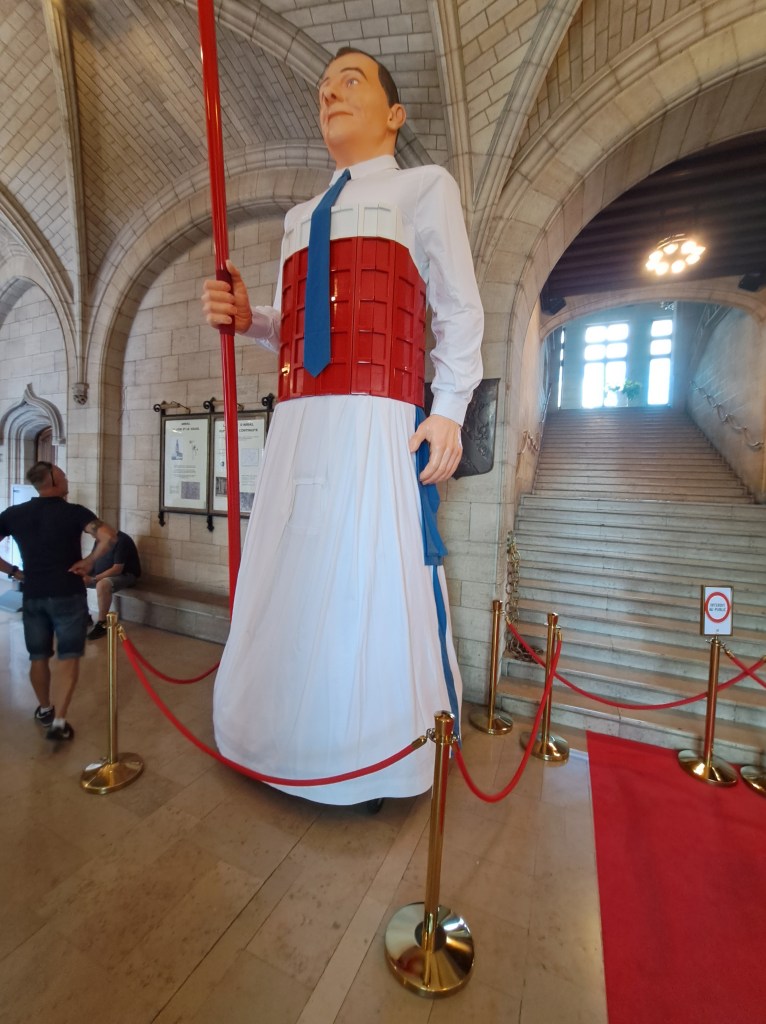
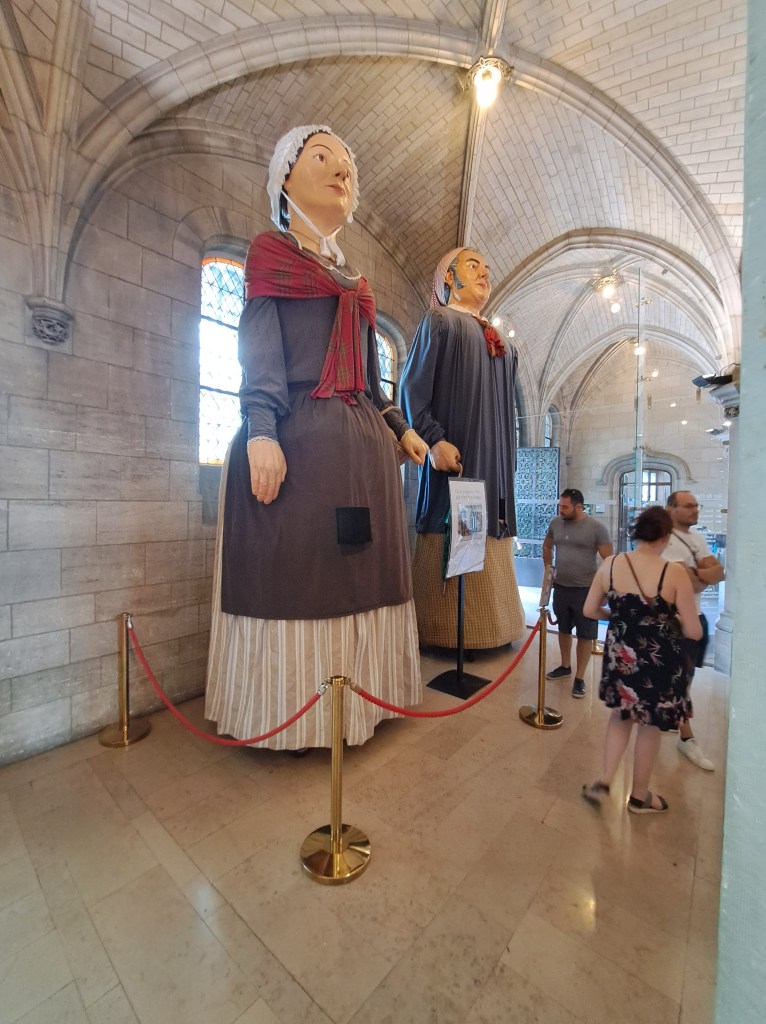
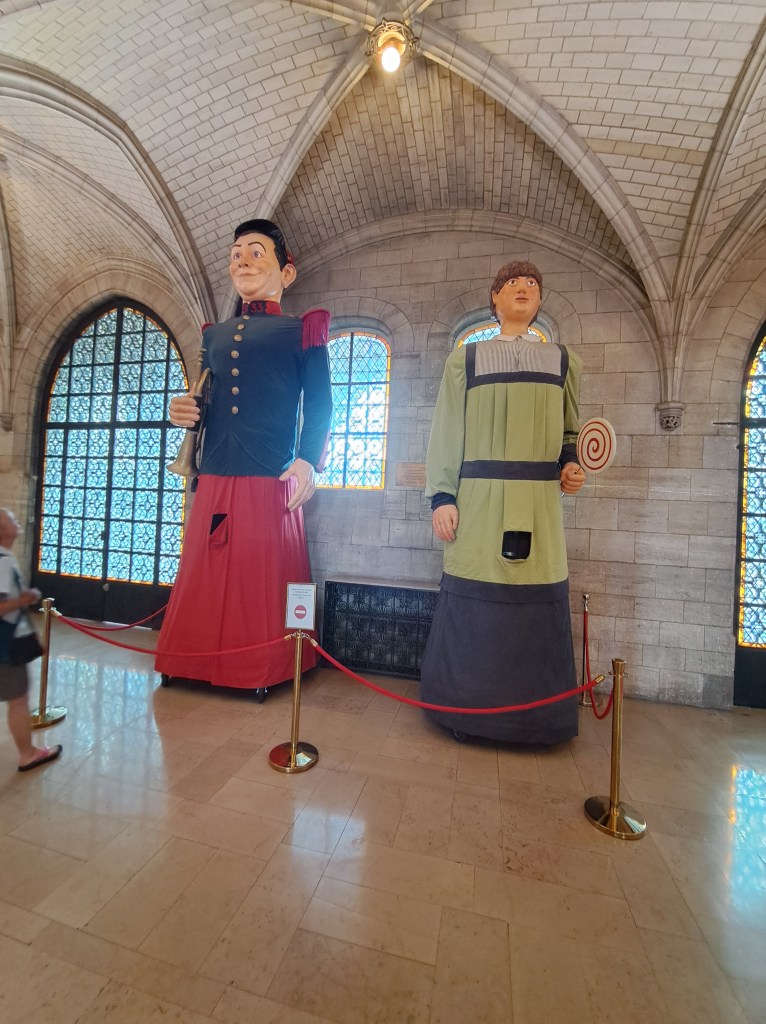
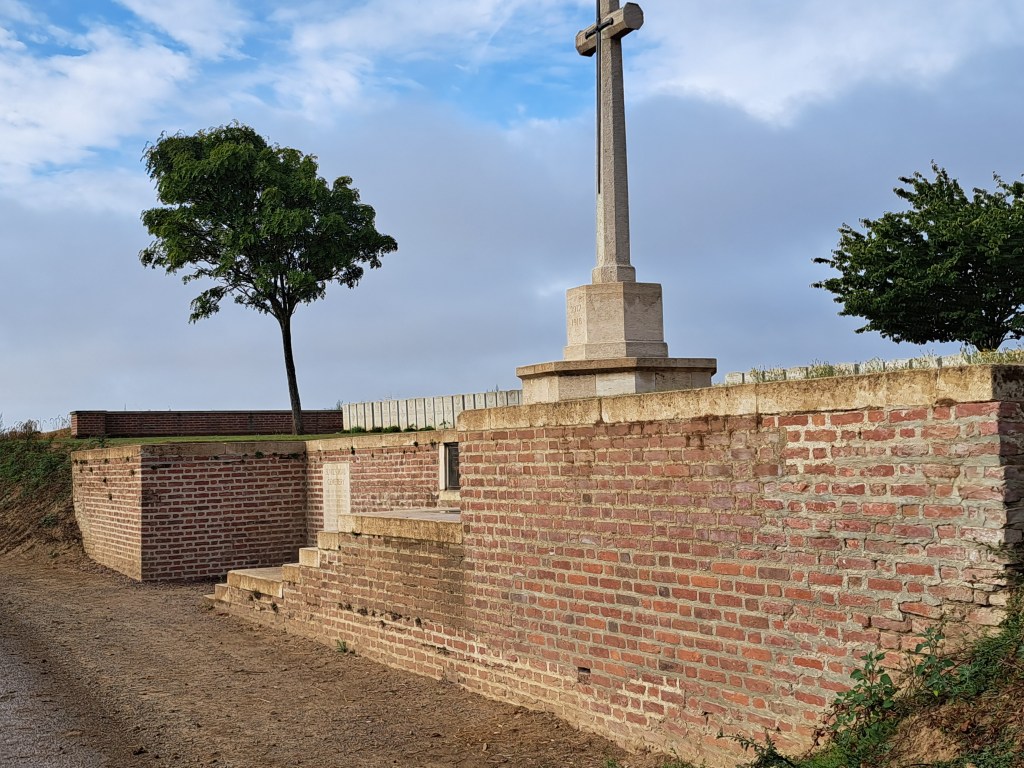
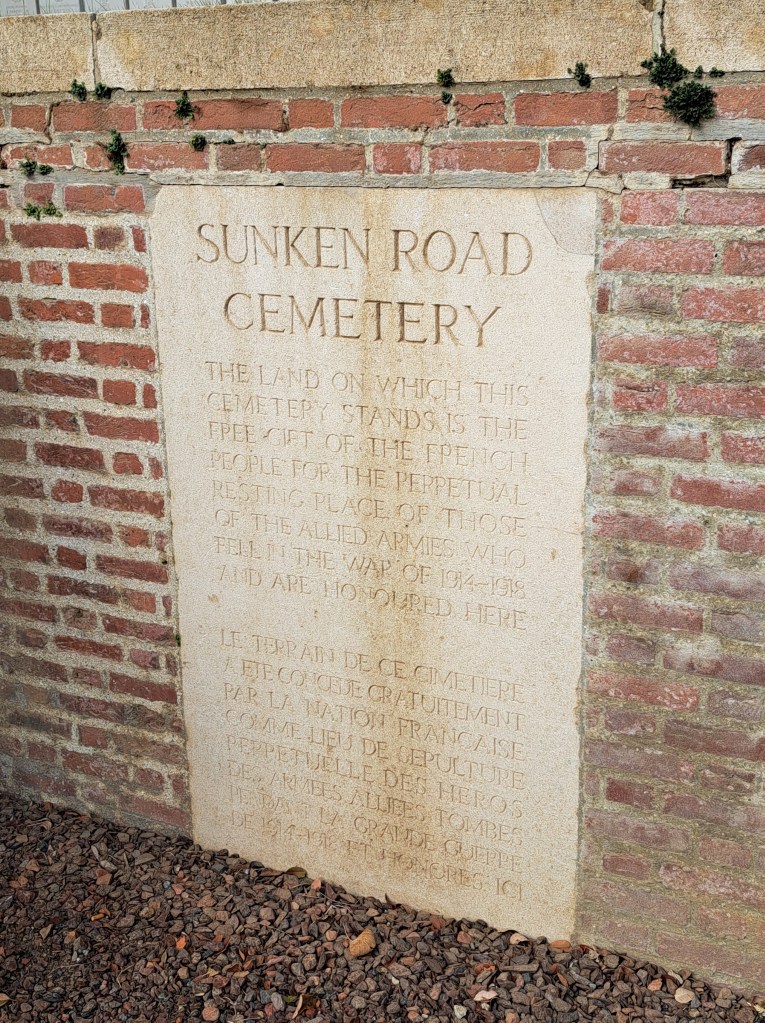
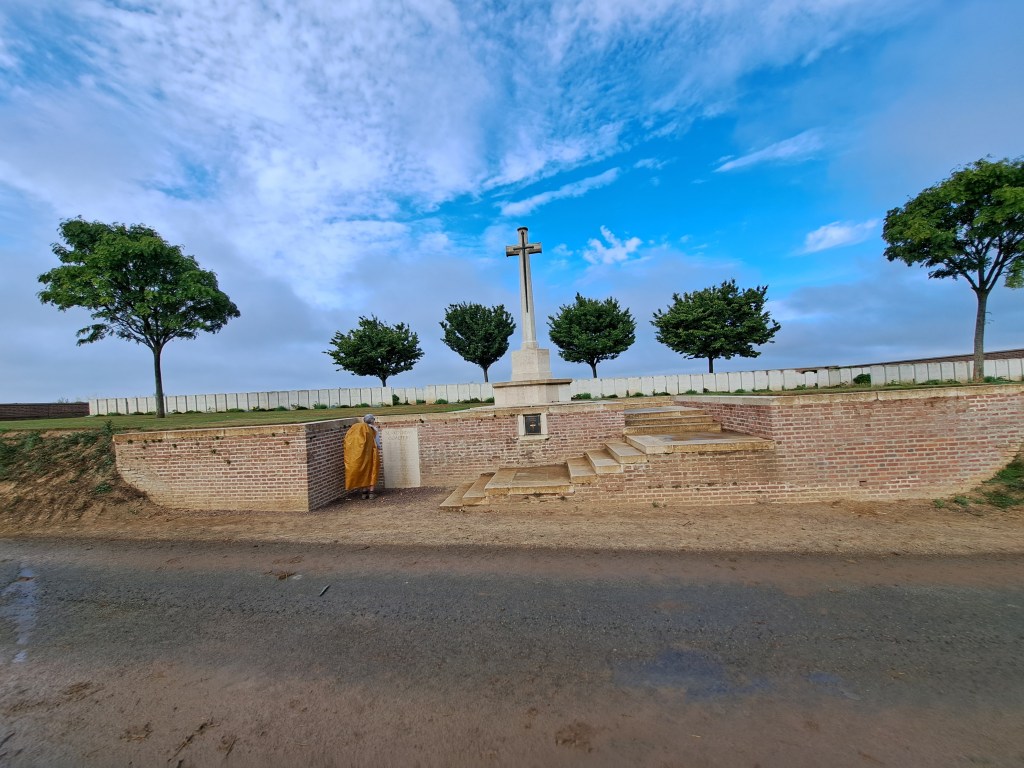
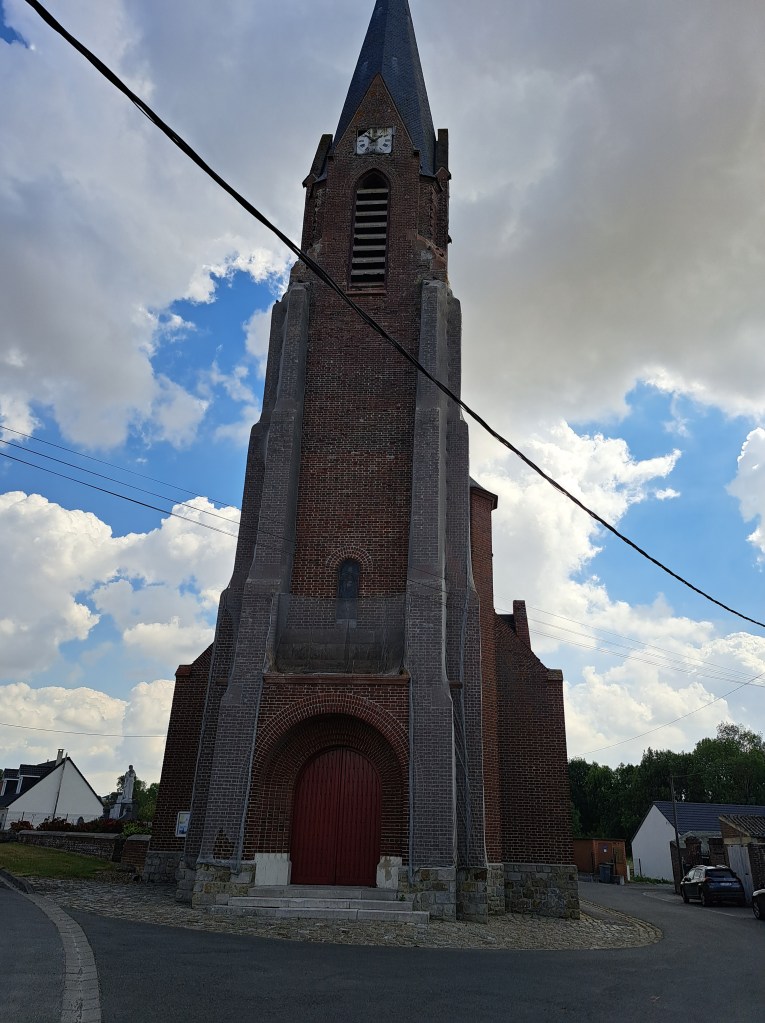
(I am having issues with posting photos so please forgive the random nature of the photos at the end, but please note the size of the giants of Arras – awesome!)
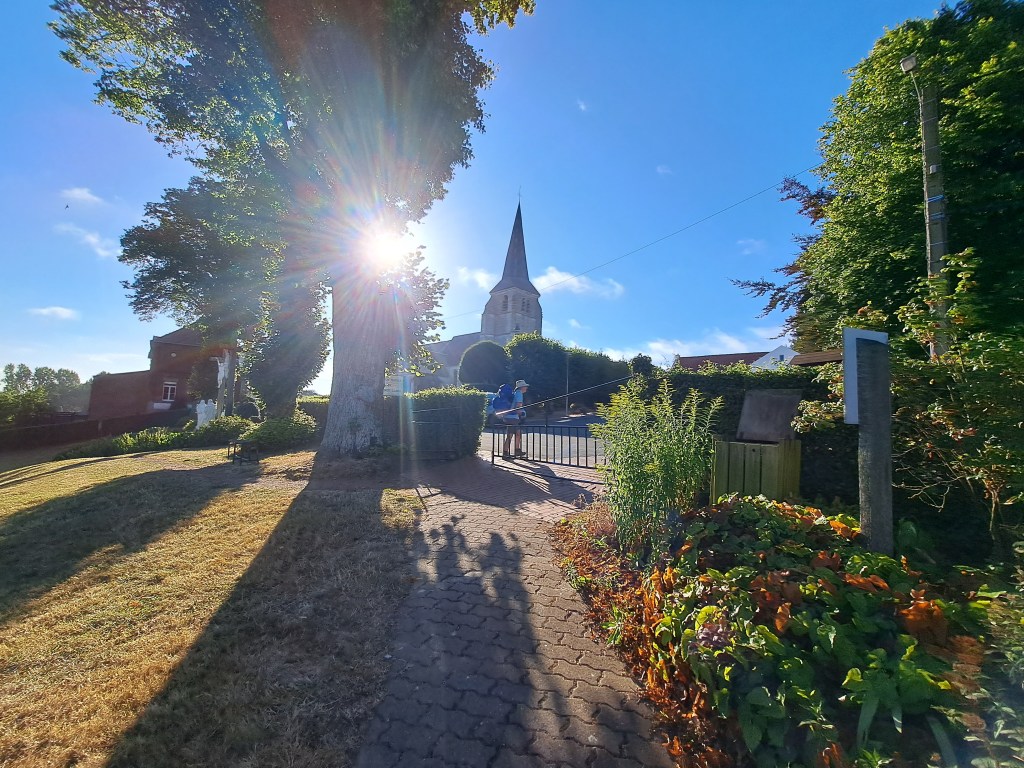
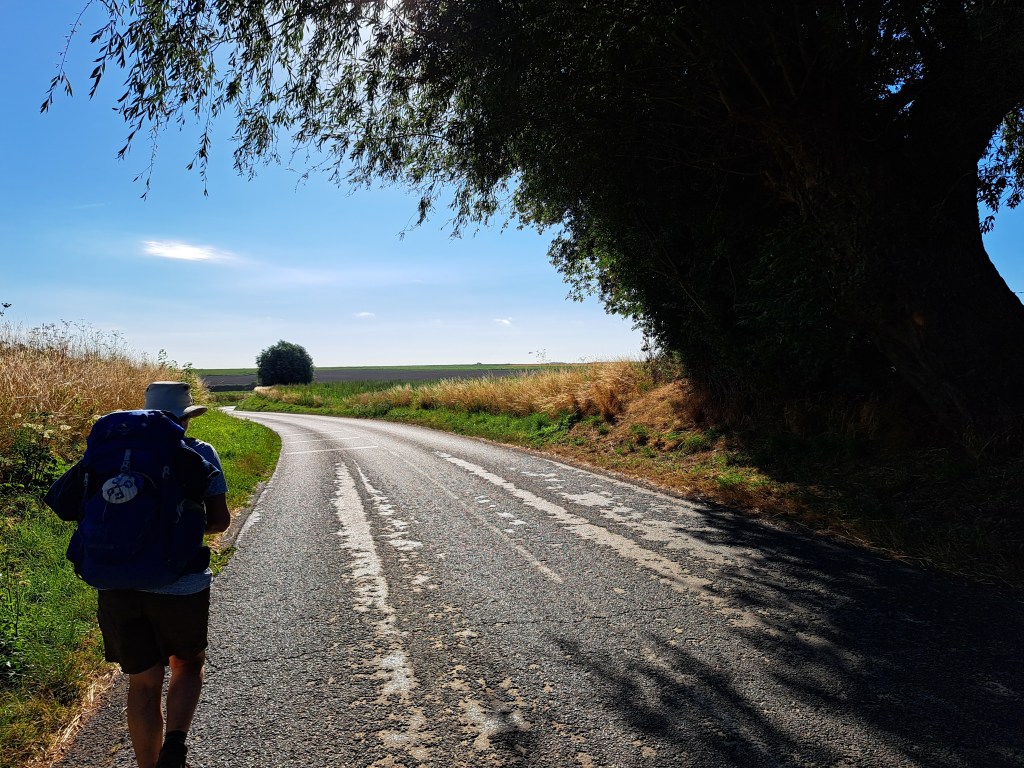
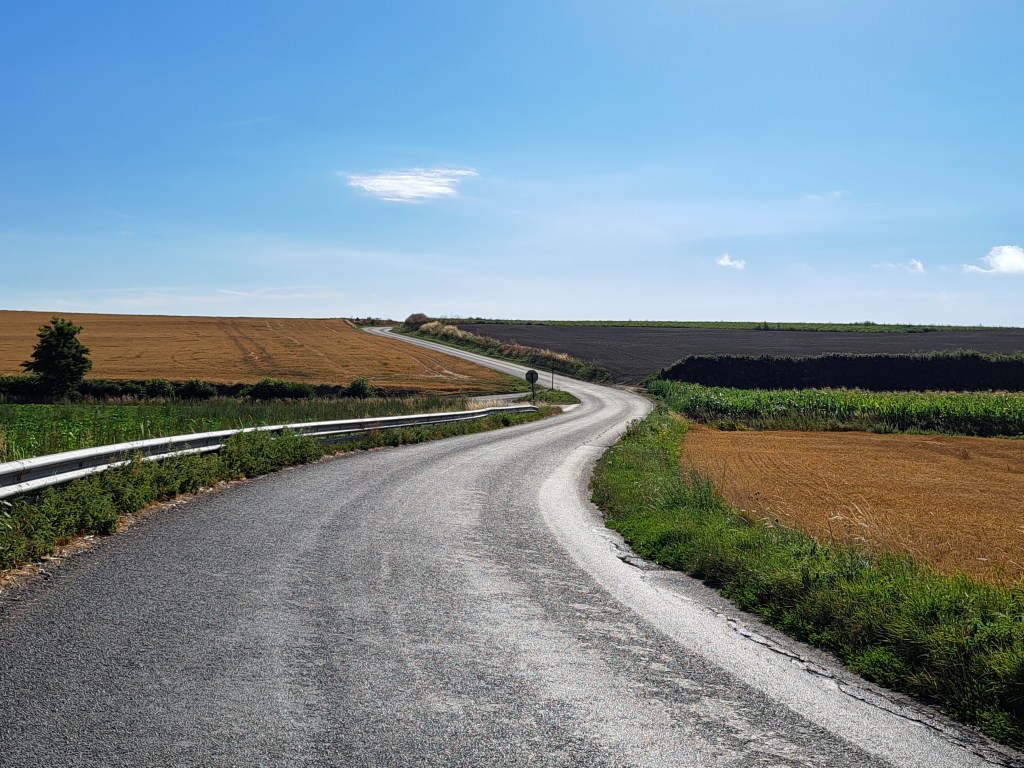
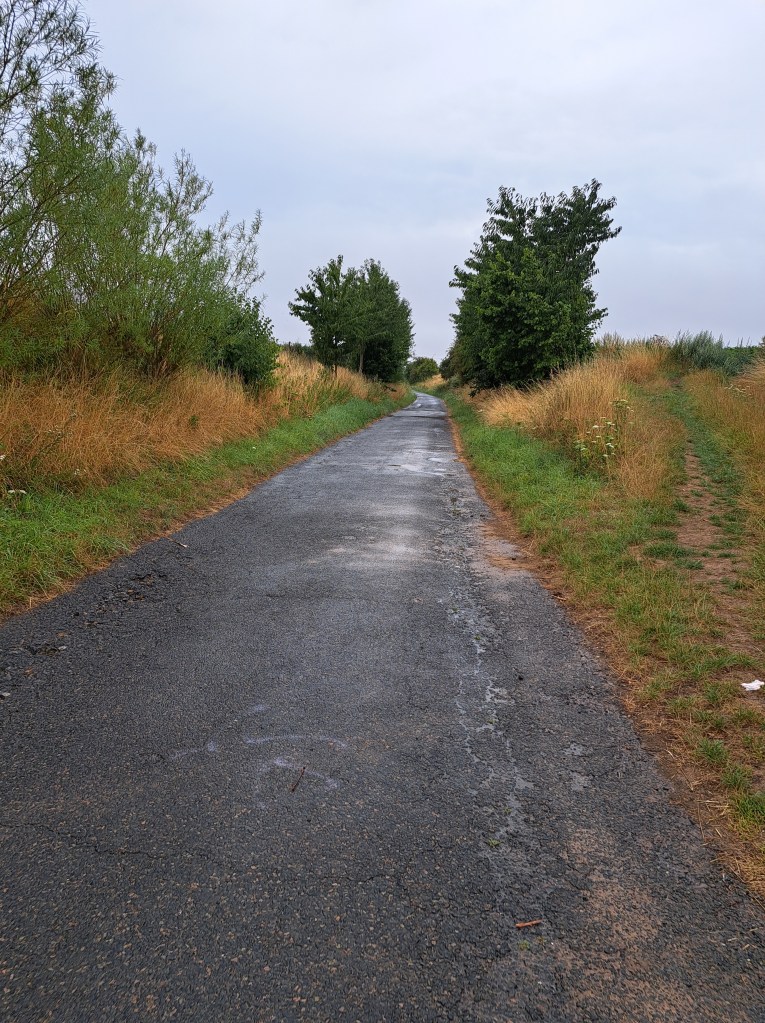
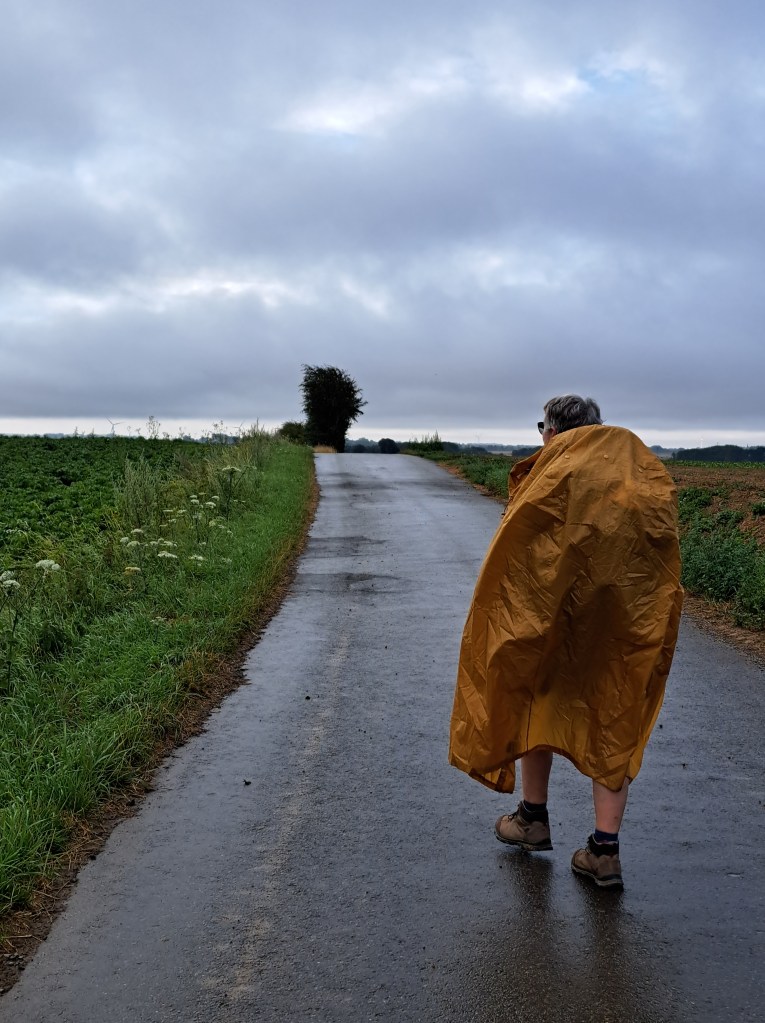
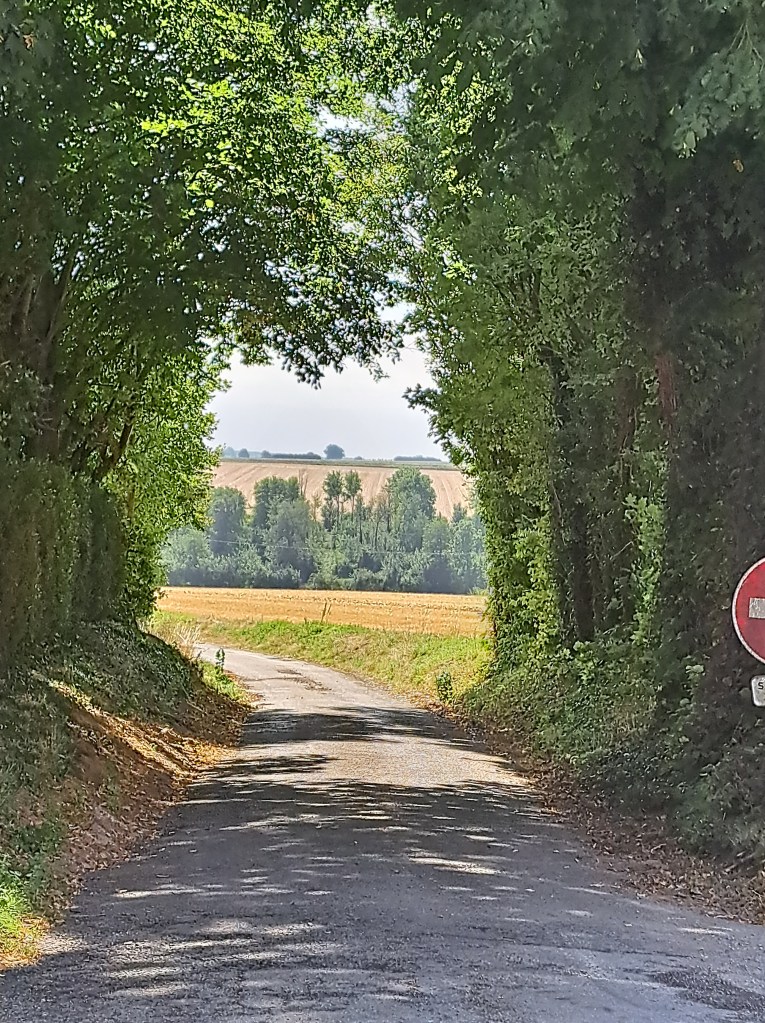
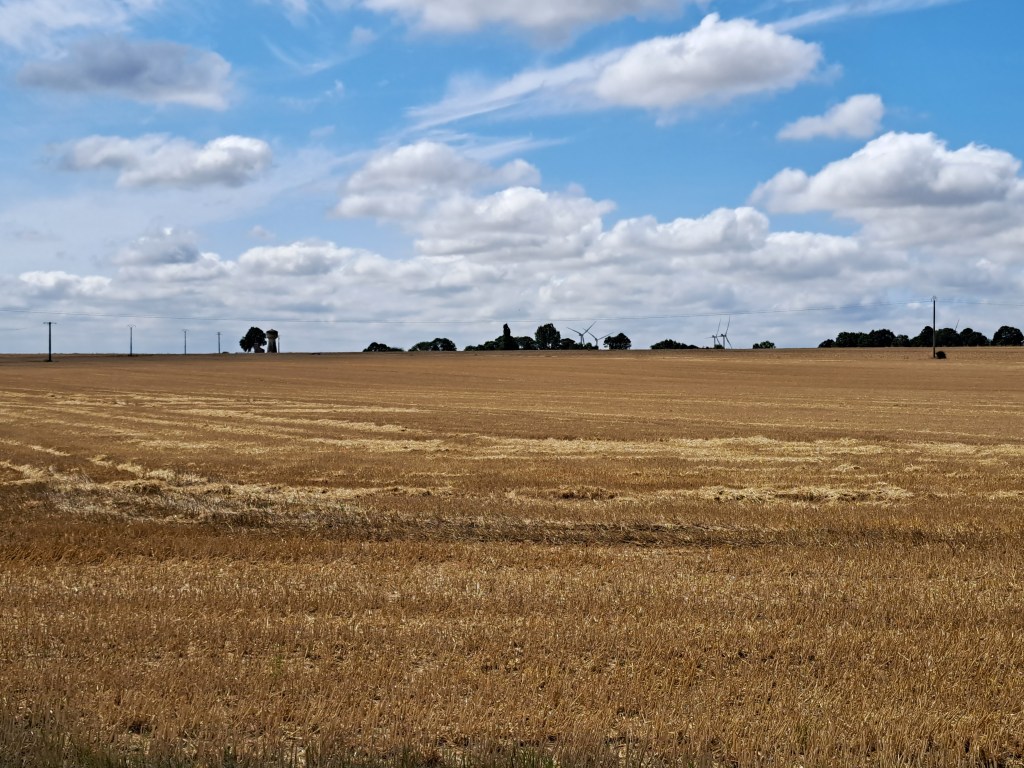
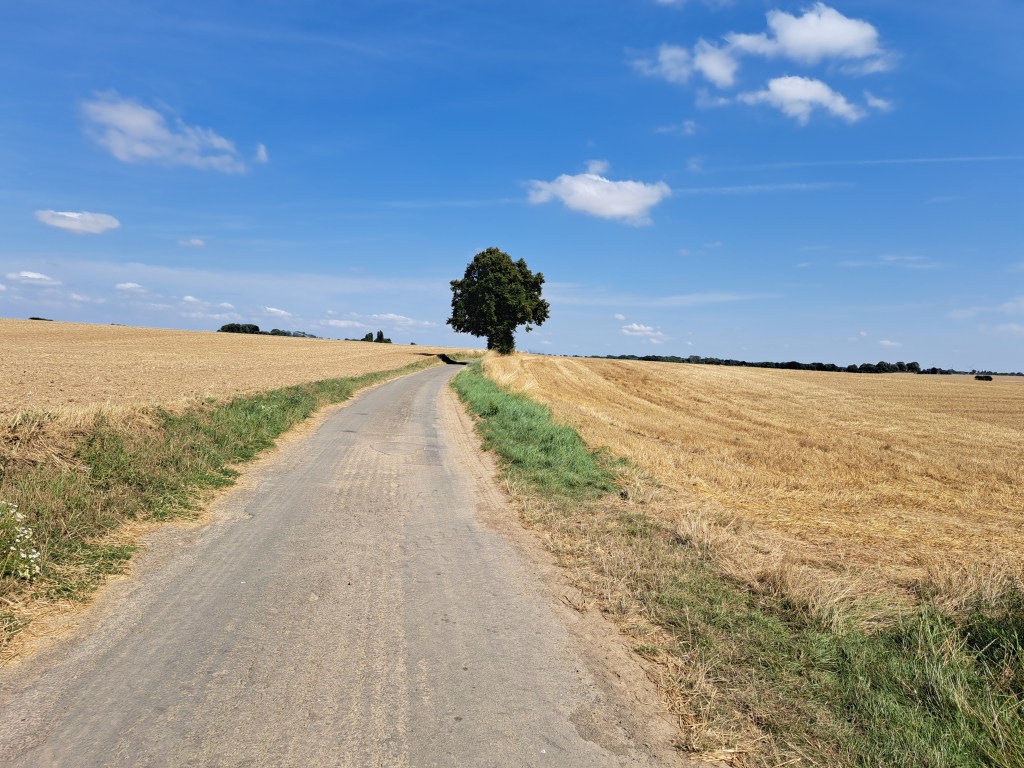
Today is the 5th August and we are now in a city called Peronne resting on the banks of the Somme. Yesterday was another long day from Arras to Ytres. We began walking in the rain at 8 am and gradually, as we walked through each village devoid of any services, the rain diminished and the sun grew in strength, the heat increased and the shade just faded as we walked. Our drinks faded too and, after lunch sitting in some blessed shade behind the war memorial at St Legere (a village that was awarded the Croix de Guerre because, despite being almost completely destroyed during WW1 the people kept on living positively and working as hard as ever alongside the rubble), we walked on to the another village where we knew there was a shop, a bar and other services. This place, Vaulx-Vraucourt had the services but they were all shut – even the shop was not going to open for almost an hour after our arrival (and we could not wait).
As we headed out of the village (I was checking out the map to see where the cemetery was because you can always find a tap of fresh water there) we saw a pharmacie, and it was open, so we walked in hoping they might have a fridge with drinks to buy….. nothing!. The two ladies behind the counter looked at us with some measure of restraint, wondering what we were going to say. Alison asked if they had any water for sale. One of the women walked behind a screen and returned with a 1.5 litre of (cold) water and gave it to me. She refused any payment and the only thing she asked was where we came from and nodded sagely when we said London.
Profuse thank you’s were followed by a stop outside where we had a drink and filled our bottles. Wonderful!
By 4.30 we were only about an hour from our destination but the heat was getting to us and our water was running low again. We knew that our host, Emmanuelle, had offered to pick us up from the pilgrim route as her place was a few miles off the path. We had opted to make our own way directly, hoping to walk the whole way but decided it prudent to take up the offer of a lift. So while Alison sat in the shade and tried to contact our host, I walked down to the church and filled up my bottle from the tap at the cemetery and we sat and refreshed ourselves as we waited for a lift.
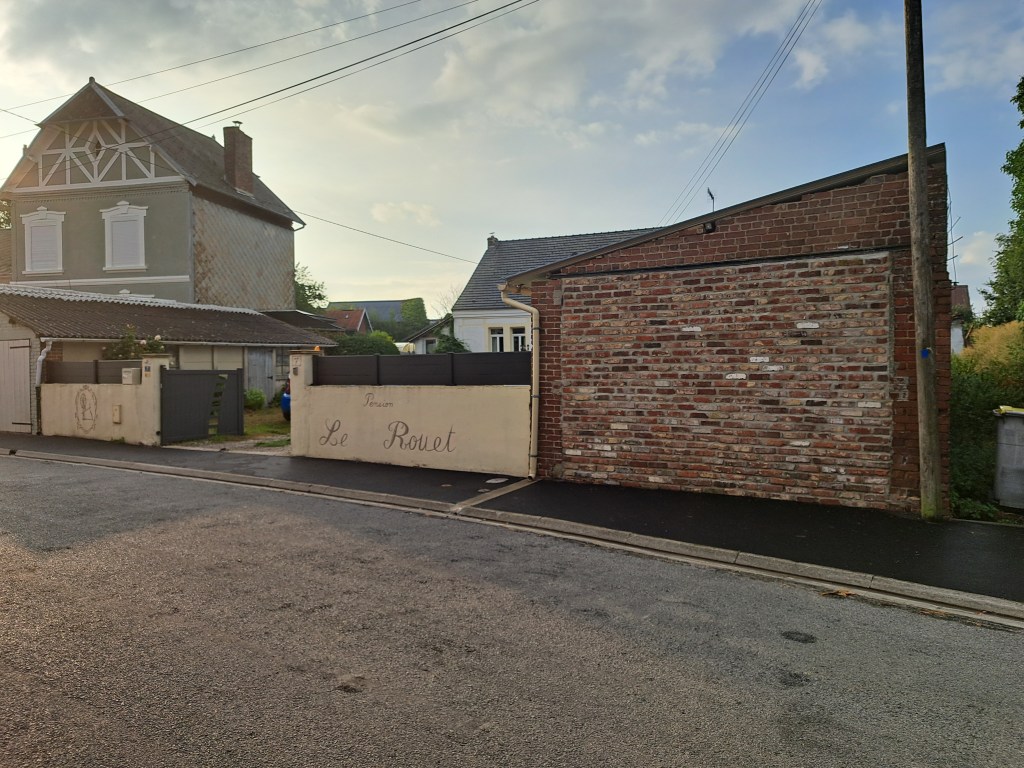
Turns out that Emmanuelle is a very bright, lively person who speaks very good English and runs a really good chambre d’hote where we had good food, a great rest and headed off to here after a fine breakfast. Another really amazing host for any traveller and all pilgrims…
Which just leaves me with this observation about today’s walk.
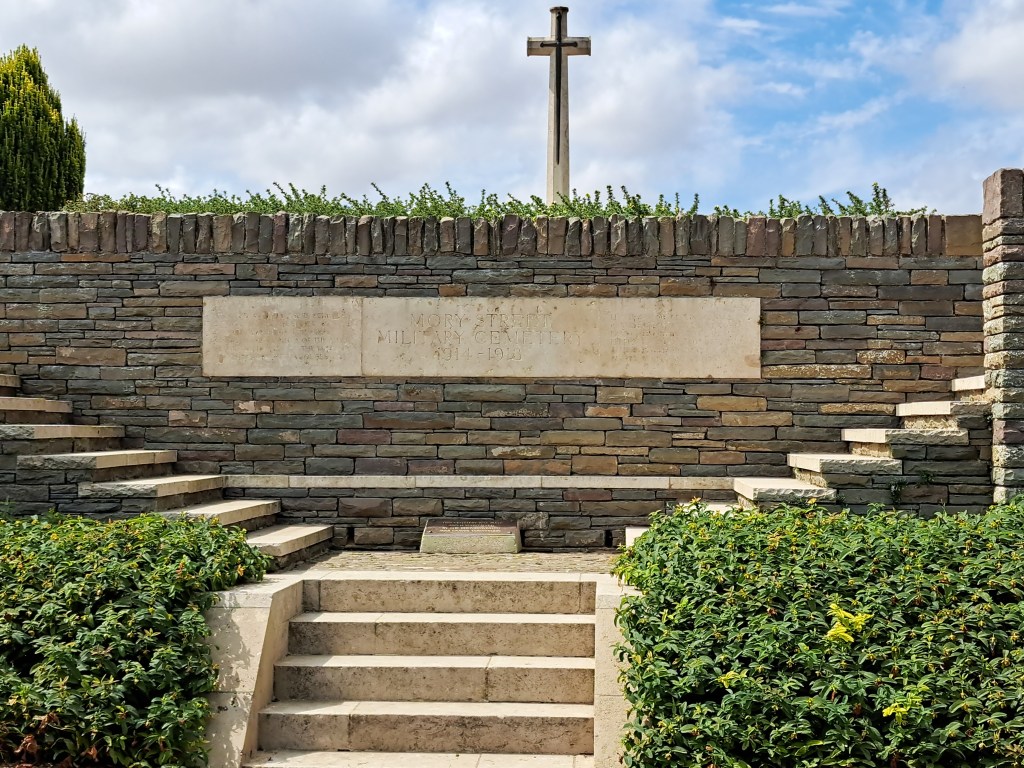
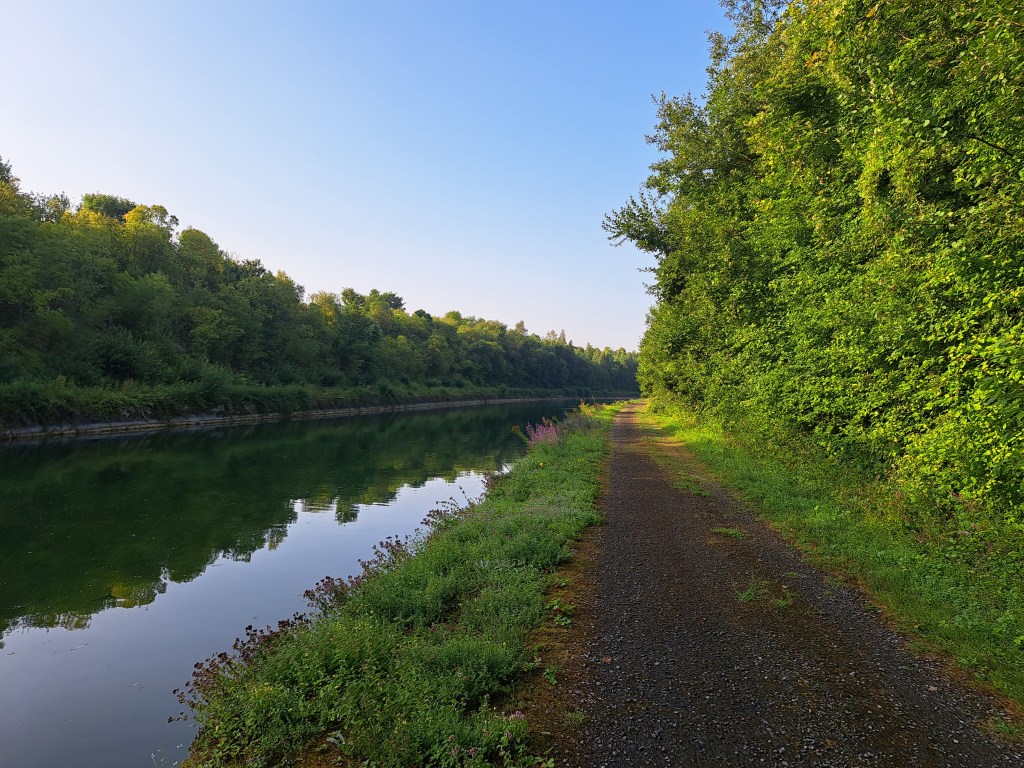
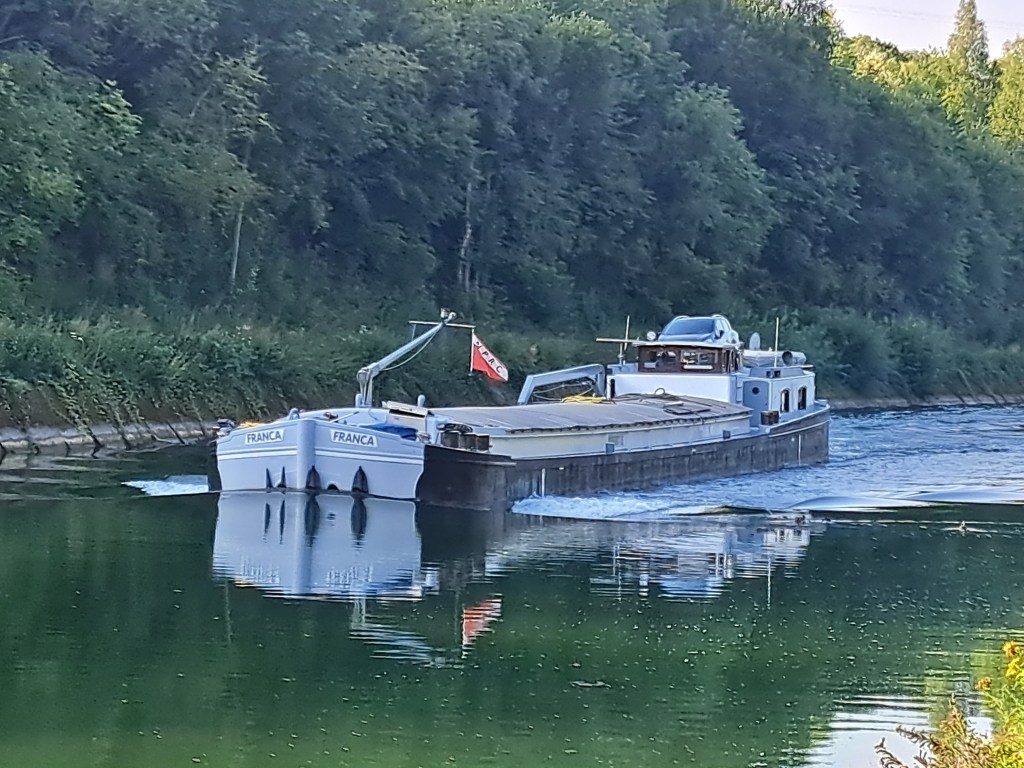
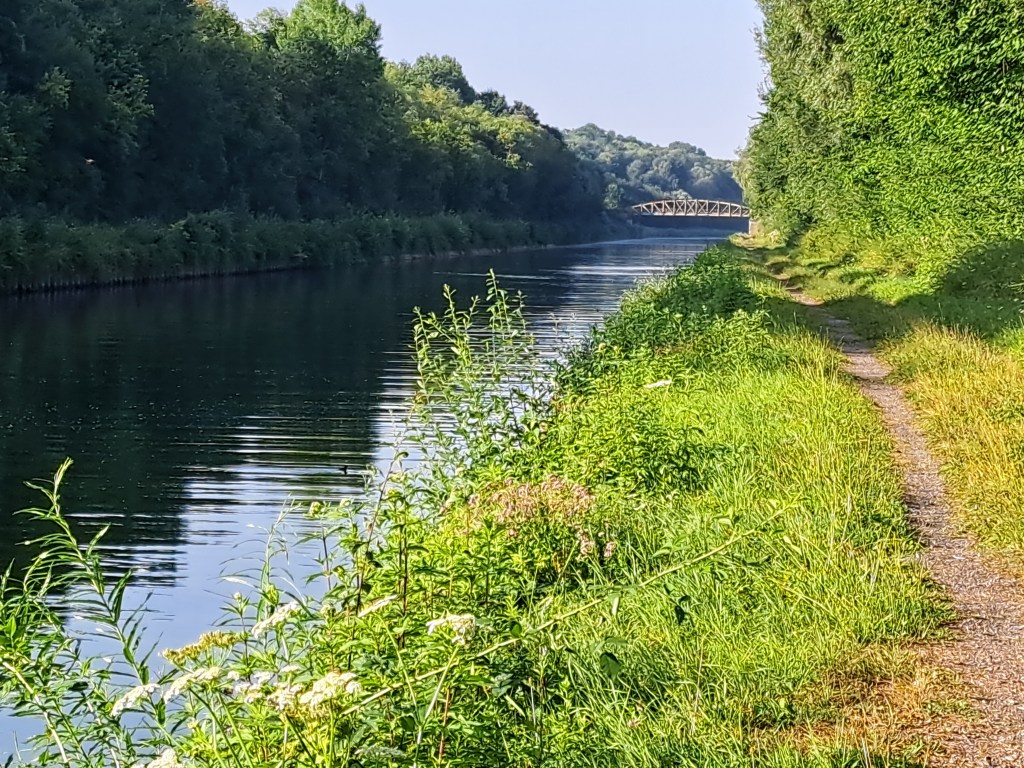
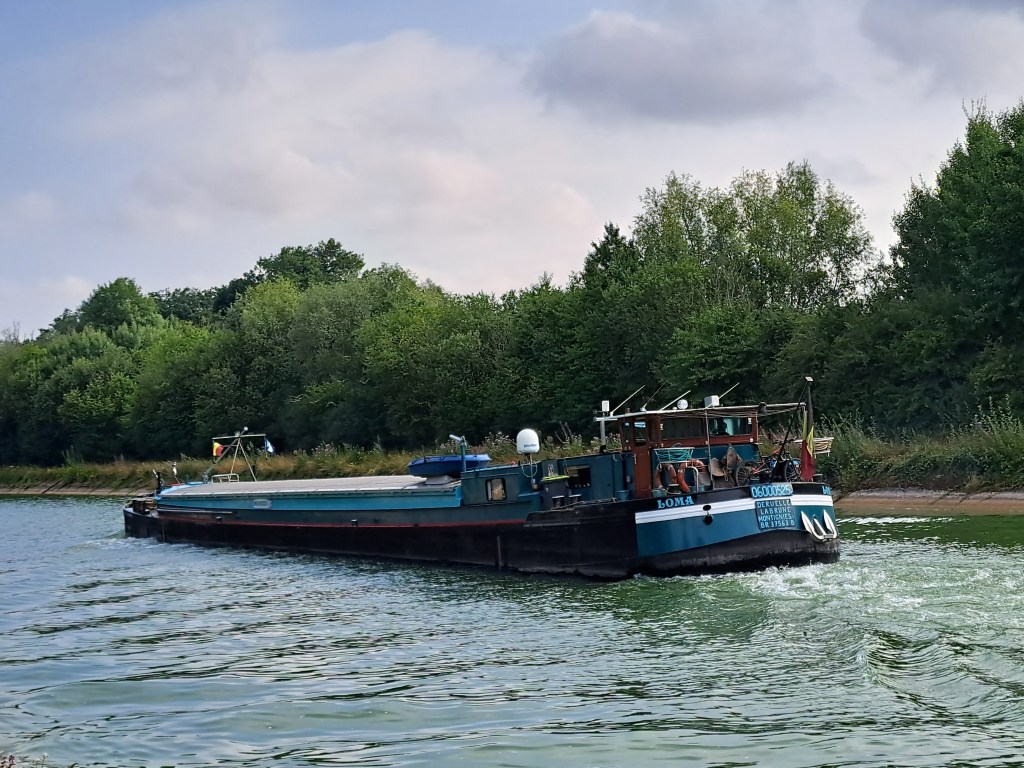
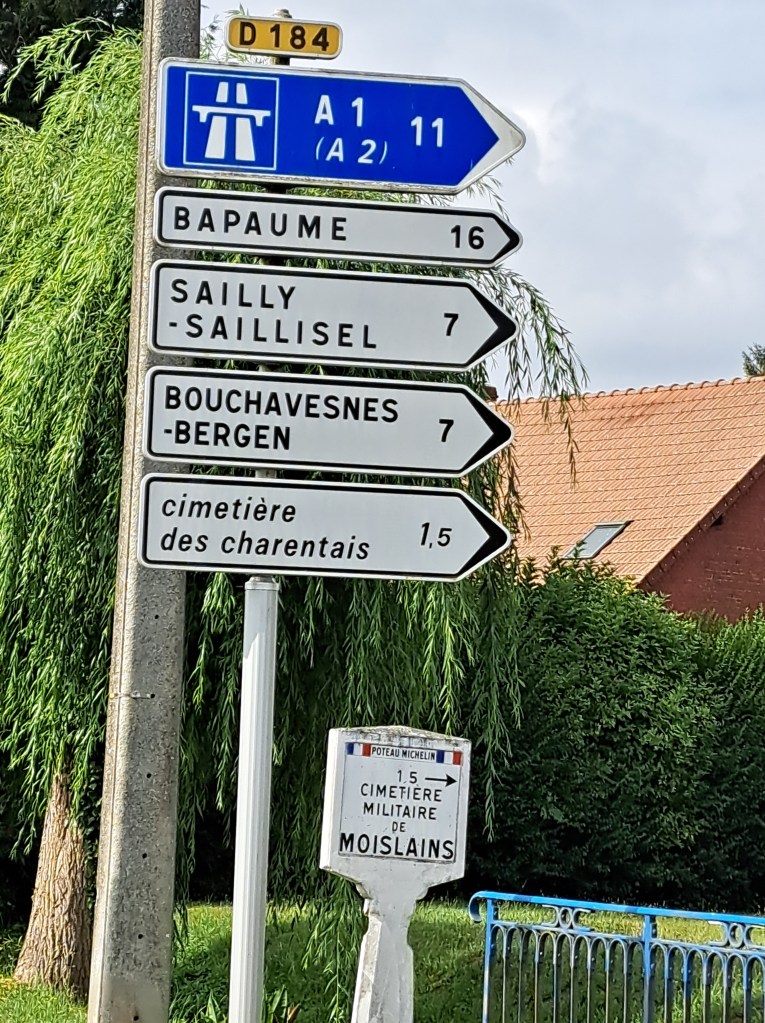
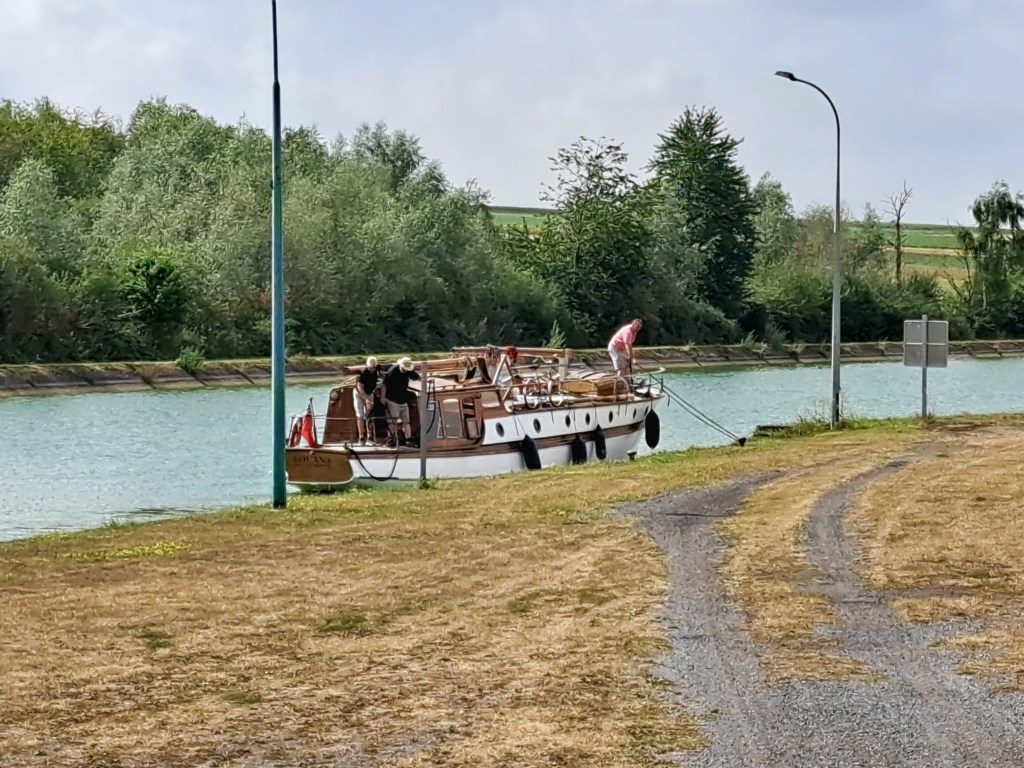
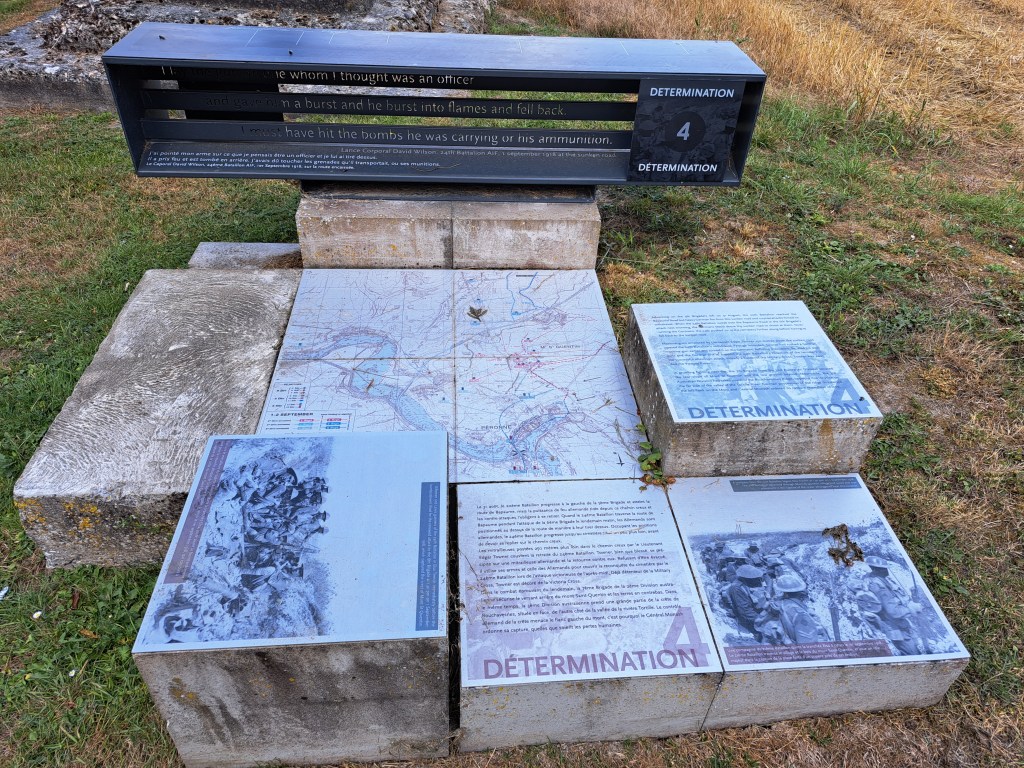
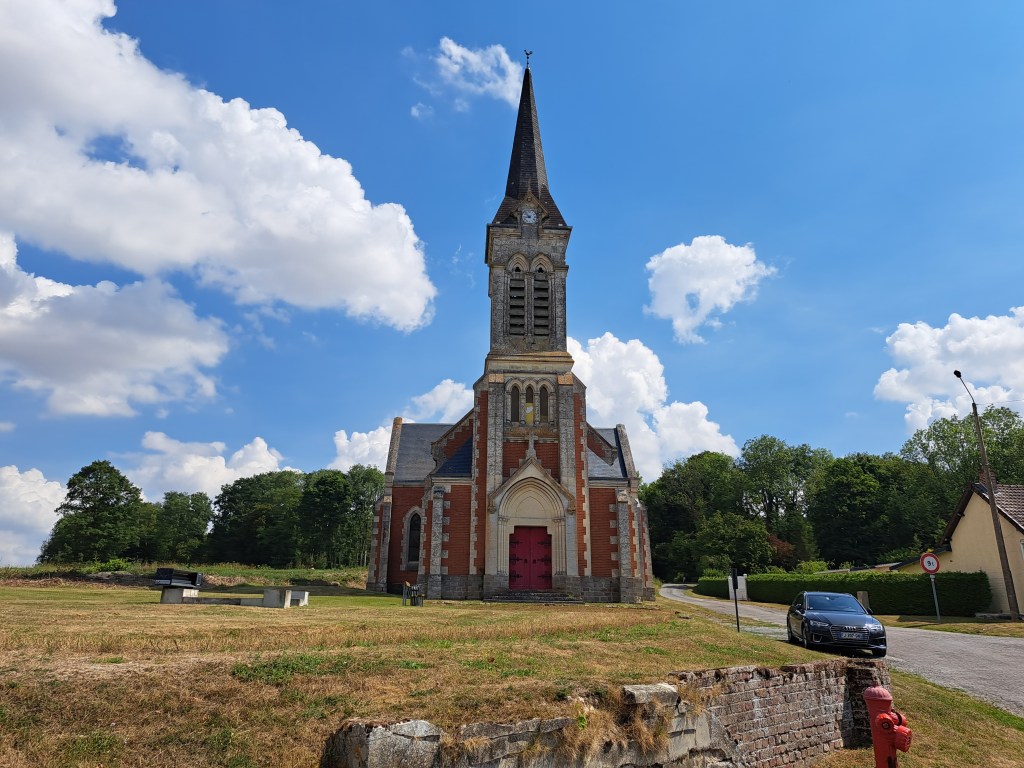
The last few days we have become very aware of the landscape’s heritage from the First World War. Although much of our day’s route followed an amazing canal (du Nord) we also passed sites relating to the war and then, just before entering the city we ended on a hill called Mont St Quentin which is a really important local WW1 Site for the people here. Peronne had been heavily occupied by the Germans during much of the war and then, early in 1918 they were liberated by the Australians who fought a seriously ferocious assault against the German occupiers and this hill was a major point of defence that had to be taken. The story of this conflict is extraordinary and deserves looking up. There were a series of small displays marking the progress of the Australians and on one panel it said “this ruined wall (near here) was the site of a German bunker. After the end of the fighting the soldiers entered the bunker to find the dead bodies of 30 German and 2 Australian soldiers”.
It was not the end of the war but it was one of too many harrowing conflicts along the way to final peace.
This city now houses a major museum of the First World War which is trilingual and tells the story of the war from the three aspects of the French, the British and the German forces. If you come here, go to that museum, go to the other sites and chat to the people in the Tourist Information Office. Glad we are passing through here….
The following was written on the evening 3rd August
I am writing this in a fine city called Arras. We are staying in very small, one room apartment on the main square. Yesterday we were in a small farm yard gite/chambres d’Hotes where the lady who hosted us was very pleasant and helpful. She promised to seel us some potatoes and eggs (from her small holding) and we brought other ingredients and wine from the previous town and made a good meal with it and sat and ate with three Belgian women who were lovely – mother, daughter and aunt walking on the pilgrim route for a few days.
It was a particularly long day (over 30 kms) to this place called Amettes and we chose it because it was on the way and it just happened to be the birth place of Benedict Joseph Labre (French: Benoît-Joseph Labre) who was born on 26th March 1748 and died on the 16th April 1783. He is the patron saint of the homeless and has been a person of interest to us for some time. Alison brought him to the attention of a lot of people when she was CEO of Housing Justice and we have walked to a number of sites related to him, including Rome, where he died.
He was an extraordinary character. He spent a good part of his younger days studying under his uncle (a parish priest) with a view to eventually entering the training for the priesthood, but a local flare up of the plague put a stop to that and, after his uncle died, he left home at 14 or so, and tried to join the trappists and other versions of the religious, but he was deemed too young and also not well enough educated for the priesthood.
After a couple of faltering steps in the direction of becoming a monk or brother, he drew a line under that idea. He joined the third order of Franciscans (a lay association) and set off from home to become a pilgrim. He walked to all of the major pilgrimage sites in Europe at the time (visiting some several times). He had no money and lived on what people would give him. He slept wherever he could and spent days in prayer and devotion, pretty much ignoring the necessities of life such as food and drink.
One might say nowadays that he was on the spectrum. He was a very special person, very focussed and extremely simple and humble in his ways. Reading about him has reminded me of Vincent van Gough, both driven, both with a great heart for the poor and underdog, and both with a passion that drove them further than most ordinary people. Van Gough had extraordinary artistic talents and Labre had such a single, simple religious focus that nothing could distract him from his devotions.
He ended up in Rome (not the first time he had arrived there) and he settled there, living in the Coliseum, which was an abandoned ruin occupied by all sorts of poor and dangerous people at the time. He was known as the “Saint of the forty hours” by the locals who seemed to really like him despite his rags and unwashed condition. And, when he finally collapsed on the steps of the church of Santa Maria ai Monti, he protested when they insisted that he be taken in and looked after. But it was too late for any help, he died of malnutrition and exhaustion on16 April 1783 at the ripe old age of 35.
So, the last time we walked to Rome we visited one of the few churches connected with him on our way through the Pyrenees, then ended up in Rome to follow some of his footsteps there.
But, yesterday we stayed in the village of his birth and walked to his original (and only real home) before heading off to Arras.
It is weird to have such a strong connection to such an odd sort of person. He was uncompromising and utterly focussed in a way that few can be. He took to pilgrimage in a way that both of us understand (‘though we will not follow his particular approach), and his connection with the poor, the marginalised, the rejected and the homeless is there for all to see. You have to understand what sort of ideas he had in order to see how he intentionally lived his life in solidarity with those with nothing and I am not going to attempt to explain all of that here. Enough to say that it is easier to sit with and be with people suffering from situations such as homelessness when you can then head off home to your own bedroom, your own bathroom and so on and it is another when you place yourself deliberately at the bottom of the whole shebang.
And don’t ask what he ever did for a homeless person. Personally, he certainly shared whatever he had with those around him and did it consistently. But his legacy is more complex than that.
I sit here, on the edge of a very busy square in a lovely city and know that we will be heading off south in the morning. The last few days have been difficult, and the coming week or so will be haphazard, not knowing exactly where we might find somewhere to stay. It is the wrong time of year to be doing this in France and especially difficult in this region, too, as places to stay here are already very limited along the way. But we will find a way through and know that, whatever we end up doing, it won’t be anything like as hard as St B faced. And therefore nothing like as bad as anyone on the streets tonight or struggling to keep their home or anyone trying to find refuge in a hostile environment will have to face.
From a lightning strike focus on one person, the view of reality spreads out, giving us both focus and a scale for any troubles we might face.
We, as always, are fine…. Just a wee bit tired.








 How far can we go?