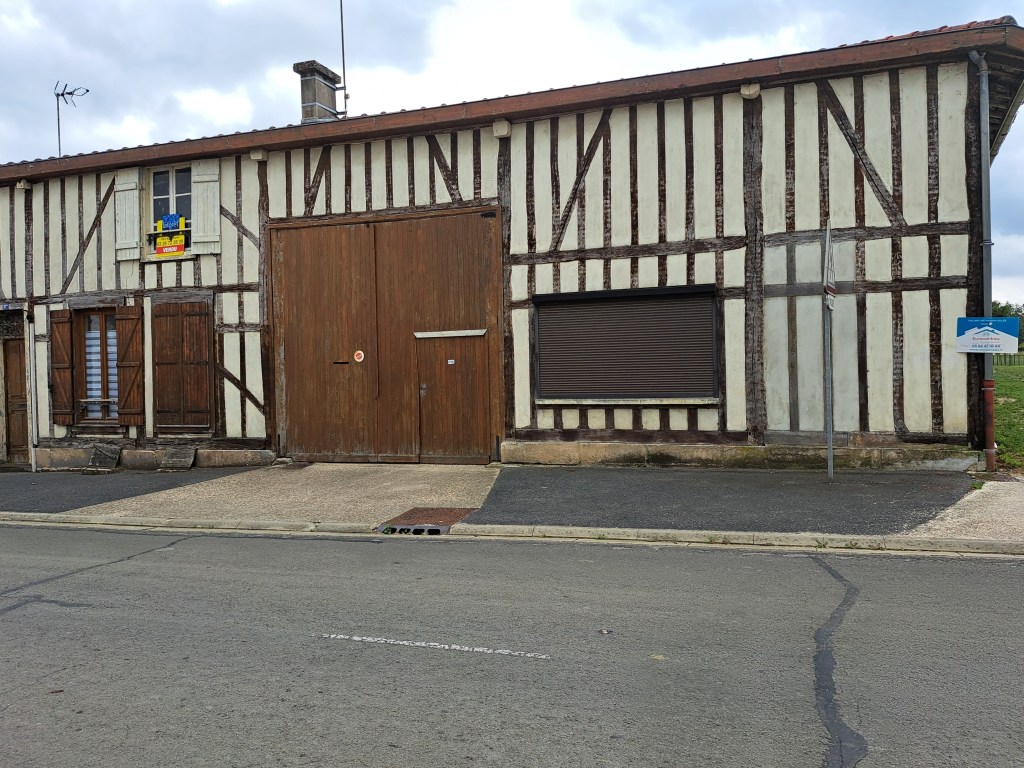
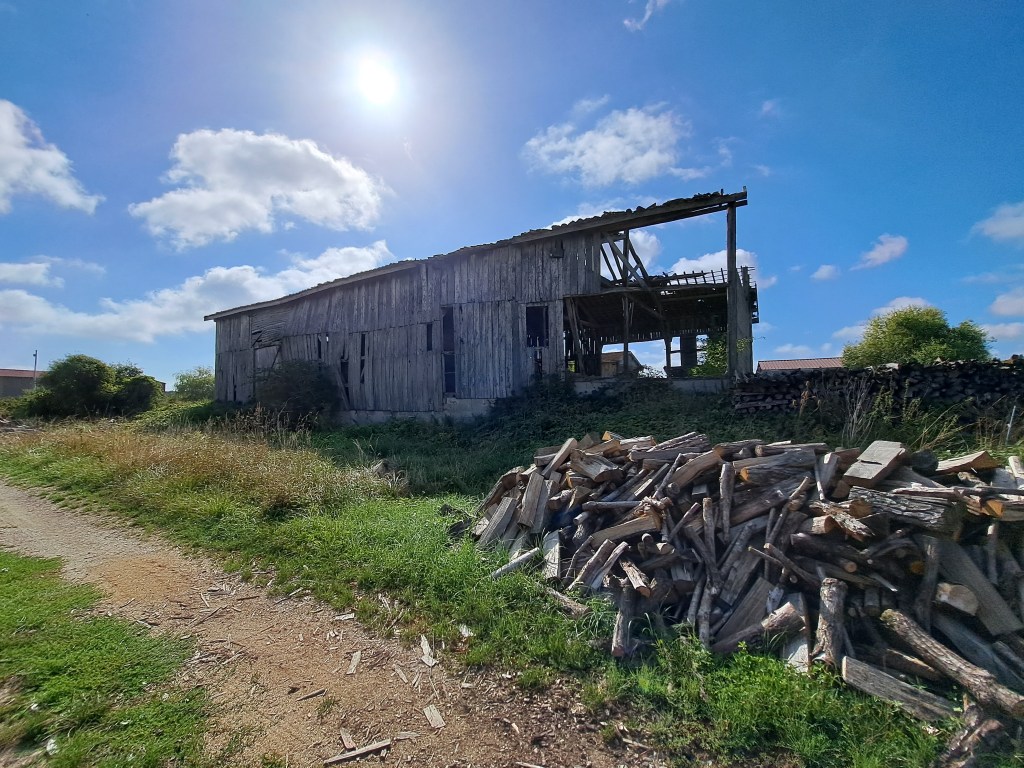
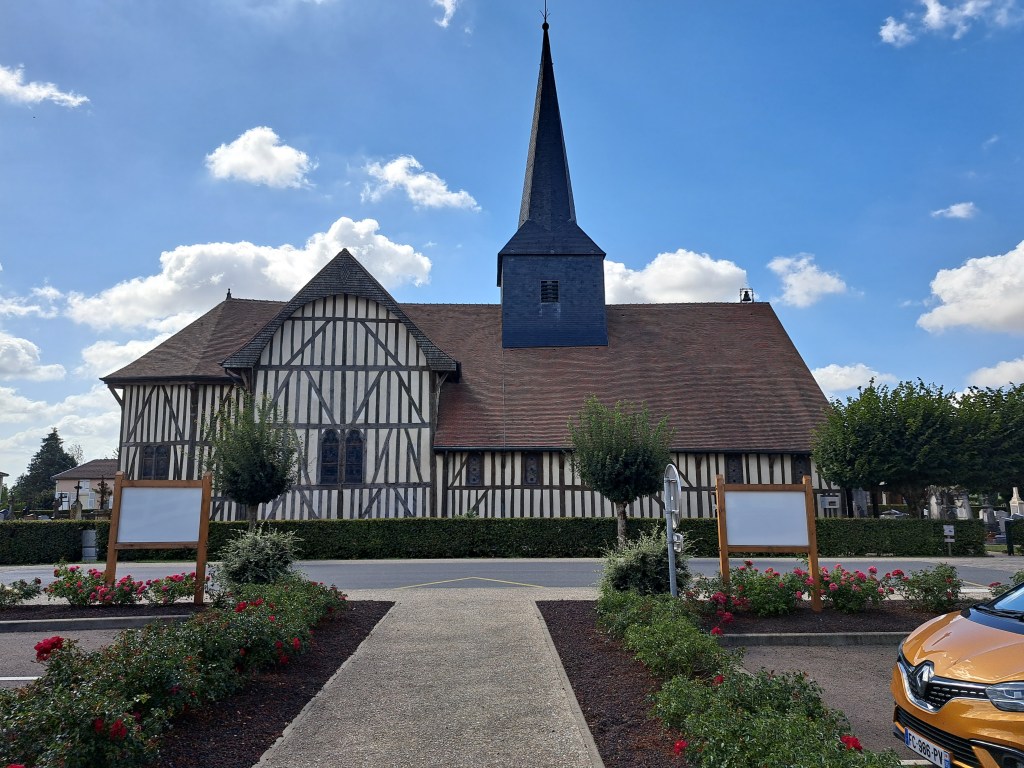
Today we are in a place called St Remy en Bouzemont. Like the last few villages and towns, we are now in the land of the “pans de bois”, i.e. the half timbered houses (and other buildings).
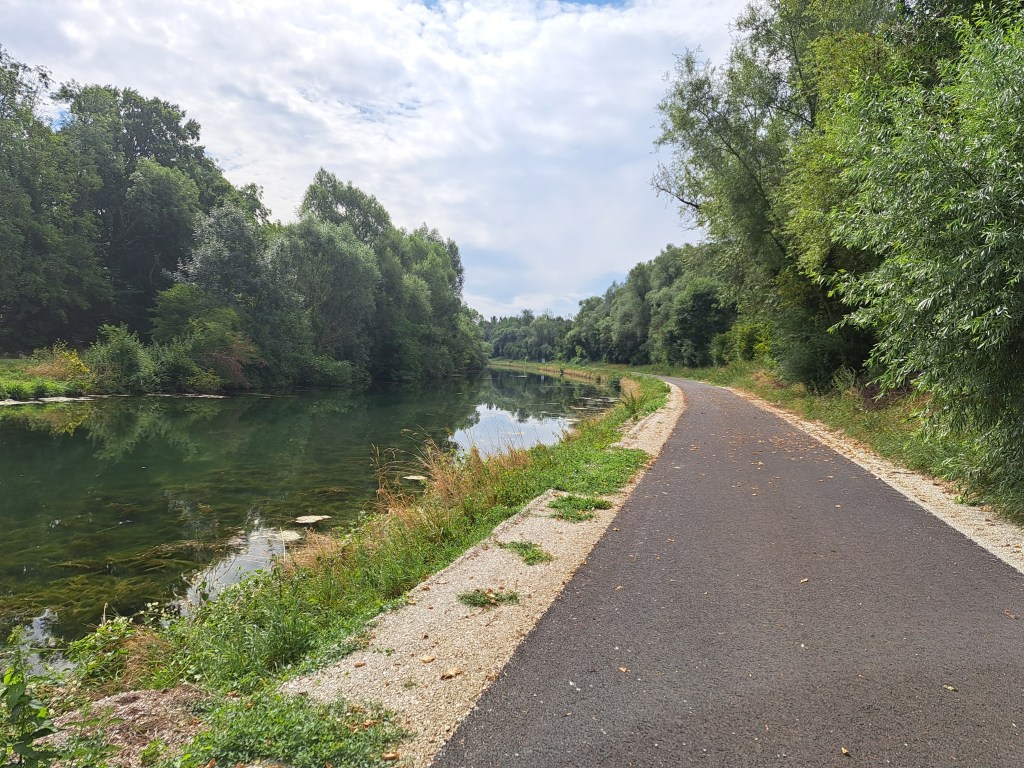
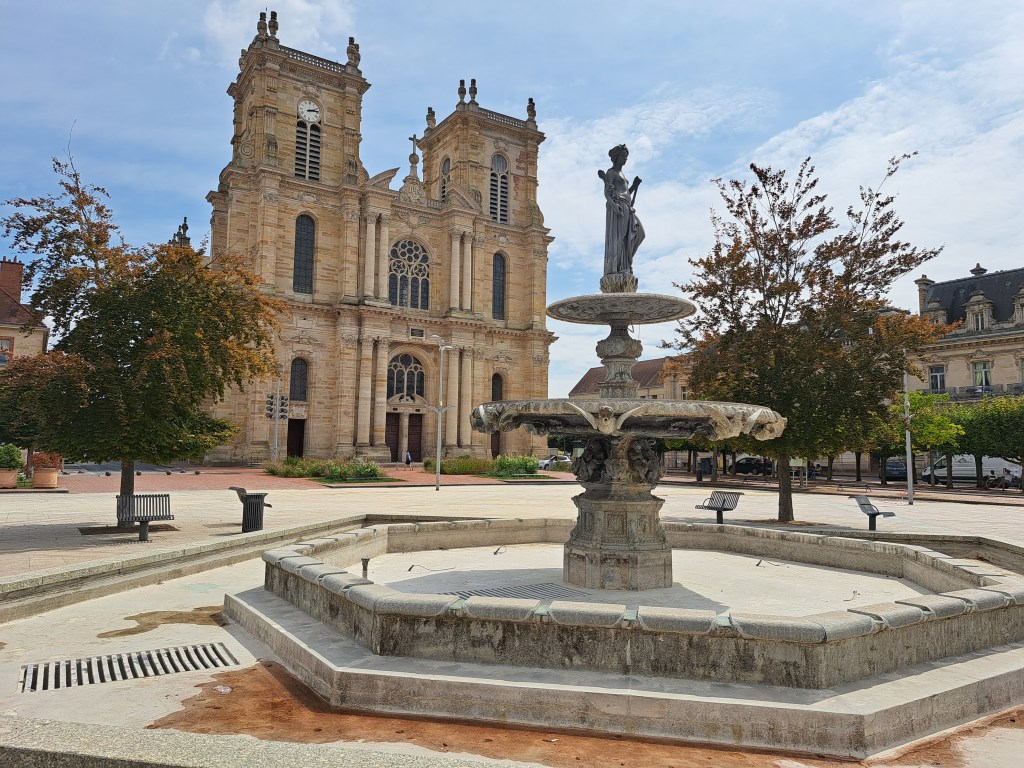
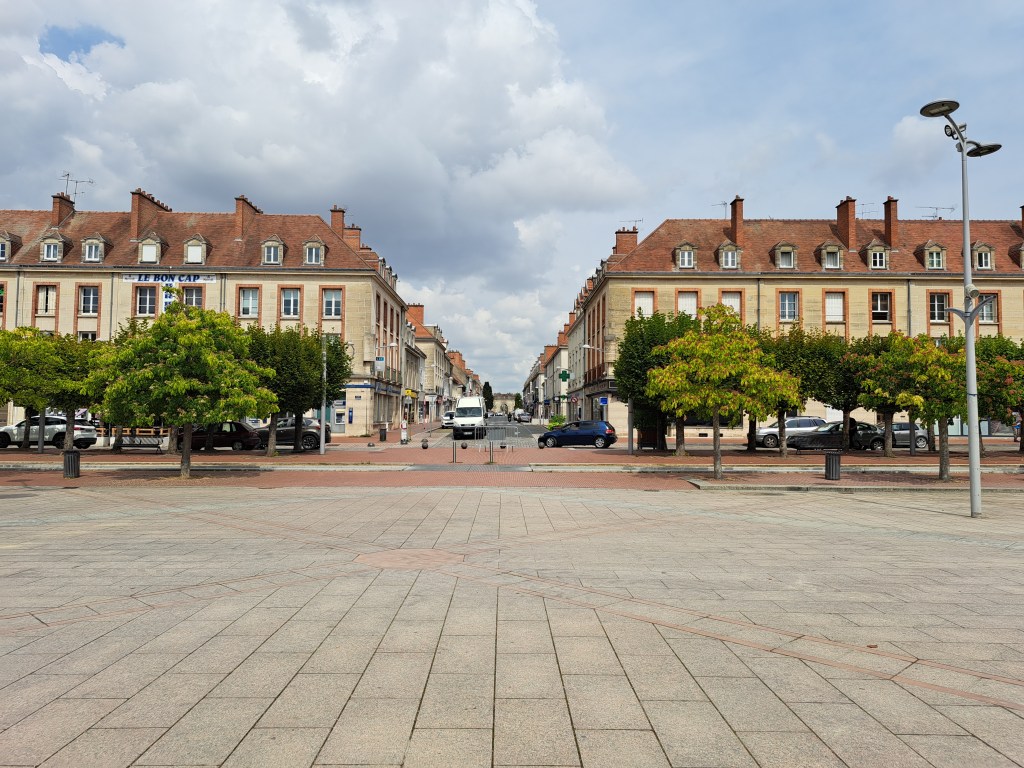
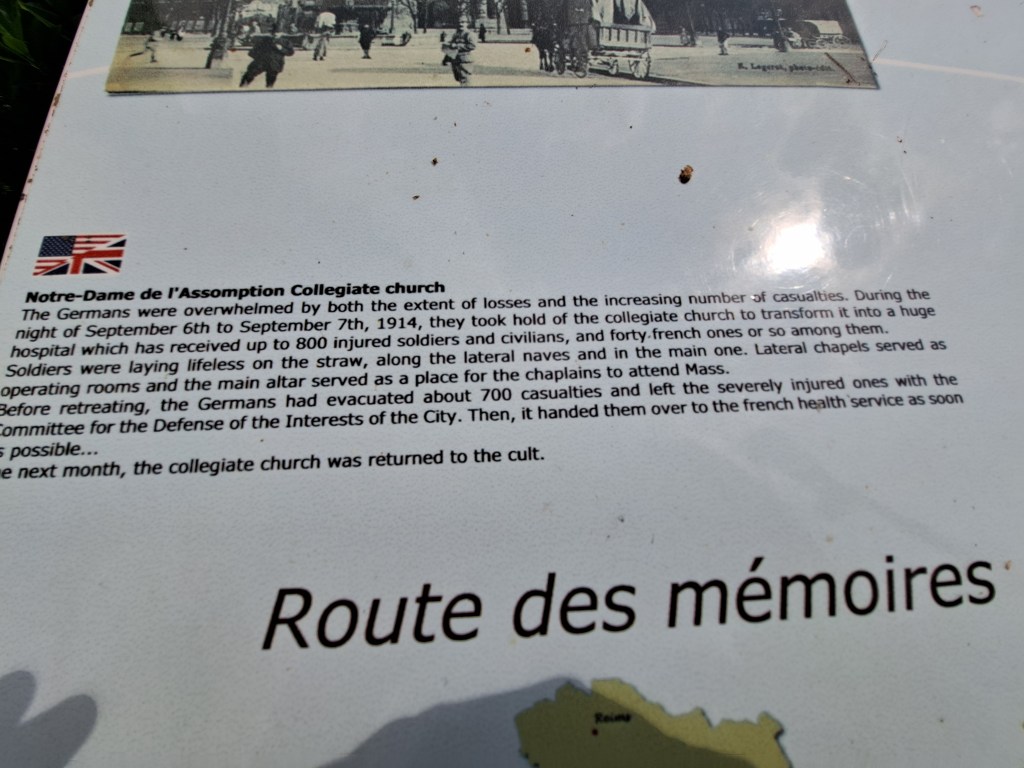
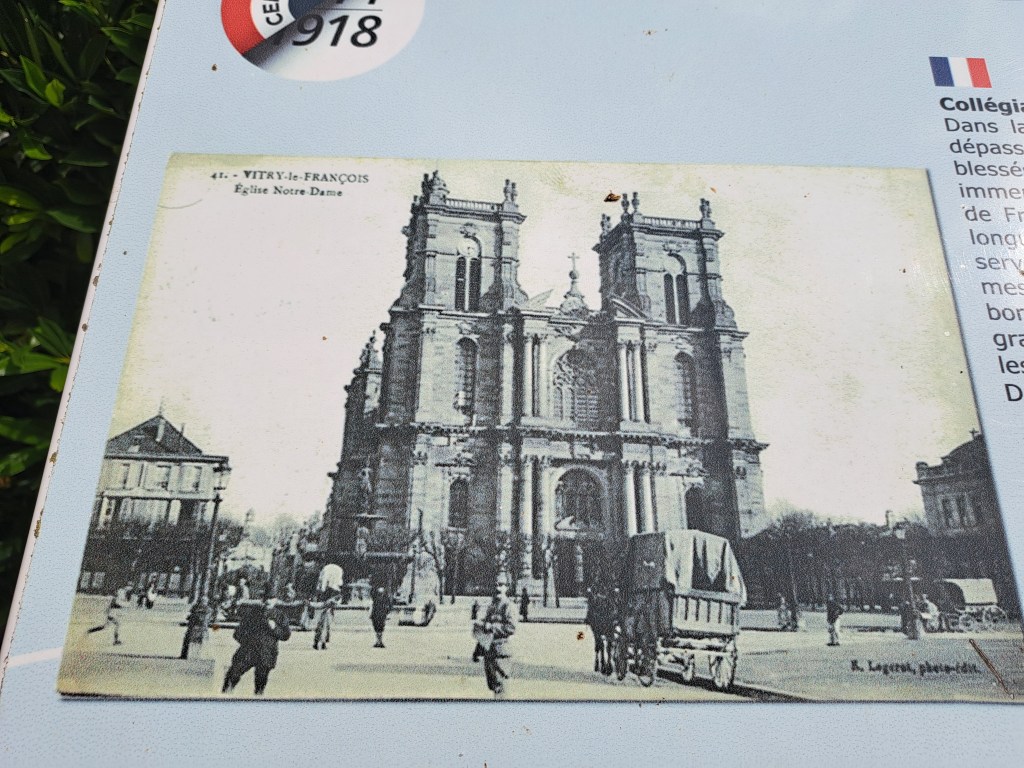
We walked here from Vitry le Francois, which is a fine little city buzzing with life and completely unpretentious (apart from the guy in the bar last night who had a very swish pointy beard and very trendy looking attire). We got to Vitry down the canal-side path which has been completely renovated and tarmacked from before Conde sur Marne (we used it to get to Conde instead of following the GR route) and from Chalons en Champagne we have used it, mostly, instead of the GR.
As well as being more direct, it is a better and easier walk (flat, smooth, hazard free, often shaded and with just as many villages along the way). Grand Randonee routes can only be granted their status if their total route consists of below 15 or 20% paved/tarmac surface, so these routes wander off into the countryside and very often avoid going into towns or villages. This might be great for day walkers, but pilgrims, on the other hand, need to be more direct with their route, need to walk through places (for shops, bars, etc) and need to find places to stay.
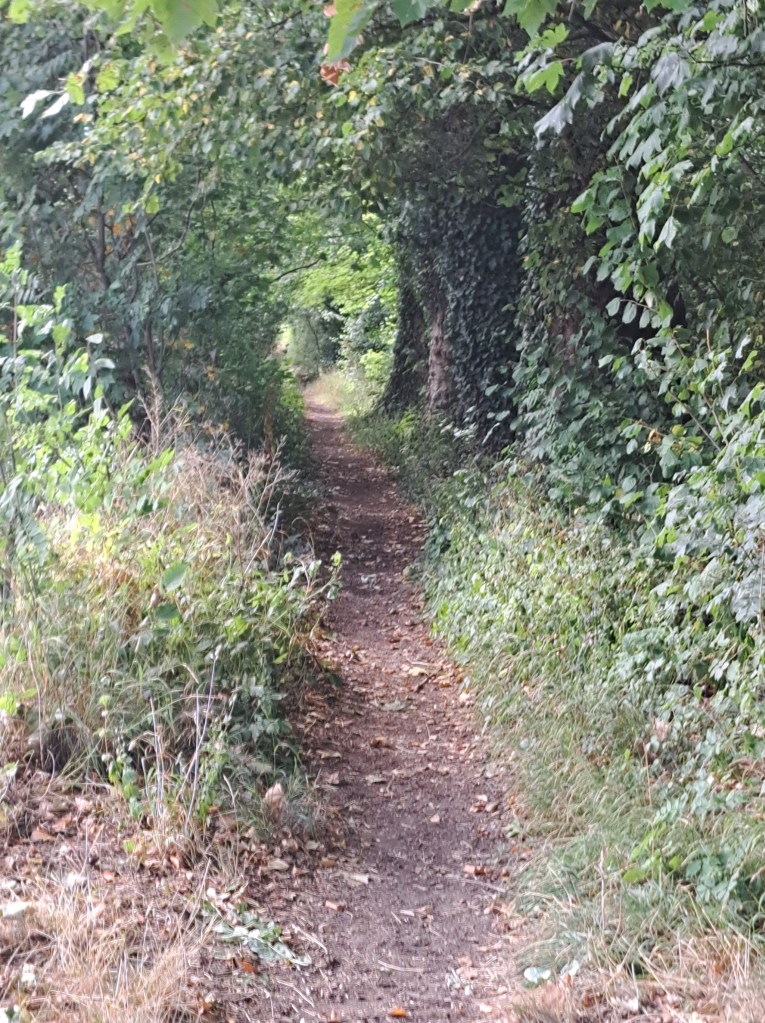
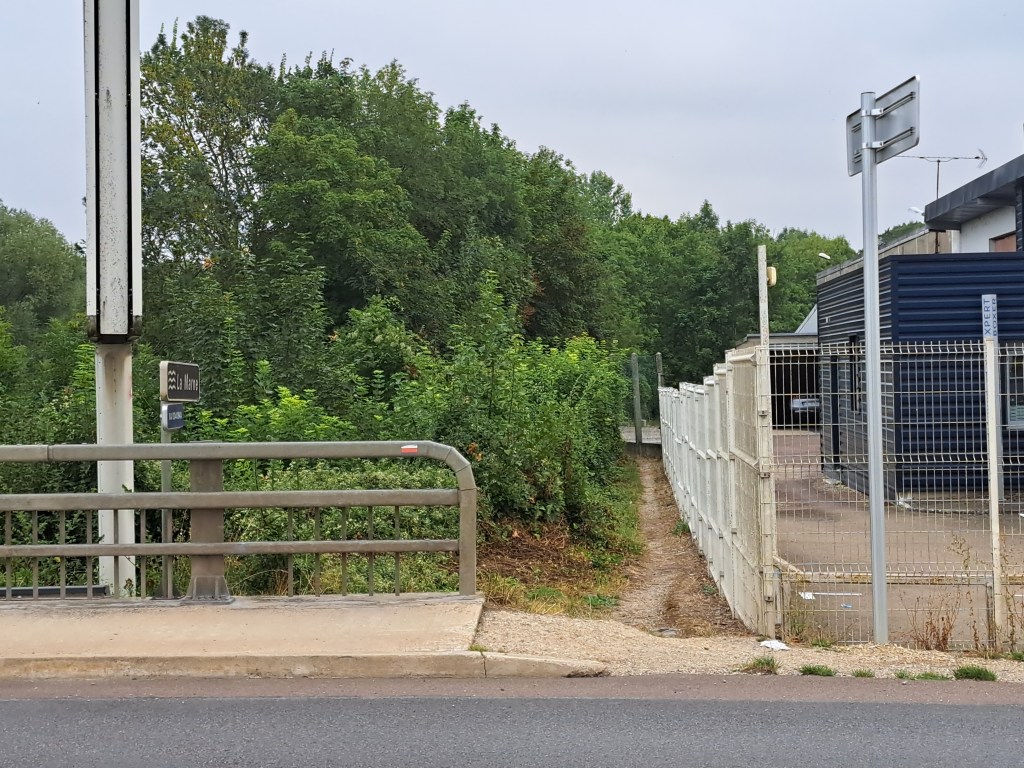
So as well as detouring to Beaumont sur Vesle to find somewhere to stay, we used the canal to keep us on track, etc. And, when we arrived on the outskirts of the city of Vitry the canal took us directly towards the centre of town and the GR skirted around the edge of the city, never getting near anywhere to stop, eat, drink or sleep. Oh, and the GR route was very narrow, overgrown and unpleasant to walk – we checked some of it out.
Our accommodation had been the main driving force determining where we stay as we go.
Where possible we had planned to try and utilise the Amis, or friends, of the route and find accommodation with them, but August has severely limited us as many of these good people are away during this period. In Laon, we wanted to stay two nights and when we do this we never seek accommodation for pilgrims as that would be hogging places that other pilgrims might need. When we stay two nights we always want a cheap but central place where we can cook/prepare our own food and, importantly, wash all of our clothes in a machine! So, that’s what we did in Laon, but, as the woman who would have taken us in was actually around, we visited her on our day off to have a chat, etc.
She was an amazing woman of some eighty years, thin but not frail, with a bright sparkle in her eye and a sharp tongue, too. She told us about some of her guests and how a few of them plead poverty and want to stay for free, then want to stay extra days. She said she has the space and is glad to look after pilgrims but doesn’t like some of the approaches pilgrims can take. Despite this she seemed really happy to be a person who could serve the pilgrim community (a community that she was a part of, too).
We could understand why she had people staying longer than planned. Her home is extraordinary and beautiful. If you walk along the narrow medieval road by the side of the cathedral in Laon (a town perched on a very high rocky outcrop that towers over the surrounding landscape) you will see a streetscape enclosed on both sides with mainly high stone walls interspersed with high wooden gates and small doors. The gates often have a smaller door set in them and one of these has a door bell. Press it and madame eventually lets you into a large cobbled courtyard with ancient buildings on the other three sides. Many flowers, plants and shrubs soften the old stone and add bright colours, the windows are open and hint at fine, beautiful rooms within. She ushers you through the main door of the house into a wide hallway with an ancient wooden staircase that sweeps up into the place, its walls lined with old oil paintings and ornaments on pedestals and it has a fine carpet drawing your eye upwards. But your interest is immediately stolen by the big French windows opening out onto the lawn of a beautiful and venerable, well stocked garden within walls that surely delimit where the land suddenly drops to the vast open space beyond. But she turns you into another wonderful room full of books and desks overflowing with jotters and magazines, books and other documents. So much to see and yet you are taken through this into a huge, wood panelled room with a big open fire surrounded by a large 18th century marble fireplace, many more paintings a massive dining table littered with so many interesting things and an ancient typewriter, obviously still in use and then you sit past the table and near the fireside on fine old seats and a sofa older and in better condition that me.
We would happily have stayed there in other circumstances, but it was not what we had planned, and so we told her we looked forward to enjoying her welcome the next time we walked through Laon. We had a lovely conversation and left to do other things and find lunch.
As a bonus, later that day when we sat down to lunch just in front of the cathedral, Madame arrived and sat next to us, so we were able to continue light chatter as we ate our lunches. It is one of her favourite places to eat, and she enjoyed a good banter with the people serving and running the place, chatting with people at other tables, too… and her appetite was formidable.
So, as I have said, we have stayed in a variety of places including studio flats, hotels, gites of various sorts, campsites (in our tent) and chambre d’hotes, but it has not been easy to find much standard pilgrim accommodation run by pilgrim associations and local communities.
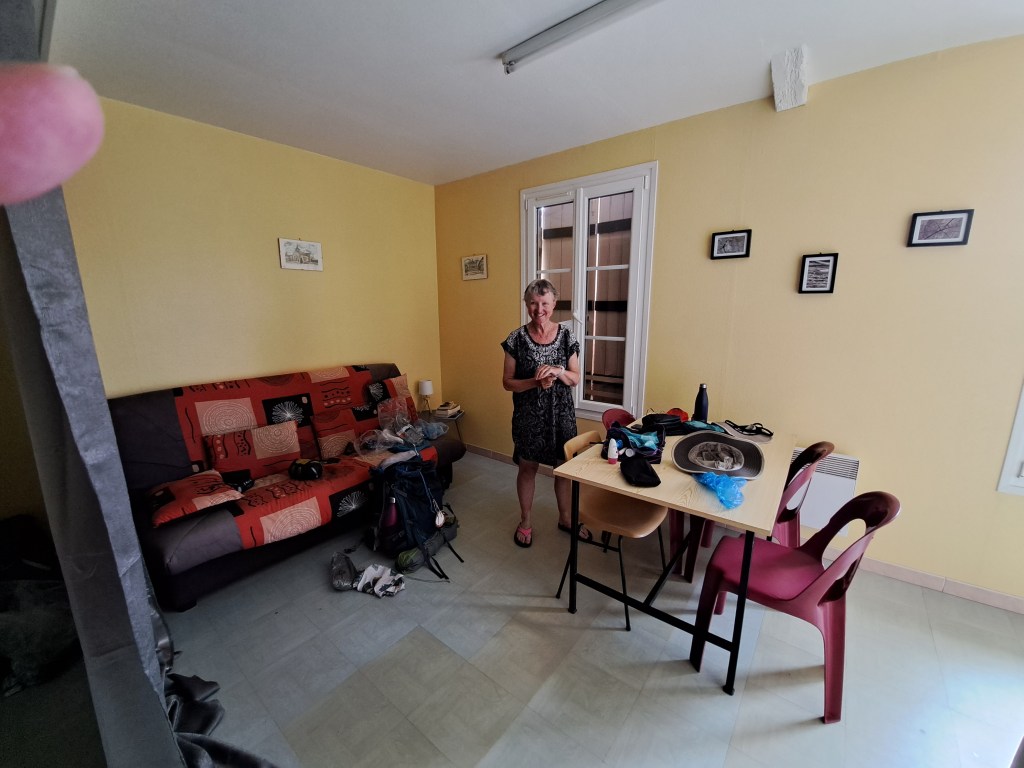
Today is our first real taste of what is possible on a pilgrim route if the community in a place thinks it wants to offer pilgrims places to stay.
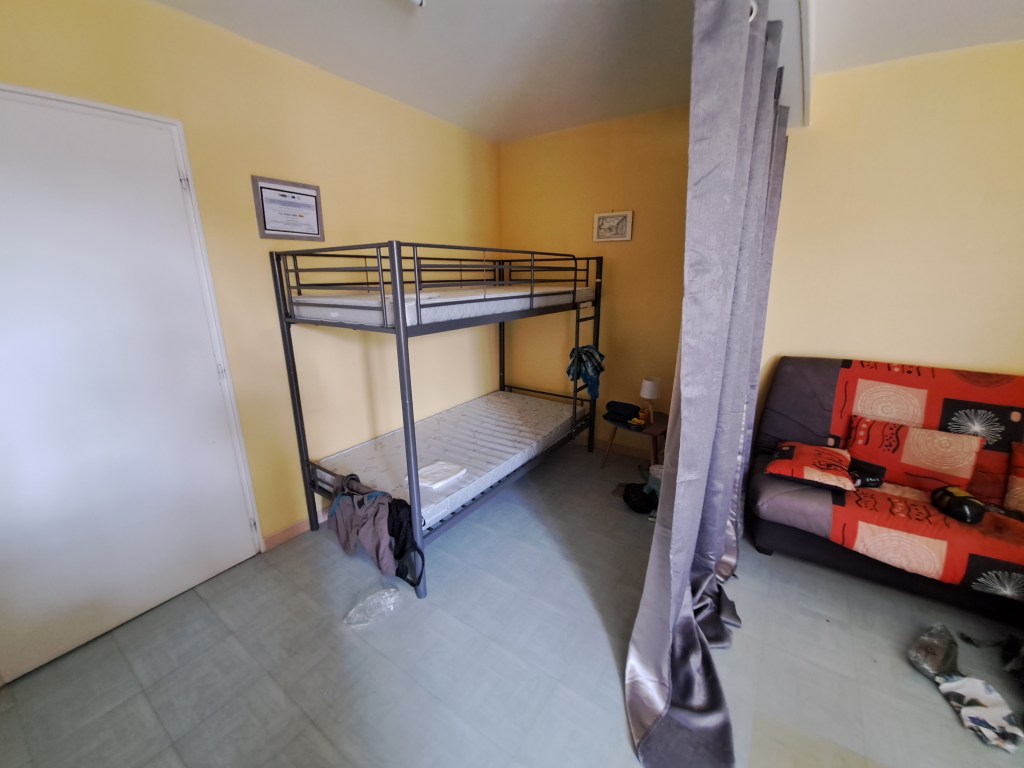
It is a first floor room that has been kitted out for pilgrims. It has one set of bunk beds, a bed settee, a table and four chairs, a kitchen area with sink, 2 ring hob, kettle and microwave, a fridge and a cupboard with the usual cookware, crockery and cutlery, etc. There is also a shower room and a toilet. With the donations they have been collecting, our hosts are planning to buy and install a washing machine, too.
And the cost for the night? It is what pilgrims call “donativo” – i.e. you give as much as you can afford.
On other routes in France we have stayed in a variety of different versions of the same thing. Either the parish, a group of local Amis or the Mairie will find a room, or a small cottage or something similar. Often, as well as the facilities above, the community will either have a cupboard with basic cooking ingredients and even some wine, and will ask the pilgrims to pay the rate suggested using an honesty box. Sometimes the cupboard is locked and the volunteer host will open it and sell you what you want. Either way you don’t have to keep carrying food and drink for the evening (like we’ve been doing) and you don’t have to worry about the total lack of shops and other facilities as you walk through the French countryside.
Tonight’s place didn’t need to sell us food as there was a shop actually in the village – a very rare occurrence indeed!
While making us happy that we were able to stay in such a place, we were a little sad and frustrated that there were so few of these on the route, especially as this section is assigned as both the Camino de Santiago and the Via Francigena. We hope, we will pray and we will seek to encourage other communities along the way to set up similar facilities for pilgrims.
But it also emphasised the fact that pilgrims are pretty thin on the ground here (and along the whole of the route so far). There is a bit of a chicken and egg thing going on here, of course. Walking in France is not cheap, so people do it with a strong heart, a good bank balance and a few tricks up their sleeves (e.g. our tent). So, the expense puts people off and they go elsewhere, leaving the route quite empty. But with a lot more places like today’s, the equation would improve and more people would come, which would spawn more accommodation of different types and actually regenerate the small towns and villages that the route passes through.
When we walked on the Voie de Vezelay in 2010 there were a few places like this and some other types of pilgrim friendly accommodation that made it possible to do the route without breaking the bank. Since then, the two to five pilgrims a day has grown substantially and both the accommodation and services on the route have really grown too.
Given the emptiness of much of this beautiful countryside, and the serious lack of facilities along the way, it could seem like a hard ask to change things. But I feel that if you want a very quiet route with the chance of never meeting another pilgrim on your way, then you better get on this route fairly soon because I think that it will not take very long for the people here to click on to this new opportunity and numbers of pilgrims here will start to rise along with more facilities and accommodation.
Dear friends, I wrote this a couple of days ago and want to add a quick note or two before posting it as we have the internet tonight (weak, but present) and the next night or two may not have even that.
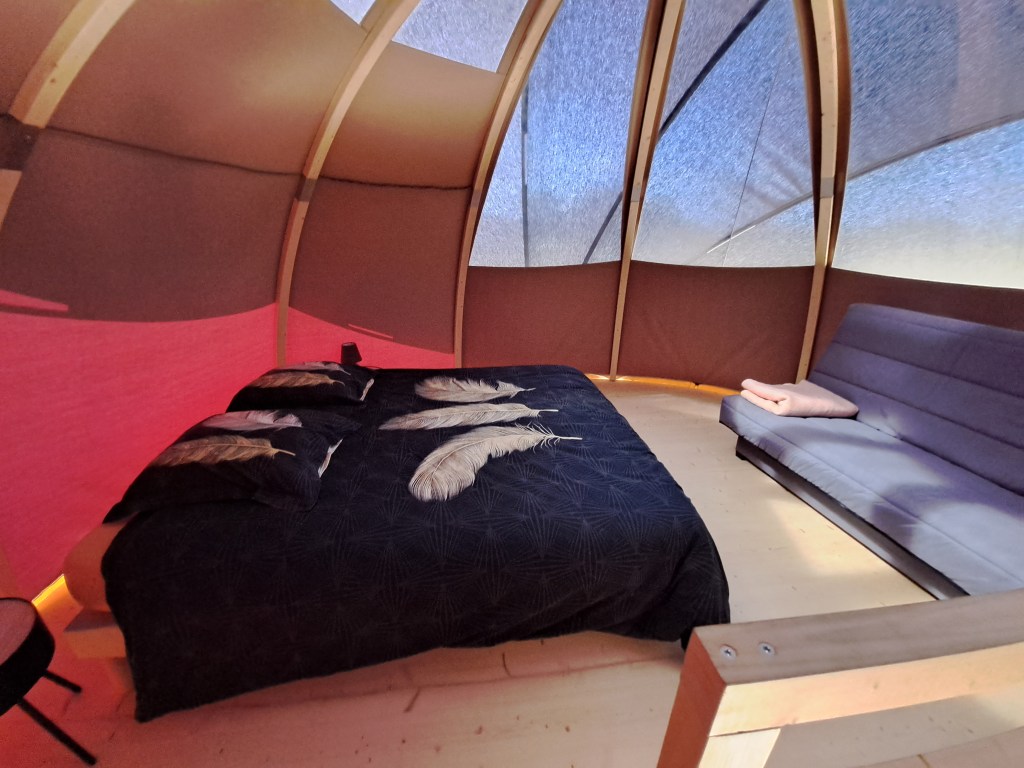
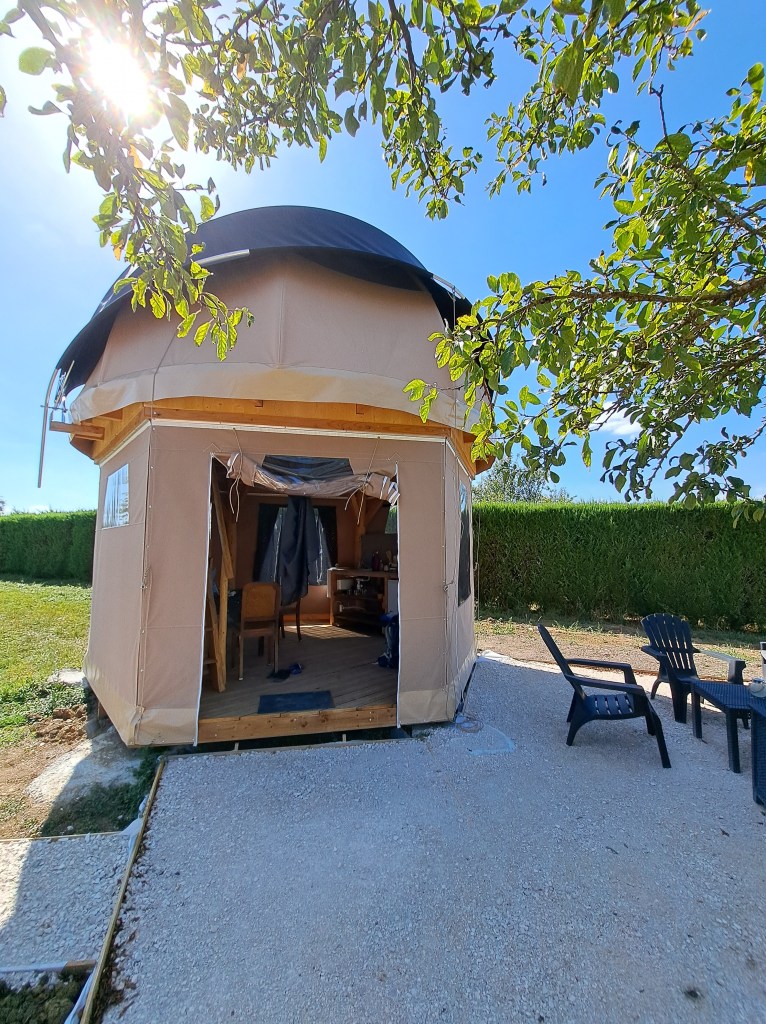
Last night we stayed in a new place (opened in July) run by lovely couple who have taken a farm house and farm yard and are running it as an eco-friendly gite d’etap. They live in the large square house made of brick and dating from the end of the 19th century. It is connected to the half-timbered barns and farm worker’s cottages by a huge, half-timbered gateway and beyond the farm yard and behind their house they have set out a series of three big, modern dome-shaped, wooden-framed tents (called boules in French) with all facilities and a double-decker tent looking pretty much like a champagne cork where we were staying. The farm worker’s cottages is a separate gite they rent out, too. Beside the tents there is a pool with a sliding, arched cover and there is also a large jacuzzi.
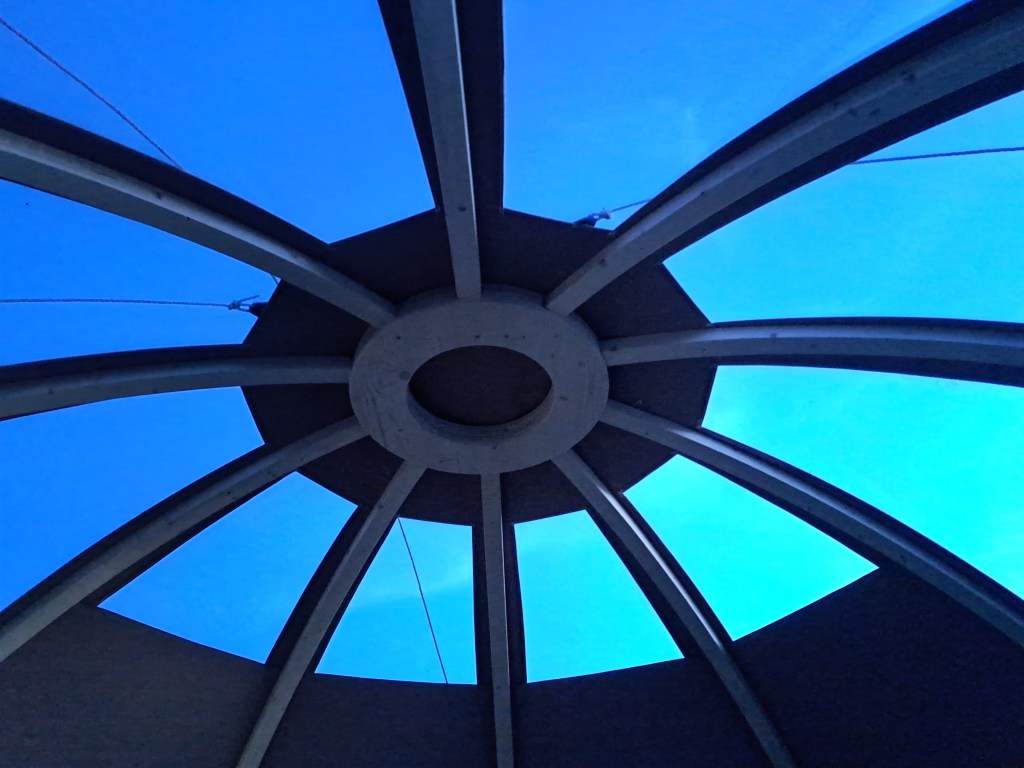
Our tent had a living, dining and kitchen area on the ground floor (with a loo under the stairs) and a double bedroom up stairs with a large settee and a see through roof that was kept covered by a cover that looked more like an eye lid that opened at night than anything else I can describe. So, after a very nice meal we retired upstairs and enjoyed a star and moon lit night in a very comfortable bed.
OK, so we were glamping! What can I say?
Didier and Sandrine, the lovely couple who were our hosts, locally sourced all of the food and drink they served, knew the farmers and butchers, brewers and cheesemakers, etc and made every effort to ensure everyone was really welcome and looked after. They were very keen to find out more about our pilgrimage and were excited by the prospect of having more pilgrims coming their way (we were both the first pilgrims and, as we paid by card, we were their first card paying customers so we had to let Didier get it going before we paid). Didier is also working hard at learning English, something he realised he needed to do once they opened their doors, and he was impressive for someone who had started so recently (well, he was actually very good and was picking up new words as we spoke).
Their kindness extended to not charging us for our beers and aperitives last night, which was also lovely.
Tonight is a very comfortable chambres d’hotes (no other choices available) and tomorrow we are in our little tent again.
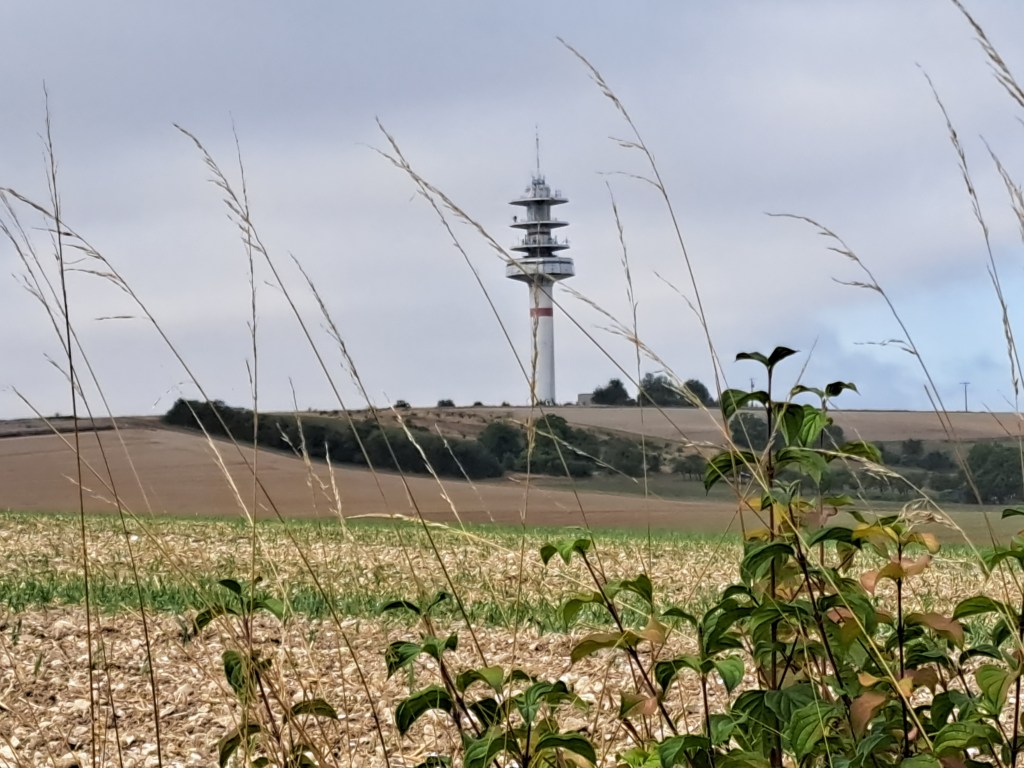
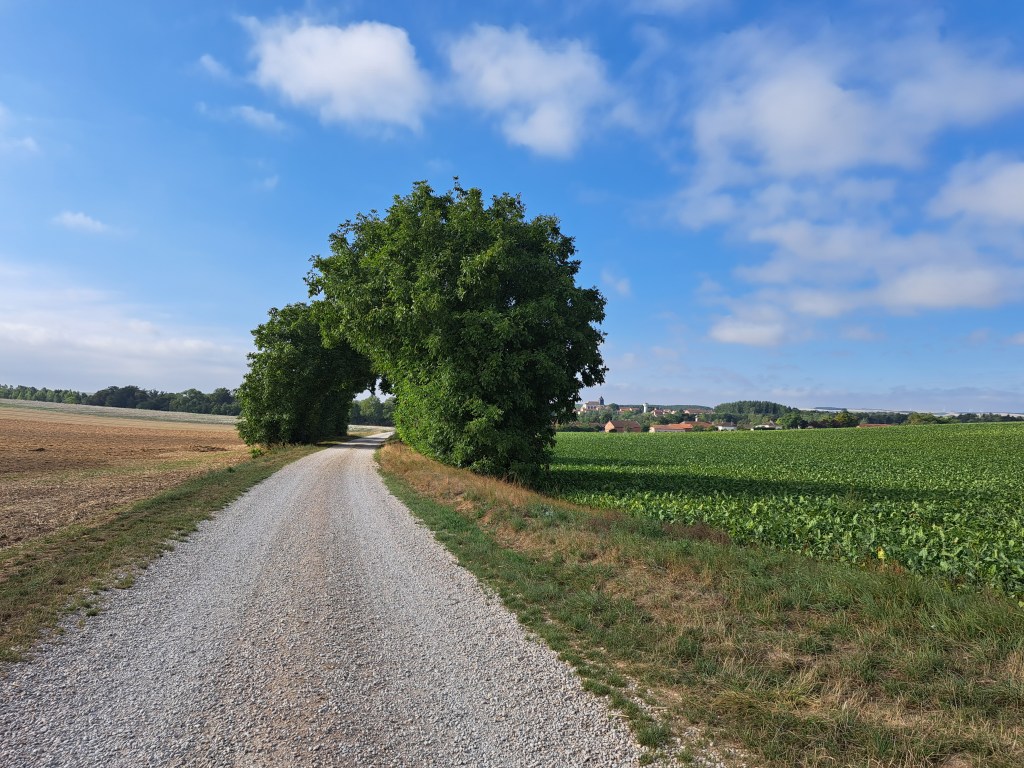
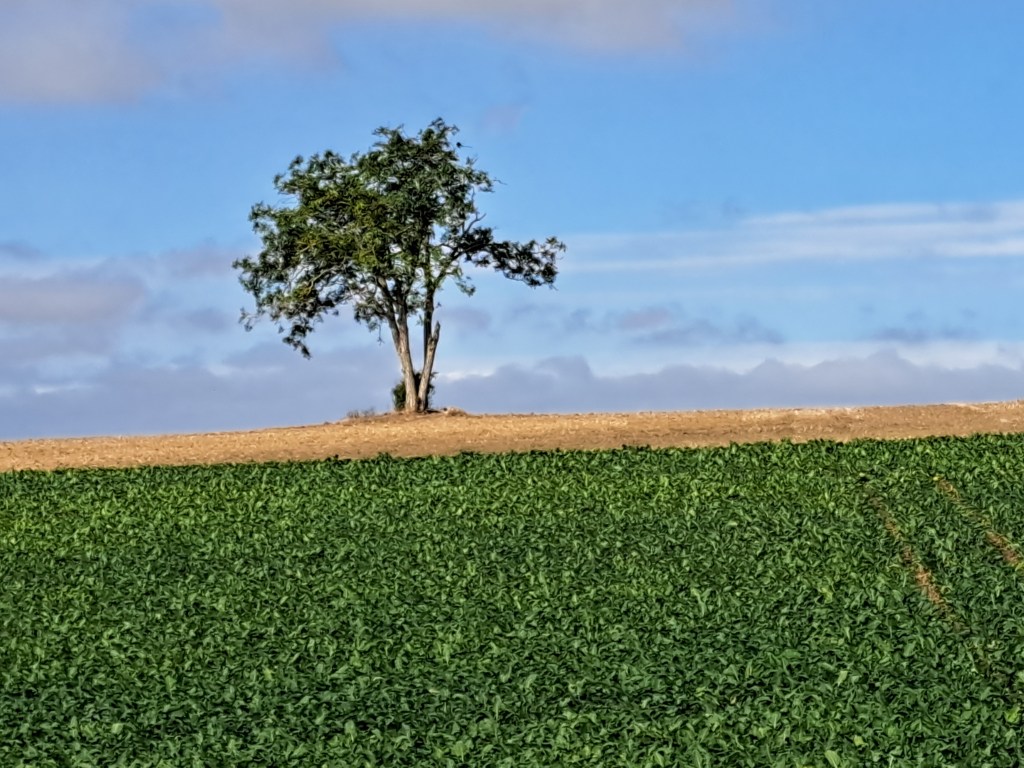
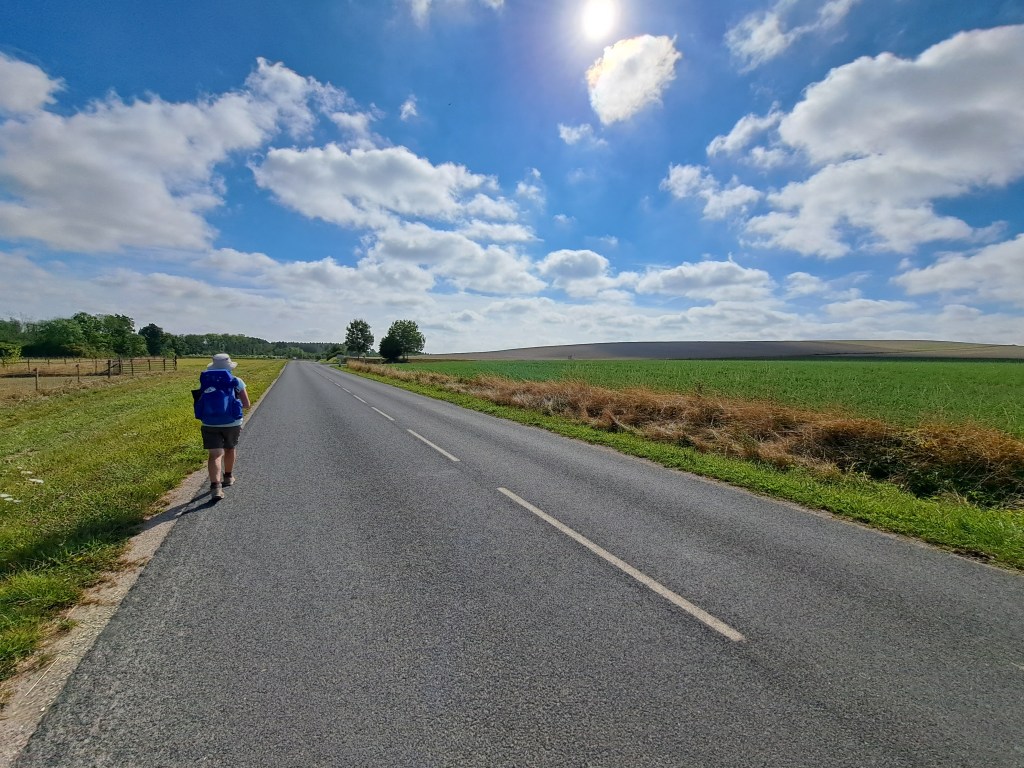
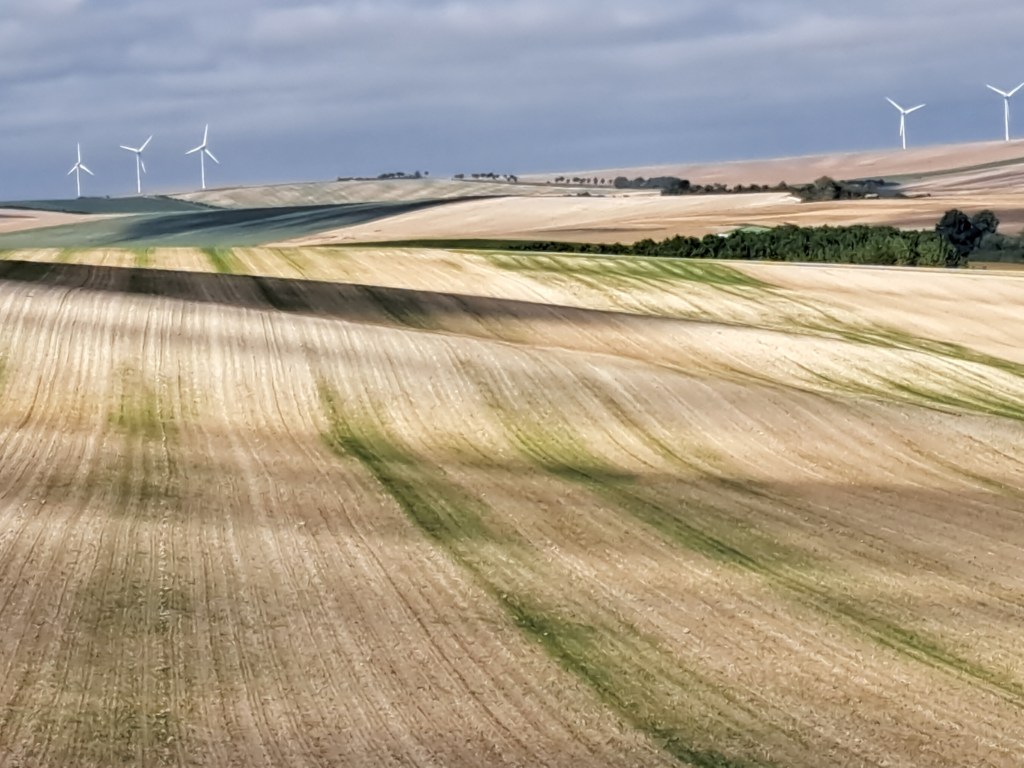
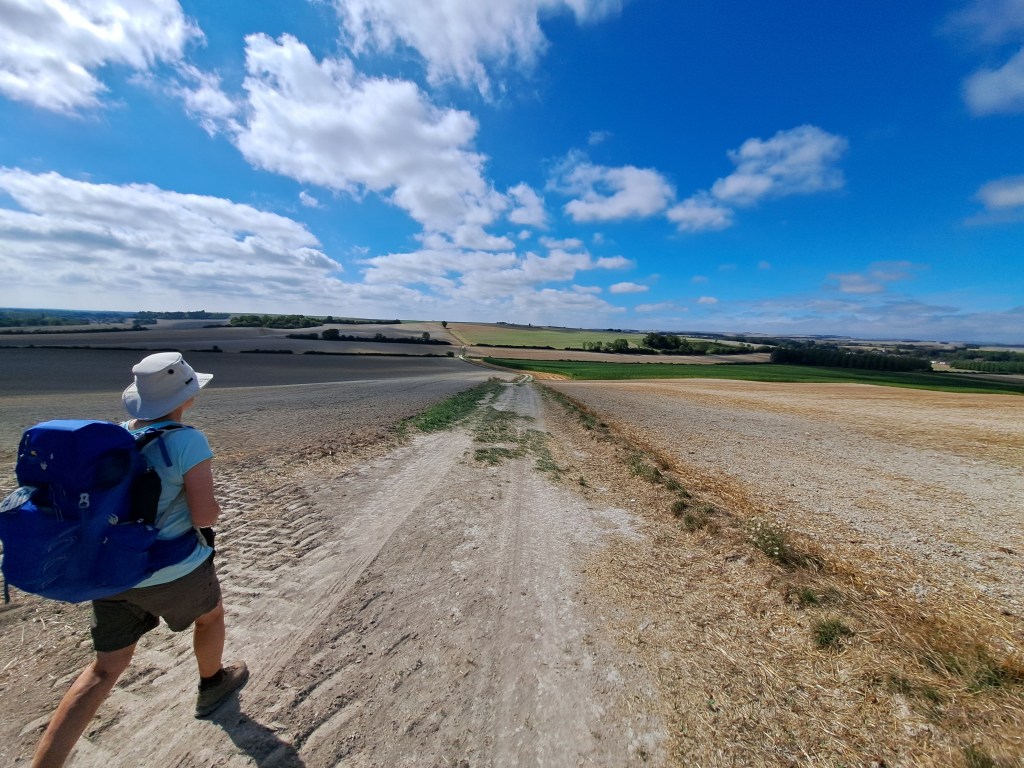
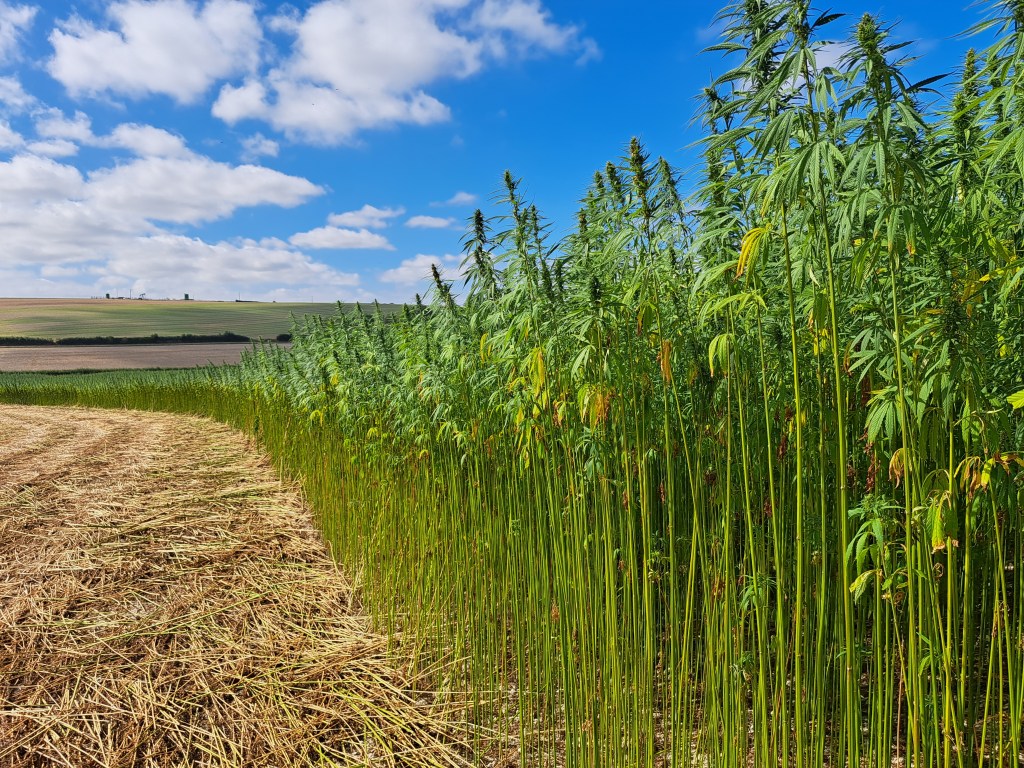
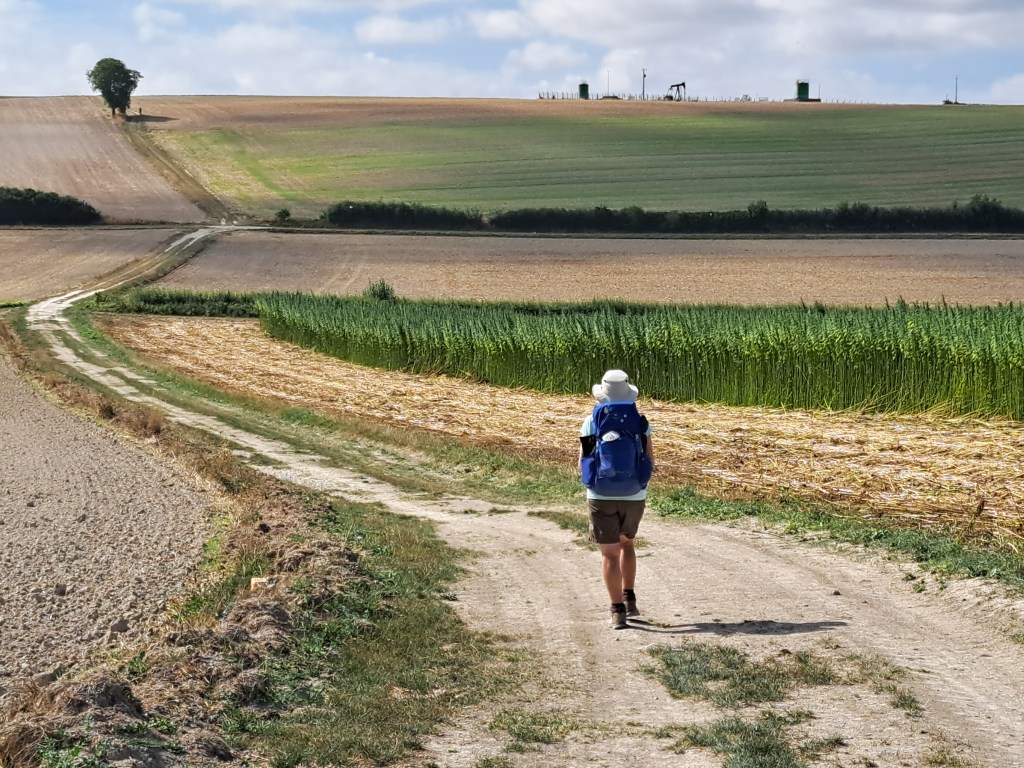
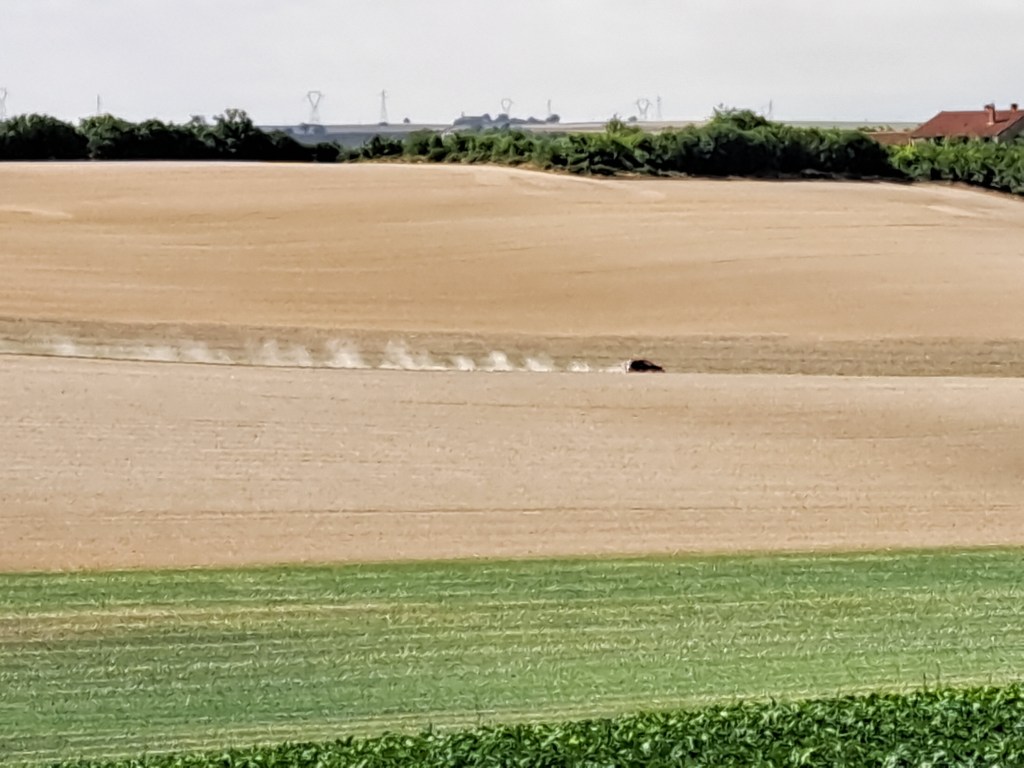
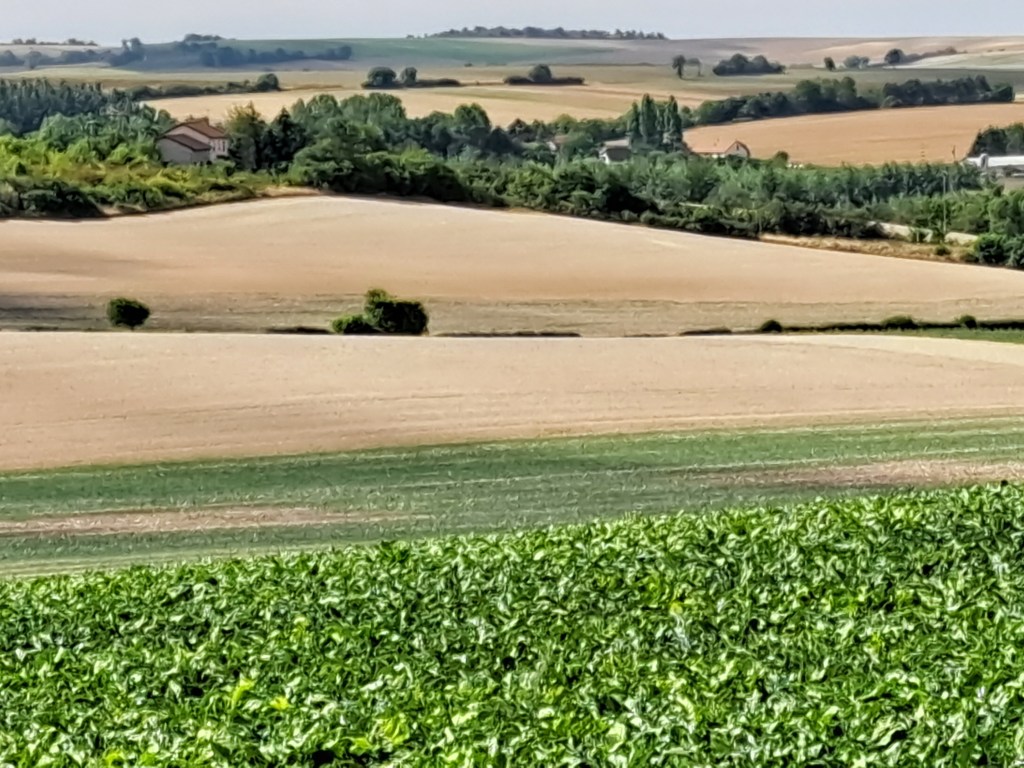
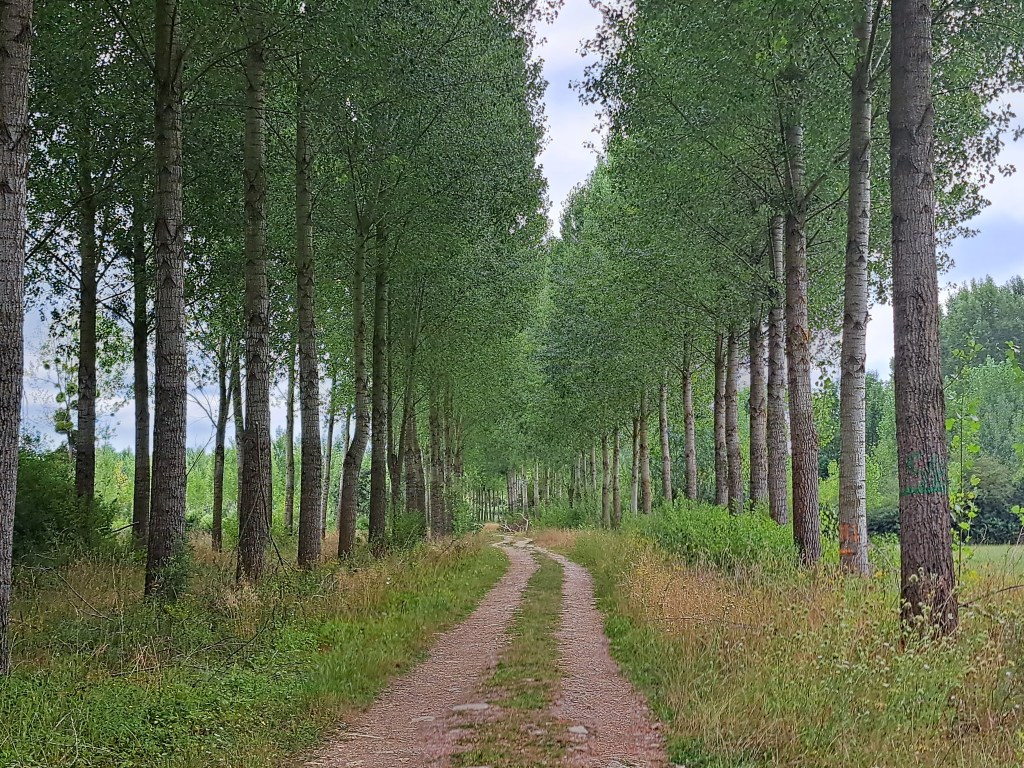
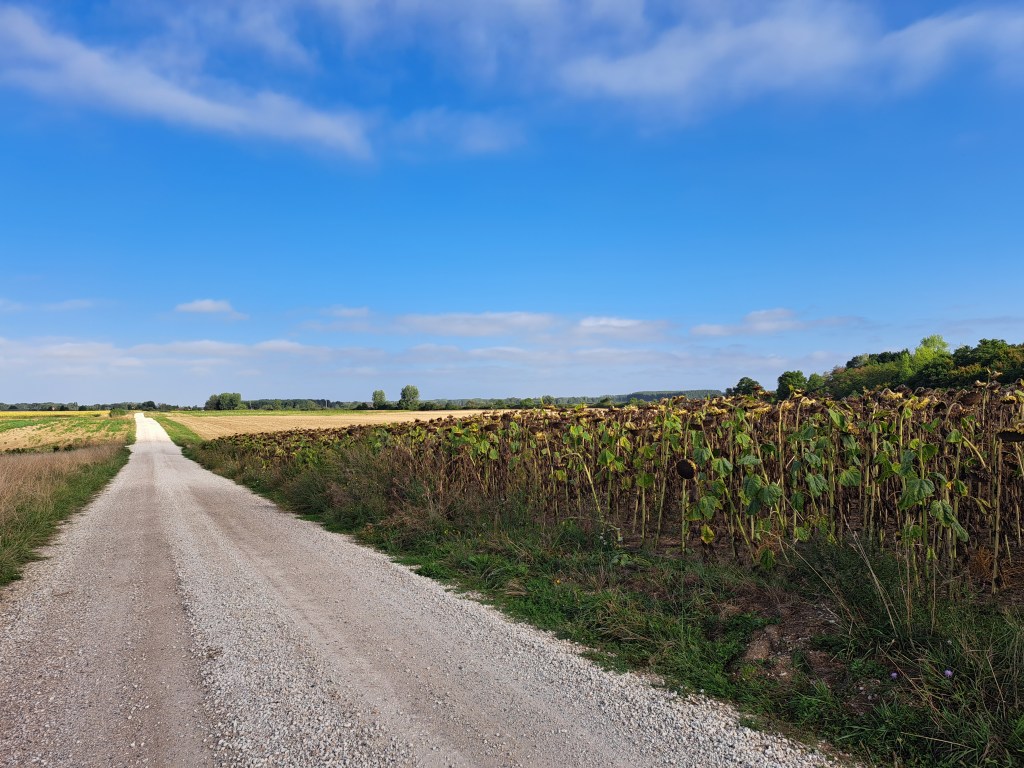
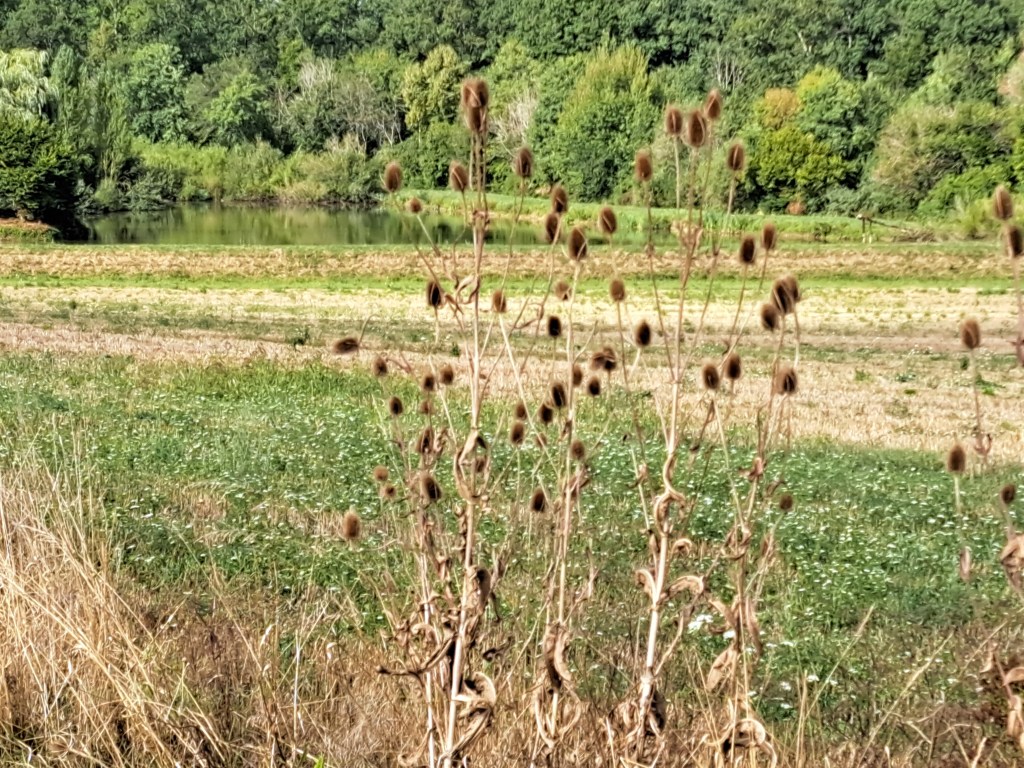
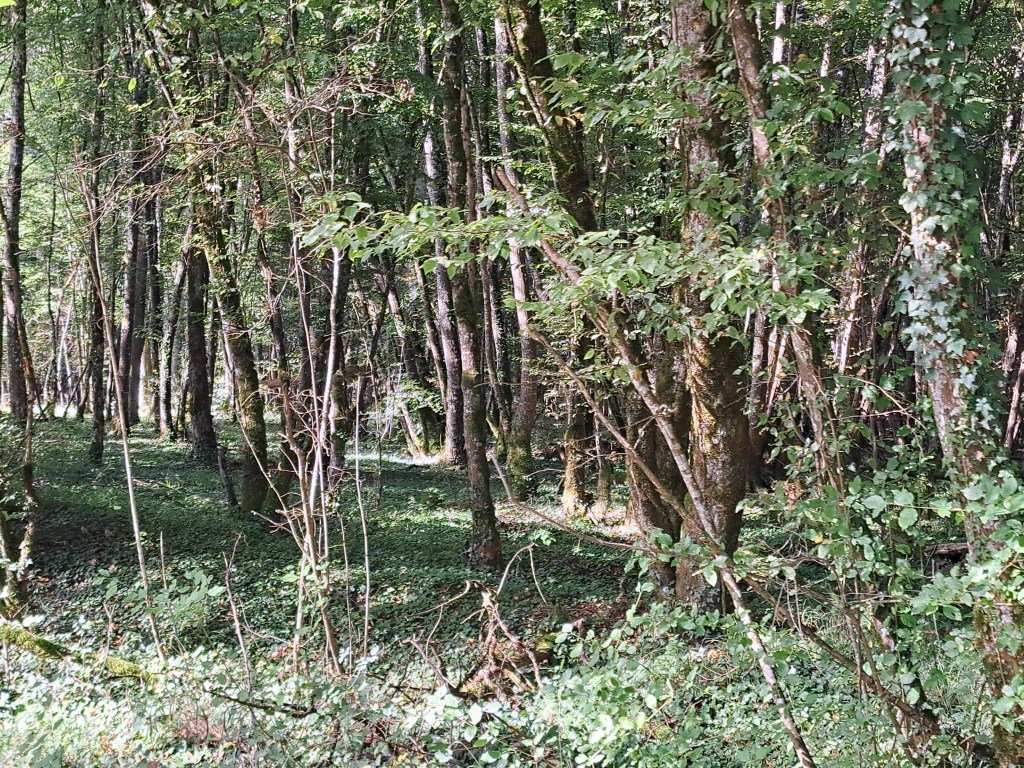
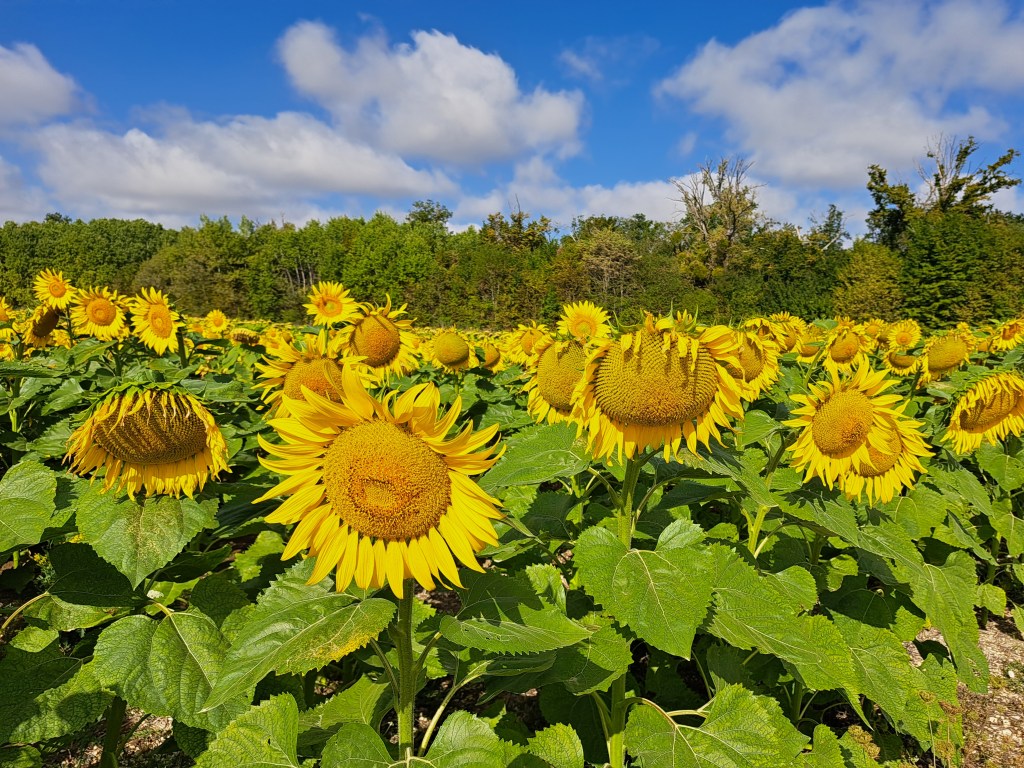
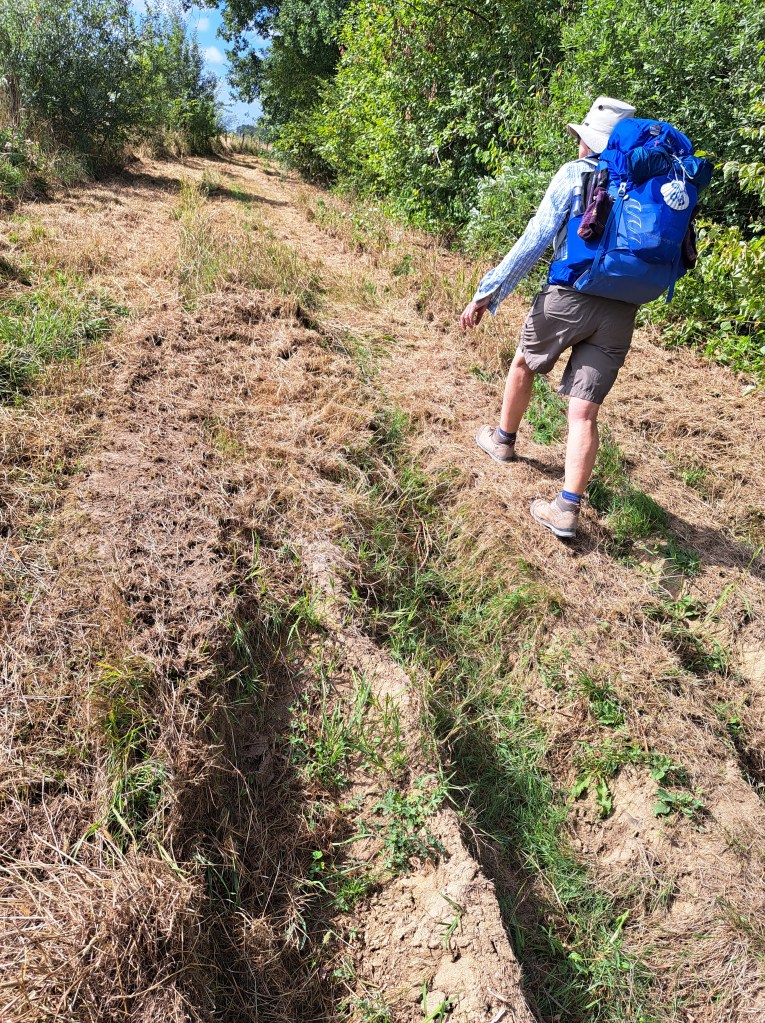
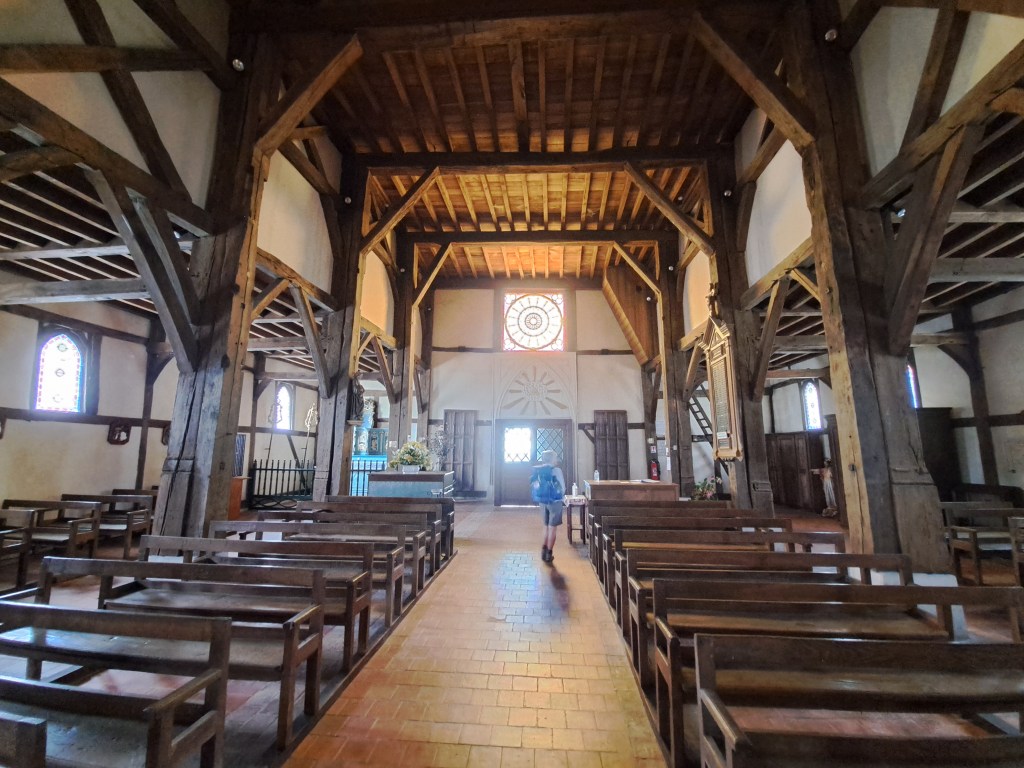
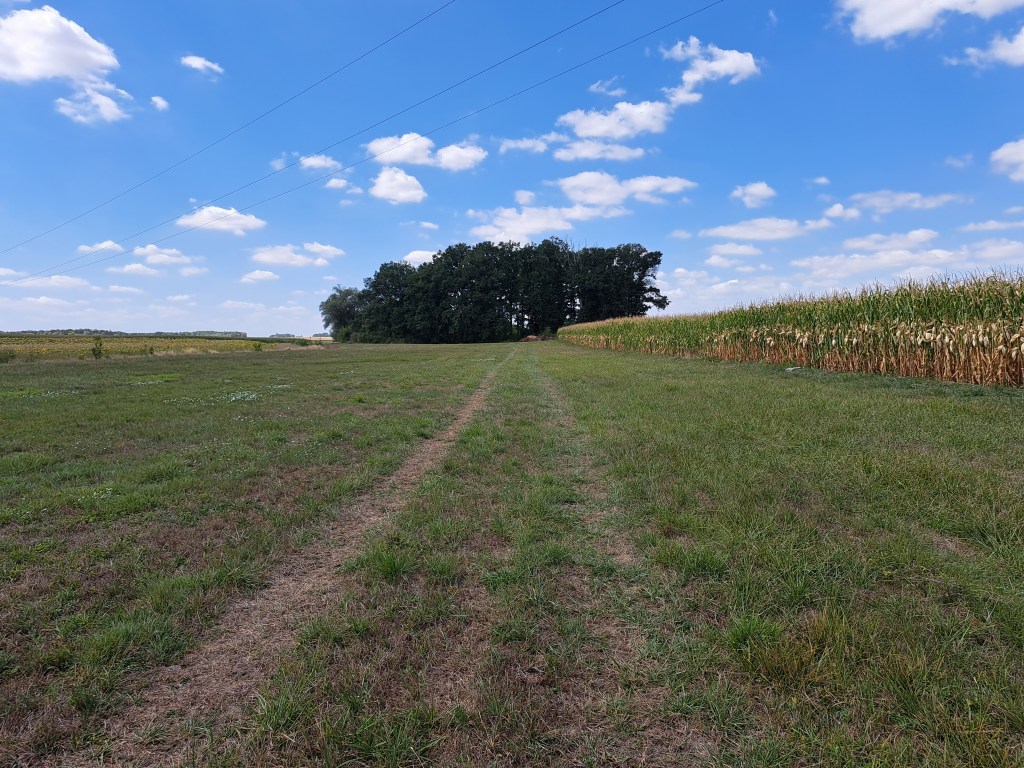
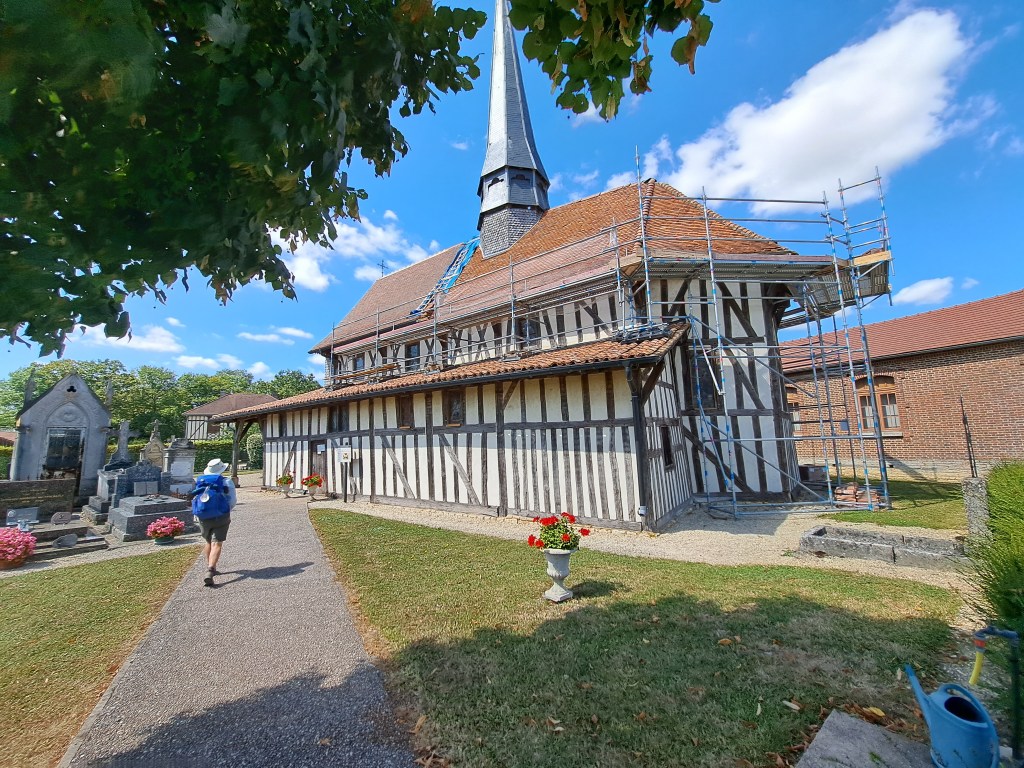
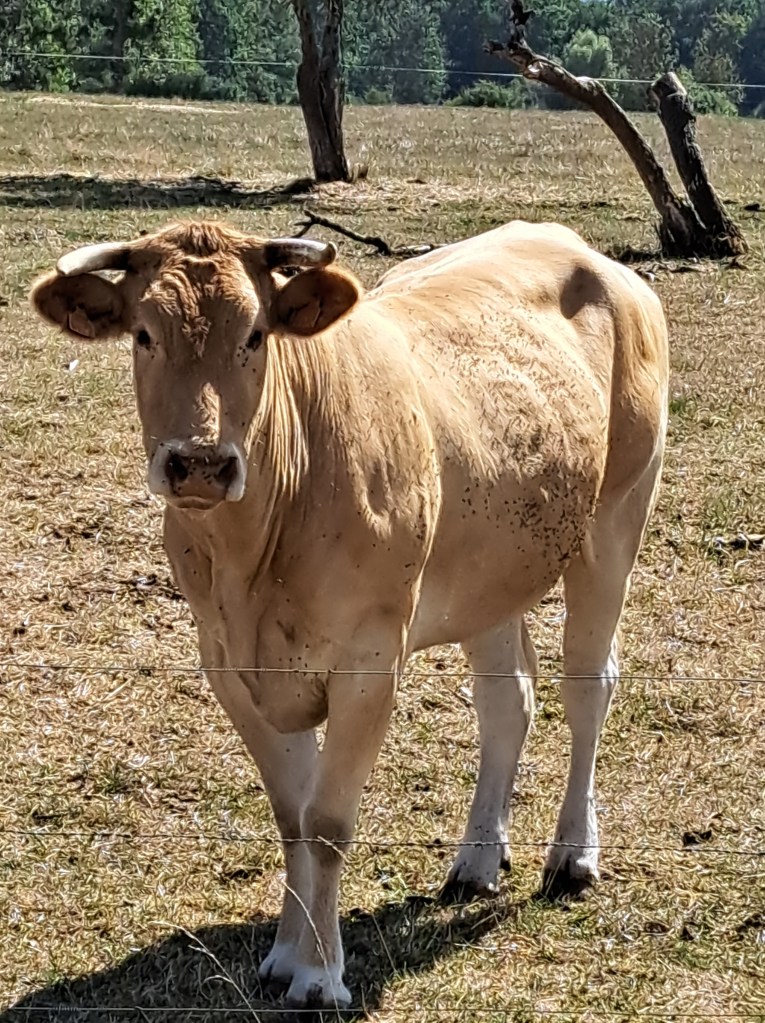
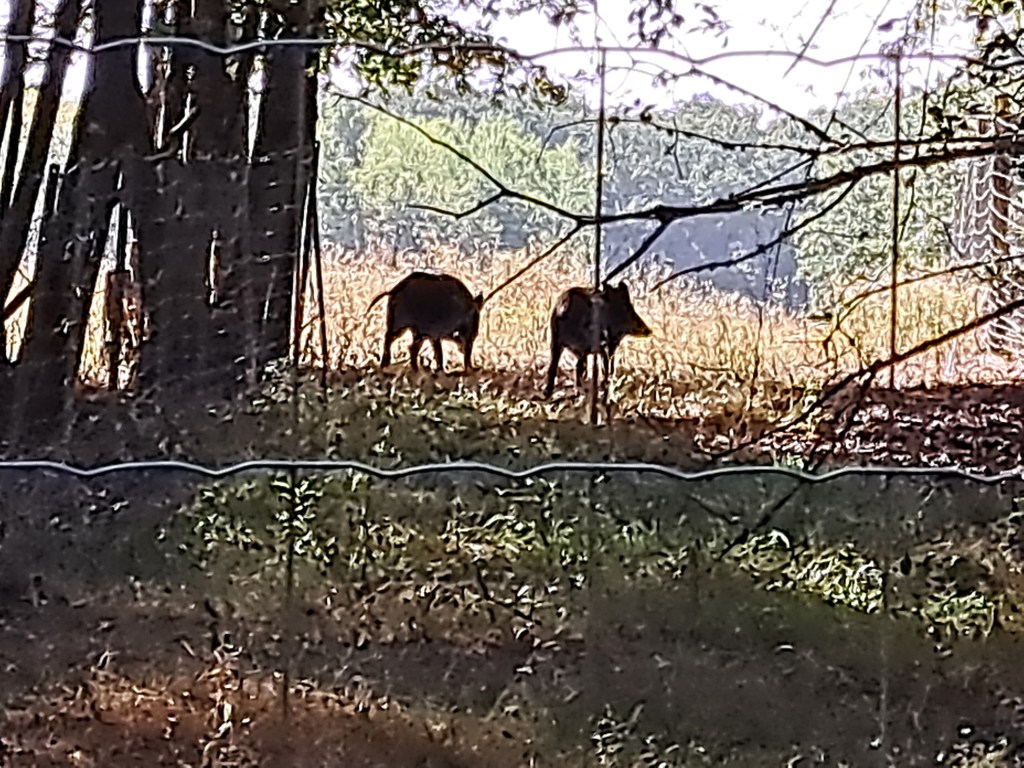
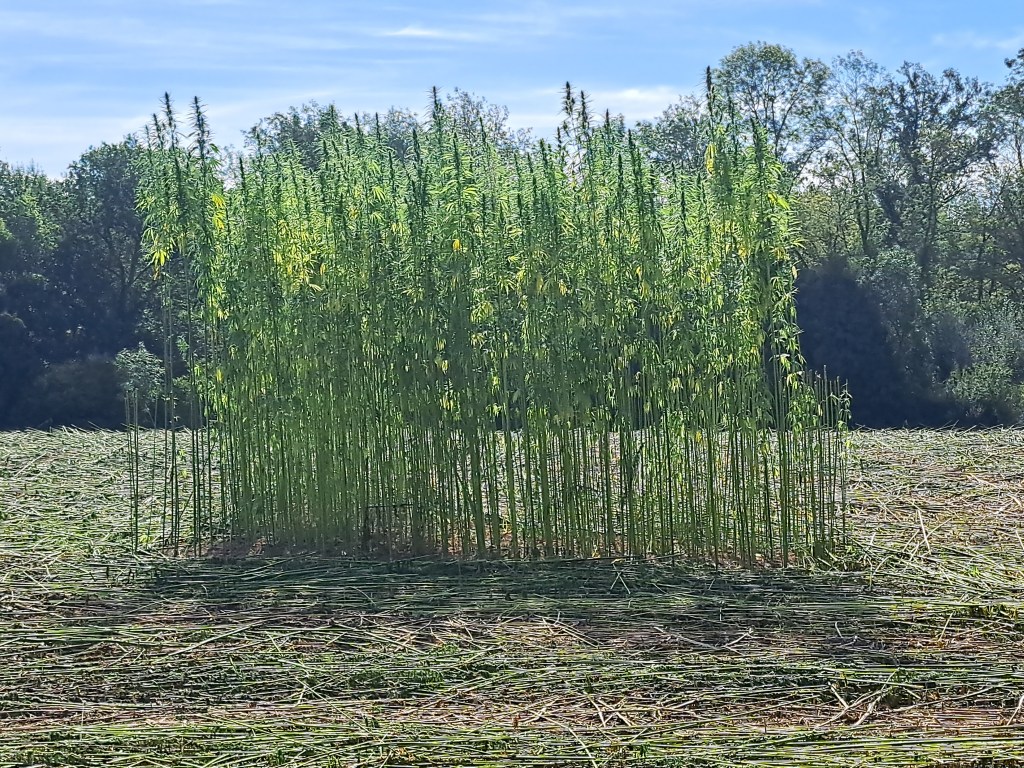
Just before I publish I also wanted to add that this region (l’Aube Champagne) is really lovely. The villages are seriously beautiful with amazing, mainly half-timbered churches that are all actually open, and despite having not shops, bars or boulangeries, they are well worth visiting (‘though I do work hard at trying to find a place with something!). The landscape is mainly rolling with some higher ridges a series of winding tributaries to the main river and some small and a couple of big lakes. It is partly wooded and mainly arable with the occasional small herd of cattle and the fields are vast, with some new additions to the usual crops of beets, maize and sunflowers (wheat, etc has already been harvested). The new crops include haricot beans and hemp. Interestingly, this morning we walked past a huge field of hemp, then onto a smaller, but longer field of now harvested hemp, but at the very end of the field was a small square of the stuff that looked quite different from the rest of the crop. A small square of, as yet unharvested “hemp”…. Anyway, in the woods we have encountered wild boar for the first time. We have known they were around since almost the first day in France but today we met three large ones and we were glad of the fence that separated us from them. They grunted and moved away but were impressive beasts. Great to see them, at last! We have also seen marmots and lots of other smaller creatures, so, despite the vast empty spaces there is still a lot of wildlife out there to encounter – and some of that wildlife carries rucksacks with shells on them…..











 How far can we go?