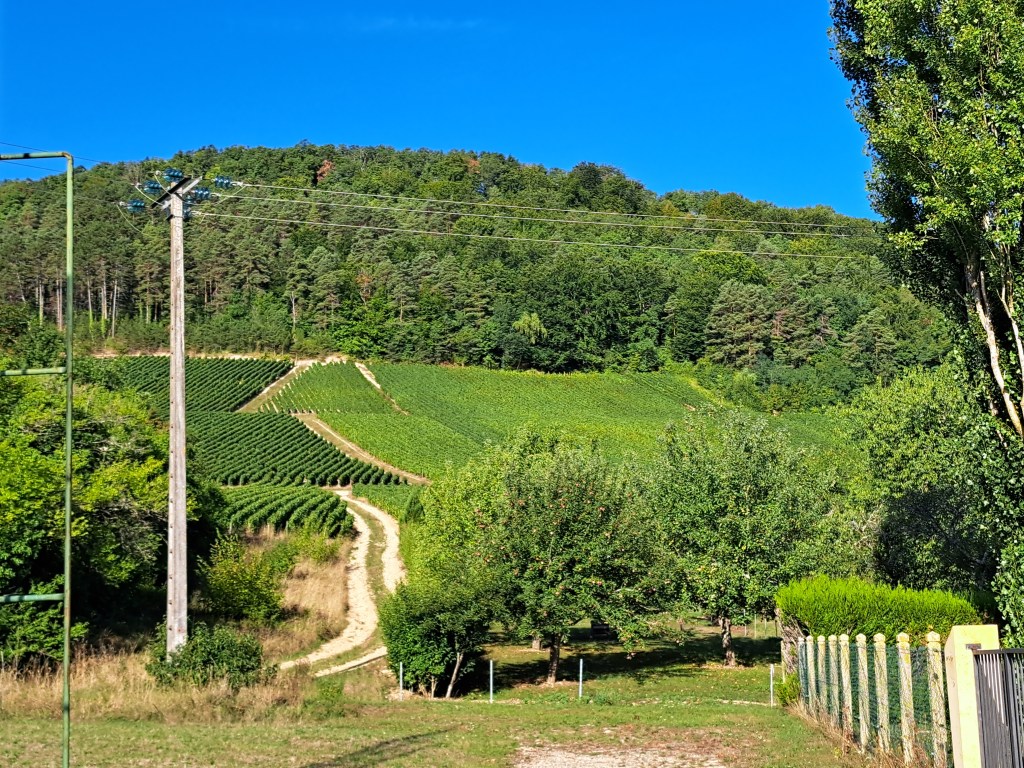
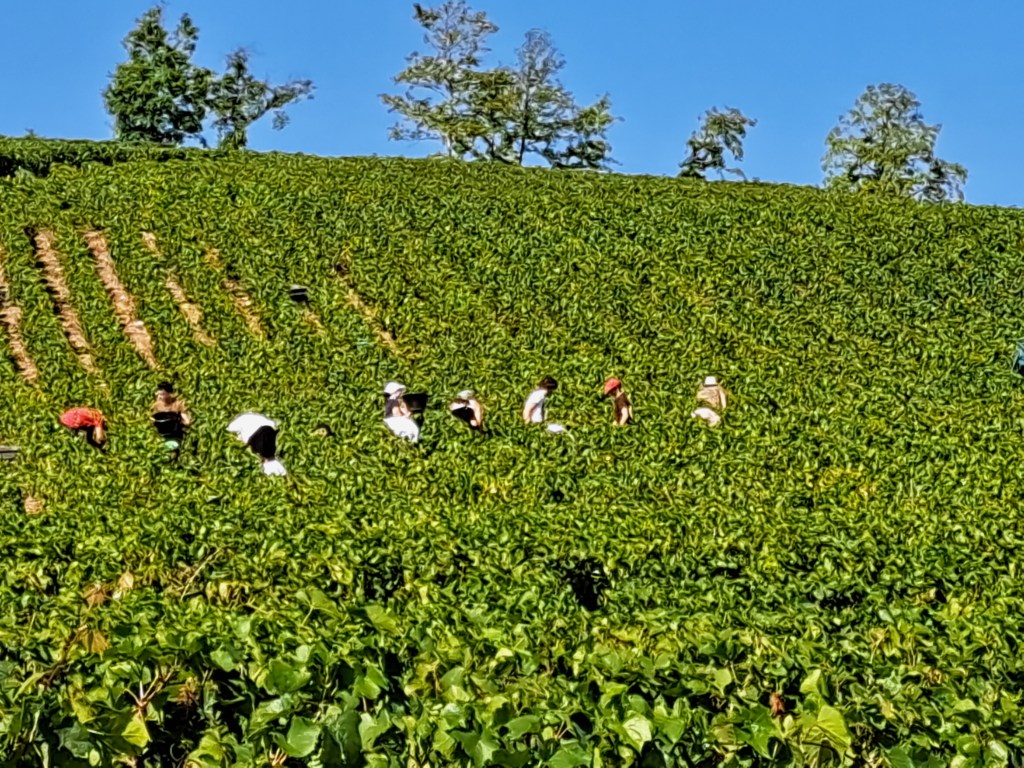
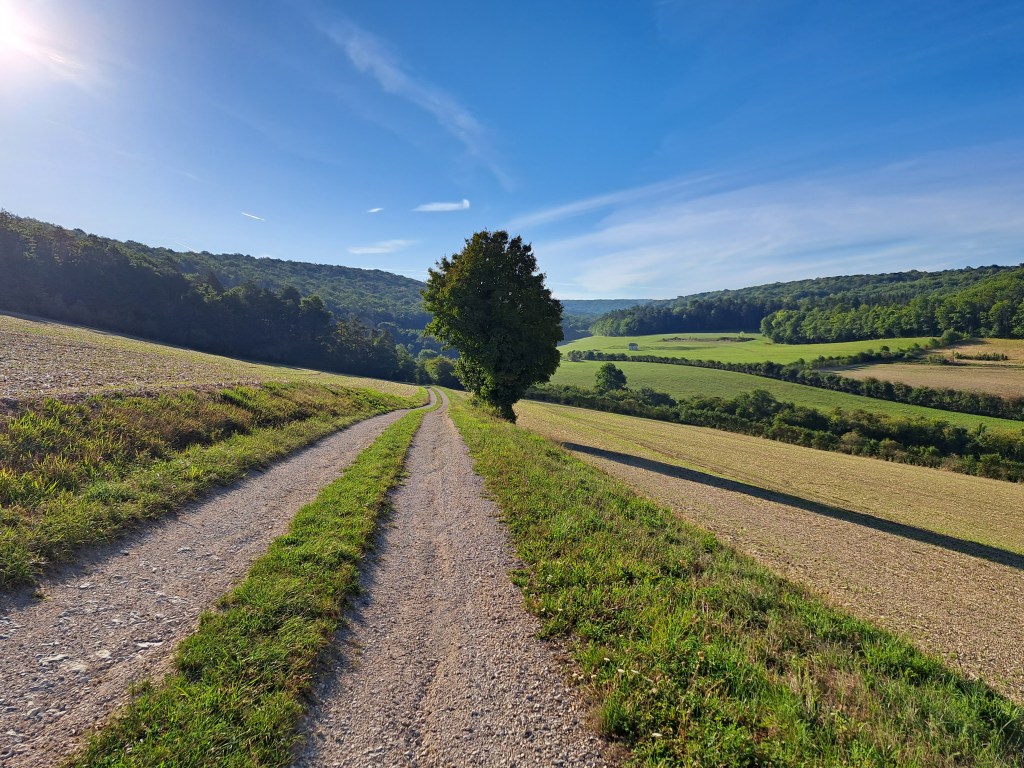
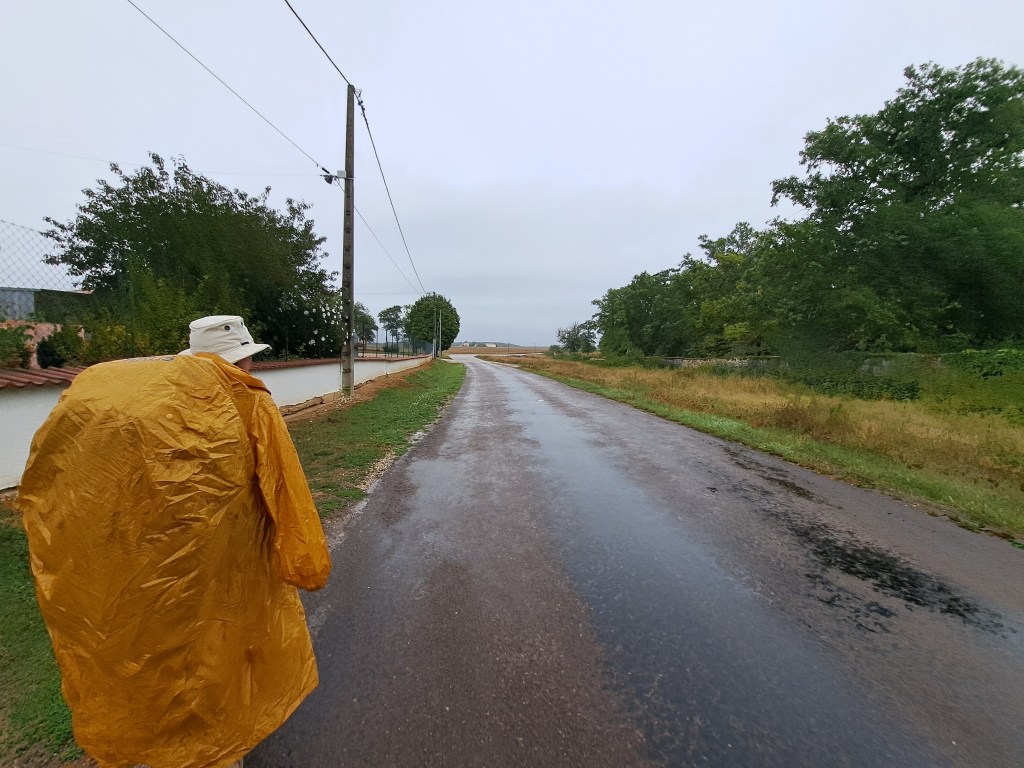
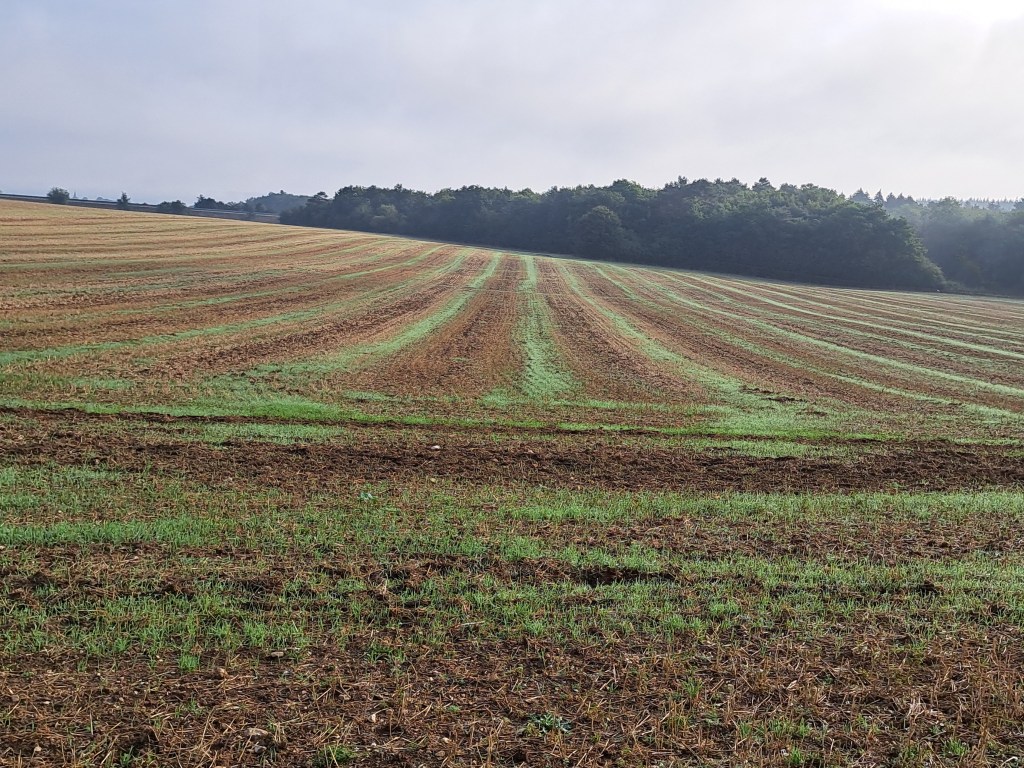
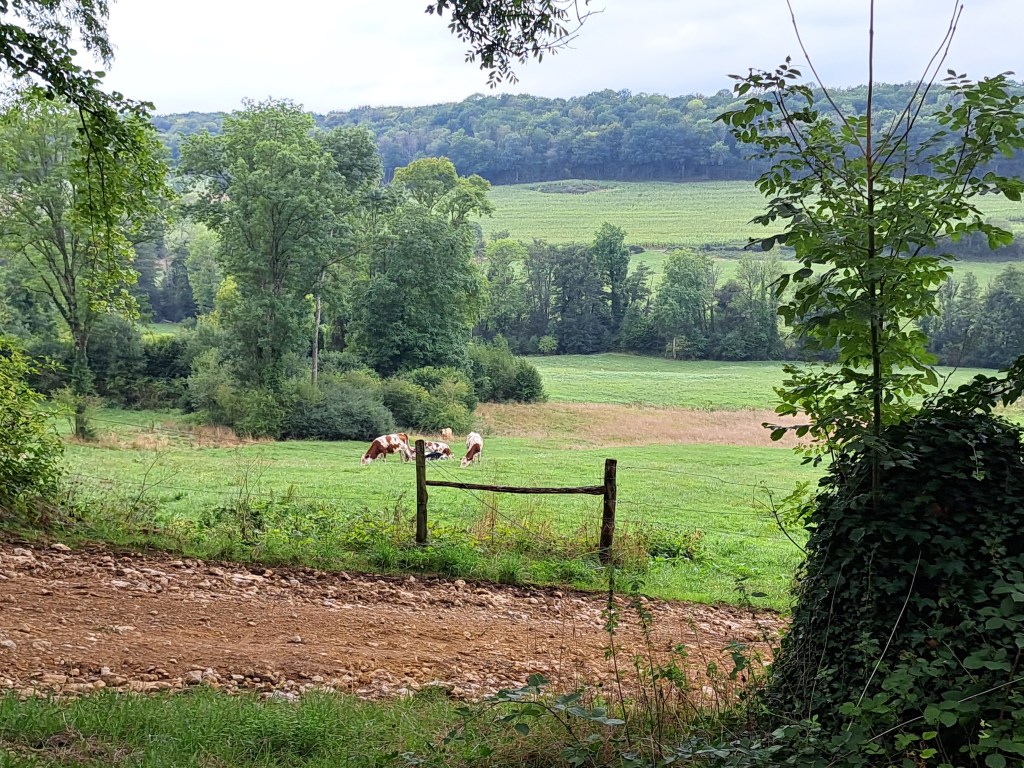
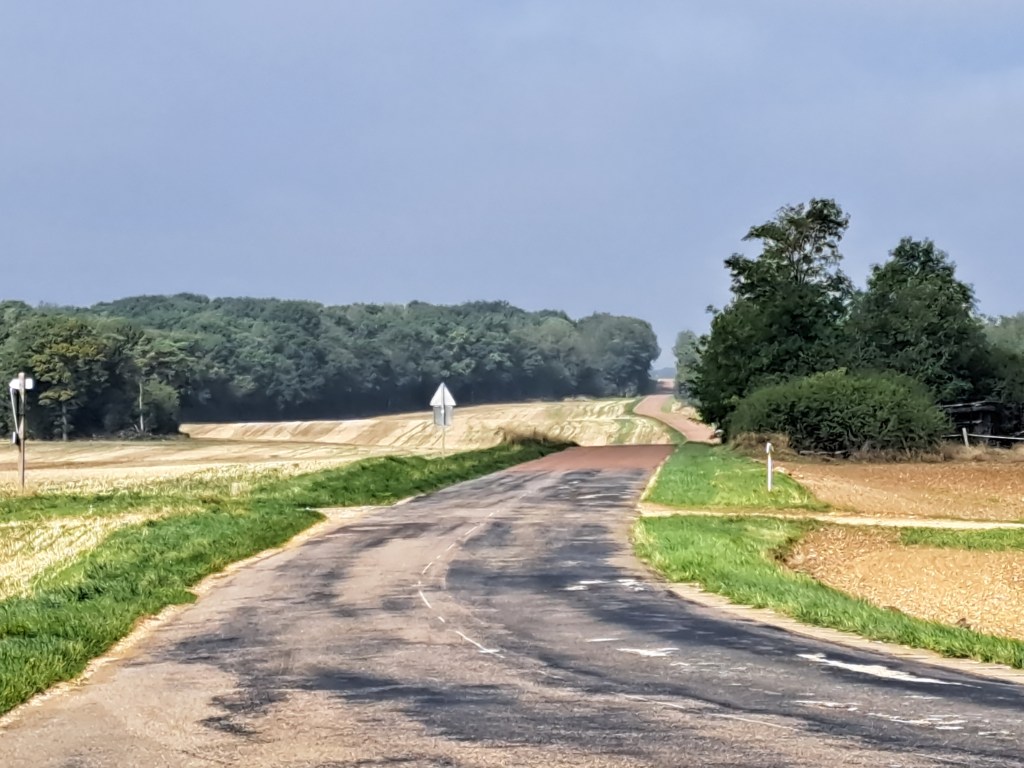
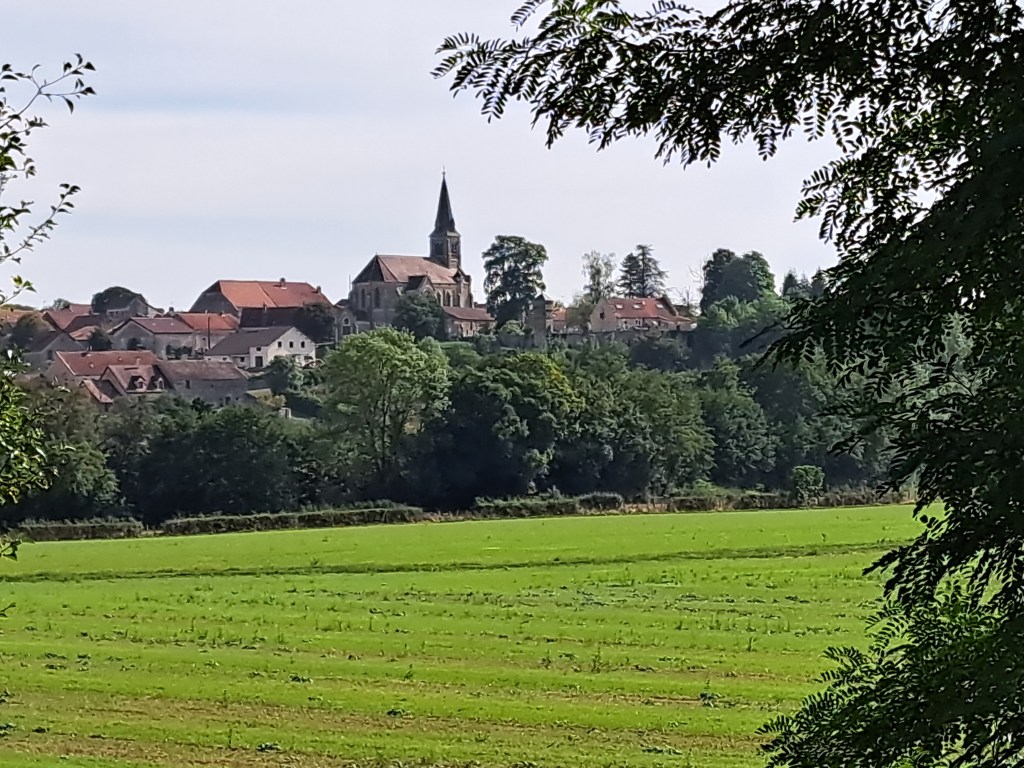
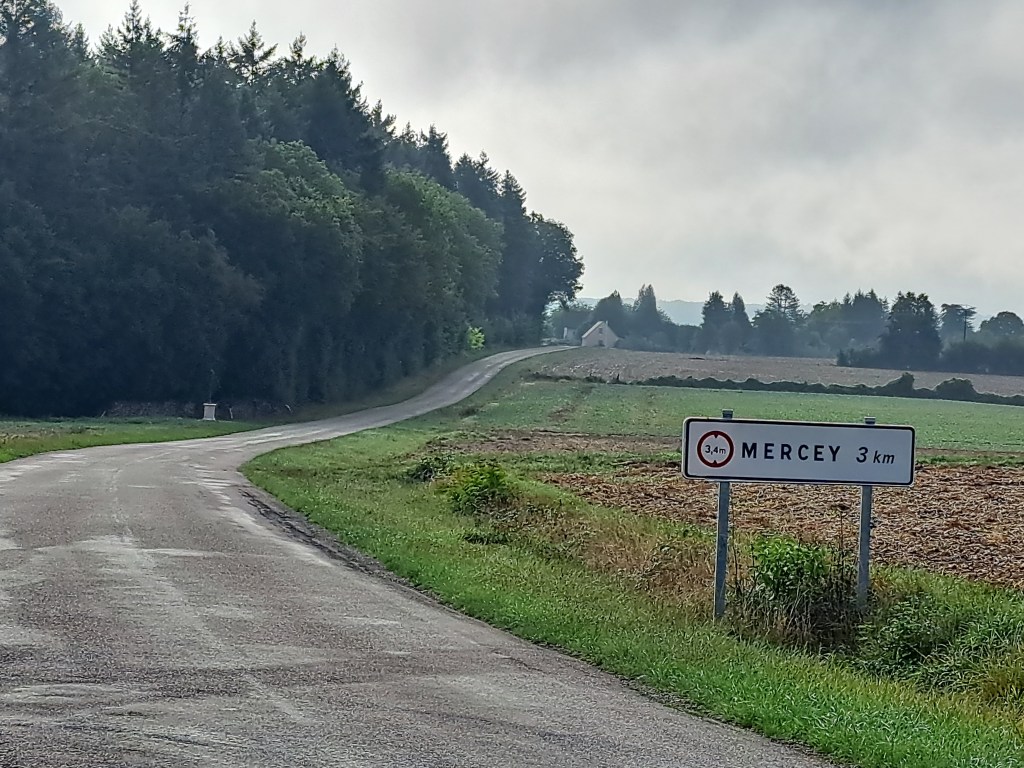
Since the last blog we have been pushing our way through the French countryside, enjoying the changes in the landscape from the edge of the Champagne region, seeing people beginning to harvest the grapes, and then deeper into the Haute Marne region. Here the rolling hills are sometimes obscured by huge forests. You get the shape of the land from the path in front of you but you have to look at the map details to see how your ups and downs relate to the area.
Again, the deer and wild boar are glimpsed and the most prominent large creatures are the buzzards as they wheel around then patrol the edges of the clearings or along the road above you. We have seen very small furry creatures dart past our feet in panic and the occasional swift and low creature that looks like a pine marten but might be some other local version of this beast (beech marten!).
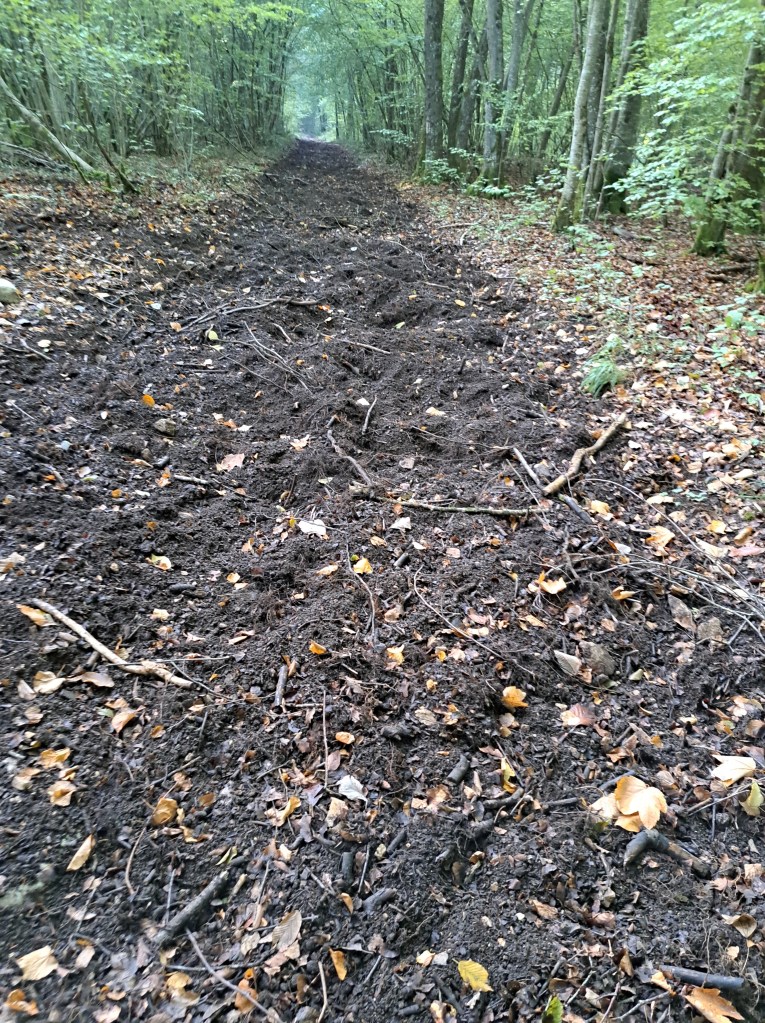
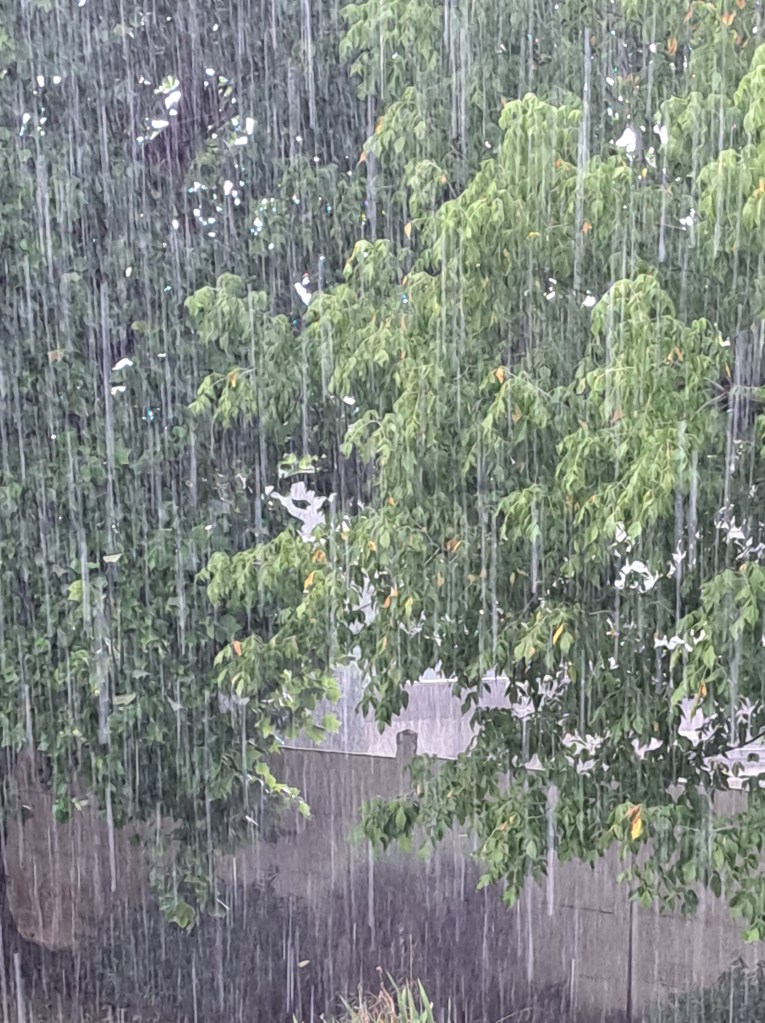
And at one point we took a path through a section of forest that seemed to be partially blocked, despite being the official way through. There were no signs of explanation so we went on, then we found the path severely damaged. It was as if someone had come through with a tractor and a plough tool of some sort and had completely dug up much of the path. I studied it as we walked across the ripped up, fresh soil and couldn’t see any tractor tracks. The area had been rained on and the fact that it was deep in a large forest meant that, despite the droughts, this area was still fairly watered, with deep, rich dark soil. And the destruction was not uniform enough to have been made by a farmer trying to discourage walkers. There were patches untouched and others deeply overturned.
Then it dawned on me. This whole path had been turned over by wild boar! There were the usual signs of boar in the area, but this was industrial scale rooting by boar. We walked with more care after realising our mistake and eventually emerged on a more stable and more solid path.
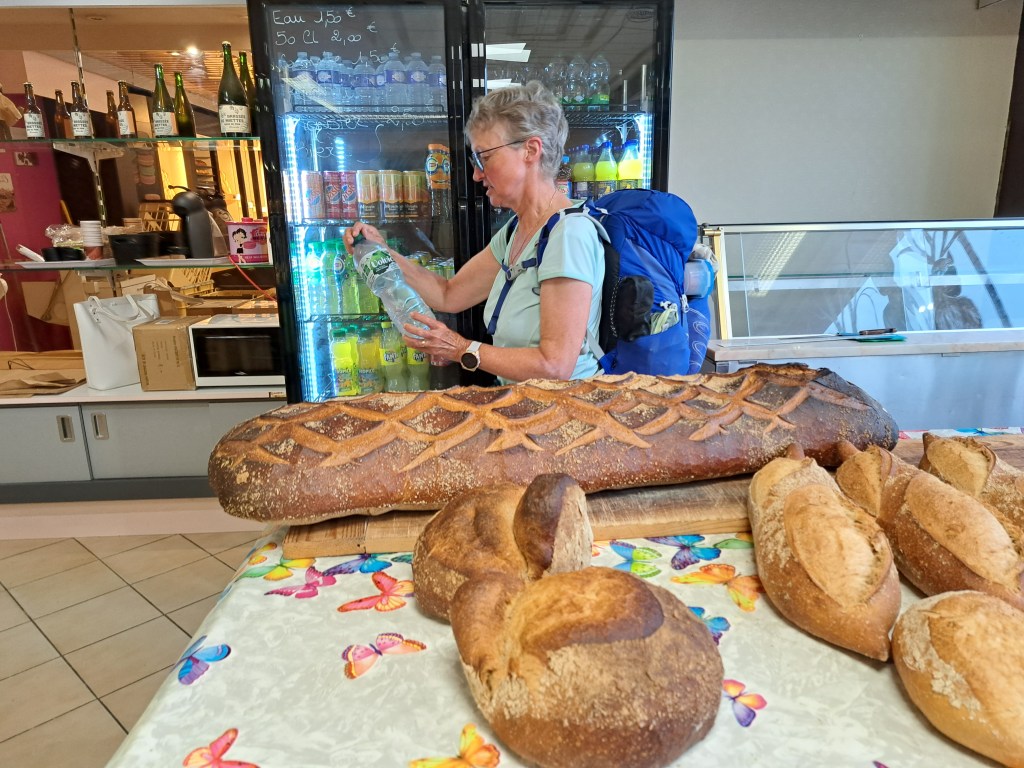
The villages and towns are attractive but almost completely devoid of services. So, we are always on the look out for a little shop, supermarket or boulangerie to get our supplies from. Even larger places that, in theory, have shops, restaurants, bars and hotels just don’t have anywhere open. We check on Google maps and then discover it will be open…. At the beginning of September….
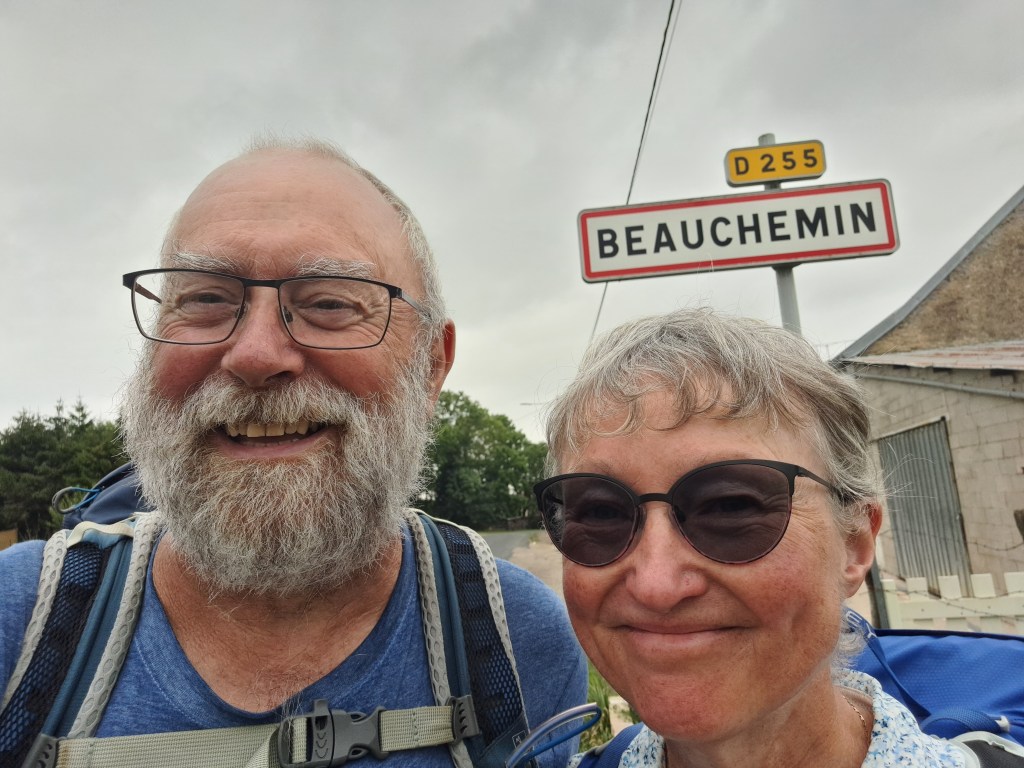
A couple of days ago we walked out of the Haute Marne and into the Haute Saone region. We walked very close to the source of the Marne and made a note of the first village named after the Marne (just a few kms from the source) and will go and visit it when we are motorised…
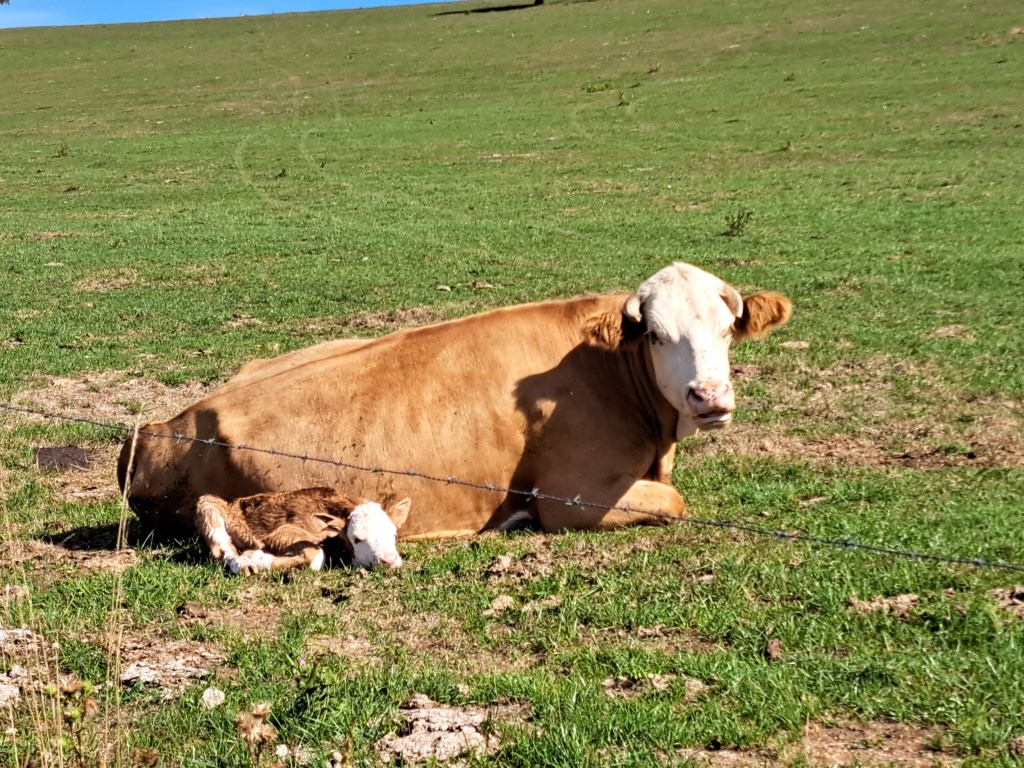
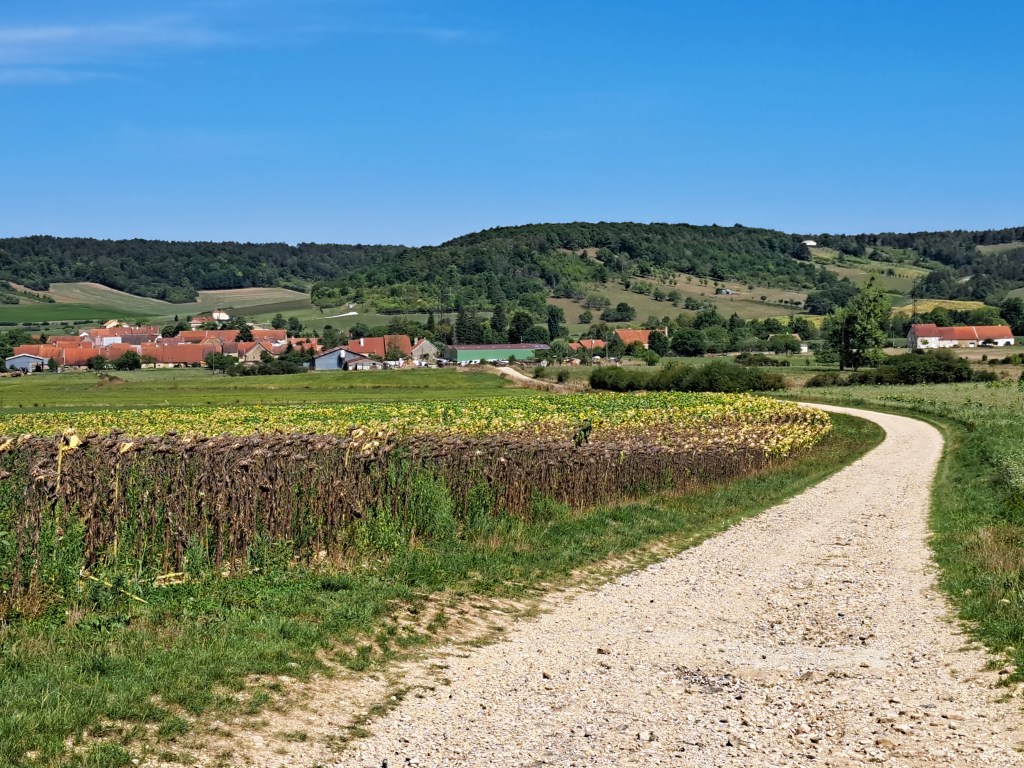
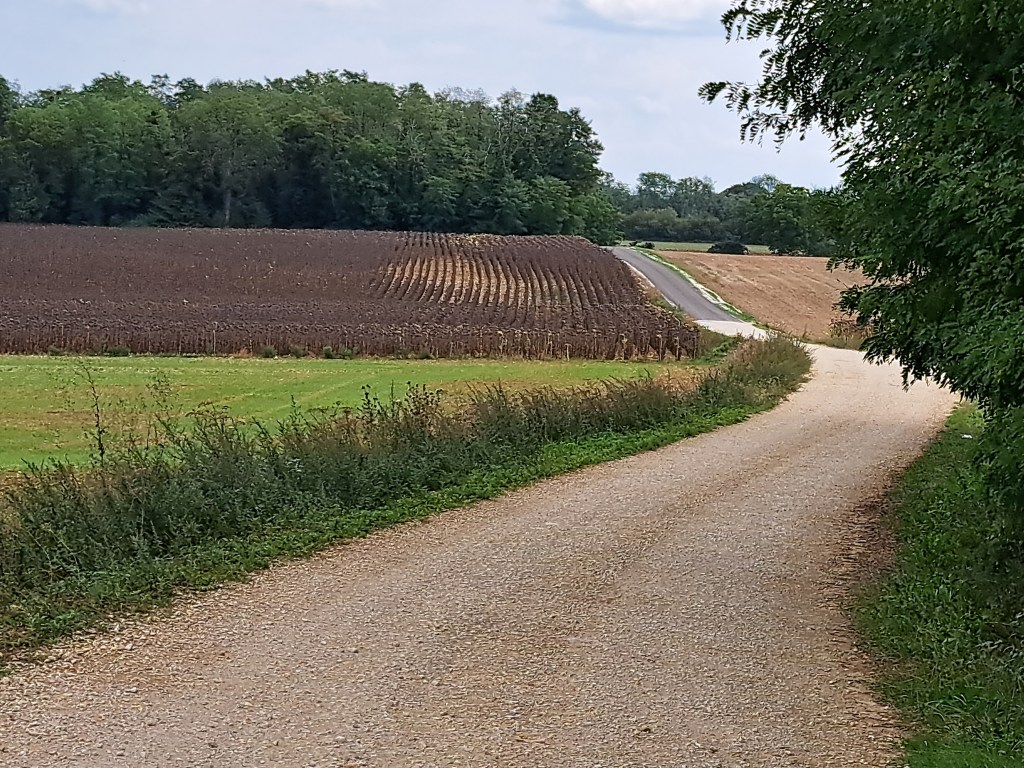
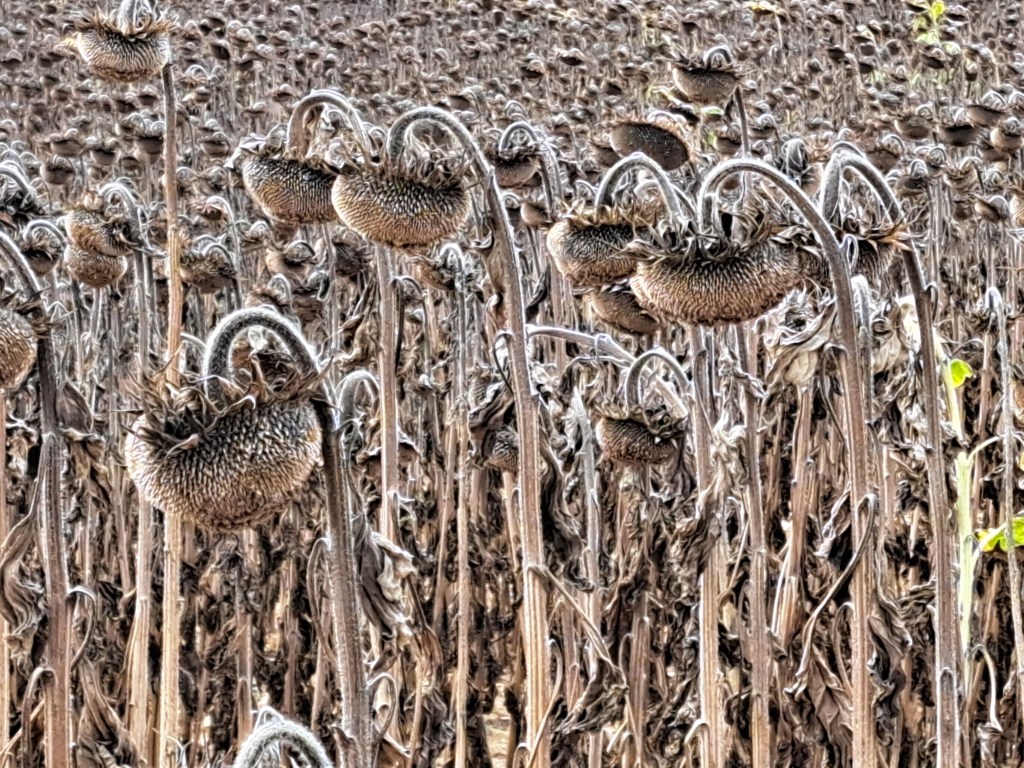
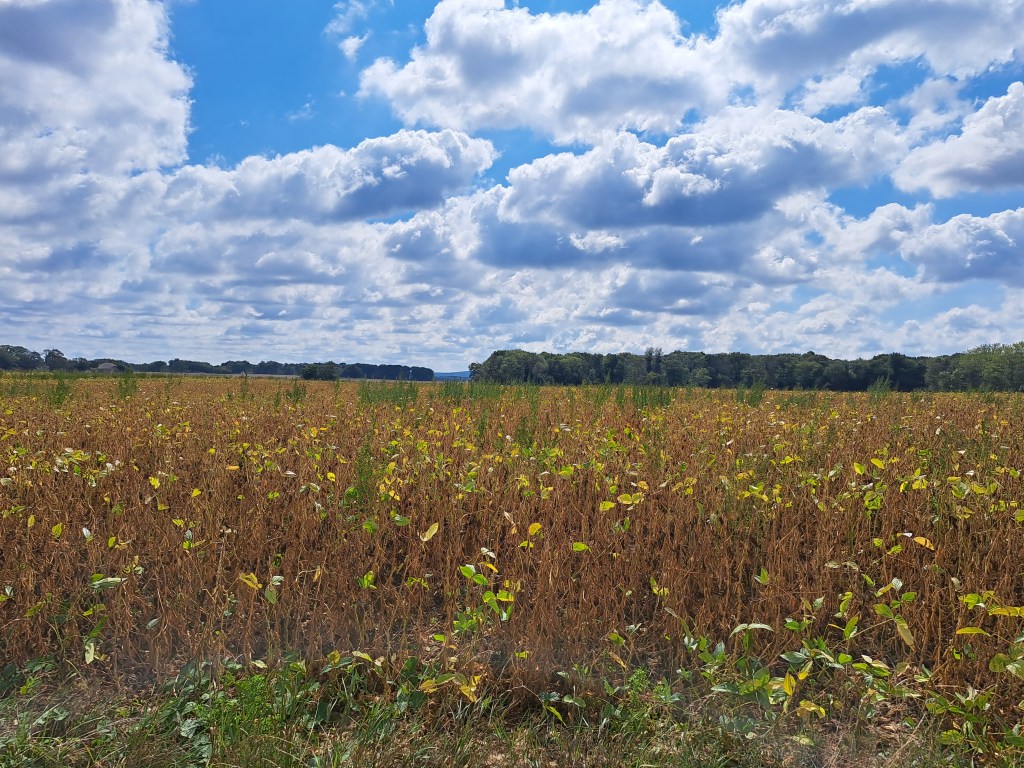
The changes are that the rolling hills are now higher and steeper to cross and the land is becoming even less rich than before. We had been noticing the mix of huge fields and smaller ones had been switching over to more small and less large fields, but now the land feels more marginal, still. There is more livestock. Cattle are also being swapped for sheep and goats. There are still big fields of alfalfa and hemp as well as sunflowers but the sunflowers are the small headed variety which I suspect is for seeds, not oil. And there are more hemp fields now, too, which I think is a more rugged crop that has shown itself to be much more profitable than it used to now that you can also sell the oils from the plant at ridiculous prices.
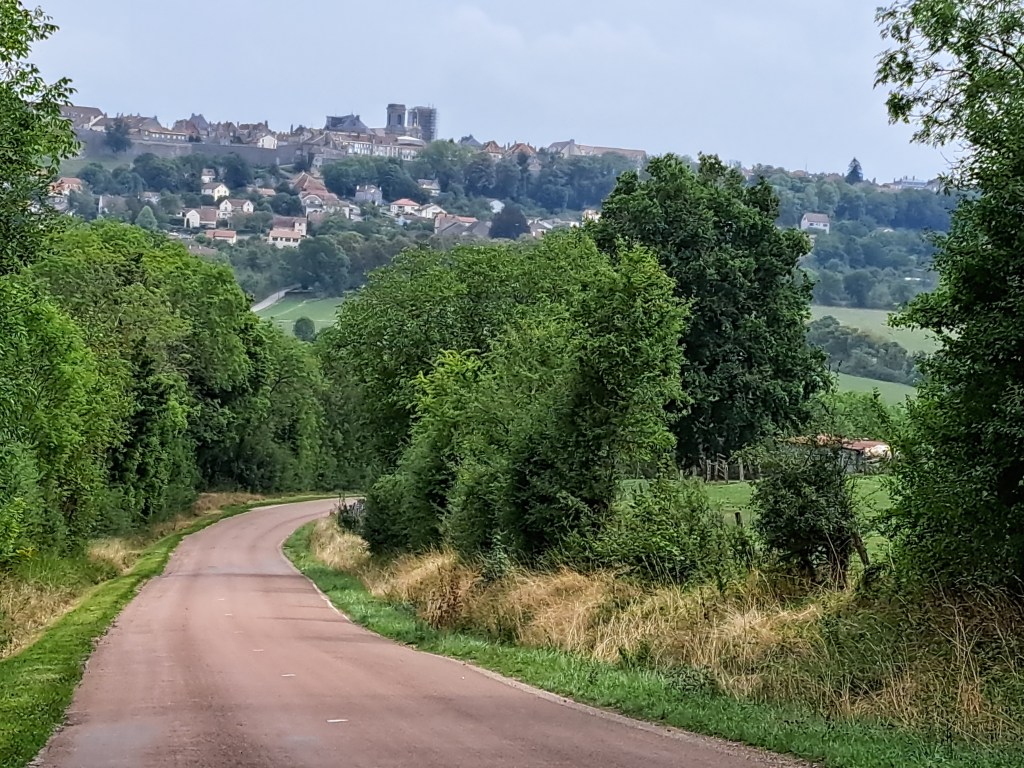
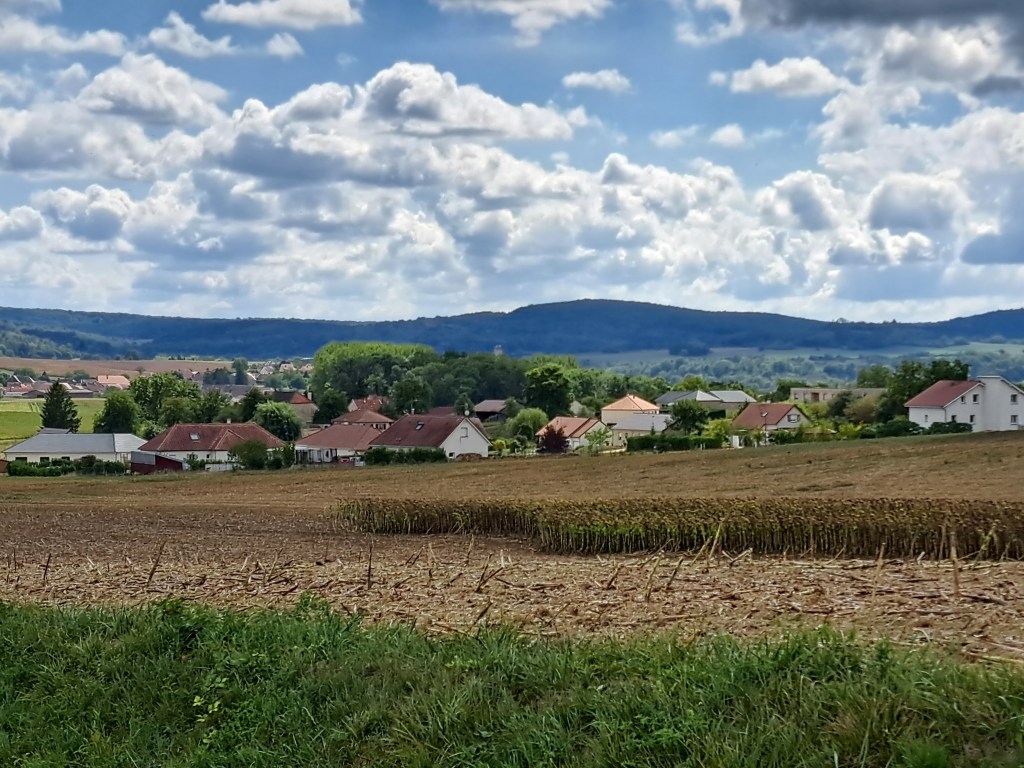
The villages and towns, though empty of services (or ones that are open) have real character to them. Farming is different in different parts of the world based on the ways in which land was distributed and how land was farmed, owned and inherited. Yes, of course there are isolated farms in the landscapes we have walked through. This is a BIG country and often the settlements are a long way apart. But land ownership changed in France in a way that was different in Britain. So many villages are filled with small farmsteads making up the core; caused, partly, by the farming practices changing in a different way and partly the inheritance laws that divided farms up into smaller parcels.
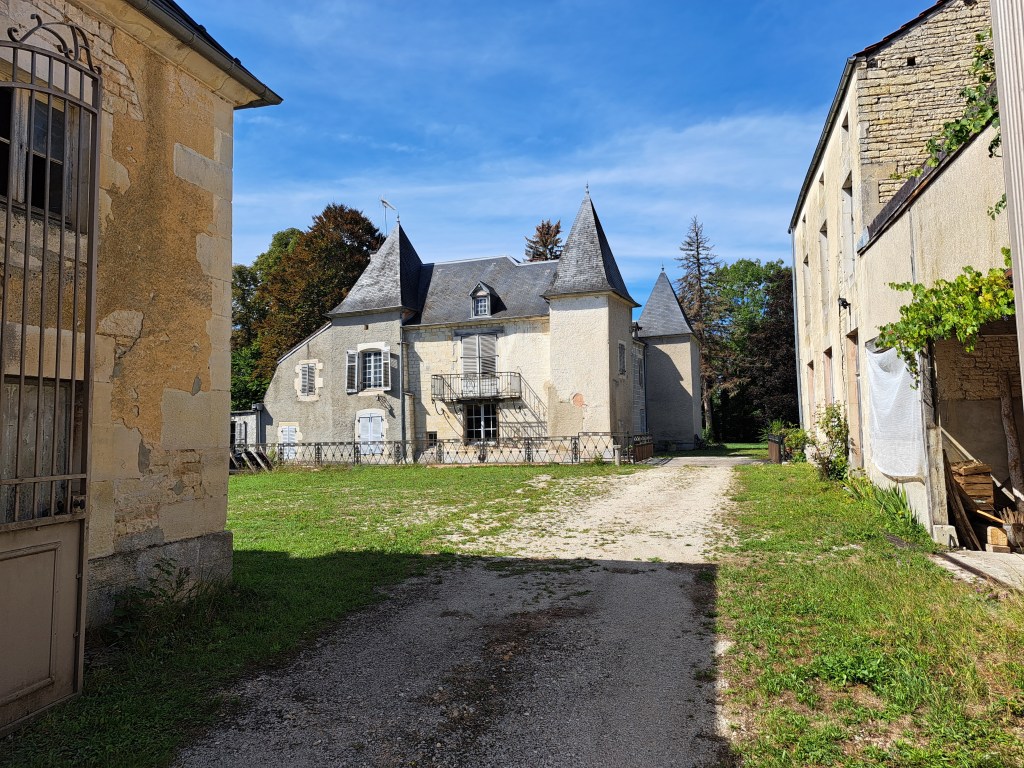
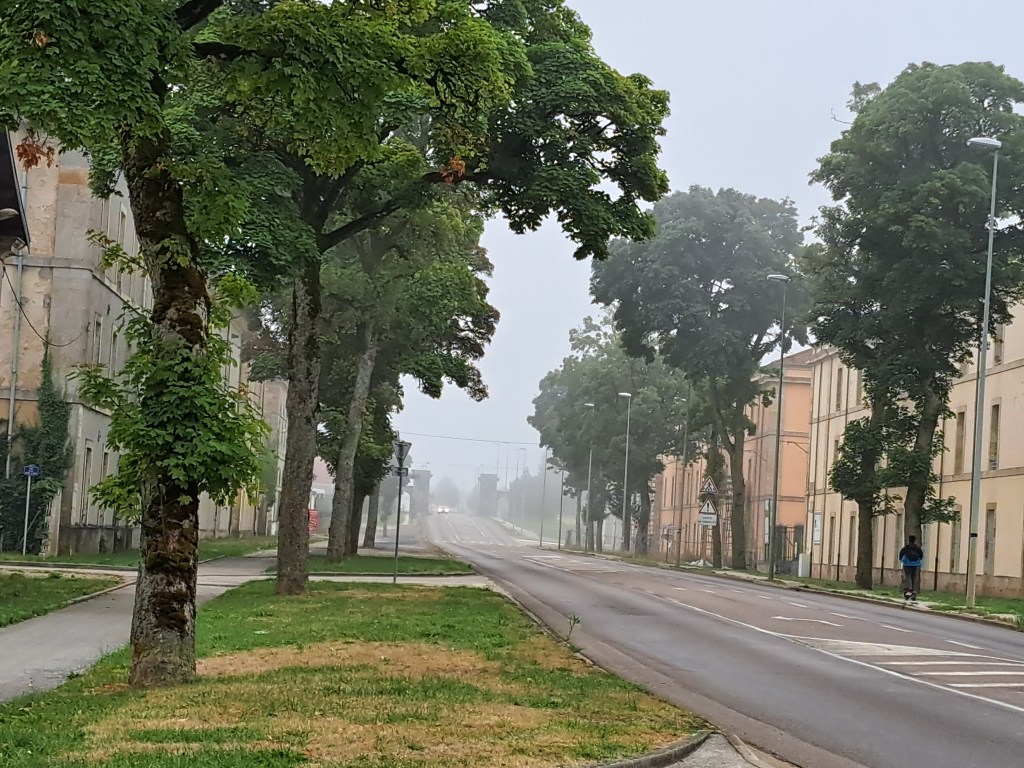
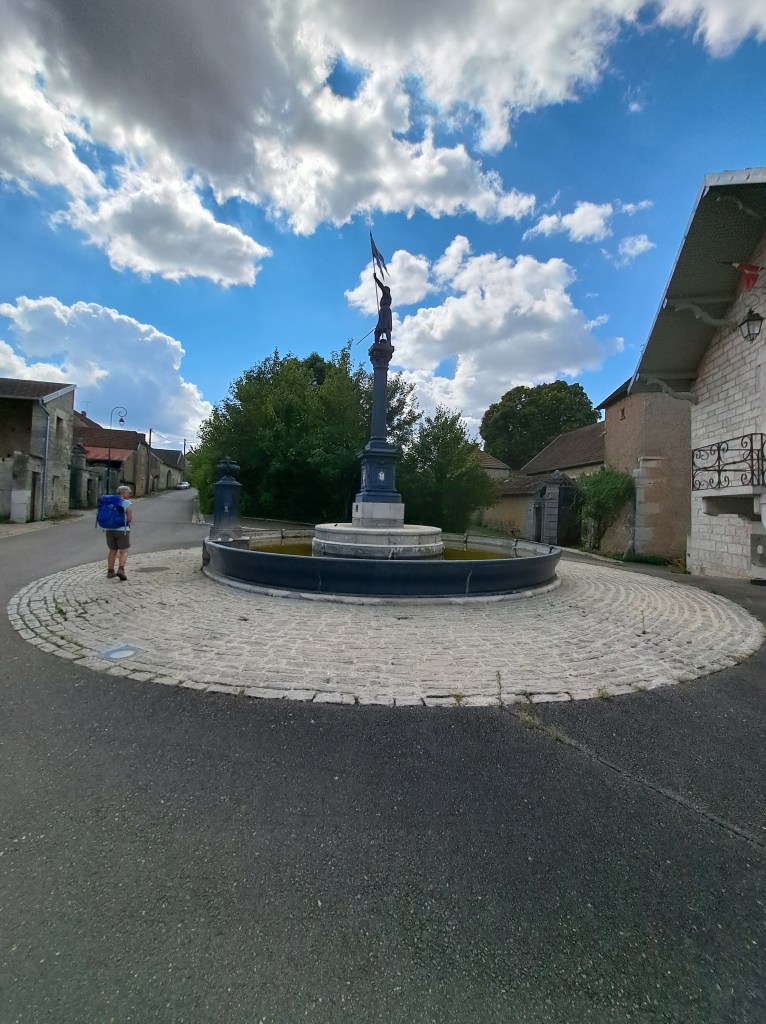
Walk through many villages across much of France and the older core is made up of a long series of farmyards with courtyards including the house, a barn and other out buildings accessed from the road by an arched gateway with big wooden gates to close it up. These are beautiful, enticing and often completely ramshackle complexes. But that is how it is, with an outer layer of more modern, often very well appointed houses lining the roads in and out of the village.
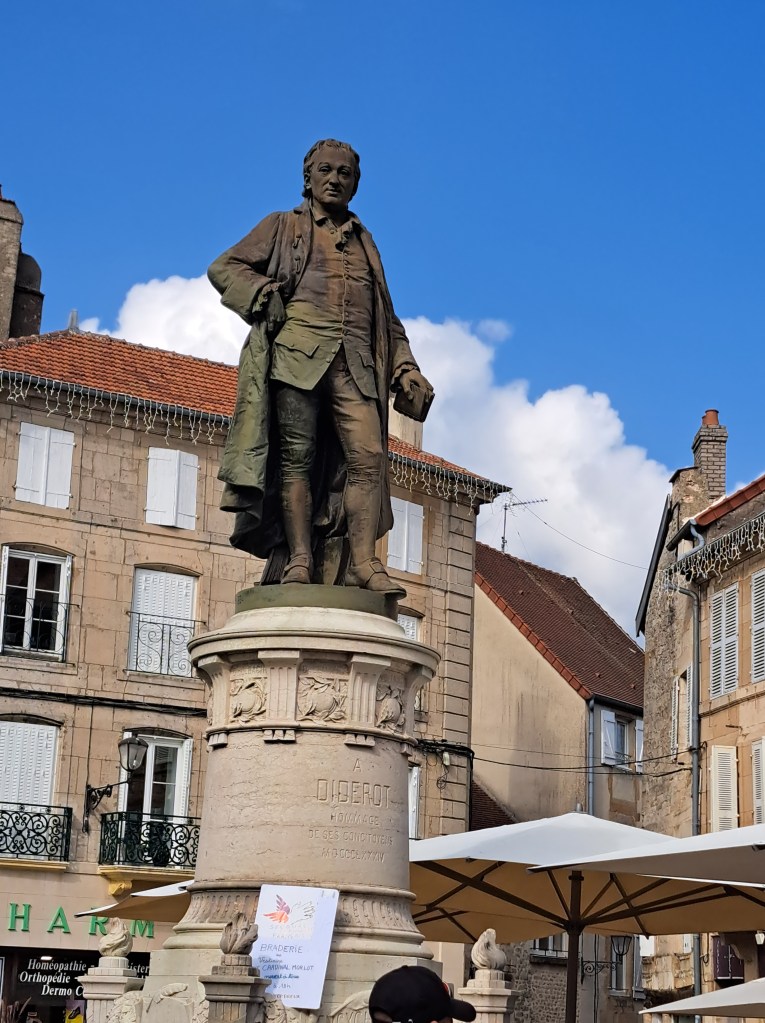
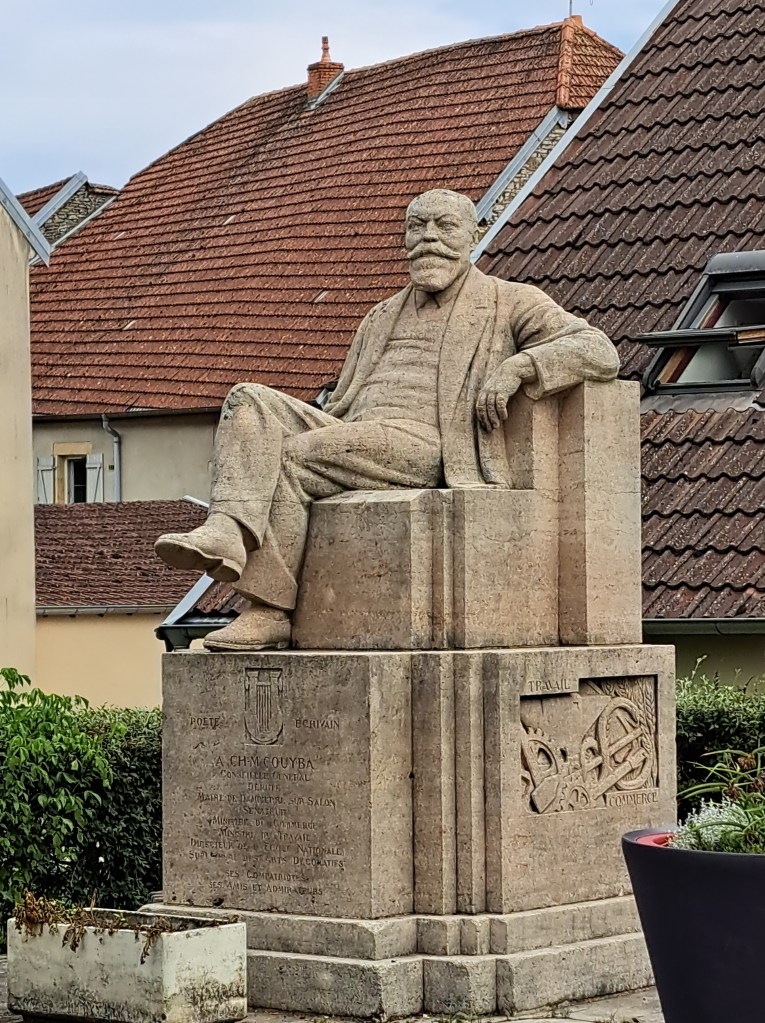
Highlights of the places visited include the wonderful city of Langres which just happened to have a market and festival going on as we arrived complete with live bands, a fair ground and Vide Grenier market, which we both love. Names including Chalindrey, Champlitte, Dampierre and Bucey les Gy are part of the role call for the last few days, and the villages in between have been a joy to visit despite their emptiness.
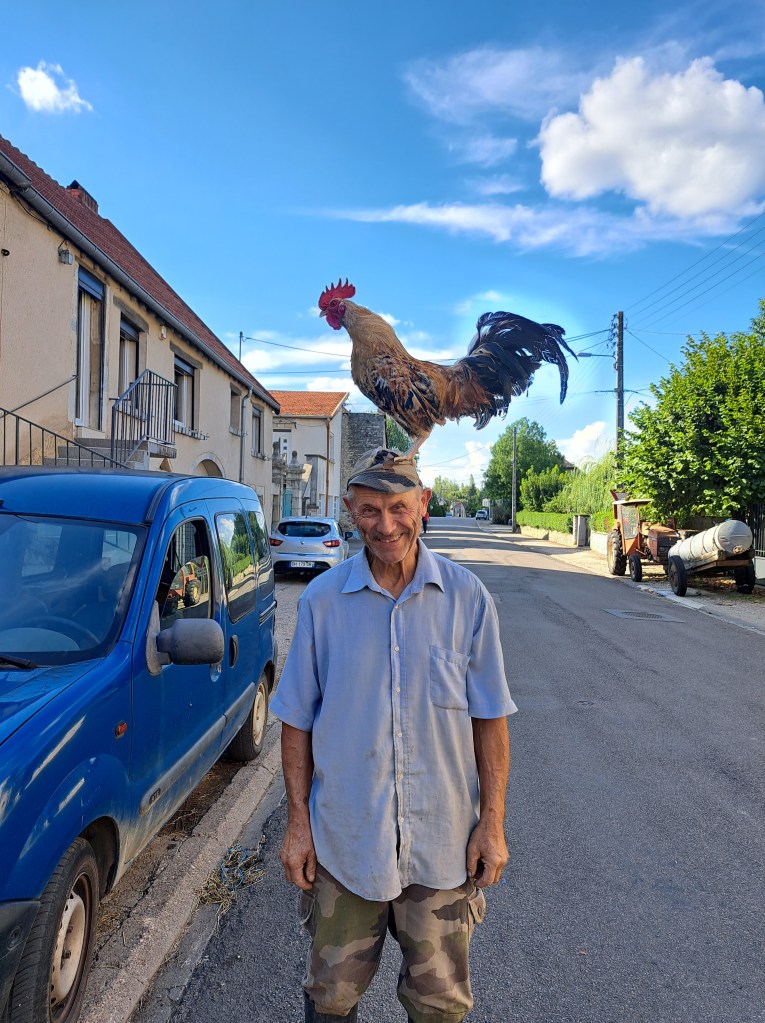
This evening, in Bucey, we are in a community Gite where we were able to cater for ourselves, which was just as well as the only café in town just happened to be shut today (!!!!) and it is a great place to stay (too many of these have also been shut this month). And, as we walked through the village to get to the supermarket on the edge of the place, I got my phone out to take a picture of a house that was full of chickens and roosters. We had walked past it on the way in and I had missed the chance to photograph it then with the open first floor loft exposed to the road resplendent with fluttering birds. As we approached, the owner, a retired soldier, greeted us and asked if we were on holiday. We said yes and he said, ah, well, so you will want to photograph an authentic French rooster, then. Before we could answer, he was opening a door to the answer of great squawking and flurries of feathers from within, then he emerged struggling with a large rooster. Here you are, he said, as he stepped out into the middle of the road, and I got my phone working as he continued to mess around with the bird. Finally, I photographed him with the cockerel standing proud on his cap….
We got his army record and a bit more before I shook his hand and we moved on to do our shopping.
Just another simple episode on our amazing journey. As is the gite, itself, which was restored by local people and with the help of various groups who have come here to learn more about the countryside and its ways and take part in the restoration work. But, as with so many other places we have stayed, this gite is filled with the personal stories of the people who live here. The drawers and cupbaords are filled with implements donated by locals, as are the pots and pans, plates, furniture and probably even the appliances.
Everything in the place has a back story that could be as amazing or as mundane as the things themselves, but all will tell you more about the basic lives of those around you as you stay in the centre.
And all of this offers you many good examples of why, as we walk, we end up talking about all sorts of things, riffing off each other’s ideas and debating a wide range of issues. Lots of things to reflect on as we go. And, in many ways, it is also why we also enjoy our silences together.
There is a lot to be said about silence….
One of the strengths of companionship can be found in silence. While we can spend hours together talking, we also have a special place for silence. And, as an individual, I also like silence when I am on my own and have discovered that there are times when I actively seek periods free of any music or other sounds. For me, silence has become a good place to grow creatively.
So, when walking, we both grow together, and grow in our thoughts and vision, when we share silence as well as when we share our thoughts.
Of course, silence has its downside, too. If you don’t communicate important things or fail to tell someone how you feel about them it can have consequences. As we walk, we have been actively reflecting on losses – people no longer with us and, as well as praying for them, we have been taking time to remember them.
In a few short years, for example, we have lost Alison’s father, her brother Martin, her mother Amy, and Martin’s partner, Linda, too. All of them had special places in our hearts and it takes time to work through the loss of anyone close, so being together and sharing this journey has offered us new ways to share this different type of journey.
I know many people who have felt that they never really had a chance to say all they wanted to say before they lost a loved one and, because of my faith, I have not felt so distraught about this because I feel it must be the case that we can all be assured that they know now, even if we didn’t get the chance to say it when they were alive. But, when you haven’t got that faith, it can be harder to feel any certainty or get any comfort from the sentiment I have just shared. So, perhaps I can offer a different sort of thought that might help.
Partly my answer lies in the way that people who are close, who love each other and/or who spend much time together, communicate with each other. I have long been convinced that we don’t just communicate in words, anyway. Every part of us can sense those around us and every part of us also offers signals to those around us, too. So, sometimes I am walking with Alison and something pops into my mind which is completely unrelated to the walk, or to anything we have been talking about. I decide to share this when Alison suddenly expresses that same thought or idea to me. People sometimes say that they can read their partner’s minds but it may be a case of us reading each other’s whole being. This is not because we are superhuman, or enjoy ESP but because we are human and that’s what humans do.
If you play in a band or other music group, you learn to read the other players and play better with them. If you play with lots of different musicians you gain short hand ways of connecting together with them, too. The same is true for pretty much every human activity where people have to co-operate in some way. Sport to acting, teaching to conducting and so on.
So, we are equipped. Trust the equipment! The equipment gets very well-tuned when you spend a lot of time together…
Thinking about loss and about communication and silence brought up a memory of my own that has brought me some comfort as we were walking today. Here’s the background..
My father, died some years ago of cancer. I got the message he was dying on the day he died. I rushed up to him with my son and joined my sisters and their partners at his bed side (Alison was in London looking after our three younger daughters). He was in a hospital in Edinburgh and was very heavily sedated, so we were sitting around his bed talking, sharing memories, keeping him company and hoping he could hear. Close to midnight, I could see that Ewan, my teenage son, needed a break and so I took him out for a breath of fresh air. The door I chose to let us out of the building locked shut on us, so we had to walk around the building to find another way in and, as we began to walk up the stairs, I head footsteps rushing along the corridor and knew that we had missed my dad’s death. People were upset that we had not been there but, as I have already said, I didn’t think of it in that way. I had been there for him and that was enough. He may have even waited for me to take Ewan out of the room before letting go. How was I to know. I was not the one in charge. But we were able to comfort each other and be the close and supporting family that we still are.
That story is background for my memory.
Most of my life my dad was not someone who was hugely demonstrative towards me. He showed his love to our mum, hugely, and he clearly loved us all. But he was not the sort who put his arms around me to tell me he loved me. And he had a definite belief that you did not hug or in any way be demonstrative towards your son (once I was old enough to be a boy rather than a baby). So it was not really something he did. As he got older I would tell him I loved him and he would nod.
So, this is my memory.
When I was about nine, we were living in a place called Mayfield, which was a bare, inhospitable council estate perched fifteen hundred feet up on the north facing slope of a ridge about ten miles south of Edinburgh. The winters were long and harsh in the early nineteen sixties and nothing stopped the wind blowing from the Arctic or Norway until it hit us. I hated the place, and the weather was just an added thing to face.
It was just after Christmas and I had been suffering from a very bad bout of the flu and was becoming a bit stir crazy, but had no where to go. The one heat source in the house was the coal fire in the living room and we were all there sitting in the low light of an early afternoon. The rain had stopped and much of the ice had melted but there was hardly a person to be seen on the road by our house.
To my huge surprise, my father got up and suggested that we go for a walk. I looked around and no one else stirred. It was just going to be the two of us.
I got up and followed my dad out to the hall, we dressed for the cold, me in my duffel coat, woollen scarf and woollen gloves and a pair of wellingtons. My dad had his jacket with a scarf and his hands in his pockets as soon as we left the house.
We went out and my dad suggested we go up and along the ridge. The place we were perched on is called the Roman Camp Ridge and is a limestone outcrop that stretches for a few miles east of Mayfield with no other settlements apart from lonely farm houses thinly dotted below the top.
The wind was fierce but the sky was a series of shredded, thin clouds scattered across an open, pale blue sky and below us we could see Edinburgh with the castle and Arthur’s Seat caught in the low afternoon light. Beyond was the Firth of Forth and Fife glinting on the horizon. We crunched along a cinder path with patches of stubborn ice lurking in the ditches and along the line of the fences. Some sheep were huddled in the far corner of a field and the trees surrounding each field we passed were black and bear with the scratchy outline of rook’s nests exposed against the thin sky.
Eventually we reached a series of what my dad called oil donkeys. He explained that they were pumping shale oil out of the ground and we stood and watched them levering up and down pulling the oil from deep below.
We turned back then and walked home as the light faded and the Pentland Hills began to glow gold and red in the sunset.
Almost nothing had been said except for the explanation of the oil pumps, but that was a special walk for me. Probably the best I ever shared with my father.
He didn’t have to tell me he loved me. He was just there. And I didn’t have to say a thing, to him, either. He knew.
The silence had been and still remains precious to me.
So, hope you can find silence from time to time that is really helpful. Share silence with those you have with you and with those you have lost – despite everything, it is still possible for me to walk with my father, so I feel it should not be hard for others to walk in silence with those they have lost, too.
And please appreciate the silence others offer you, knowing there is a lot to cherish in the richness of something so apparently empty.

















 How far can we go?
Your thoughts on “silence” were very thought provoking, but then I saw the photo of the rooster & couldn’t stop giggling😀
LikeLike