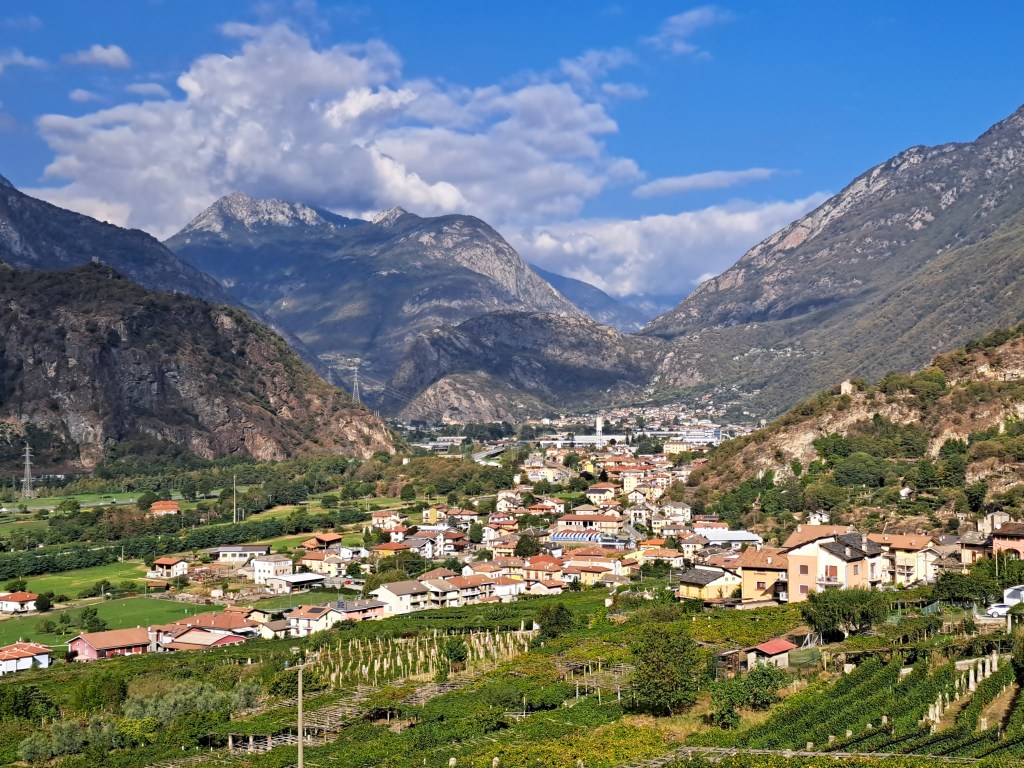
It is the 21st September and we are in a small apartment in a place called Pont St Martin, which is a little town between Verres and Ivrea and we are heading out of the Aosta Valley and will soon be in Piedmont and heading to where the rice grows….. so soon (but not quite yet) we will not be climbing up and down steep paths surrounded by mountains and huge rocky outcrops with homes perched in impossible places amongst and above gravity defying terraces of vineyards.
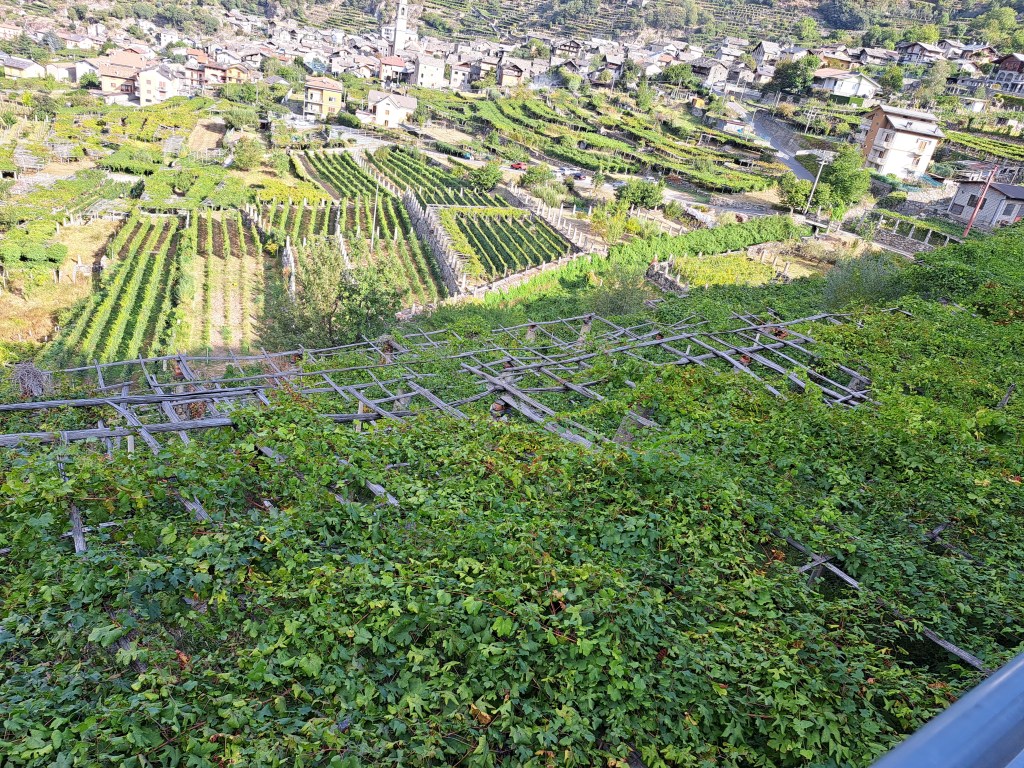
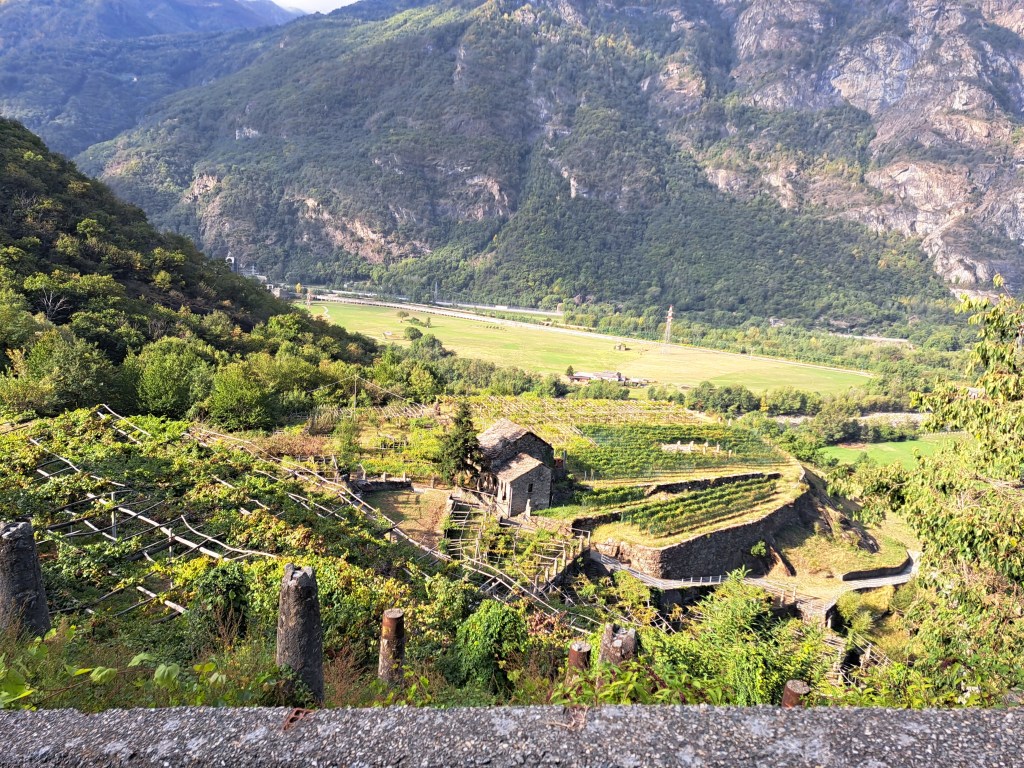
By the way, we enjoyed lots of varieties of wine in Switzerland and have been loving the Aosta Valley ones, too. Almost all are mountain varieties with some really fine whites and fabulously deep reds and we have walked through the places where they grow these grapes, high on the side of mountains. The older style wines are almost all starting to fade away in a commercial sense (especially if you want it exported) and this is sad, because they are really good. The style of growing is similar to what we saw in Portugal with the vines growing up onto trellises that create tunnels of vines with the grapes hanging down, ready to pick at harvest time. These tunnels of vines allowed the locals here to grow other crops underneath so the rare commodity of land was effectively used by these marginal farmers. Growing them in narrow terraces that step steeply up the side of the hills made so much sense but, as with the Swiss wine makers and the ones along other parts of this valley, the cost of managing and harvesting becomes prohibitive when no machinery can reach the vines. So, people have been changing to other varieties of grapes that harvest easier with higher crop rates and are no longer able to grow other crops in tandem with the vines.
We have seen lots of the old style vines today and also a notice saying that local people are trying to keep the tradition alive. We hope that they continue to grow their vines this way and will happily support them any time we happen to be passing through here and can buy some of their produce… It is important to pursue traditions not just because they often have an intrinsic value in themselves, and can be a valuable way of linking today with the past and teaching people about that past. They can also be the source of plants (and livestock) with valuable genetic traits that we don’t even know we need to utilise yet. There is also a beauty in working and farming in traditional ways that need to be kept alive.
This also echoes a strong and constant theme that we have shared as we have walked through parts of England, France, Switzerland and now Italy.
Walking makes you intensely aware of how the land is being used and what it is being used for. We have seen farming on a massive scale with crops like little onions being grown and harvested across huge tracts of land and we have seen patchworks of small fields h lots of different crops flourishing. We have seen massive flocks or herds and many small holdings with few animals or with small flocks of unusual varieties of sheep or goats, and so on. Lots of approaches across hundreds of miles and through different types of landscape.
We have also stayed in all sorts of places from the ultra-modern to the ancient forms of homes and from tents to barns and castles. It has made us aware of the fragility of our homes with regard to climate change and helped us assess our responses to the issues the changes can present.
We have also walked in places where rivers and the wind used to be the sources of energy for the local people. Using wind to produce power is not a new idea but the value to us in making use of such a simple natural resource as wind disappeared until quite recently. Sadly, in Britain, if someone sees an old windmill they say how pretty it is and smile, but when they see a wind turbine they declaim it as ugly, an eye sore and dangerous to wild life… Sadder still is the official response which panders to this view. While I’m glad to see off-shore doing well (despite the Cameron Government’s withdrawal of support for the wind-powered generation industry) I still hope there will be room for on-shore production, too (along motorways and railway lines for example).
More pointed is the fact that so much of our industrial power started with water energy and that almost every river in Britain had several mills using that natural resource. We have walked past many hundreds of mills all over Britain and Europe that are pretty buildings but pretty useless as sources of energy.
It is my hope that rivers across the world will become major sources of renewable energy production and that our electrical power distribution systems will be improved and changed to allow for these sources to be both local and national sources of our energy supply. It is an area just waiting to be developed further.
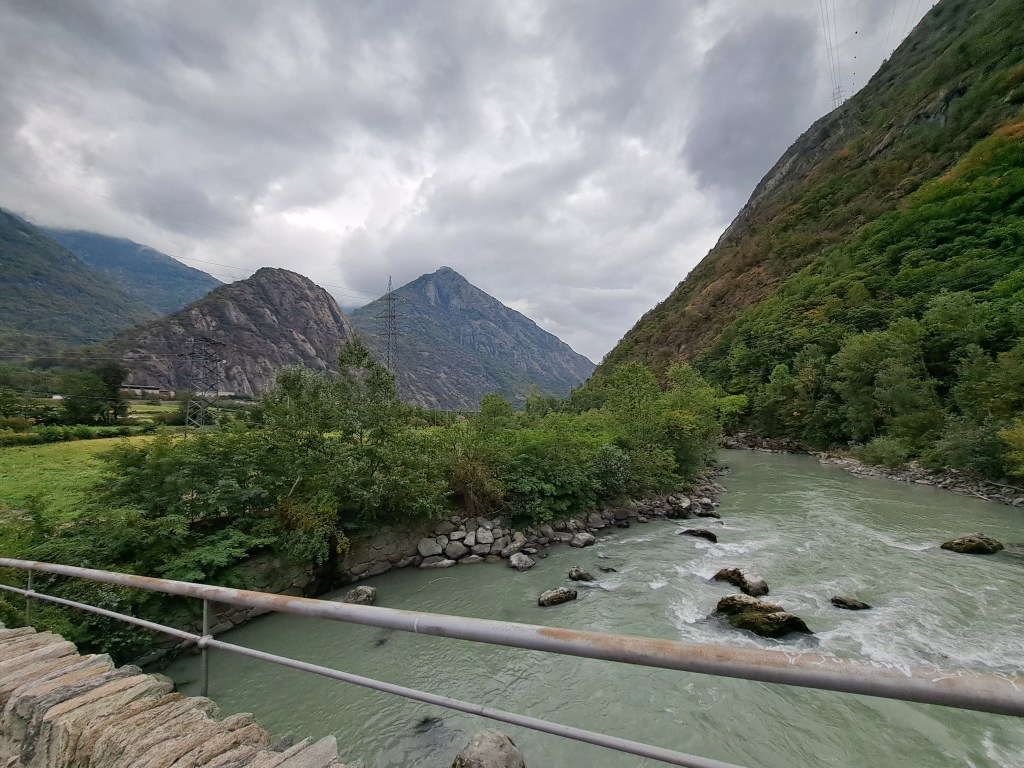
From the Jura through Switzerland and into Italy, we have seen sometimes more than two hydroelectric power plants a day. I know we are in mountainous regions, but some of these plants are pretty recent and they all make me think of how proud I used to be as a Scottish lad claiming the value that Scotland added to the country through its hydroelectric power plants. But when was the last of these built and how much would new ones cost compared with just one nuclear power plant? I do believe that our natural resources have been place as second best to other, much more problematic sources/processes…. Of course I do
Which turns our thoughts to the current UK Government’s proposed solutions to the energy crisis, which include North Sea Oil and gas, nuclear power and fracking…. The first two are short term, limited and retrograde at best. The third is old technology that is, at best, dodgy given the providers and is very expensive even before you add in the cost of trying to decommission and deal with the waste it produces….
As for fracking, we walked with an expert in the oil industry when we were walking on the Camino Inglese in Spain and got a very detailed explanation as to why this life long advocate for oil had been deeply and profoundly shocked by the fracking industry. His assessment was that it did fundamental and irreparable damage to the earth, pumping highly toxic chemicals into the earth without regard to the consequences and the very, very long term effects. And, after causing so many serious and catastrophic problems in areas often well populated, the perpetrators leave and are never held to account for the irreparable blight they have inflicted on the deep structure of the strata beneath our feet (permanently broken) the aquafers and other important systems below ground (poisoned and with no means to limit future damage beyond the area) and the problems facing the land and the people above.
If that sounds dramatic, it is a faint shadow of what this man’s assessment was, and he, as I have said, has spent the whole of his working life in the oil industry and knows its shortcomings in great detail and will defend it, but not fracking…
And, alongside all of the medium and long term solutions to producing energy, we know that simply investing in making our homes and work places highly energy efficient would reduce our energy usage (and people’s bills) hugely. It would also be great if we could legislate to ensure that no one builds anything that is not designed to the highest energy efficiency standards (something called future proofing…). But none of this seems to be anywhere on the horizon in Britain… I worry about what we will return to and will have to face in the future.
So, as we walk through yet more stunning landscapes, in locations where both humans and their close ancestors lived and enjoyed the fruits of the lands, we continue to see things on a smaller, more intimate scale but still feel that the vulnerability as well as the riches of the places we are in can offer so much more without being abused and bled dry.
And we reflect on the opportunities available to anyone who has the power to do something about it now. We hope and pray that sometime soon someone will discover the idea that investing in the future might actually be a wise and prudent thing to do. It won’t happen any other way and, if you look around you, you will find the serious major powers all doing just that. I pray for clear sightedness, vision and responsibility in our country, too.
And tomorrow, we will hope that it doesn’t rain on us (not in our control), that the paths and the hills are kind to us (not in our control) and that we get to the next place safely and in time to get ourselves settled, sorted and rested enough so we can continue on our way, the next day.
……
Guess what? We are now in Ivrea, the Home of Olivetti typewriters. I had a great portable one given to me by The Observer when I worked there. It was stolen from a vintage Alpha Romeo Sports car parked in the Majestic Hotel in Brighton when I was speaking at a conference there in the early 80s. I ended up refusing the rubbish replacement and got one of the early Apple computers instead (boosted from 48 to 64 K ram….).
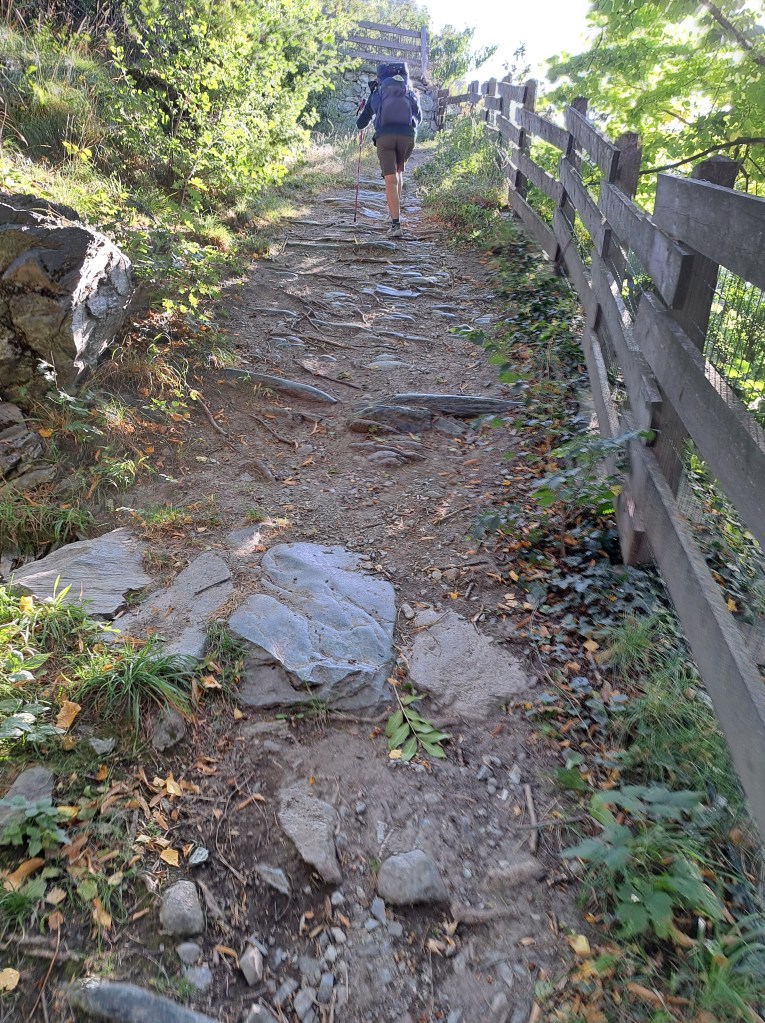
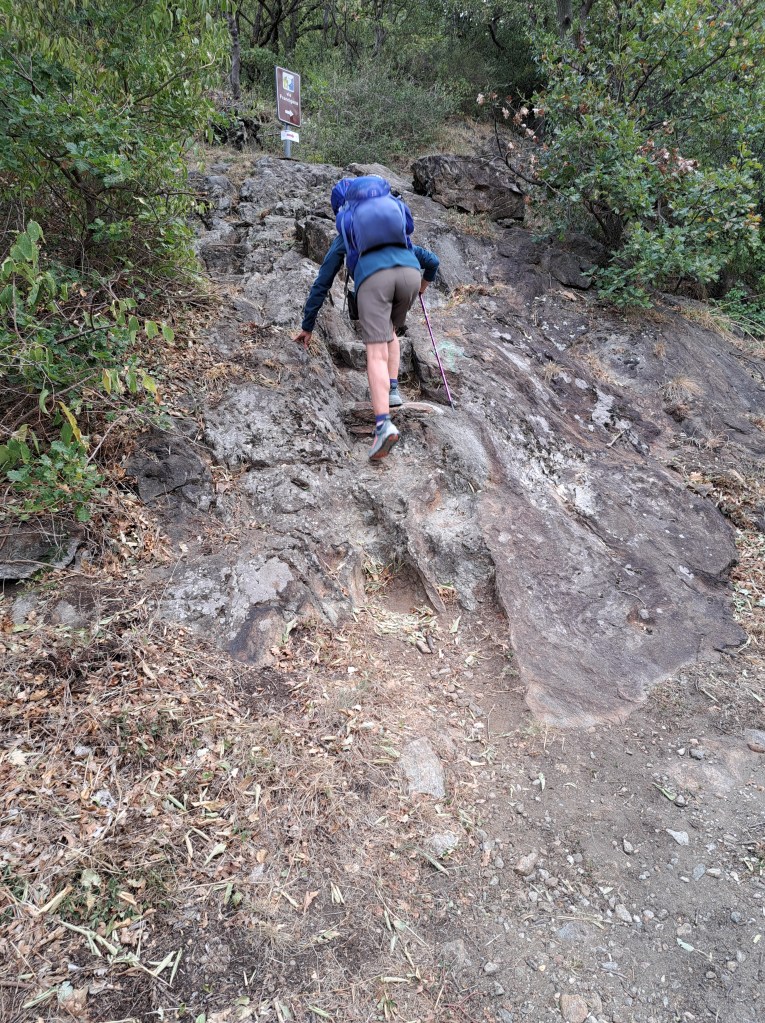
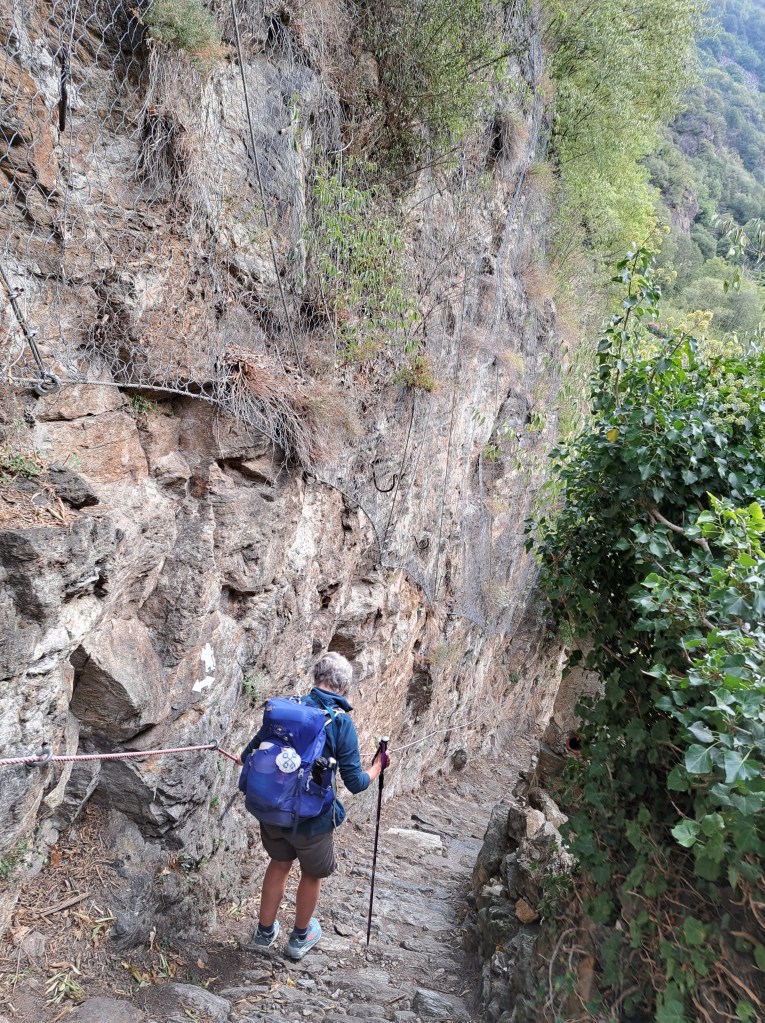
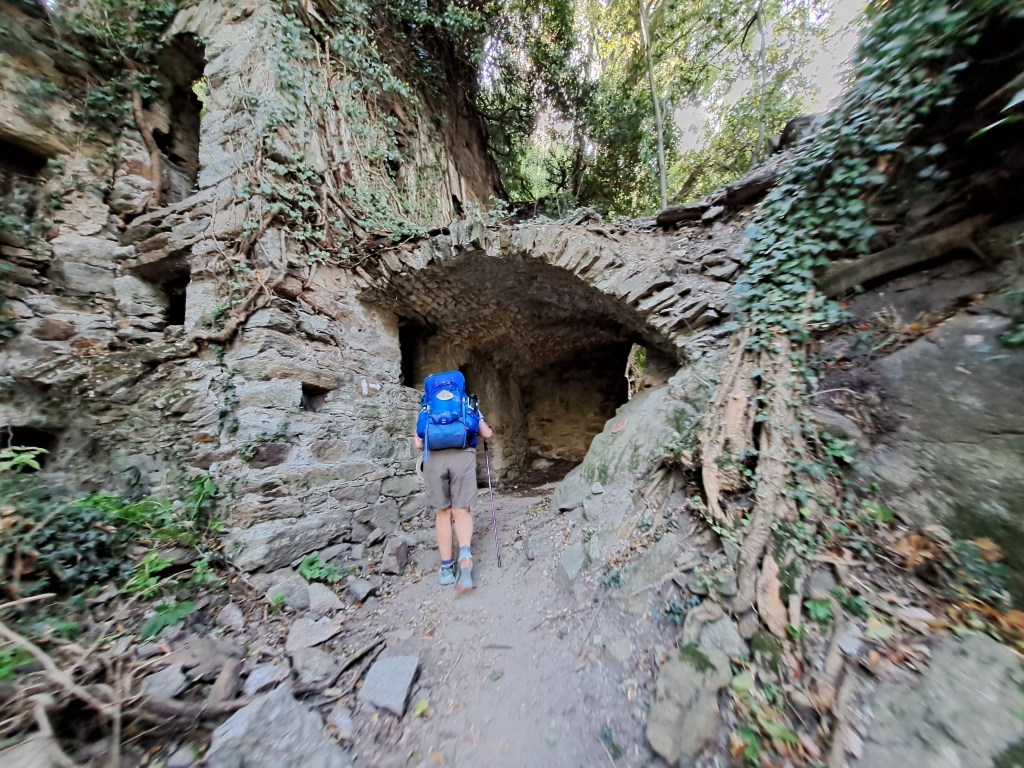
Anyway, we had a pretty strenuous day today but we were very lucky that it did not rain and gradually became rather sunny and warm. Some of the paths we took ended up being serious almost vertical scrambles but the views and the route was stunning, which was a great compensation for the effort.
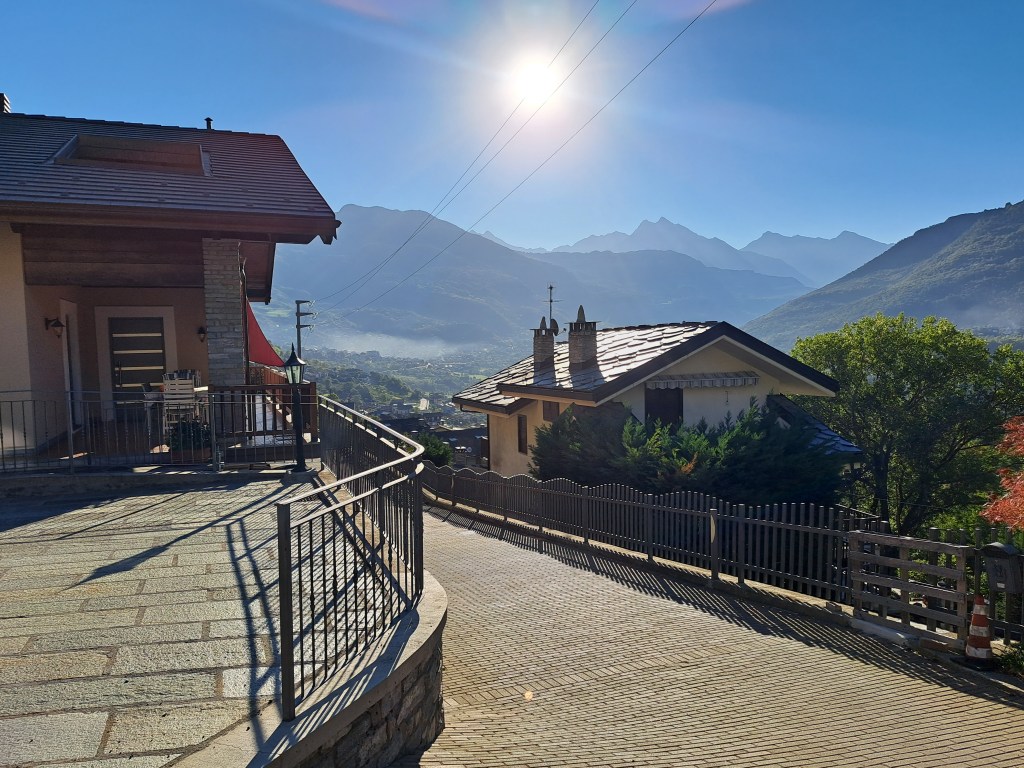
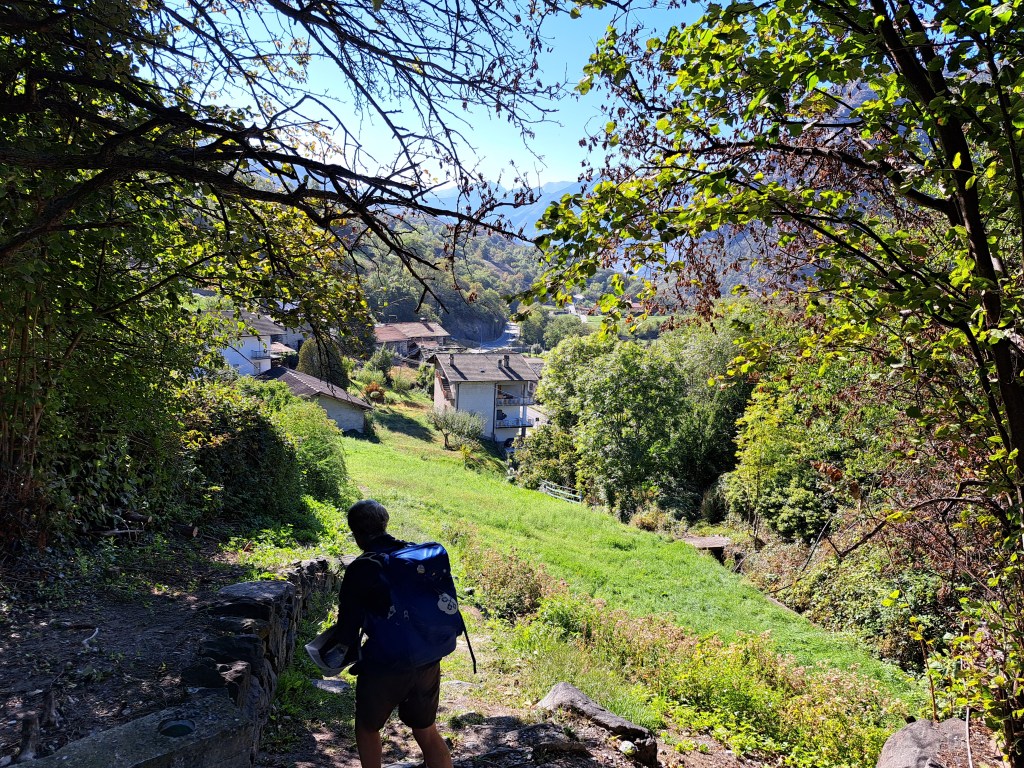
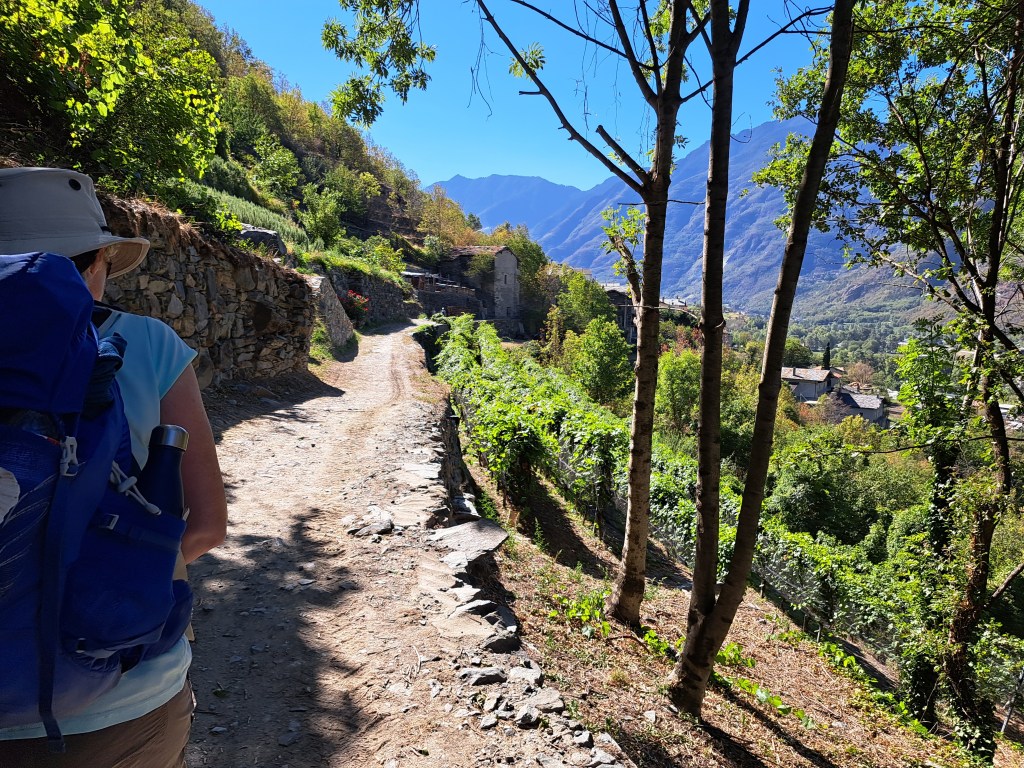
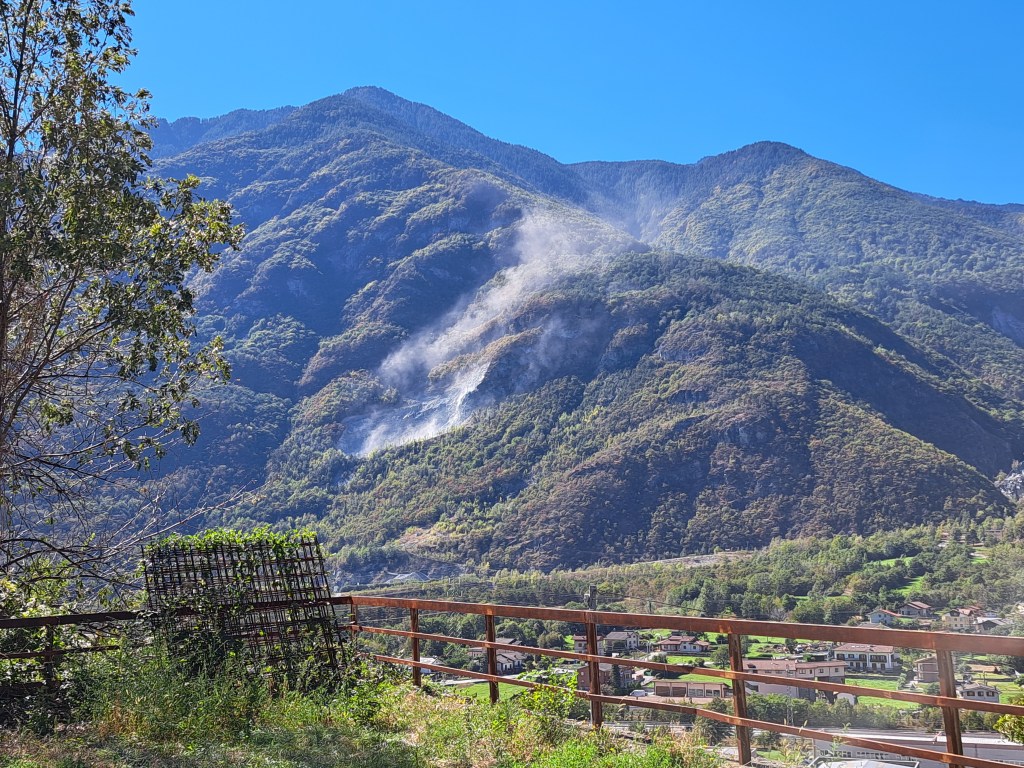
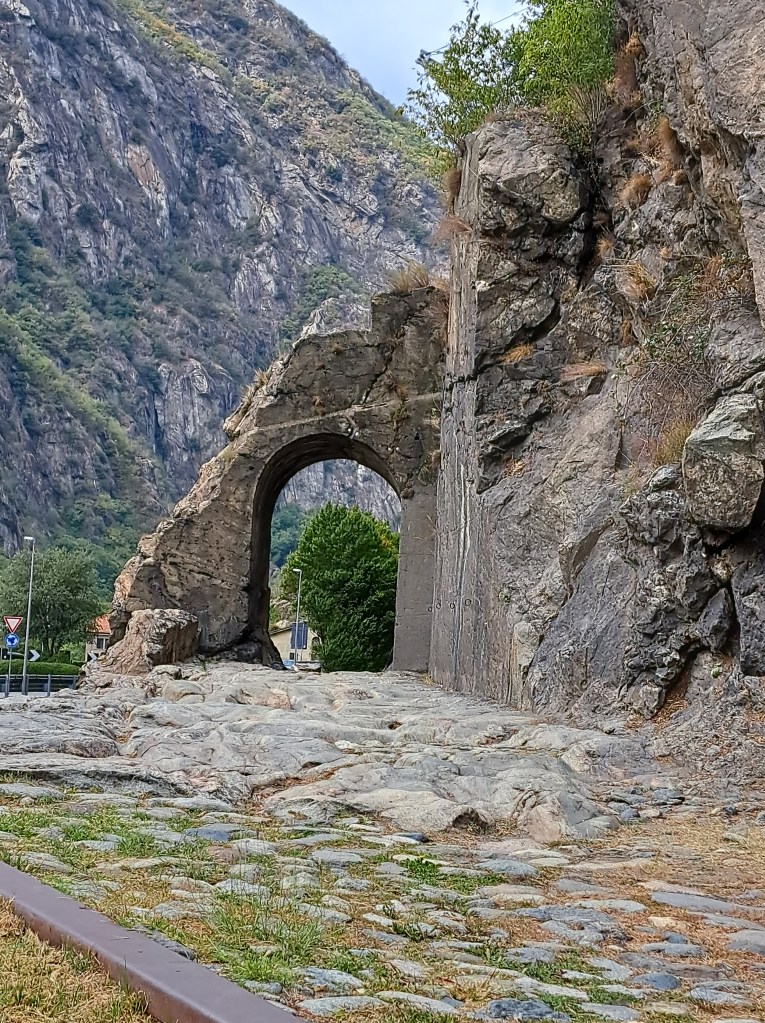
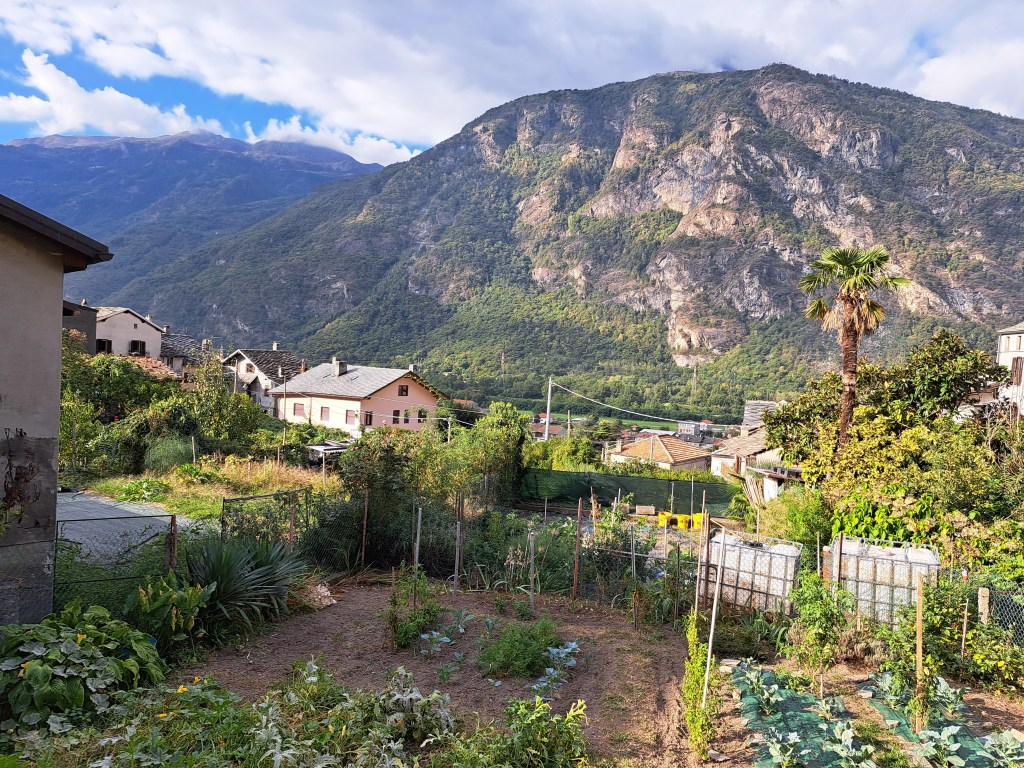
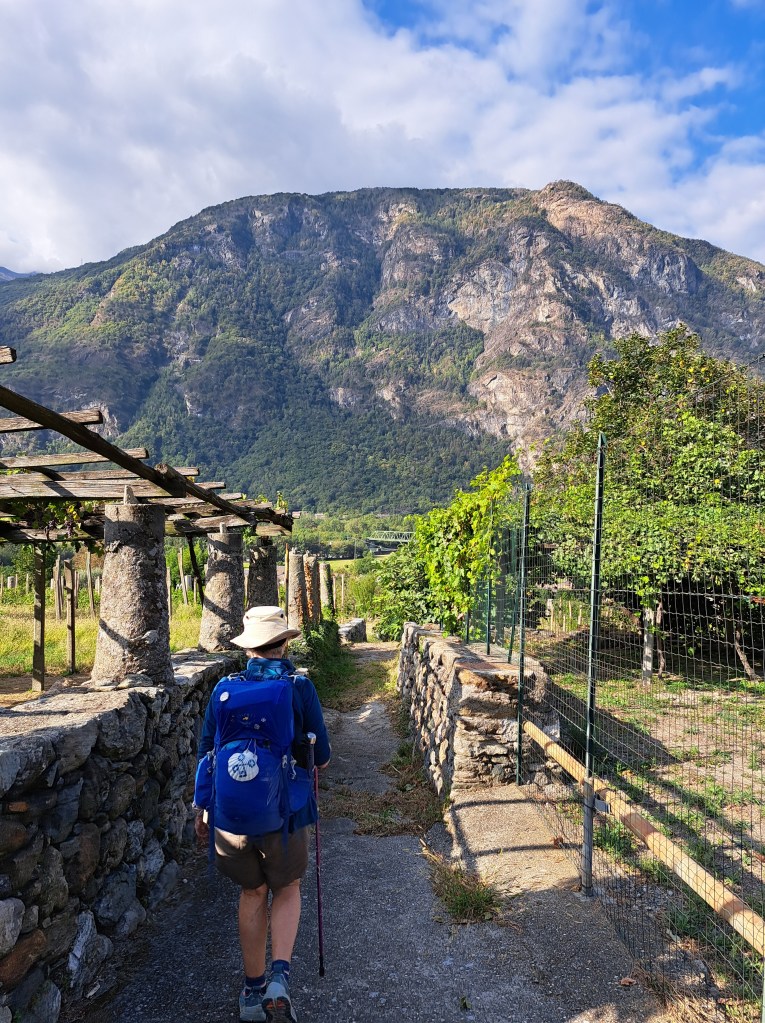
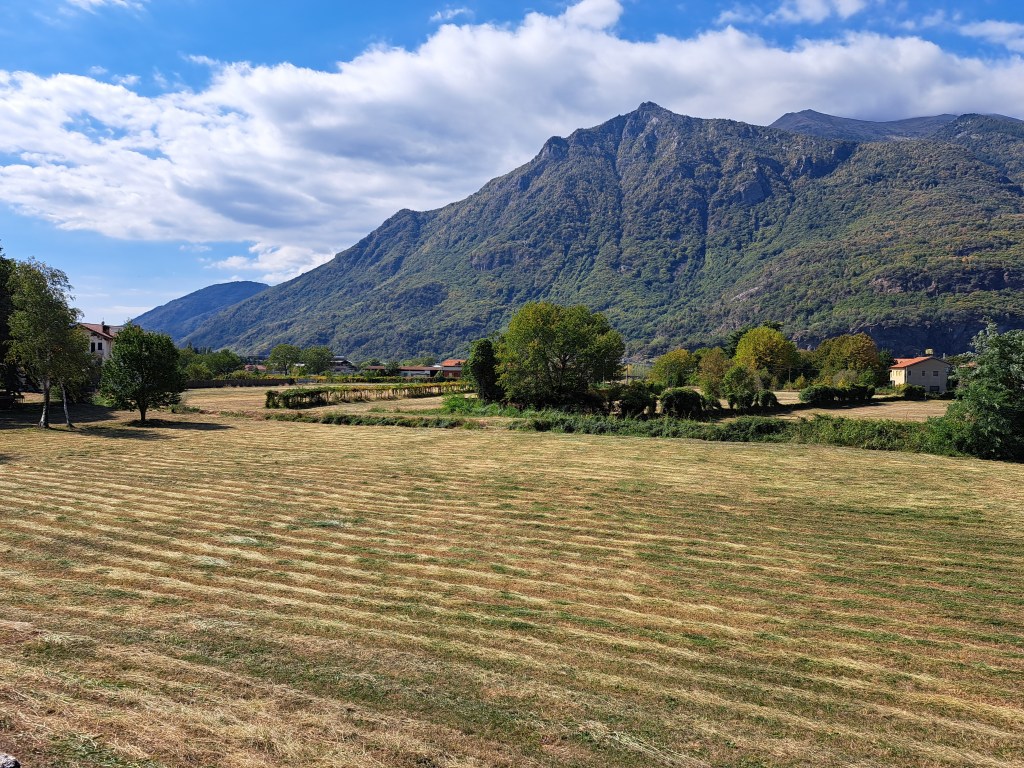
The paths involved walking up and through both the remnants of old galleried vineyards set in terraces high above the valley floor but also included walking through many working vineyards and the harvest is just starting so we saw lots of activity as we went on our way (mainly just moving crates and preparing the vineyards for the pickers). I have included pictures from yesterday and today to show you how amazing this landscape is. At times it felt like we were walking through a series of abandoned Roman or Greek ruins that had been repurposed by winemakers, so colonnades of pillars now supporting vines hanging from trestles. It was also, at times, like we were walking in an alien landscape, but so beautiful…
The other significant experience was starting the walk in the midst of mountains and ending it with almost no hills in view except the small one that has the amazing castle on its brow next to the cathedral…
So, tomorrow we head towards the rice fields and see what the next region of Italy has to offer us….
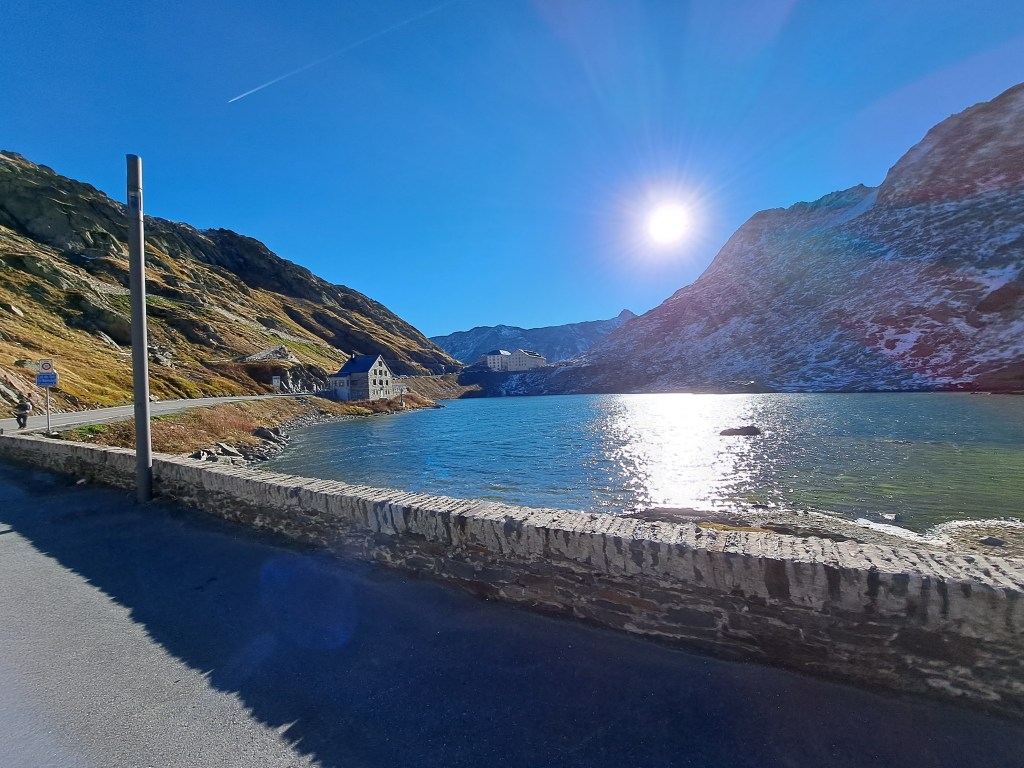
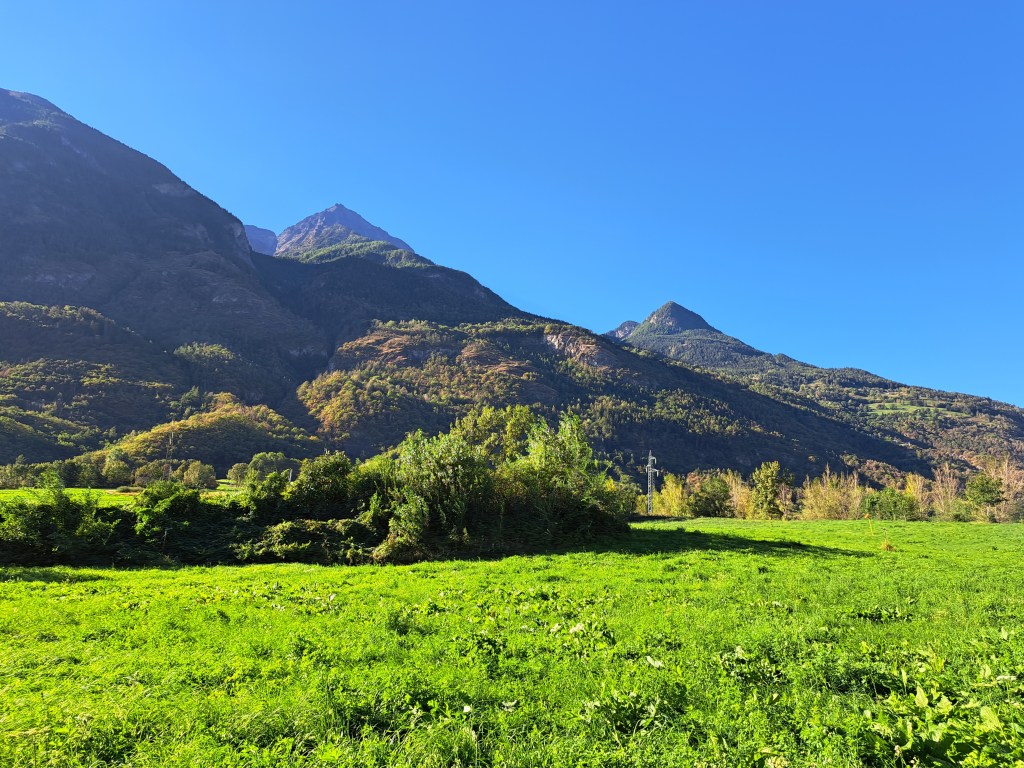
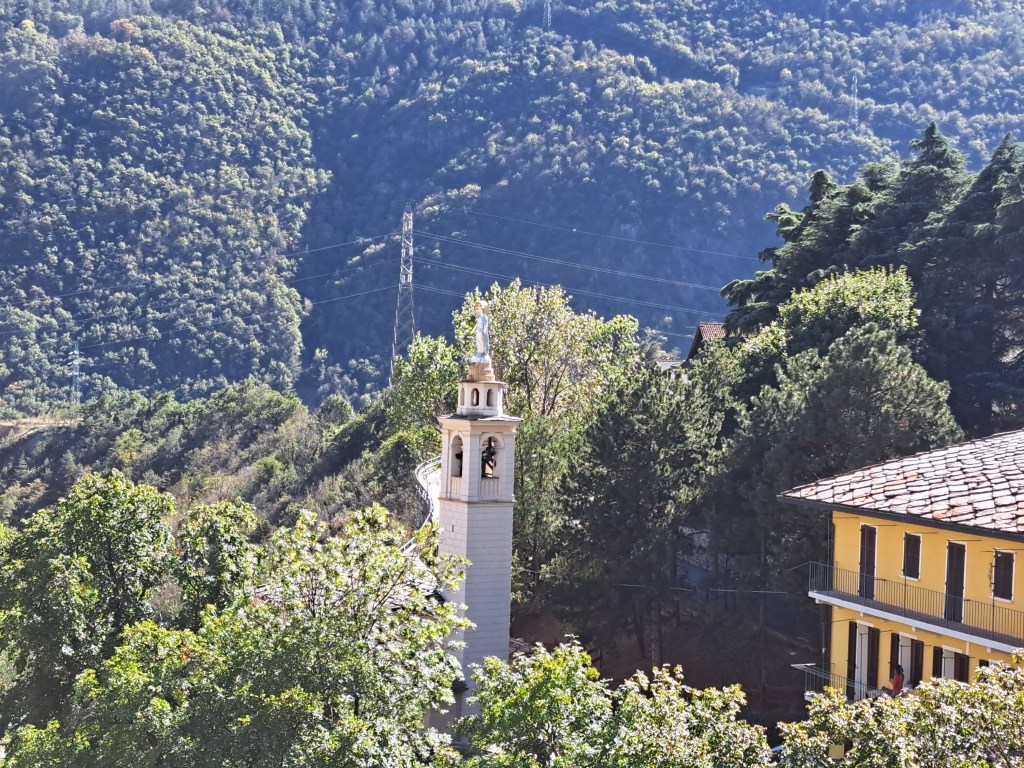
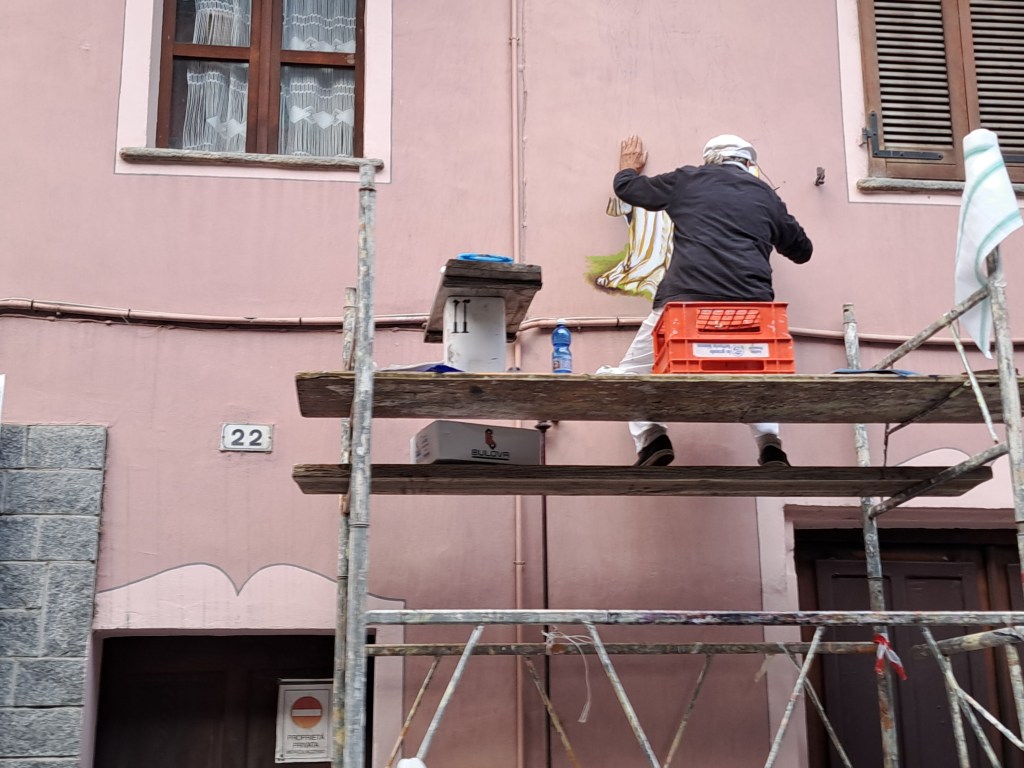
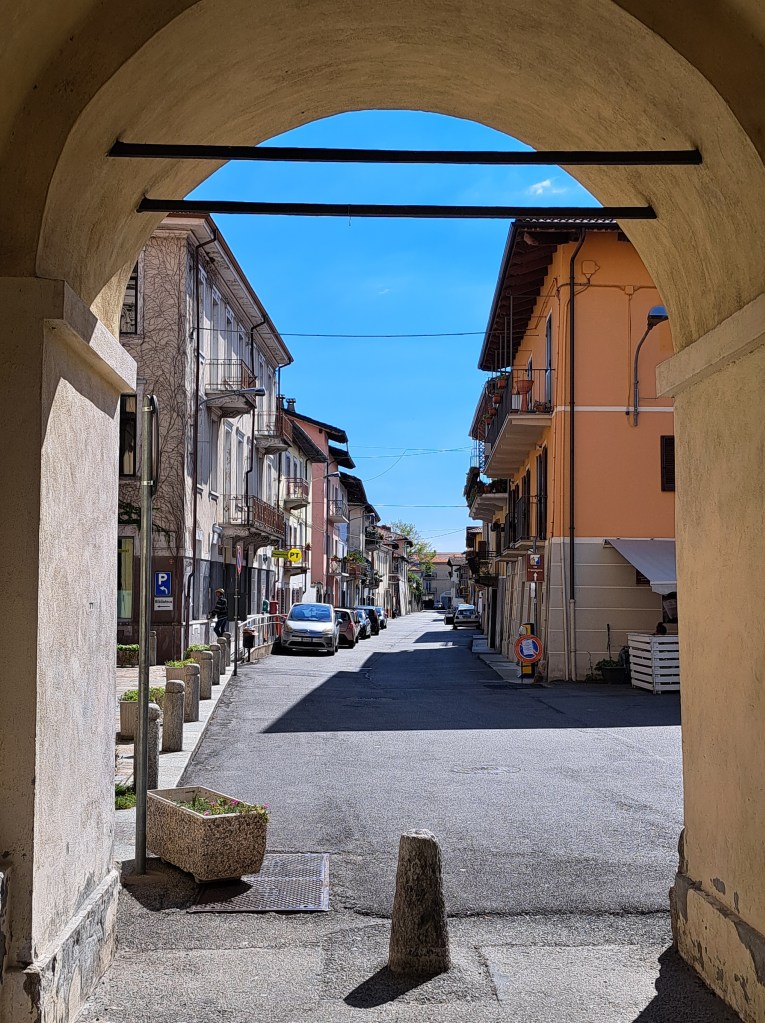
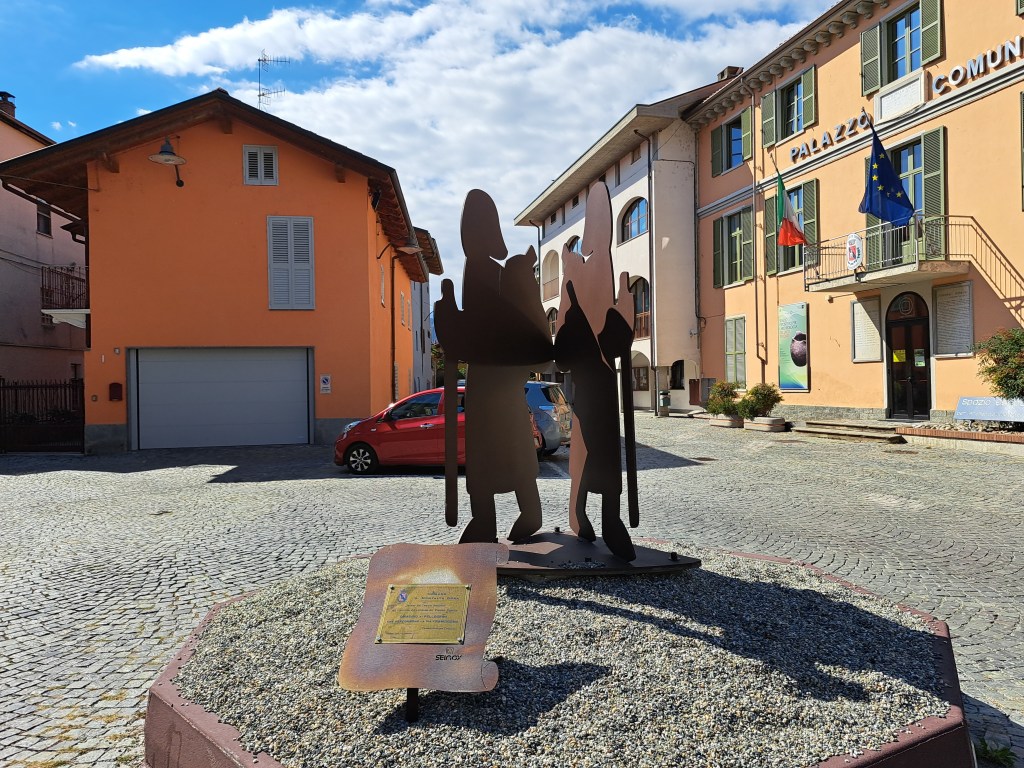
The photos start at the top of the Pass and work their way to here… too many to choose from so just a quick flick…





















 How far can we go?