Today is the 28th of September and we have arrived in a place called Tromello. Yesterday, when I wrote this, we were in a fabulous B&B in Mortara which is in Lombardy…..
We have walked through Piemonte to get here and have thus spent a few days in the rice growing heart of Italy.
I am writing here in a lovely garden owned by our hosts who are musicians. Roberto Allegro (also known under the name Roberto Maurizio) is a conductor and pianist/harpsicord player of note who has devoted his life to Baroque music. His son and one of his daughters are classical musicians. The son plays the oboe and daughter is a violinist specialising in playing the baroque violin. Both trained at the Royal College of Music in London as well as in Italy (he thinks the teaching in London is the best).
I have spent the last couple of days writing about the countryside we have been walking through and the effect it has been having on both of us, but particularly on me. Sadly, I did not save this and a few minutes ago, I accidentally closed Word and I seem to have lost everything. It didn’t even ask me to save things before it closed. I was in the middle of editing one of my sections and accidentally brought up another screen (from the stupid windows 10/MSN system ) and that was that. Will have to remember to save things rather than just leave them open.
I had been writing in our room but it doesn’t have a desk and was sitting with my computer on my lap, so I needed to get out and sit in the garden at a proper table with a proper chair. So, the sounds of the city and the irritating flies will keep me alert as I write this.
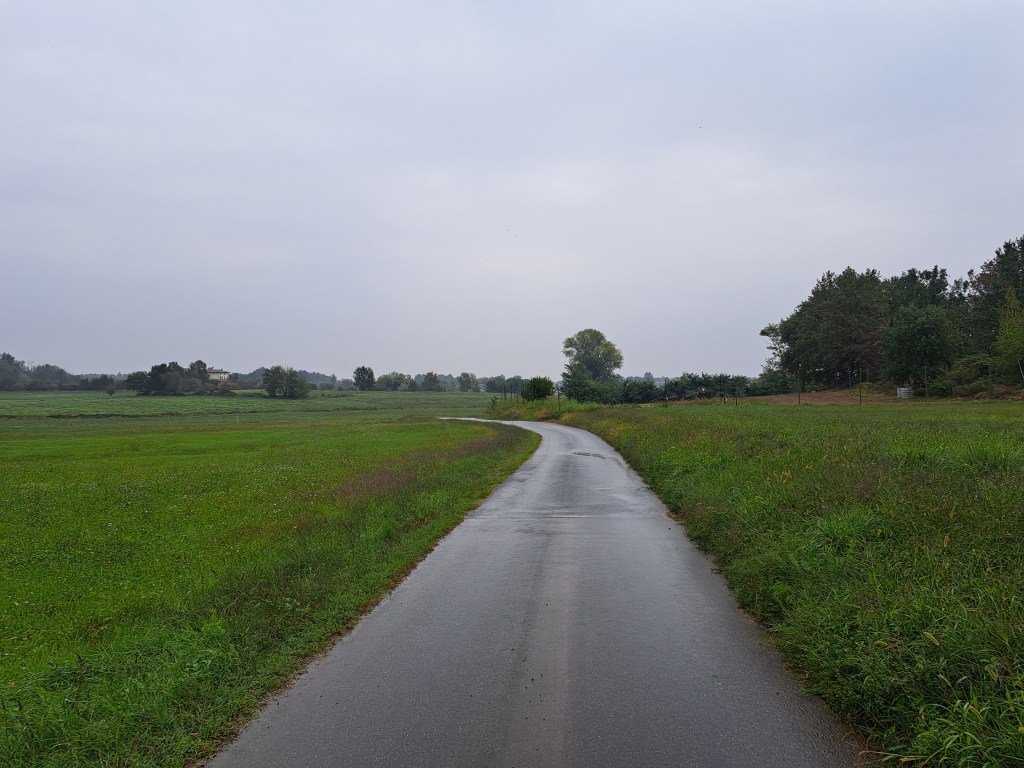
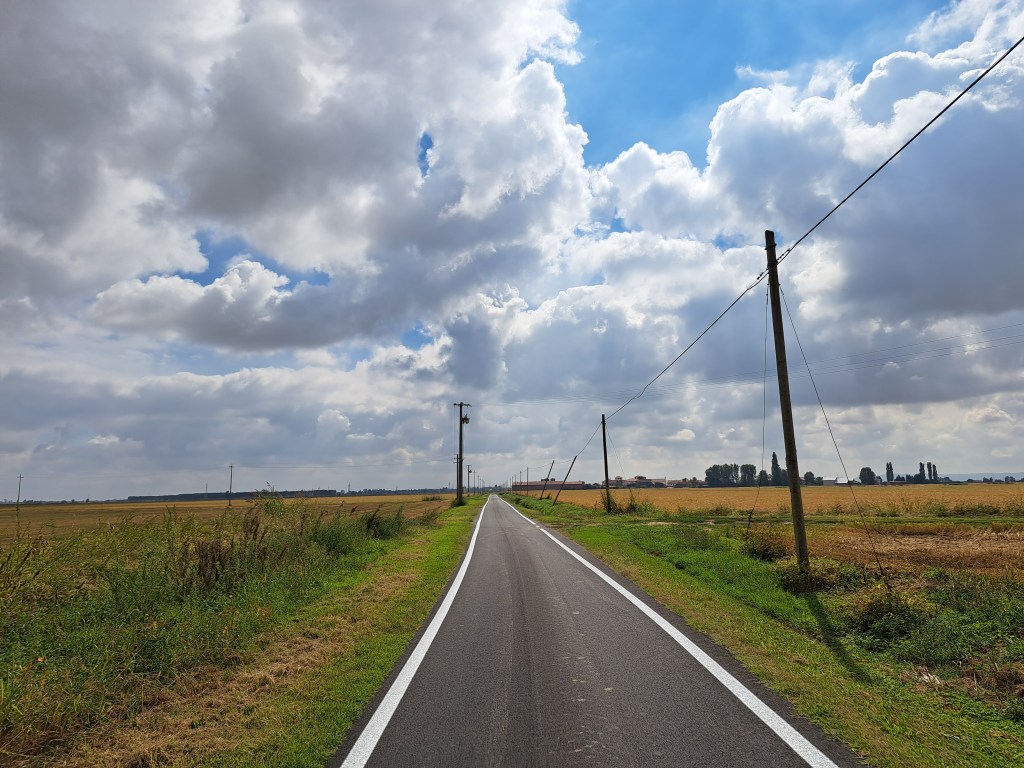
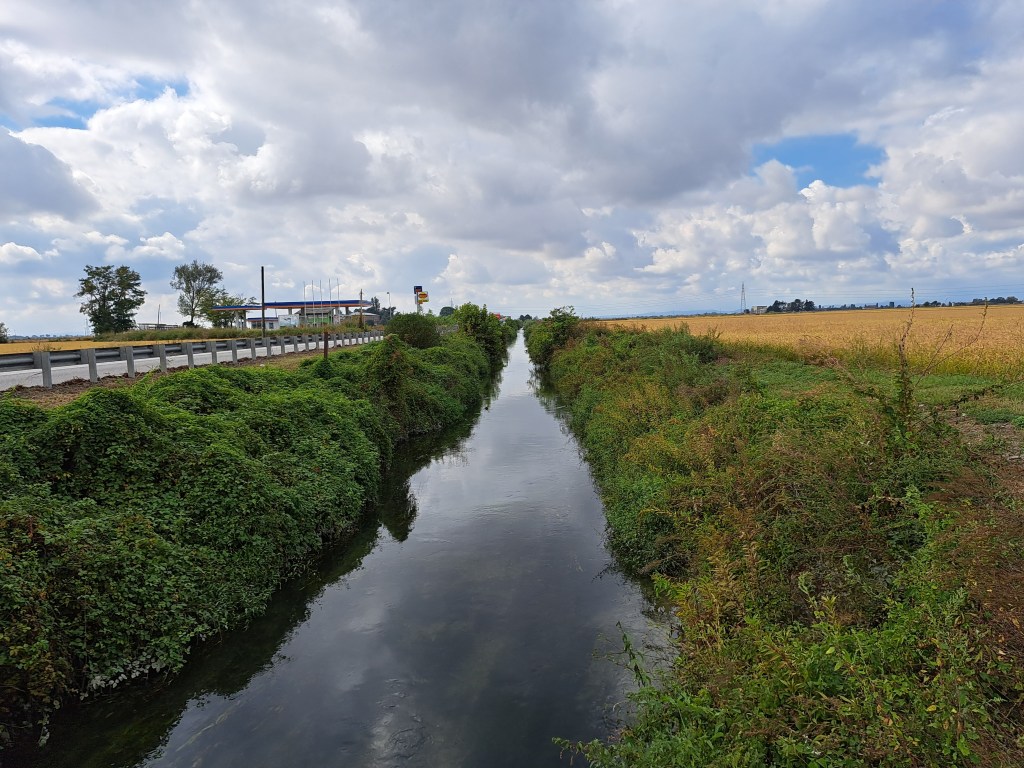
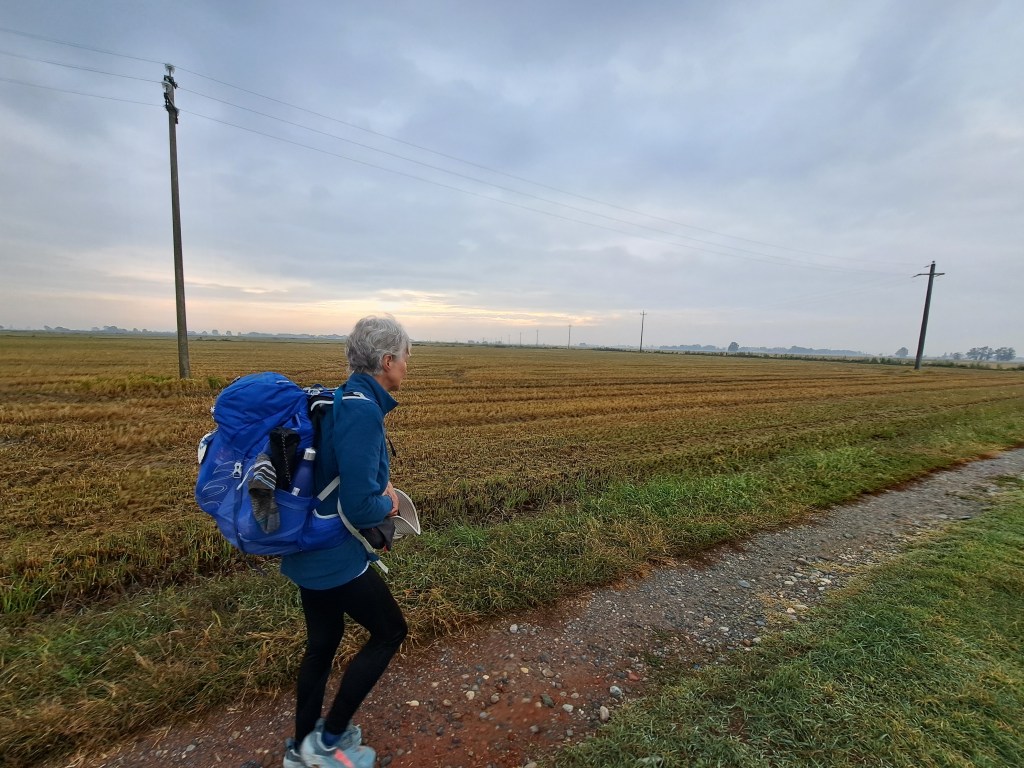
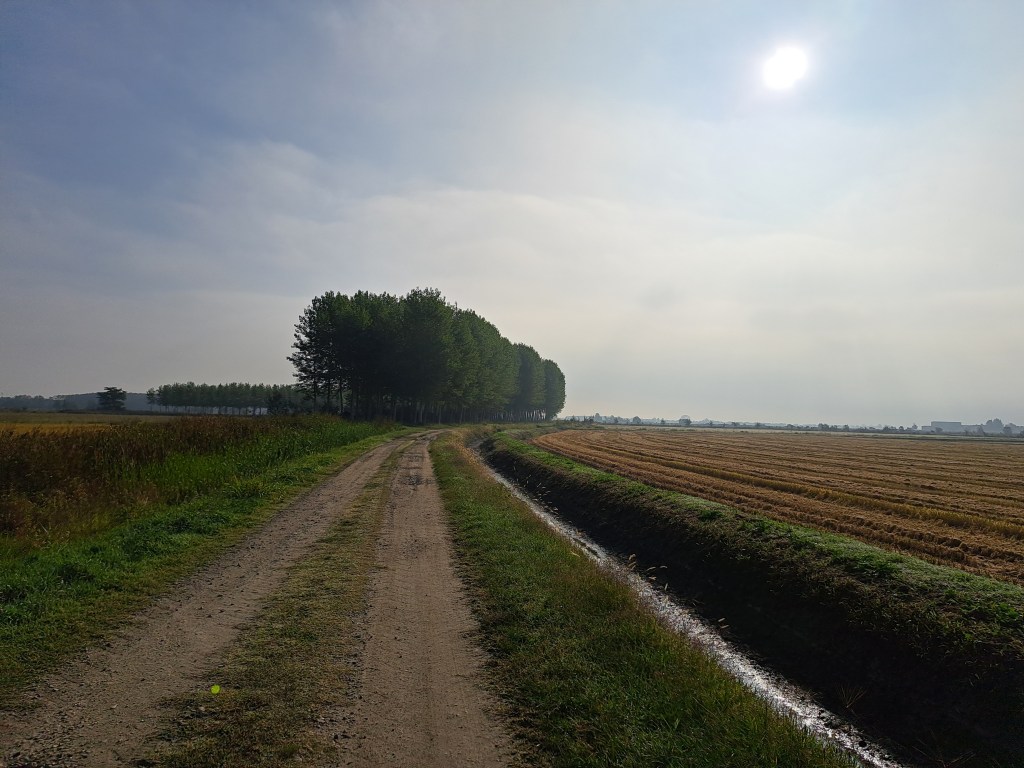
Walking in the rice growing area is quite instructive. We have walked in lots of low lying, flat landscapes and have always enjoyed the huge skies and wide vistas. Here, we have those in abundance. There are aspects of the landscape that are so familiar and yet the place is quite alien or odd in other ways. The contrast between the Fens and here is quite useful to start with. The Fens is a flat landscape that has been dried out with the use of a complex series of drainage ditches. So the land has shrunk and the roads and the villages and towns tend to be raised above the land as they were built on islands or at least dry areas and the land has gradually been lowered with the extraction of the water. The rivers and a number of the roads are also above the agricultural land for the same reasons, and the ditches cut through the landscape helping to manage, and limit the supply of water to the land.
The land here began as a large area of swamps fed by the Po and other rivers snaking across the flat region between the Alps and the Apennine mountains. Unlike the Fens, with the introduction of rice growing back in the late fifteenth century, the intention was to keep the water on the land for up to half of the year manage the draining of the land in order to complete the growing of the crops.
So the area became a vast managed swamp and, by the mid nineteenth century, with new understanding on how to do the water management and with big inputs of money as well and knowhow, the whole place became an even greater producer of this one crop.
Alongside the new canals and network of irrigation systems came the need for more and more workers. Growing rice was very people intensive and well over quarter of a million people were needed to prepare the land, plant the cops, week and maintain them and then harvest and process it. So, in the nineteenth century alongside the industrial scale of production came the industrial scale of exploitation of the workers. From March to October these people worked the heavy clay soil, planted the crops by hand, weeded in flooded fields, dealt with the voracious insect populations that these man-made swamps produced and dealt with the extremes of cold and heat that came with the three different seasons they worked in.
It was not until the early twentieth century that these workers got at least some improvements in their work conditions and it was the post ww2 period that finally brought about viable machinery and use of weedkillers and other solutions that significantly reduced the numbers needed for this crop.
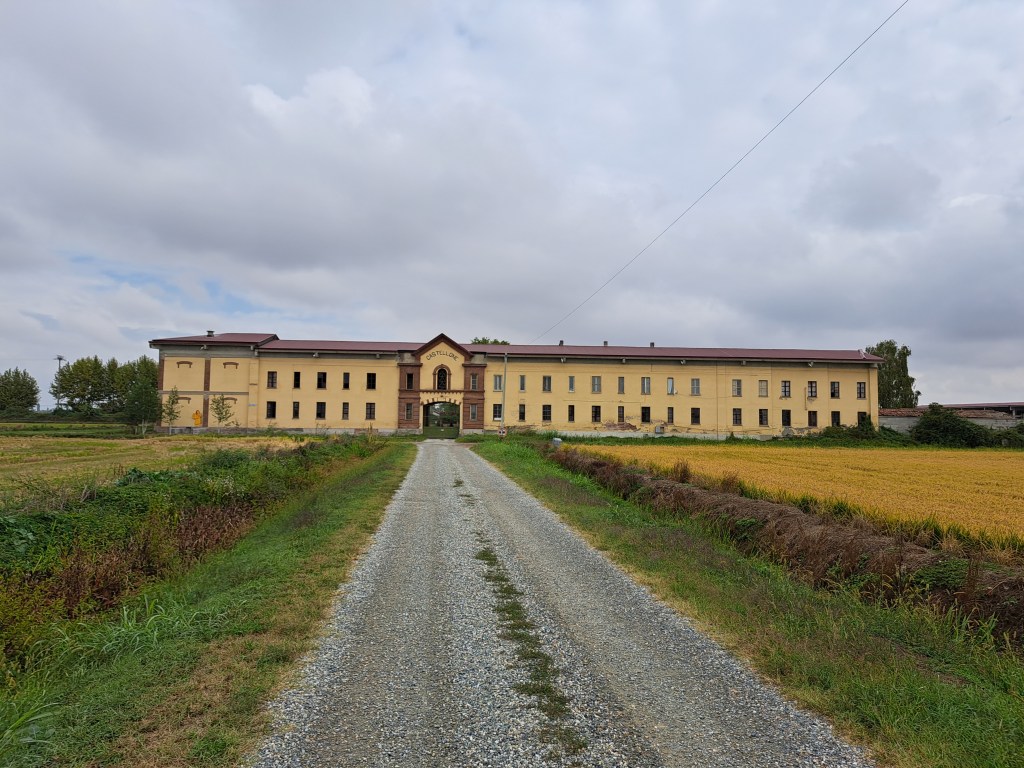
Today, when walking through the region you will see isolated “farmsteads” consisting of a series of large buildings (a mix of farm buildings and blocks of accommodation) often forming great quadrangles that look like a cross between a stern monastery and a prison. These were where many of these impoverished and abused workers (often whole families) lived and worked. Most are abandoned or close to that state. The crop is machine harvested now and mainly processed in huge, featureless factory blocks. The derelict buildings do often give off a strange sense of unwelcome as you walk past them.
The other thing to note about rice growing (apart from the abundance of insects) is the nature of the crop itself.
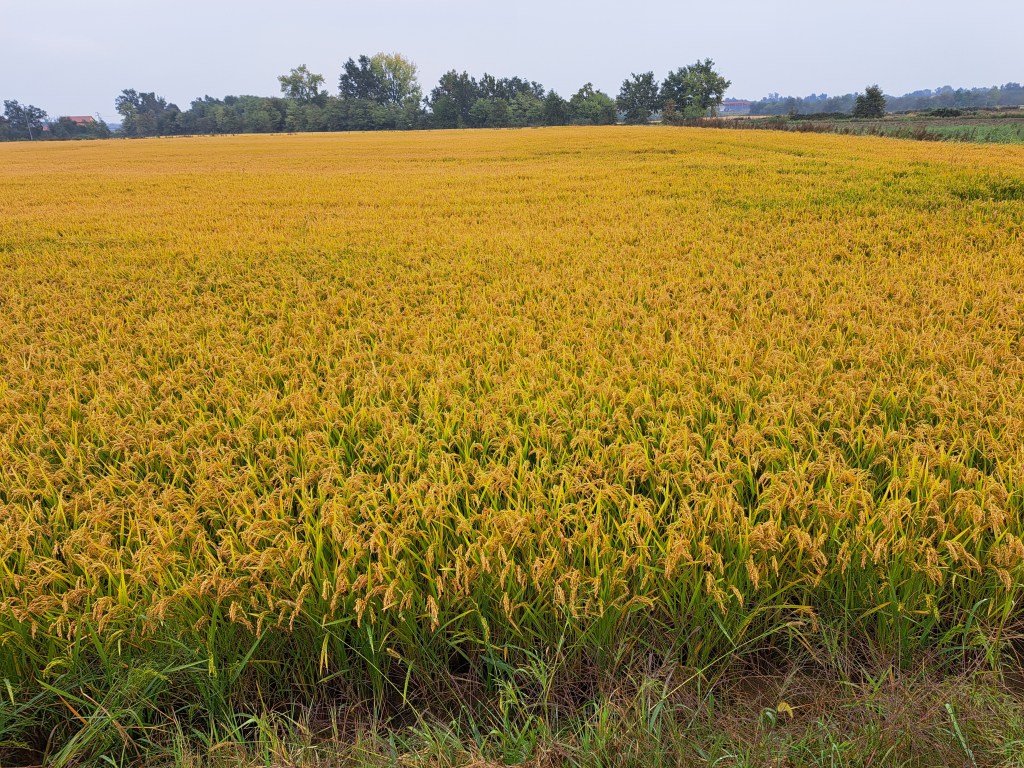
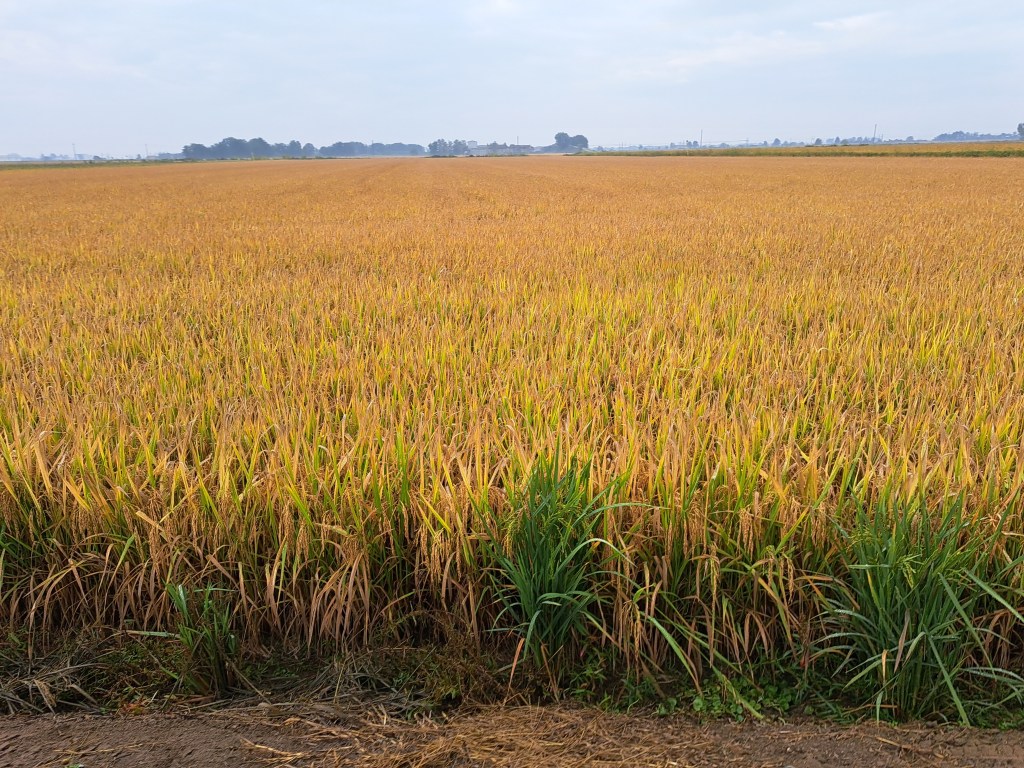
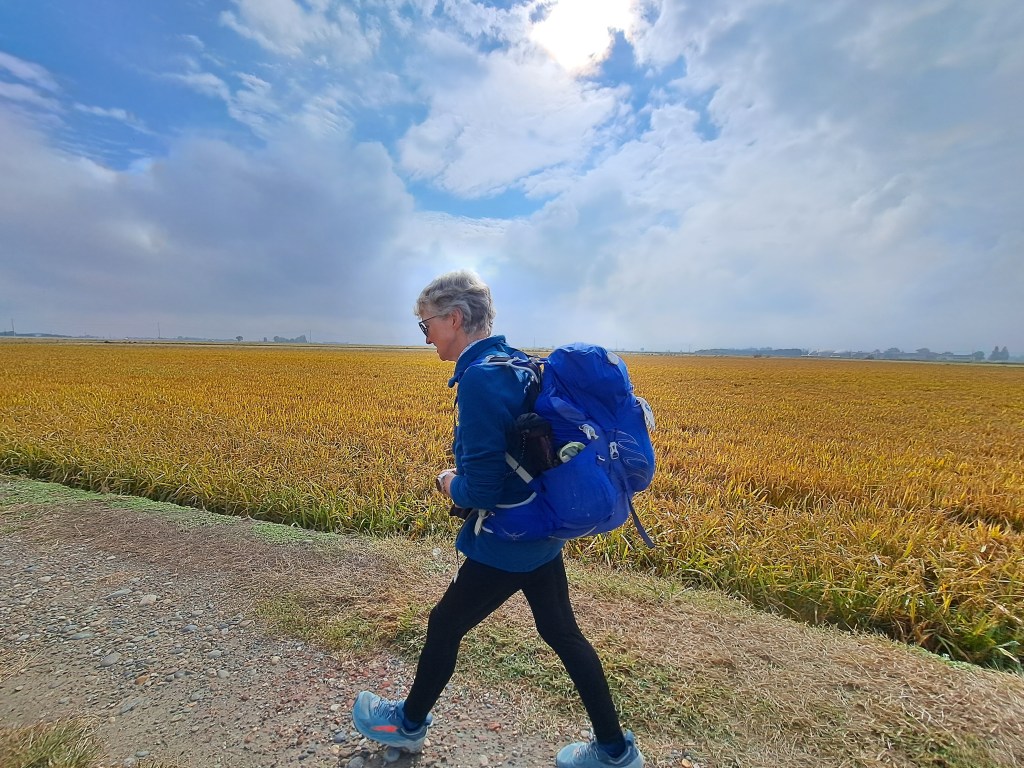
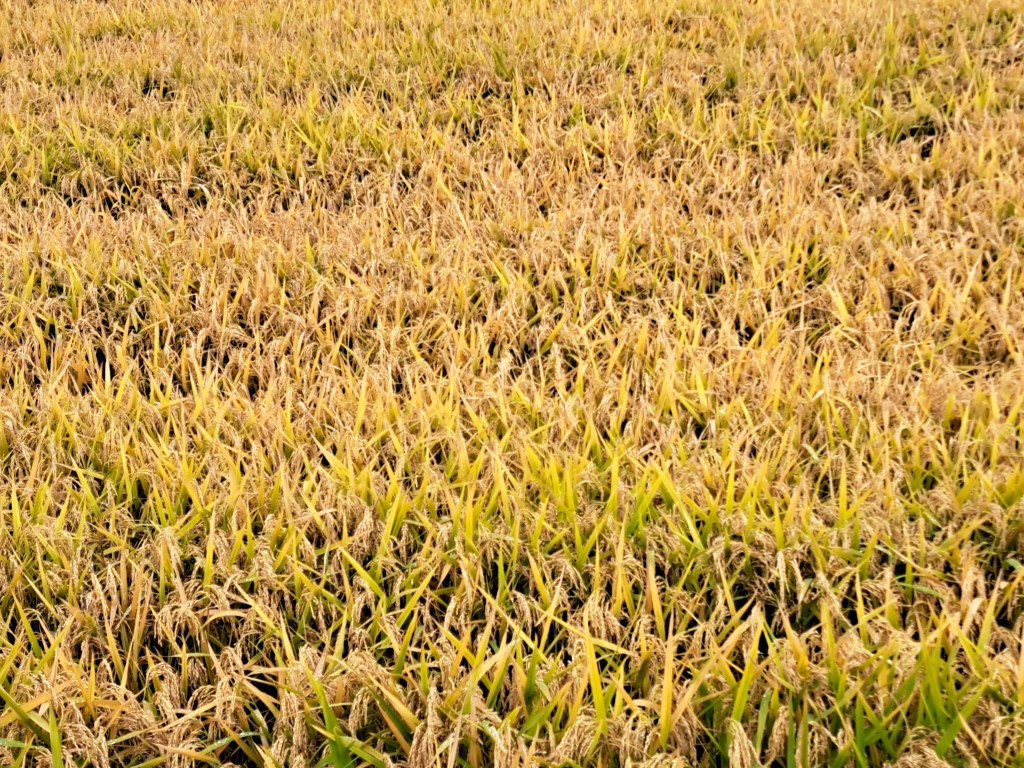
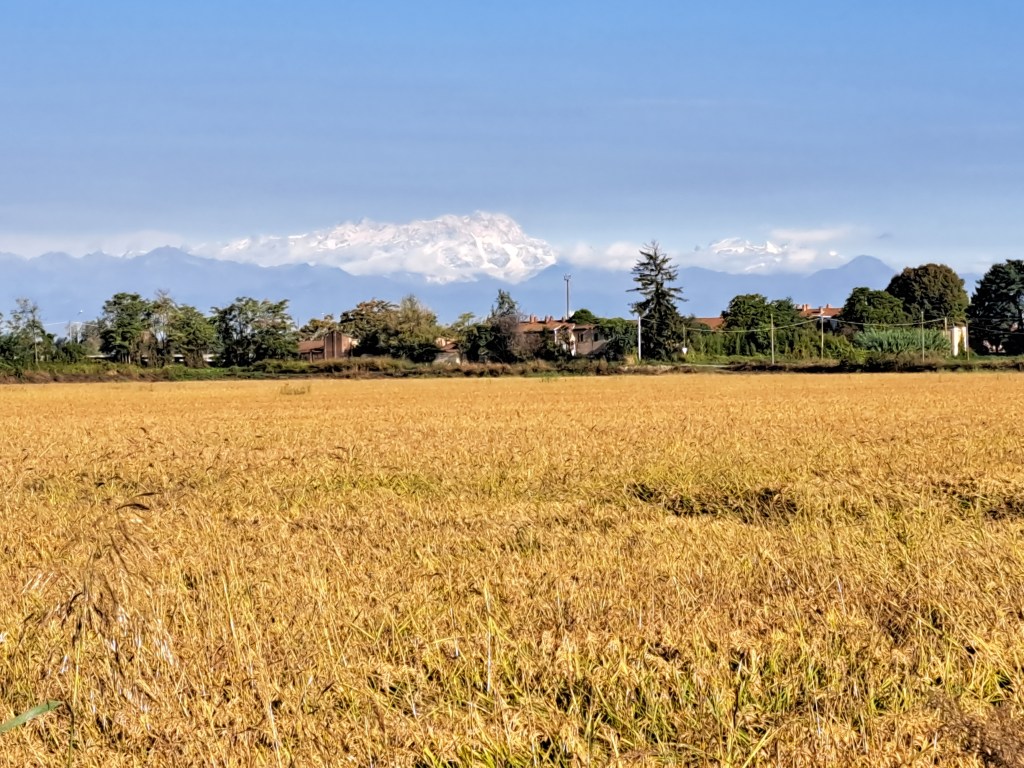
Apart from a couple of fields today, every field we have past has been drained and is pretty much ready to harvest. The rain we have had has delayed some of the process but we pass by some fully cropped and partially cropped fields but most are still wating for the harvesting machine to come by. The colour of ripened rice is incredible with a different sort of gold to it from other crops, having a mix of both red and green in its hue.
The other thing is how densely the stuff is grown. You don’t get rows of individual stalks of rice. They are grown in tightly pack rows of bunches of stalks so, when you look at the field from above you don’t get a sense of there being individual plants. The tight packing and the heavy heads of rice form a thick carpet when you look down on it and across the field there is the look of a badly cut field with blades of grass sprawled across the land. But you are looking at the top of the crop and the earth is a good couple of feet below that. You have to see the field from a lower angle to understand what’s going on. I have some photos to illustrate this odd effect.
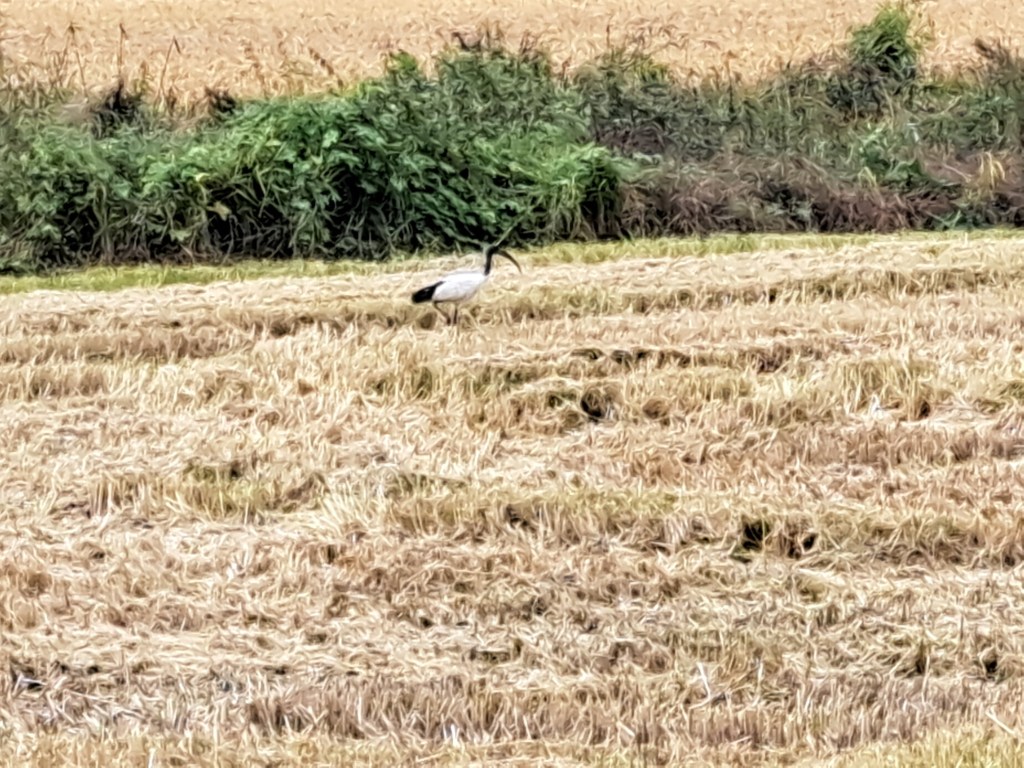
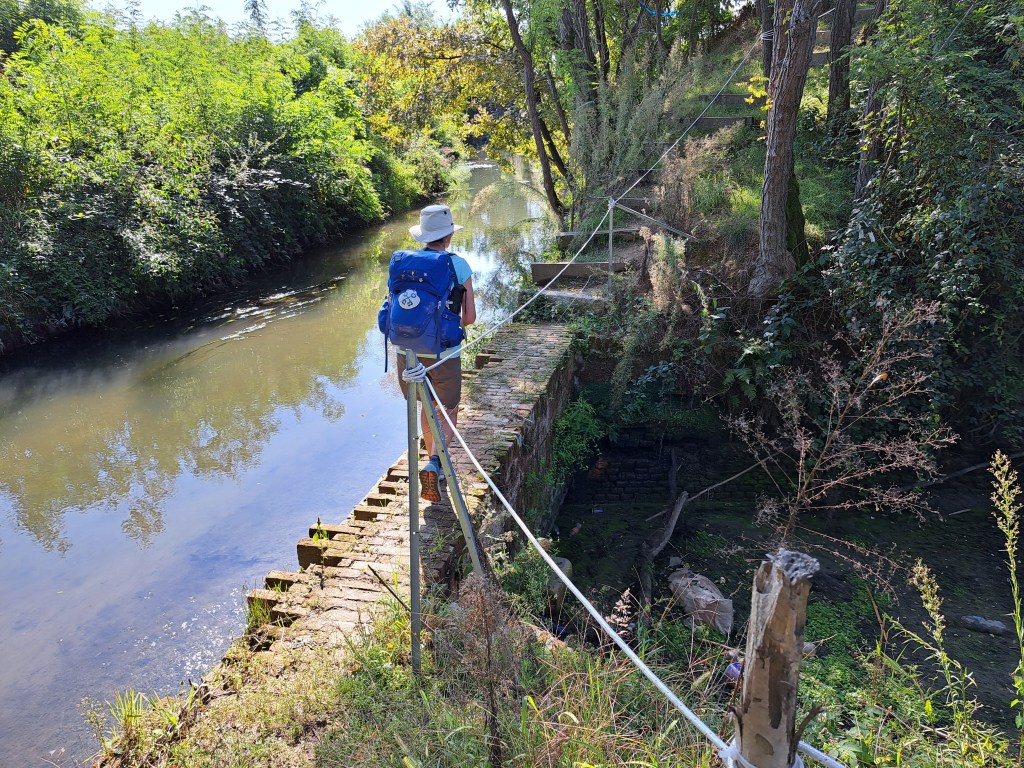
Having mentioned the insects, I should add that the walk has been quite rich in a number of different types of fauna. Yes, there have been a few mosquitoes, but largely we have managed to miss the major plague that persists across the summer months as the fields are mainly drained and much of the water in the ditches is flowing along merrily. Many other flies, gnats and huge swarms of tiny flies are there to keep us uncomfortable and help distract us from the remaining mosquitoes whose bites uncomfortably dot my shoulders, forehead and legs. There are also various sizes of hopping insects that could be crickets or even locusts. The smaller ones mainly hop and the larger ones hop then fly on quite large sets of wings. We have seen a few animals we thought were marmots but turn out to be nutrias (a now common invasive species from the Americas) and other furry creatures who are at home both on land and in the water. The nutrias got us excited because we thought they might be beavers (we saw beavers in France) but, while they have the two big teeth and similar furry faces, they don’t have the big, flat tails, so nutrias are what they are. We see frogs and other amphibious creatures, evidence of snakes (skins and dead ones) and we have seen the prints of other animals including wild boar and deer. But the birds are probably the main creature that visibly dominates this landscape. Huge black and white birds with long curved beaks everywhere (African Ibis?), as are smaller, more elegant white birds we suspect are egrets. But many other birds, large and small add colour and grace to the landscape, too. Not so many jays as earlier but some magpies and of course, various birds of prey from very small ones whipping across the fields and large ones wheeling overhead.
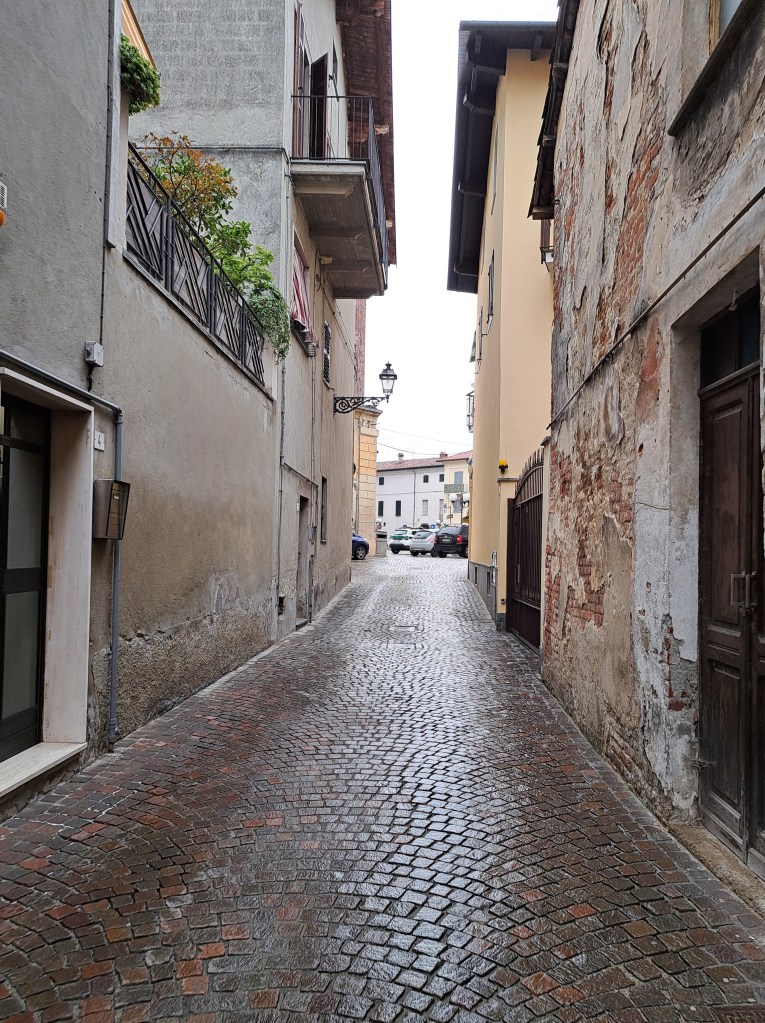
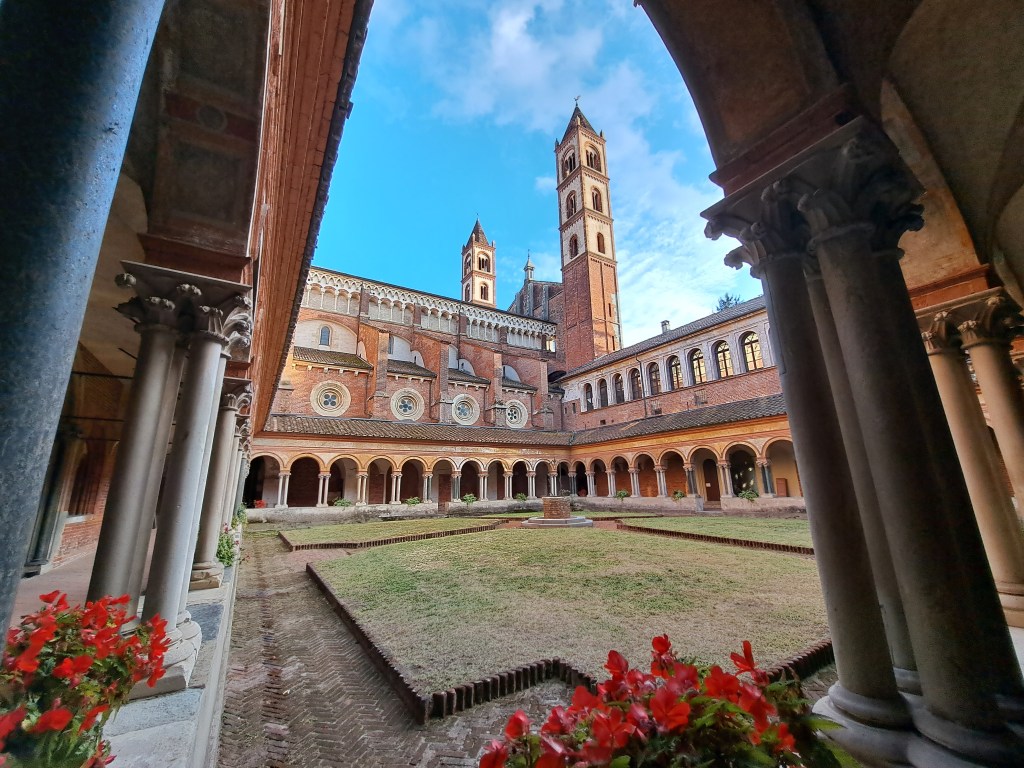
In the last few days we have stayed in a variety of places and each one has proven itself to have its own distinct character with people hosting us who are keen to help, to show off the places they are renting and give us the support pilgrims need (like where to get food, where the route goes the next day, where to visit and get a stamp or what the significant sites are for pilgrims. We stayed in a pilgrim hostel in Santhia, an amazing room in a building built by the Italian version of a mixture of a friendly society and an early union. This was in the amazing city of Vercelli. Then we stayed in an agricultural centre on the end of Robbio where they take groups of mainly young people and teach them about rural life in this area. The building was amazing and they had a small farm section with chickens, geese, goats and a pony at the back. And now we are in Mortara, which is lovely.
One particular animal that has featured a few times on this stage of the journey has been the dogs. In other parts of Italy we have walked in dogs have not really featured (apart from some amazing sheep dogs) and, unlike France, they were never as persistent in their barking or their defence of their owners property. But here, they are easily as noisy and persistent as their French counterparts and today our experience was a bit troubling.
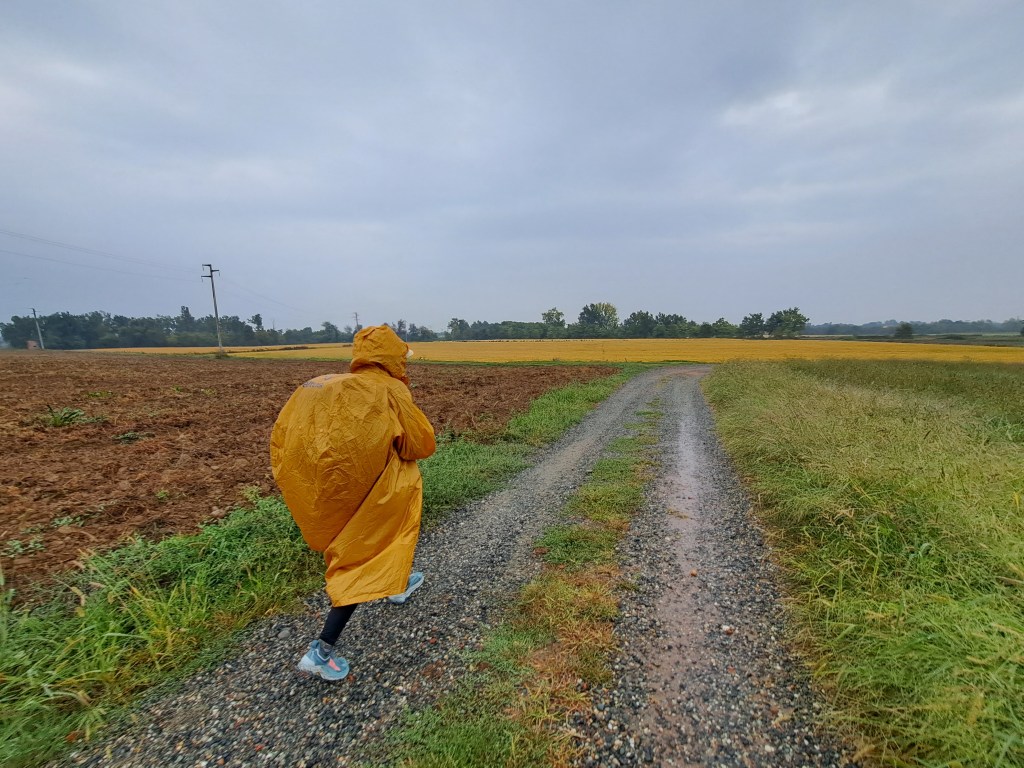
This morning, on the path just short of a place called Madonna del Campo, we were walking along a path between fields when we saw three very big dark brown dogs emerge from around a corner ahead of us. We thought they might be owned by hunters as they looked like they worked together and the started to run towards us, then stopped as if they had been called by someone, then they turned and trotted away out of view.
We got to the turn and walked into another section of the path with a ditch on the right and a field edged by trees on the other. We immediately saw the dogs in the diagonally opposite corner of the field to us. They were very alert and barked at us as we proceeded to walk along the path, then they began to approach us in short trots then pausing to bark and snarl as we walked along.
We did what we usually do in such circumstances. We didn’t engage with them, kept our gaze forward and walked together at a steady pace, as the dogs moved round to our rear and continued to threaten us. We remained steadfast and continued to walk to the far corner and then onto the next section of the path and, thankfully, we had left the zone they wanted to protect so they remained at the corner watching us until we were far enough away for them to be satisfied that they had done their job.
Someone should have had them under control and I worry that individuals or people less confident would have turned away and tried to find an alternative route rather than risk walking past that aggressive little pack of hounds. Even if we had known the Italian for “Go Home!”, as we do in French, we would not have tried it with these animals. They were not wagging their tails and their growls were not just for show.
We also hope that the young Dutch woman we have been occasionally encountering was spared from a similar encounter as she is walking with her dog and may not have been treated in the same way by those hounds. Or perhaps, as an experienced dog owner, she might have just sent them packing!! We hope that was the case…
So, all of the other stuff I have been writing about (and managed to lose today) will have to wait for another day. I have spent too long on a history lesson and wanting to share our mixed delights and encounters with nature with you.
We are getting closer to the River Po and hope to be able to take the ferry across in a few days’ time – the drought earlier on this year caused it to stop for a while but the rains have helped get it going again. We are also looking at a good day’s rest when we get to Pavia on the 29/30th September. Just one short and one long day to walk before then. (Well, just finished the short day!}
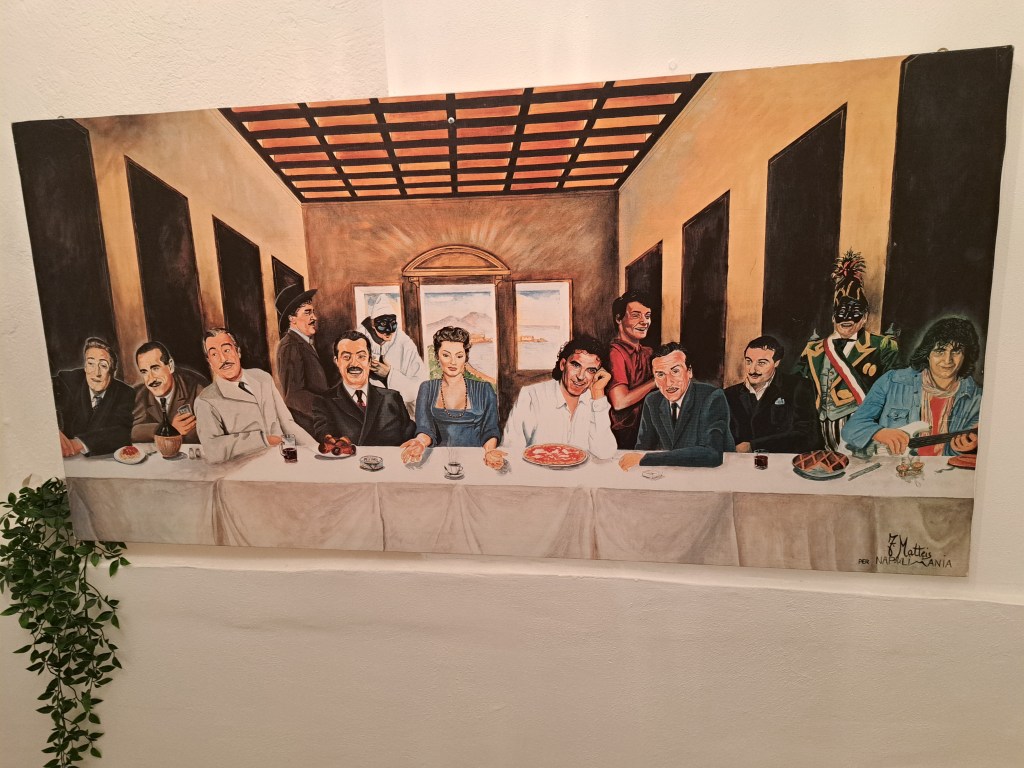
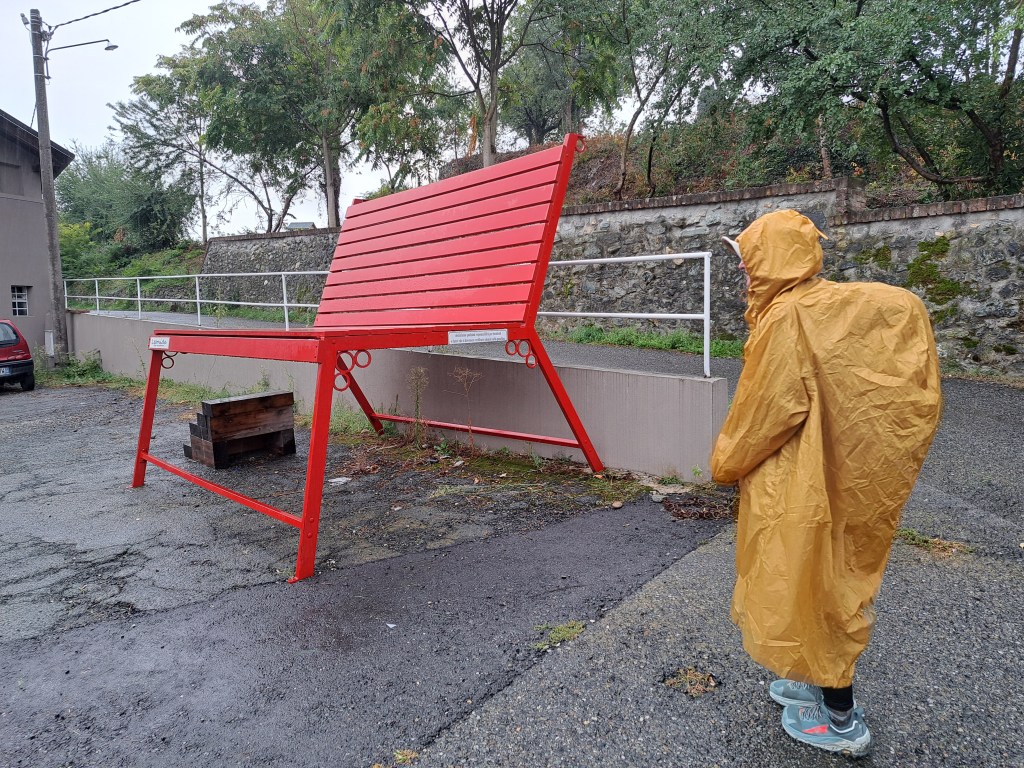
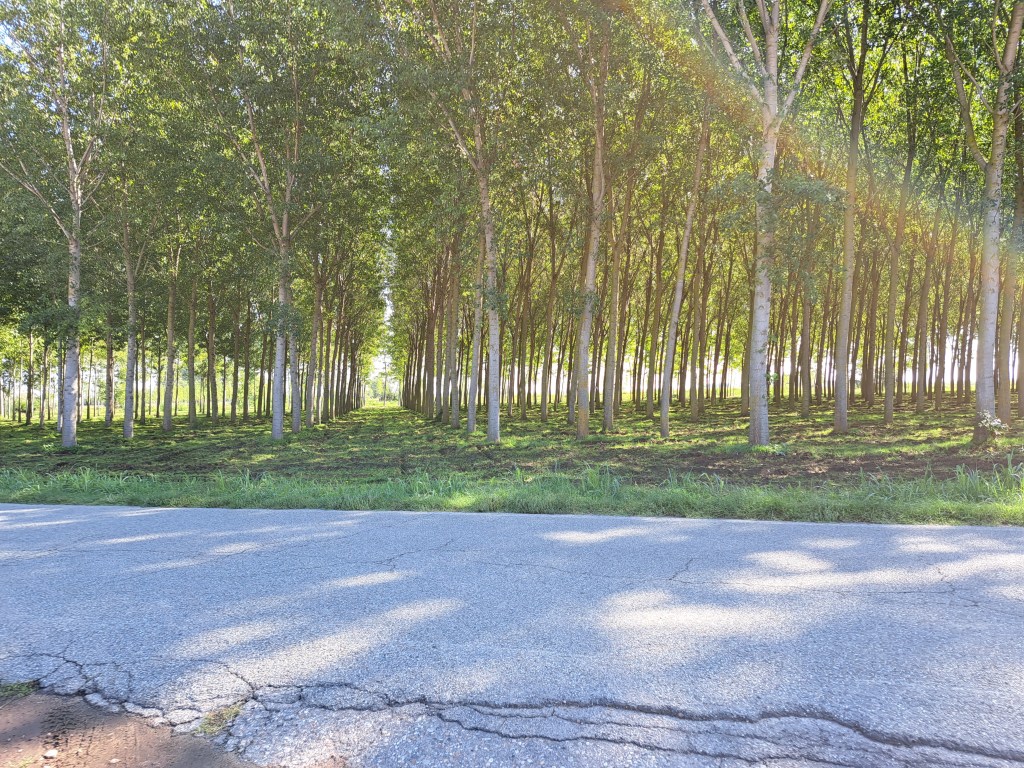
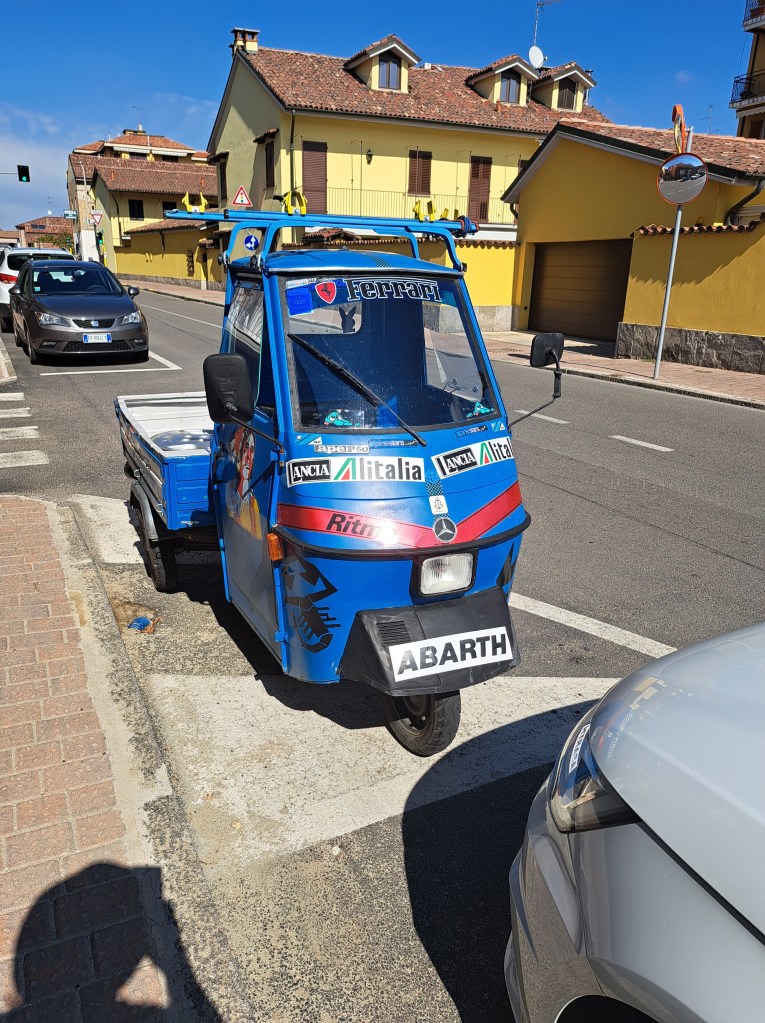
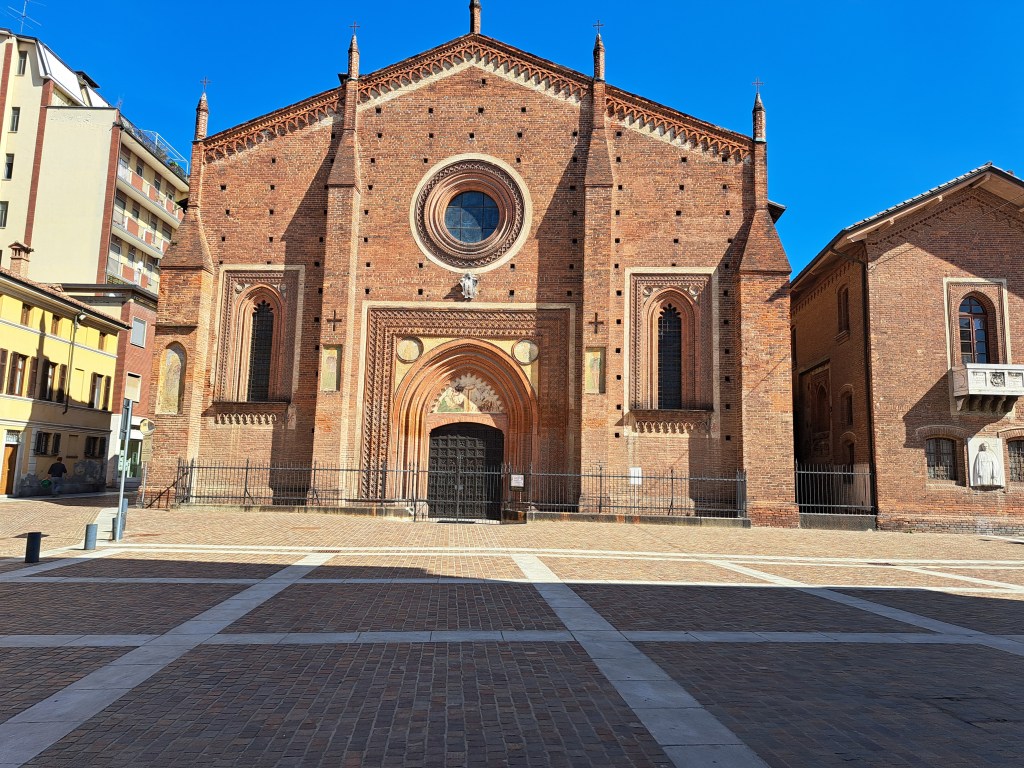
And here is a mix of photos starting as we left the lakeside town of Viverone where we stayed in a renovated monastery where, on the wall as you walked up the stairs to the large room where we had breakfast, was an interesting a reworking of the last supper that I had to share here….
















 How far can we go?