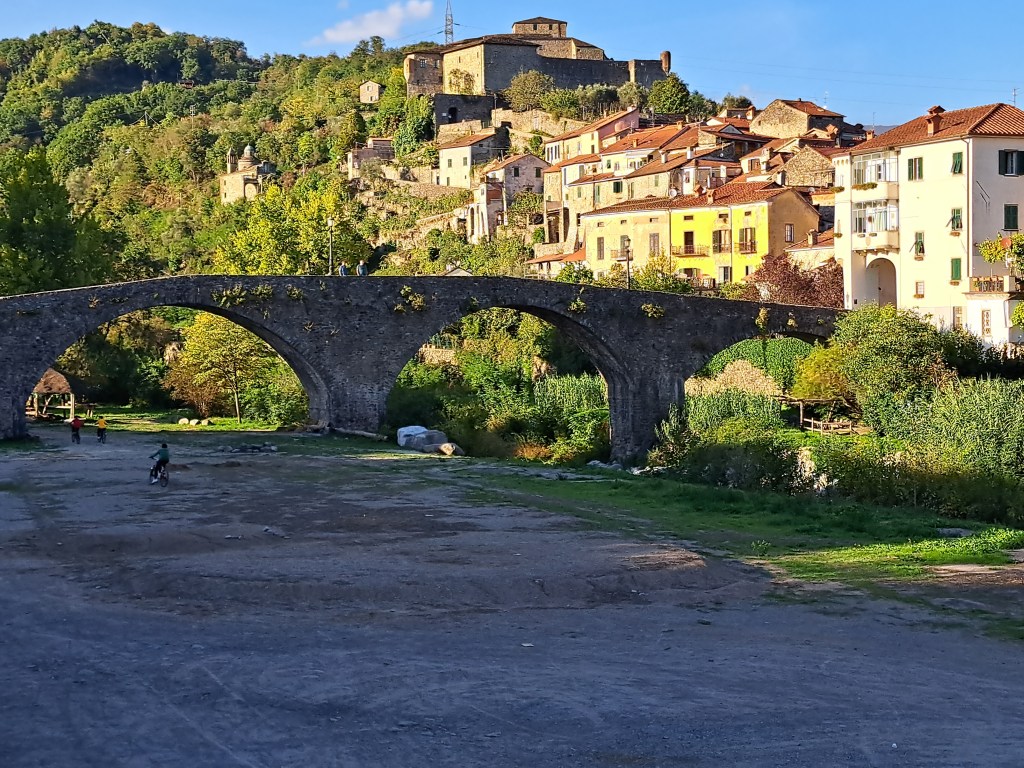
We are in a small mountain town called Pontremoli, which basically means trembling bridge. It has two fabulous medieval bridges and, I am sure neither are likely to do any wobbling, so I assume that the original bridge was a rope and wood bridge of some sort back in the distant past. It stands on the junction of two rivers so there are more bridges to be found here, too. Almost next door is the church now used as the parish church, but it was founded by St Francis along with a convent that is no longer here (a Capuchin one is on the other side of the river from here). Sadly, the church is not open at the moment, which is unusual, but it just means this is another place to return to at a later date.
Yesterday we walked from Fiorenzuola d’Arda to a place called Fidenza. Both are lovely places and the walk was only 23Kms (compared with the previous days walk which was almost 35 Kms – from Piacenza). We will miss the annual food festival at Fidenza which starts today and goes on till Sunday, which is Ironic because we struggled to find anywhere open yesterday evening where we could have dinner. We ended up sitting in a bar that promised it would open up for dinner at 8pm which was too long a wait for Alison but we did it anyway.
The hotel we stayed at last night was the only one we could find (our fellow Korean pilgrim also stayed there) it was a pretty weird place. Called Hotel of the two “spades” I assumed it meant the two of spades but, of course, spades in Italian are something other than shovels. It is the hotel of the two swords – I worked it out from it’s logo… So, quite a dashing sort of place….
We entered the lobby and there were two older women sitting in the reception/lounge watching the equivalent of that TV programme where a couple argue and accuse each other of terrible things and let the audience decide. One was watching avidly as the older one dozed. We arrived and said hello and the conscious one elbowed the other who jerked upright and tried to stand up, nearly falling over with her effort. She was a tiny, very frail, elderly woman with bright red died hair and a very wobbly gait (no evidence she was from Pontremoli) and had a distinct resemblance to Mrs Overall from the comedy sketches “Acorn Antiques”. After signing us in, etc, we went up to our room and tried to have showers. Alison was first and returned after quite a long time saying the shower was cold. I tried it to see if I was brave enough to use it then went down stairs to waken up out host again. She insisted that I needed to leave the water running for a while and, after insisting that this had not worked I gave up and had a grimly icy wash
As we left, later on, to explore the town and find a place for dinner she insisted that the water would be fixed soon. Only two hours, she said, and it will be hot again.
After our rather extended outing we returned at about half nine to find the women with three men of various ages talking loudly in the foyer. They all greeted us warmly and the older man, who turned out to be the main hotel person happily assured us that within the next hour we would have hot water and pointed the one of the other men saying that he was our angel who had come to solve the water problem.
Needless to say, we did not try the shower until the next morning.
We had committed to spend the morning in Fidenza because we had been having trouble finding accommodation for a couple of the stops over part of the mountain sections. We had one booked and one that we thought we night be able to get into despite not being able to contact them but the other place was impossible to contact my phone, email or text so we had given up and decided to take the train to Pontremoli and leapfrog those sections of the way across the Appenine mountains. So we were able to visit the Cathedral and check out a few other places including a church with a very moving memorial.
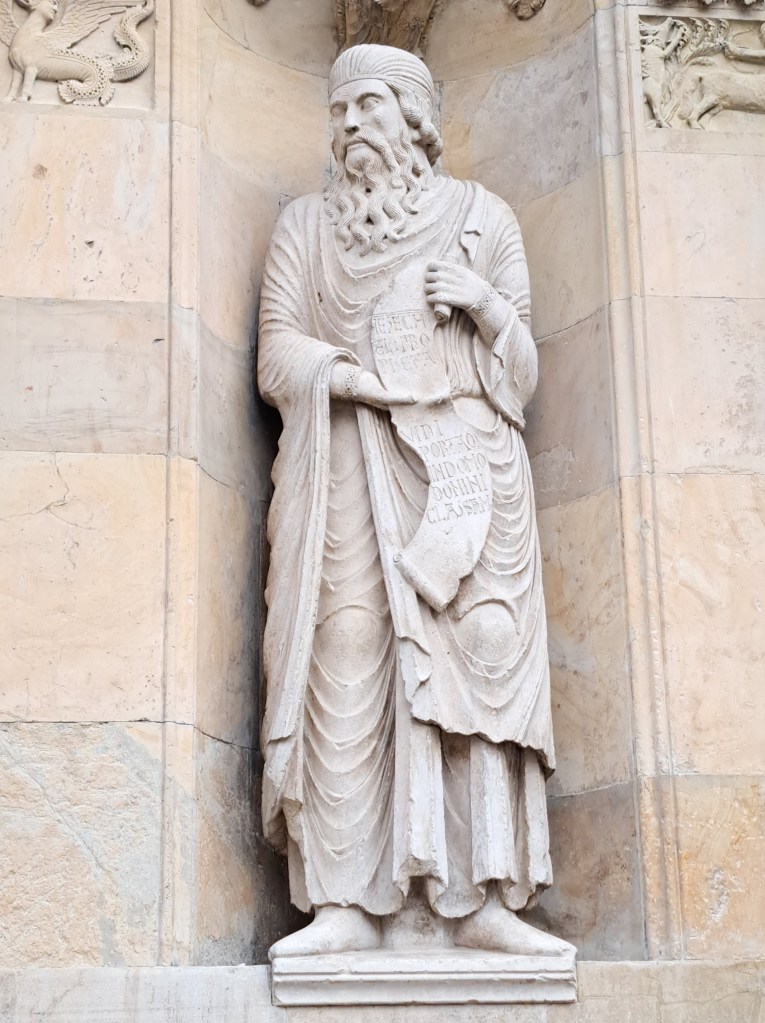
Fidenza is a place that has been fought over and subject to violence since its earliest days when it was a Roman fort and town. The local Saint, who gives his name to the Post-Roman title of the town “Borgo San Donnino”, was martyred there by the Romans and the shrine for the saint (who was beheaded) was already an established pilgrim site by the late fourth century. The crypt of the Cathedral has his bones laid out neatly in a glass and metal case below the altar, there. On the outside of the Cathedral there is a statue of St Peter with a scroll in his hand referring to the pilgrim route to Rome and pointing the way, so this has been a major stopping of point on the way for a very long time.
The city has been owned by various kings and dukes, fought over and destroyed a few times and, in the early twentieth century was heavily invested in by Mussolini who renamed it Fidenza to be closer to the original Roman name for the place. Then, during the war it was heavily bombed by the Allied forces, destroying quite a large part of the city, and then the Germans took the place over during their retreat and conducted a series of atrocities on the poor folk there. The memorial in the church has a painting of a woman distinctly like Mary (The Church is dedicated to Mary the Mother of God) with a man very like Christ laid out over her lap looking dead while she throws her arms up in despair. Near her are two angels offering solace and all around her is devastation with other dead bodies and the church badly damaged, in the back ground. Next to the paining is a memorial plaque listing some 120 people (men, women and children) who died during the Allied bombing. Given the news of the Russian rockets fired into a Ukrainian block of flats, we stood there contemplating the tragedies and suffering caused by wars.
So, after visiting local churches and other sites, we did a bit of shopping and headed for the station. On our way we did a detour past a stall we had noticed that was selling freshly roasted chestnuts. We have been walking past sweet chestnut trees for a long time now and have felt saddened by the lovely nuts lying crushed by cars and people’s shoes. So we bought a bag of them and sat on the train watching the Italian countryside speed by as we peeled and ate these delicious things. We went first to Parma, where the ham and violets come from (amongst other things…) and then on a second train that took us out of the flat lands of the Po valley and into the mountains. Tomorrow we set out to roam across some of those dramatic and heavily wooded mountains and spend the day walking about 32 Kms to a place called Aulla.
The train journey took us out of the previous Italian region we had been walking in called Emilia Romagna and has plonked us in the Ligurian region where we have walked before. Different food, different language and different landscape, too.
So, I am sitting writing this in a room where I can see one of the medieval bridges arching across a river whose banks are amply dressed with many trees and to my left another window shows the edge of the town with the hills and mountains rising up behind it. The wooded hills are a bit in shadow now but the jaded, rocky mountains behind them are pink and golden in the light from the sinking sun.
Alison is sorting out our washing and hoping it will all dry before we leave tomorrow as we have an early start and we went a bit mad, washing lots of our stuff as we have a washing machine here and wanted to take advantage of the luxury (we usually wash our clothes each day by hand). Everything will be fine and we will leave here early to get a good start on the day!
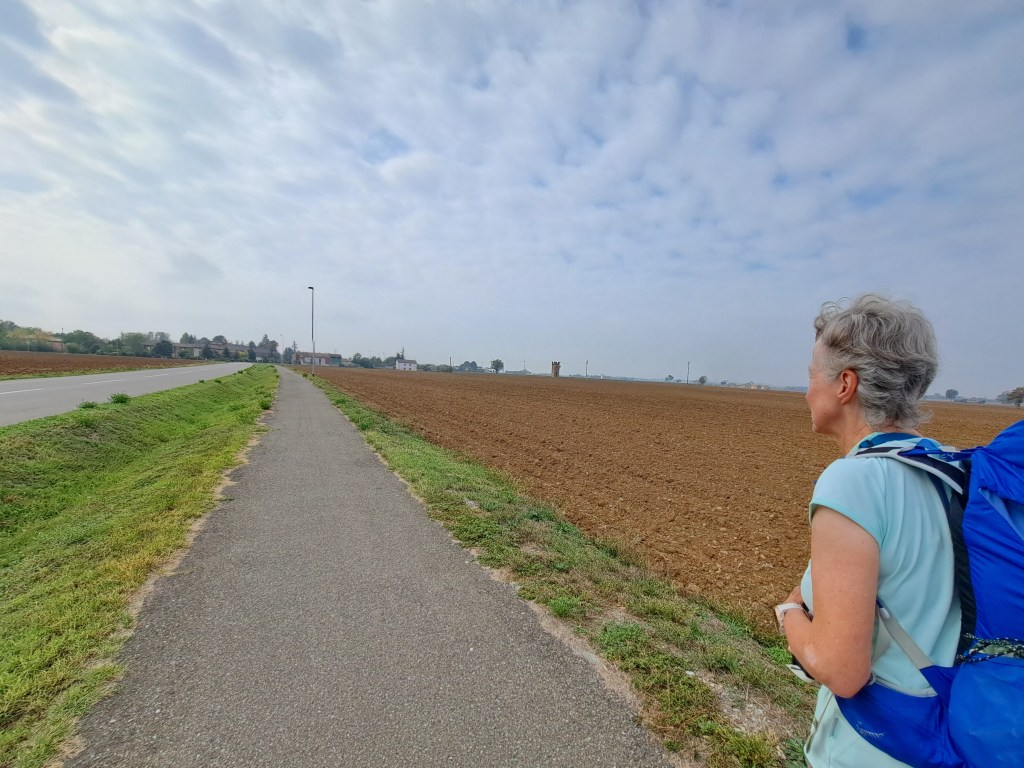
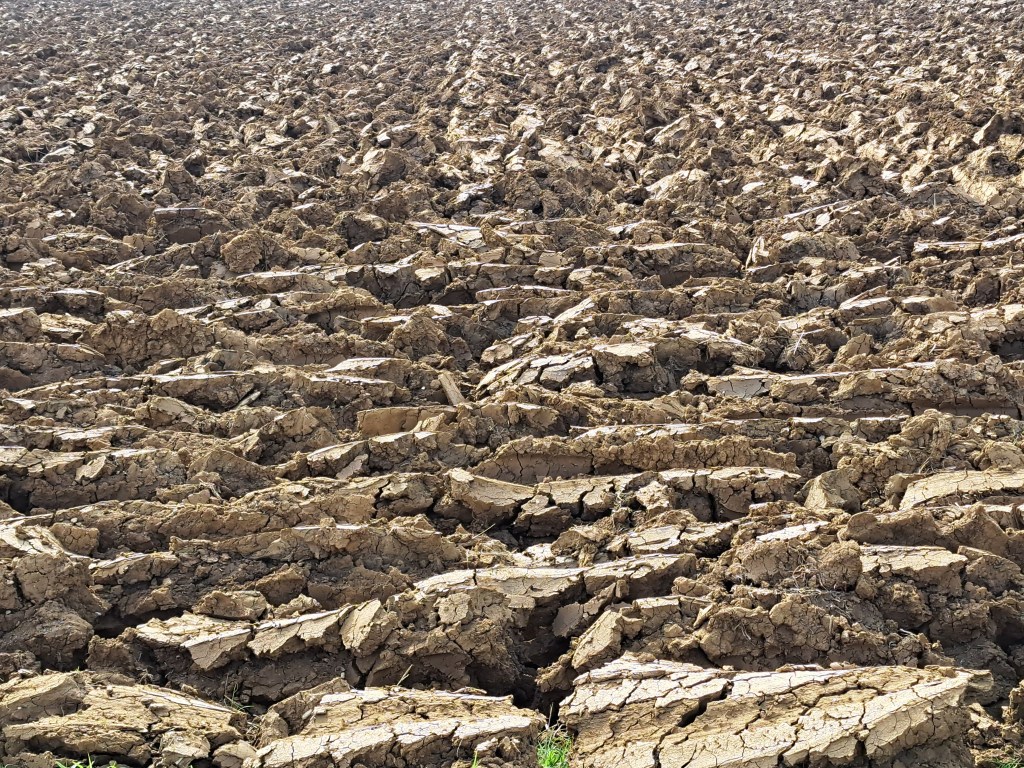
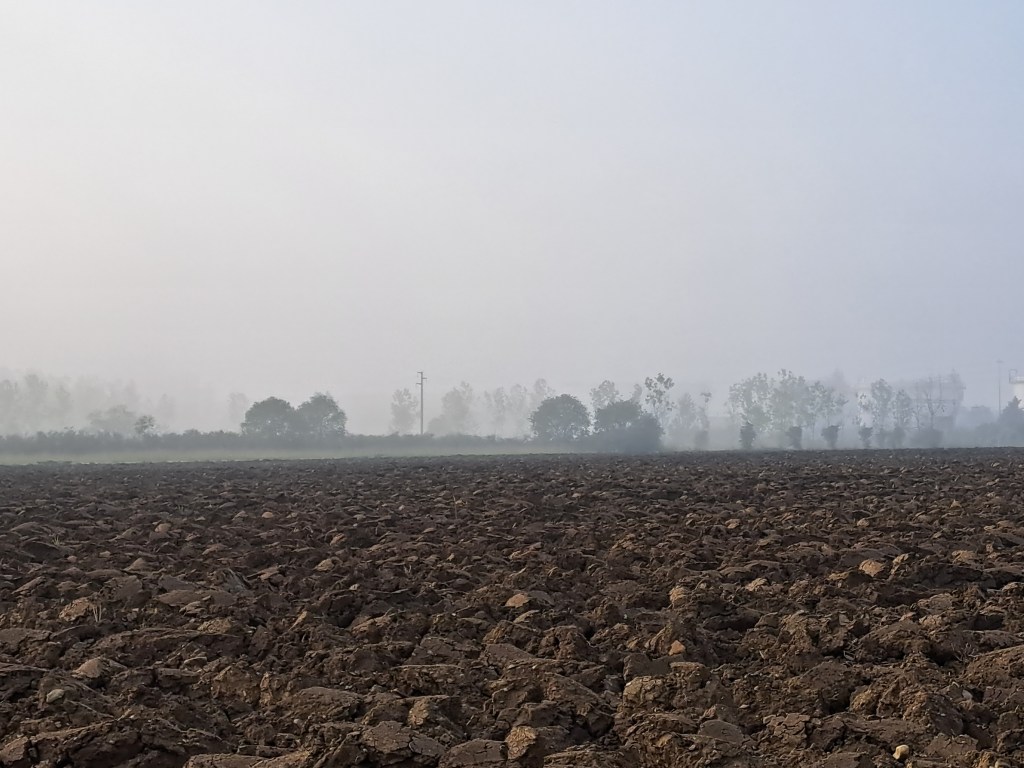
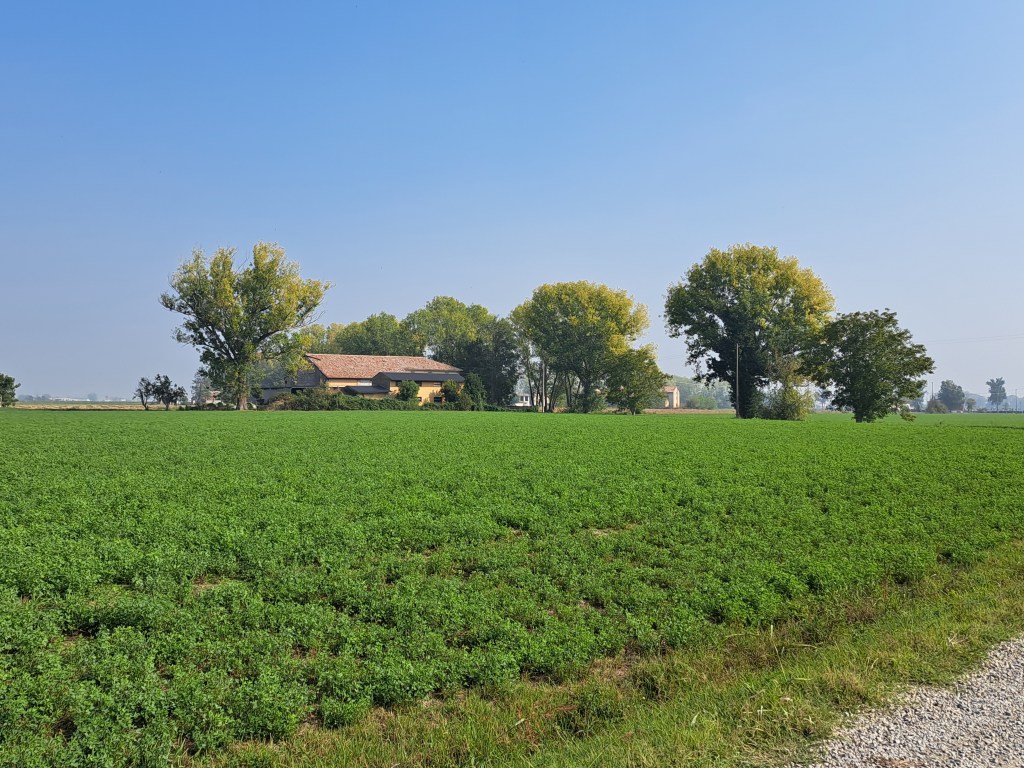
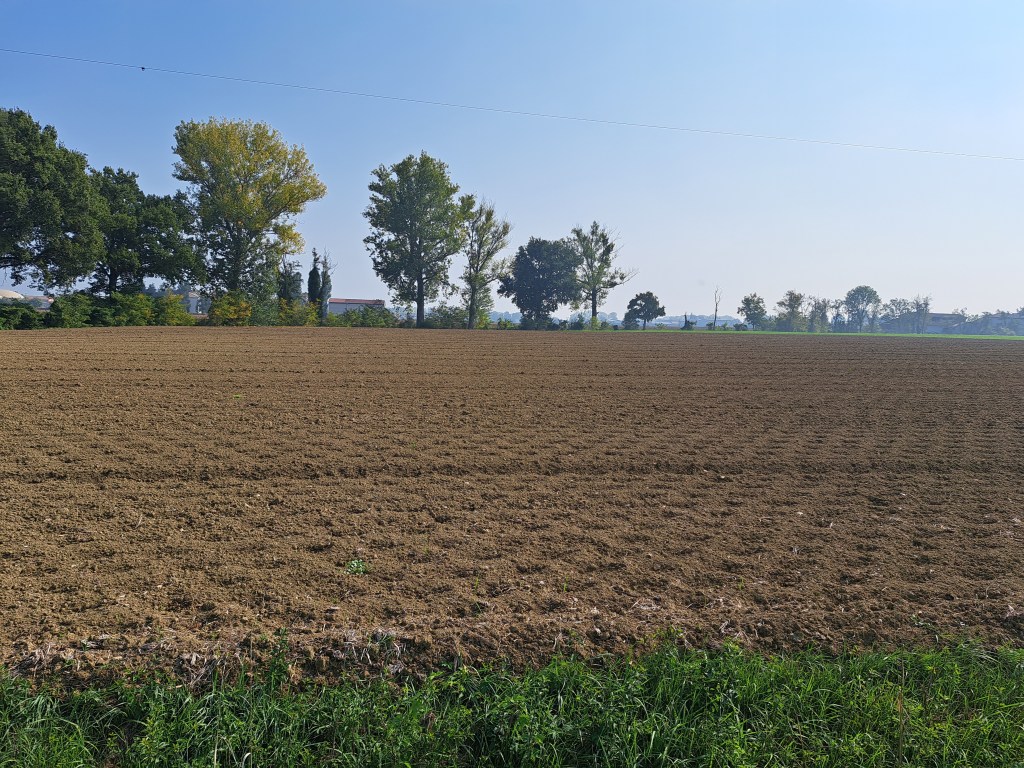
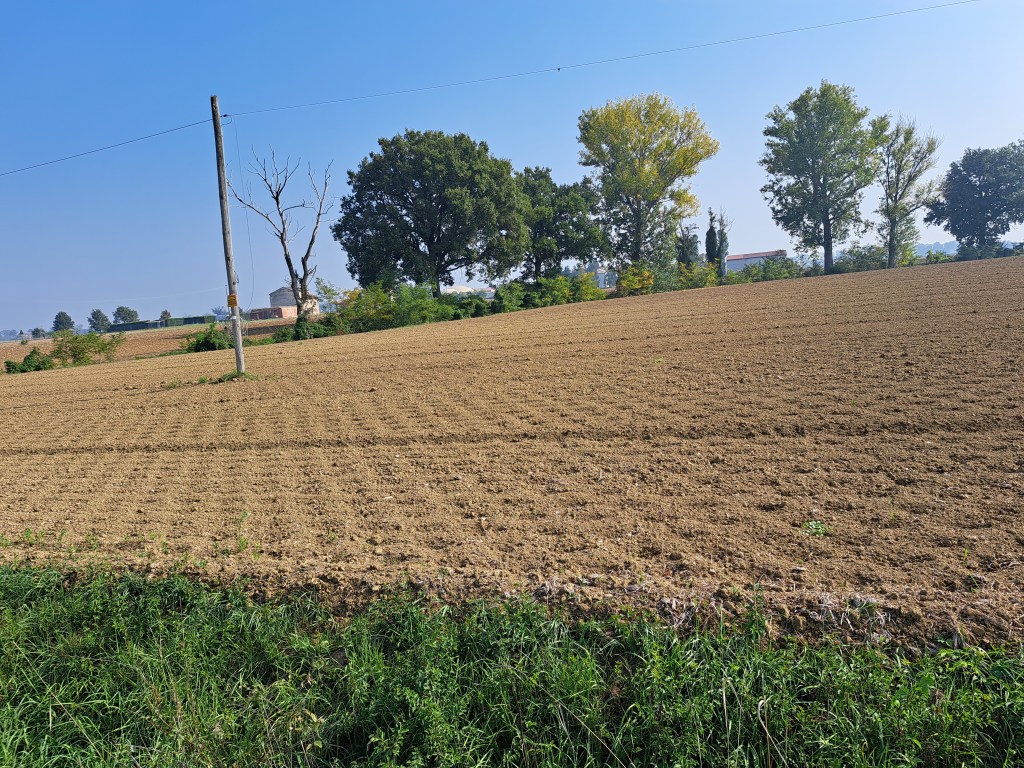
As we have a clunky wifi system here I will put up a few pictures and leave it till another day to share other ones. One of the pictures I will add is of the fields we passed yesterday. The farmers do a really deep ploughing of the fields, then they take a couple of goes at breaking the soil up, after leaving the field for a few days for the soil to dry hard. Then, they end up with a light, very fine, dry loam soil that they appear to reseed with a crop. We don’t know what the crop is but the pattern they leave in the field is intriguing and someone might know what that sort of seed pattern means…. Answers here please!!
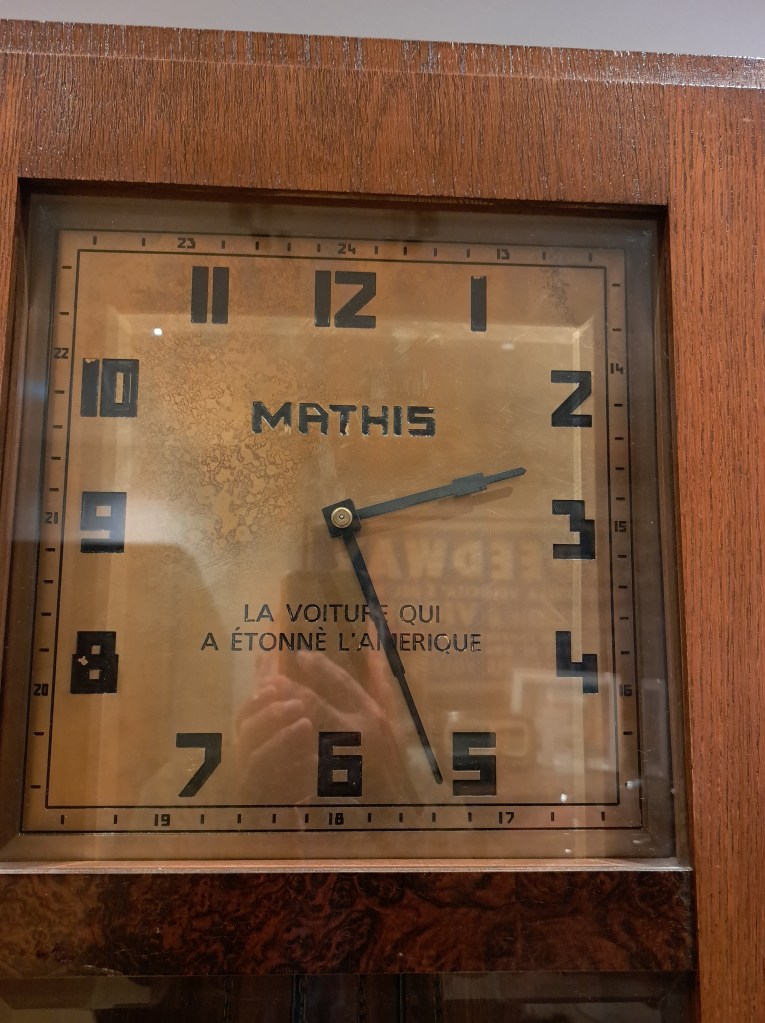
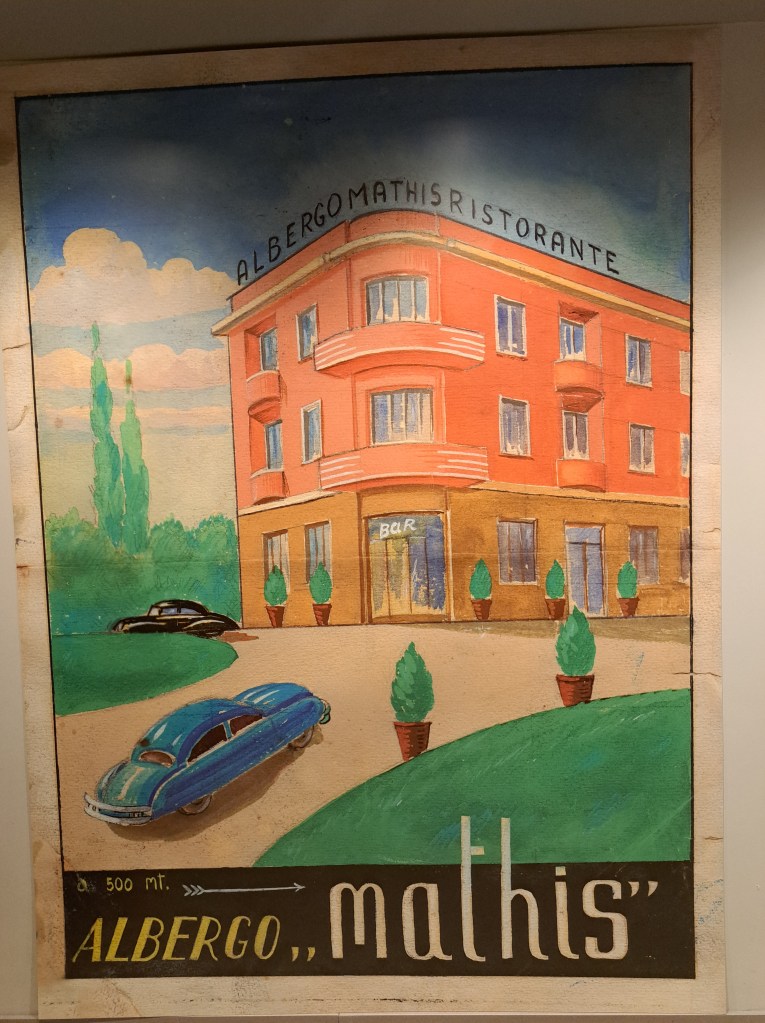
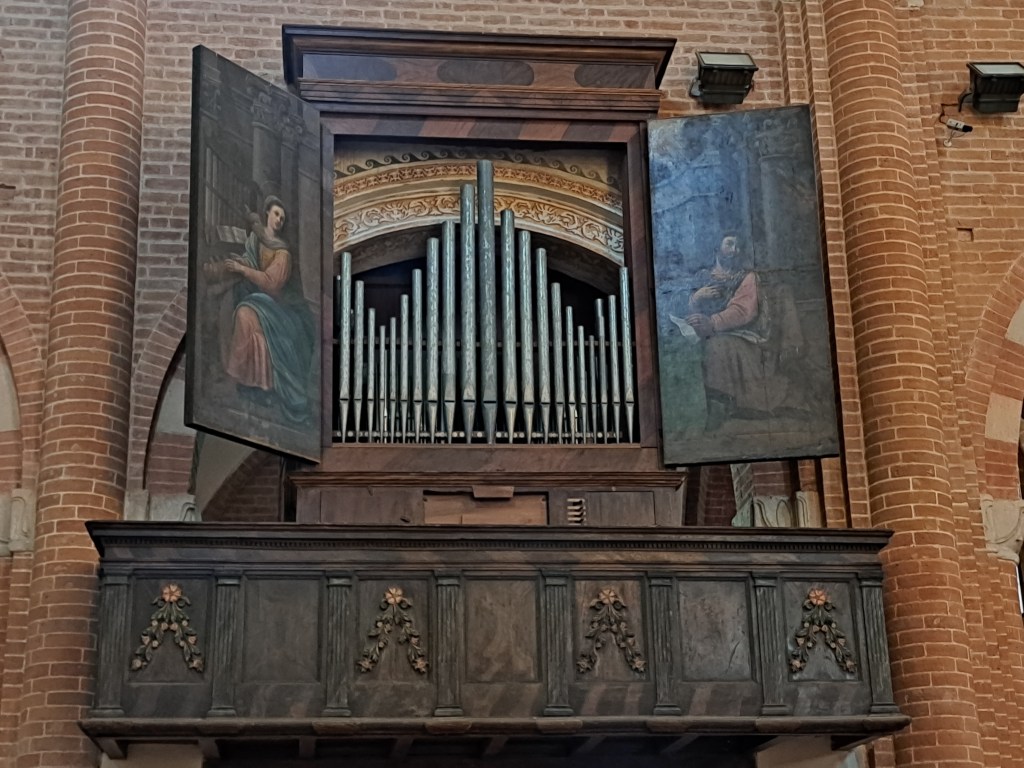
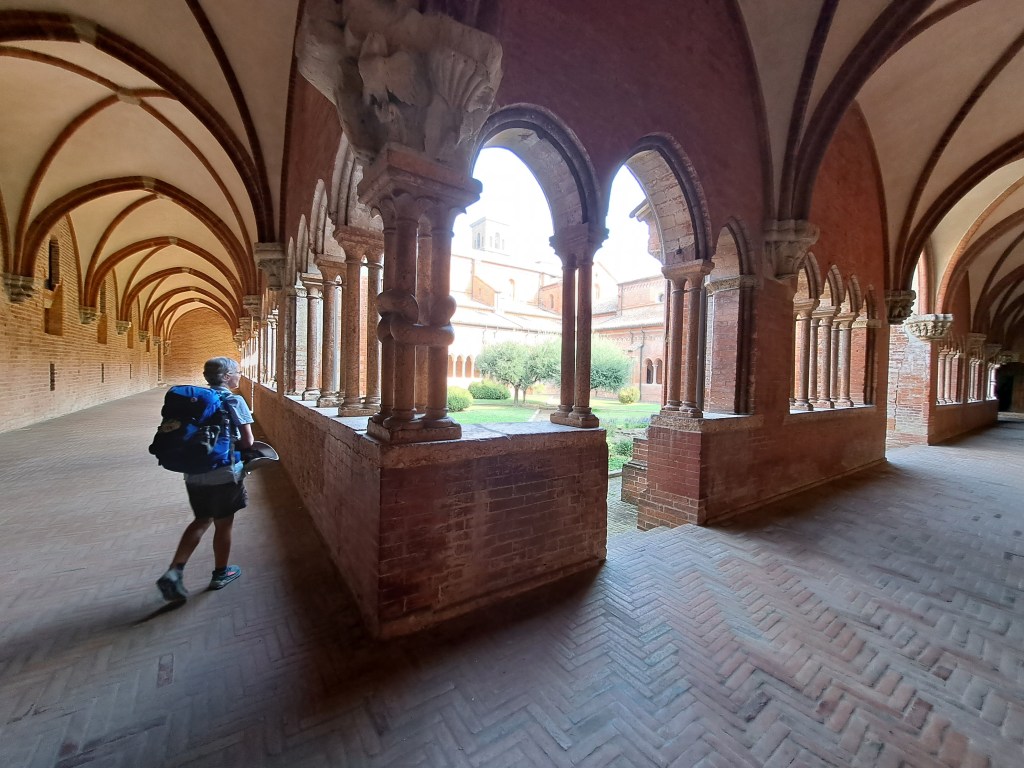
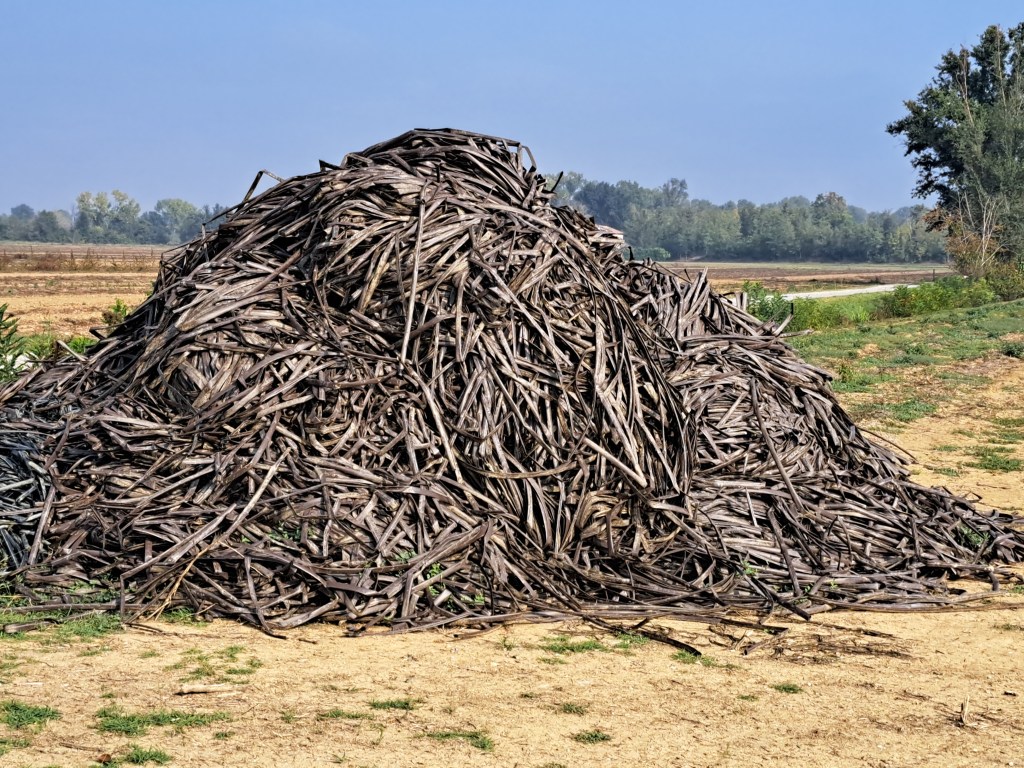
I have also included a picture of an early to mid16th Century organ in an abbey we visited that is still in use (Abbey of Chiaravalle della Colomba, where the cloister photo comes from, too)!! Other pictures include a couple from the Matthis Hotel, which has a full body profile of Johny Matthis on the roof but was originally named after a car… The strange tubing is irrigation pipes that seem to be being scrapped all over the area!! And a couple of pictures of the not so shaky medieval bridges…









 How far can we go?