-
Locked in the landscape
The plan for today (Wednesday 24th August) was to get up and dash off from Bar sur Aube to Clairvaux – a mere matter of 15 kms or so and dump our bags at the hotel there so we could go on a guided tour of the Abbey. It was not until we were doing our final packing that Alison said we needed to have photo ID to get in to the Abbey and she was worried we might need our passports which were buried deep in the bottom of her rucksack.
It was necessary, she explained, as the Abbey was now a maximum security prison, which made me gulp. I had not noticed that little fact and, sure enough, when I checked out the map in more detail it revealed that the Abbey at Clairvaux, the Abbey founded by St Bernard of Clairvaux, was indeed a prison.
I tried looking at the aerial photo of it on the IGN mapping site and it was blotted out – can’t check out details of prisons in France. Even Google complies with that rule and street view also blots out the image, despite the fact that it is just a blank wall.
I had been very pleased to be visiting the Abbey and had both been positive, despite the short day, and also found the hotel we could stay at, conveniently located just down the road from the Abbey. And I had reason for being so enthusiastic.
St Bernard has strong links with Vezelay, which is not too far from here, and it is where he preached the 2nd Crusade. That fact is not so high on my list of reasons to be cheerful about him, but the connection with Vezelay is good.
For those of you not familiar with Alison’s and my connection with Vezelay, here is a quick resume.
Since 1976, Alison has been involved with a cross-carrying pilgrimage in England that was, until last year called Student Cross and is now Pilgrim Cross. She introduced me to this in the early eighties. It involves groups of pilgrims walking from different locations to Walsingham in North Norfolk, England. The pilgrimage takes place during Holy Week and ends with all of the groups coming together to celebrate Easter in Walsingham.
The Pilgrimage began in 1948 and was inspired by a peace march/pilgrimage that happened two years earlier. It involved 14 groups of men who carried crosses from different parts of France and a few other countries, including Britain, to the tiny village of Vezelay in North Burgundy. The crosses (along with a 15th that had been carried by German prisoners of war) still stand in the Basilica in Vezelay. The pilgrimage was the first peace action by the newly formed Pax Christi and was called Pilgrim Cross.
In 2010, Alison and I walked from Walsingham (after walking there on Student Cross) to Vezelay and then on to Santiago de Compostella. We wanted to join some dots…
And on August 25th 2016 we organised a short pilgrimage that went from Auxerre to Vezelay with members of Pax Christi and then Student, now Pilgrim Cross to mark the 75th anniversary and so, as we are not going to go through Vezelay this year, it made total sense to stop in Clairvaux.
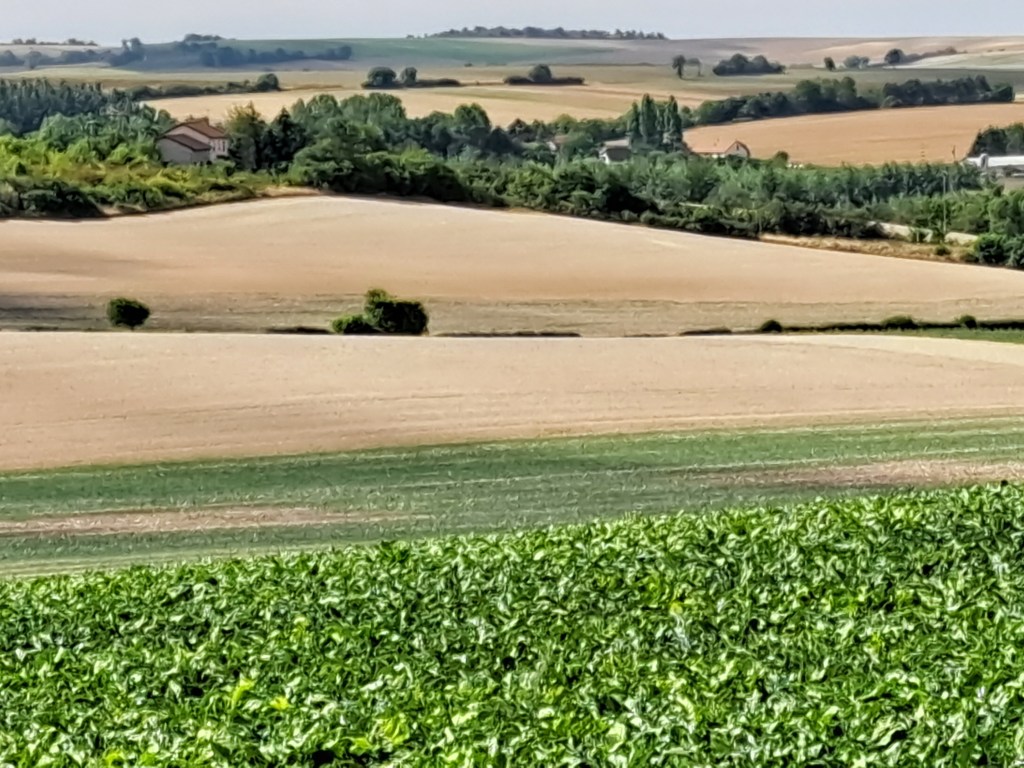
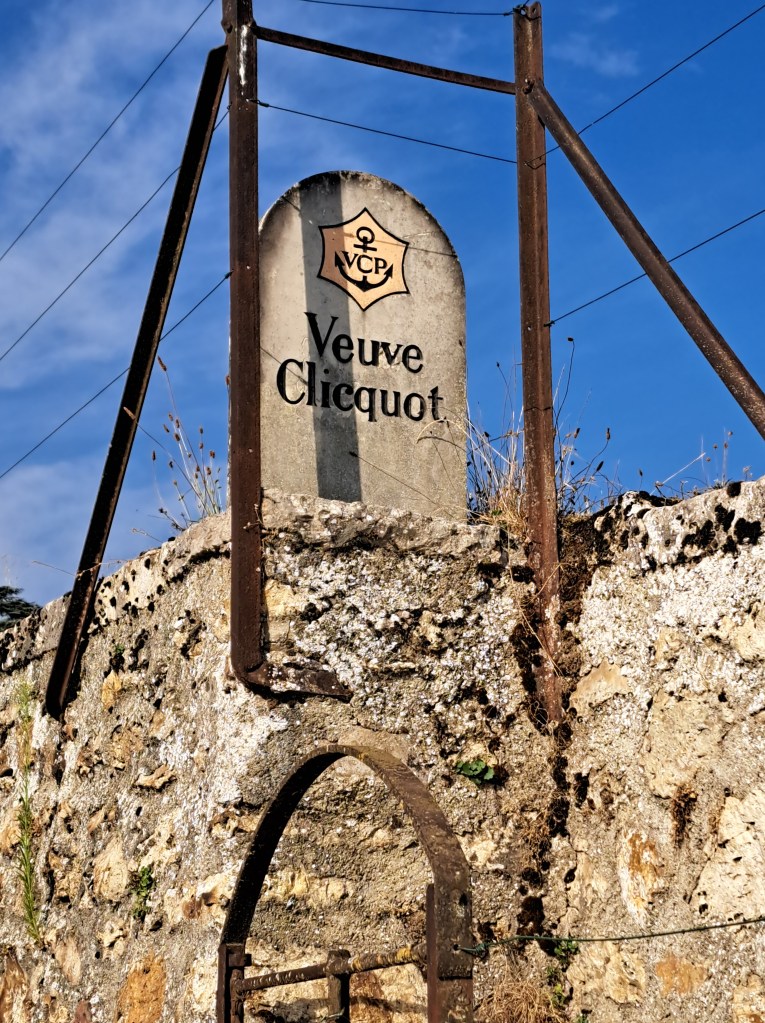
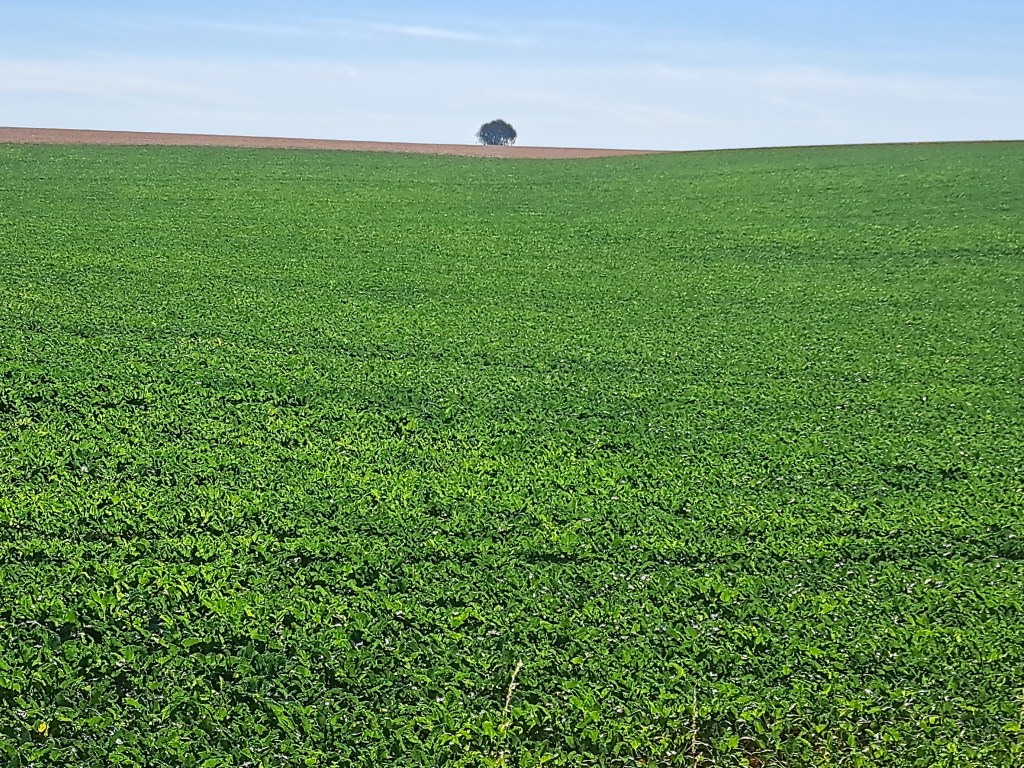
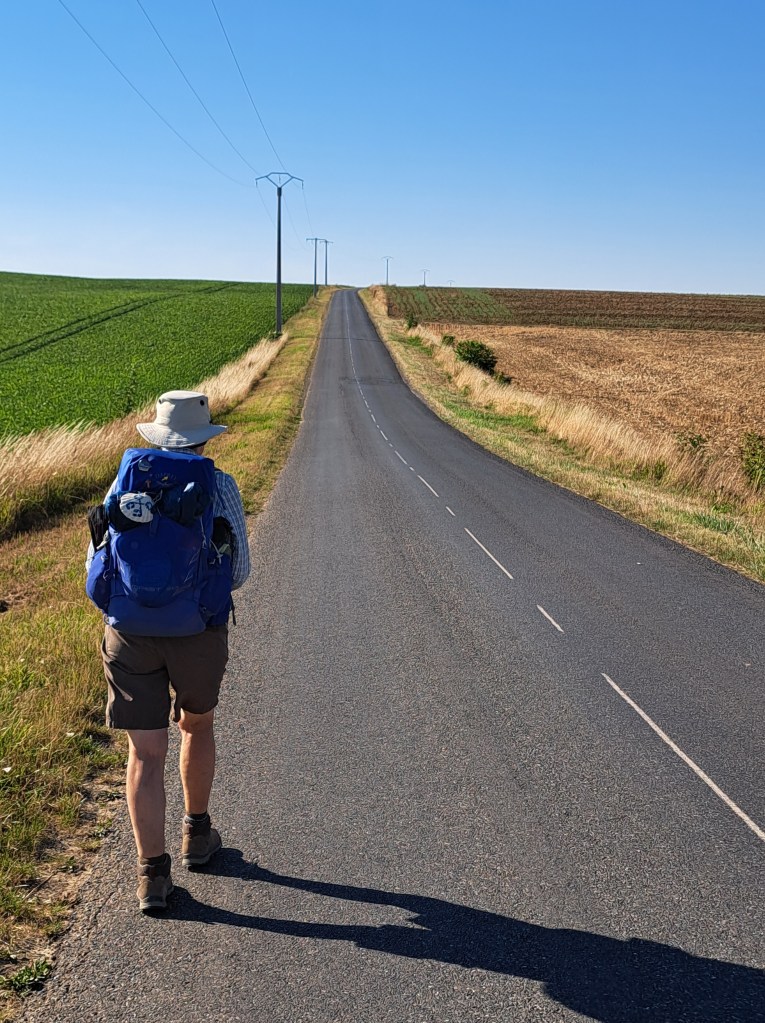
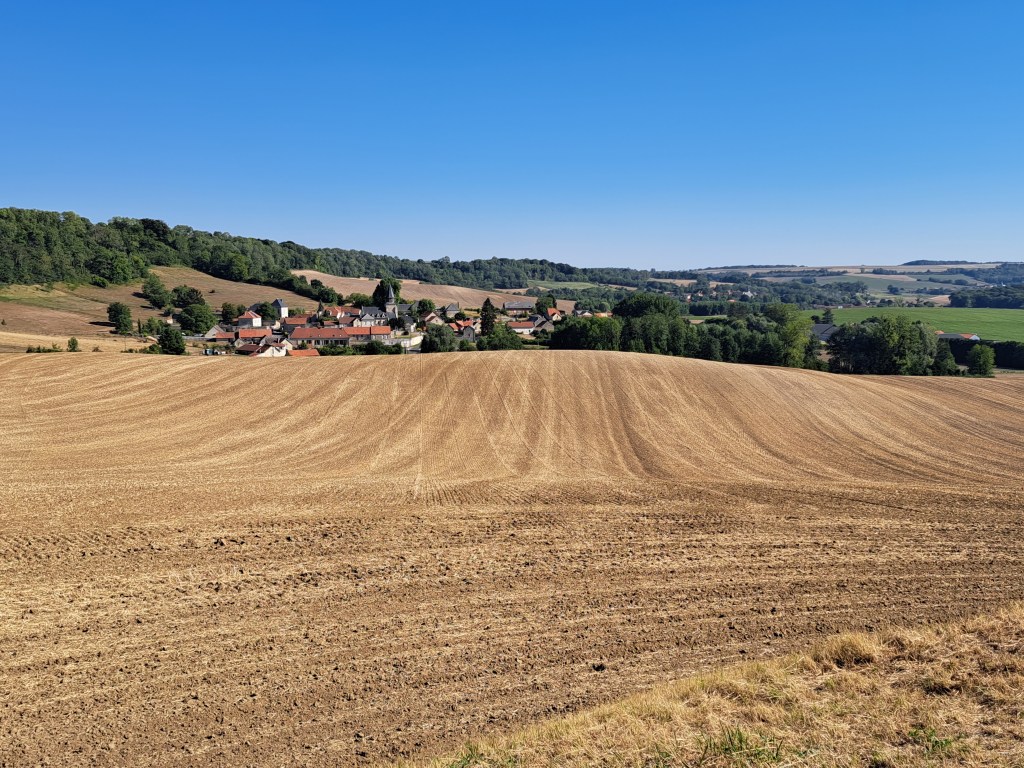
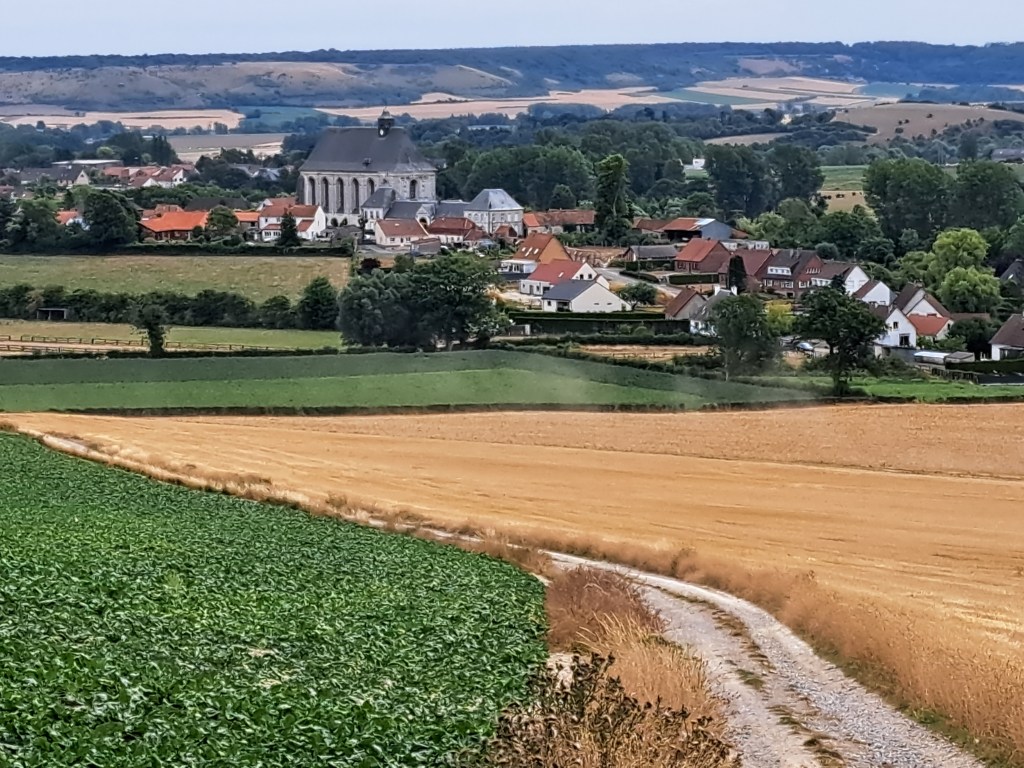
I spent a fair bit of the walk today thinking about how I felt about visiting a prison. We have spent a week or so walking through a landscape dominated by huge agricultural fields, spread across hillsides and valleys blanketed in single crops, beet, then sun flowers then maize, and so on. When not in fields we have been in forests and the landscape has rolled on in amazing, but fairly restricted ways. We were walking in the Champagne region still, but we had left the land of the Cordon Rouge and the Massif de Champagne behind.
Then, yesterday, we saw vineyards again, on the slopes of hills across the river and tucked in between swathes of forests. And we passed through villages where every second door seemed to have someone behind it selling their own cuvee of the bubbly stuff, just like up north in the Epernay and Reims dominated areas. Bar sur Aube is known for its bubbly, we found, and everywhere sells it in its many local forms. New names to us, but very well established, so pardon our ignorance, we’re better on red wine, really….
So, today was much more of a chalk landscape with steeper slopes to climb, huge areas under vines and the river and forests to keep you on your toes. And, each village has had its fair share of doors with signs telling you which cuvee you can buy there. Champagne part deux is here.
The vine covered hills added to the sense of change that I had felt when I heard of the prison and I did speculate if it had become one during the Revolution and I was almost right. It was the Revolution that chucked the monks out basically because they were not the sort that Bernard had presided over many hundreds of years before. The men in the Abbey were now living in a fairly ridiculous amount of luxury and enjoyed a lot of power and wealth.
I know this because we have just come back from the Abbey and are still processing the information given on the tour.
Now, I am not going to give anyone history lessons about this place. You can easily look it up and find out more than I can tell you.
But here’s the thing: the place was established by Bernard in the twelfth century and, as with other of its ilk, it prospered and was supported by wealthy and influential people. Even when the reformation was happening, the drivers of that change still referred to Bernard as having contributed to the faith, but his Abbey was not as it used to be. When the revolution happened, the place was toast, and would have had St Bernard turning in his grave regarding the opulence of the 18th century version of the establishment and its people.
It was sold off early in the revolution, then Napoleon saw the value of it as an isolated stronghold with a lot of space and well surrounded with high walls….. so he made it into a prison. Over the next couple of centuries it housed many thousands within its walls at any one time. The prison authorities just partitioned off bits, built floors between the floors and generally made occupant’s lives a misery. Parts of the surviving medieval bits were kept alongside the renovated 18th century extravaganzas, but the surviving Abbey Church, in all it’s medieval grandeur, was demolished by inmates over the years as a process of doing their labour. Stones went into other bits of the place, laying new floors on now mezzanine floors, and profits were made by selling stone off to people outside. The prisoners’ labour was sub-contracted to businesses and the inmates were subject to massive overcrowding and terrible conditions were all of those in power simply used to bleed inmates of their worth and abuse them, and generally extract any humanity that was left in them for profit or personal benefit in some other way. Men, women and children, old and young, etc, etc.
Victor Hugo was inspired to write Les Miserables after a man died here – the story is complicated but you can find it on line… the point is it was pretty rubbish and continued to be so up until, wait for it, the 1970’s. Yes, there were improvements but not much, and the overcrowding that was a special feature of places like this, were still being prcticed up until then.
OK, so there is a bit of a history lesson here, but there is such a big story here, you need to read up on this or come here.
We arrived at the reception and it looked like most historical places with a very nice little shop and so on. We bought our tickets, handed in our drivers’ licences and agreed to not take any photos during the visit. We were asked if we understood French and we asked for the English translation, but the woman who took us on the tour was great, and she was very careful to speak very clearly and at a sensible pace. A couple of times she translated things and checked that we understood what she was saying then went on. I got about 70 to 80 percent and glanced at the leaflets a couple of times, but they didn’t really cover much of what she was saying, to the centre so I looked at it as we were going back to reception to add even more background.
Yes, I am still processing things.
She counted us in, unlocked and locked doors as we went, she commented on the fact that the department responsible for prisons had done almost no repair work on the buildings and had added bits with no regard for the buildings or their history. The prison life was still clear in the fabric of the place and there were many places where the scenes were clearly appalling, and worse when we considered the conditions of those who had lived here.
But, of course, it was also beautiful and some of the buildings had real grace and presence. Such a wild contrast….
It is set in a landscape that cannot escape the past.
It is enclosed and from where you are, you can see where the high security prison still operates today. The harsh regime still emanates a force that has a bitterness that will not go away.
And I suspect that even now I am skirting the dark shadow that seems to have been following me all day.
Usually, I am physically and emotionally overwhelmed by these places. They leave me frightened to touch walls and keep me fully aware of the pain that still resides in such places.
Today I felt numb rather than overwhelmed – perhaps hearing it in French softens things? Perhaps what? I don’t care?
I can only think that the fuse is a bit longer today than I had expected. I am visiting things in my head that have taken me a few hours to really get to grips with. My discomfort in the place was still seeking reference points when we were walking through the place.
Dissonance is not linear.
Just waiting for the dreams tonight with a little apprehension…
But one thing rings true, and has been true when we have walked past other prisons of all sorts. The people who live here, and work here, are great. They are making their lives useful and productive, happy and fulfilling, despite being next to a prison.
But, despite this, I still have to work out what exactly has been making me so disturbed by our visit to an historical Abbey of some renown that has been a prison since 1808….
Footnote:
Needless to say, I did find sleep a mixed blessing last night. We have walked to a place called Chateauvillain today and my dreams have accompanied me through the forests and open landscapes that have challenged us today.
And here is a sketch-poem scribbled in my note book this morning as I was rushing to get ready to go. I typed it up and thought; nothing deep, but it came from the voice of someone I dreamed about as a result of our visit yesterday, and that will hopefully work as my excuse…
Nuages
I think of the clouds
and imagine the stars
only to think
that you might be seeing them
only to hope to share your viewI hear the wind
and think of you standing
with that wind in your hair
and I long for it
to pass over me
on its wayBut I am invisible to the sky
and hardly know where the sun rises
or where it sets
and these hard walls
tell me nothing of where I am
or where you might be todayI hear a bird sing
as it moves along the top of the wall
and hear your voice
feel the delicate sounds
entice the edges of my vision
as I think of being with youAnother shadow falls
and the indirect shade dissolves
on cold blond stoneBut even second hand light and shade
give me hope
as I ask you
be my cloud
be my stars
be my wind
as I stay ready
to see you againPhotos to follow!!!
-
Pilgrim encounters of various kinds
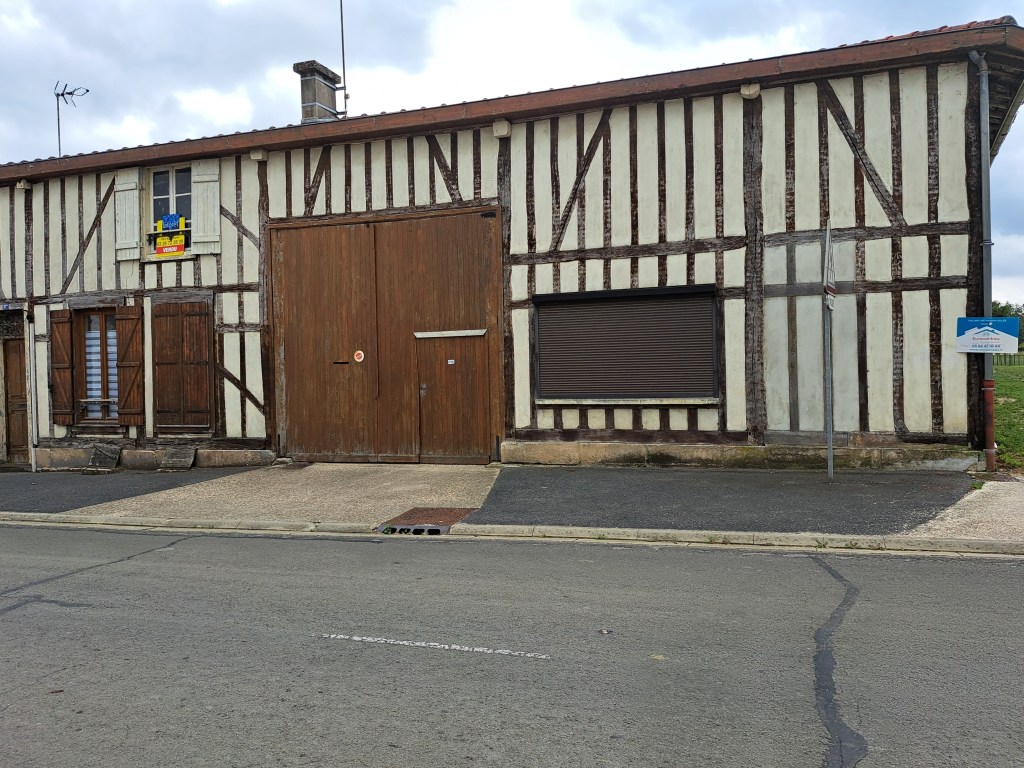
Today we are in a place called St Remy en Bouzemont. Like the last few villages and towns, we are now in the land of the “pans de bois”, i.e. the half timbered houses (and other buildings).
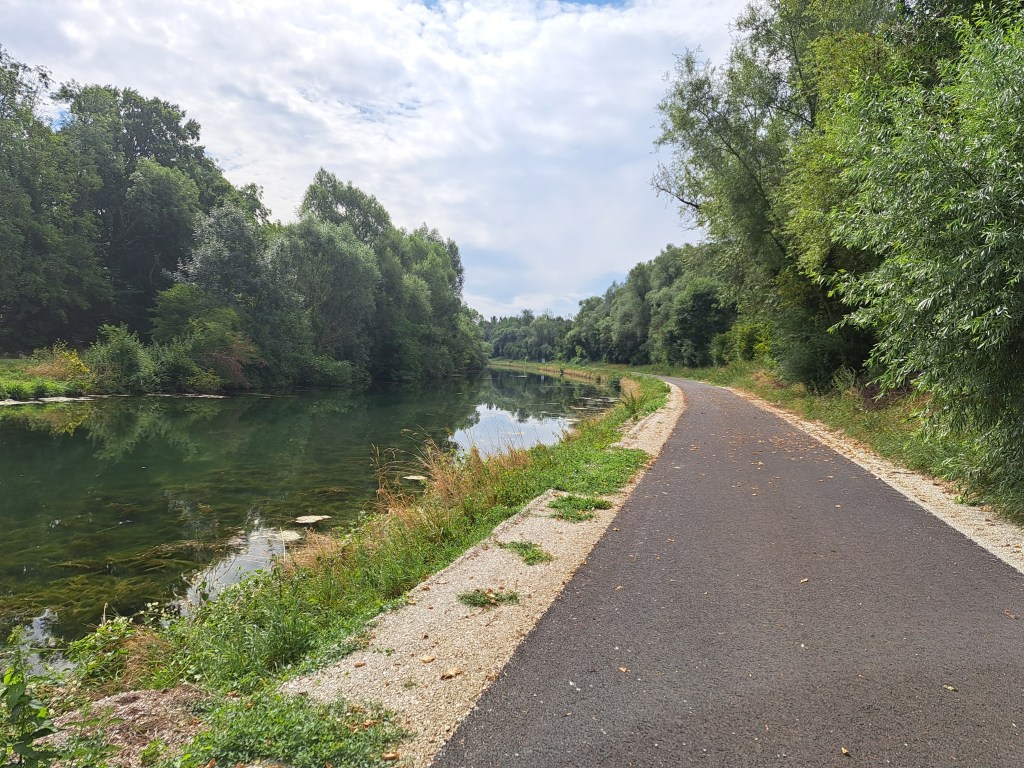
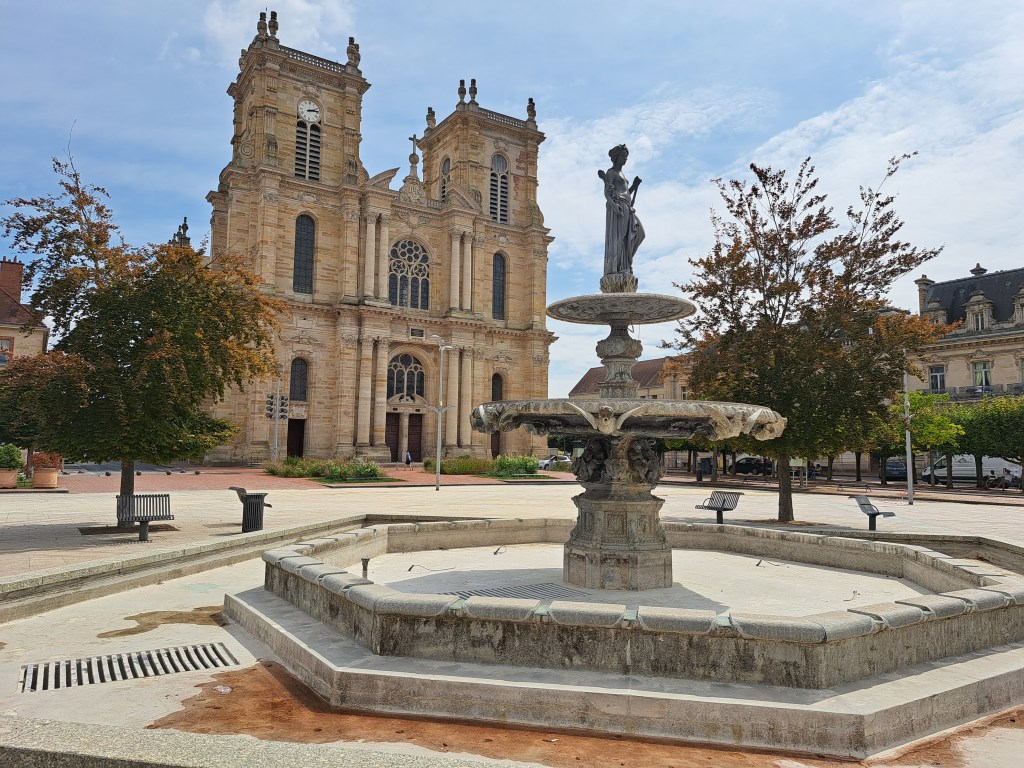
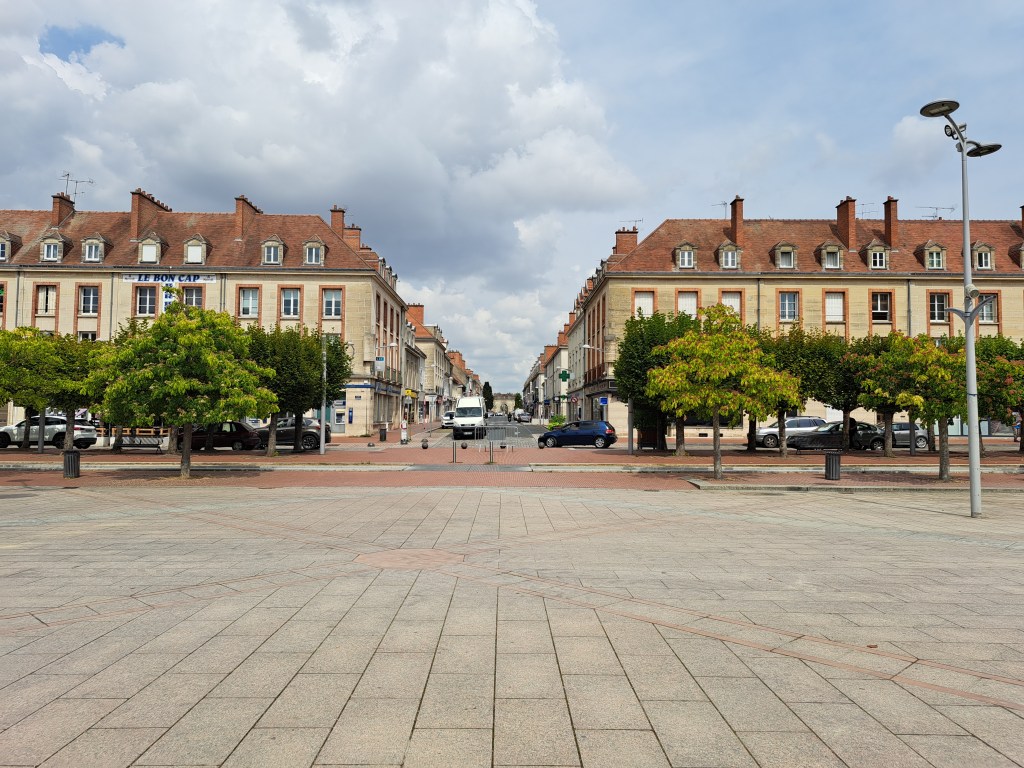
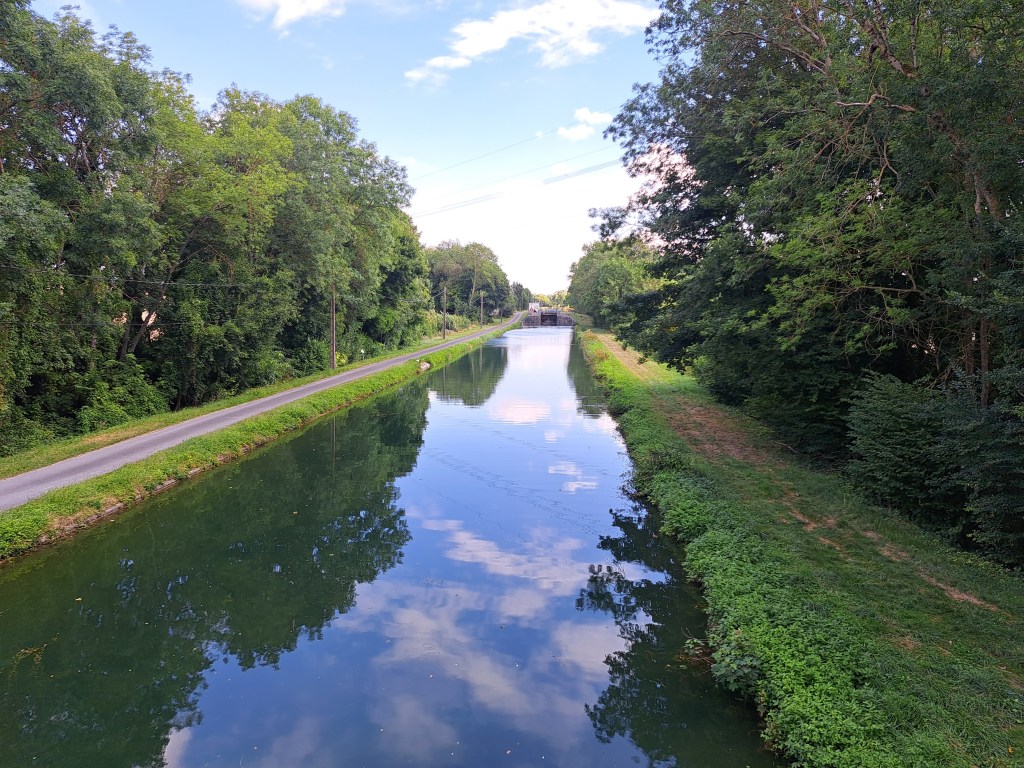
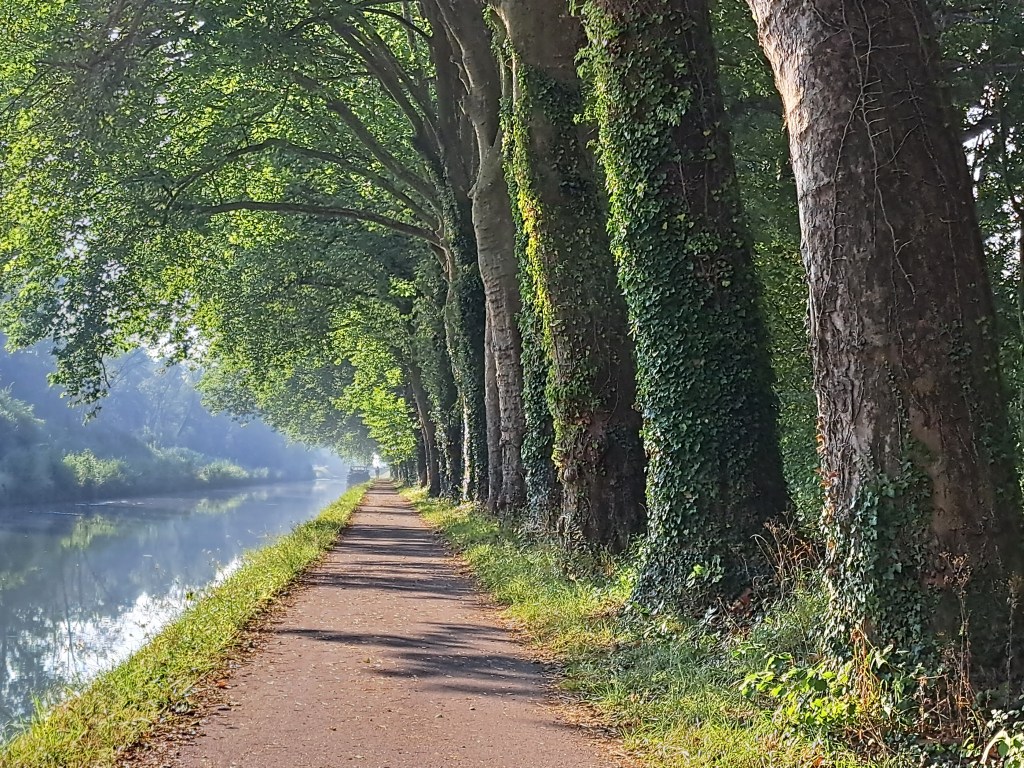
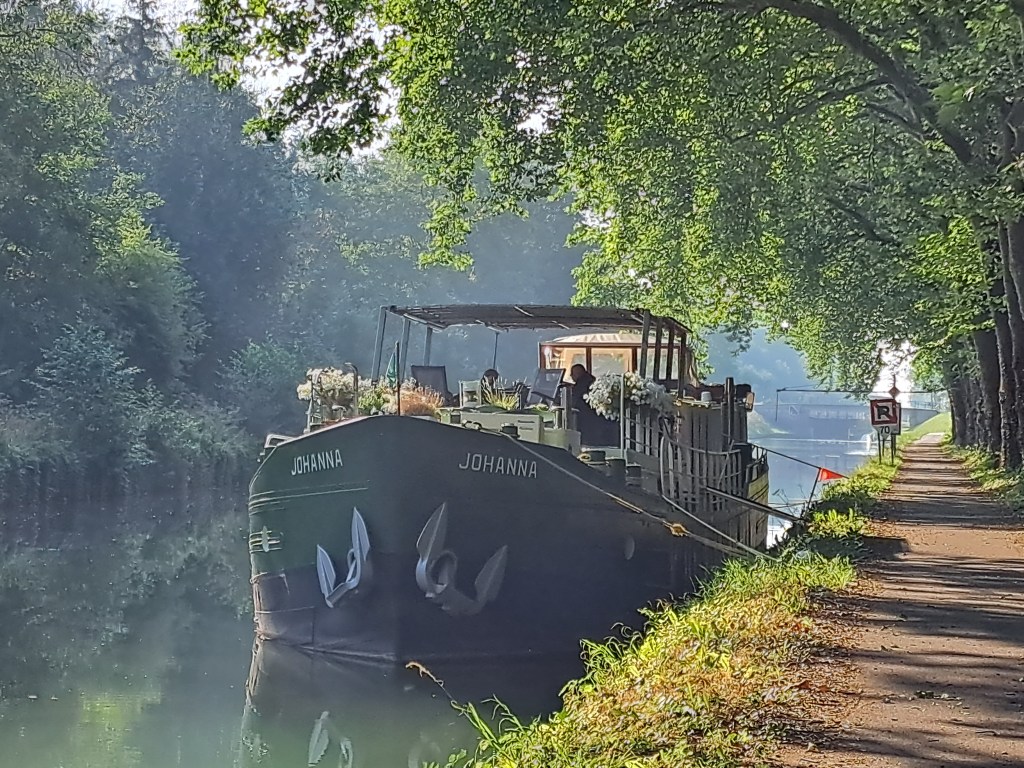
We walked here from Vitry le Francois, which is a fine little city buzzing with life and completely unpretentious (apart from the guy in the bar last night who had a very swish pointy beard and very trendy looking attire). We got to Vitry down the canal-side path which has been completely renovated and tarmacked from before Conde sur Marne (we used it to get to Conde instead of following the GR route) and from Chalons en Champagne we have used it, mostly, instead of the GR.
As well as being more direct, it is a better and easier walk (flat, smooth, hazard free, often shaded and with just as many villages along the way). Grand Randonee routes can only be granted their status if their total route consists of below 15 or 20% paved/tarmac surface, so these routes wander off into the countryside and very often avoid going into towns or villages. This might be great for day walkers, but pilgrims, on the other hand, need to be more direct with their route, need to walk through places (for shops, bars, etc) and need to find places to stay.
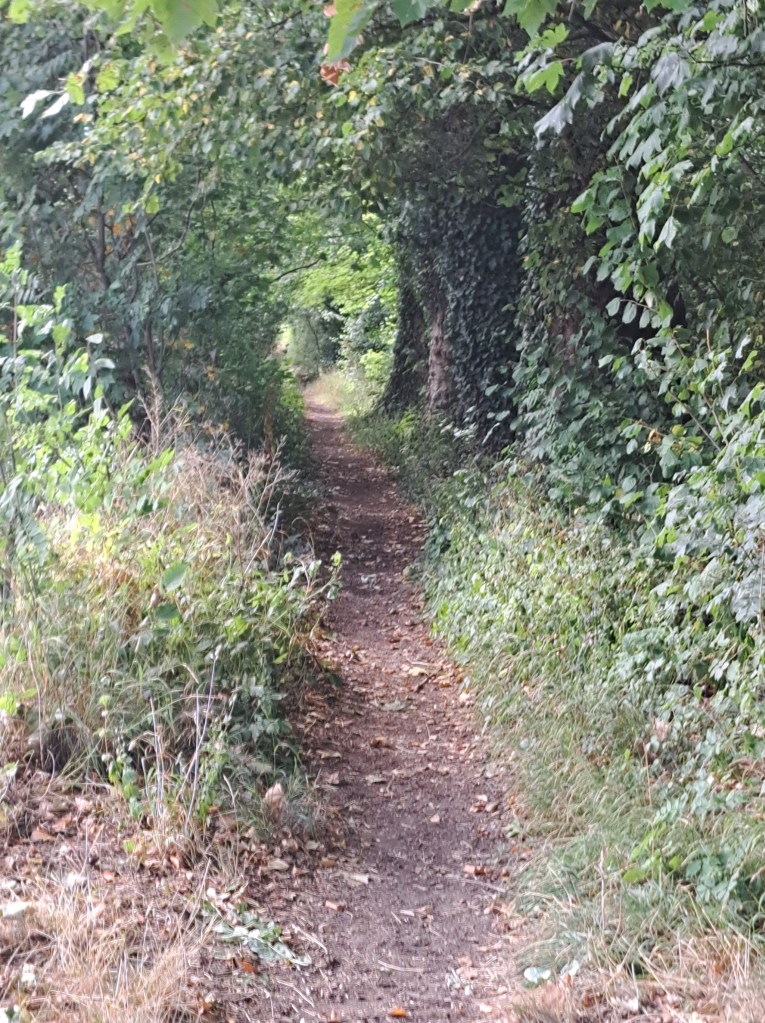
So as well as detouring to Beaumont sur Vesle to find somewhere to stay, we used the canal to keep us on track, etc. And, when we arrived on the outskirts of the city of Vitry the canal took us directly towards the centre of town and the GR skirted around the edge of the city, never getting near anywhere to stop, eat, drink or sleep. Oh, and the GR route was very narrow, overgrown and unpleasant to walk – we checked some of it out.
Our accommodation had been the main driving force determining where we stay as we go.
Where possible we had planned to try and utilise the Amis, or friends, of the route and find accommodation with them, but August has severely limited us as many of these good people are away during this period. In Laon, we wanted to stay two nights and when we do this we never seek accommodation for pilgrims as that would be hogging places that other pilgrims might need. When we stay two nights we always want a cheap but central place where we can cook/prepare our own food and, importantly, wash all of our clothes in a machine! So, that’s what we did in Laon, but, as the woman who would have taken us in was actually around, we visited her on our day off to have a chat, etc.
She was an amazing woman of some eighty years, thin but not frail, with a bright sparkle in her eye and a sharp tongue, too. She told us about some of her guests and how a few of them plead poverty and want to stay for free, then want to stay extra days. She said she has the space and is glad to look after pilgrims but doesn’t like some of the approaches pilgrims can take. Despite this she seemed really happy to be a person who could serve the pilgrim community (a community that she was a part of, too).
We could understand why she had people staying longer than planned. Her home is extraordinary and beautiful. If you walk along the narrow medieval road by the side of the cathedral in Laon (a town perched on a very high rocky outcrop that towers over the surrounding landscape) you will see a streetscape enclosed on both sides with mainly high stone walls interspersed with high wooden gates and small doors. The gates often have a smaller door set in them and one of these has a door bell. Press it and madame eventually lets you into a large cobbled courtyard with ancient buildings on the other three sides. Many flowers, plants and shrubs soften the old stone and add bright colours, the windows are open and hint at fine, beautiful rooms within. She ushers you through the main door of the house into a wide hallway with an ancient wooden staircase that sweeps up into the place, its walls lined with old oil paintings and ornaments on pedestals and it has a fine carpet drawing your eye upwards. But your interest is immediately stolen by the big French windows opening out onto the lawn of a beautiful and venerable, well stocked garden within walls that surely delimit where the land suddenly drops to the vast open space beyond. But she turns you into another wonderful room full of books and desks overflowing with jotters and magazines, books and other documents. So much to see and yet you are taken through this into a huge, wood panelled room with a big open fire surrounded by a large 18th century marble fireplace, many more paintings a massive dining table littered with so many interesting things and an ancient typewriter, obviously still in use and then you sit past the table and near the fireside on fine old seats and a sofa older and in better condition that me.
We would happily have stayed there in other circumstances, but it was not what we had planned, and so we told her we looked forward to enjoying her welcome the next time we walked through Laon. We had a lovely conversation and left to do other things and find lunch.
As a bonus, later that day when we sat down to lunch just in front of the cathedral, Madame arrived and sat next to us, so we were able to continue light chatter as we ate our lunches. It is one of her favourite places to eat, and she enjoyed a good banter with the people serving and running the place, chatting with people at other tables, too… and her appetite was formidable.
So, as I have said, we have stayed in a variety of places including studio flats, hotels, gites of various sorts, campsites (in our tent) and chambre d’hotes, but it has not been easy to find much standard pilgrim accommodation run by pilgrim associations and local communities.
Today is our first real taste of what is possible on a pilgrim route if the community in a place thinks it wants to offer pilgrims places to stay.
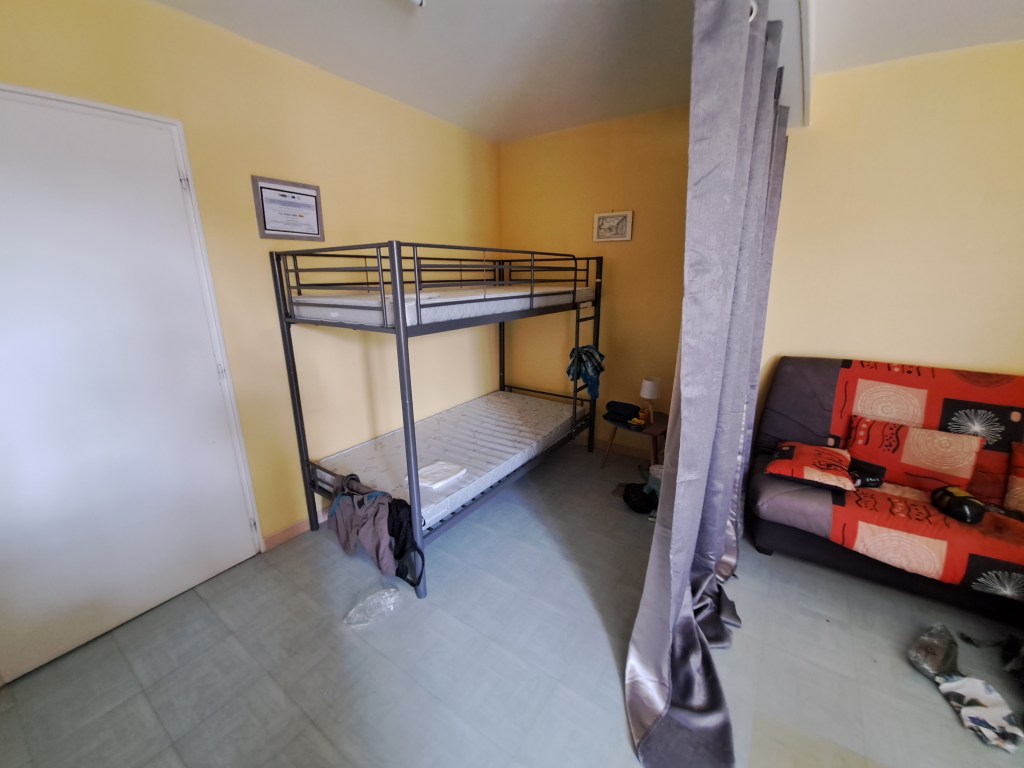
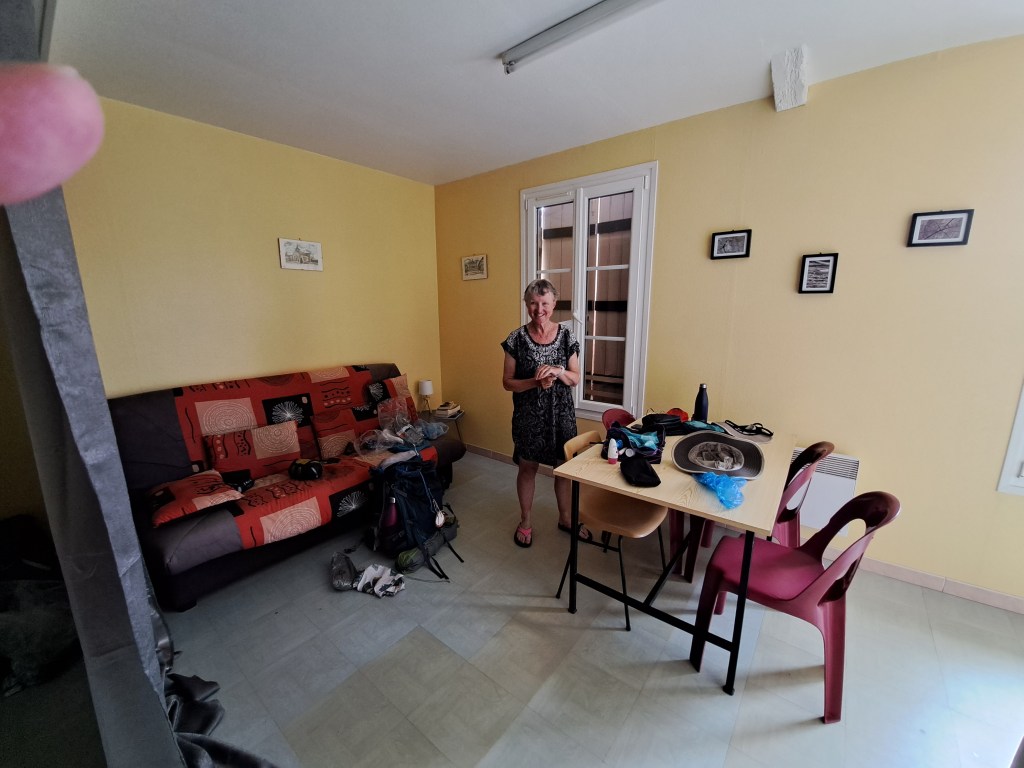
It is a first floor room that has been kitted out for pilgrims. It has one set of bunk beds, a bed settee, a table and four chairs, a kitchen area with sink, 2 ring hob, kettle and microwave, a fridge and a cupboard with the usual cookware, crockery and cutlery, etc. There is also a shower room and a toilet. With the donations they have been collecting, our hosts are planning to buy and install a washing machine, too.
And the cost for the night? It is what pilgrims call “donativo” – i.e. you give as much as you can afford.
On other routes in France we have stayed in a variety of different versions of the same thing. Either the parish, a group of local Amis or the Mairie will find a room, or a small cottage or something similar. Often, as well as the facilities above, the community will either have a cupboard with basic cooking ingredients and even some wine, and will ask the pilgrims to pay the rate suggested using an honesty box. Sometimes the cupboard is locked and the volunteer host will open it and sell you what you want. Either way you don’t have to keep carrying food and drink for the evening (like we’ve been doing) and you don’t have to worry about the total lack of shops and other facilities as you walk through the French countryside.
Tonight’s place didn’t need to sell us food as there was a shop actually in the village – a very rare occurrence indeed!
While making us happy that we were able to stay in such a place, we were a little sad and frustrated that there were so few of these on the route, especially as this section is assigned as both the Camino de Santiago and the Via Francigena. We hope, we will pray and we will seek to encourage other communities along the way to set up similar facilities for pilgrims.
But it also emphasised the fact that pilgrims are pretty thin on the ground here (and along the whole of the route so far). There is a bit of a chicken and egg thing going on here, of course. Walking in France is not cheap, so people do it with a strong heart, a good bank balance and a few tricks up their sleeves (e.g. our tent). So, the expense puts people off and they go elsewhere, leaving the route quite empty. But with a lot more places like today’s, the equation would improve and more people would come, which would spawn more accommodation of different types and actually regenerate the small towns and villages that the route passes through.
When we walked on the Voie de Vezelay in 2010 there were a few places like this and some other types of pilgrim friendly accommodation that made it possible to do the route without breaking the bank. Since then, the two to five pilgrims a day has grown substantially and both the accommodation and services on the route have really grown too.
Given the emptiness of much of this beautiful countryside, and the serious lack of facilities along the way, it could seem like a hard ask to change things. But I feel that if you want a very quiet route with the chance of never meeting another pilgrim on your way, then you better get on this route fairly soon because I think that it will not take very long for the people here to click on to this new opportunity and numbers of pilgrims here will start to rise along with more facilities and accommodation.
Dear friends, I wrote this a couple of days ago and want to add a quick note or two before posting it as we have the internet tonight (weak, but present) and the next night or two may not have even that.
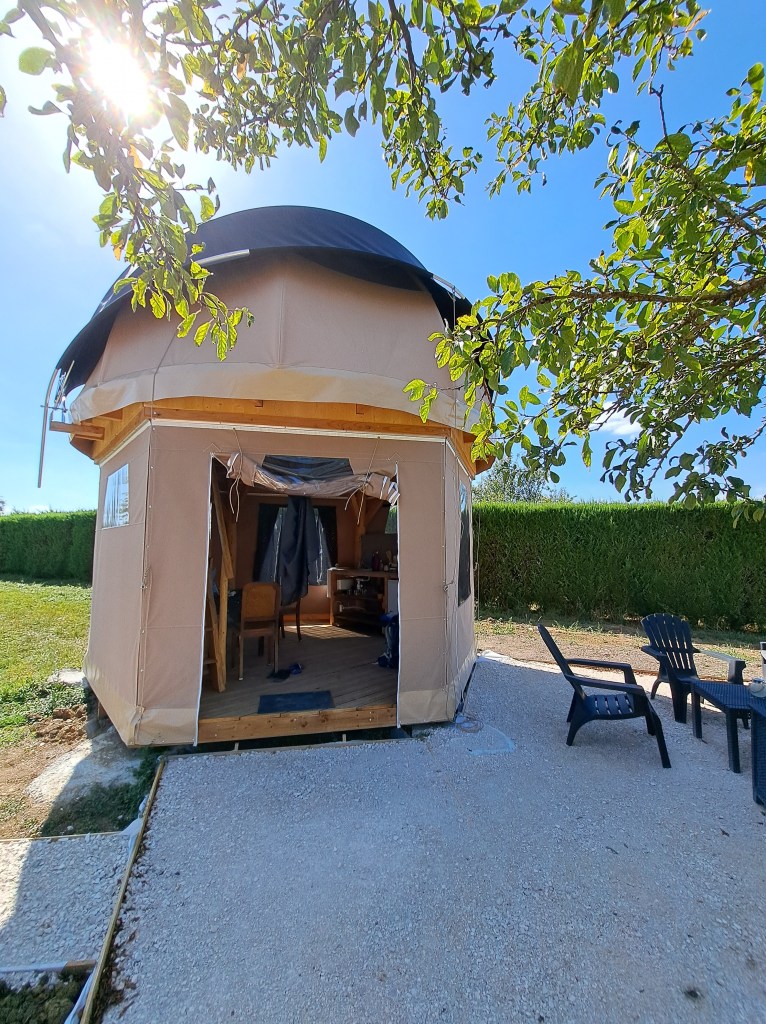
Last night we stayed in a new place (opened in July) run by lovely couple who have taken a farm house and farm yard and are running it as an eco-friendly gite d’etap. They live in the large square house made of brick and dating from the end of the 19th century. It is connected to the half-timbered barns and farm worker’s cottages by a huge, half-timbered gateway and beyond the farm yard and behind their house they have set out a series of three big, modern dome-shaped, wooden-framed tents (called boules in French) with all facilities and a double-decker tent looking pretty much like a champagne cork where we were staying. The farm worker’s cottages is a separate gite they rent out, too. Beside the tents there is a pool with a sliding, arched cover and there is also a large jacuzzi.
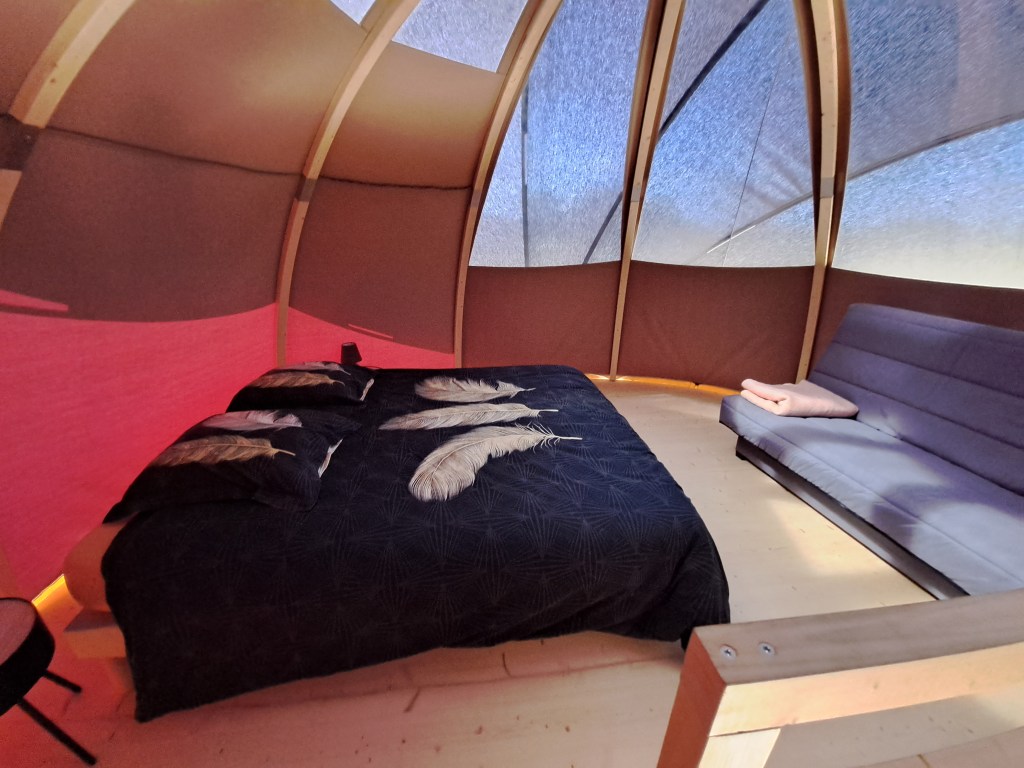
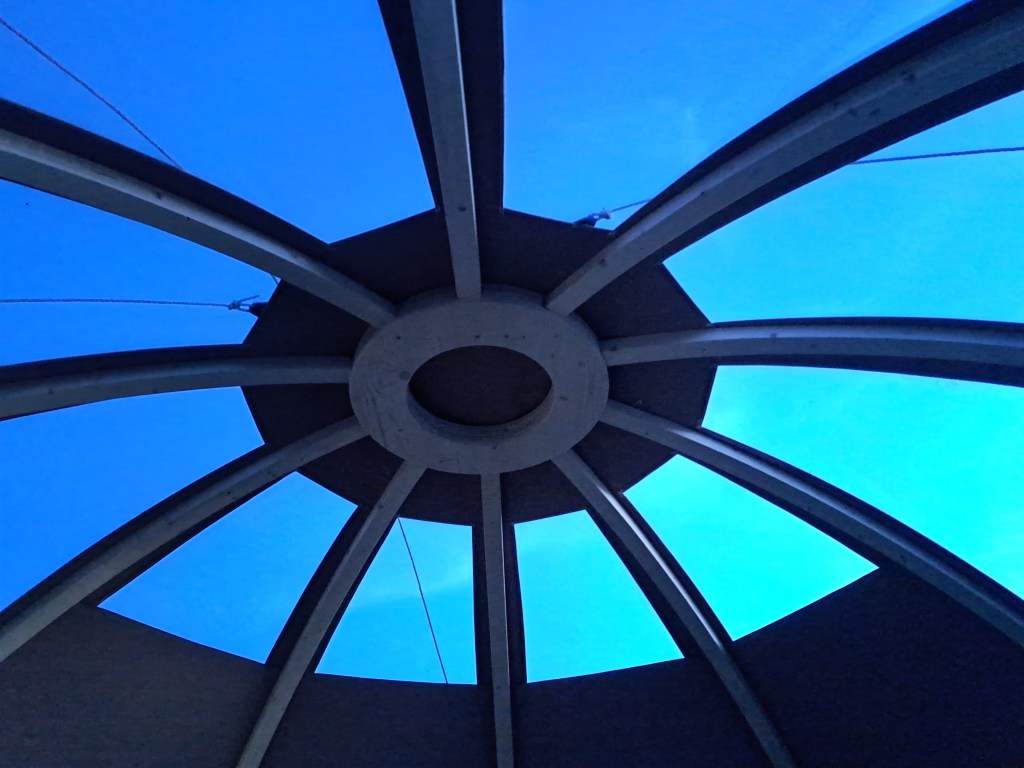
Our tent had a living, dining and kitchen area on the ground floor (with a loo under the stairs) and a double bedroom up stairs with a large settee and a see through roof that was kept covered by a cover that looked more like an eye lid that opened at night than anything else I can describe. So, after a very nice meal we retired upstairs and enjoyed a star and moon lit night in a very comfortable bed.
OK, so we were glamping! What can I say?
Didier and Sandrine, the lovely couple who were our hosts, locally sourced all of the food and drink they served, knew the farmers and butchers, brewers and cheesemakers, etc and made every effort to ensure everyone was really welcome and looked after. They were very keen to find out more about our pilgrimage and were excited by the prospect of having more pilgrims coming their way (we were both the first pilgrims and, as we paid by card, we were their first card paying customers so we had to let Didier get it going before we paid). Didier is also working hard at learning English, something he realised he needed to do once they opened their doors, and he was impressive for someone who had started so recently (well, he was actually very good and was picking up new words as we spoke).
Their kindness extended to not charging us for our beers and aperitives last night, which was also lovely.
Tonight is a very comfortable chambres d’hotes (no other choices available) and tomorrow we are in our little tent again.
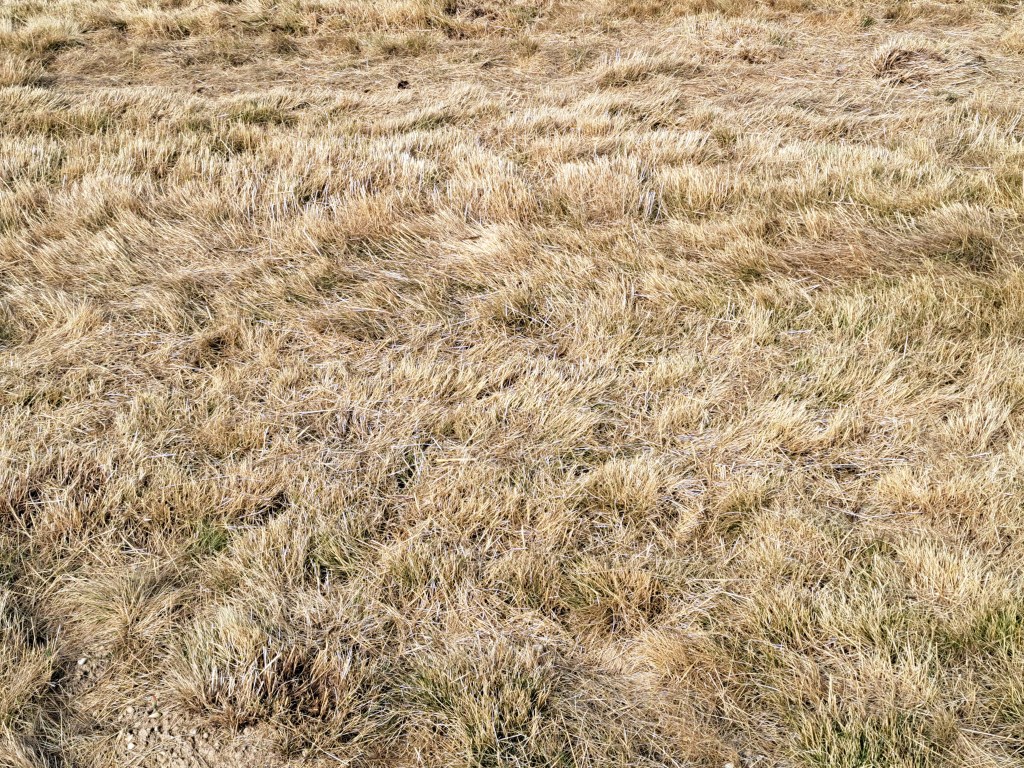
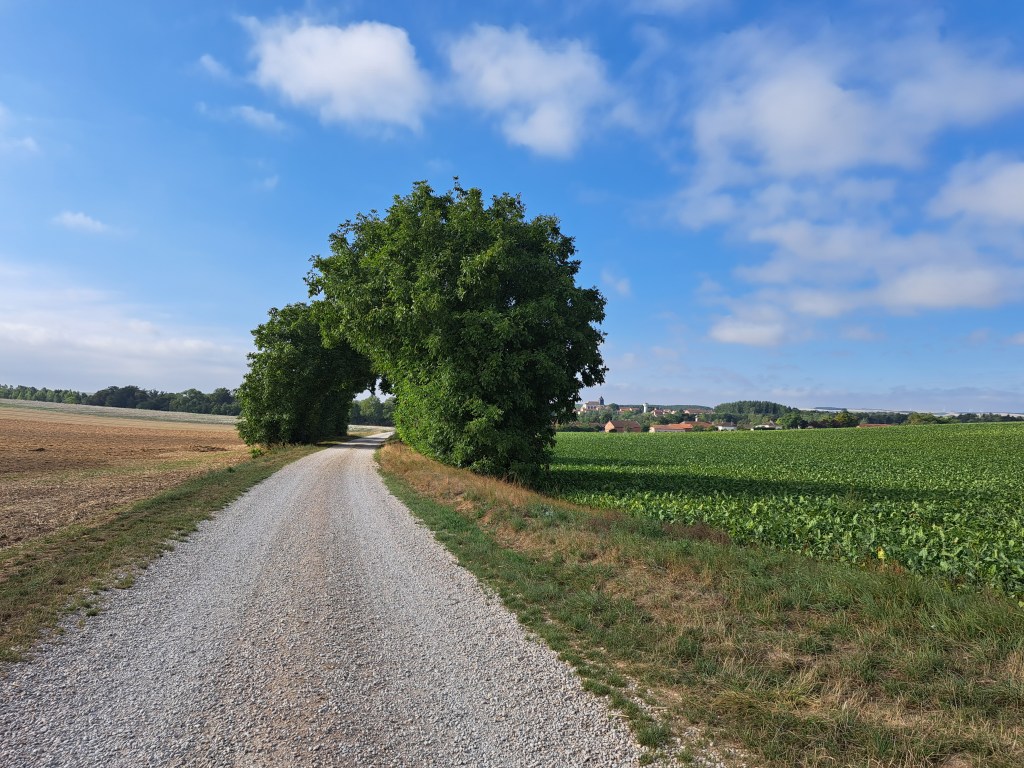
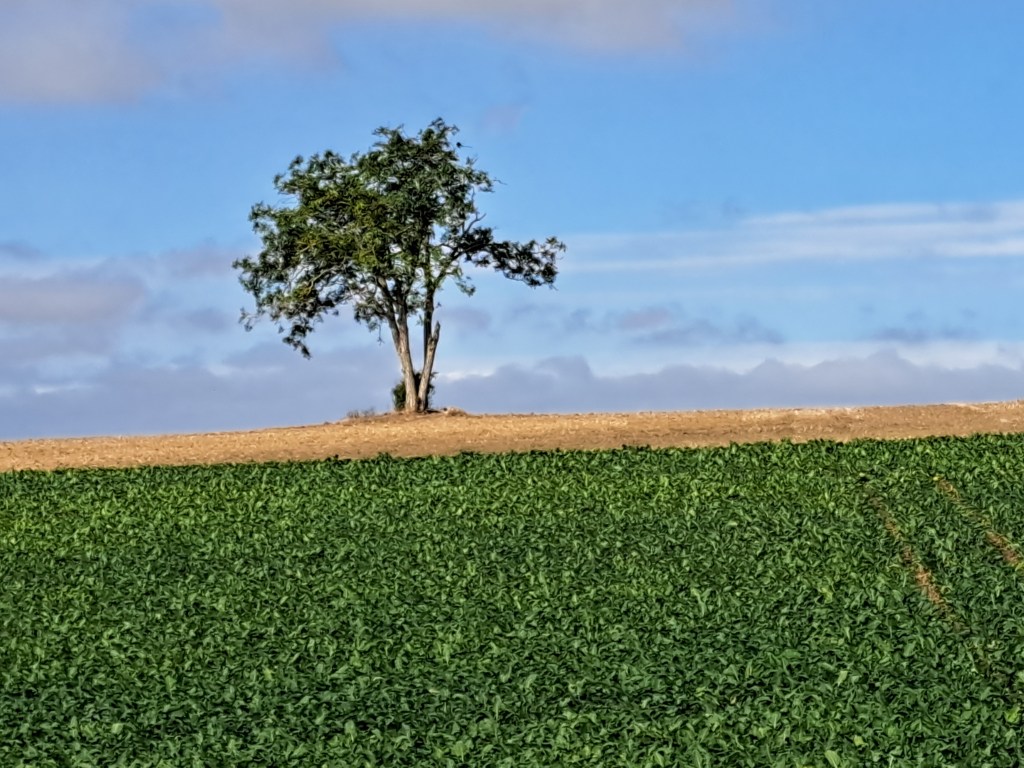
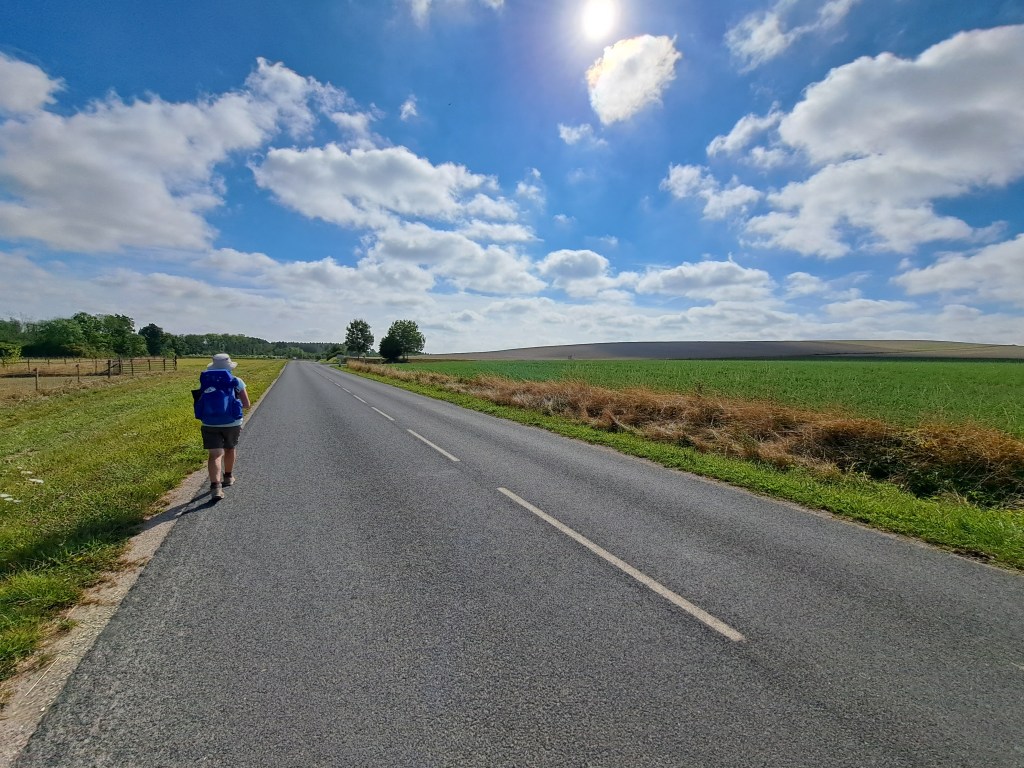
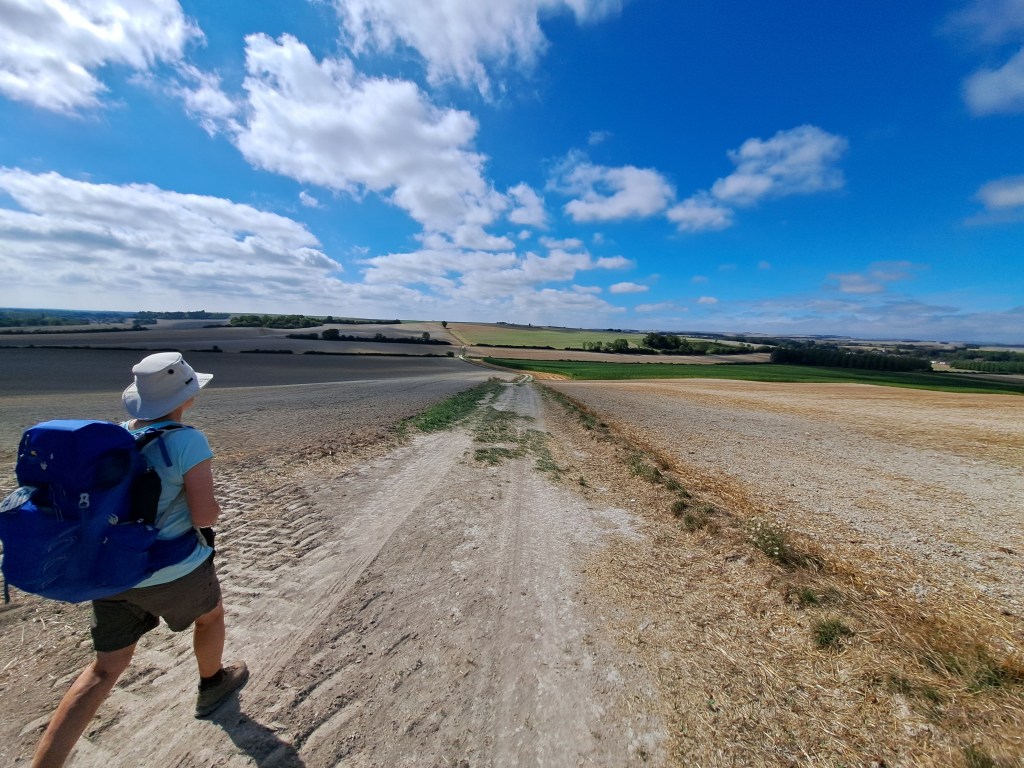
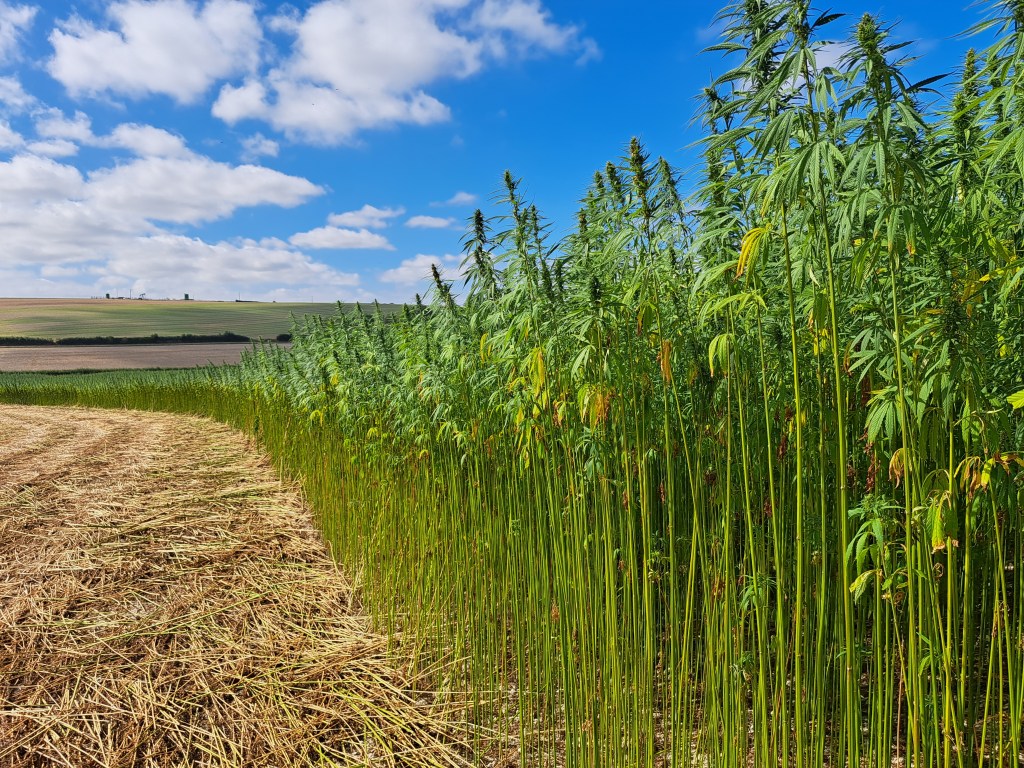
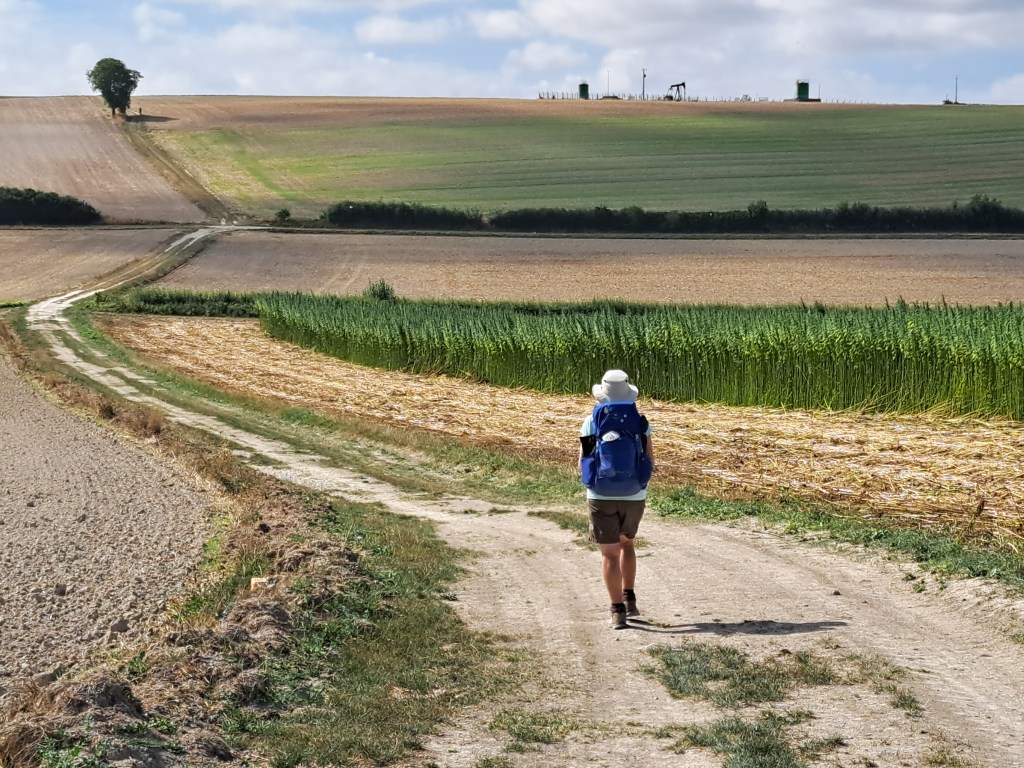
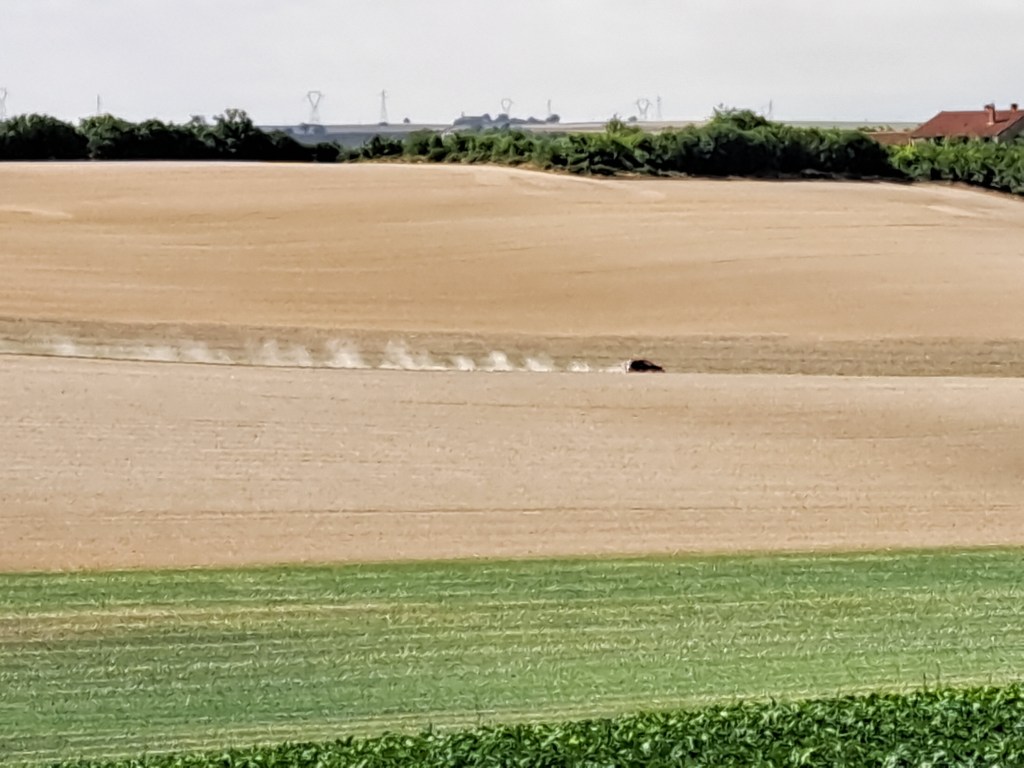
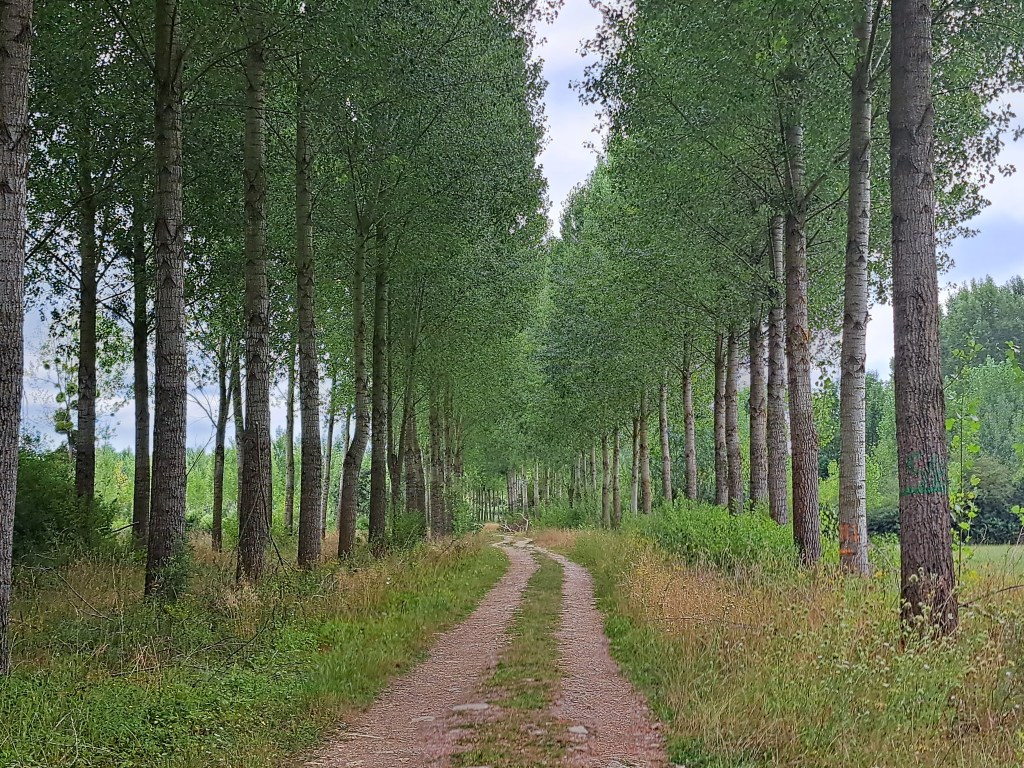
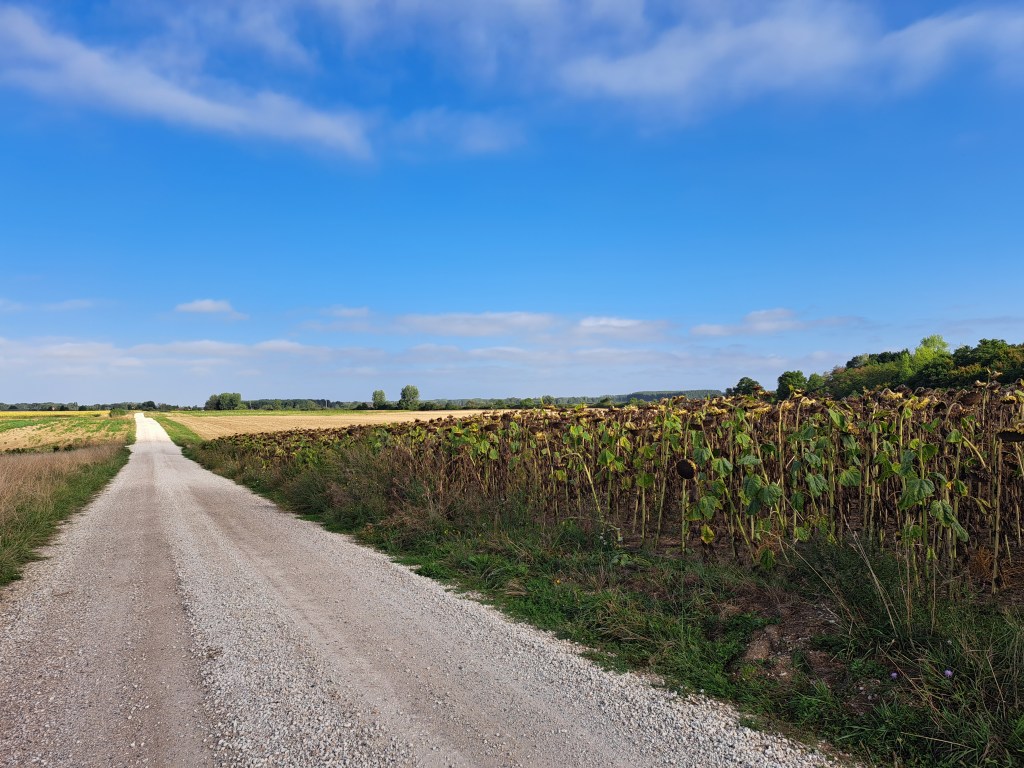
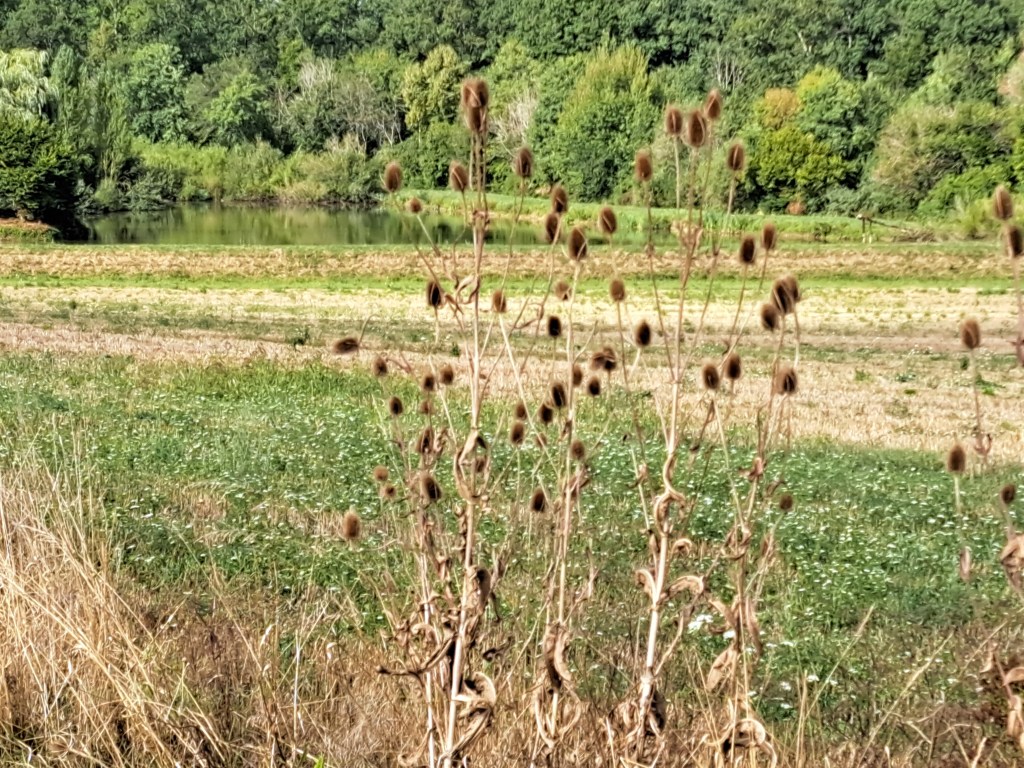
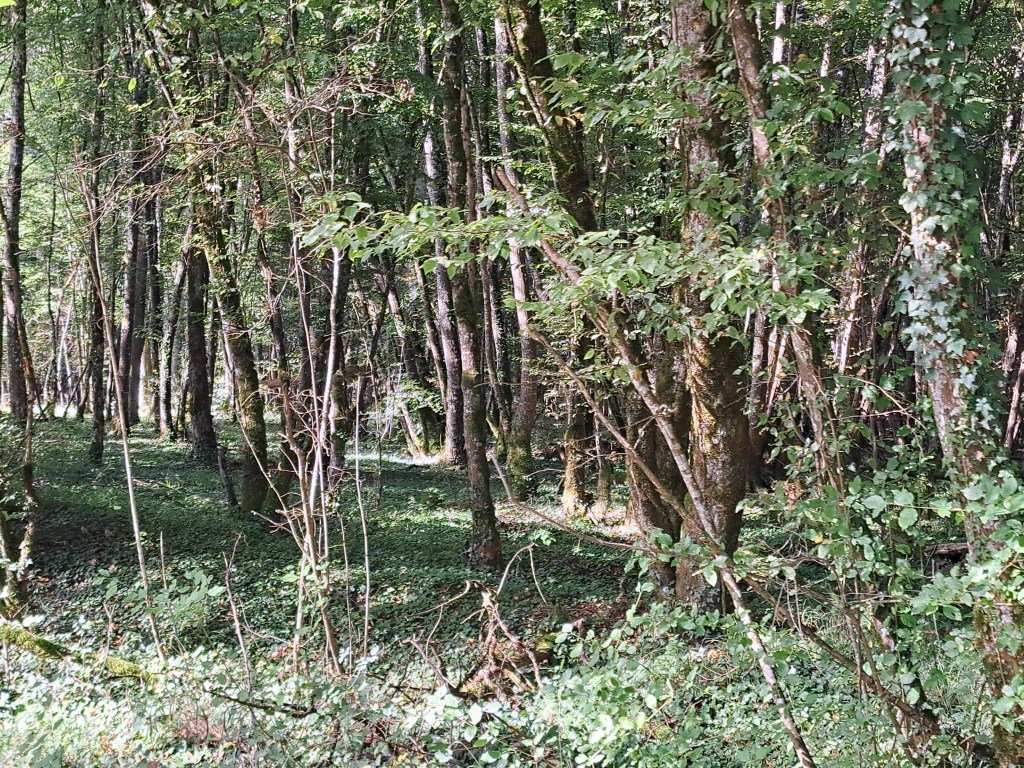
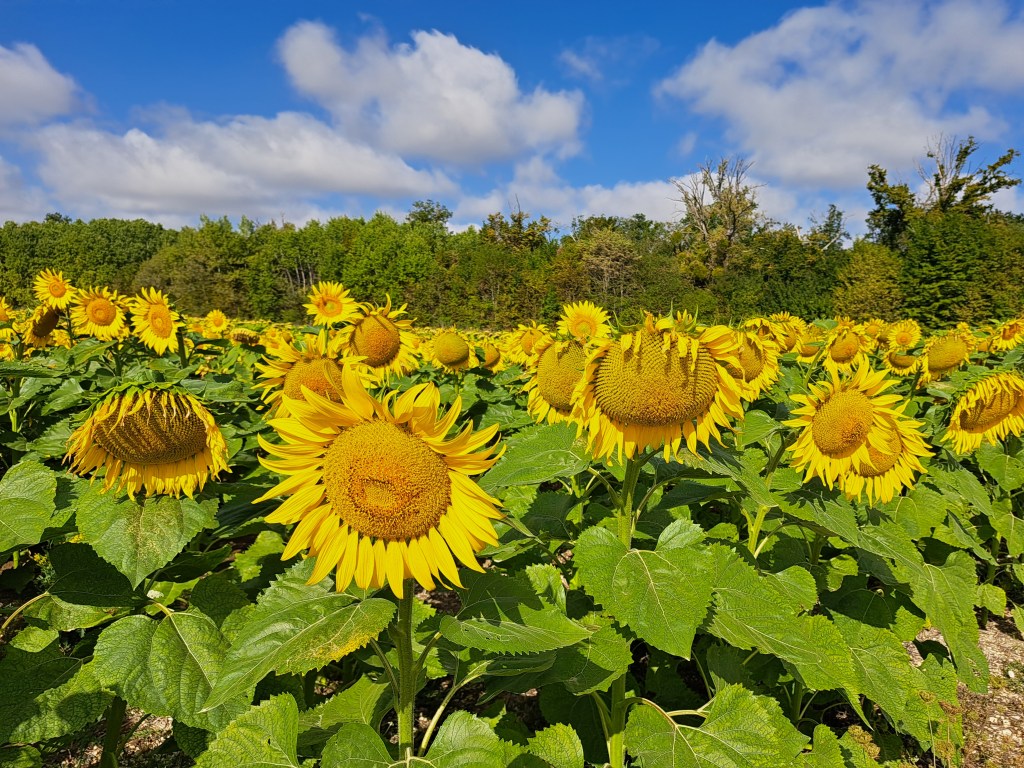
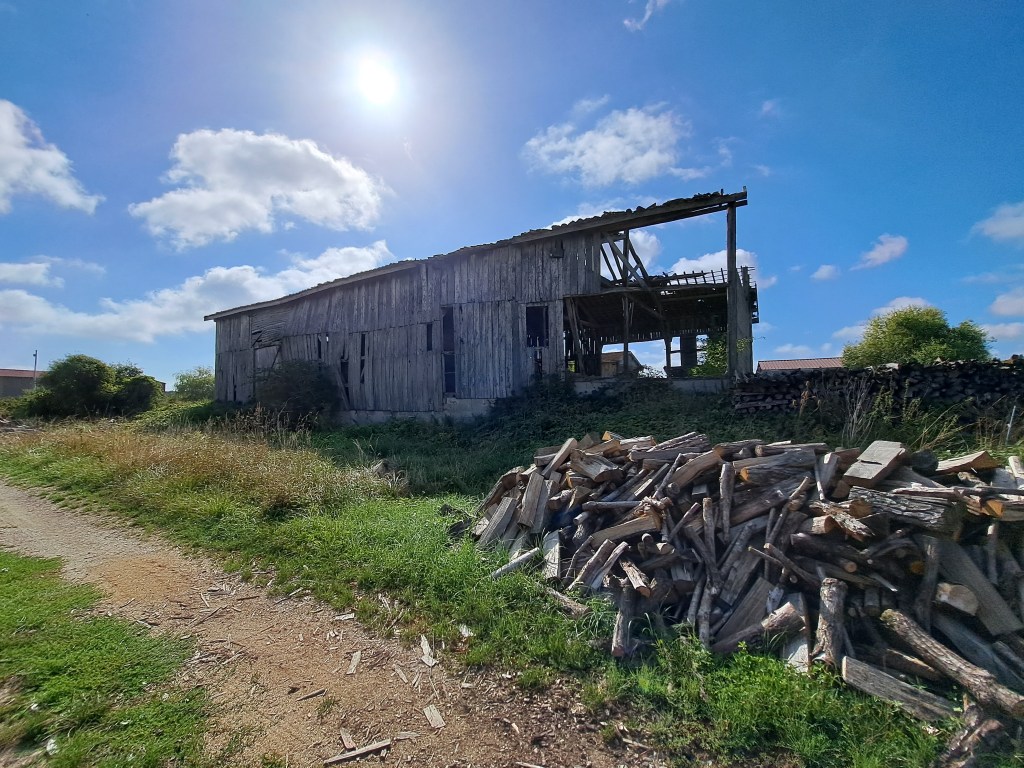
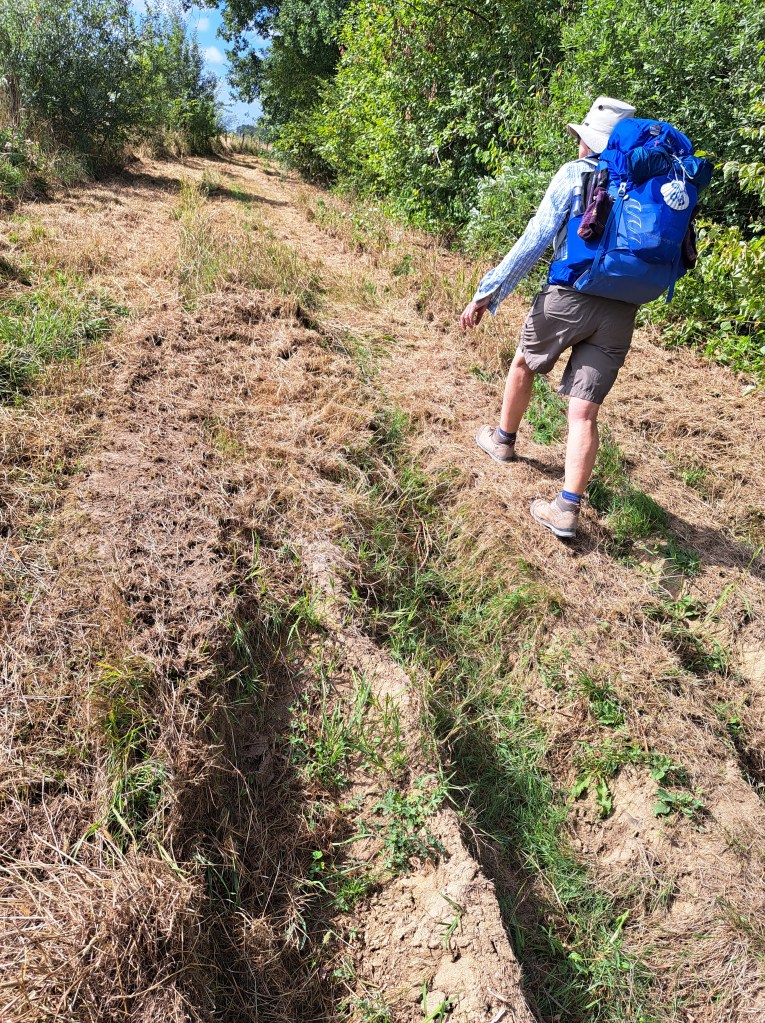
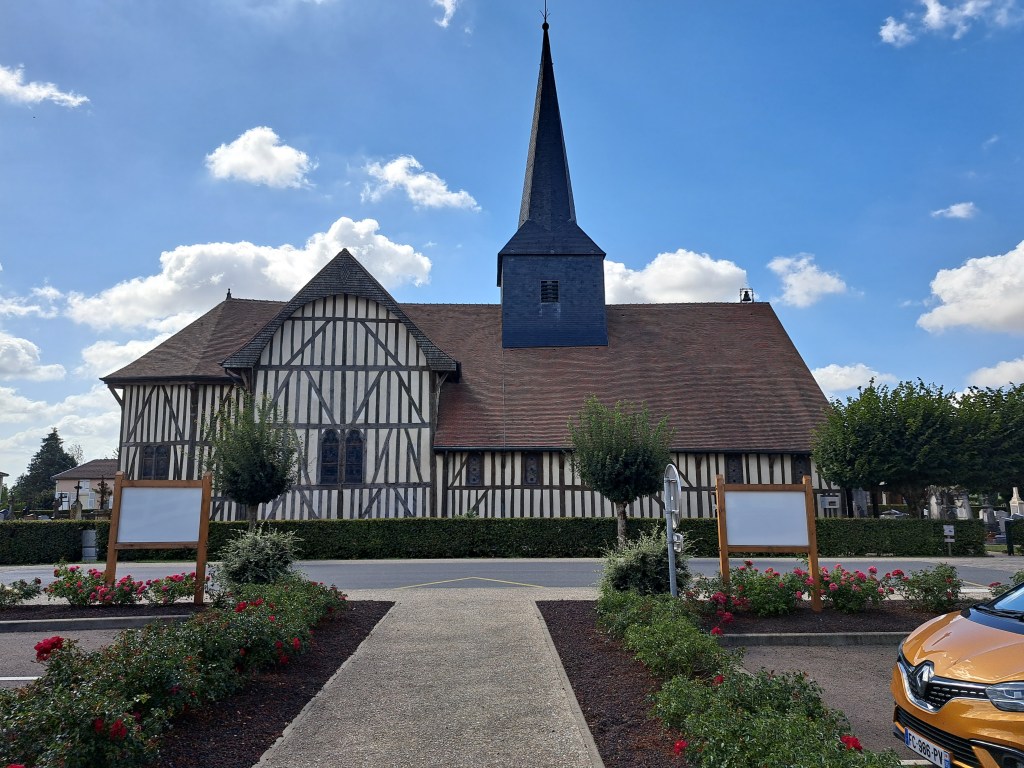
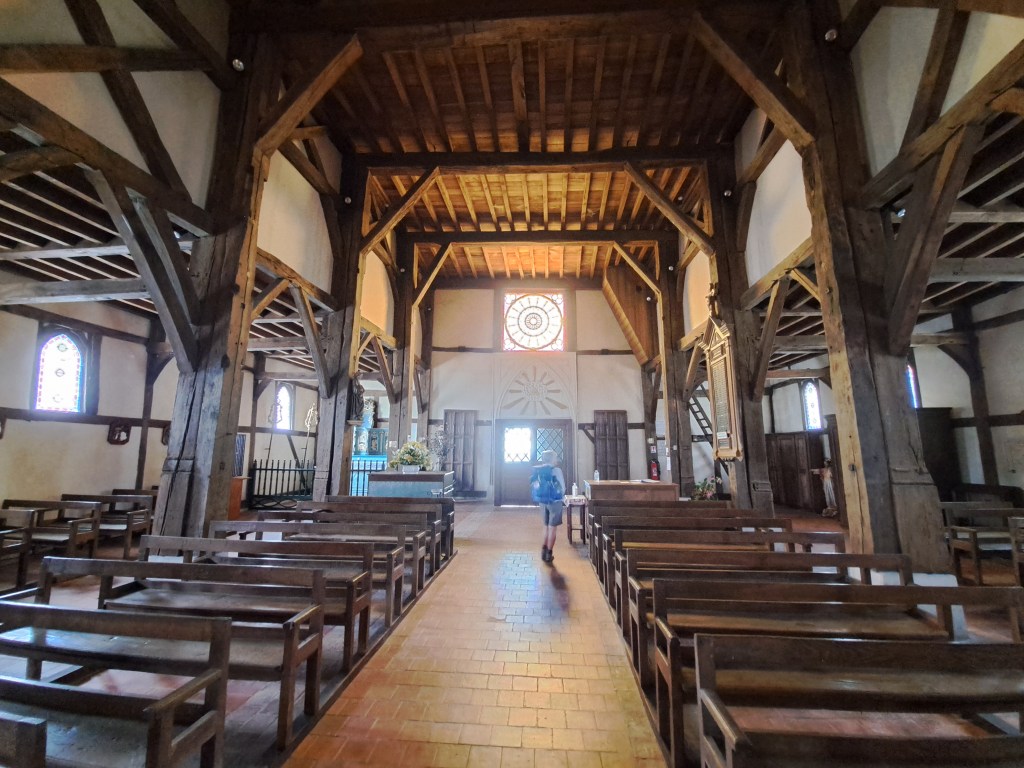
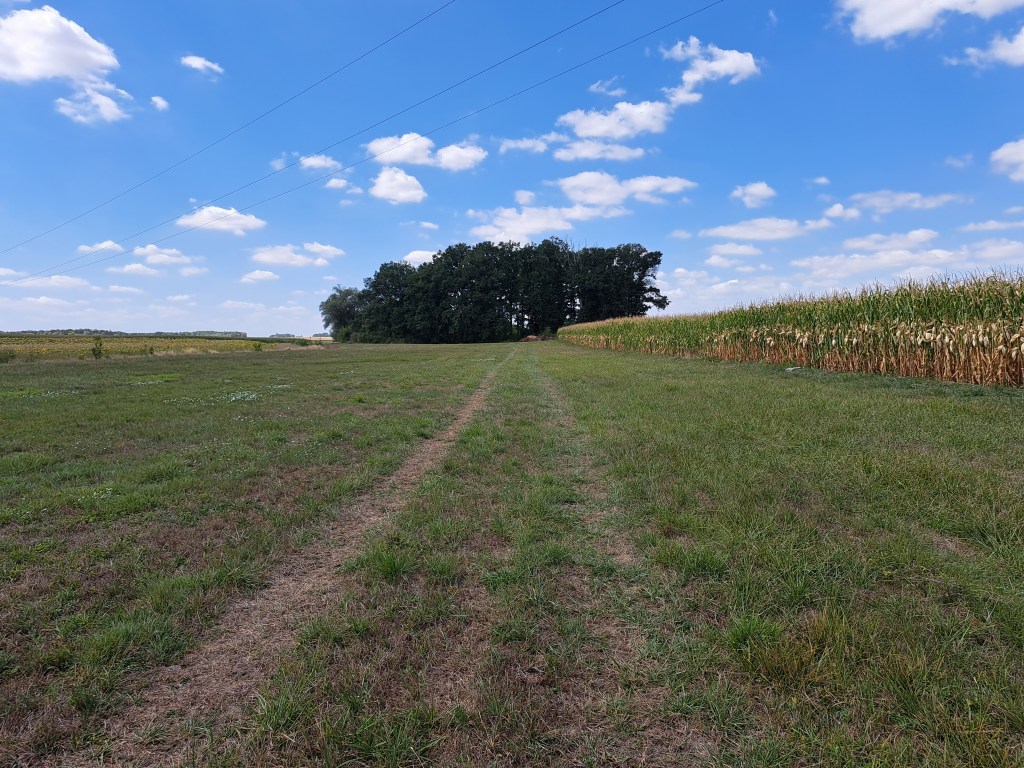
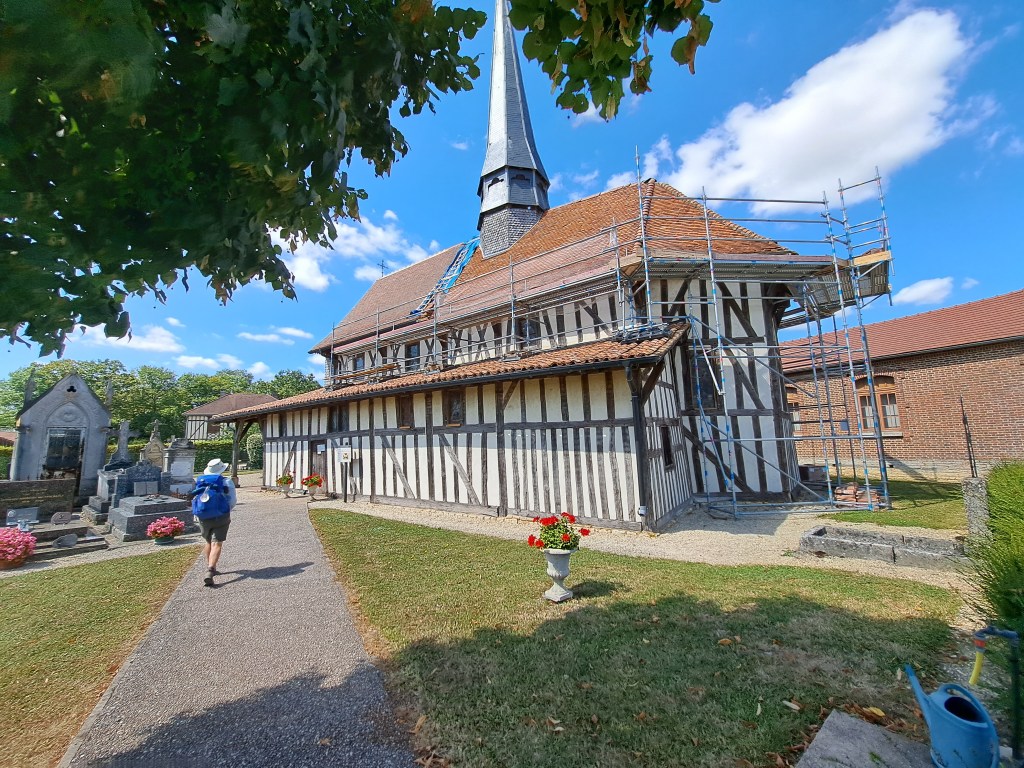
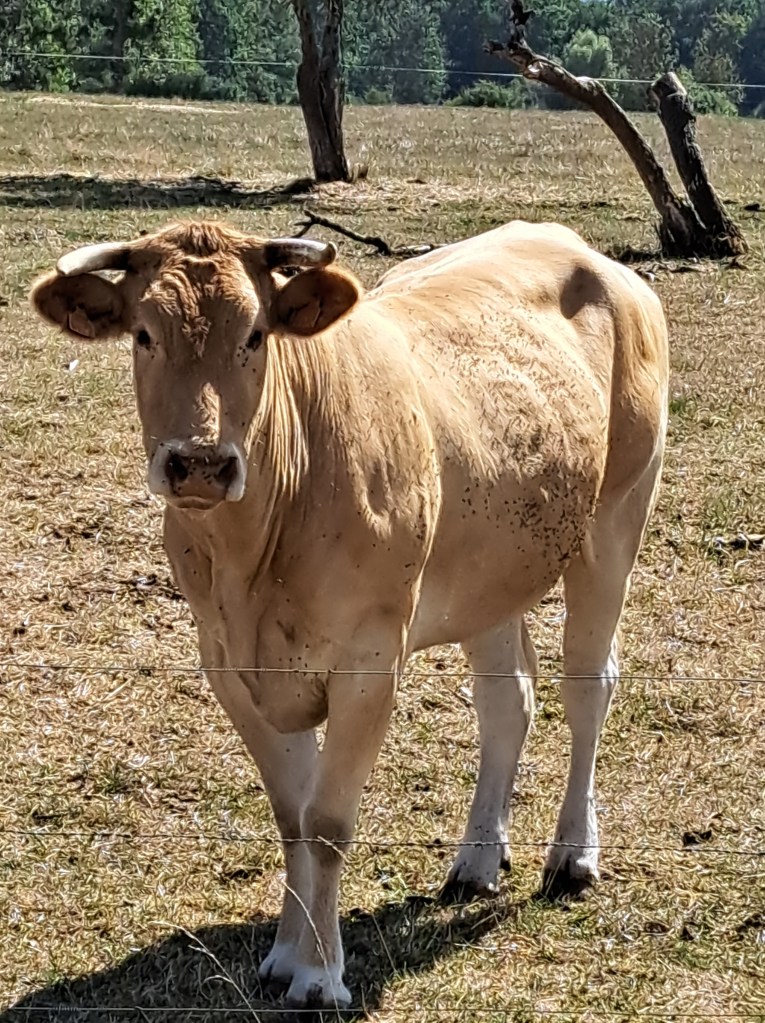
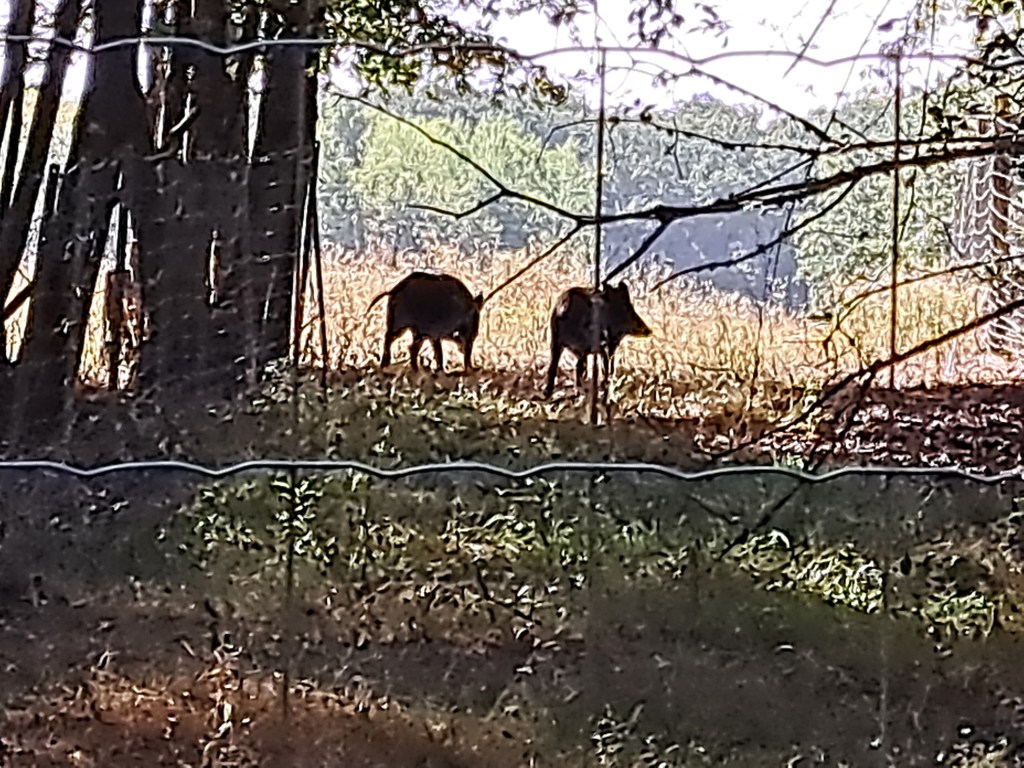
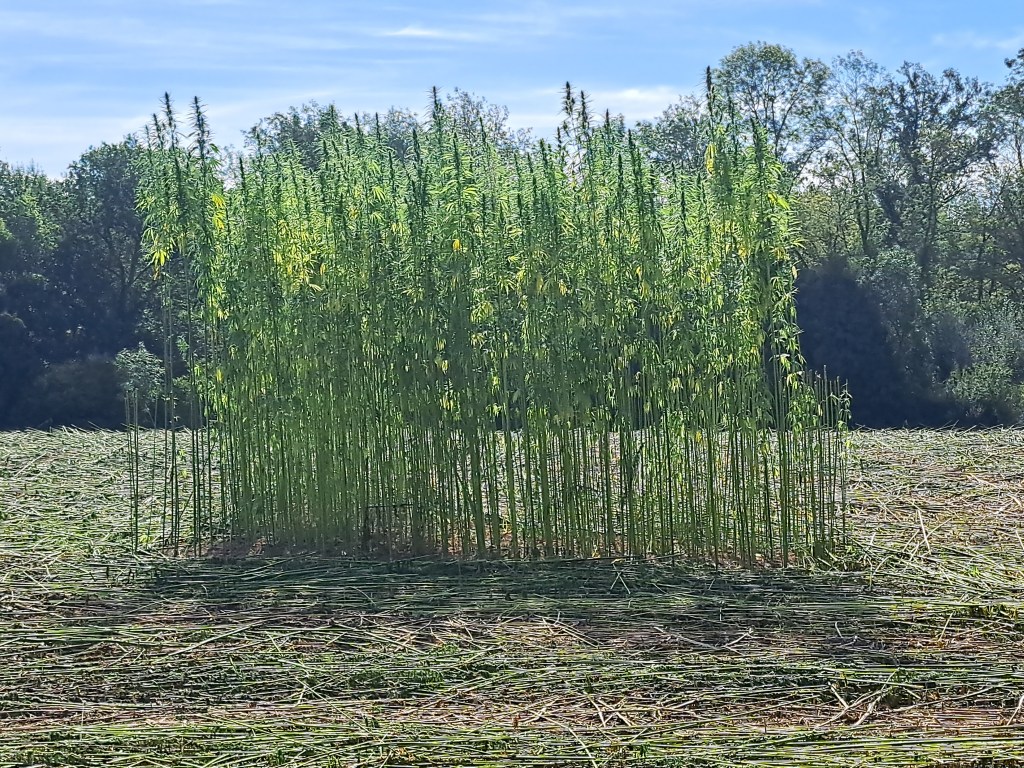
Just before I publish I also wanted to add that this region (l’Aube Champagne) is really lovely. The villages are seriously beautiful with amazing, mainly half-timbered churches that are all actually open, and despite having not shops, bars or boulangeries, they are well worth visiting (‘though I do work hard at trying to find a place with something!). The landscape is mainly rolling with some higher ridges a series of winding tributaries to the main river and some small and a couple of big lakes. It is partly wooded and mainly arable with the occasional small herd of cattle and the fields are vast, with some new additions to the usual crops of beets, maize and sunflowers (wheat, etc has already been harvested). The new crops include haricot beans and hemp. Interestingly, this morning we walked past a huge field of hemp, then onto a smaller, but longer field of now harvested hemp, but at the very end of the field was a small square of the stuff that looked quite different from the rest of the crop. A small square of, as yet unharvested “hemp”…. Anyway, in the woods we have encountered wild boar for the first time. We have known they were around since almost the first day in France but today we met three large ones and we were glad of the fence that separated us from them. They grunted and moved away but were impressive beasts. Great to see them, at last! We have also seen marmots and lots of other smaller creatures, so, despite the vast empty spaces there is still a lot of wildlife out there to encounter – and some of that wildlife carries rucksacks with shells on them…..











-
Just Rambling On
For most of you who read this the words, “we are now resting in Châlons-en-Champagne” will not mean a great deal. OK, it is a small city in the southern part of the Champagne region edging onto the river Marne. You can easily find it on Google maps. It’s a place. But we walked here and we did so with purpose because we are pilgrims.
I’m sorry but that isn’t quite what I was going to say to start all of this, but let’s just go with it.
Since we began walking there has been a strong sense of something below the surface as we have moved along each day. A bit like a strong pulse of electricity that you can sense but is not easily found and pointed at. Part of this began with the anticipation of the walk.
We had been waiting for a good couple of years or so before we were able to start this walk. And our start times were delayed due to illness and my damn knee injury (sorry! All my own fault). And when we began the walk, we were faced with a pretty harsh injury that Alison suffered but just went with and coped with and we can now say, the wound is a fraction of what it was when we restarted our walking in Kent. Because of the wounds and our concerns that it would be OK, we even went to A&E the night before the ferry trip and also had a follow up appointment on the morning of the crossing before we headed off across the water.
But, somehow, the momentum of pilgrimage was already too strong to slow us down by much.
And, as we began the French route, we sensed other things going on, cutting into our sensibilities, short wiring our focus, but only to get us more on track. We sensed before we knew it that we were deep in the territory wrenched from peace by two world wars. We are not ignorant of history but we were not on a tour of historic sites from WW1 and WW2, we were on the historic Francigena route to Rome, along a way described by a guy who walked it over a thousand years before….
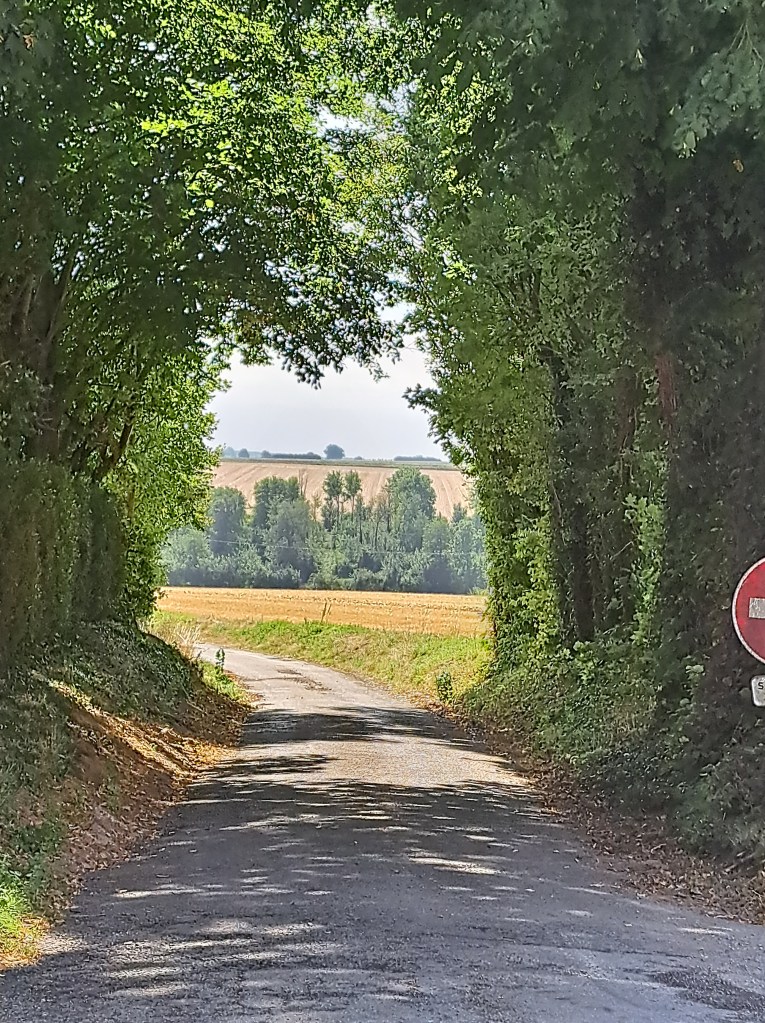
But the ground was not letting us past without acknowledging the harsh truths of history. I had nightmares in one place that felt like the past was not going to let go, we walked by so many places with stories, so much destruction and, yes, so much hope, too. And we began to find a balance there as we trudged across sweeping open fields, cut along deep cut paths that were the sunken roads on the front, down into valleys where nothing had been left when the shelling stopped, and yet people had come back and rebuilt…. Yet again.
And the rivers and many canals we walked along seemed dark and murky ribbons of water until something broke the surface and gobbled a fly or leapt up and really took a fly with a splash at the end. The fields could mesmerise into a trance, then we would stop, stunned to see two hares racing each other across the side of the hill, their long legs hardly touching the surface as they went fast between the furrows. We followed one of their cousins the wrong way up a hill before realising we had gone the wrong way, but were rewarded by the view we got as we cut along another path to re-join the official route.
A deep brown deer grazing in a field of beets distracted us and, as we slowly walked along watching its grace as it fled the scene, we missed our turning and ended up walking about a kilometre further than we needed to – but we were not upset. This was something special we would not have wanted to miss.
The buzzards, making their strangely plaintive cries as they wheel along the edge of the woodland together, hunting and enjoying the early morning sun as it heats up the furrows below them and cuts long shadows for them along the deeply etched earth, have entranced us as we walk steadily along the edge of the same fields.
How can we be part of all of this? How can this be part of us?
And still, there is an unsettling in our hearts that is not bad, just something that keeps us on edge, keeps us aware of where we are and about the something that we keep walking into, opening ourselves to.
And, as we continue, we keep talking about things.
One thing that has kept with us, worrying away at our hearts, is the story of the people whose lands we have been crossing. People who were invaded by armies who tore apart their land, turned their villages into rubble and destroyed their fields, replacing them with hellish swamps of poisoned, death-filled mud.
Some became refugees who were forced to flee and find homes elsewhere until the war was finished.
Some remained and tried to maintain as much of their lives as possible, trying to keep hope and dignity in their hearts as they endured that endless hell.
Then, when the war was done, when the leaders declared peace and everything was allowed to become “normal” again, they had the task of trying to find their homes and their lives again. How could they do it? How did they do it? Why did they even come back?
But we have walked through those landscapes and met their children and their children’s children, we have seen what they have achieved and the evidence of their determined hope and faith. Part of this sense we have been touched by lies in these troubling and up lifting details. We imagine what it must be like for people across the world today whose lives are being, or have been affected in similar ways and gain hints of just how hard these people’s lives must be, but this land, on the doorstep of Britain, went through these terrors during periods of time that are very familiar to us, too. We have a lot of shared experience, shared losses, hard memories. There are places in Britain where refugees from France and Belgium were taken in without any hesitancy and where links still lie deep between both communities even now. We just don’t hear about them.
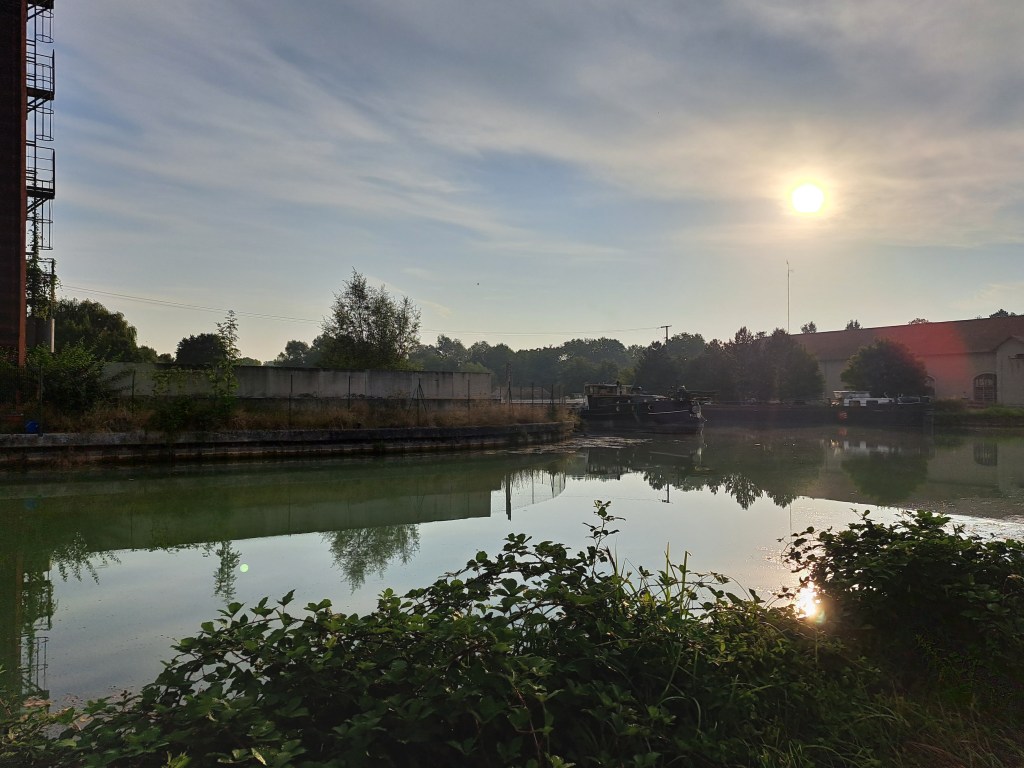
So the life that lurks deep in the dark green canal is just as real as the birds sweeping past us along the surface of the water. The sense of place is vibrant wherever we go and the people open up brief doors and let us glimpse new life.
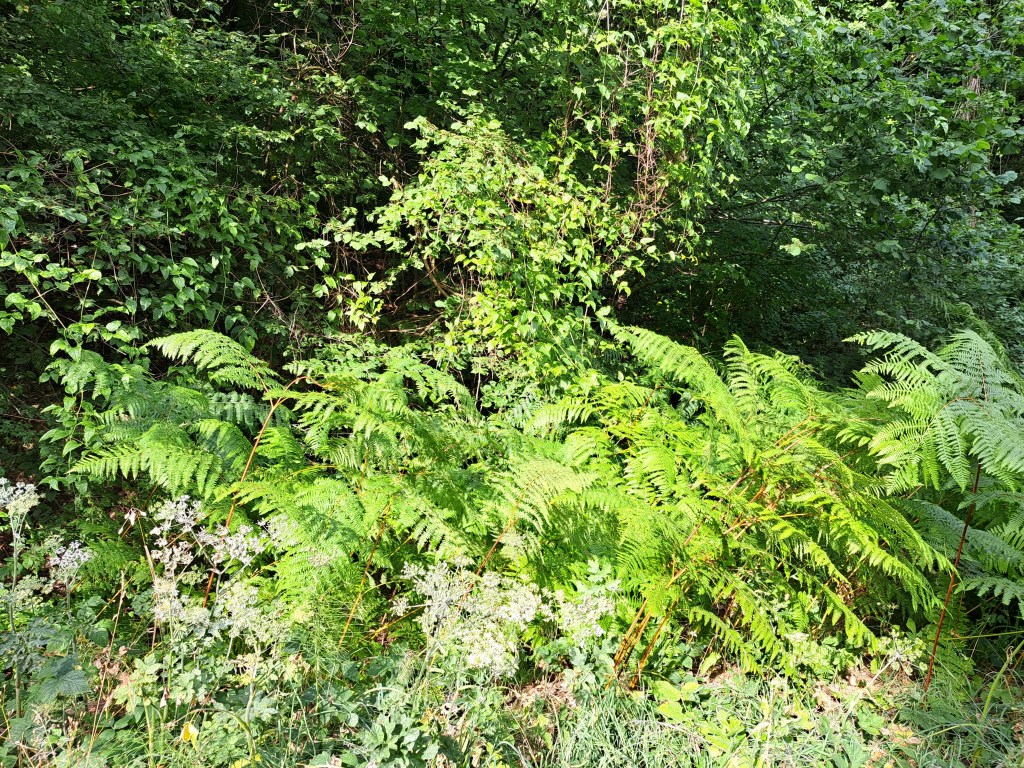
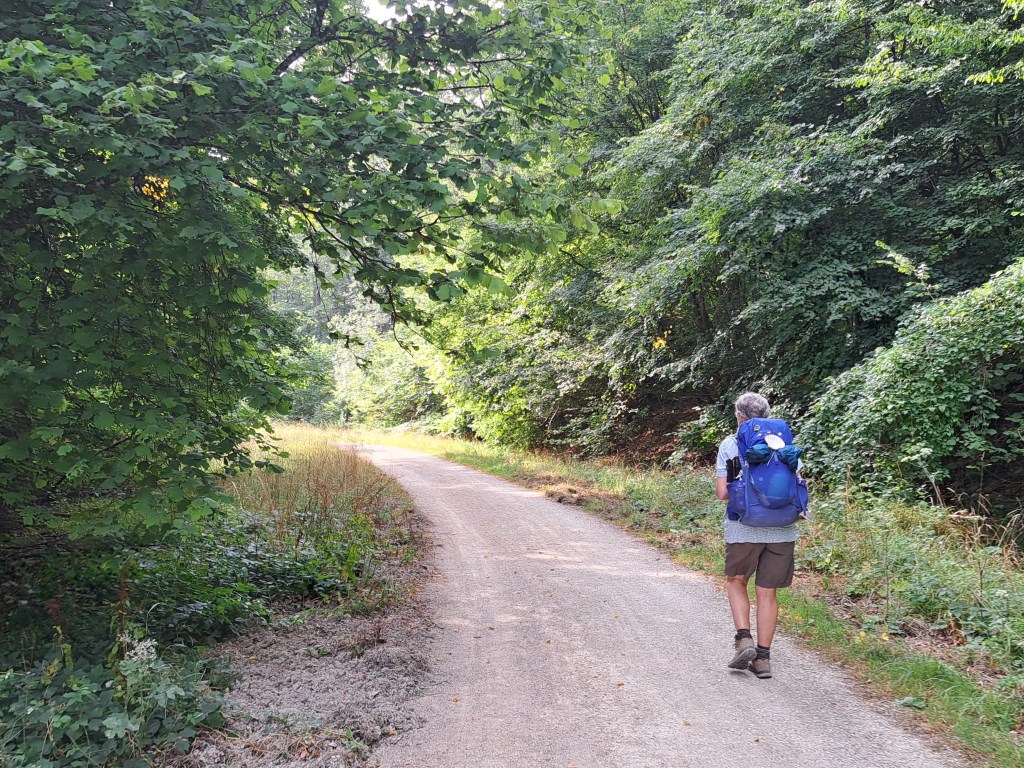
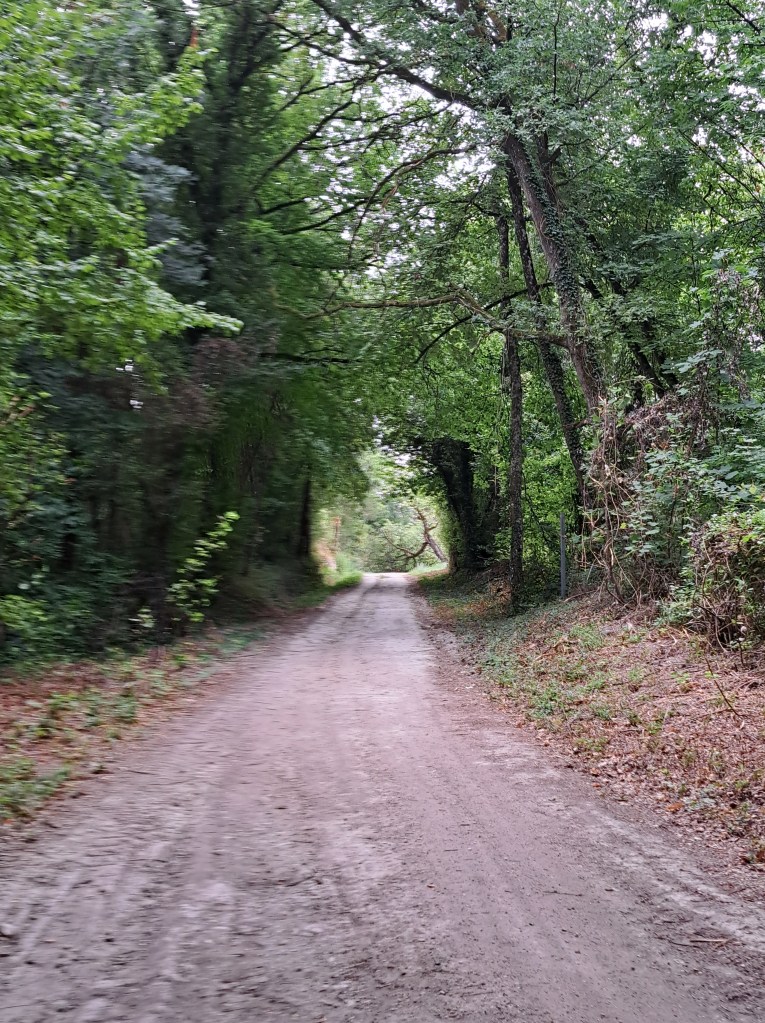
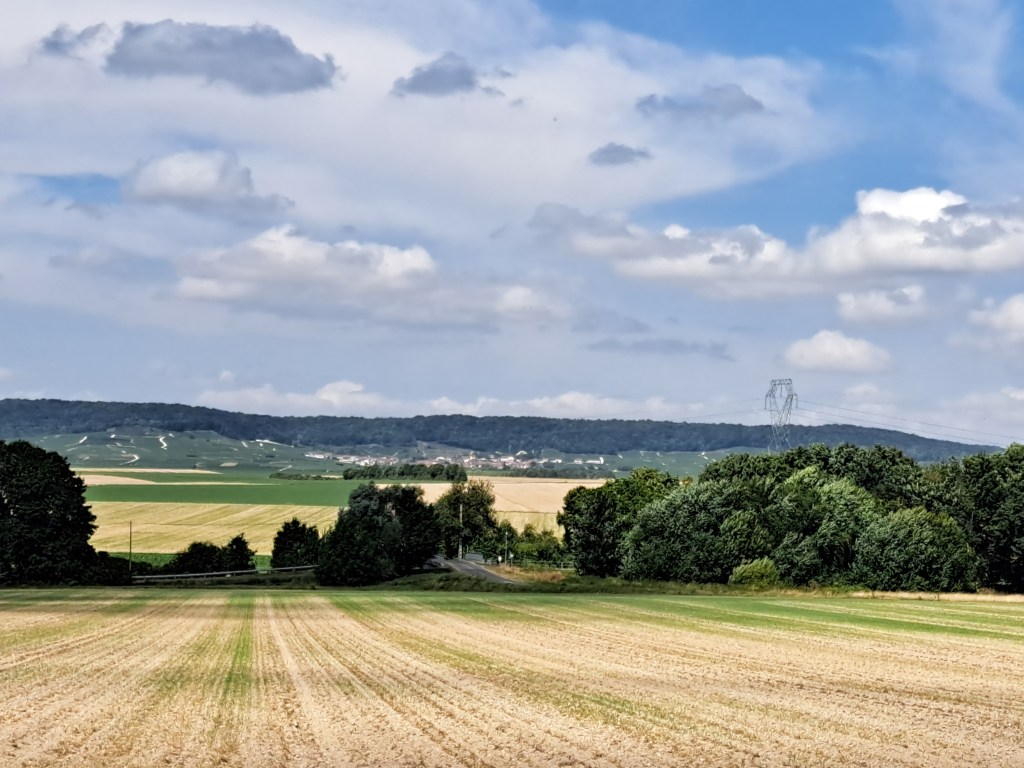
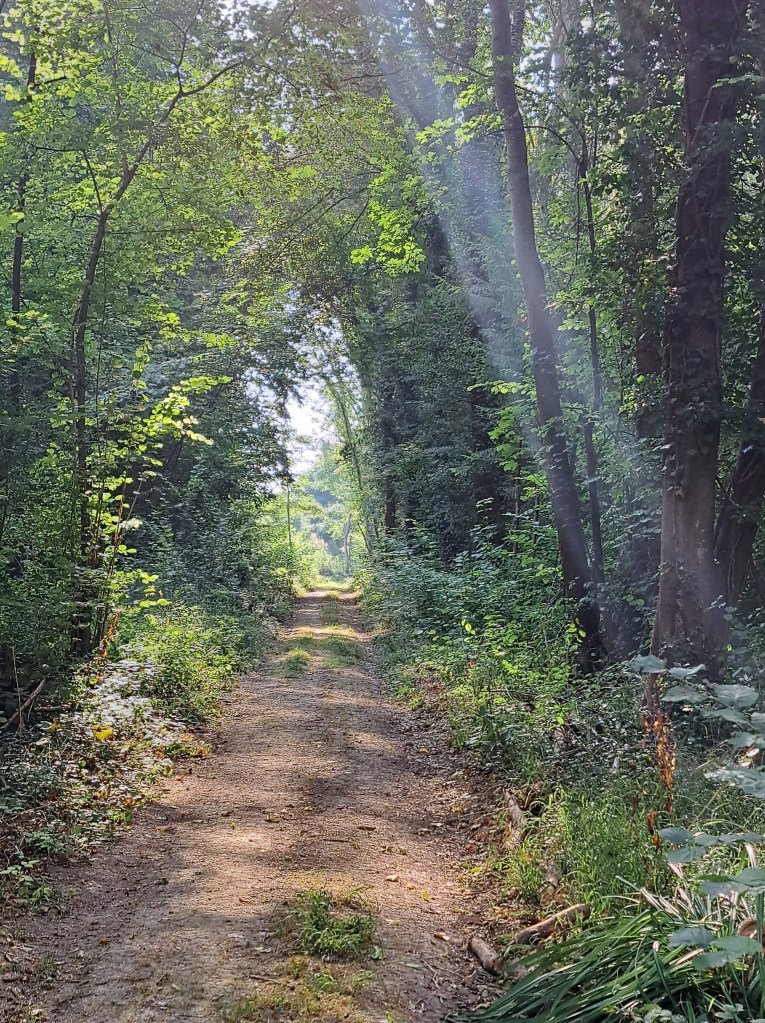
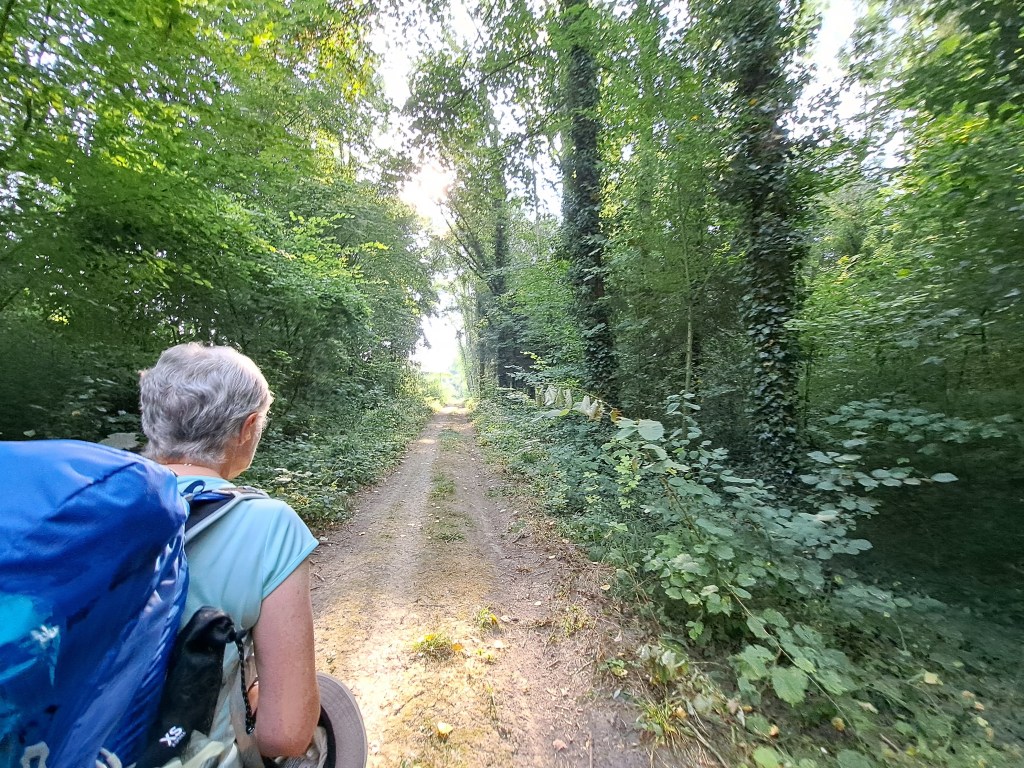
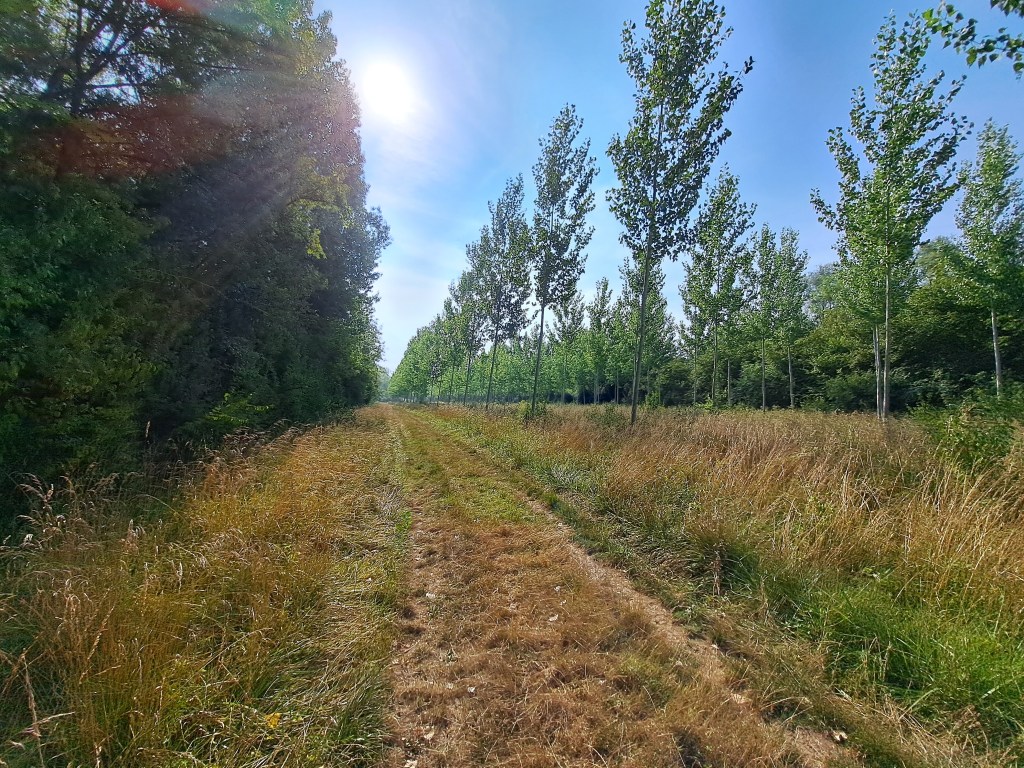
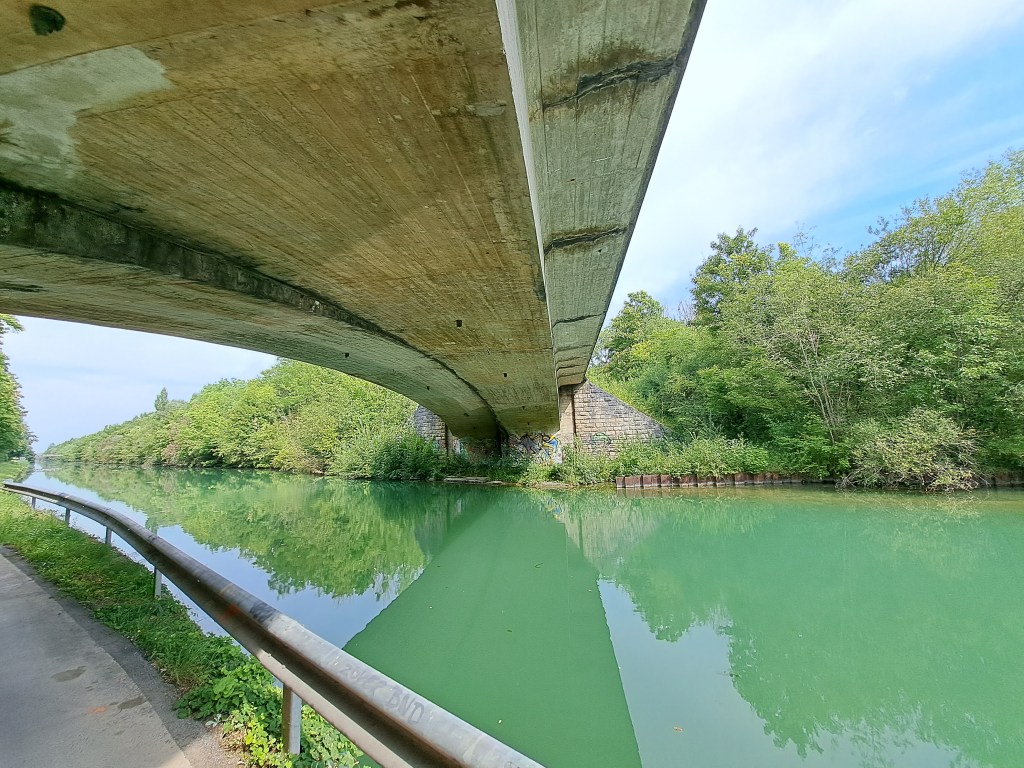
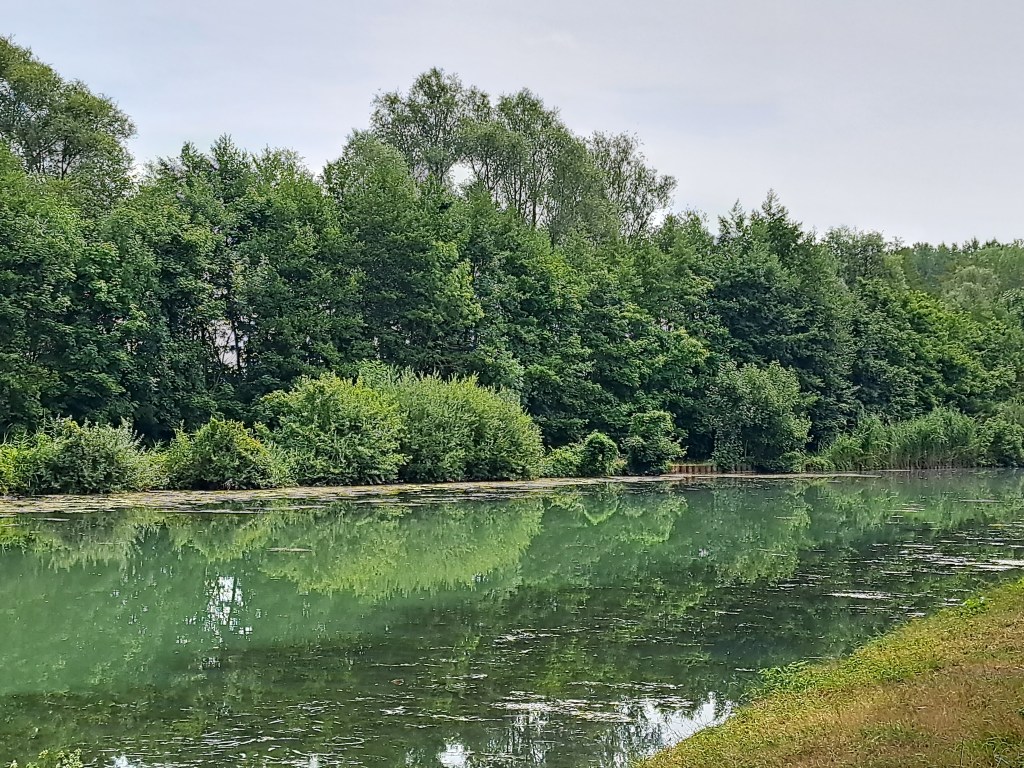
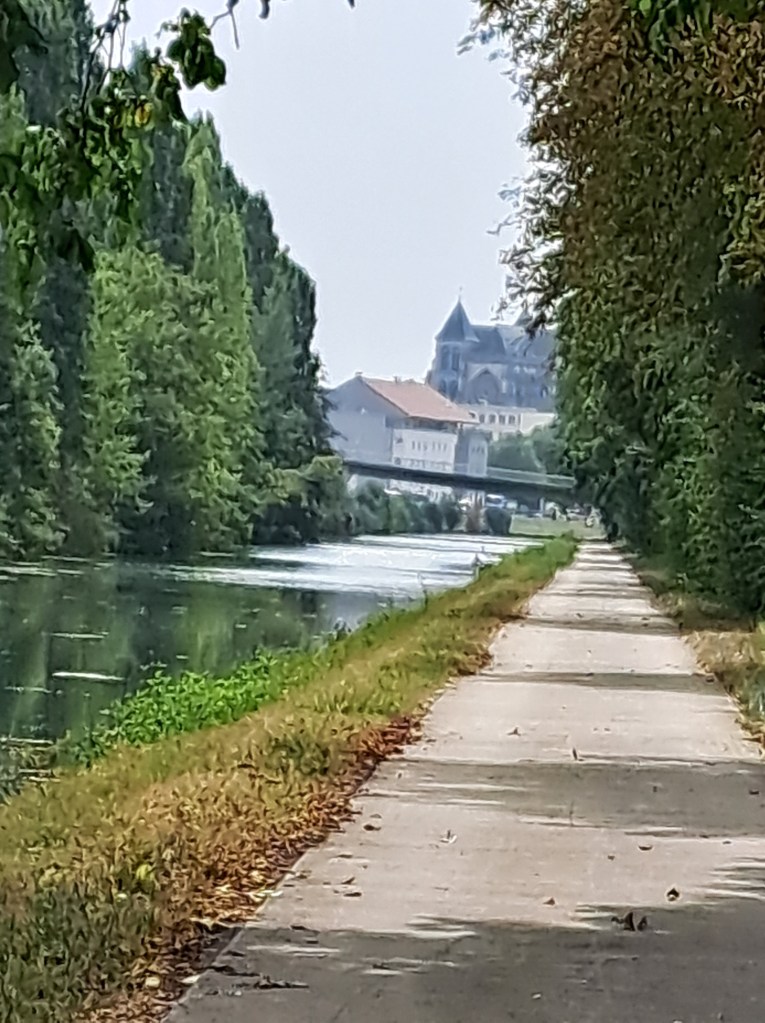
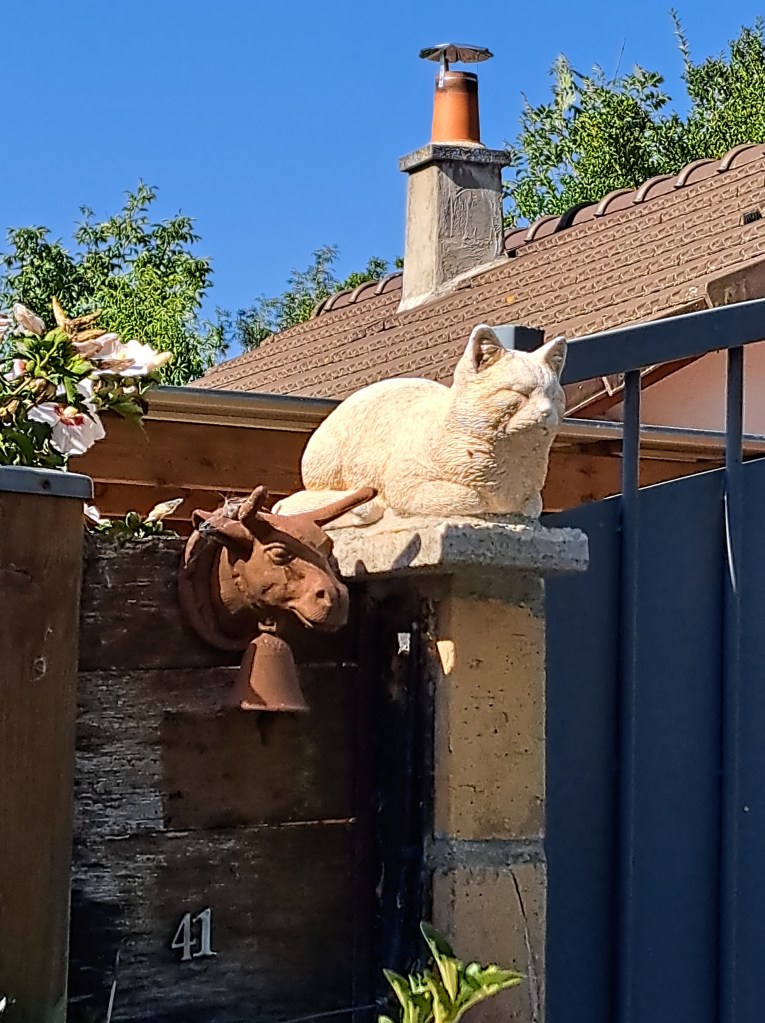
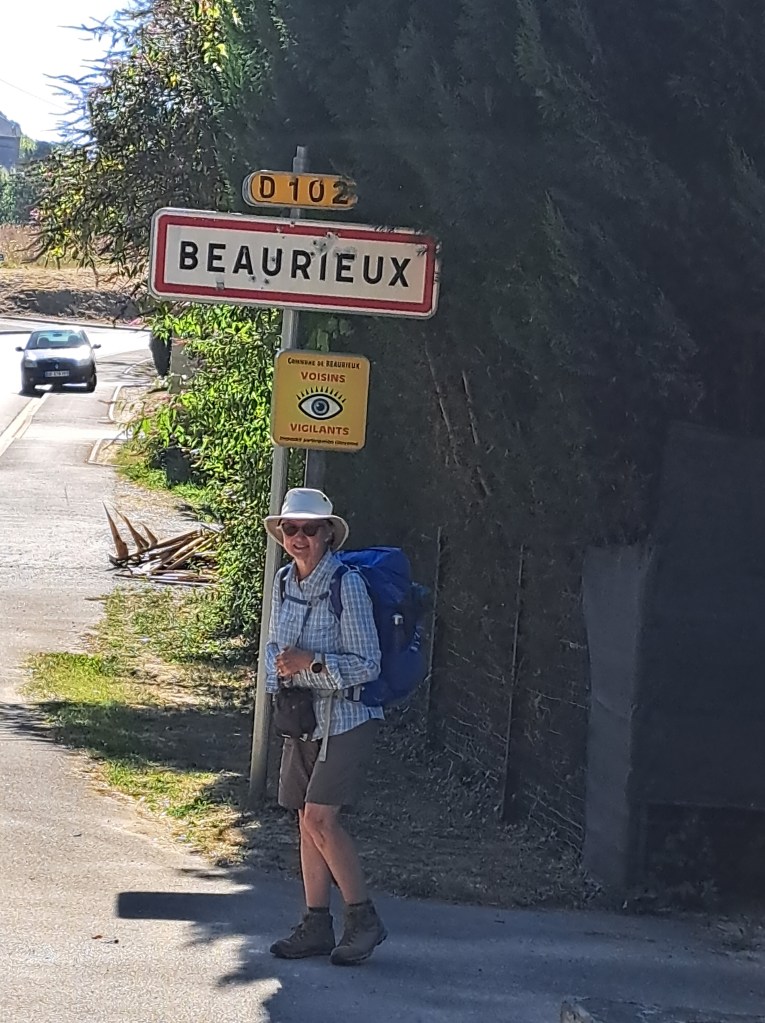
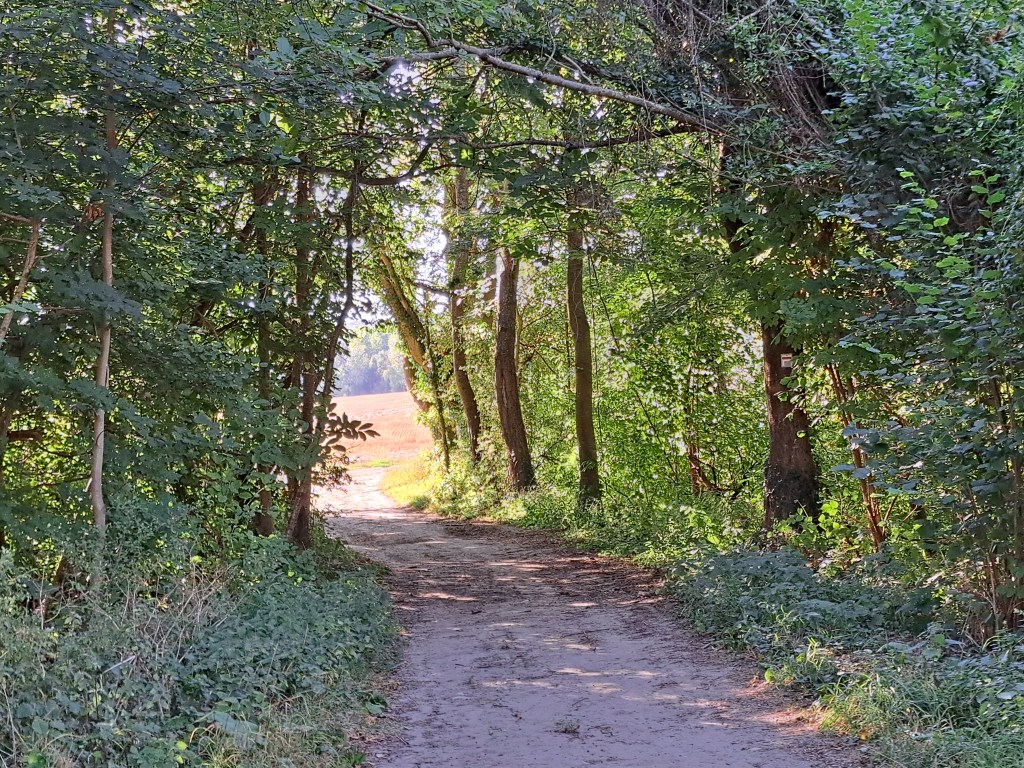
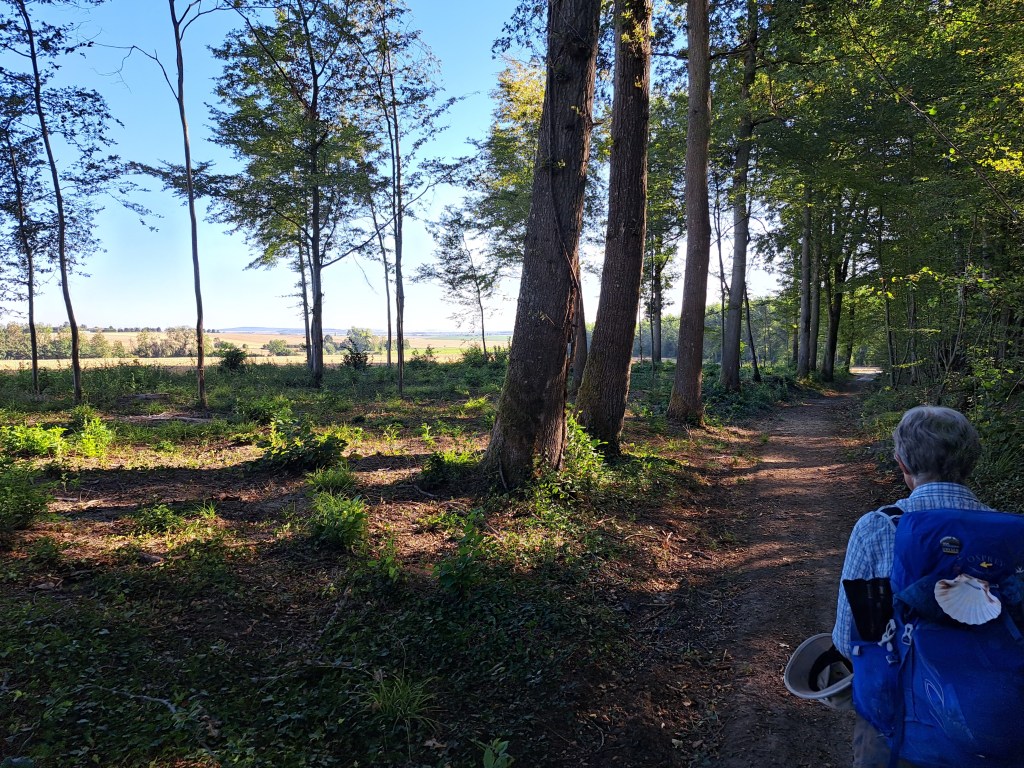
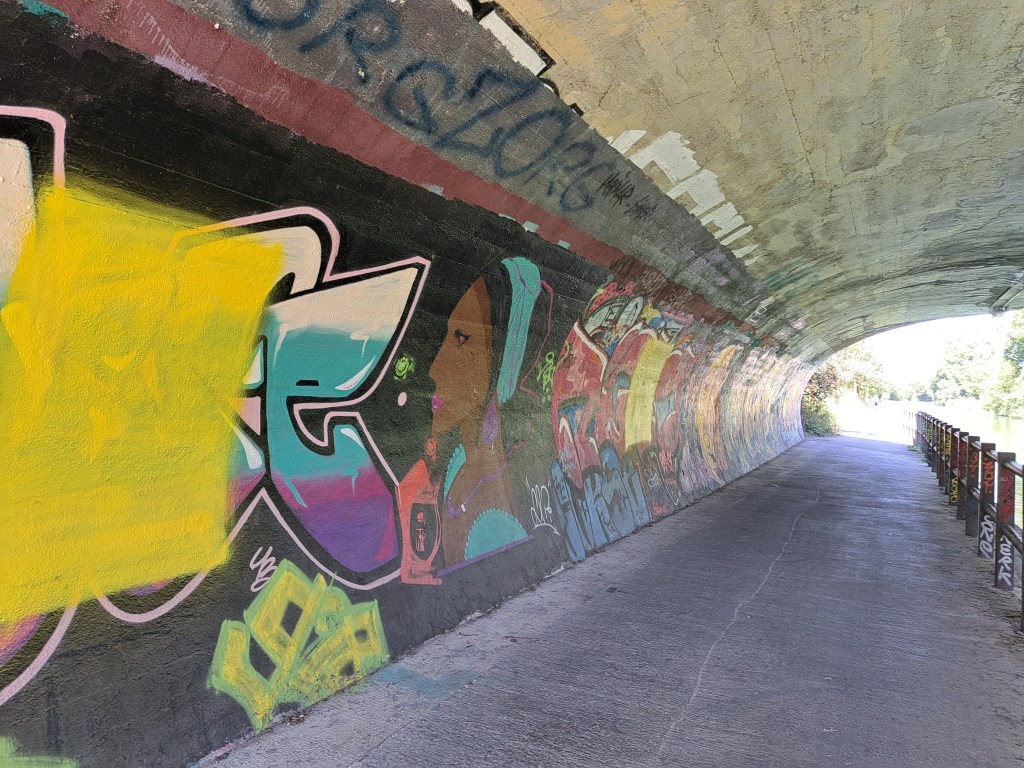
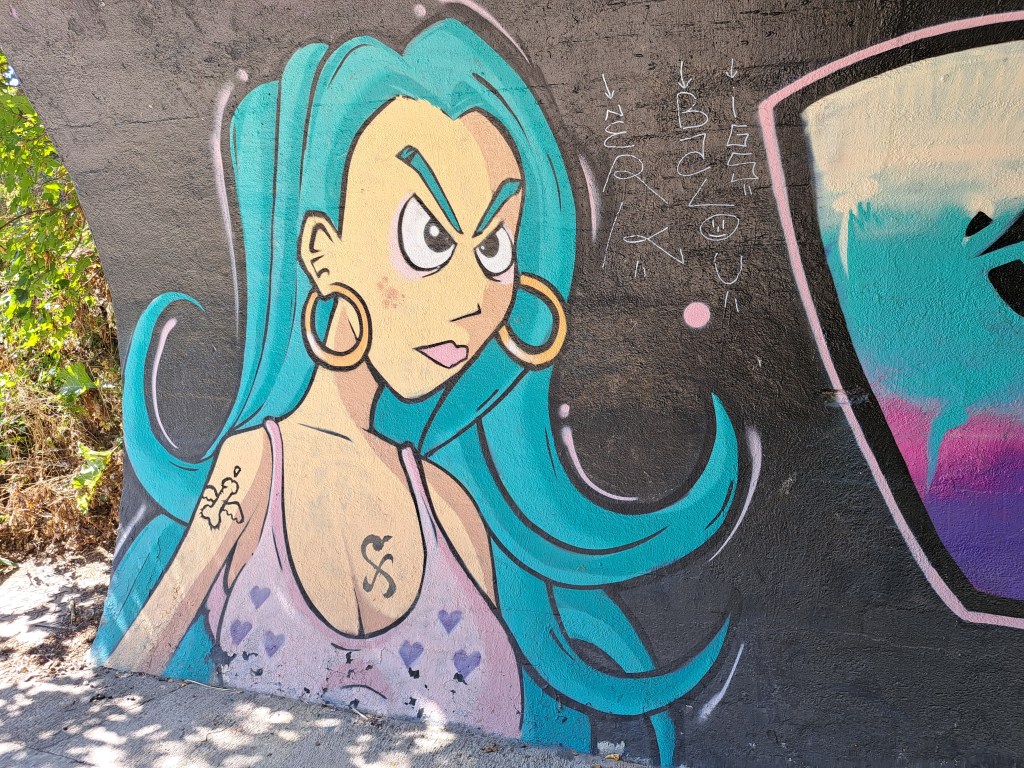
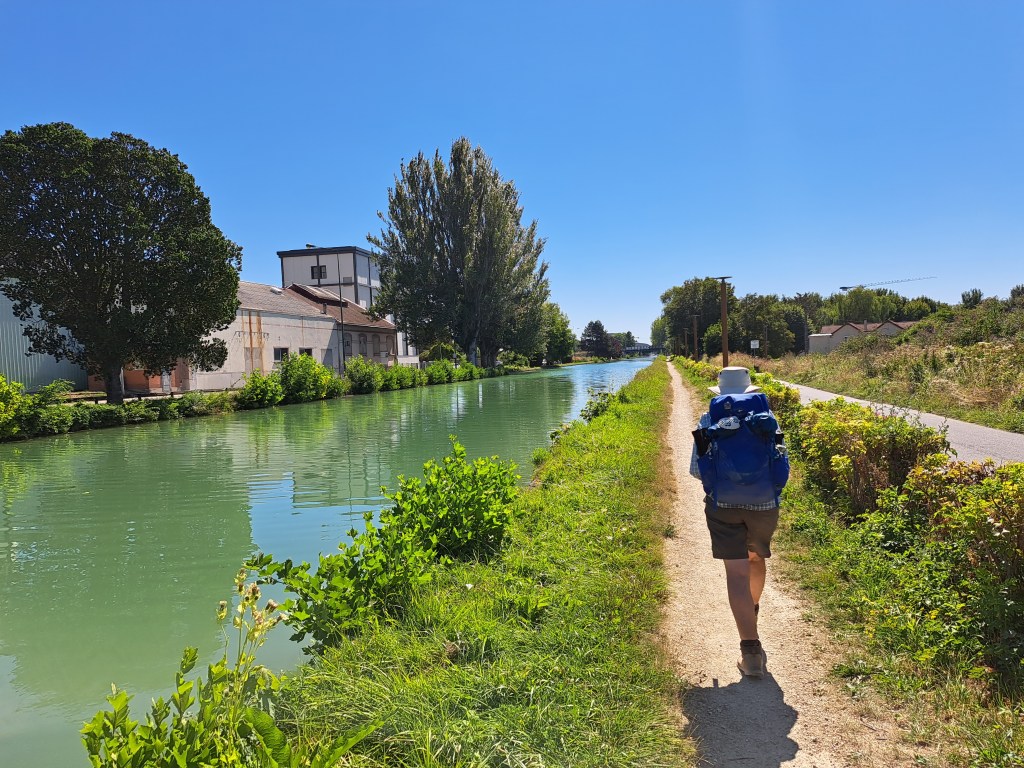
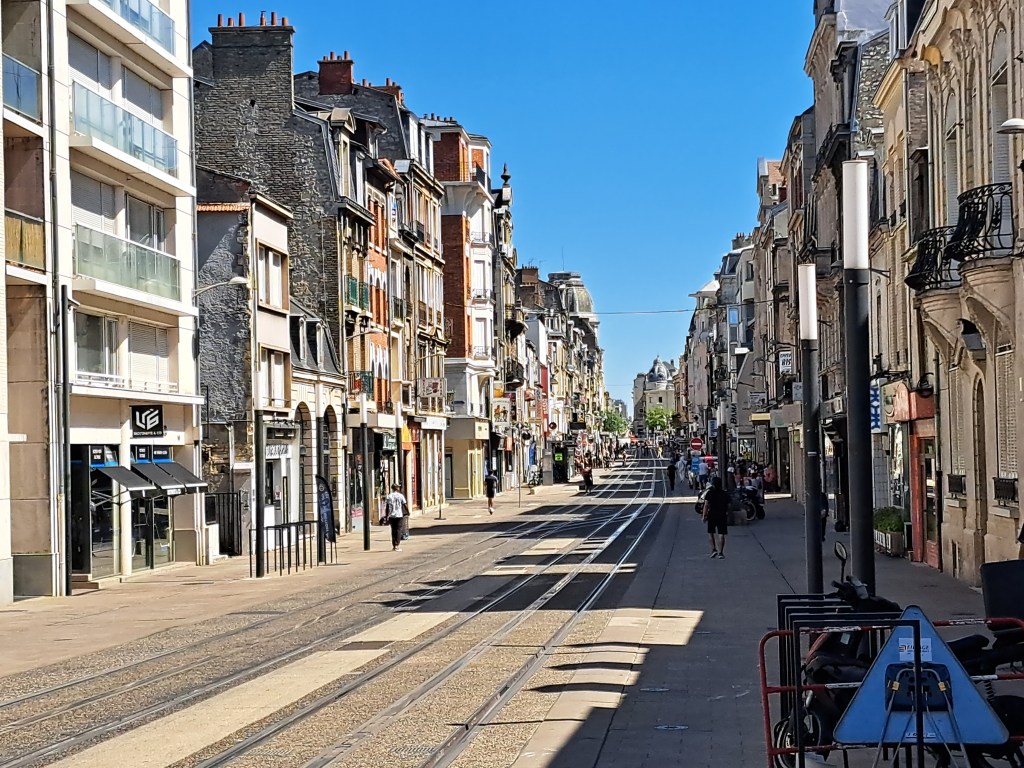
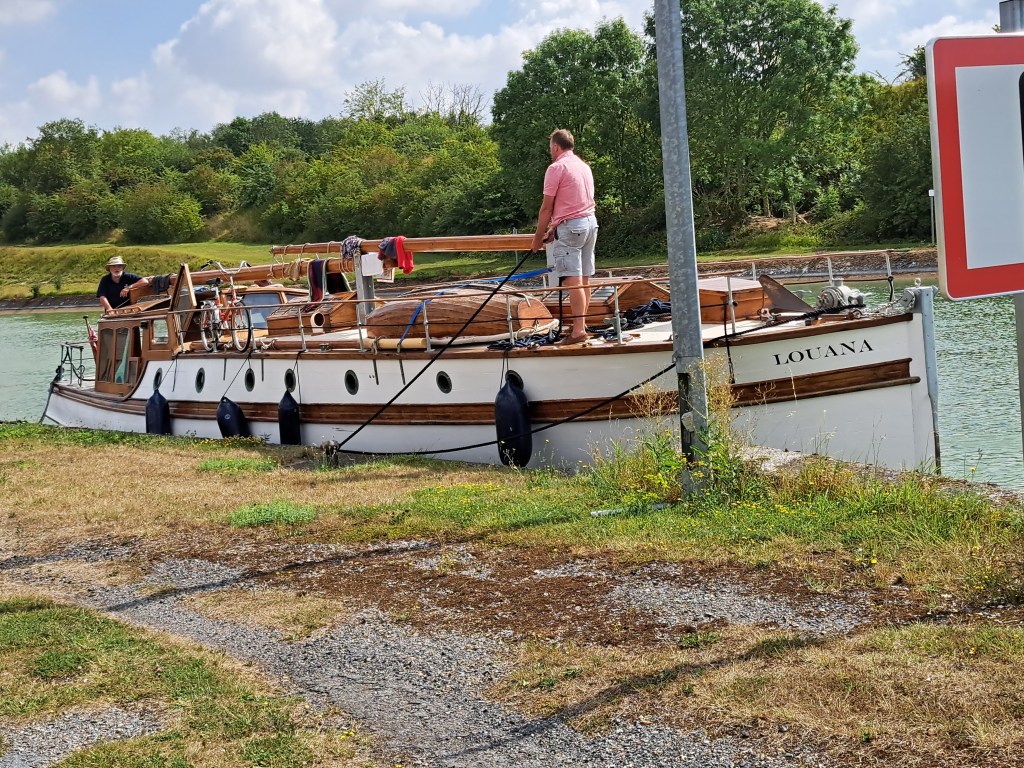
And yes, this shows itself in so many ways. I have included a few photos from the last couple of days but the last ones seem to sum up how the ordinary and extraordinary often come together to surprise you.
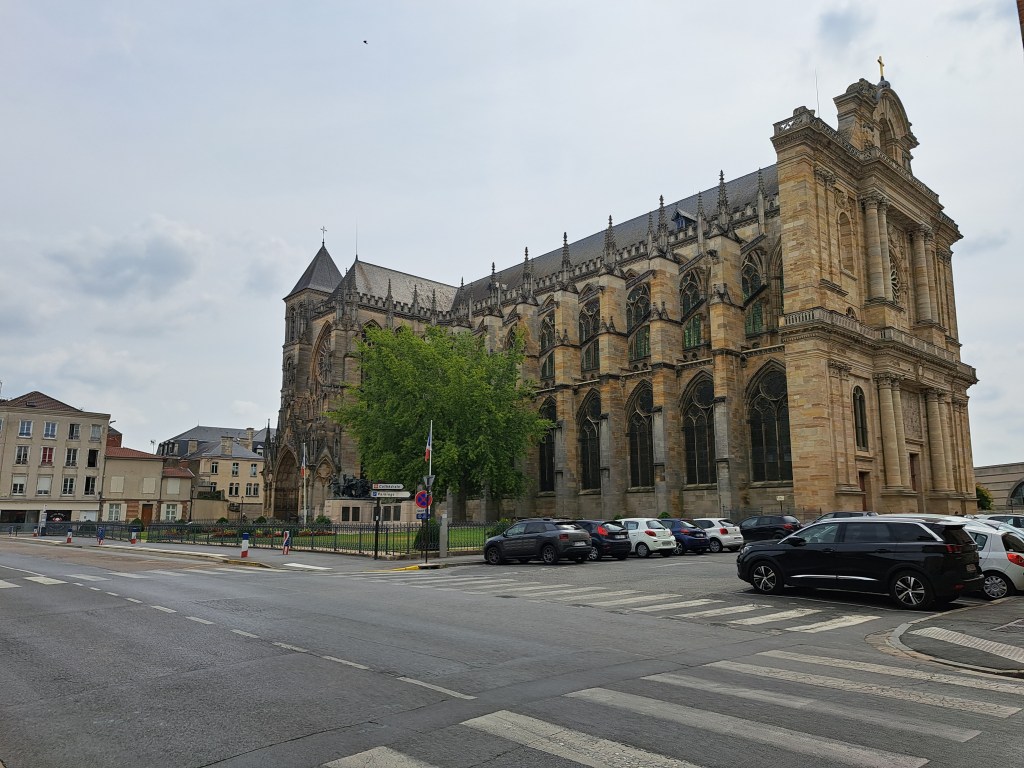
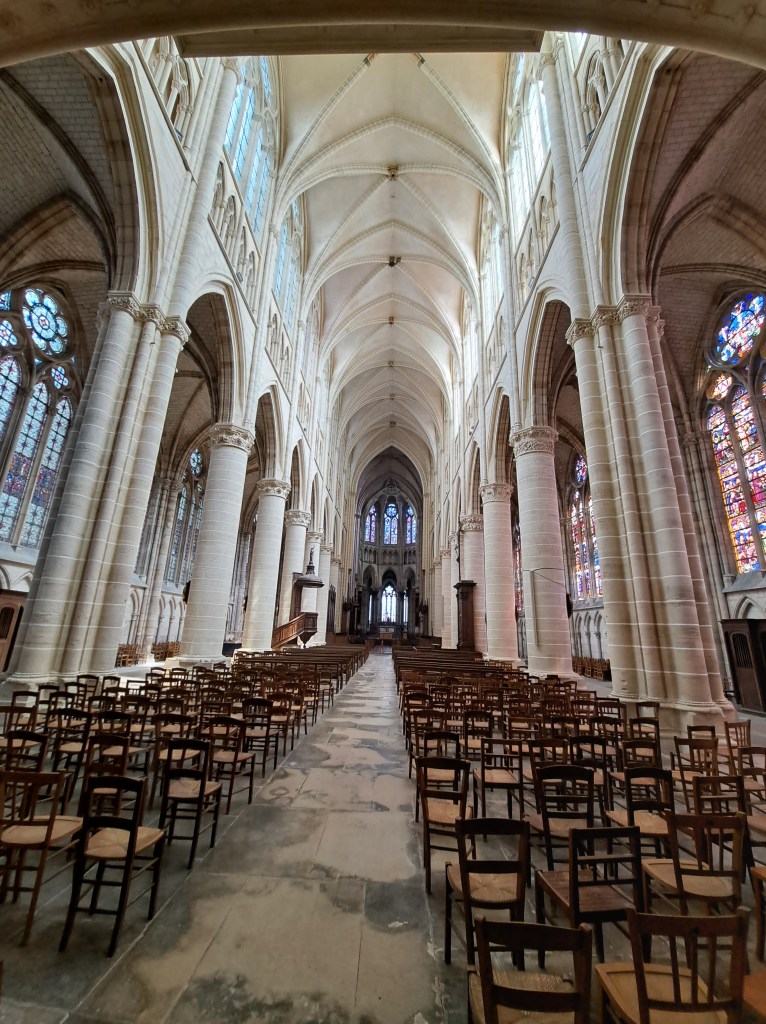
We took the chance to visit the cathedral in Châlons and as I was standing at the door looking back it occurred to me that this amazing building actually faced a large set of buildings on the other side of the road. I couldn’t see any openings in the line of buildings facing the cathedral at all. Walking back down the road I eventually could see the canal but it did not seem to line up with the church’s façade. Yet I photographed views of the façade as we approached the city. Strange, I thought. Something to try to work out the next time we visit. Pilgrims don’t get the chance to retrace their steps to work out things like that.
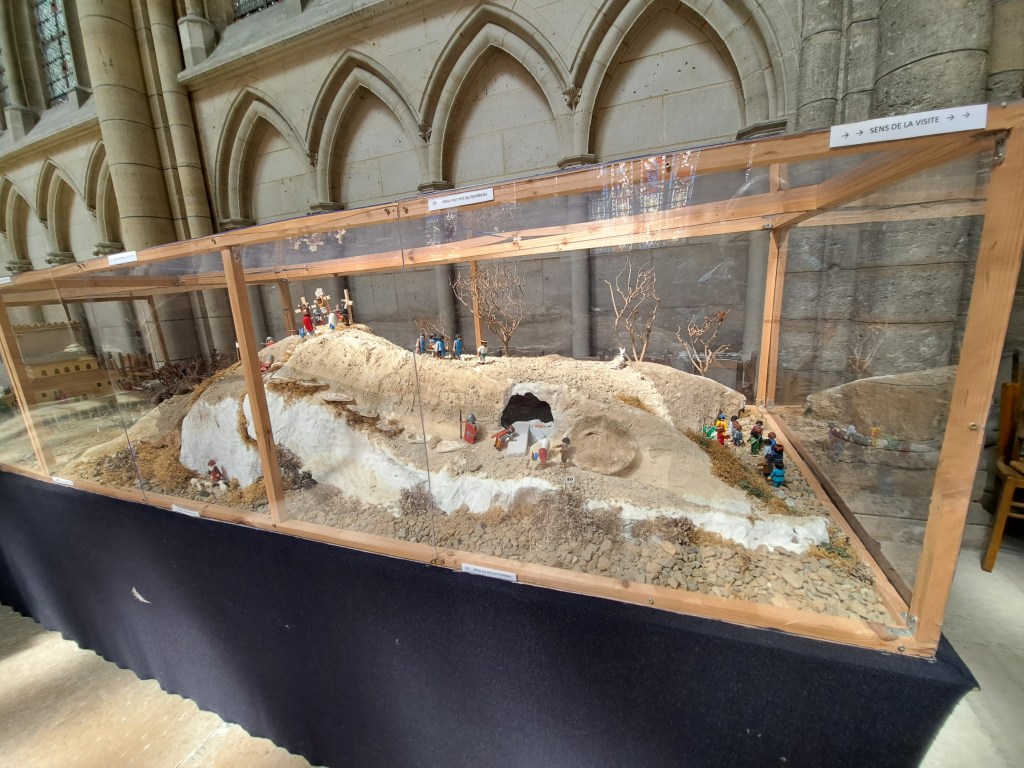
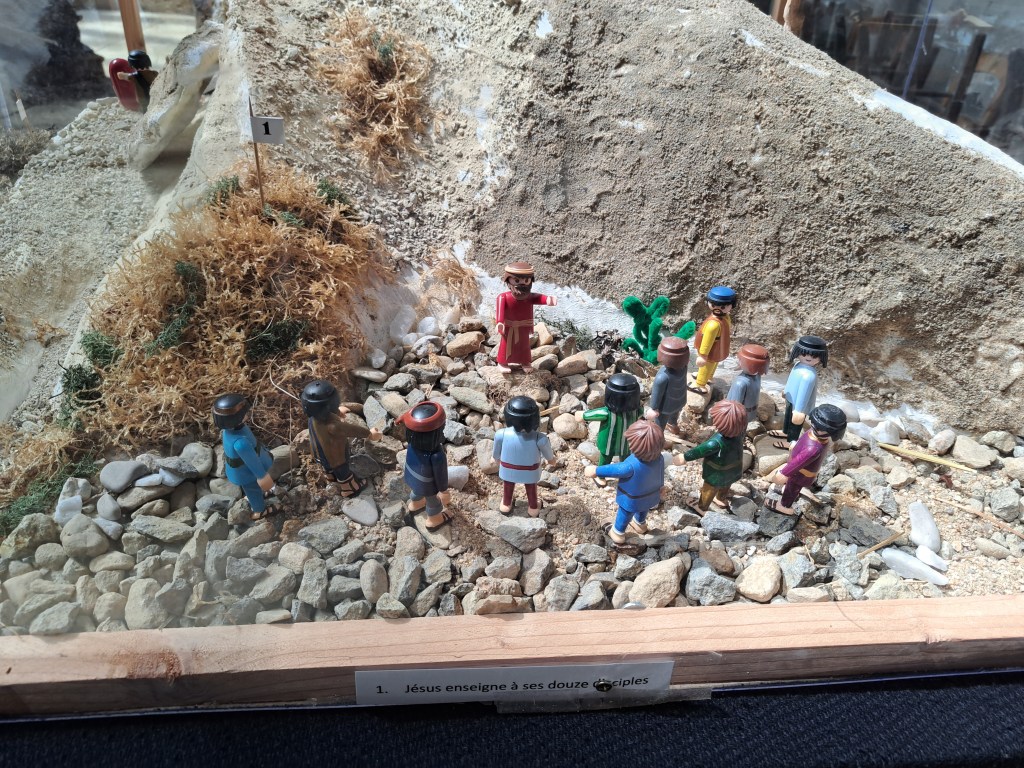
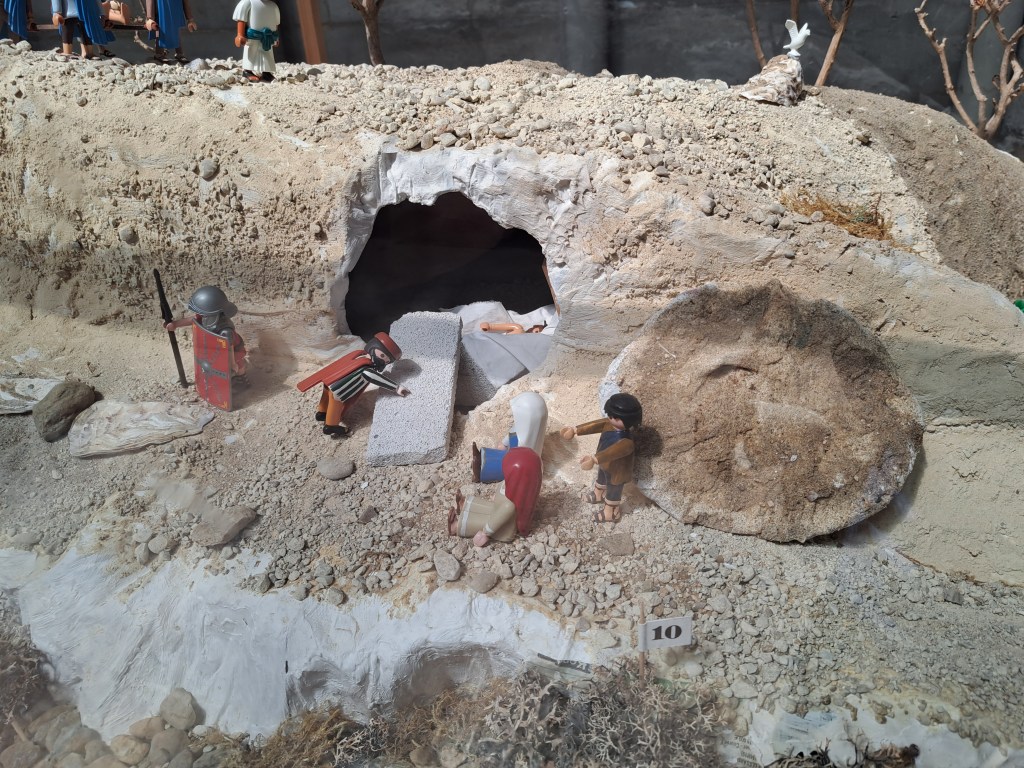
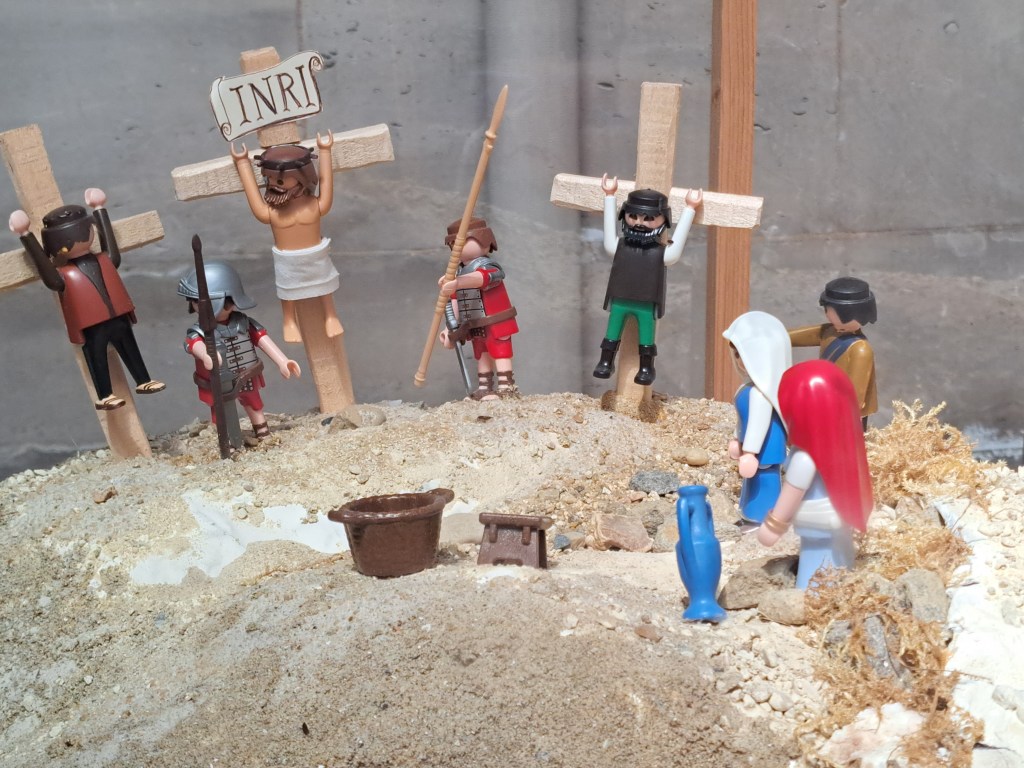
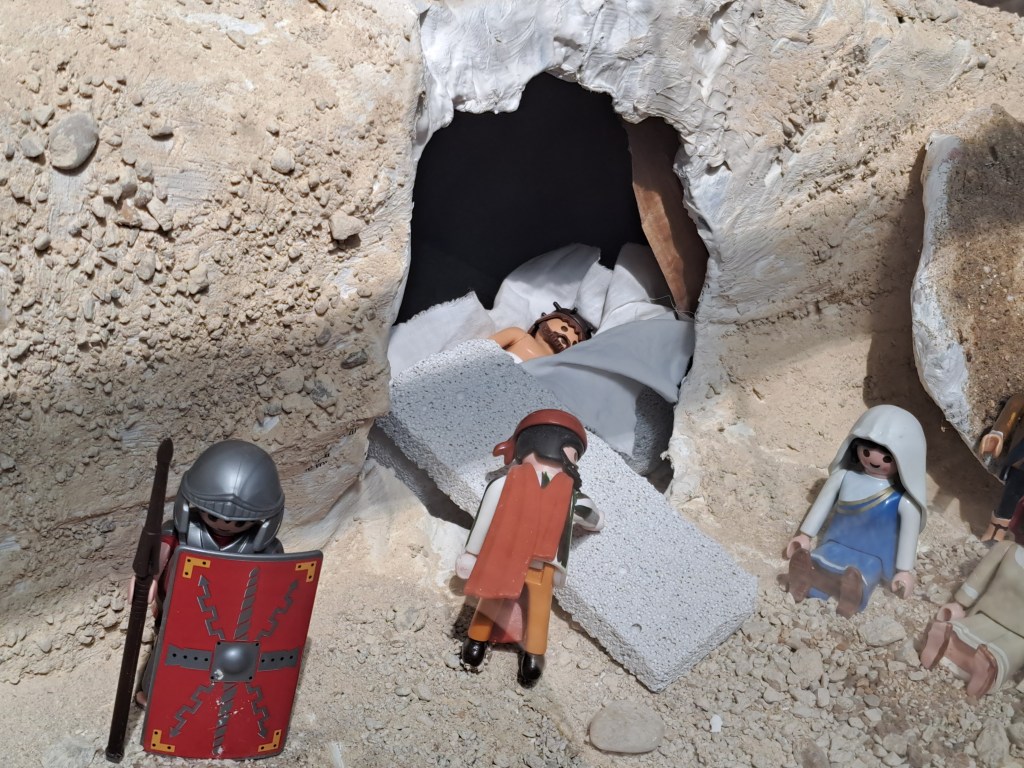
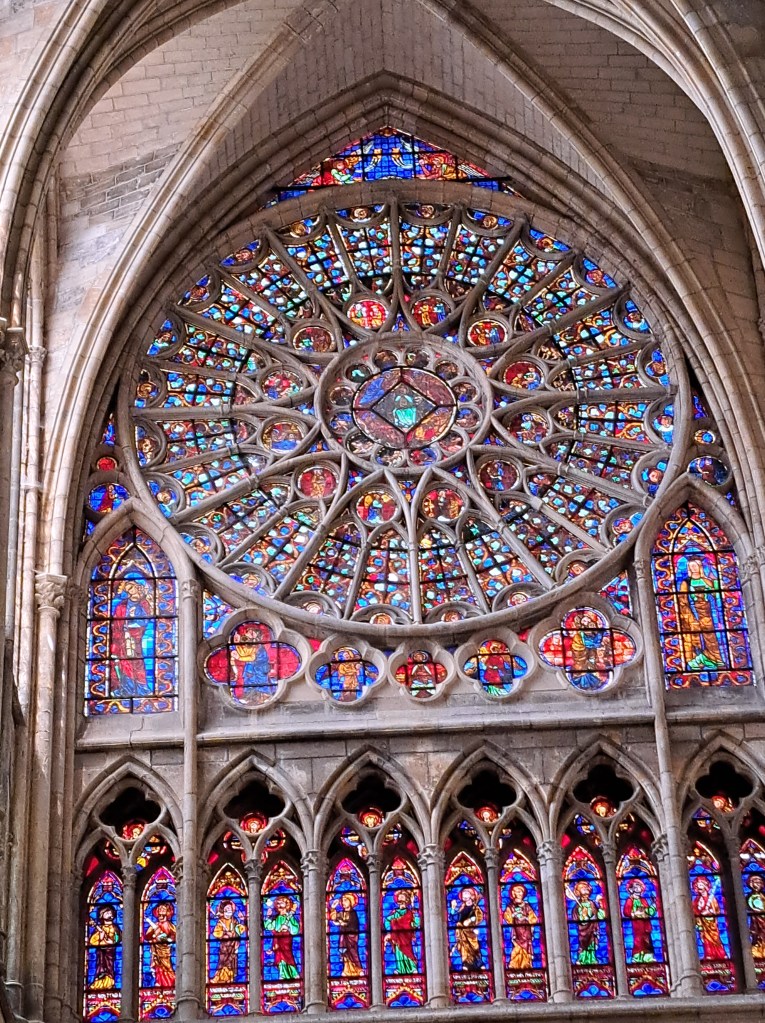
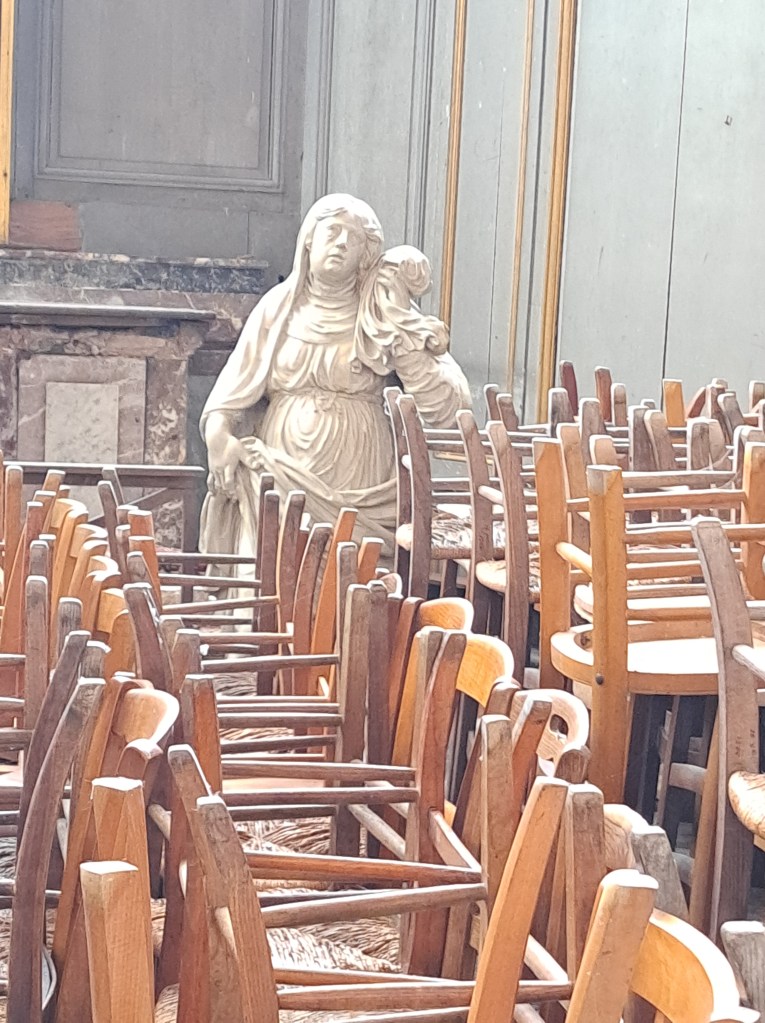
We entered the cathedral and were both impressed by its interior and a number of the bits of surviving medieval glass but the thing that took us by complete surprise was the long and large glass walled cabinet set to one side of the church. Someone had constructed a series of hills and valleys, well a hilly landscape and it was covered with a series of scenes from Christ’s life, mainly focussing on the story of the passion. And all of the characters were Playmobile figures.
That was the sort of weird that is quite hard to beat, but, weirdly, it worked! Kids of a certain age range will mark it down as their best ever bit of church, by a mile… and they will know what all the scenes are about, too….
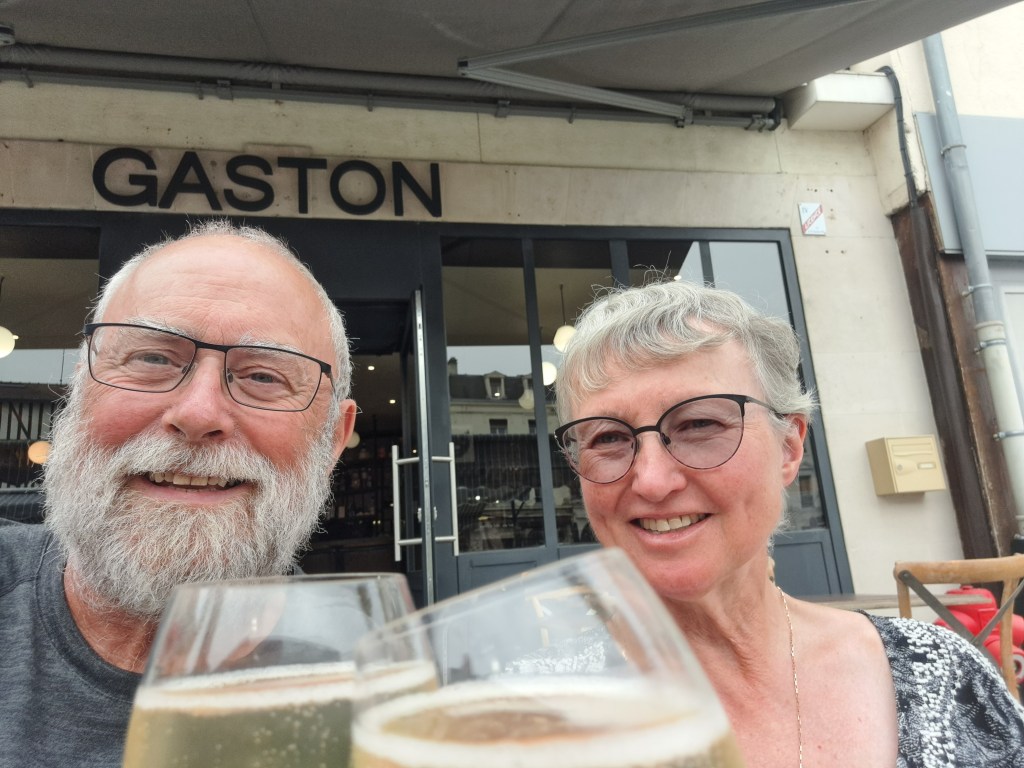
So, we are now resting in Châlons en Champagne, we have recently toasted all sorts of special people with some bubbly, picnicked in our room, as is custom, and are still feeling that frisson shared by pilgrims everywhere who are on the move. You can plan where to walk the next day but you really don’t know what will find you as you set off along the road….




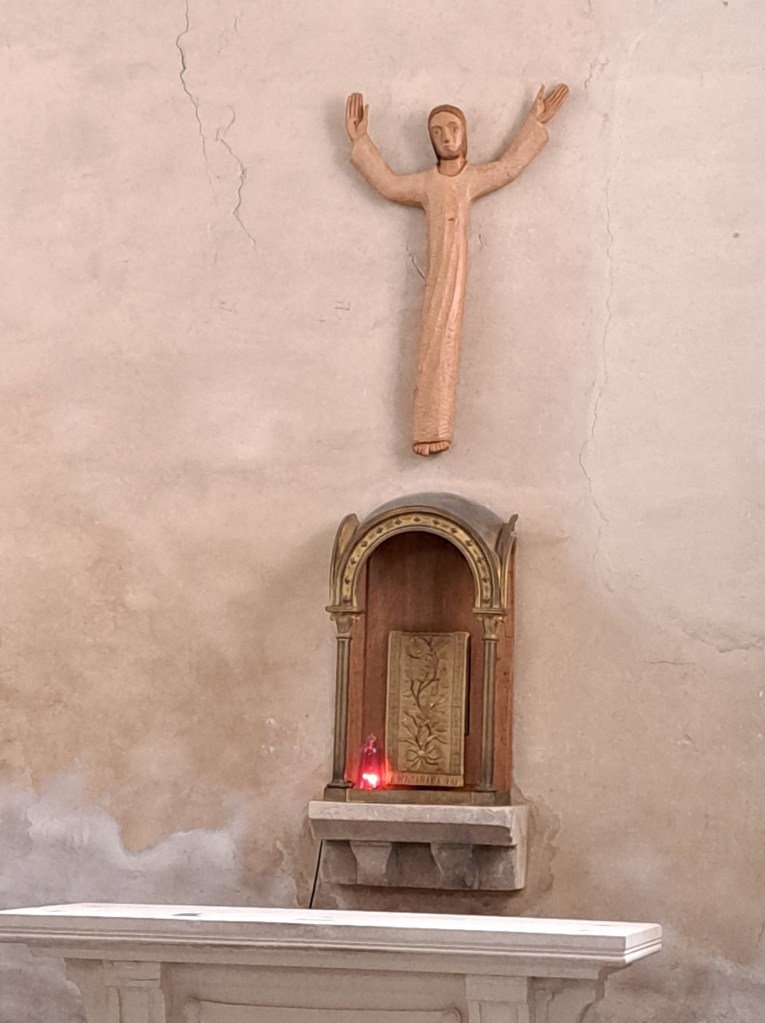
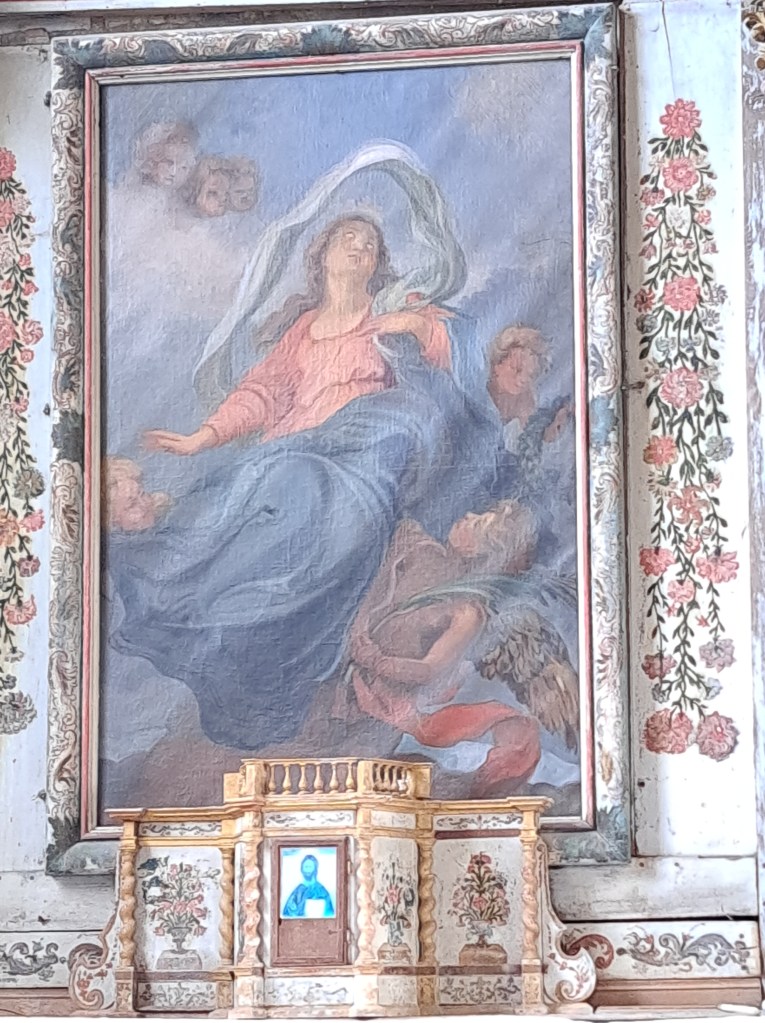
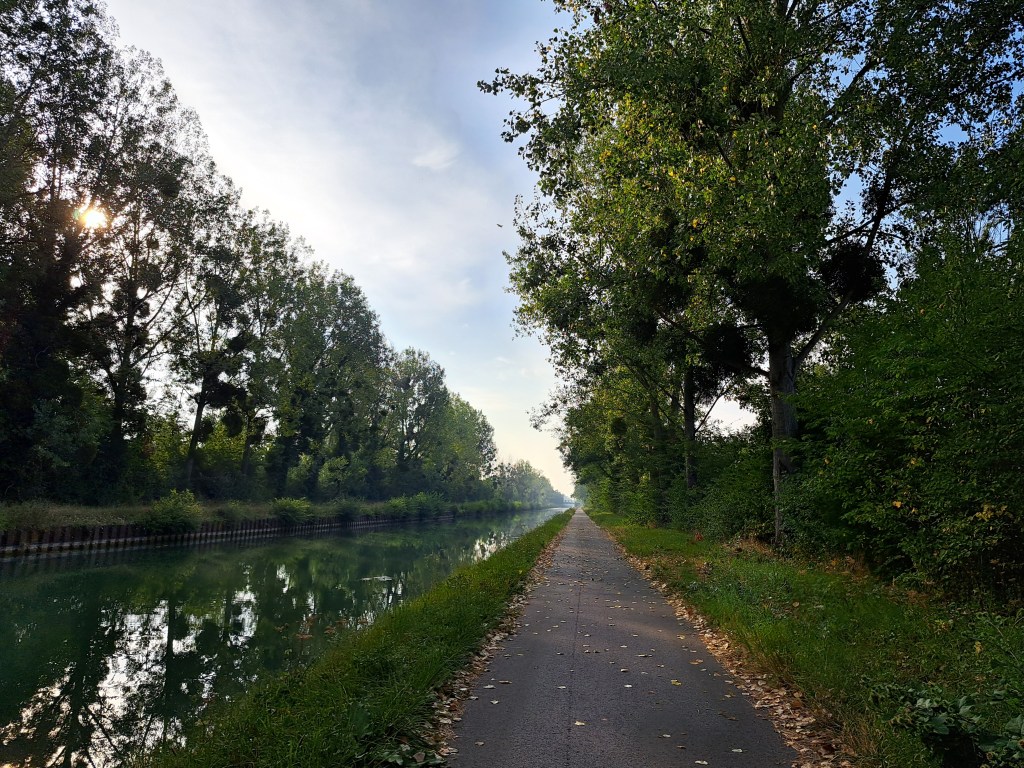
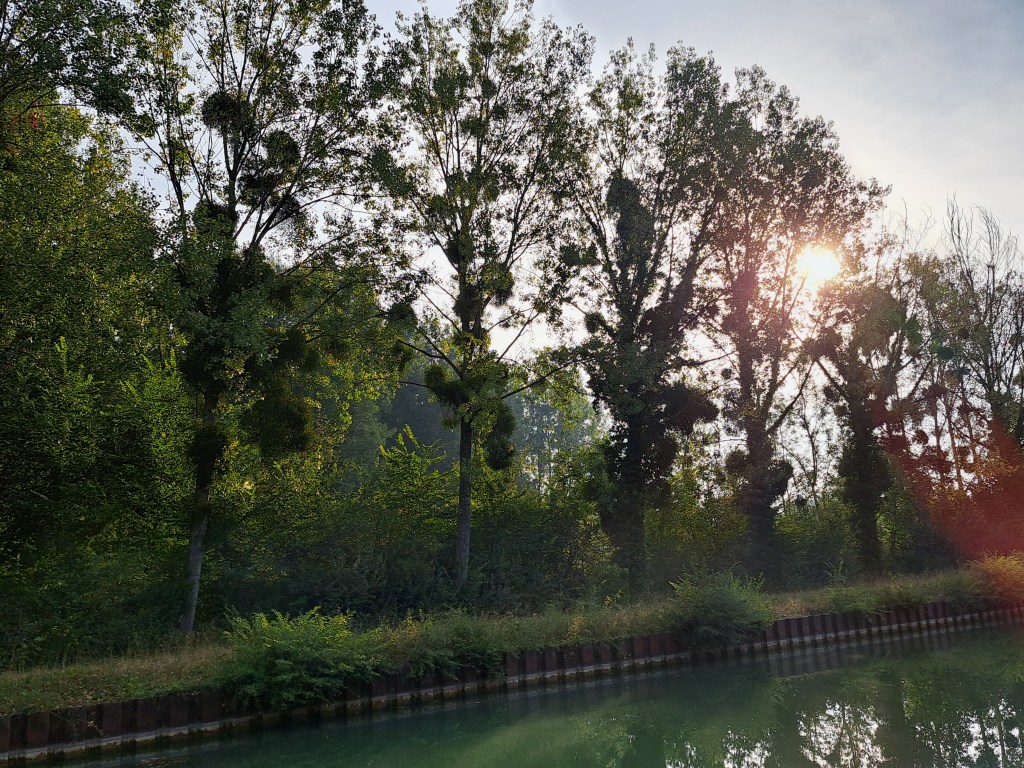
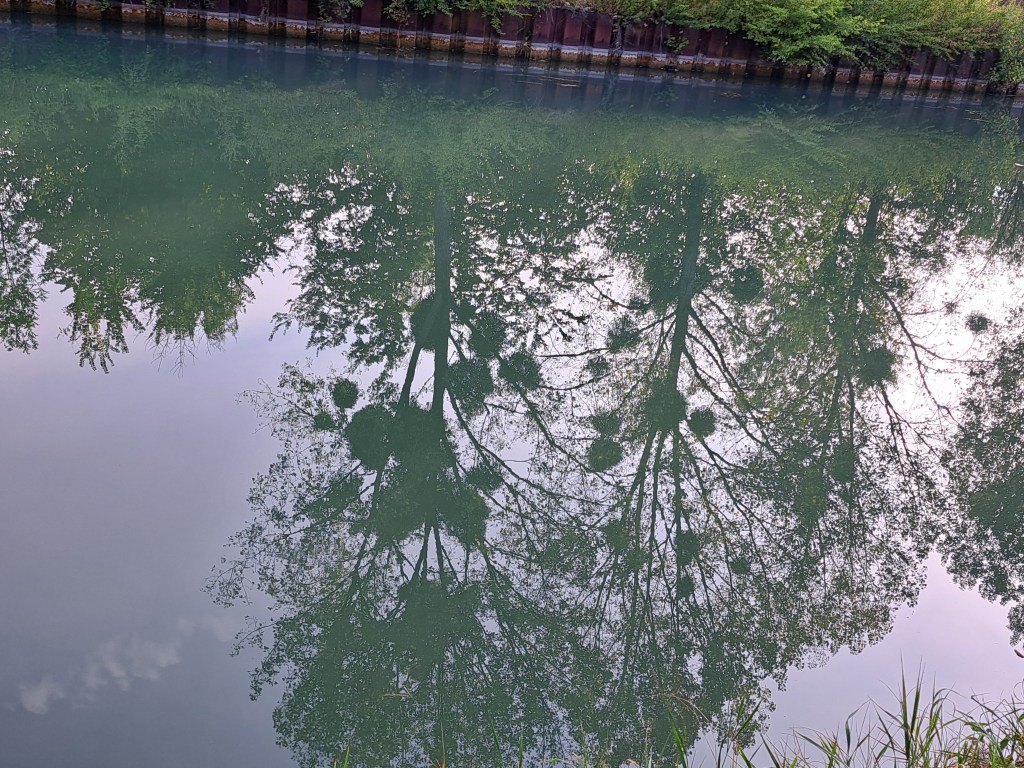
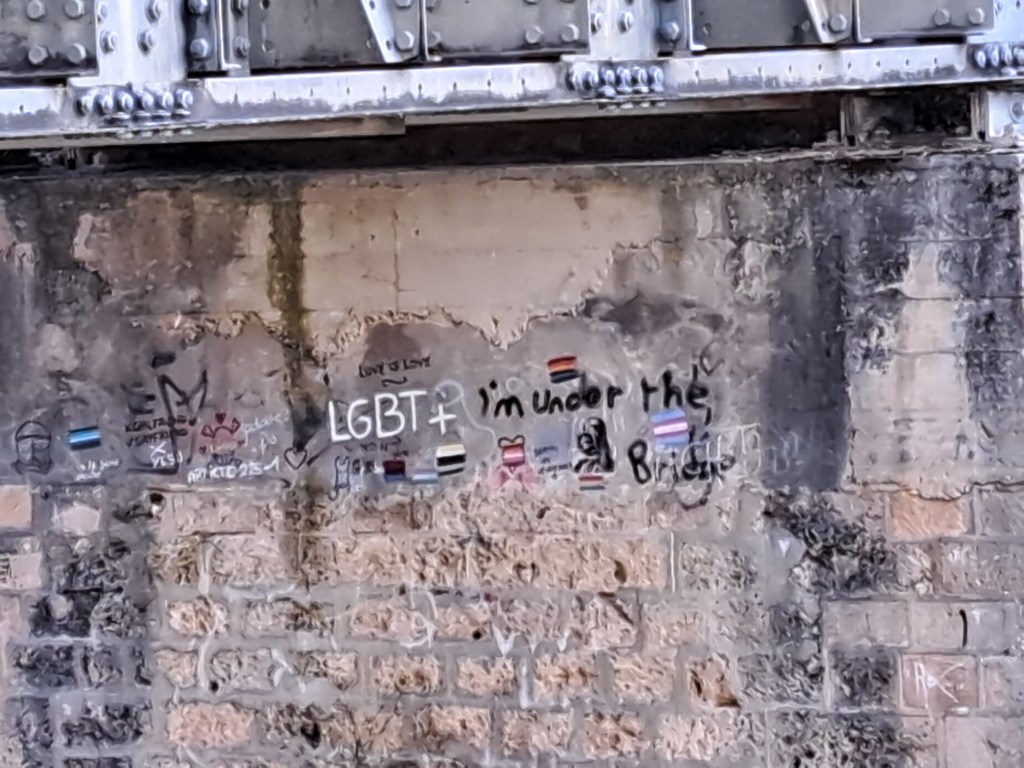

-
A Second Bite at the Cherry
We last walked through Reims ten years ago. Then we were walking from Namur in Belgium, to Vezelay in the Burgundy region (Vezelay is an important place for the two of us – walked there three times, now). We were walking on a different GR route and managed to get a bit lost crossing a landscape of endless checkerboard fields of sugar beet and wheat, only relieved by occasional encounters with vast sugar processing plants or the solitary water towers that were scattered across the flat landscape. The lack of any shade and absence of any villages with any services in them had helped finish us off, so, when we arrived at a suburb of the city and had found the only bar open that day, we sat in it and worked out that, despite it being well after four in the afternoon we still had at least another hour’s walking to do before we were anywhere near our hotel for the night. We did not hesitate when we saw a taxi firm sign on the counter of the bar, and were very happy when the man behind the bar assured us that a taxi could deliver us into central Reims without any problems.
The clouds had been forming while we were in the bar and by the time we got to out hotel it was already raining. That was a problem we could cope with. We often had picnics in our hotel rooms, eating salads and bread and some rillettes (me) and cheese (Alison) while quaffing a bottle of red using either the hotel’s glasses or our own plastic cups. Shopping was not a problem when you had the correct gear to hand. The real problem was that we had managed to get carried away by the facts that the hotel was really cheap but really central. In fact, it was a dive! We camped there but it was not a good experience with nothing en-suit and the showers two floors down (no lift), the room wasn’t particularly clean, etc etc.
Next morning was dismal, we walked to the cathedral which seemed to be a dull,dark, overbearing place perched on the corner of two of the city’s busiest streets with traffic crowding in on you as you waited to cross the road and seemed to rumble and complain to you through the doors of the cathedral. The windows had little light to shine through them and the potentially interesting stained glass seemed to be coated in dust and cobwebs. We left the place, trudged along looking at our maps and encountered a taxi rank where we piled into a taxi and got the driver to drop us on the outskirts of the city. Job done. Not likely to rush back there we thought!
Of course, we are open minded and mature travellers and, although it held no real prospects for us (in our minds) we were intending to have a better, more positive experience of the city this time. We had experienced a very long and demanding walk the previous day from Chamouille to Hermondsville. In August France does close down a lot and with the coming long holiday weekend, it had been really hard to find anywhere to stay. So we had managed to find a really expensive hotel in Chamouille and then a chambre d’hotes in Hermonville, but the official route between the two was over 37 kms so we had used Google to help us find something shorter. We saved about 5kms but had to endure a lot of long climbs across bare but hilly landscapes with almost no shade. It was hot. In fact, it was very hot, but we had enough water and other resources and managed it, as always.
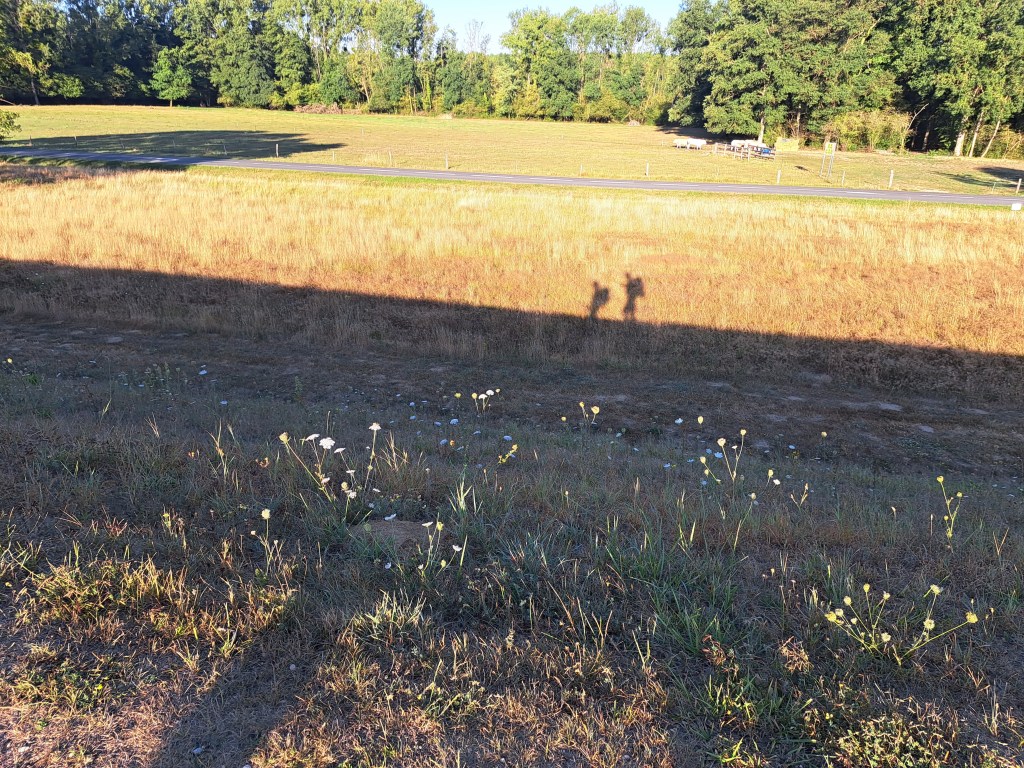
So the day into Reims was a lot easier and a lot shorter and, to add to the good news there was more shade and it was flatter, with the long approach to the city utilising the same canal we have been encountering for a number of days now. This time it was a well surfaced and tree lined canal tow path route that was good to walk.
While approaching the city we had a number of opportunities to spot a tall edifice that we felt sure must be the front of the cathedral. We were glad to see it come nearer, but we were more interested in getting to the centre and being able to sit down, rest, have some food and a very long cold drink. We would go to the cathedral for a stamp in our pilgrim passport and hope that the sun which was beating down so hard on us would add some grace and joy to the place.
A week might be a long time in politics but ten years in the life of a city can be a very long time indeed!
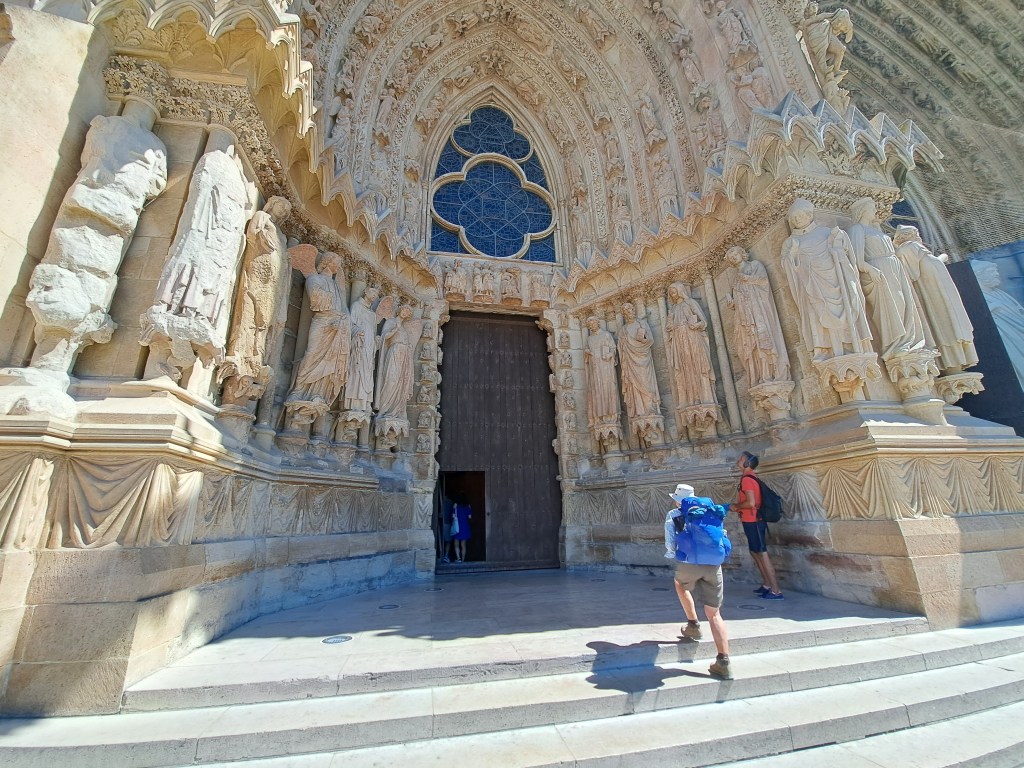
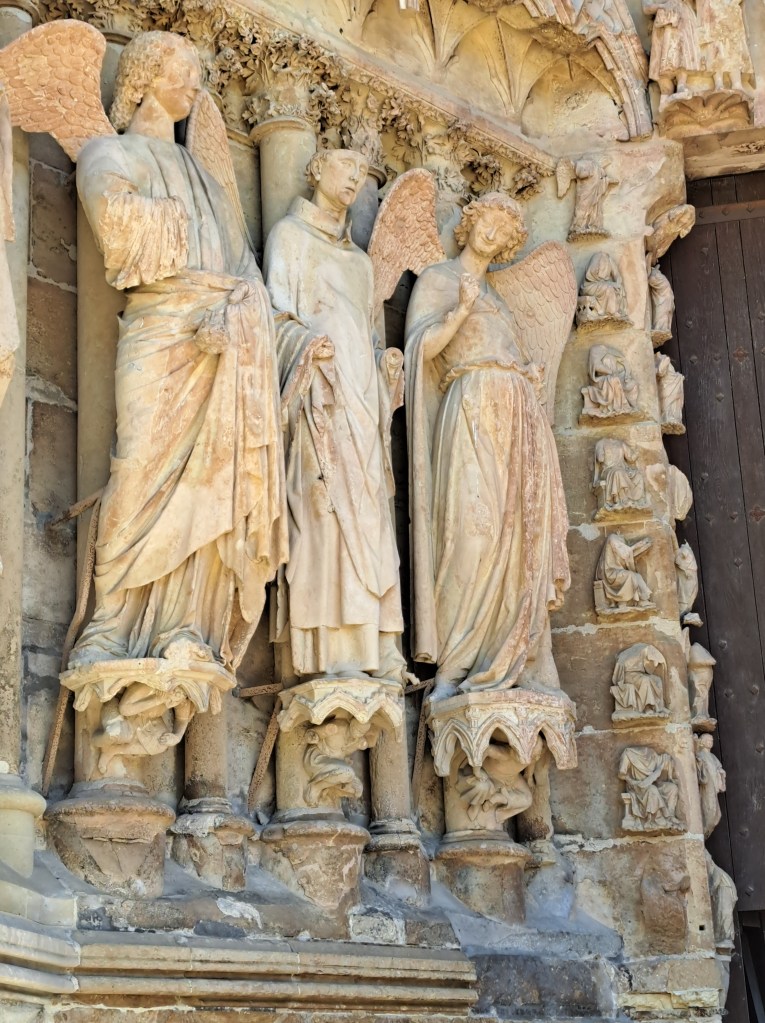
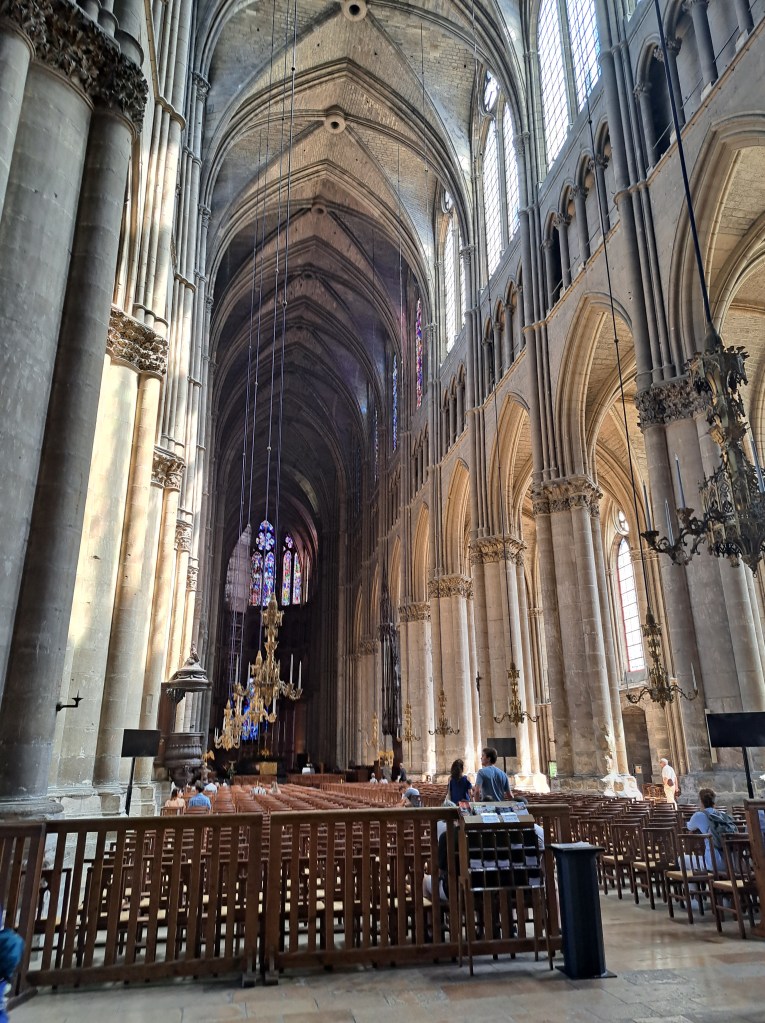
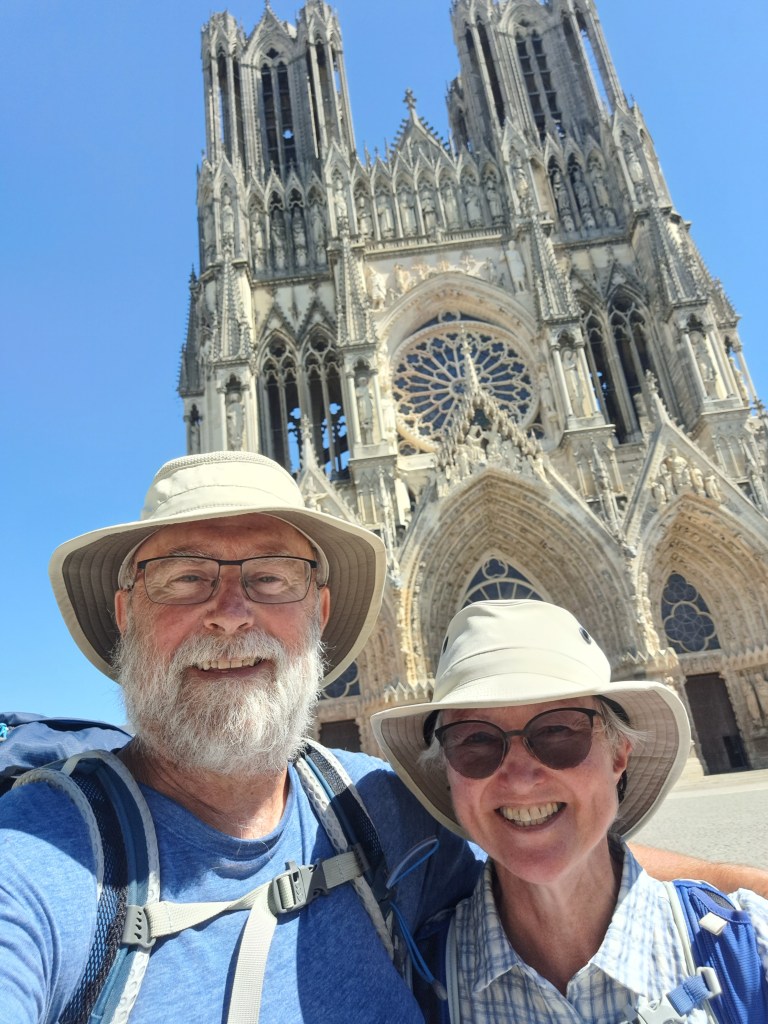
As we walked into the city, we put the fact that the city seemed a very attractive and civilised looking place down to the sunshine and to the fact that we were walking in a different sector from the one we had been in the last time. After following the indirect pilgrim route to the cathedral, we were stunned to find a very fine, cleaned up and honey stoned building of great character sitting in the midst of a pedestrian only precinct with a very nice selection of bars and restaurants dressing the sides of the square and the streets stretching out from the church.
Reims, please forgive our earlier snooty views of you! It looks like you have done a superb job of revitalising yourself. Even if our earlier view was deeply coloured by unfortunate circumstances, just the transformation of the Cathedral and its environs would have been enough to make you shine in our eyes. But the rest of the city also looks really great. The major boulevards are buzzing, there seems to be a great art and music scene going here and it all feels like you have stepped up to the mark and shown yourself to be a really fine and attractive northern French city.
Wow!
So, this morning, despite having loaded up with enough food (plus wine) for a couple of days where there will be almost no shops or cafes open anywhere and where no evening meals will be available, we left Reims with a lighter step than our bags deserved and with a conviction that we will return – a lot sooner than in another ten years.
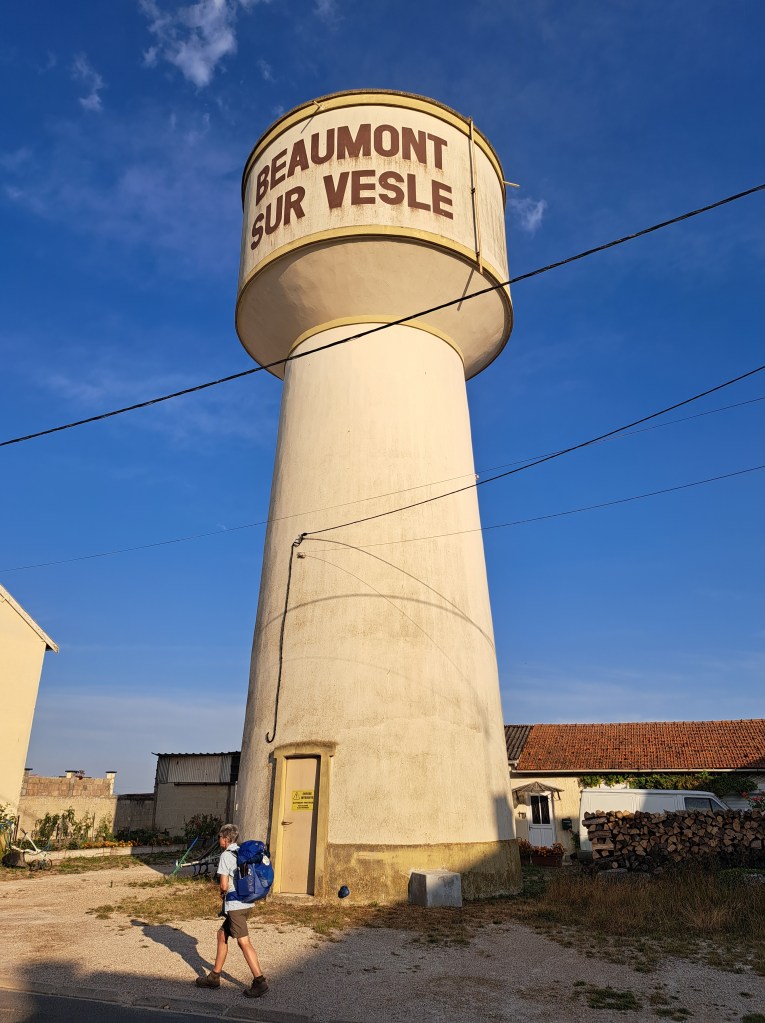
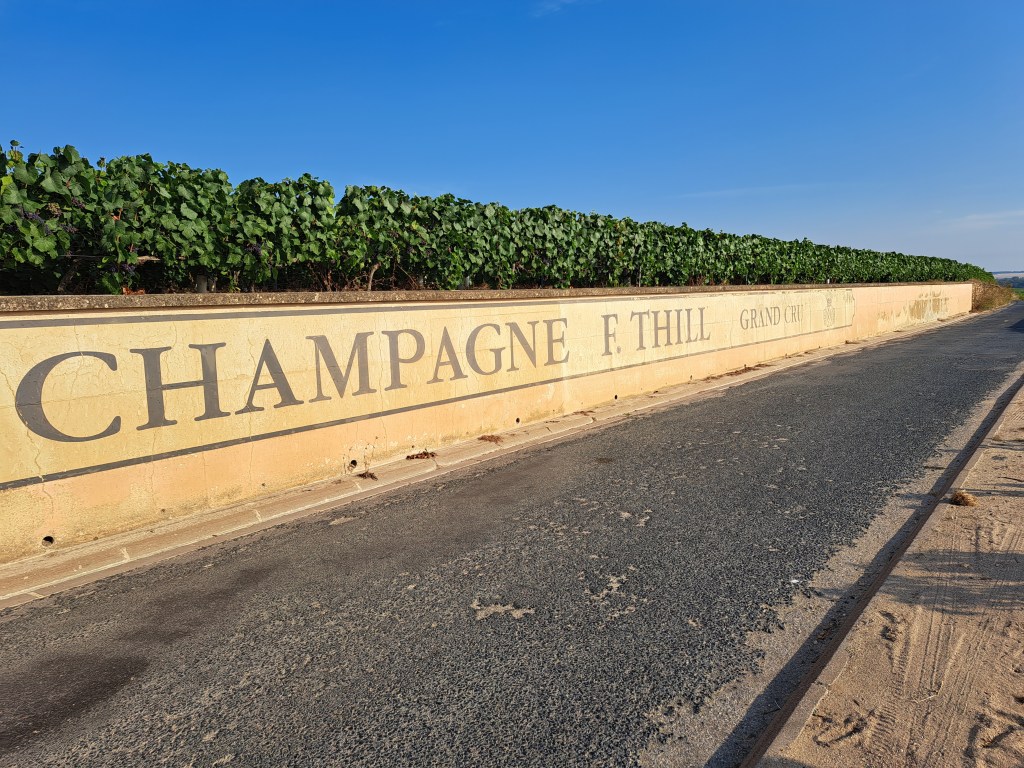
This evening we are in Beaumont sur Vesle, just a few kms off the route and I am about to cook some tea (burgers and salad). And tomorrow we head back on the route and will rest our weary heads in Conde sur Marne. At least the roads will be quiet as tomorrow is a major French holiday, it is the Feast of the Assumption. We have been in the Champagne region at least since Hermondville but we have not tasted any of the bubbly yet (for various reasons) but we will have to wait until we reach Chalons en Champagne before we can get the chance of doing so.
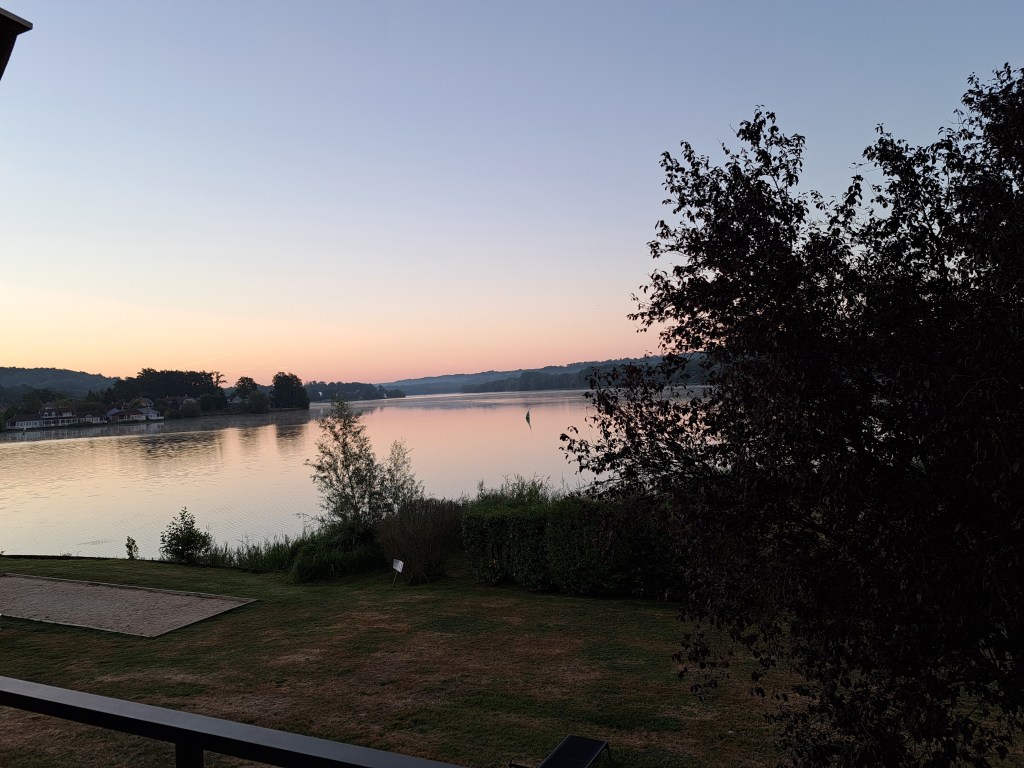
When we do, we will raise our glasses to all of our friends and family back home and, especially, to our daughter Rosalind and her family (Callum, Quentin, Isla and Matilda) who will have arrived in Australia by then, ready to start their own new adventure there. We will toast to life and to love and to peace xxxx
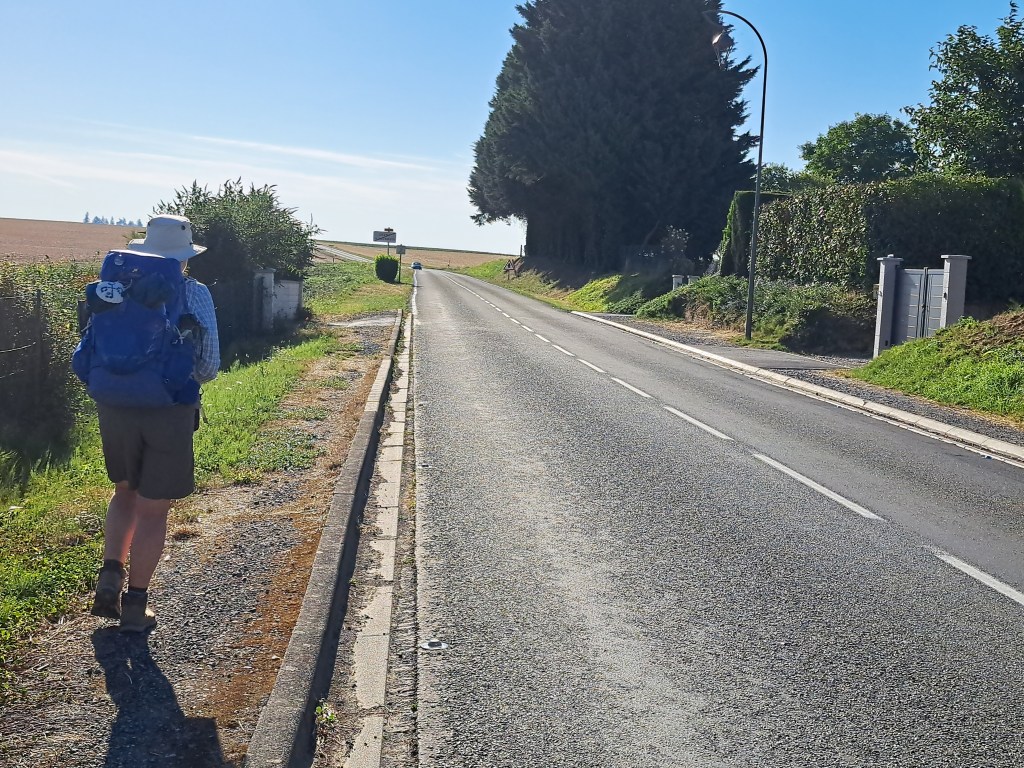
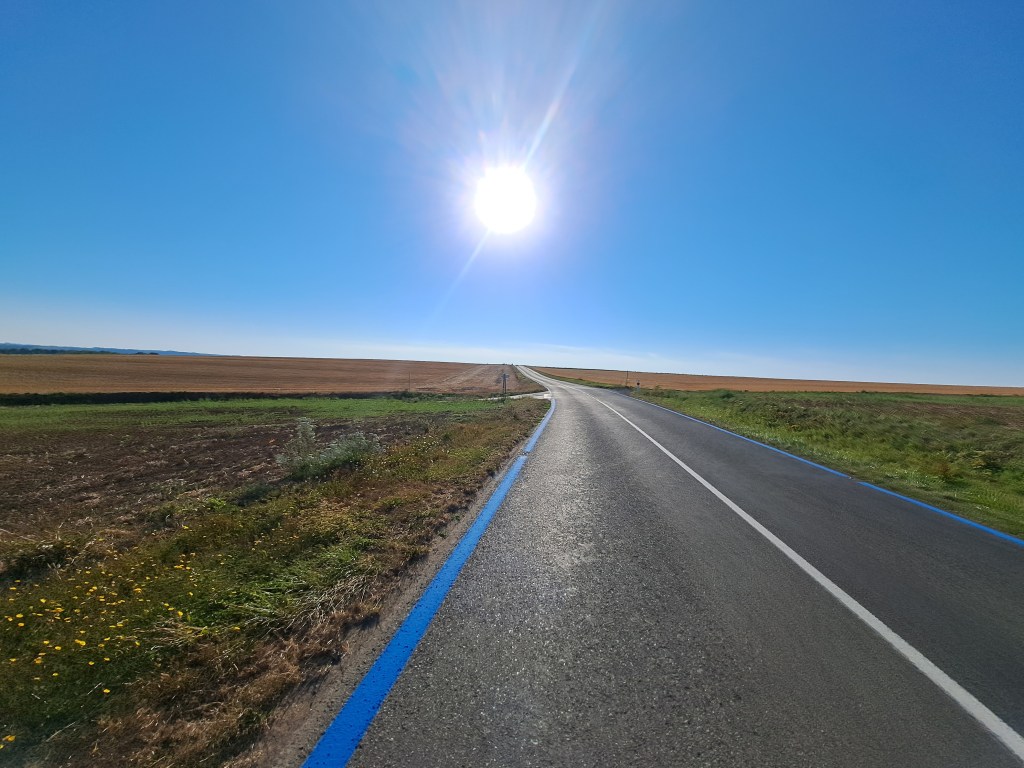
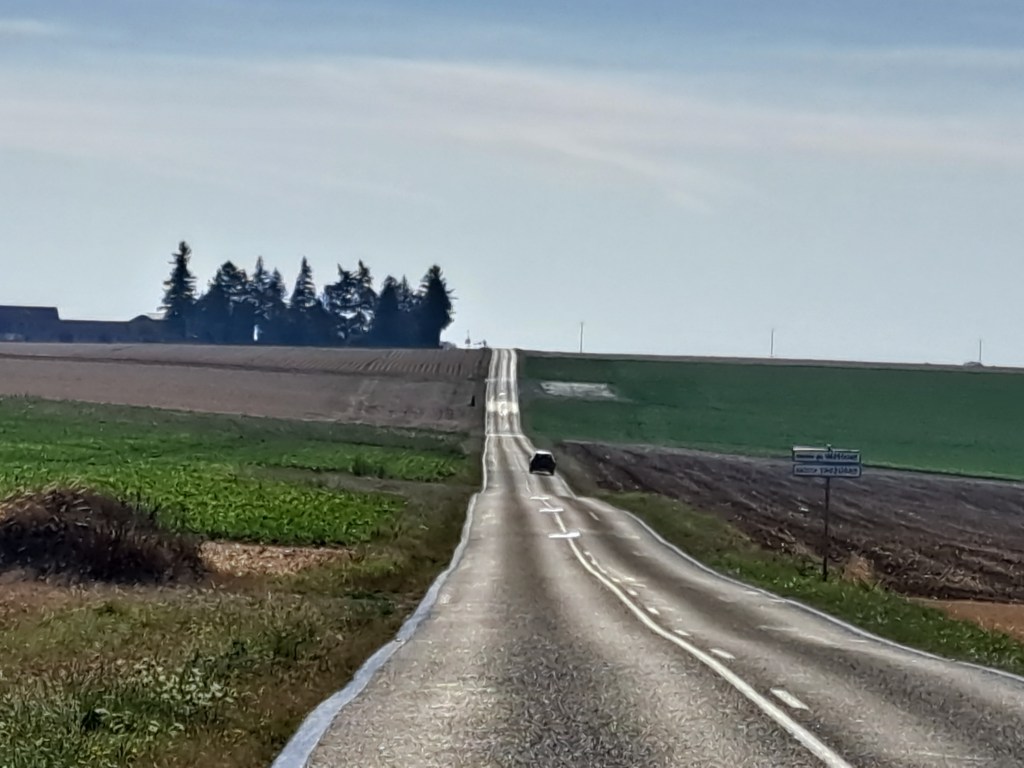
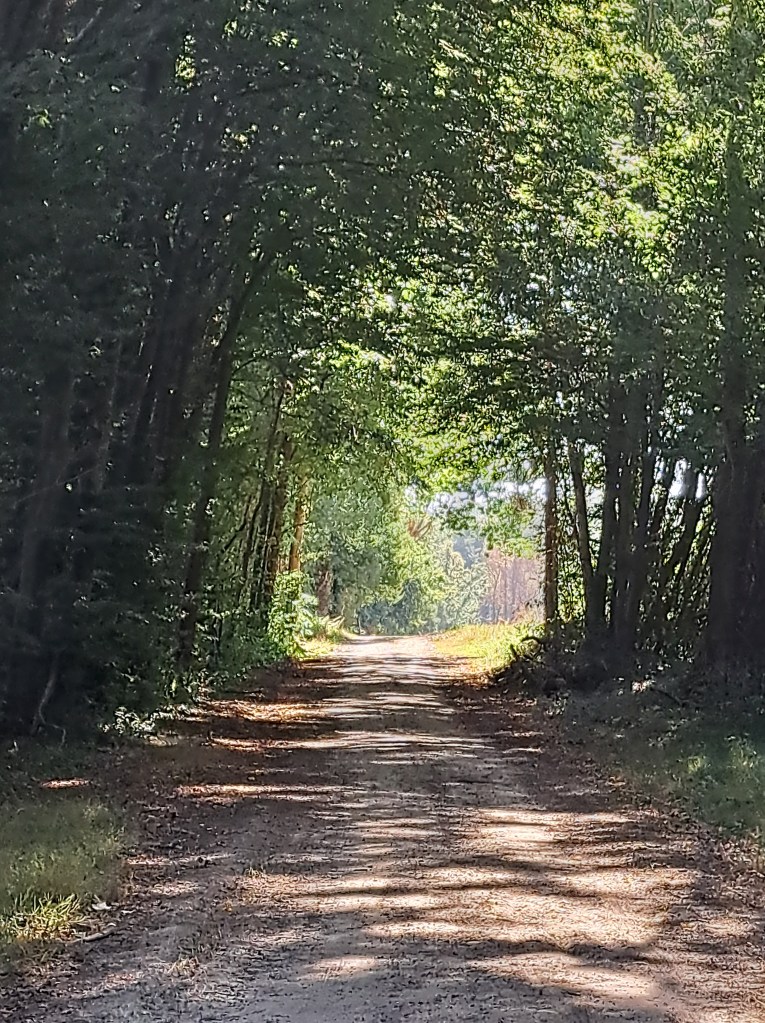
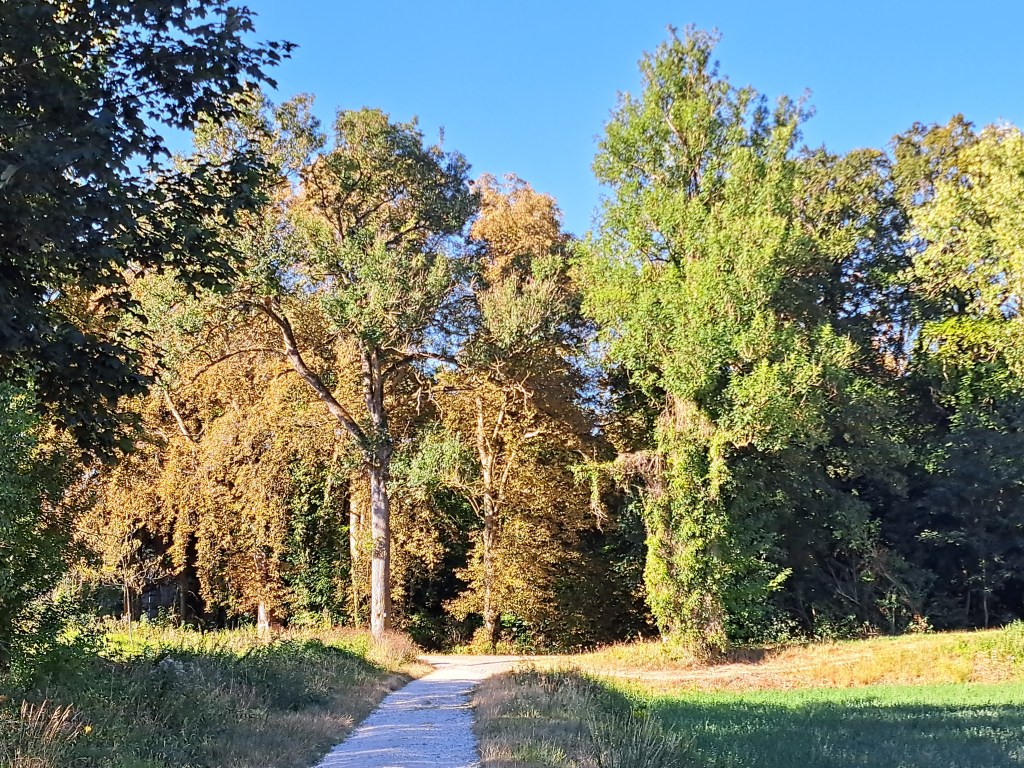
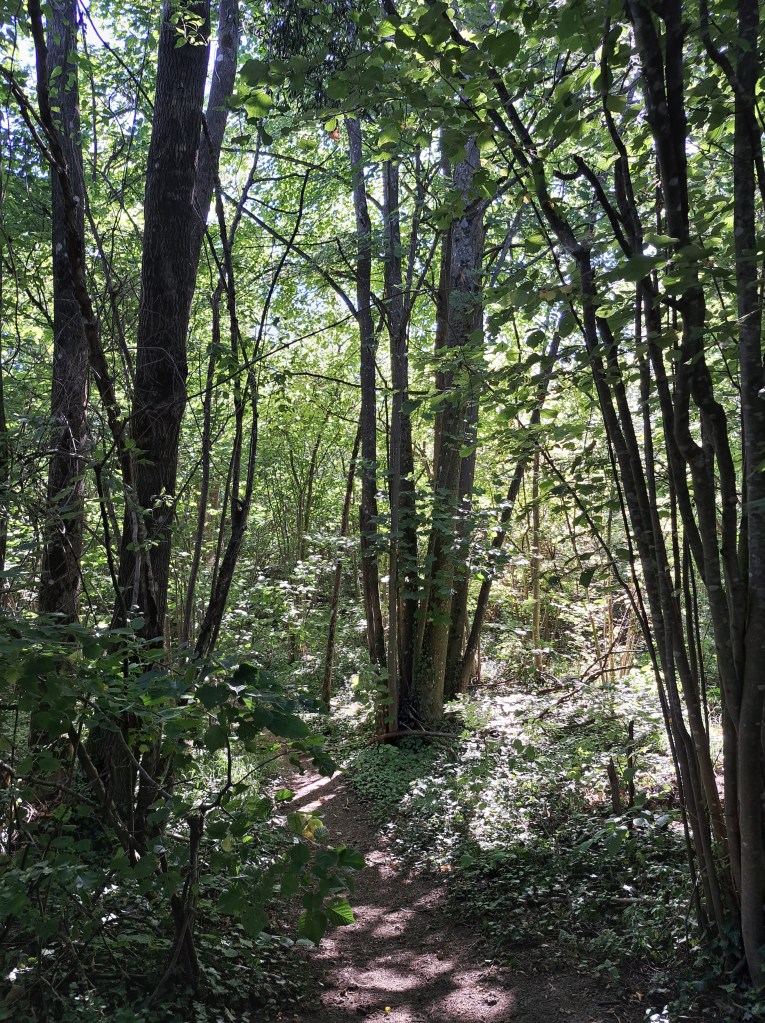
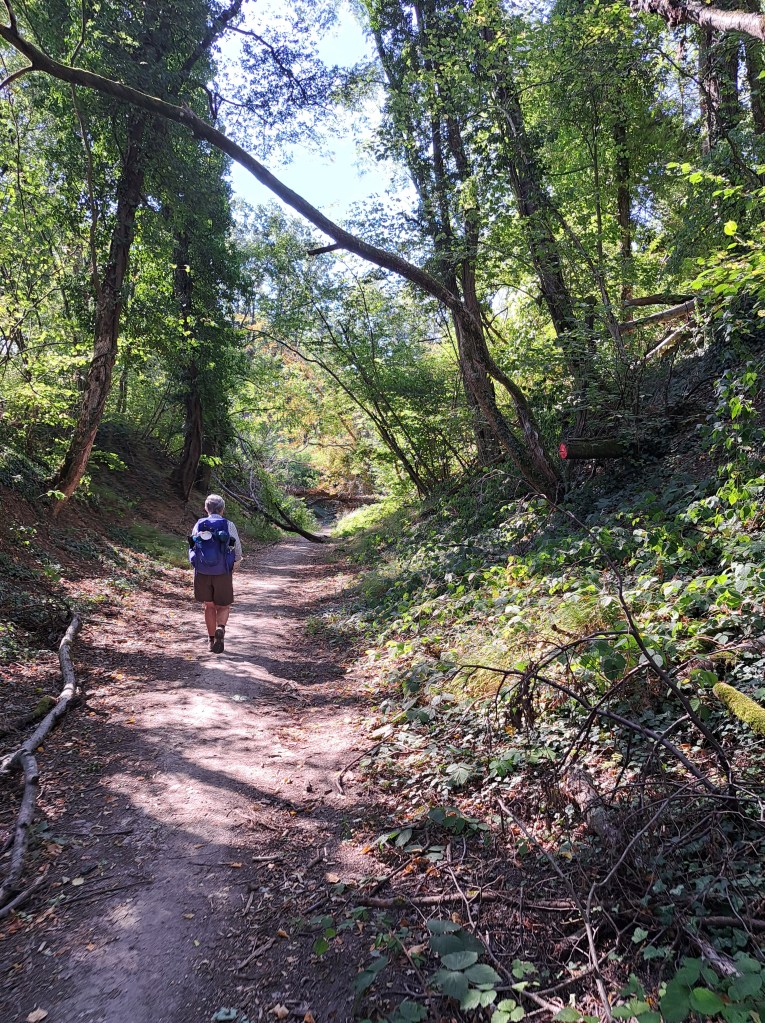
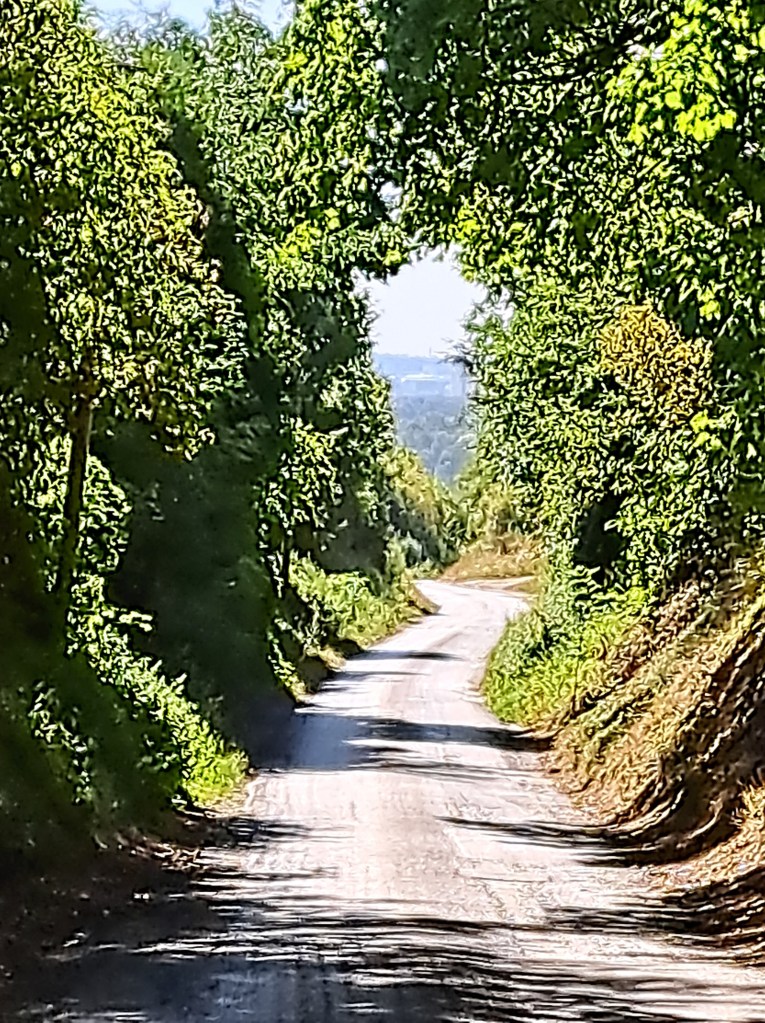
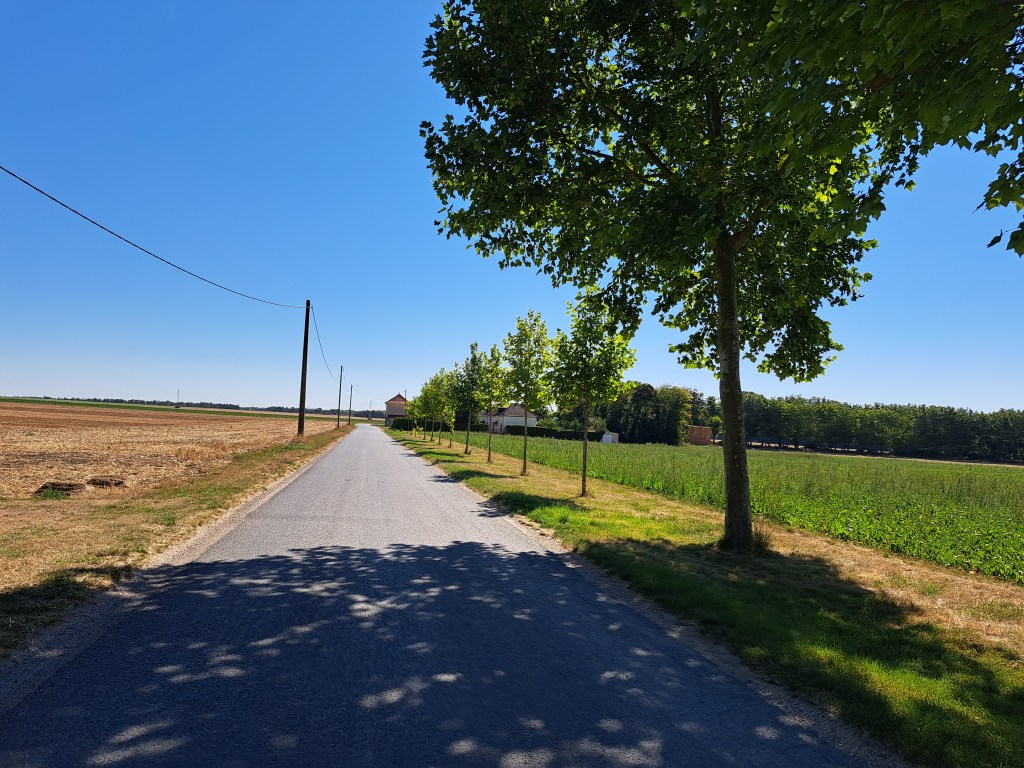
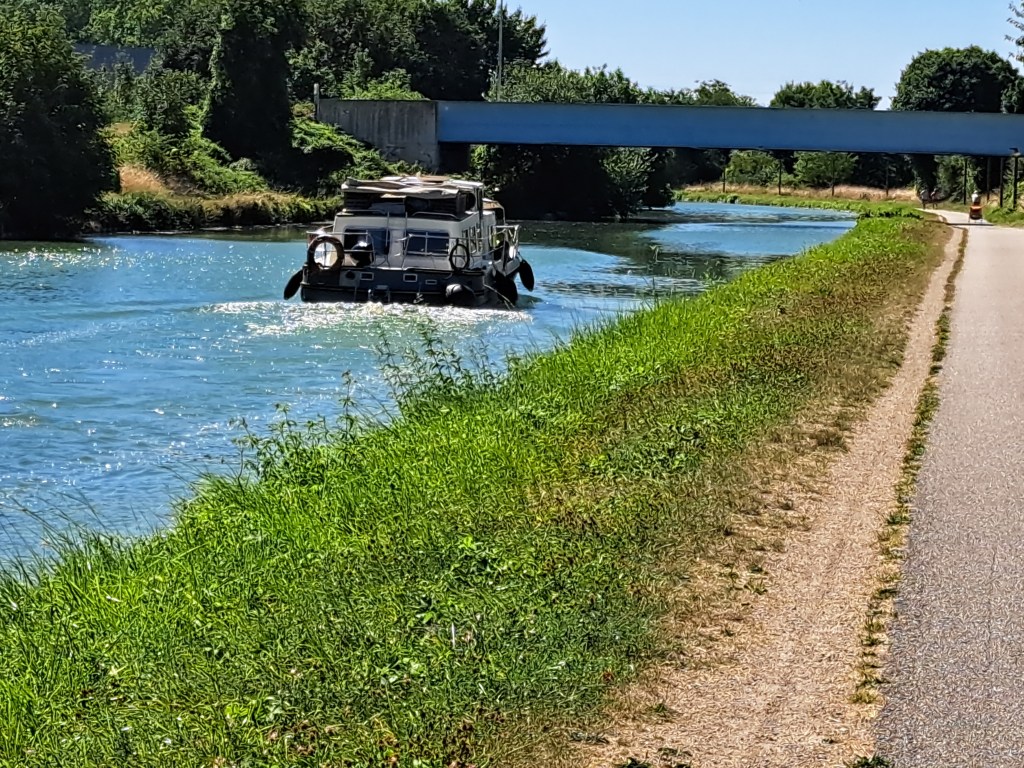
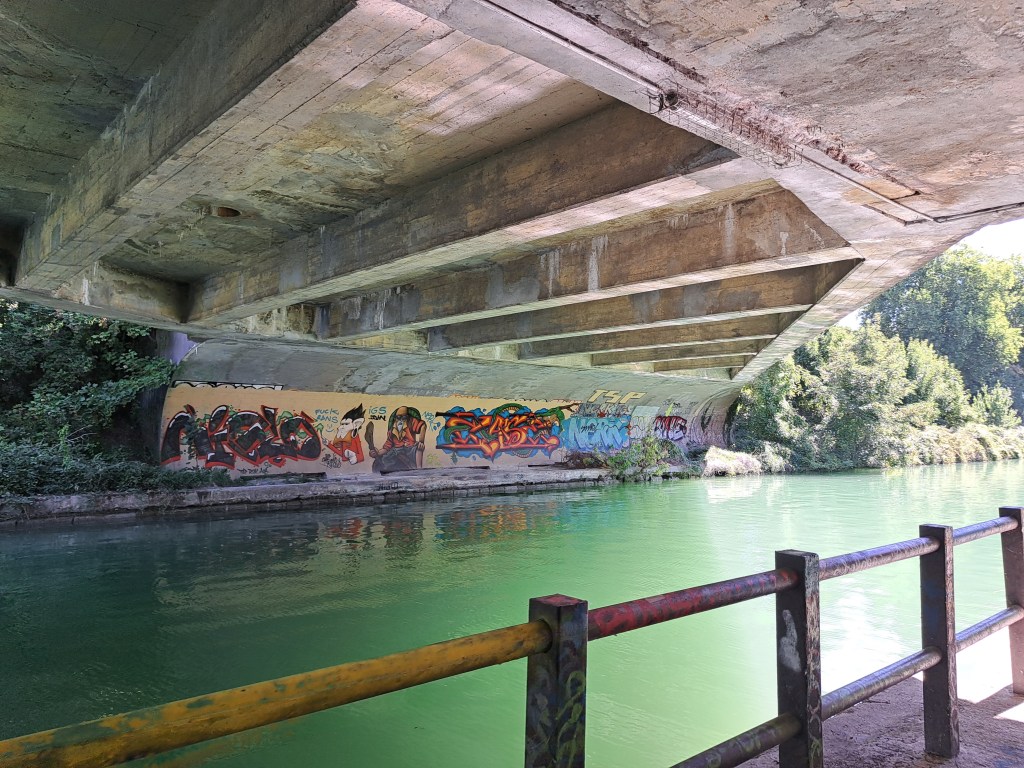
-
Each new step we take..
Before we left to start this walk we were asked by an Australian Franciscan Friar what our theme or focus would be for the walk. Alison said, off the top of her head that it might be an opportunity for us to reflect on and think about those who have passed away. Essentially, since our last long walk we have lost both Alison’s brother, Martin and Amy, Alison’s mother. We also lost Martin’s widowed partner, shortly after Amy died. So, there is still a lot to process and life has had its other demands, and this seemed to be a way to make good use of some of our time out of daily life.
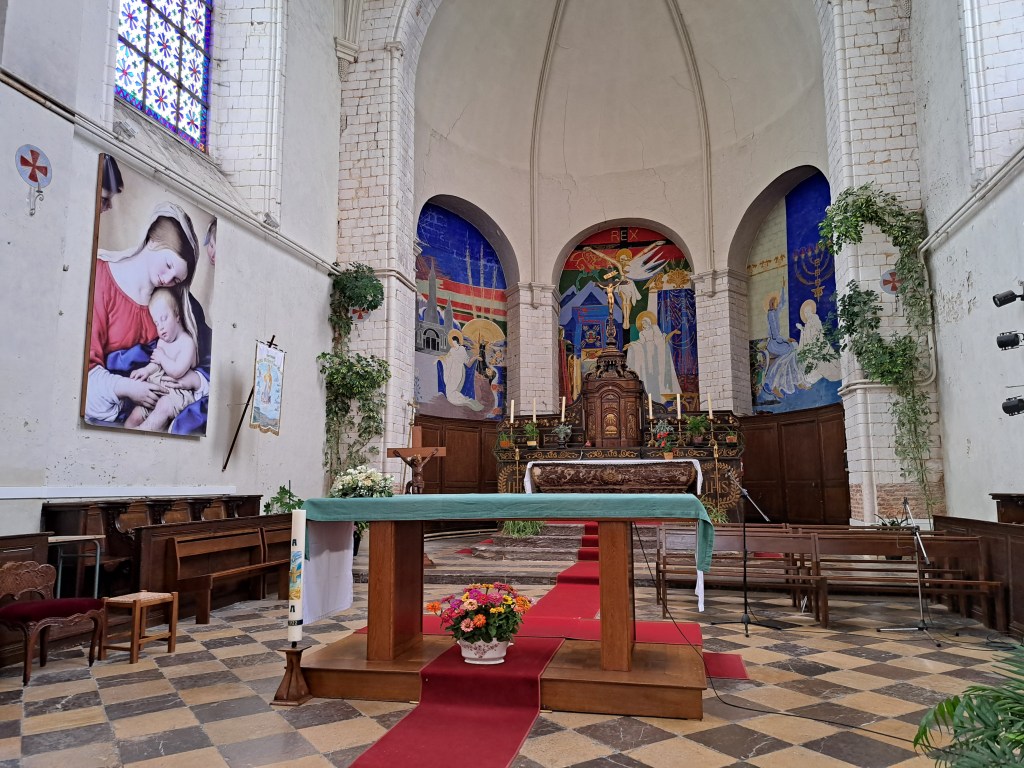
We have had some time and, especially when we were walking in England, we were visiting churches along the way and would take time to reflect and pray in the quiet of those places. Sadly, not many churches seem to be open in rural France. Of course, we always use the time honoured Dugald Principle established on the Camino routes but just as relevant on other pilgrimage routes, too. It goes, “Never pass the door of a church on the way without trying the door handle, and if the door opens, go in – you never know what you might find inside.”. It has worked for us so many times, including stumbling over fantastic pieces of art or Medieval wood work, discovering interesting and important historical thing/facts, encountering amazing people, or stepping into a beautiful musical performance. And sometimes it is just the place of peace you need at that time.
But if the door doesn’t open, there is usually a seat nearby where you can have a drink and a rest, and so on.
The last three days have also had times when we would have loved to have been able to get into certain churches simply because they have been so intriguing.
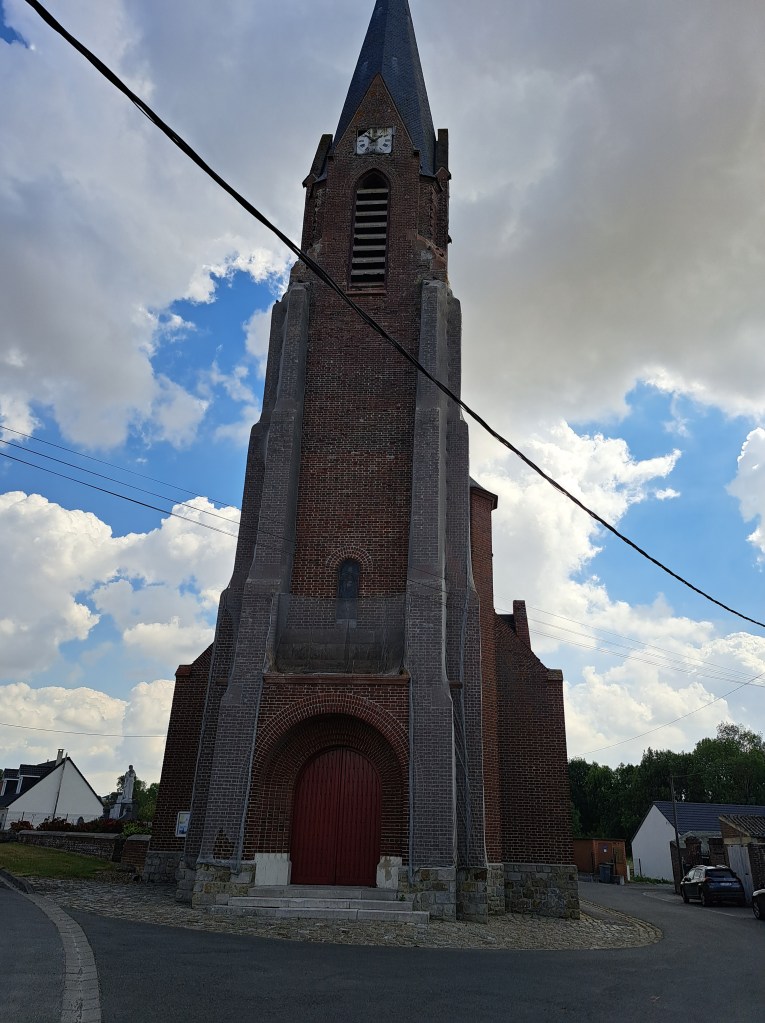
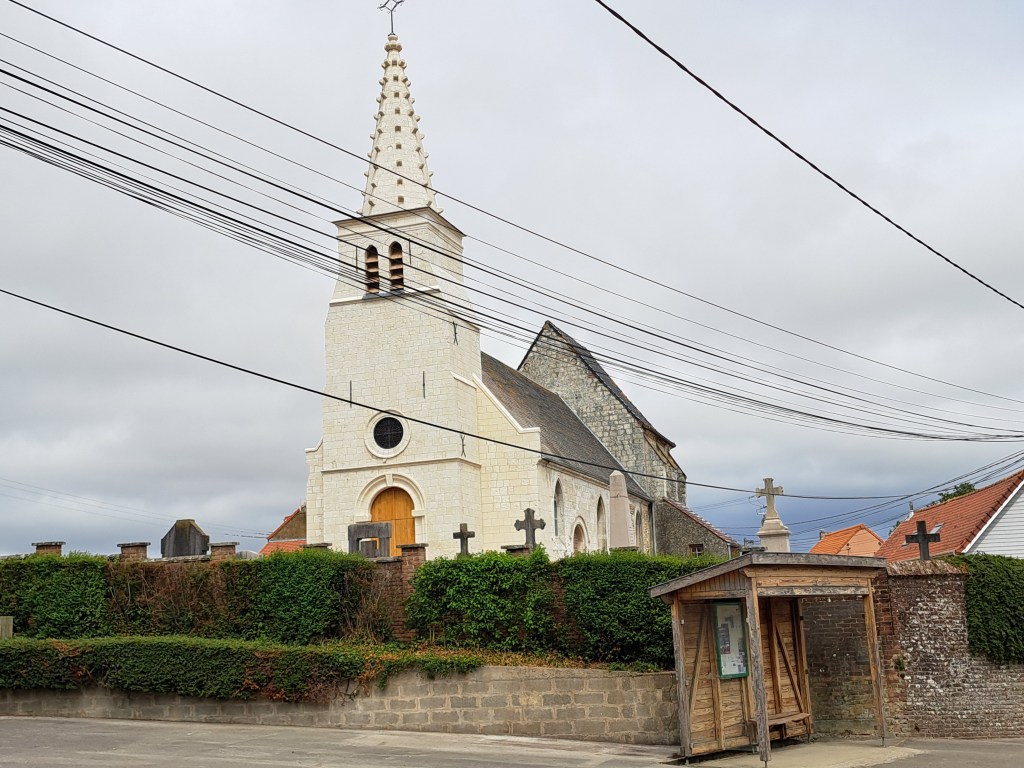
The first one looked like it was possibly a ruin. From a distance we could see right through holes in the spire and, as we got closer, the tower looked the same and there seemed to be a framework around the building, too.
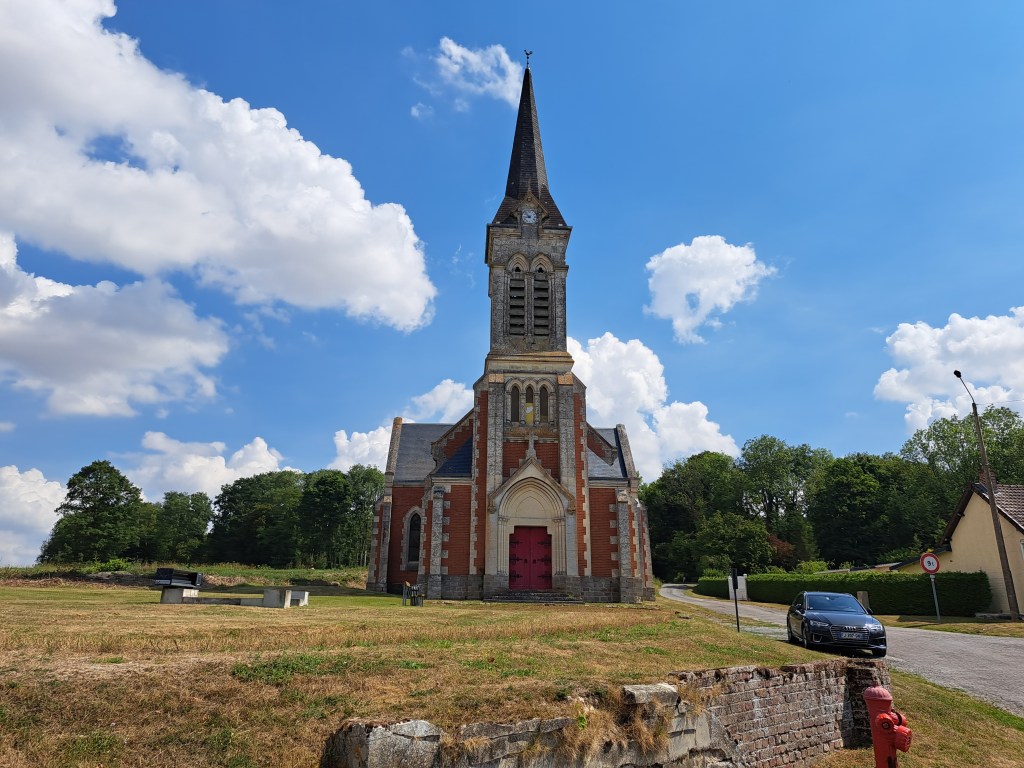
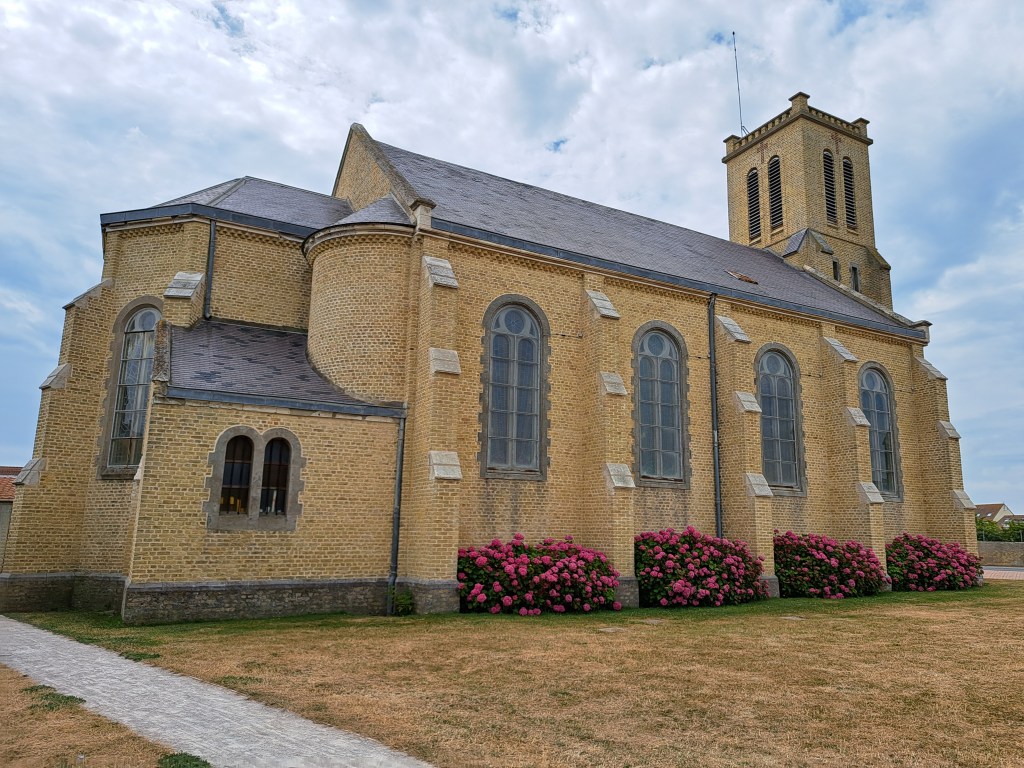
As with most of the villages we have walked through, you see the church from afar, you follow the path around the edge of the village, now obscured by trees or the buildings lining the early, out-lying streets, then you turn into the village and, at some point, the church reappears. So it was with this village and, when we saw the church we were astonished. Look at the pictures, there are three churches n this area that we have encountered and we suspect there are more. And they all have hollow towers and spires incised with shaped holes of different sizes and a tower that contains some sort of monumental statuary as part of the design.
In Peronne we had a long chat with the young guy holding the fort in the local tourist information office. He told us about how much of the town, and surrounding villages, had been totally destroyed during the first world war. Almost everything had been reconstructed using brick as those were the easiest, fastest and cheapest local building materials to produce. Buildings like churches had been made of stone, before but many of them had been reconstructed in brick. He also said that art deco buildings in the area were important to him because they were new after WW1 and doing something more than just re-building.
These churches have notices saying that their interiors are being renovated because they contain some very important art deco designs and art work. You can see that they are in need of some TLC so I’m glad of that fact but we were both sad not to step into those places ourselves. For us they signal that there was some clear movement to make a statement between the wars in this area. Partly thanksgiving for having survived, partly to remember those lost in the war and partly as a sign of hope and a way forward for the future.
Somehow for me, they are better than the war memorials, although many of them are impressive and moving, too. These buildings were a massive sign of intentions to move on to a better world and I suppose, the fact that they survived the second world war says something…. I will do some research when I get home and possibly plan a pilgrimage of architecture and art after the first world war about positive ideals for the future….
This is a phase in our walk where we are coming to terms with this journey through such a troubled landscape. It is, perhaps, a new window that has opened onto the idea of reflecting on loss. We are in a landscape of remembrance that didn’t stop after the end of the first world war; we are now seeing plaques remembering deaths from the second world war, too….
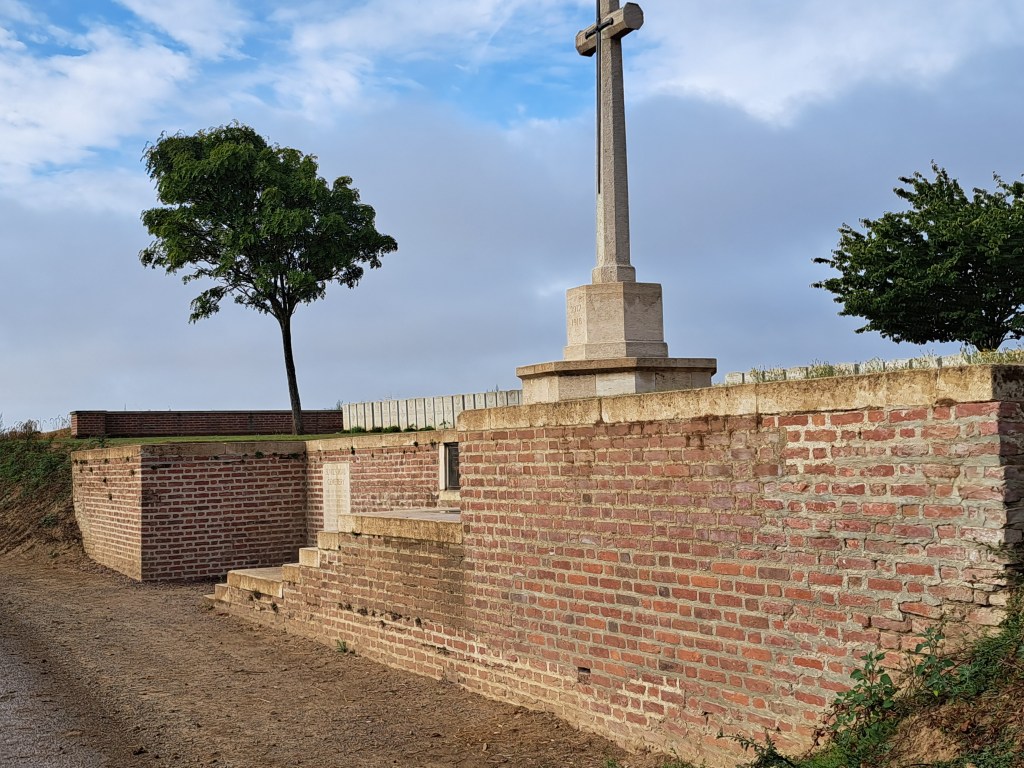
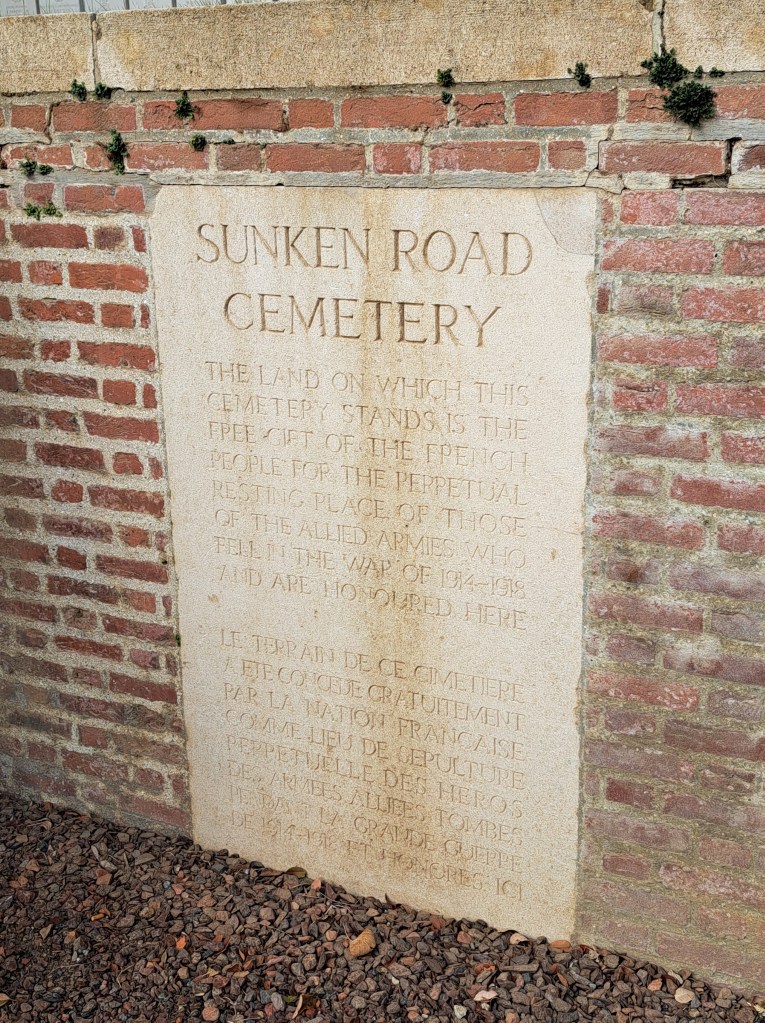
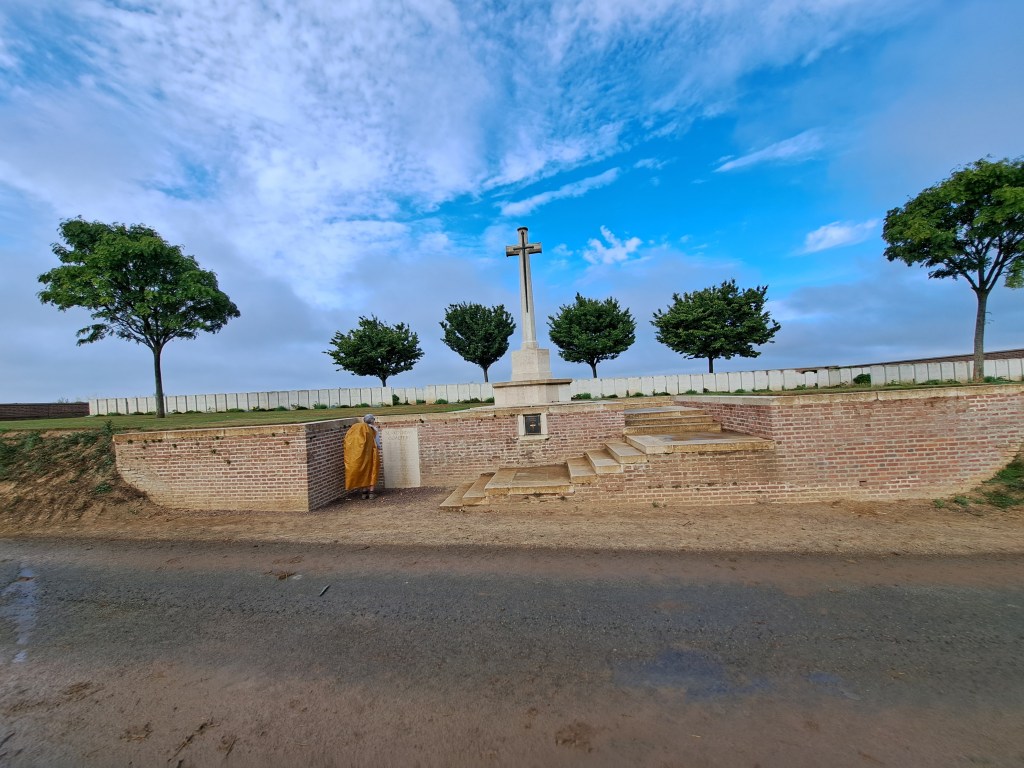
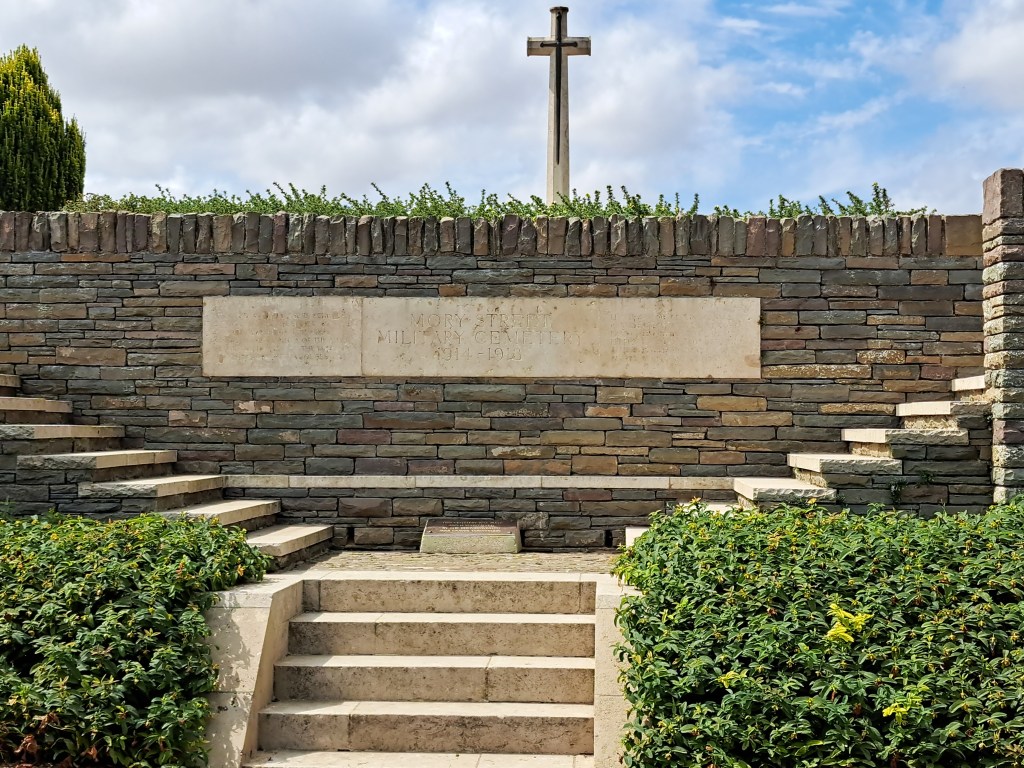
Tonight in Seraucourt le Grand we are in a campsite where they have a section of the site where pilgims can camp and we and two Belgian cyclists are staying here tonight. Before settling down here we walked through the town and decided to walk out of the town to visit the town’s local British War Graves Cemetery,
Afterwards, I spoke to my sister Elizabeth and she told me that our great uncle James Smith died in the 3rd battle of Ypres and that he has no grave but is listed on the Menin Gate. Alison also has a relative listed on another memorial and here we were, the third time in two days, looking at British and commonwealth graves and reflecting on what it all might mean.
I thought it easier to say it my way. Photos will follow when we have a system that works…
Reading the names
Blue set against white
names but not on every stone
rows of the lost are resting
and the wood pigeon’s throaty call
echoes the sound of a solitary car
grumbling up the slope
on the little shaded road belowSome swallows swipe along the rows
and swoop over to the next line of graves
gleefully taking a late lunch in the August heat
as we look at the many unnamed stones
and on others read the names and ages
of young men from different regiments
from Yorkshire or Ireland, or Western Australia
ennumerated, placed at rest with care
and just resting in peaceWe walk down each row and our pilgrim hearts
remember the roads we’ve walked
through the fields of heavy clay
below the gathering clouds
over the sweeping curves of land
that once hid fetid trenches
now strewn with bales of straw
like golden monuments
to the abandoned ruins of war
and on the way we see the shells and bullets
now ploughed up and raked from the land
lined in low rows and little stacks
awaiting collection for disposal.Such a peaceful landscape
scarred and littered with remnants of war
and left with a patchwork of remembered grief
in careful places of regimented rest
where reading names
is always an act worth doing -
Arriving on the Somme with a message of hope
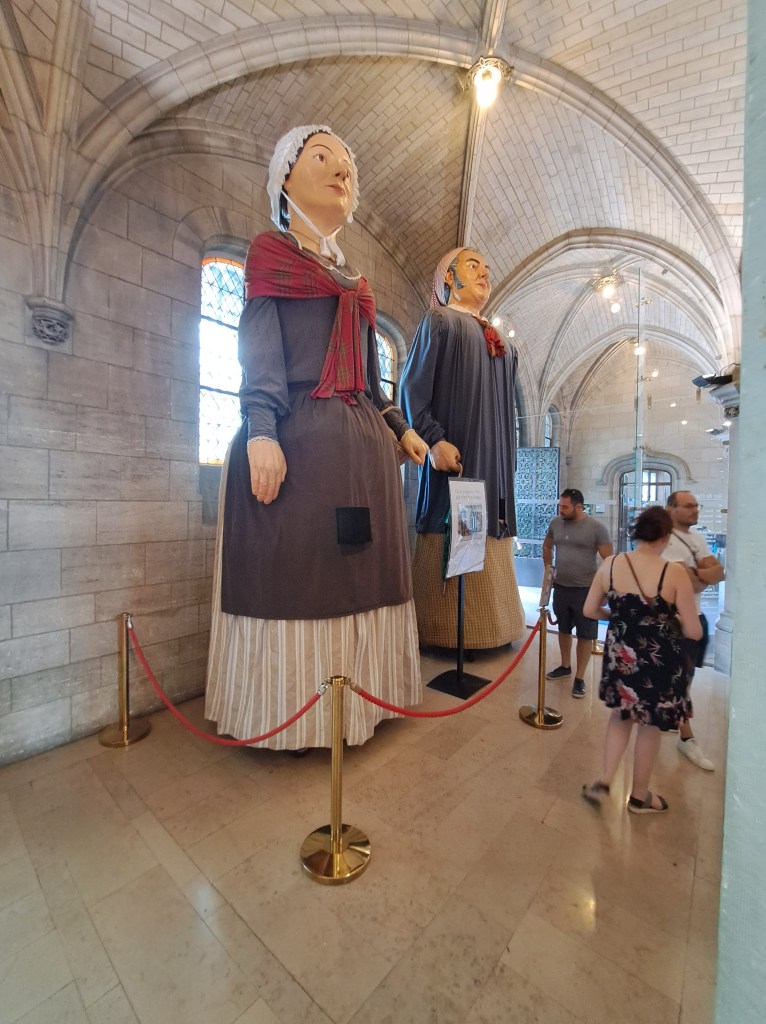
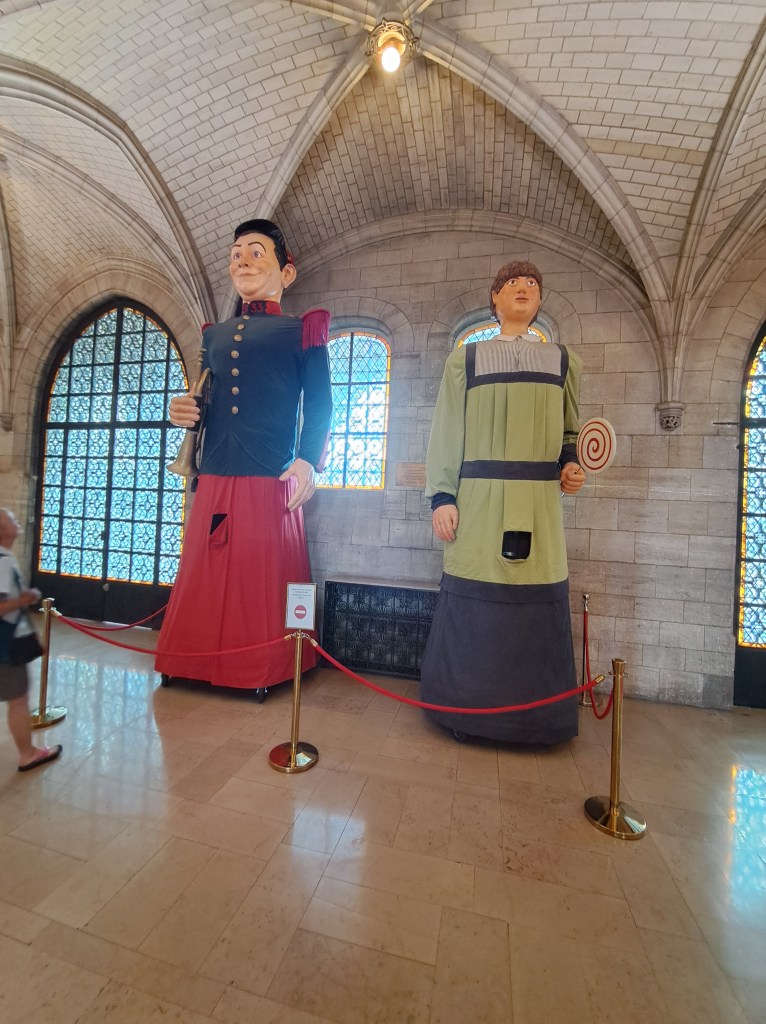
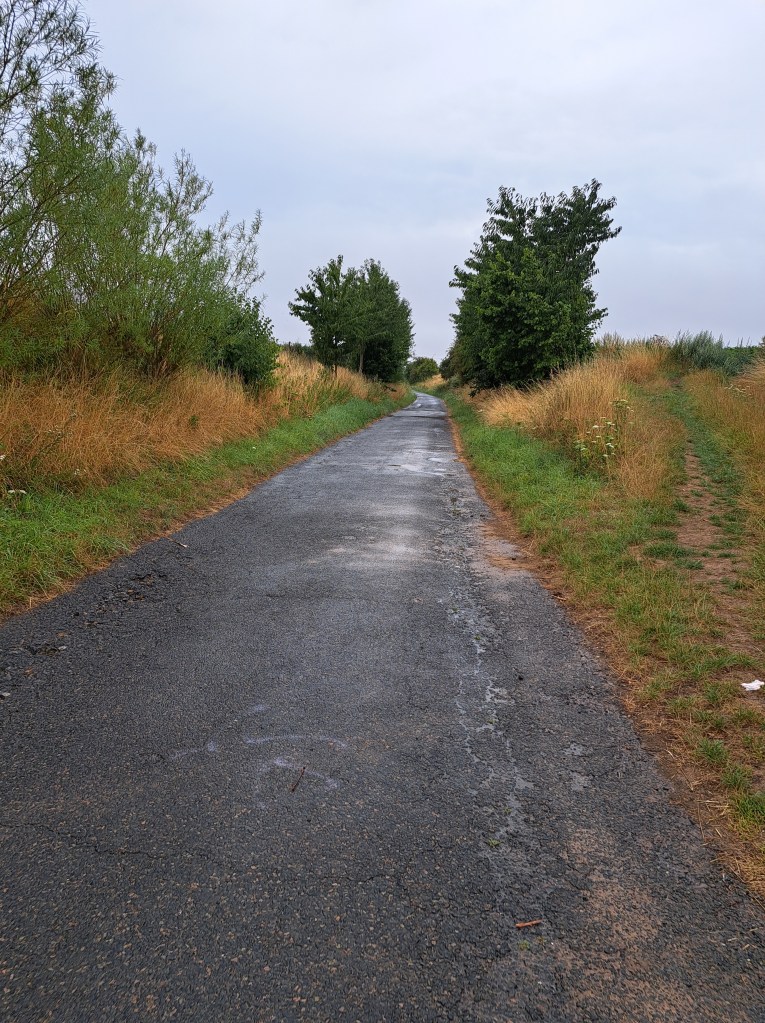
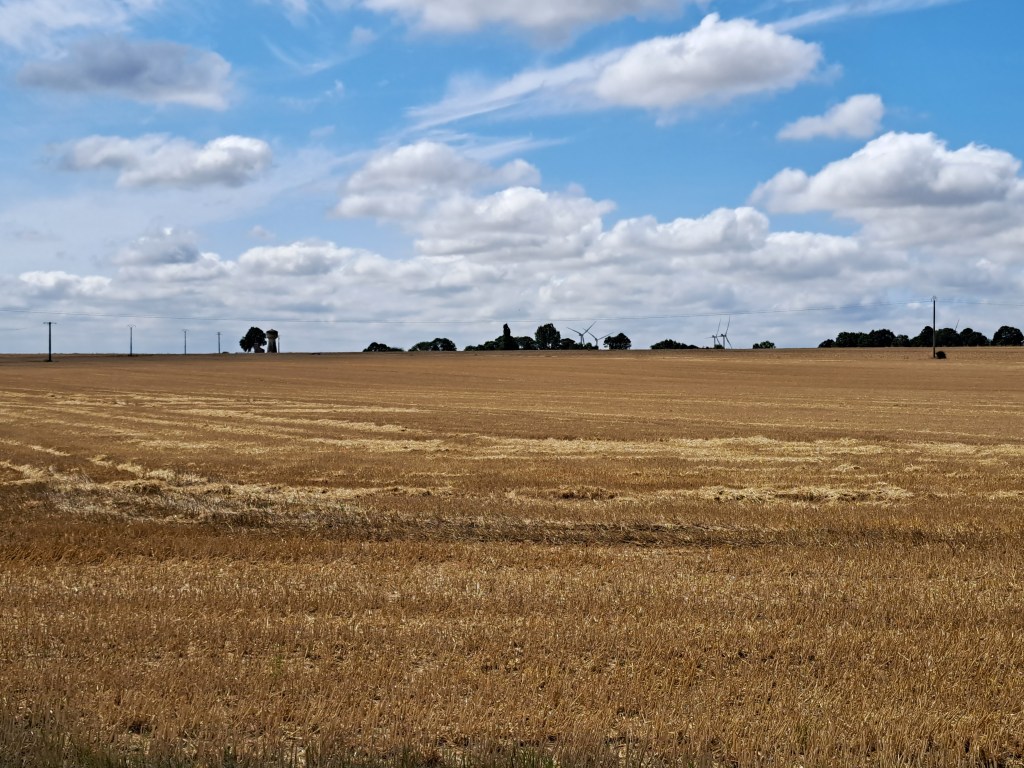
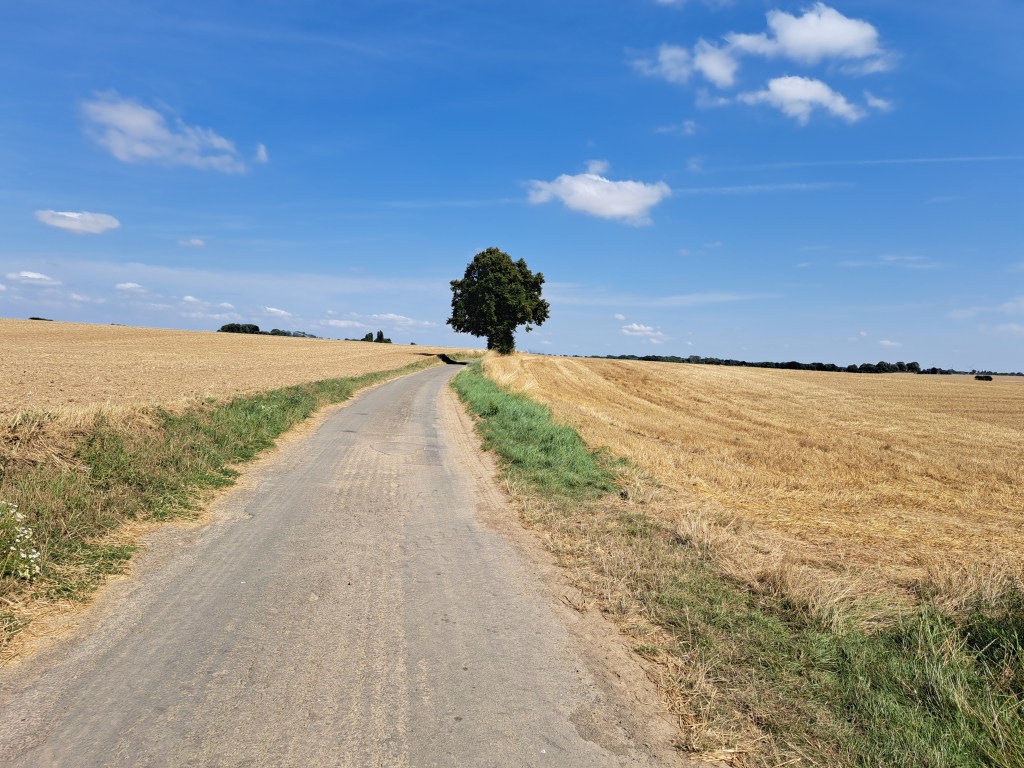
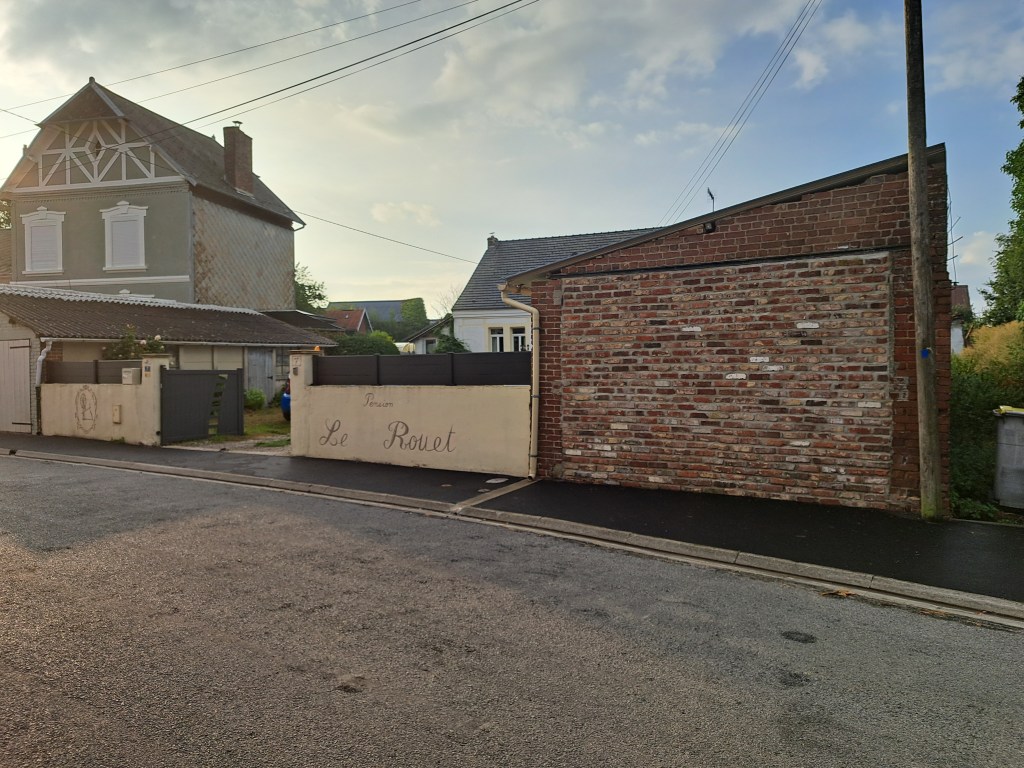
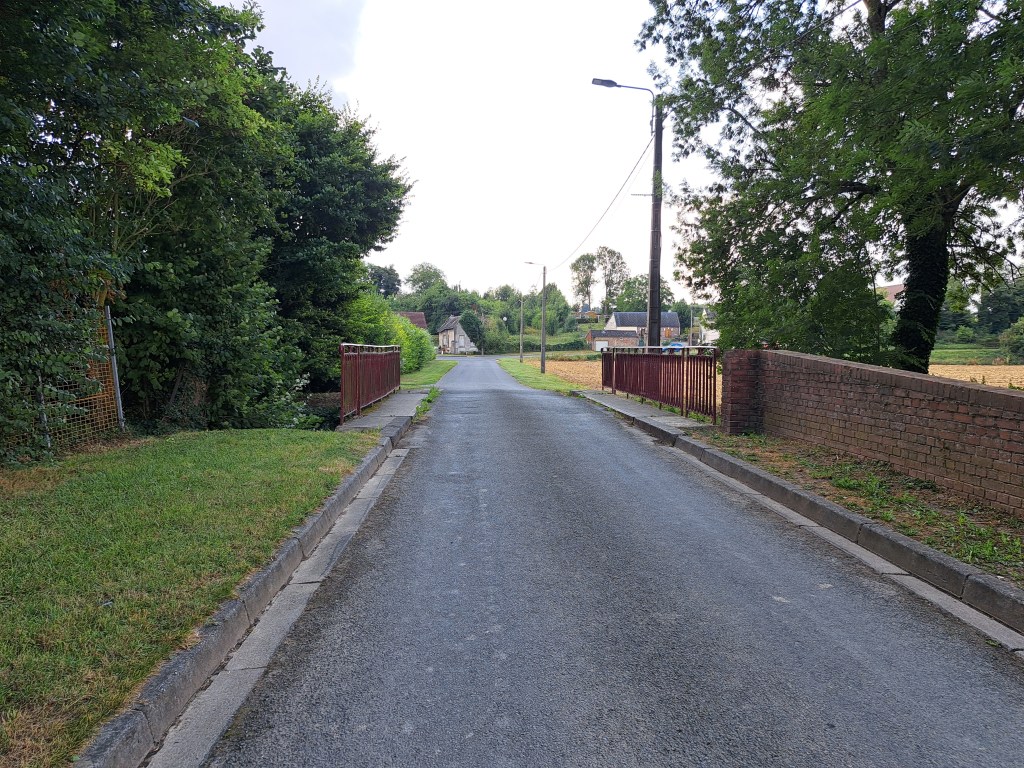
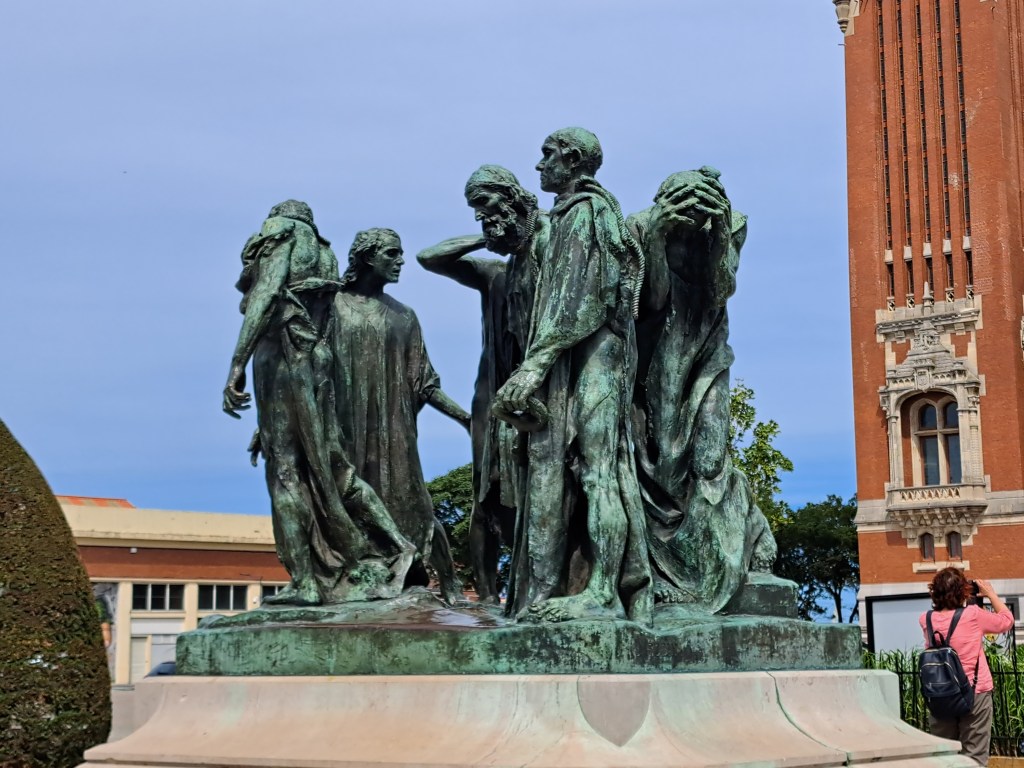
(I am having issues with posting photos so please forgive the random nature of the photos at the end, but please note the size of the giants of Arras – awesome!)
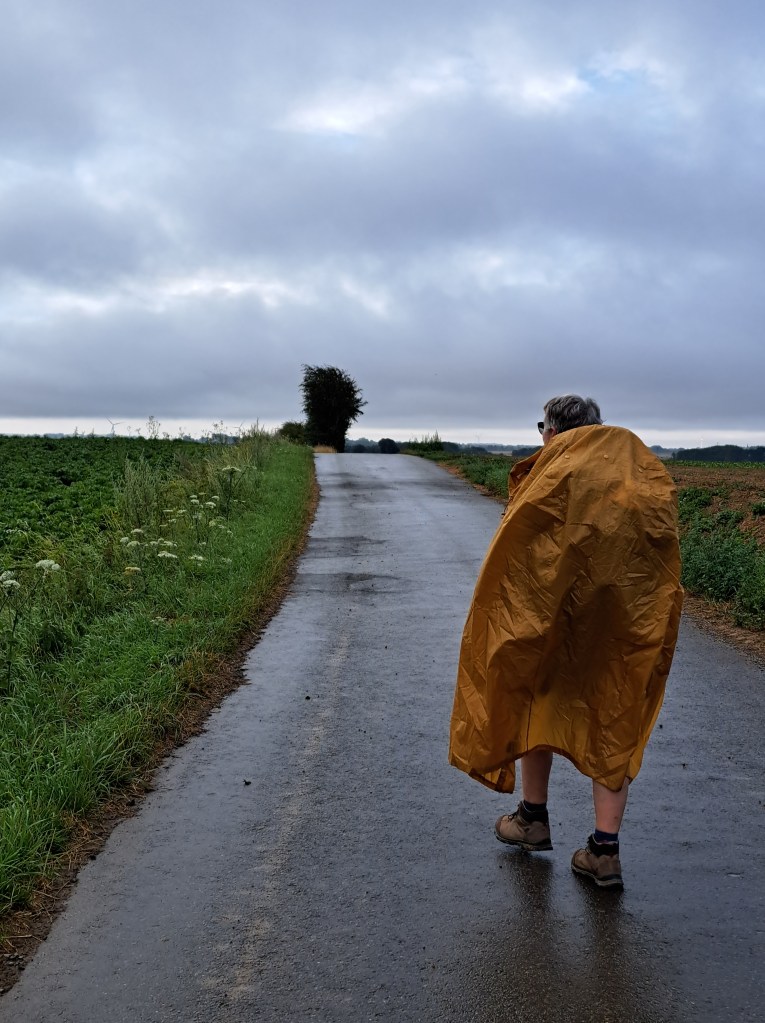
Today is the 5th August and we are now in a city called Peronne resting on the banks of the Somme. Yesterday was another long day from Arras to Ytres. We began walking in the rain at 8 am and gradually, as we walked through each village devoid of any services, the rain diminished and the sun grew in strength, the heat increased and the shade just faded as we walked. Our drinks faded too and, after lunch sitting in some blessed shade behind the war memorial at St Legere (a village that was awarded the Croix de Guerre because, despite being almost completely destroyed during WW1 the people kept on living positively and working as hard as ever alongside the rubble), we walked on to the another village where we knew there was a shop, a bar and other services. This place, Vaulx-Vraucourt had the services but they were all shut – even the shop was not going to open for almost an hour after our arrival (and we could not wait).
As we headed out of the village (I was checking out the map to see where the cemetery was because you can always find a tap of fresh water there) we saw a pharmacie, and it was open, so we walked in hoping they might have a fridge with drinks to buy….. nothing!. The two ladies behind the counter looked at us with some measure of restraint, wondering what we were going to say. Alison asked if they had any water for sale. One of the women walked behind a screen and returned with a 1.5 litre of (cold) water and gave it to me. She refused any payment and the only thing she asked was where we came from and nodded sagely when we said London.
Profuse thank you’s were followed by a stop outside where we had a drink and filled our bottles. Wonderful!
By 4.30 we were only about an hour from our destination but the heat was getting to us and our water was running low again. We knew that our host, Emmanuelle, had offered to pick us up from the pilgrim route as her place was a few miles off the path. We had opted to make our own way directly, hoping to walk the whole way but decided it prudent to take up the offer of a lift. So while Alison sat in the shade and tried to contact our host, I walked down to the church and filled up my bottle from the tap at the cemetery and we sat and refreshed ourselves as we waited for a lift.
Turns out that Emmanuelle is a very bright, lively person who speaks very good English and runs a really good chambre d’hote where we had good food, a great rest and headed off to here after a fine breakfast. Another really amazing host for any traveller and all pilgrims…
Which just leaves me with this observation about today’s walk.
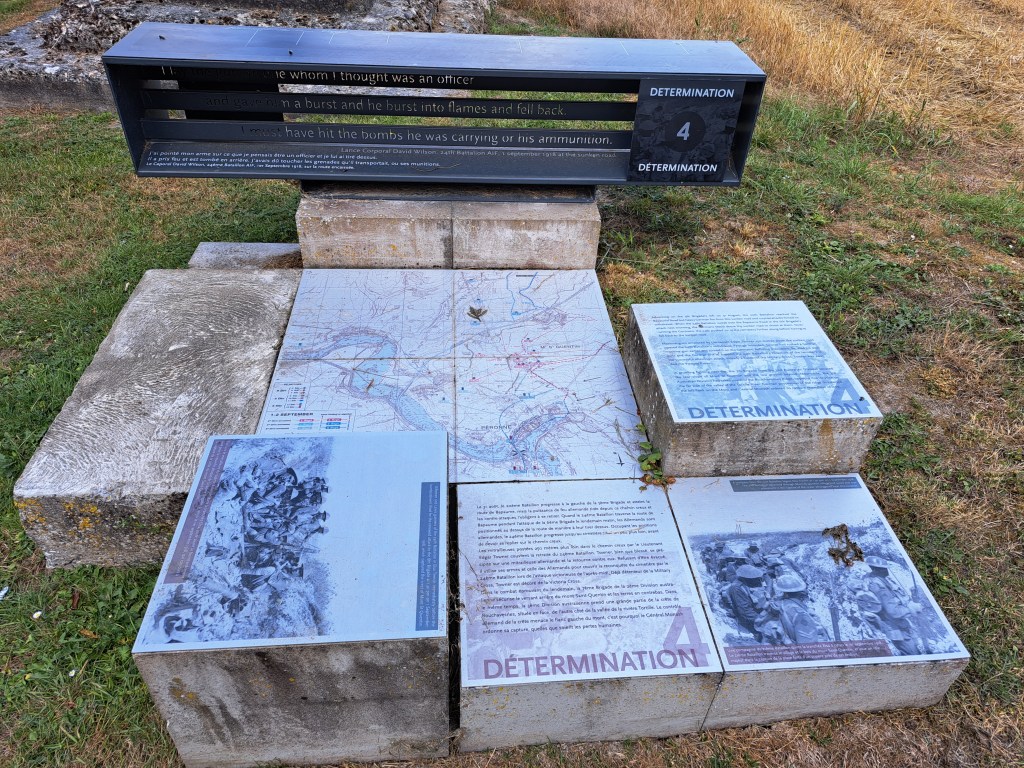
The last few days we have become very aware of the landscape’s heritage from the First World War. Although much of our day’s route followed an amazing canal (du Nord) we also passed sites relating to the war and then, just before entering the city we ended on a hill called Mont St Quentin which is a really important local WW1 Site for the people here. Peronne had been heavily occupied by the Germans during much of the war and then, early in 1918 they were liberated by the Australians who fought a seriously ferocious assault against the German occupiers and this hill was a major point of defence that had to be taken. The story of this conflict is extraordinary and deserves looking up. There were a series of small displays marking the progress of the Australians and on one panel it said “this ruined wall (near here) was the site of a German bunker. After the end of the fighting the soldiers entered the bunker to find the dead bodies of 30 German and 2 Australian soldiers”.
It was not the end of the war but it was one of too many harrowing conflicts along the way to final peace.
This city now houses a major museum of the First World War which is trilingual and tells the story of the war from the three aspects of the French, the British and the German forces. If you come here, go to that museum, go to the other sites and chat to the people in the Tourist Information Office. Glad we are passing through here….
The following was written on the evening 3rd August
I am writing this in a fine city called Arras. We are staying in very small, one room apartment on the main square. Yesterday we were in a small farm yard gite/chambres d’Hotes where the lady who hosted us was very pleasant and helpful. She promised to seel us some potatoes and eggs (from her small holding) and we brought other ingredients and wine from the previous town and made a good meal with it and sat and ate with three Belgian women who were lovely – mother, daughter and aunt walking on the pilgrim route for a few days.
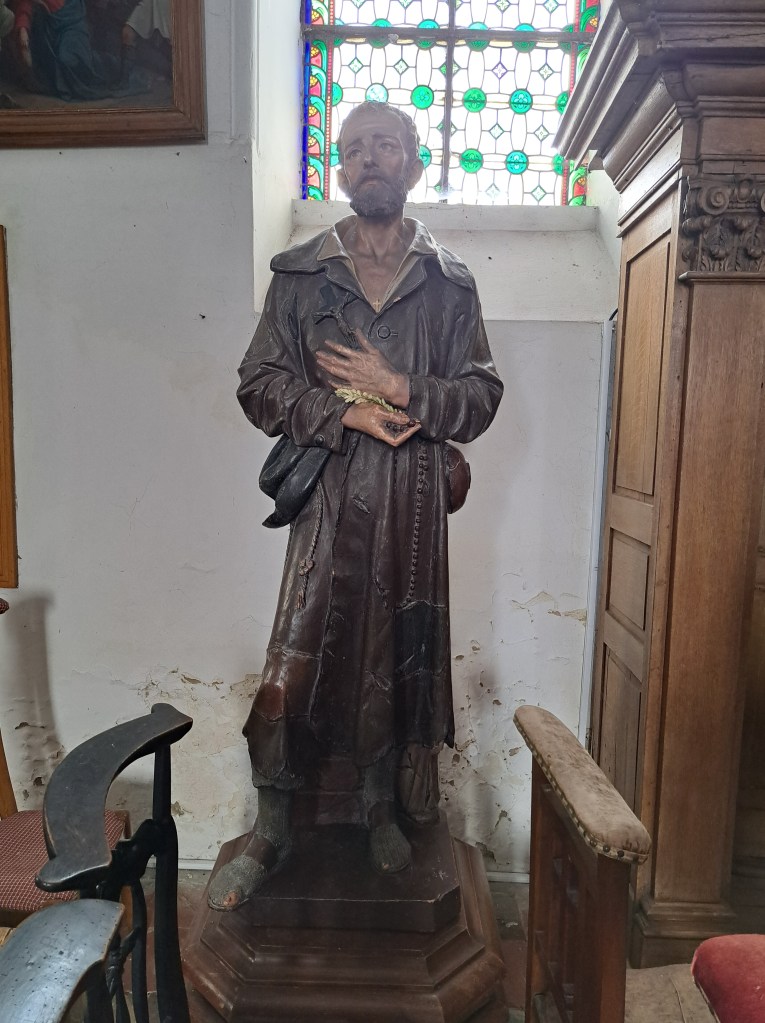
It was a particularly long day (over 30 kms) to this place called Amettes and we chose it because it was on the way and it just happened to be the birth place of Benedict Joseph Labre (French: Benoît-Joseph Labre) who was born on 26th March 1748 and died on the 16th April 1783. He is the patron saint of the homeless and has been a person of interest to us for some time. Alison brought him to the attention of a lot of people when she was CEO of Housing Justice and we have walked to a number of sites related to him, including Rome, where he died.
He was an extraordinary character. He spent a good part of his younger days studying under his uncle (a parish priest) with a view to eventually entering the training for the priesthood, but a local flare up of the plague put a stop to that and, after his uncle died, he left home at 14 or so, and tried to join the trappists and other versions of the religious, but he was deemed too young and also not well enough educated for the priesthood.
After a couple of faltering steps in the direction of becoming a monk or brother, he drew a line under that idea. He joined the third order of Franciscans (a lay association) and set off from home to become a pilgrim. He walked to all of the major pilgrimage sites in Europe at the time (visiting some several times). He had no money and lived on what people would give him. He slept wherever he could and spent days in prayer and devotion, pretty much ignoring the necessities of life such as food and drink.
One might say nowadays that he was on the spectrum. He was a very special person, very focussed and extremely simple and humble in his ways. Reading about him has reminded me of Vincent van Gough, both driven, both with a great heart for the poor and underdog, and both with a passion that drove them further than most ordinary people. Van Gough had extraordinary artistic talents and Labre had such a single, simple religious focus that nothing could distract him from his devotions.
He ended up in Rome (not the first time he had arrived there) and he settled there, living in the Coliseum, which was an abandoned ruin occupied by all sorts of poor and dangerous people at the time. He was known as the “Saint of the forty hours” by the locals who seemed to really like him despite his rags and unwashed condition. And, when he finally collapsed on the steps of the church of Santa Maria ai Monti, he protested when they insisted that he be taken in and looked after. But it was too late for any help, he died of malnutrition and exhaustion on16 April 1783 at the ripe old age of 35.
So, the last time we walked to Rome we visited one of the few churches connected with him on our way through the Pyrenees, then ended up in Rome to follow some of his footsteps there.
But, yesterday we stayed in the village of his birth and walked to his original (and only real home) before heading off to Arras.
It is weird to have such a strong connection to such an odd sort of person. He was uncompromising and utterly focussed in a way that few can be. He took to pilgrimage in a way that both of us understand (‘though we will not follow his particular approach), and his connection with the poor, the marginalised, the rejected and the homeless is there for all to see. You have to understand what sort of ideas he had in order to see how he intentionally lived his life in solidarity with those with nothing and I am not going to attempt to explain all of that here. Enough to say that it is easier to sit with and be with people suffering from situations such as homelessness when you can then head off home to your own bedroom, your own bathroom and so on and it is another when you place yourself deliberately at the bottom of the whole shebang.
And don’t ask what he ever did for a homeless person. Personally, he certainly shared whatever he had with those around him and did it consistently. But his legacy is more complex than that.
I sit here, on the edge of a very busy square in a lovely city and know that we will be heading off south in the morning. The last few days have been difficult, and the coming week or so will be haphazard, not knowing exactly where we might find somewhere to stay. It is the wrong time of year to be doing this in France and especially difficult in this region, too, as places to stay here are already very limited along the way. But we will find a way through and know that, whatever we end up doing, it won’t be anything like as hard as St B faced. And therefore nothing like as bad as anyone on the streets tonight or struggling to keep their home or anyone trying to find refuge in a hostile environment will have to face.
From a lightning strike focus on one person, the view of reality spreads out, giving us both focus and a scale for any troubles we might face.
We, as always, are fine…. Just a wee bit tired.


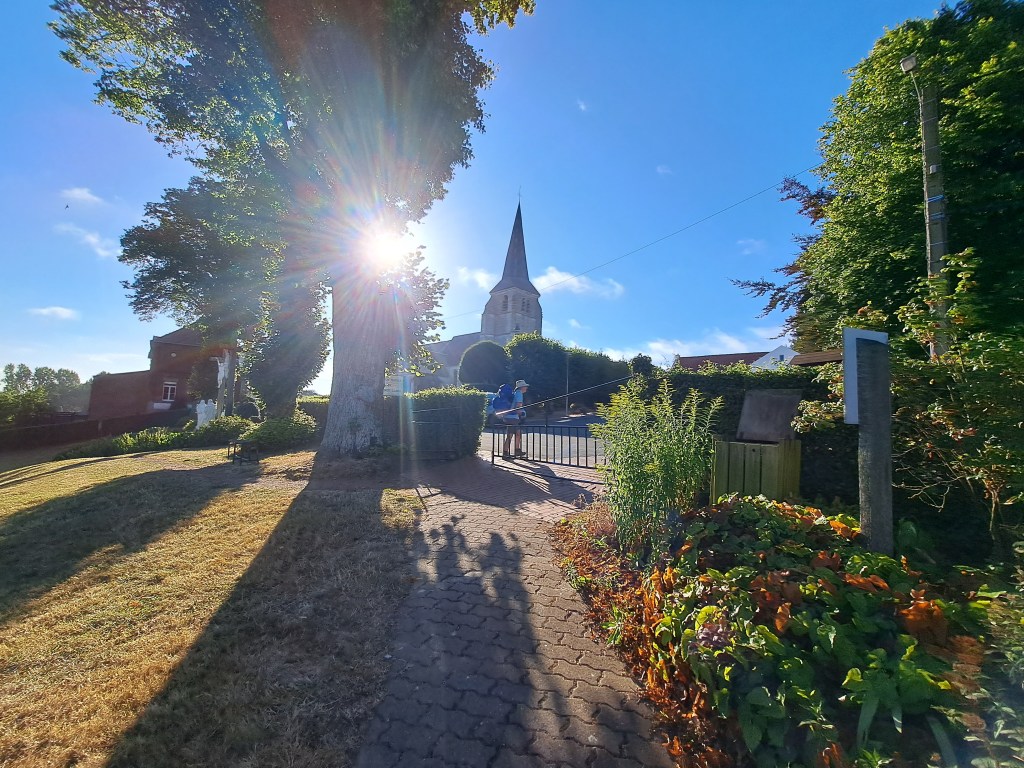
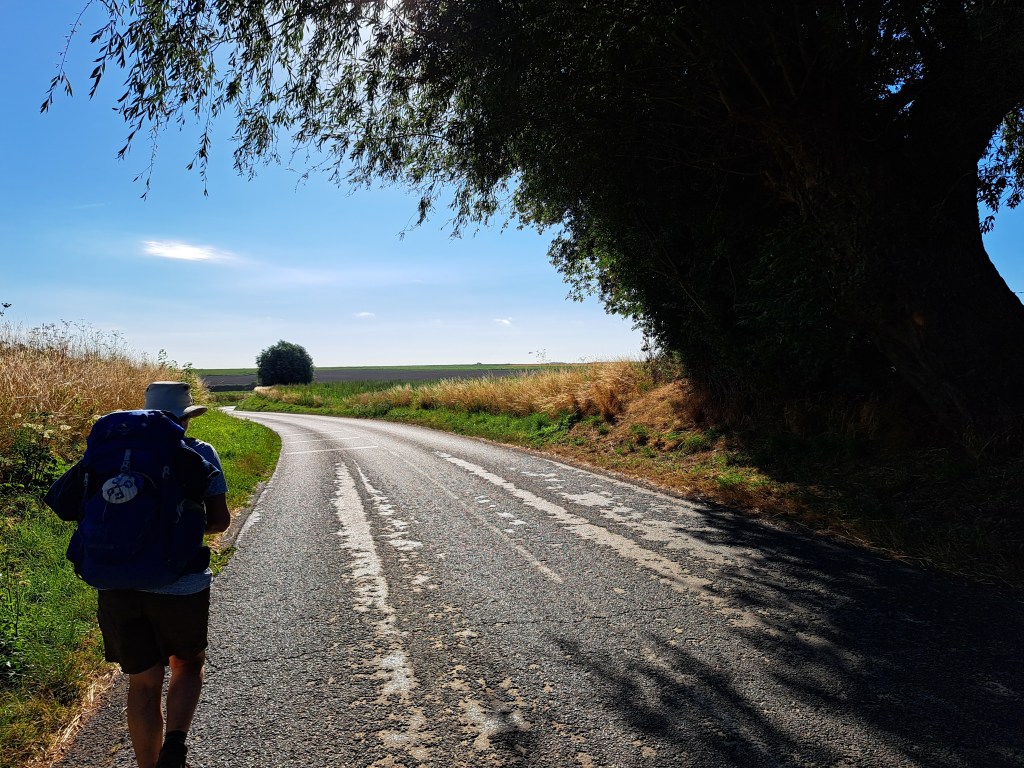
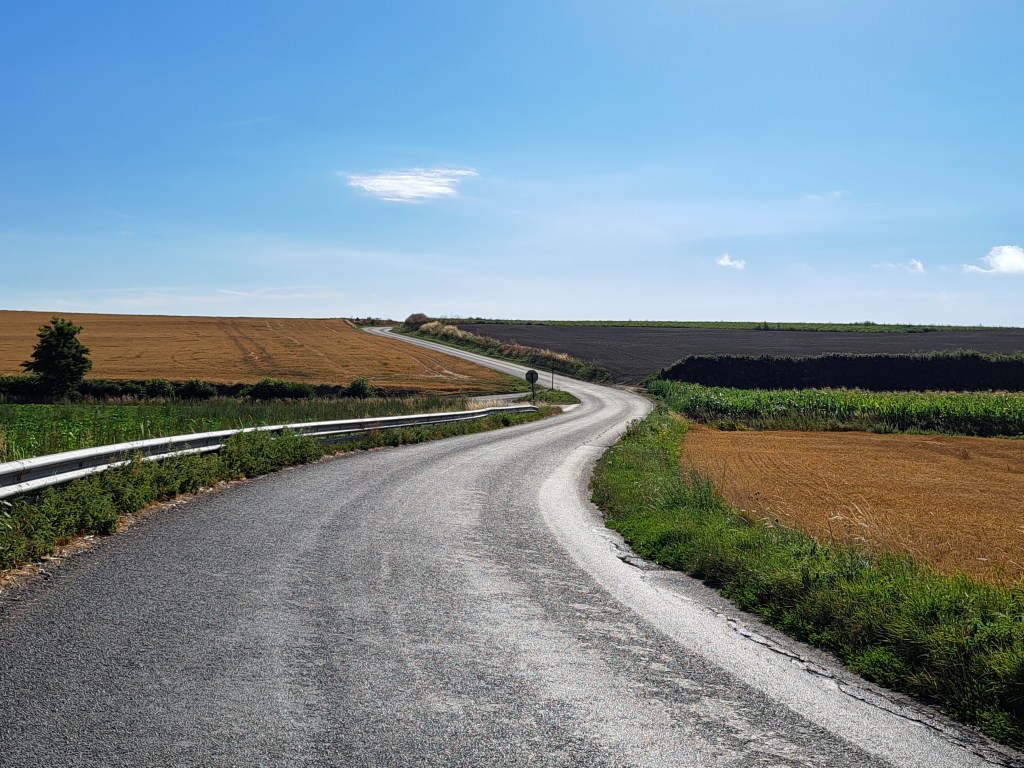
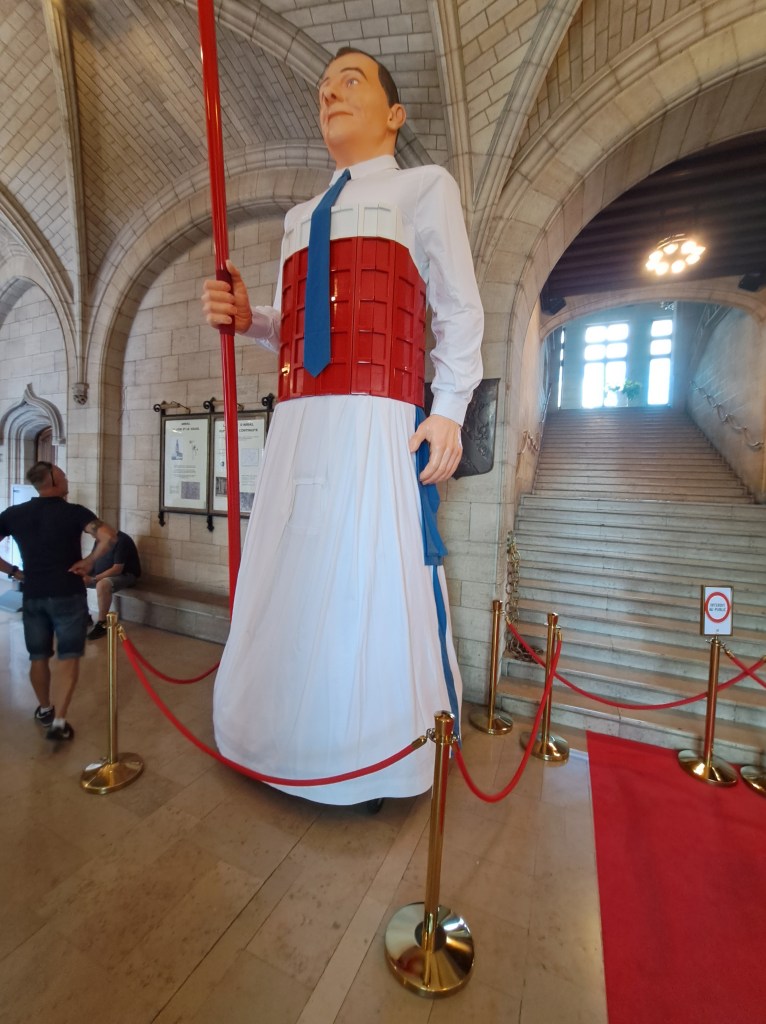



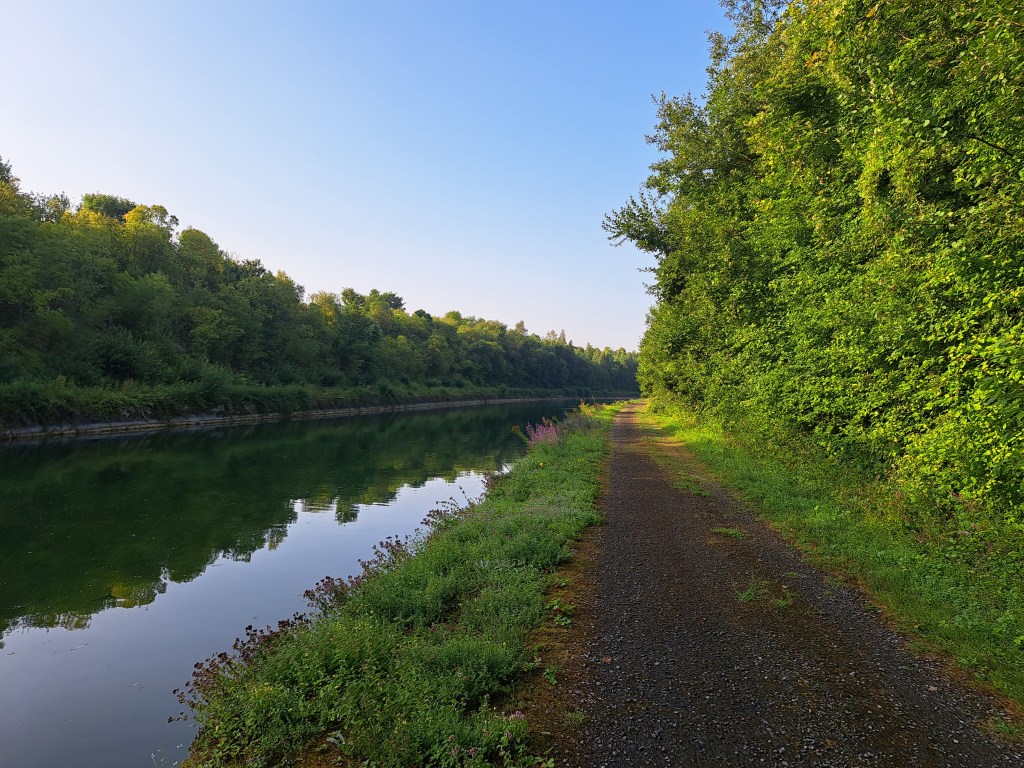
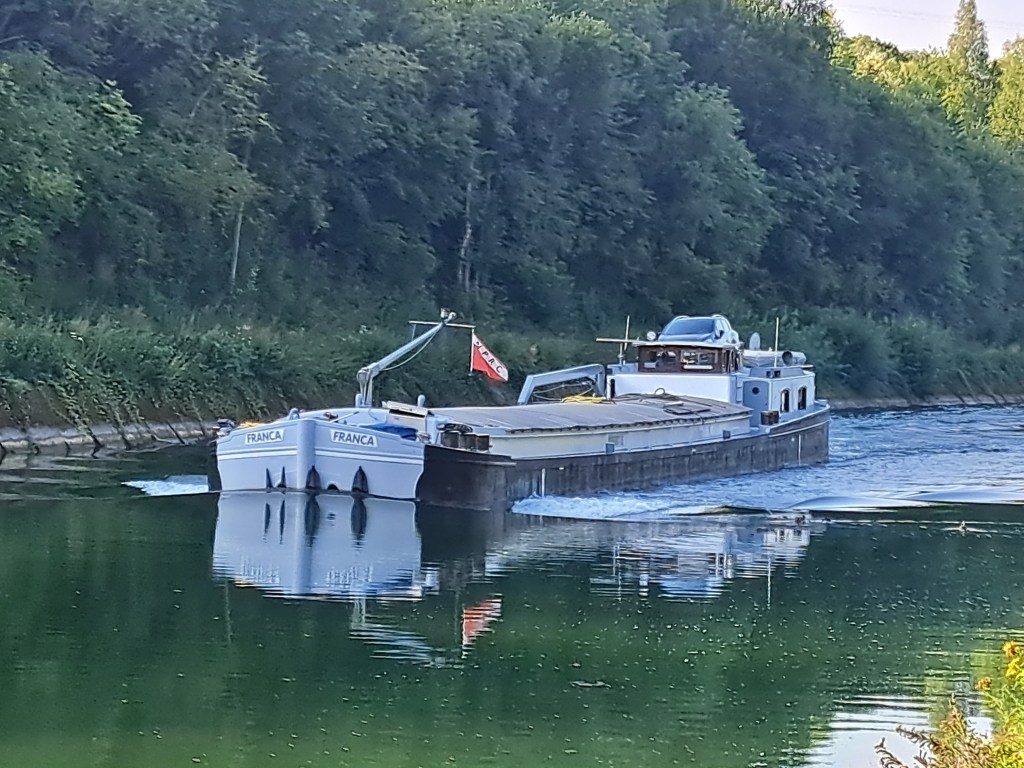

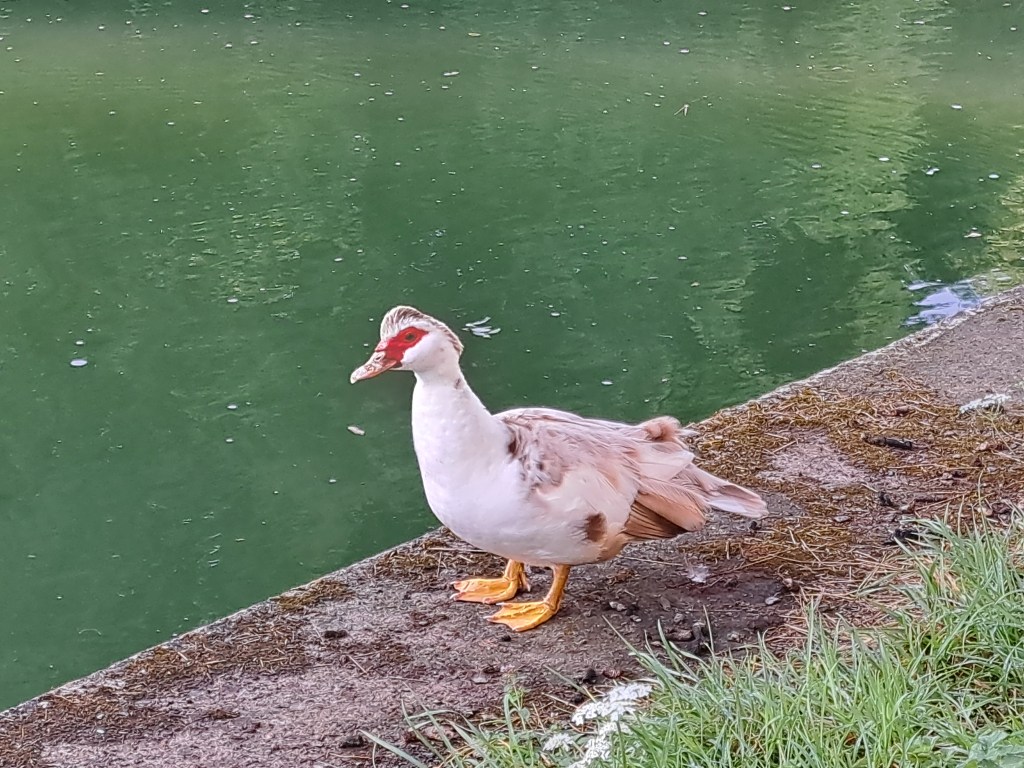
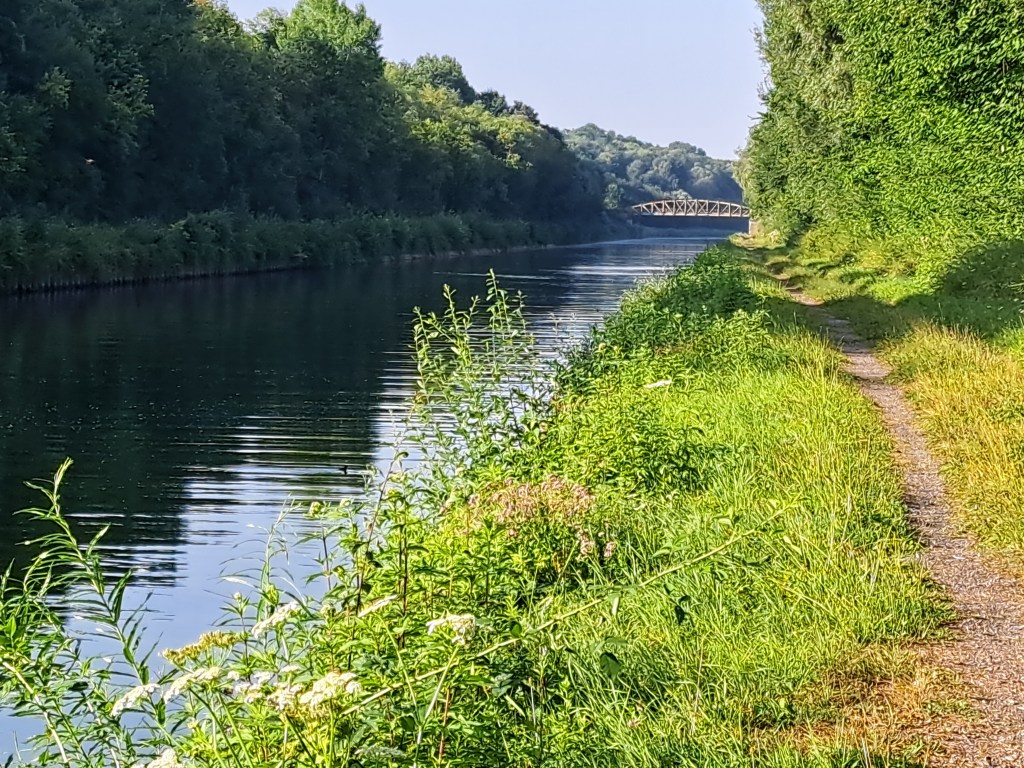
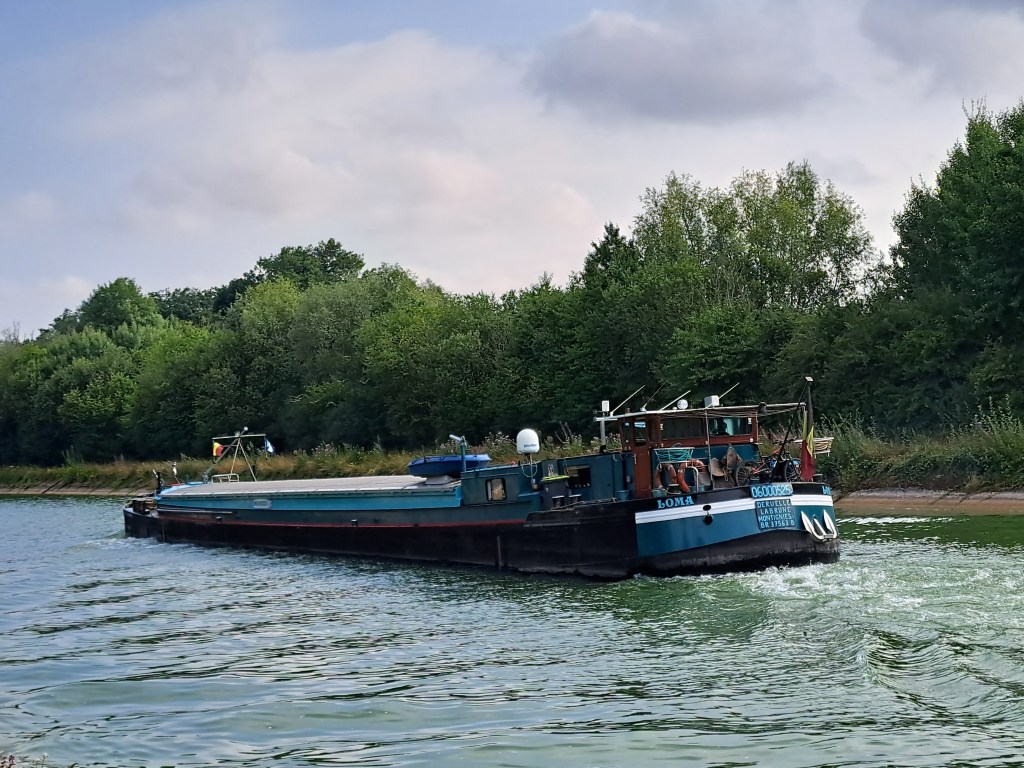

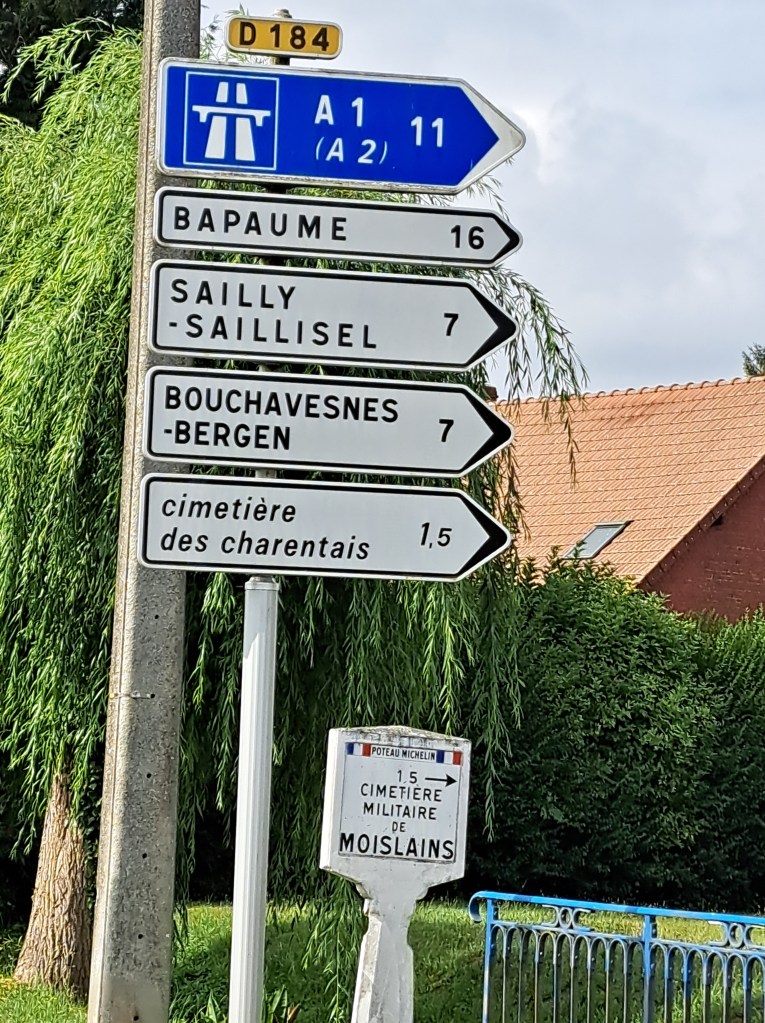
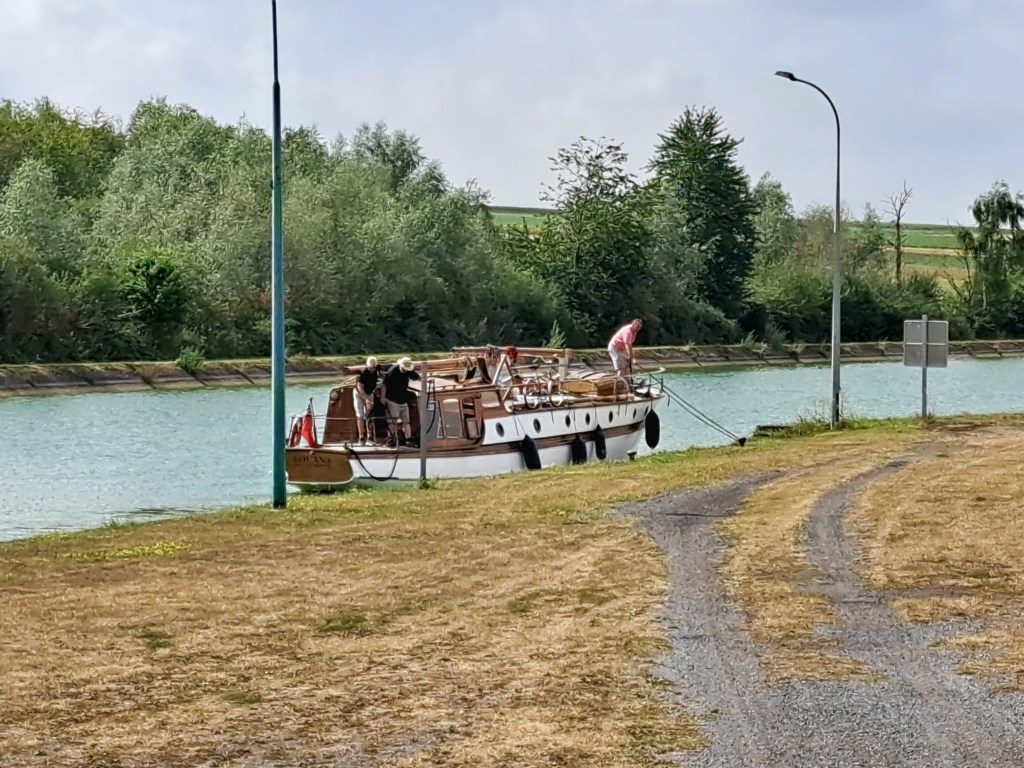
-
Echoes of pilgrim life
(This was written when we were in Wisques as guests of the Nuns. We are now in Arrass, which is a bit further on – long days on the road, but good ones)
Tonight we are in a place where time is measured by the ringing of bells.
We walked from a small village where we stayed in a Chambres d’Hotes in a small farm on the edge of a village. The woman running it was lovely. We had tried communicating with her but her emails were all very terse to the point where she typed BJR for bonjour. Originally she didn’t want us to arrive until six but was happy to welcome us after three because we were pilgrims on foot.
Both dinner and breakfast took into account my allergies without any fuss and she wanted to know all about our walk and where we were from, etc. The house was set in a large courtyard with old farm buildings on the other sides and a lovely pond with an attractive tree in the centre. They are renovating the buildings and had a wooden trailer that was obviously another bit of accommodation, so, with so little accommodation in the area, they are preparing to provide a good service to many more people passing through.
The day before (Sunday) we had a lovely lunch in another Café de la Mairie. This one had a sweet elderly woman running it who made us excellent sandwiches (from baguettes) and served us very nice local beer. The only other people who used the café while we were there was a very elderly woman who came in three times to buy another gambling ticket. It seemed like a simple excuse to walk across the road and have a short chat with the lady behind the bar. Four other customers arrived – Sunday walkers who seemed to be regulars. They had walked to the ruins of a chapel on a high ridge above the village and were now in the bar to have a drink while they ate their packed lunches at the table next to ours. One of the women from the group (three women and one man in their sixties) popped over to us to say hello and offer us some of the red currants she had grown in her garden. We felt sorry for the woman running the place and stayed for a coffee before heading off on our afternoon sortie.
So, today was a relatively short walk to a place called Wisques, just south and west of St Omer.
It has two Abbeys in the village. The first is the men’s Benedictine monastery – Abbey St Paul de Wisques. We could have stayed there but decided to stay at the Abbey Notre-Dame de Wisques which houses an enclosed order of Benedictine nuns. Their beautiful (and enormous) Abbey, like St Paul’s, was built in the latter part of the 19th Century and is a neo-gothic masterpiece. They, have large grounds encircled by a high wall and the original gate house and a couple of other houses form the main accommodation for guests and those spending time in meditation or on retreat here.
The church is huge but very simply adorned, as would be expected but, as the order is enclosed, there is a side chapel to the left of the Altar (from the priest’s view) completely secure to ensure no one can either get into the main body of the church or see any of the nuns therein.
We attended Vespers, which was completely sung in Latin and, although I am not a fan of any services in Latin, I felt it was very much worth attending. Although beautiful and quite intoxicating as the clear voices resonated around the high bare walls of the church, it was a service that we were expected to take part in, albeit in silence, because what we were doing was being invited to be part of their shared prayer. This was not a performance, it was their community devotion and part of their daily prayer life.
My school boy Latin and pre-Vatican 2 memories of prayers assisted me in following the psalms and prayers as they were sung. Not every going to be part of my religious life but happy to sense their joy and devotion.
Which brings me to the bells. These are rung to mark the daily pattern of worship and prayer at the two Abbey’s. At 5:15 am the nuns sing Matines-Laudes then at 8:15 they have Prime. Ten in the morning is their usual Mass time and Sexte is at 12:50. By 14:35 they are at None and Vespres is at 18:00 hours. Complies is at 20:30 hors and I heard the bell for that just a few minutes ago. And, even though these Abbeys have only been here since the nineteenth century, this pattern of life has been an enduring feature of daily life for religious orders like these Benedictines for centuries.
During medieval times Abbeys, and their like, were very often major centres for farming and the life of their farms revolved around the bells as they marked out the phases of the day. These bells marked out the days of other farmers and villagers across the whole of Europe and, in the cities and towns they marked out the times for commerce, the work of state and so on. And most churches tended to follow similar patterns of prayer through the day, reflecting the prayer lives of the priests serving there. So, since our arrival at lunch time today, as we settle in for the night and as we get up tomorrow, we will have be hearing the bells as they continue to mark off the stages of every day spent in a life of faith and shared by everyone who happens to live and work nearby.
It gives me a deep sense of happiness that, as pilgrims, we can still hear these bells as echoes of a pattern of pilgrim life that persisted across many centuries and can still be found in a place like this today.
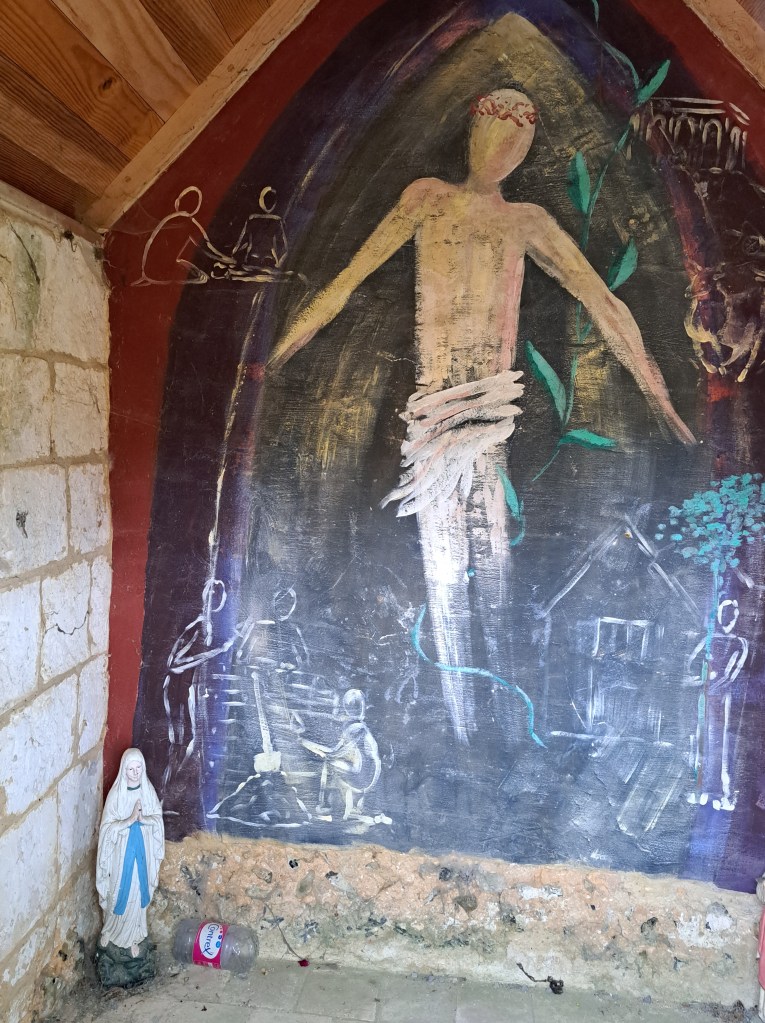
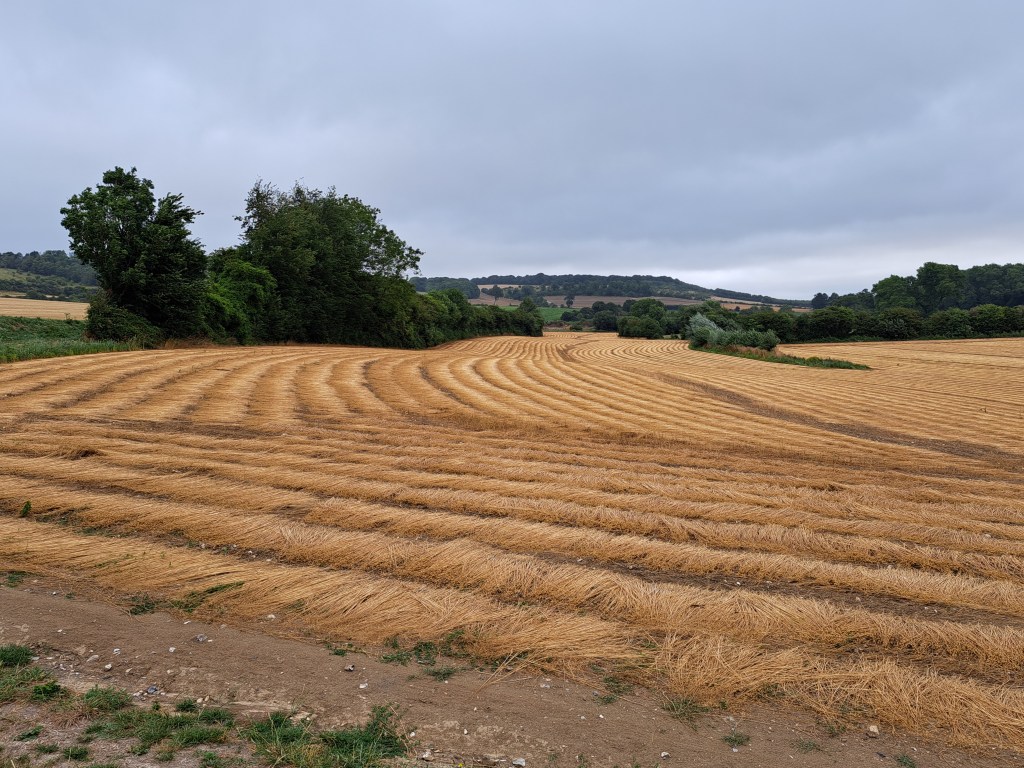
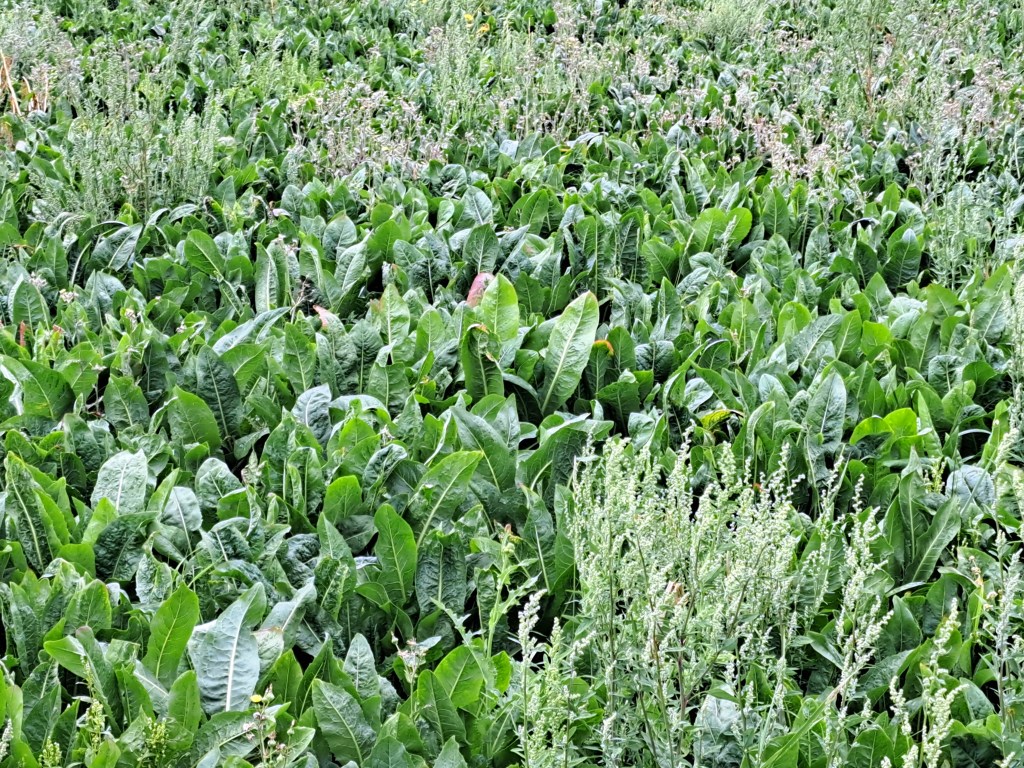
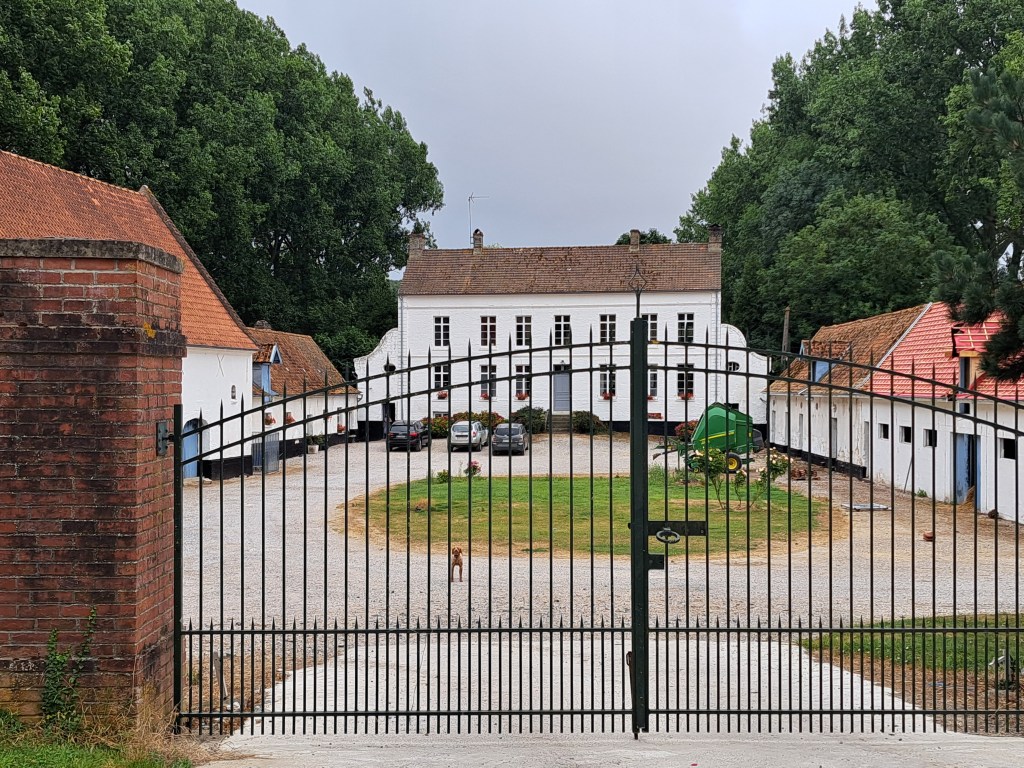
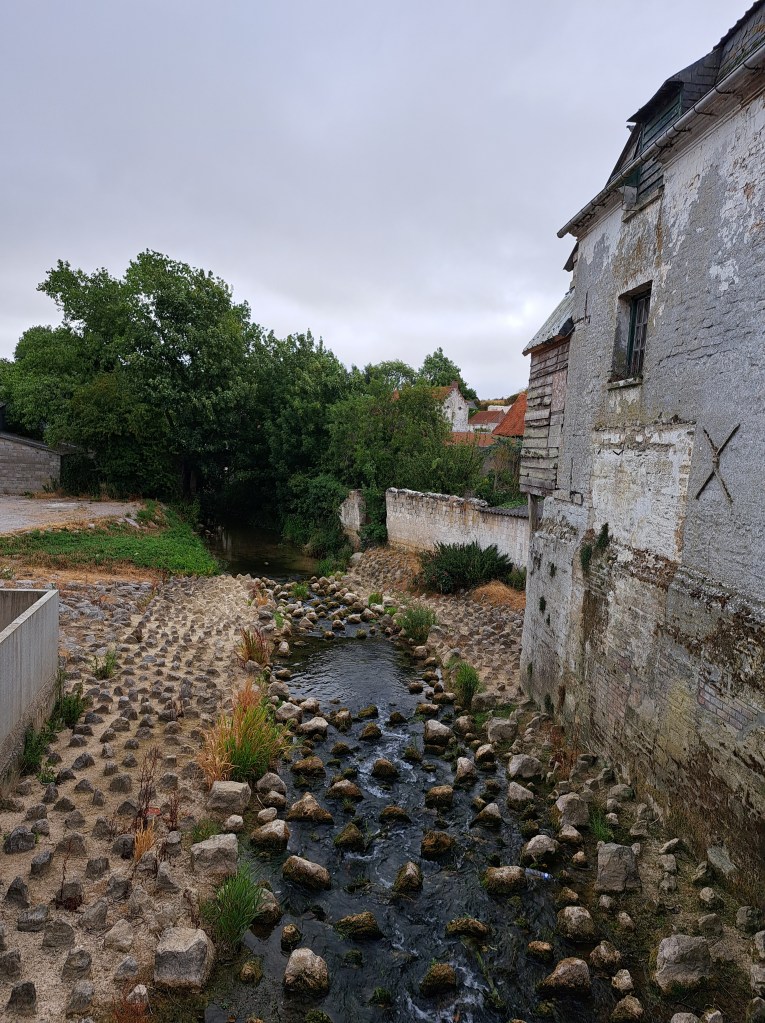
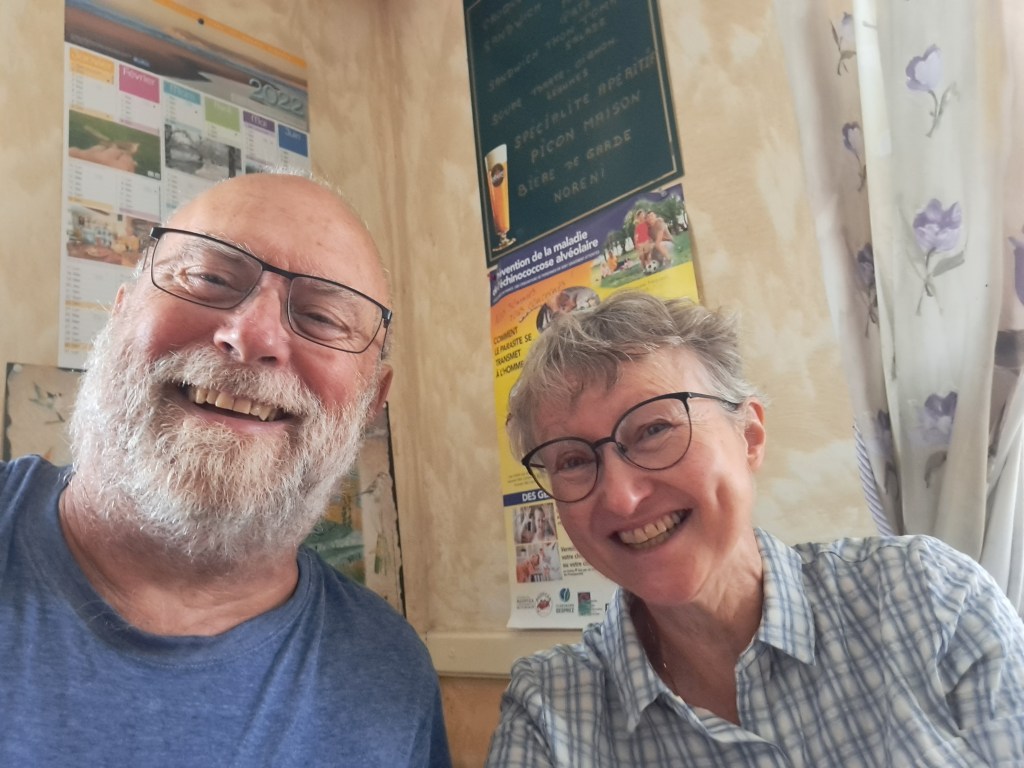
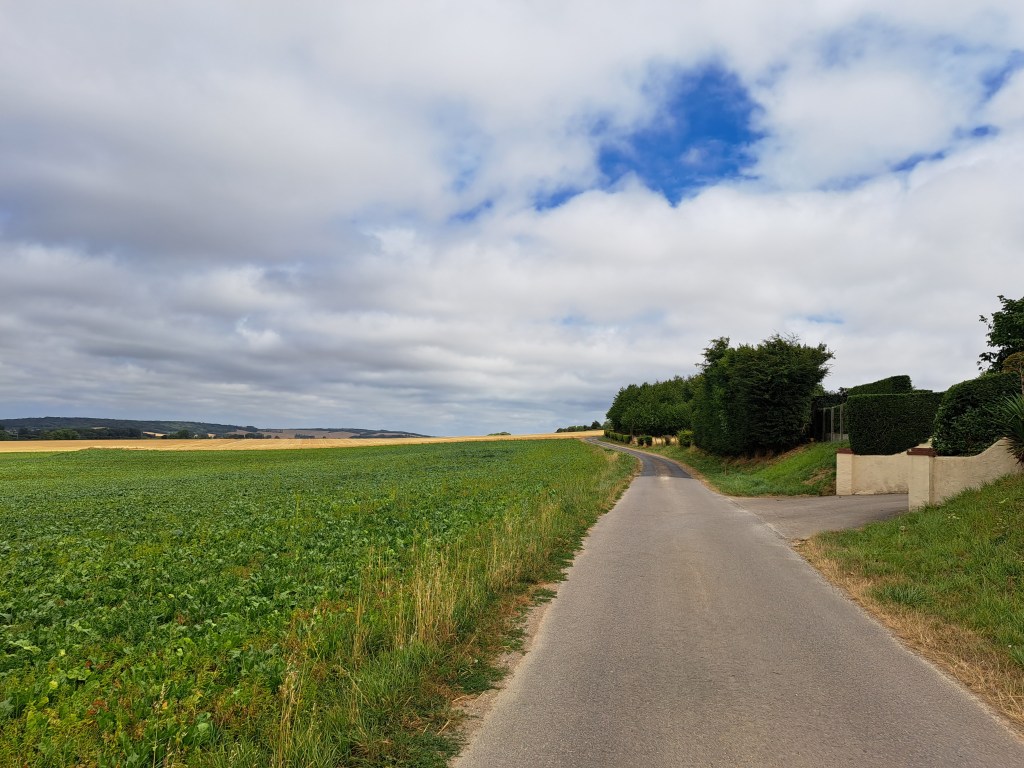
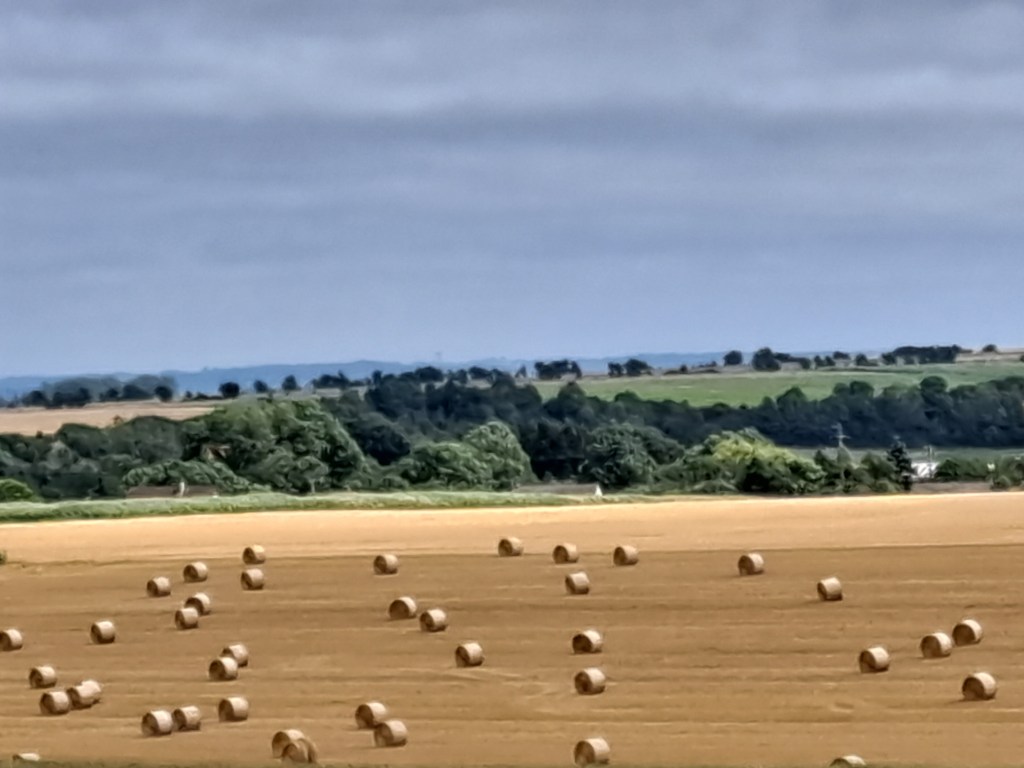
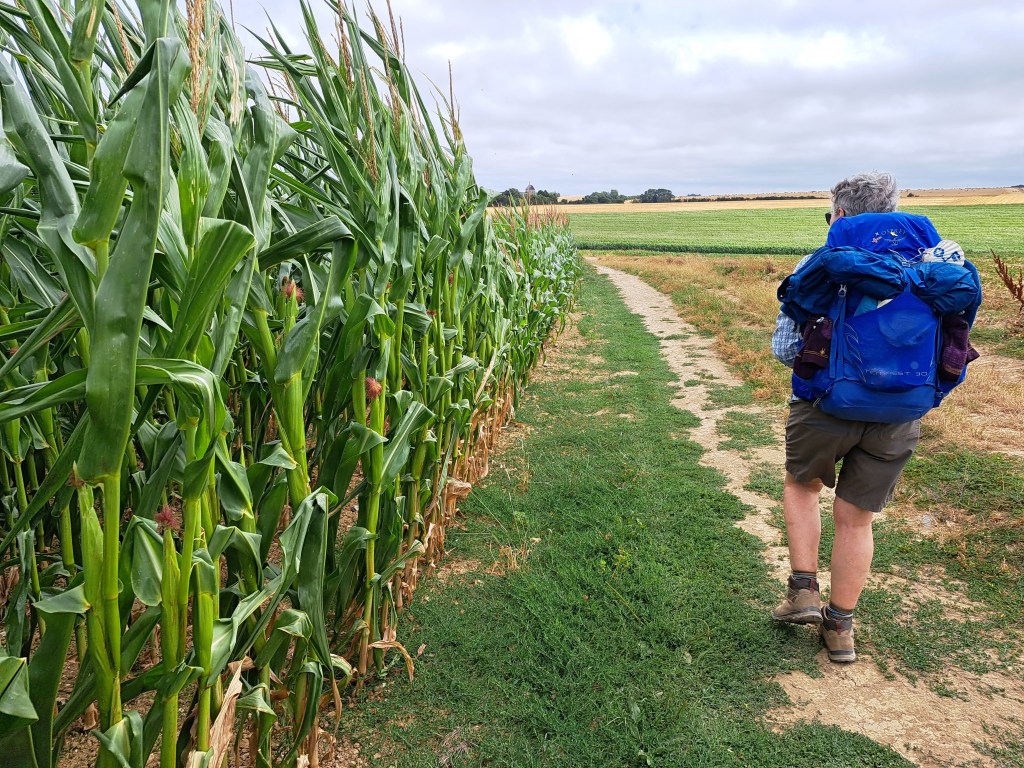
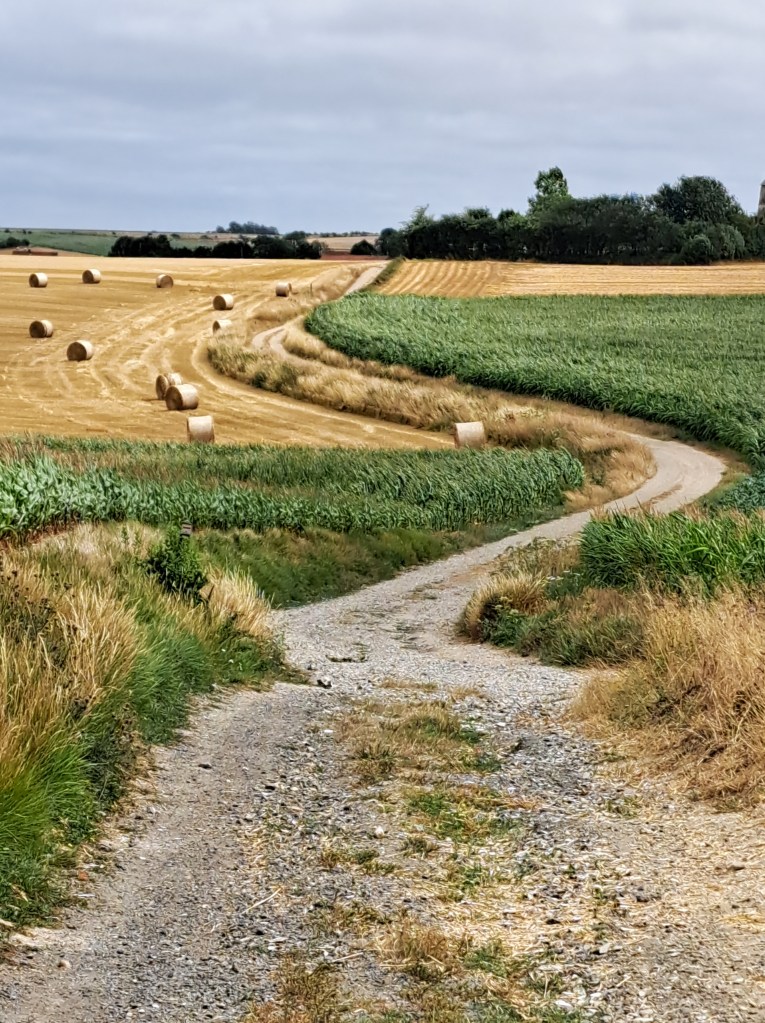
Here are some of the pictures. I couldn’t post many in the last blog and I now have so many, here is a selection of the past few days.
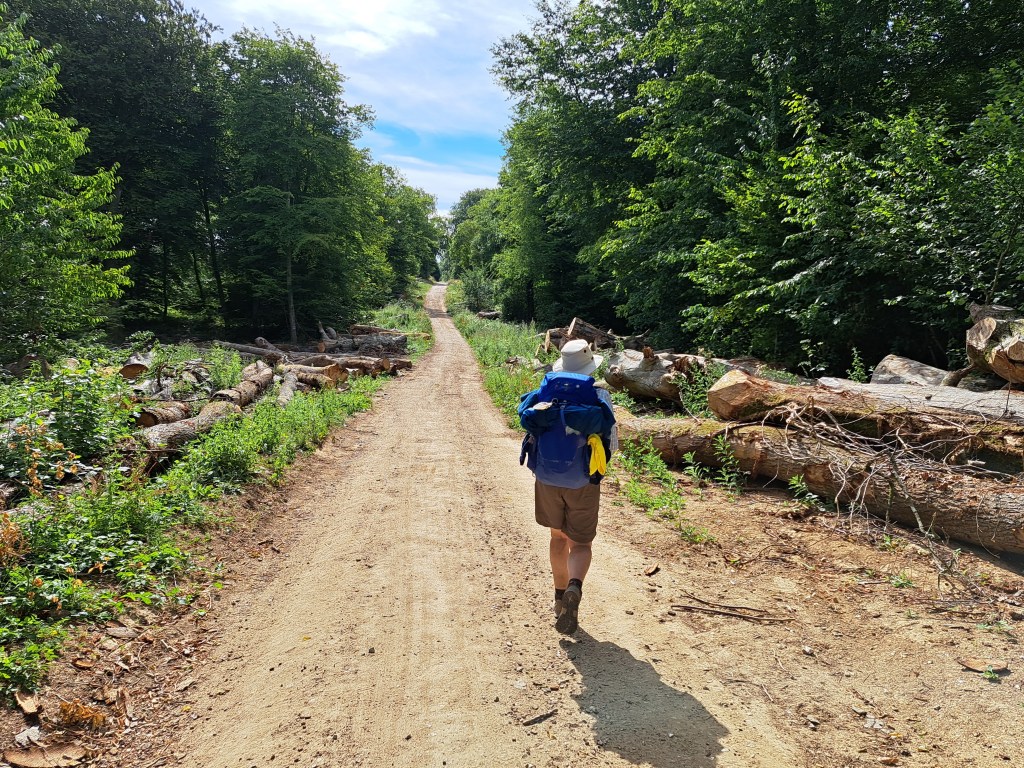
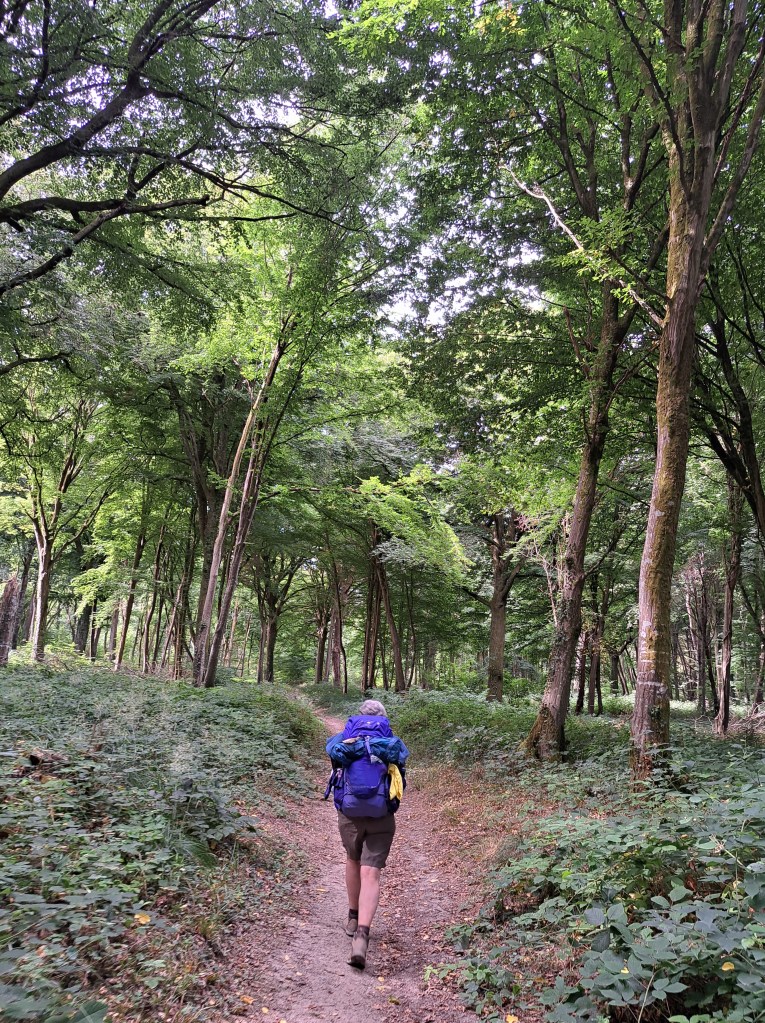
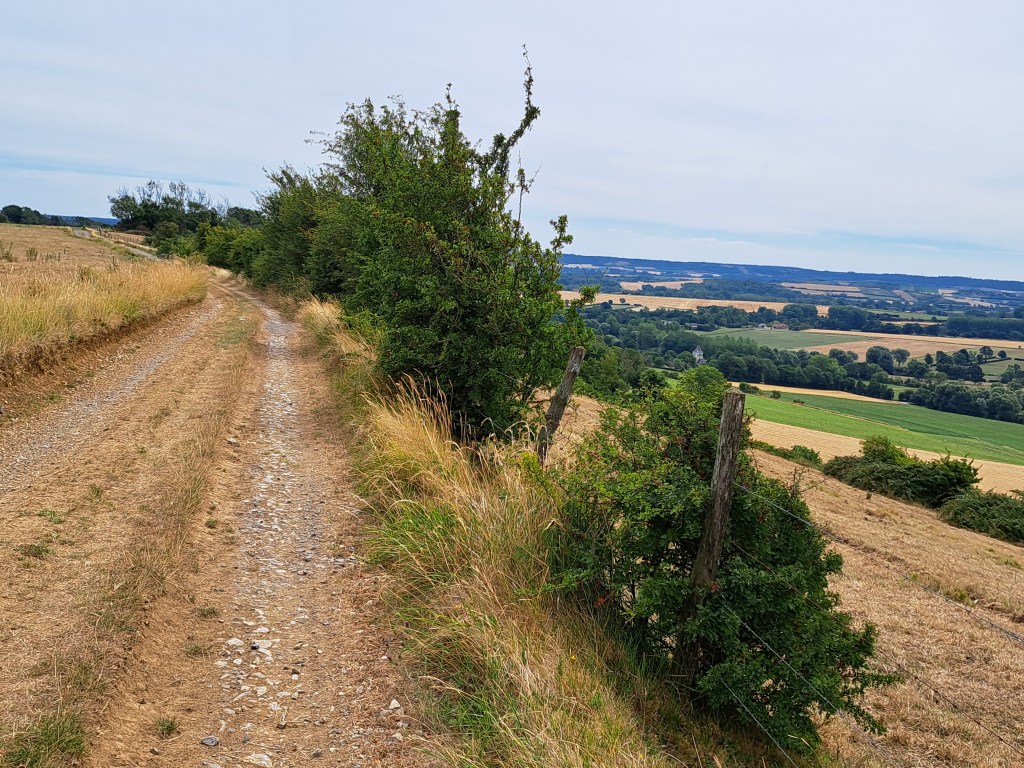
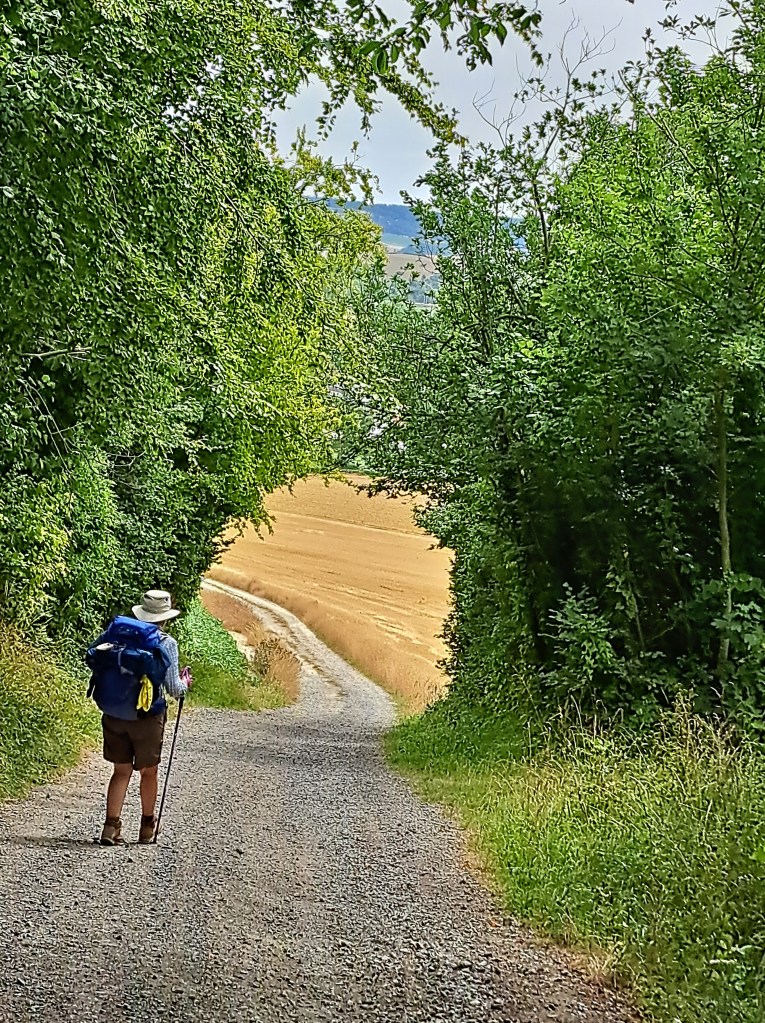


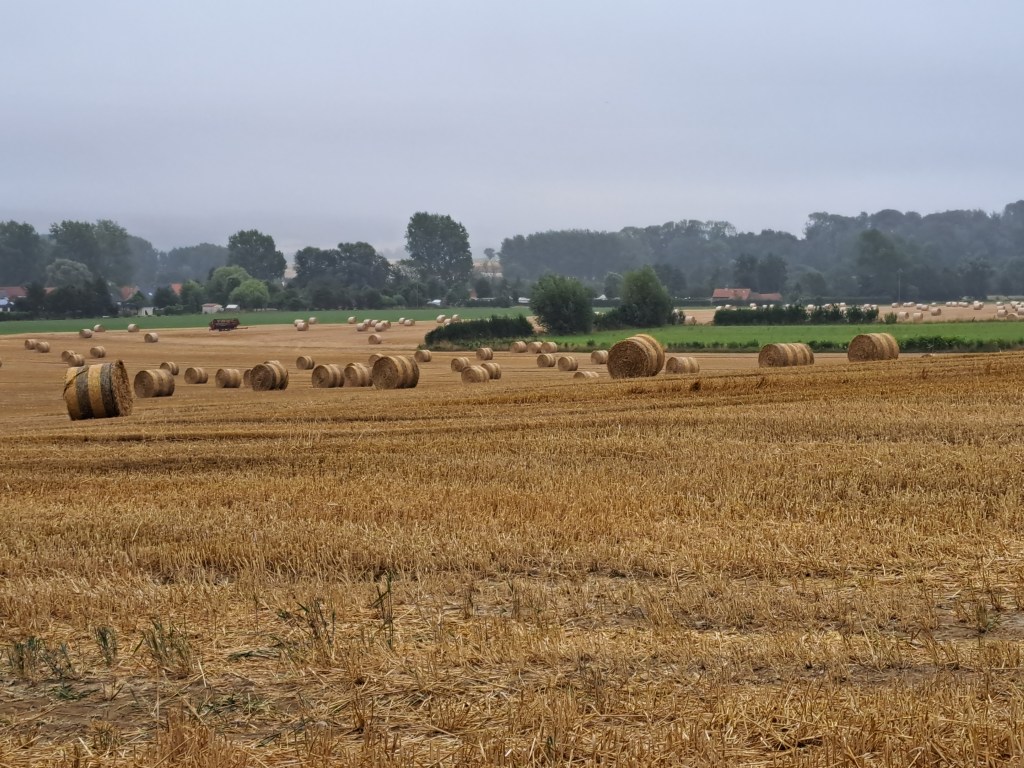
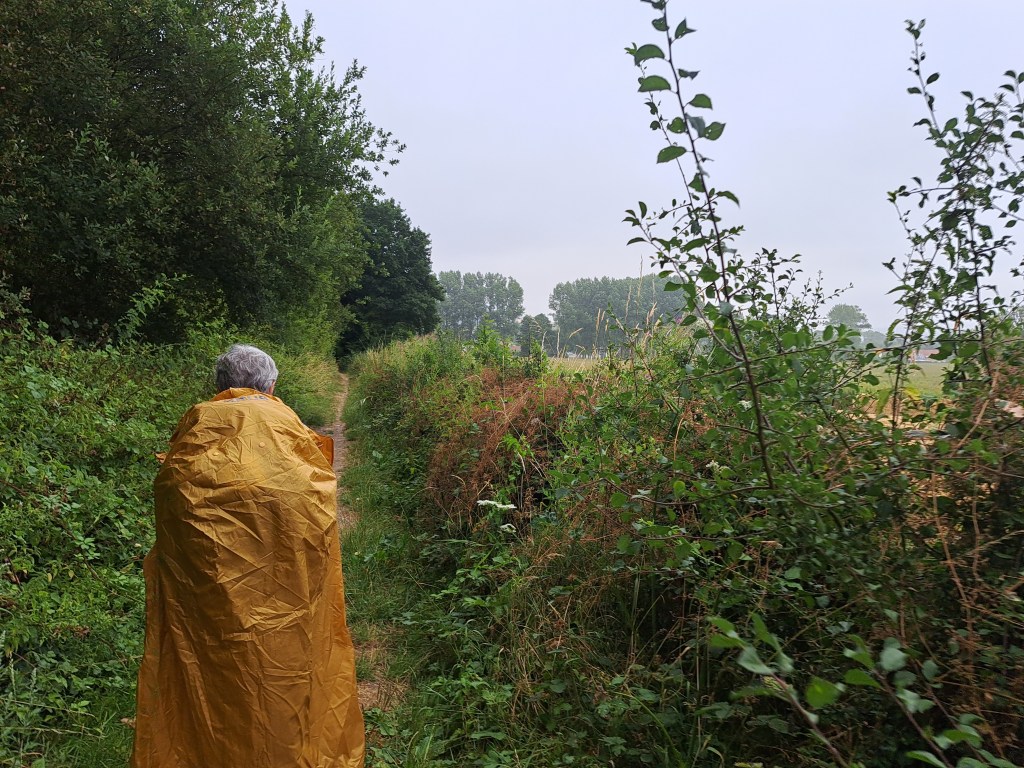
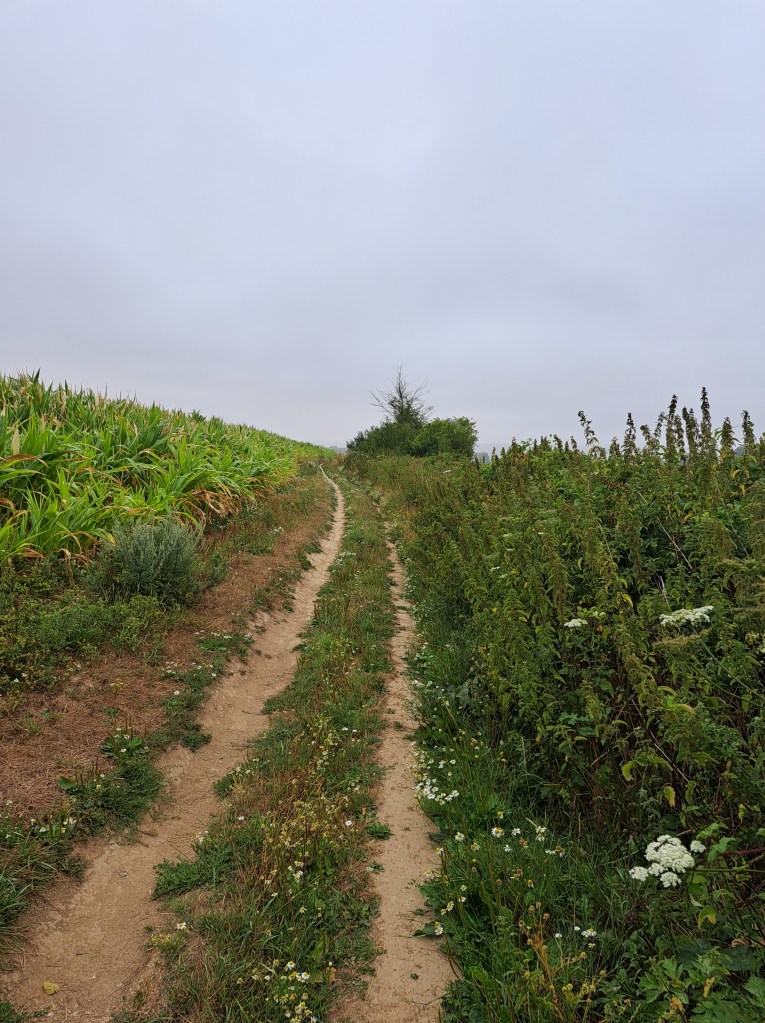
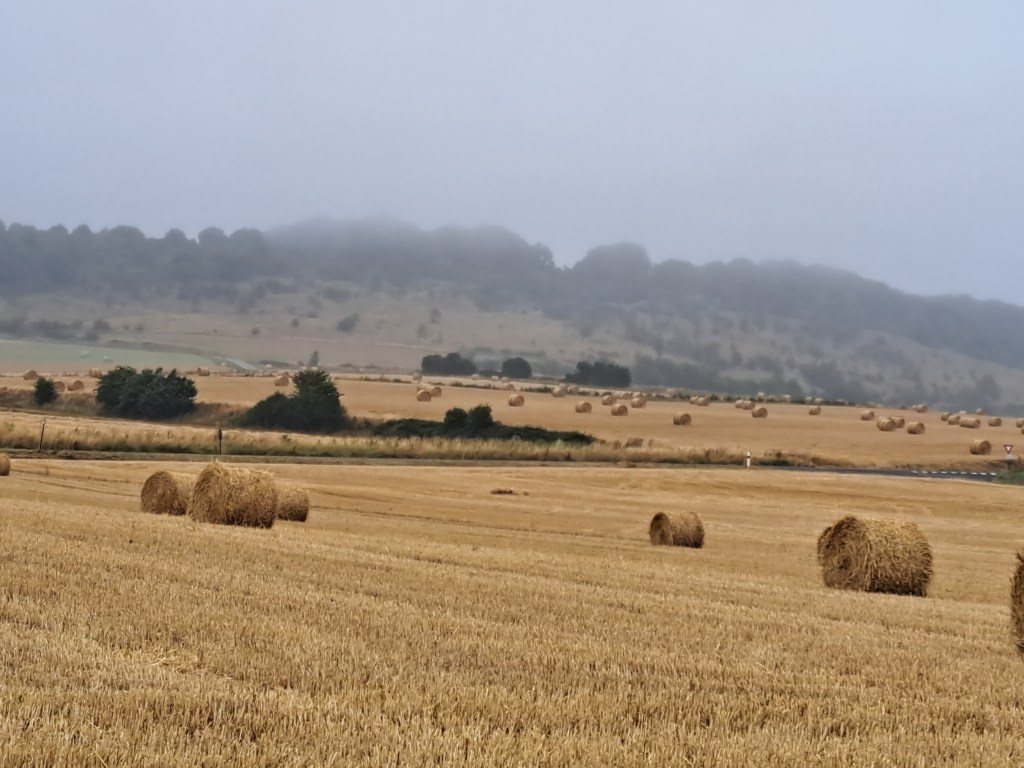

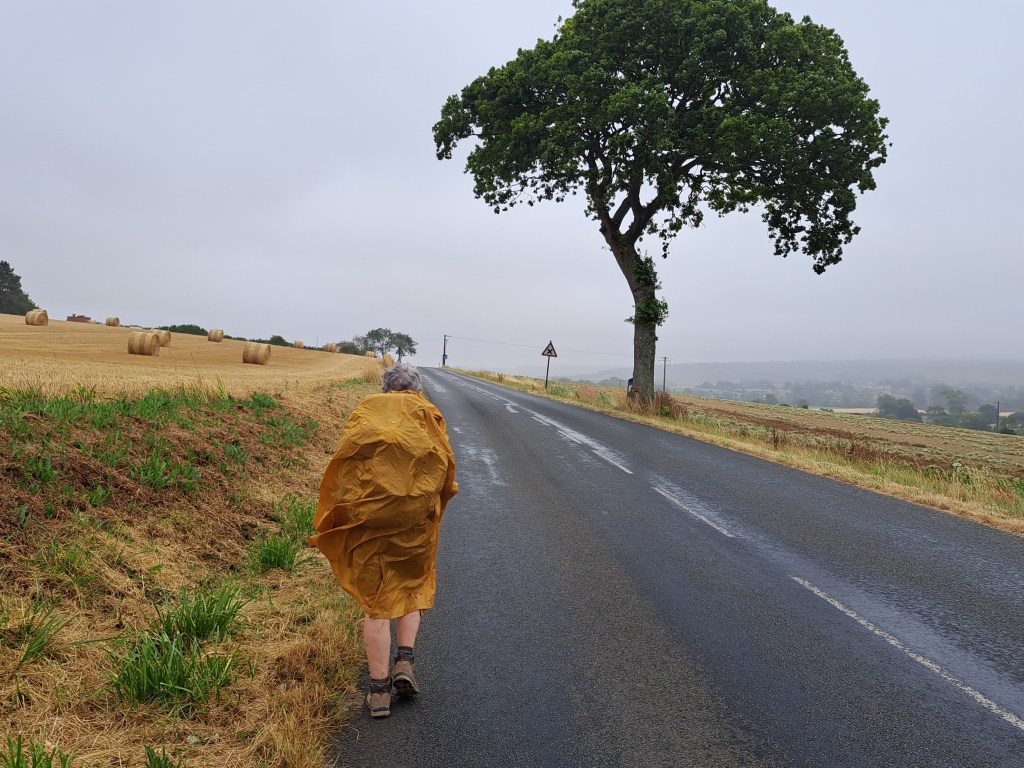
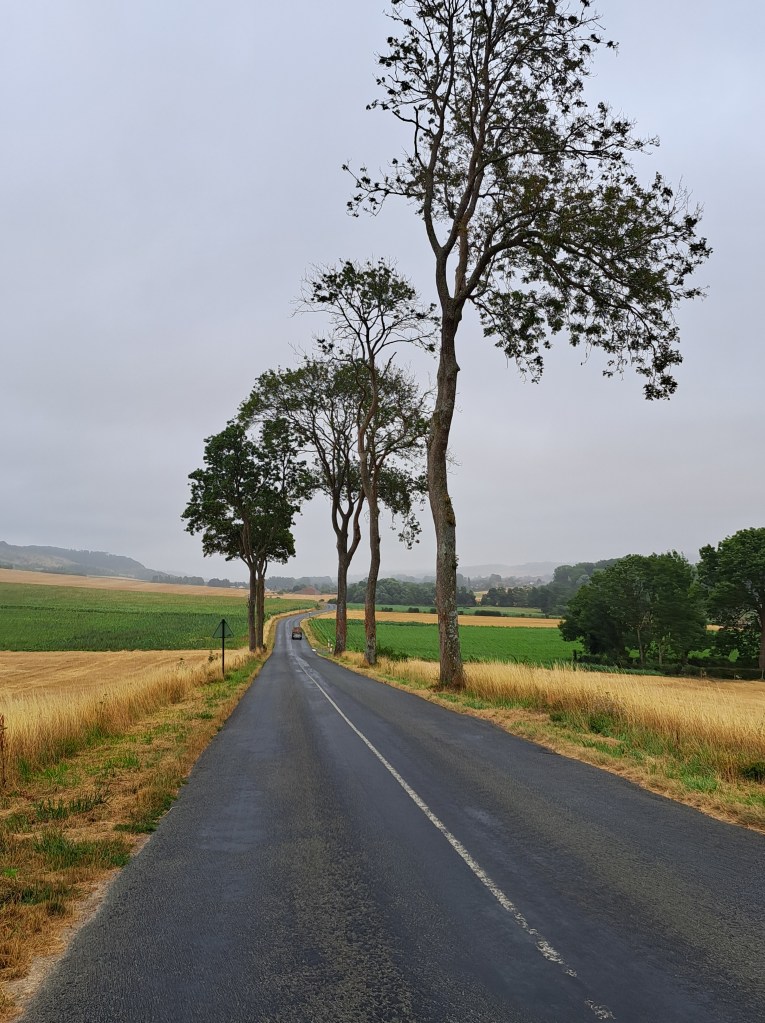
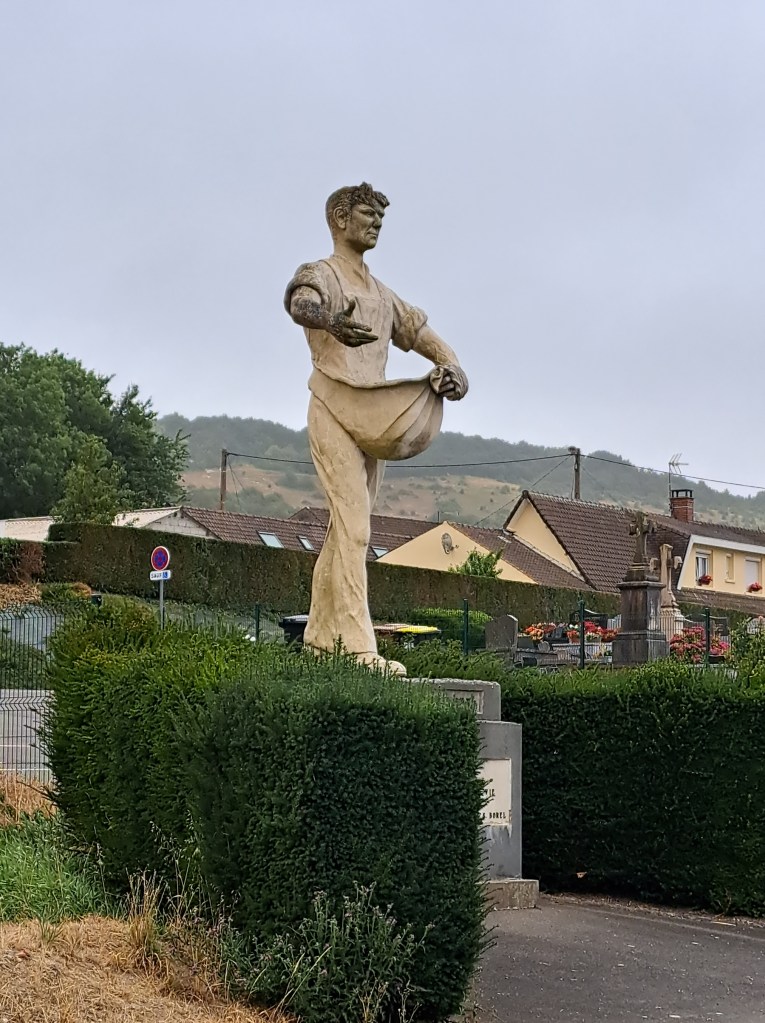
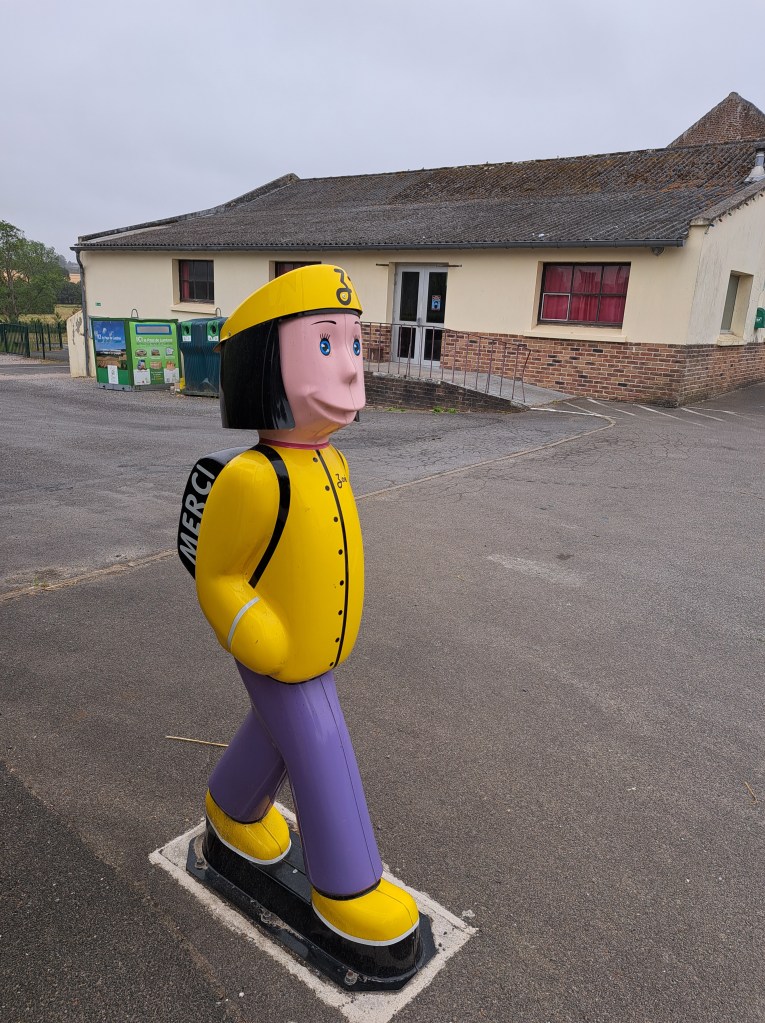
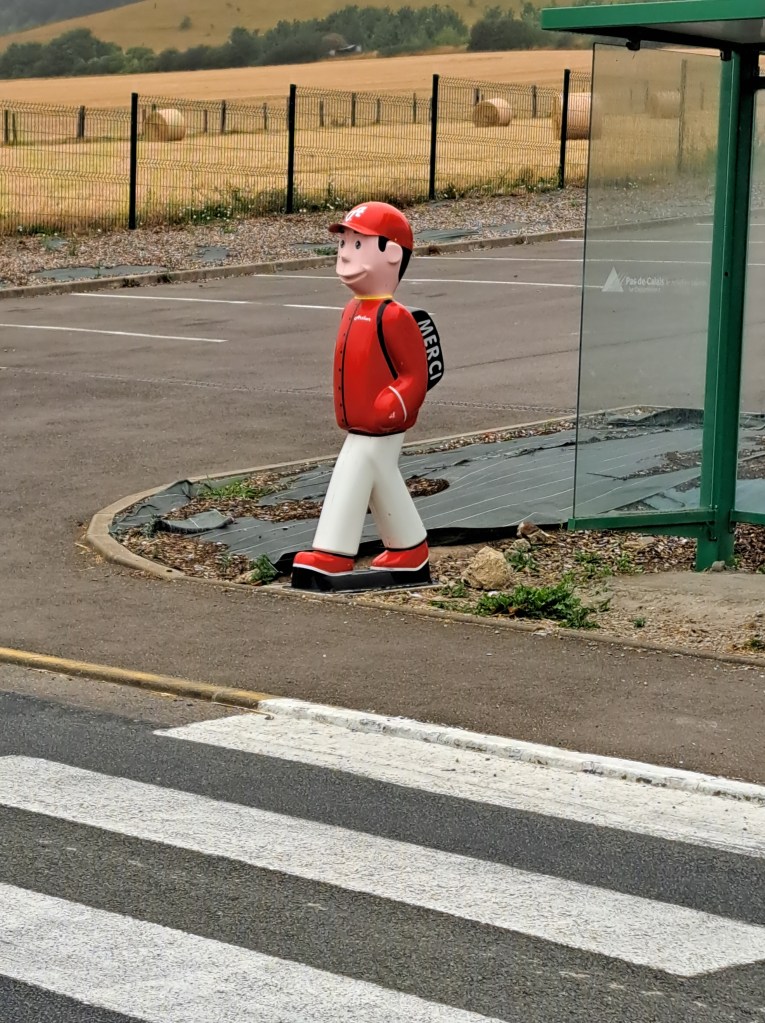
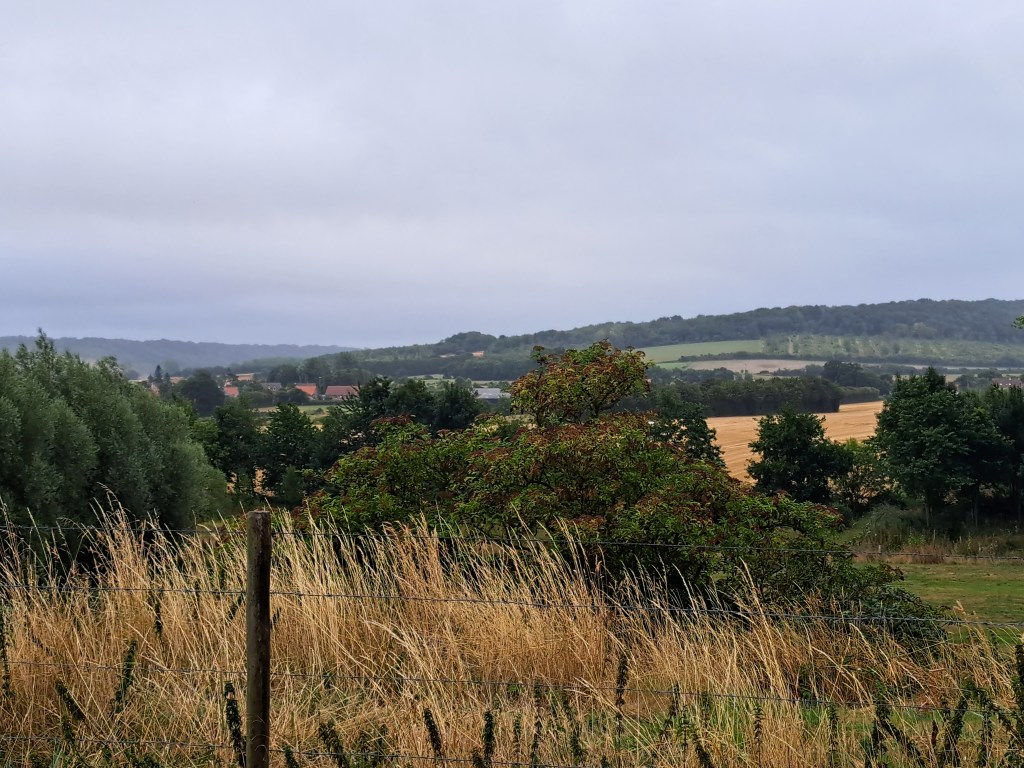
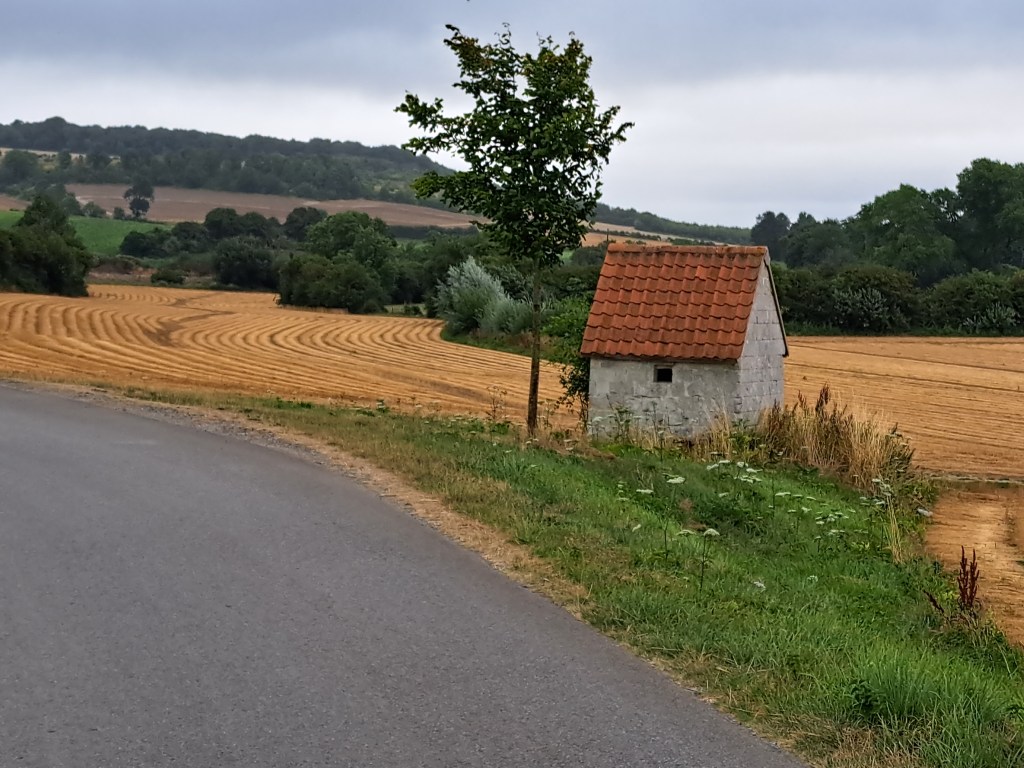
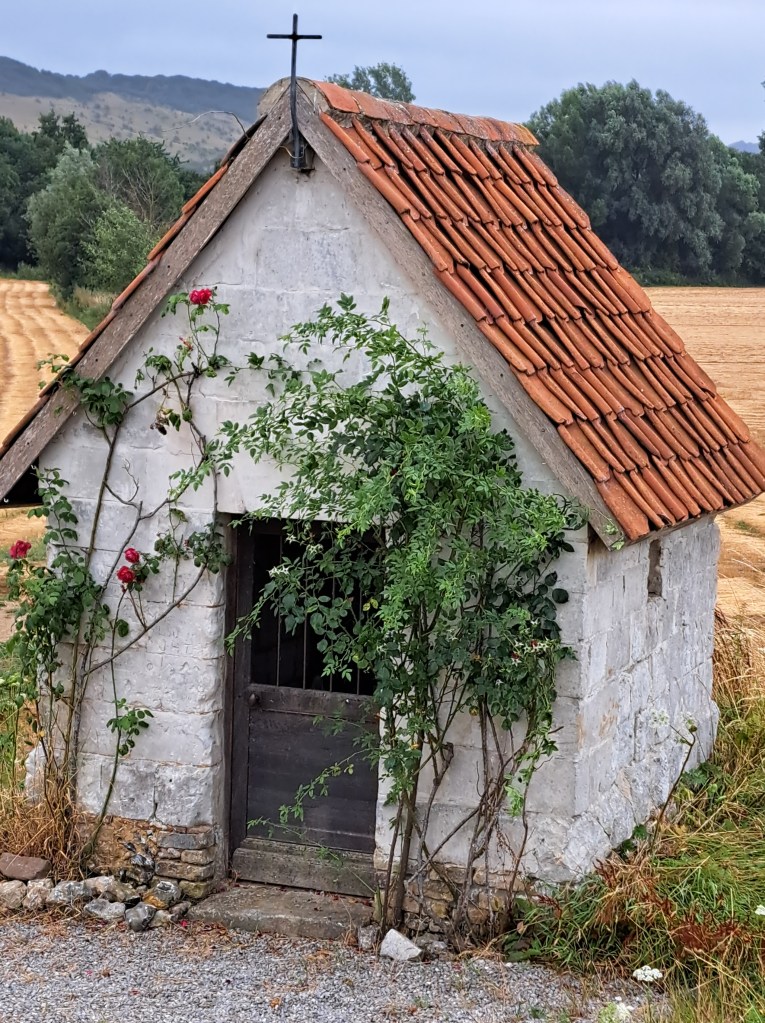


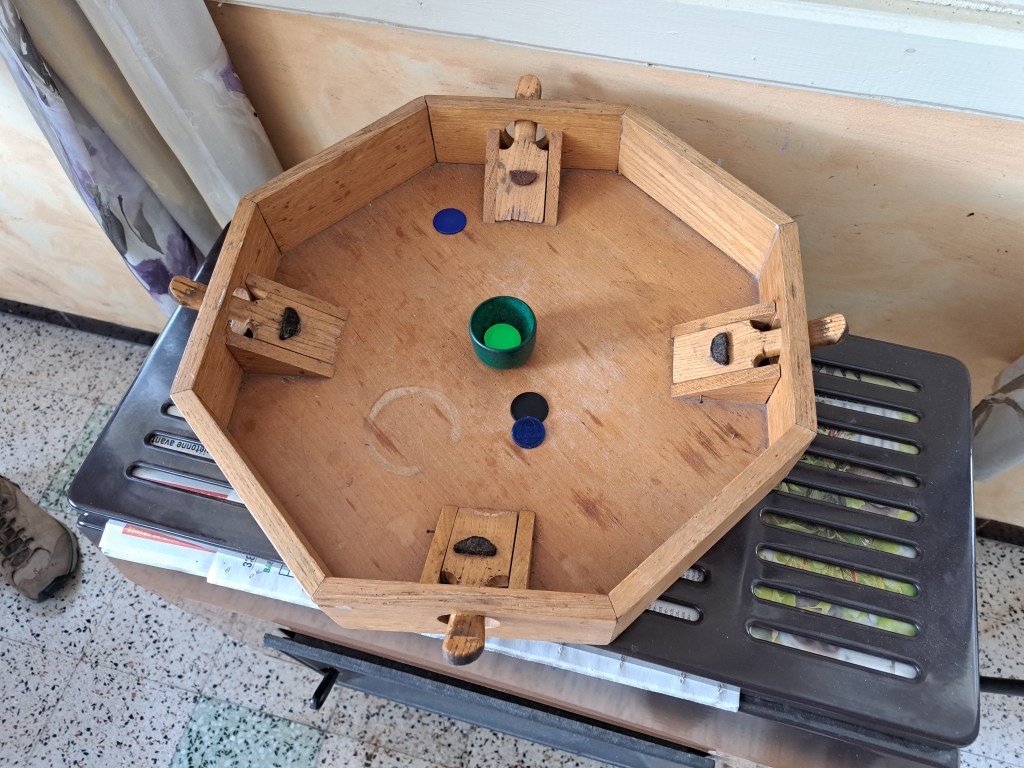
French tiddly winks 




-
Getting to grips with France
This was written on Day 13 which was our third day of walking in France.
On day 14 we now have wifi that might work!!!
I had been looking forward to the “stepping across the water event” … into a new land, and it has been an interesting experience.
Calais is not Dover. Yes, there are poor people here and yes there are refugees… but it is a far more prosperous and positive place than Dover. Here there is very visible investment, very visible support for both the economy and the infrastructure. It is a seaside resort, it is a regional centre, it is somewhere that has been invested in, there are many shops, many restaurants and cafes, there are loads of hotels and the museums/historical centres have been recently invested in..
None of the above appears to be the case for Dover, which is a place that deserves all of the above.
So, we stayed the night in Calais then walked out across the town and onto the shore. We watched the ferries come and go as we walked along the sea front, then we moved in land to avoid both walking on loose sand (with heavy packs on) and walking over ancient dunes that are marked as the route but did not look like they were yet properly protected from erosion…
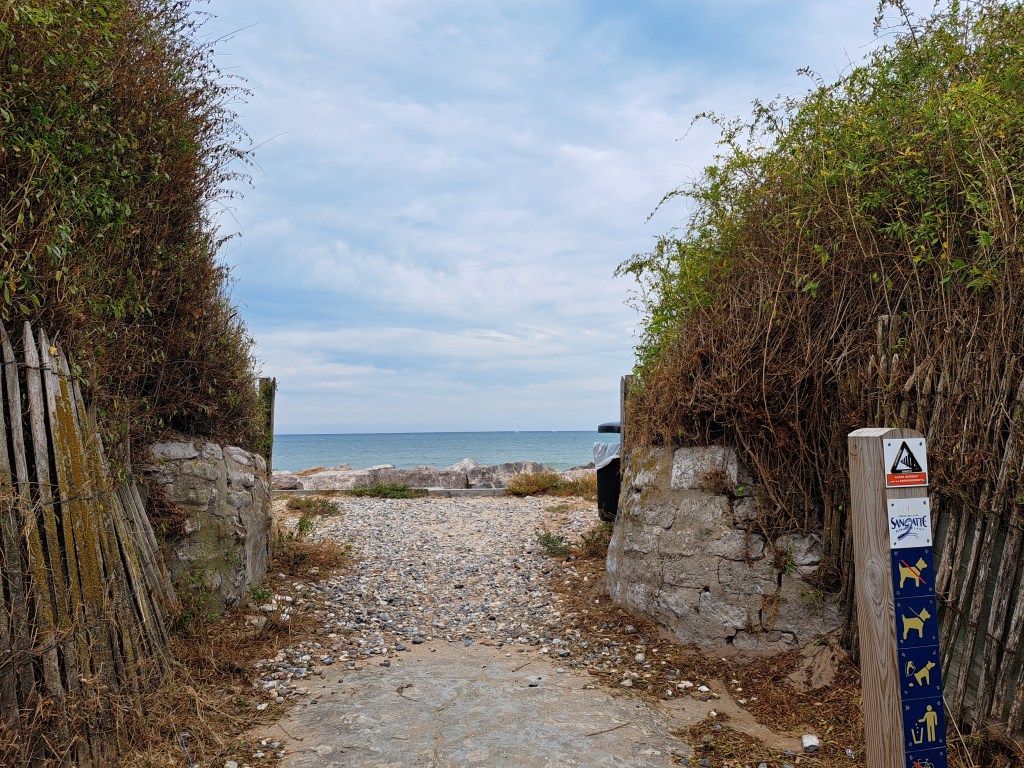
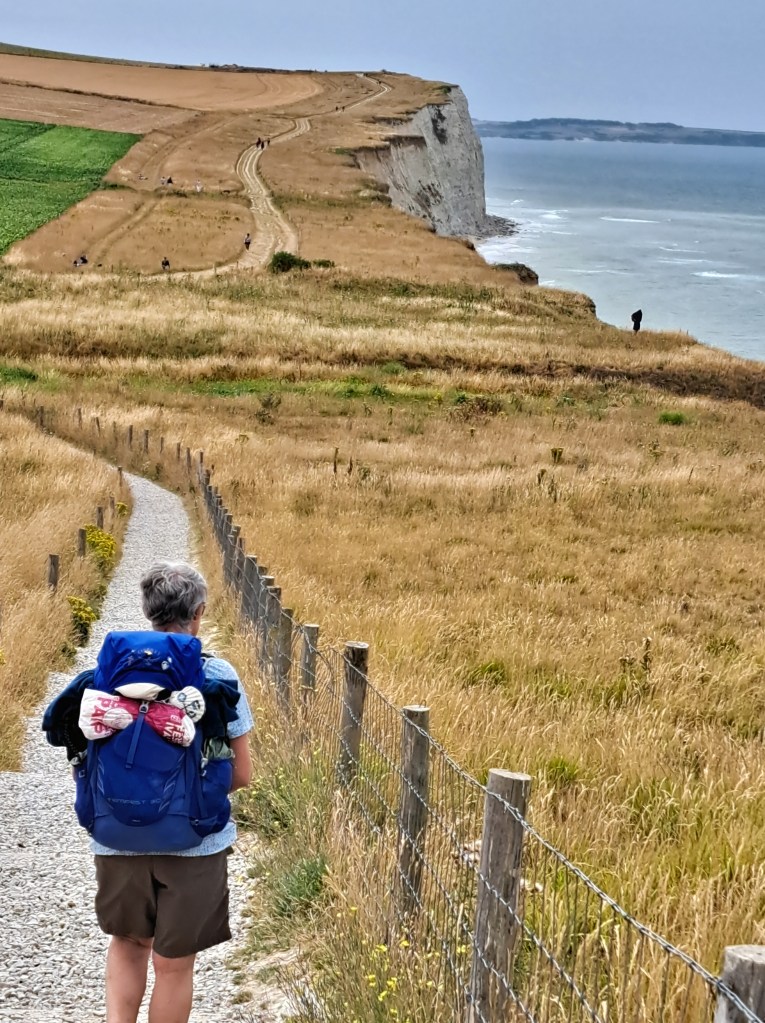
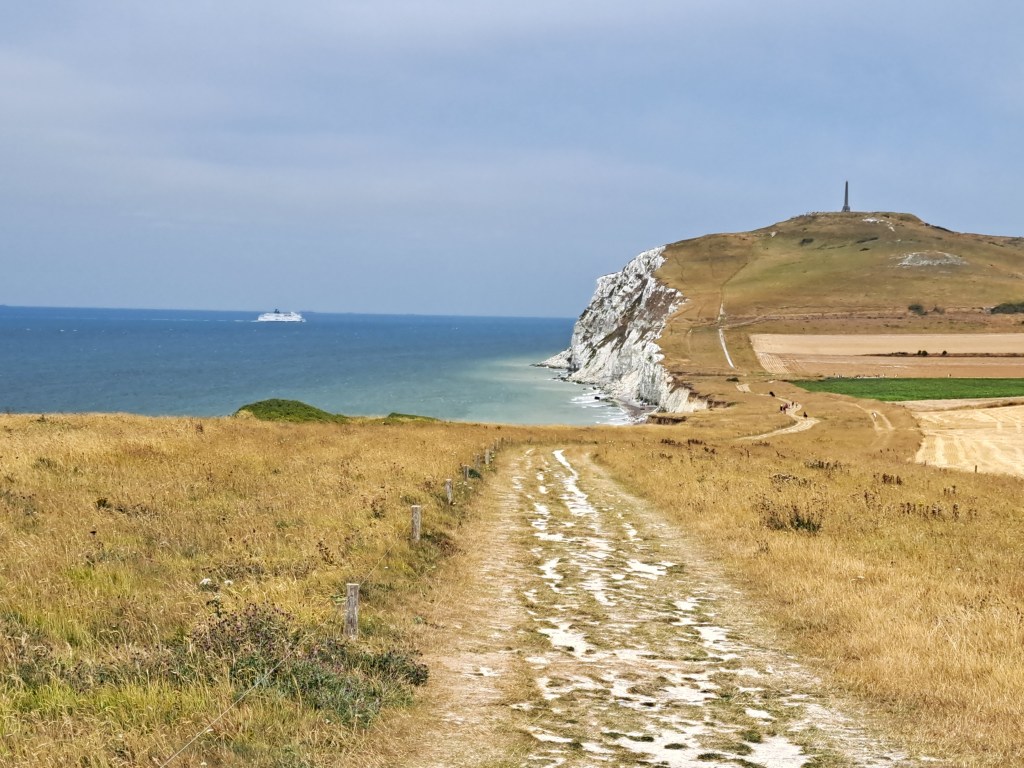
We re-joined the route on the cliffs, which was spectacular, and then finished the walk into Wissant on the beach, using the hard sand below the high tide line. Loads of people were doing exciting wind surfing, para-surfing and so on.
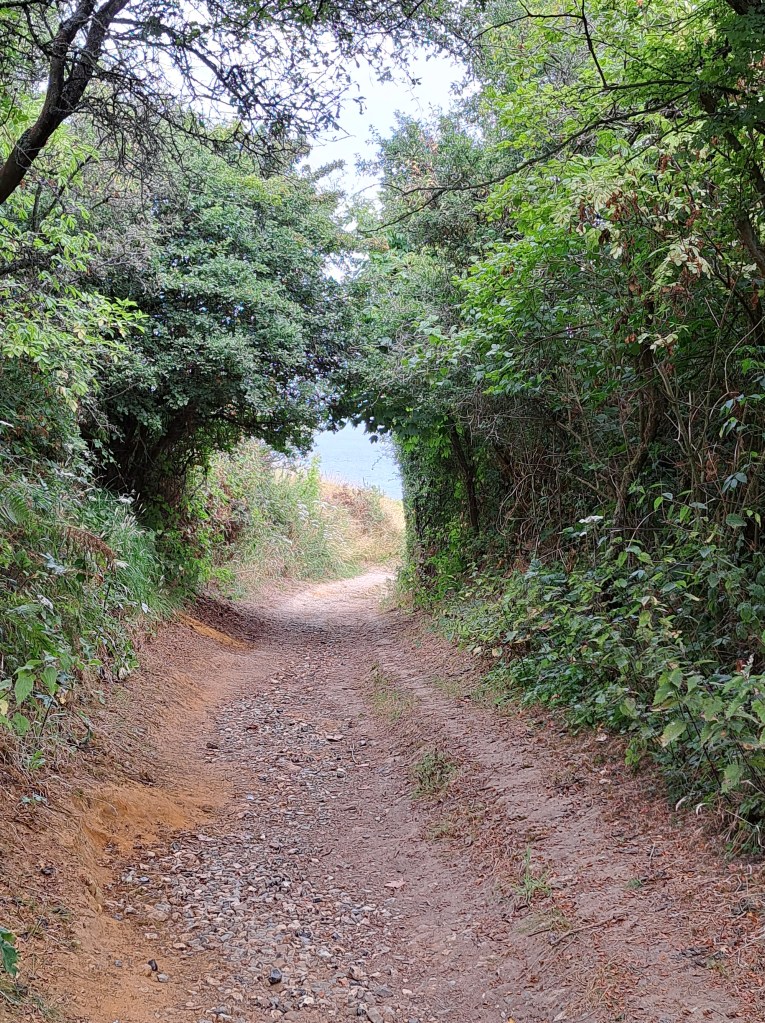
Then, today as yesterday, we were walking in rolling landscapes with lots of different types of walking surface. Most guides don’t tell you about this. They miss out that the path is totally crap for the next several miles. Sometimes it is because the guide does not find it a hardship. Sometimes it is because they are focussing on the actual route and don’t think that the condition is important. But, as with yesterday, there were times when the path really was rubbish, uneven, very stony, and so on.
The landscapes, as always, are the real compensation and the joy and keep us just walking on, into the new landscapes, this experience is better than any discomforts that these routes present.
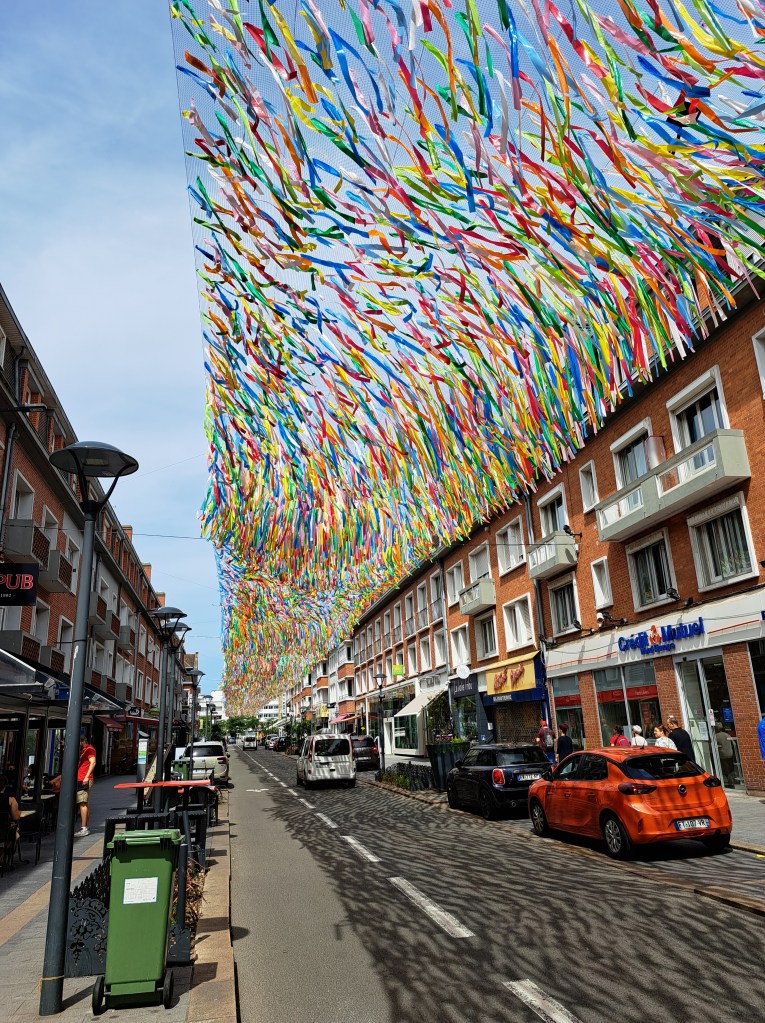
In Calais, we had some great bits of art, including lots of street art, and the churches and villages are now giving us surprises and rewards as we go.
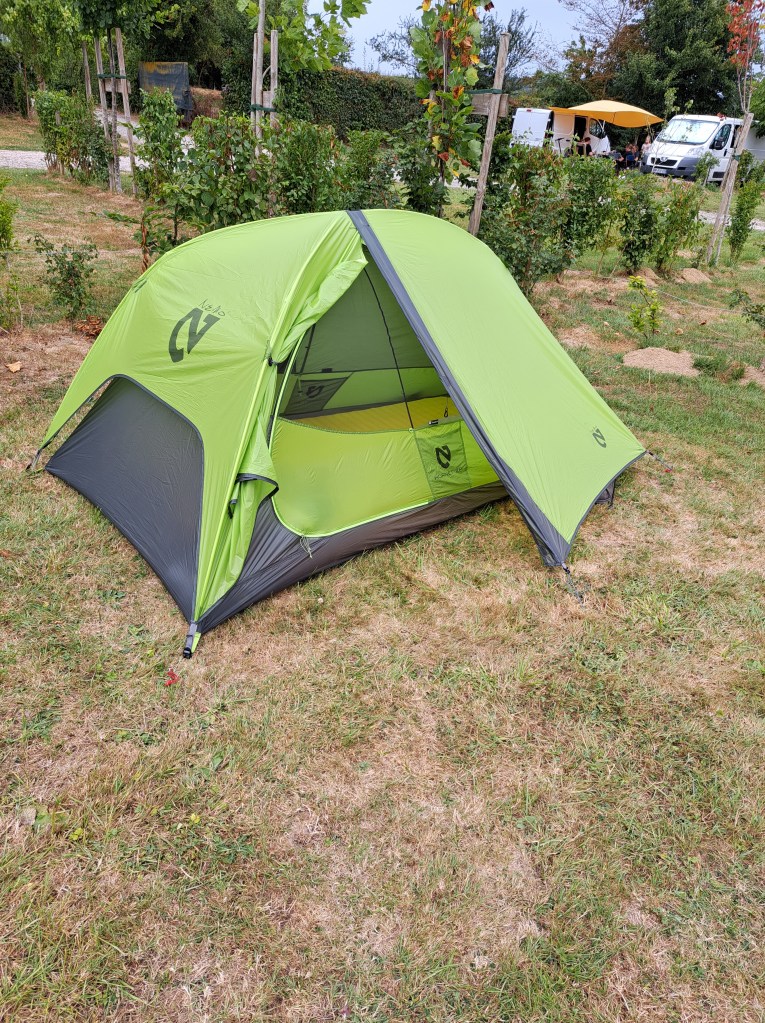
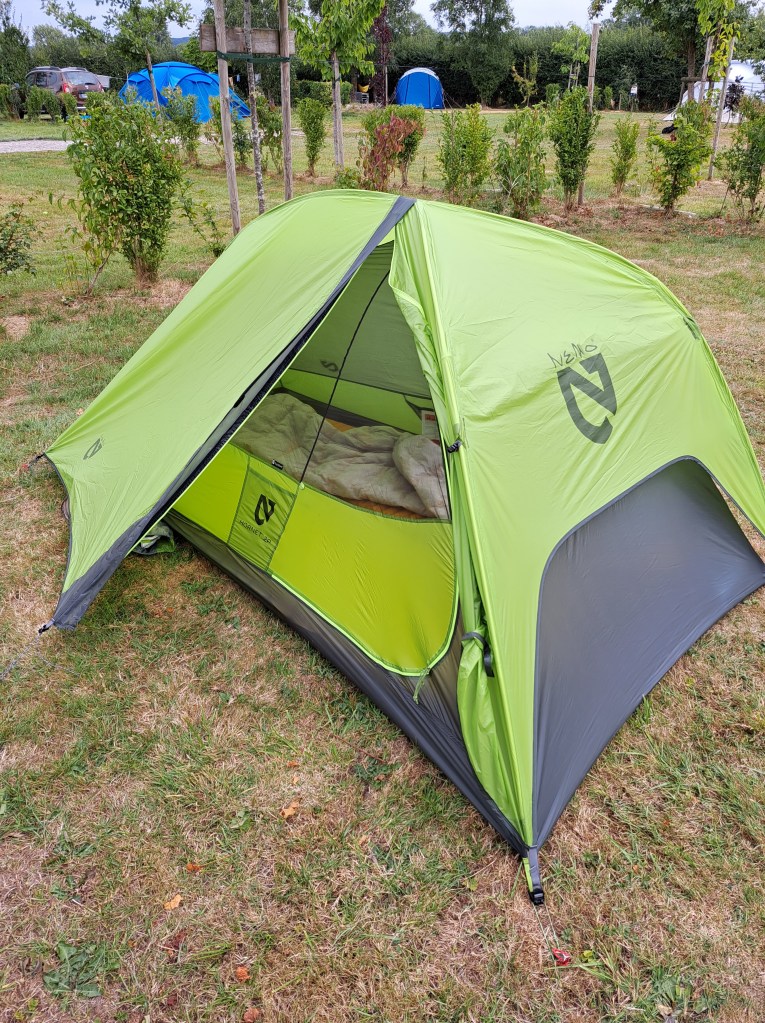
Wissant was the seaside town we walked to from Calais and then we walked on to a campsite just outside Guines. The campsite was good and it was our first night “under canvass”. The tent went up easily and everything fitted in the tent or under the flysheets and the restaurant connected with the campsite was a Logis hotel/restaurant, so the food was excellent.
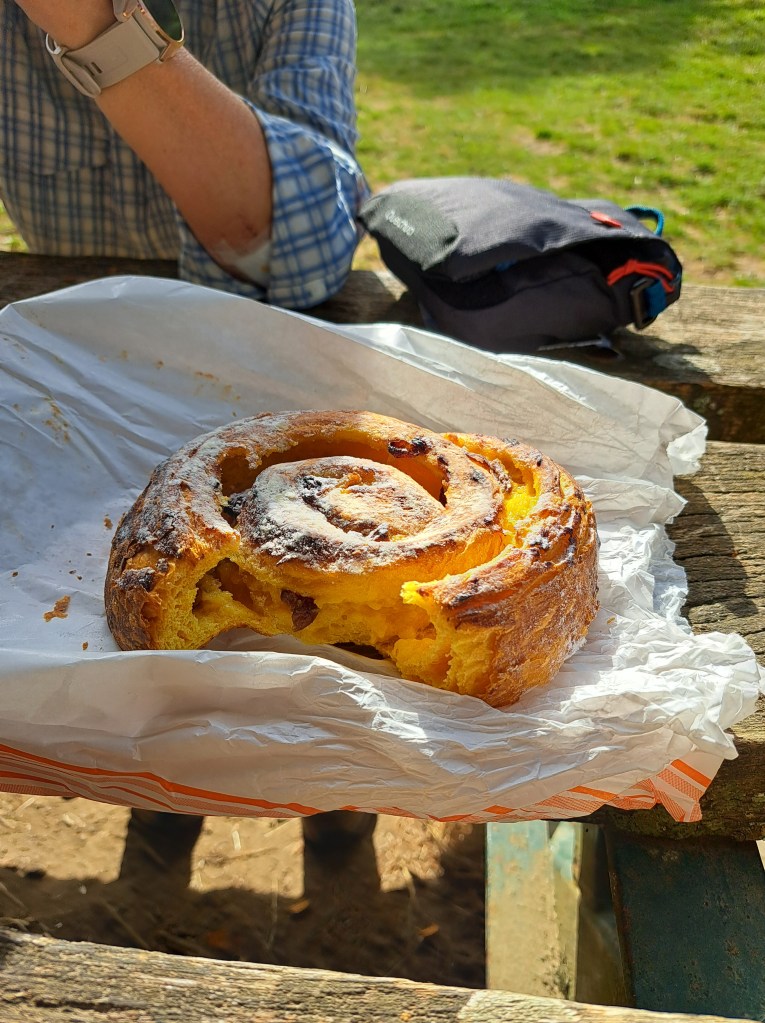
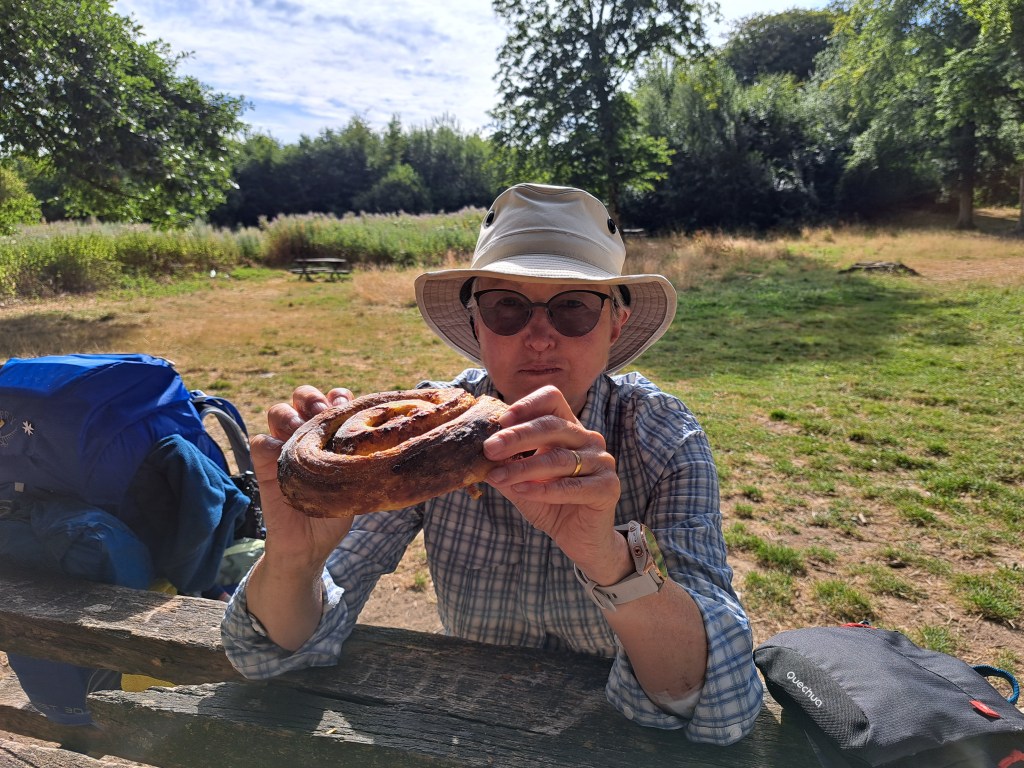
We left early today and walked into the town, which is famous for being the place where Henry the eighth had the over the top meeting with the King of France at the “field of the cloth of gold”. We managed a stop at a boulangerie (escargots and a baguette – escargots are large pains aux raisins), a stop at a fruit and veg place (two tomatoes and an apple) and a tabac (two black coffees and a sit down.
Several kms later we stopped at a picnic place in the forest and ate some pastries….
After long stages in forests and a few bouts beside large cultivated fields we found ourselves on the edge of an escarpment with great views along the valley below. So good to have a broader view of the world after hours enclosed in forests. I love forests and find them peaceful and quite mysterious, but the stepping out to a wider vista was very satisfying. I suppose the fact that I had been suffering from the very course and uneven paths liberally strewn with flint nodules and sharp, broken shards, helped make the break out feel so good.
After dropping steeply down to the valley floor we had to, of course, climb up the other side to enter Lique where the huge Church of the Virgin towers over the rest of the town. It is all that is left of an ancient Abbey. After making our visit to the church and failing to find a stamp for our pilgrim passport, we went to the bar almost next door for a rest and a well-earned beer.
There were some men sitting around inside. They were all drinking heavily, all were engaged in conversations across the bar to each other and to the woman behind the bar, and they were all very loud. They had the very strong, guttural accent of Northern industrial France and they were as cheerful as they were loud (and drunk).
We corrected their assumption that we were Camino Pilgrims (they assumed we didn’t understand them and were shouting at the bar woman. We also explained where we were going instead, which raised some additional excitement, albeit briefly before returning to football and agricultural issues.
It turned out that, because the church was not attended, the powers that be had given the woman at the bar the stamp that should have been in the church. After quickly searching for the stamp, she happily stamped both of our pilgrim passports but didn’t seem interested in putting the date on the square alongside the stamp.
It turned out that her stamp had been assertively applied upside down.
We are at campsite number two and hoping that the wifi here actually works!!! (it didn’t…)
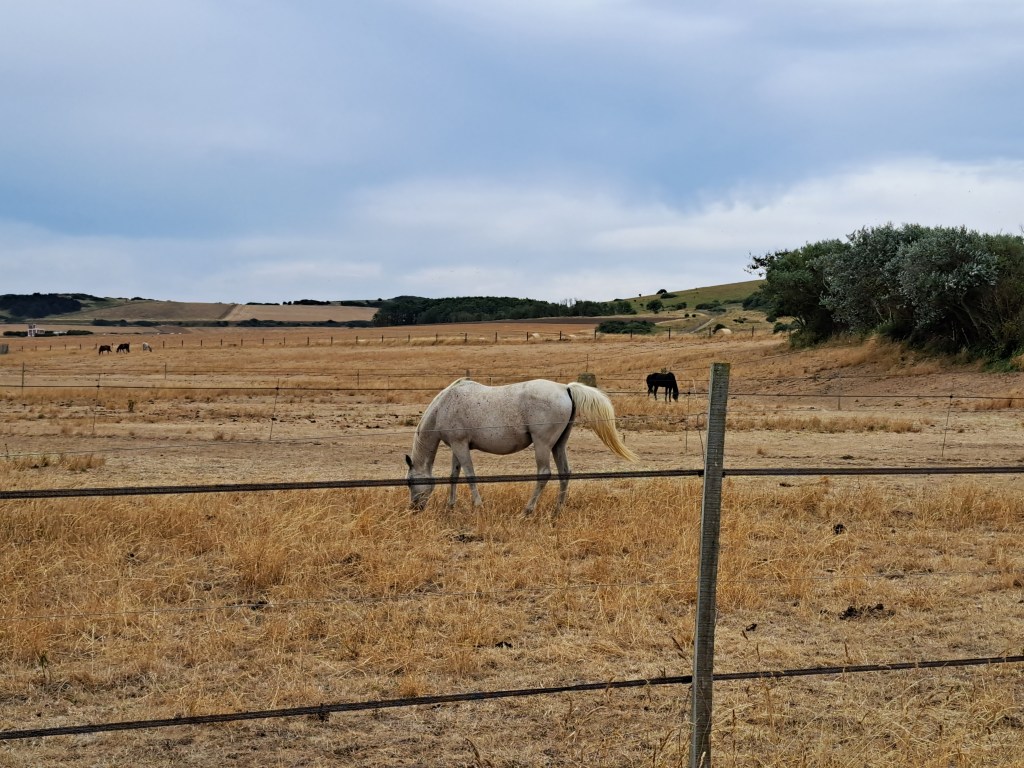
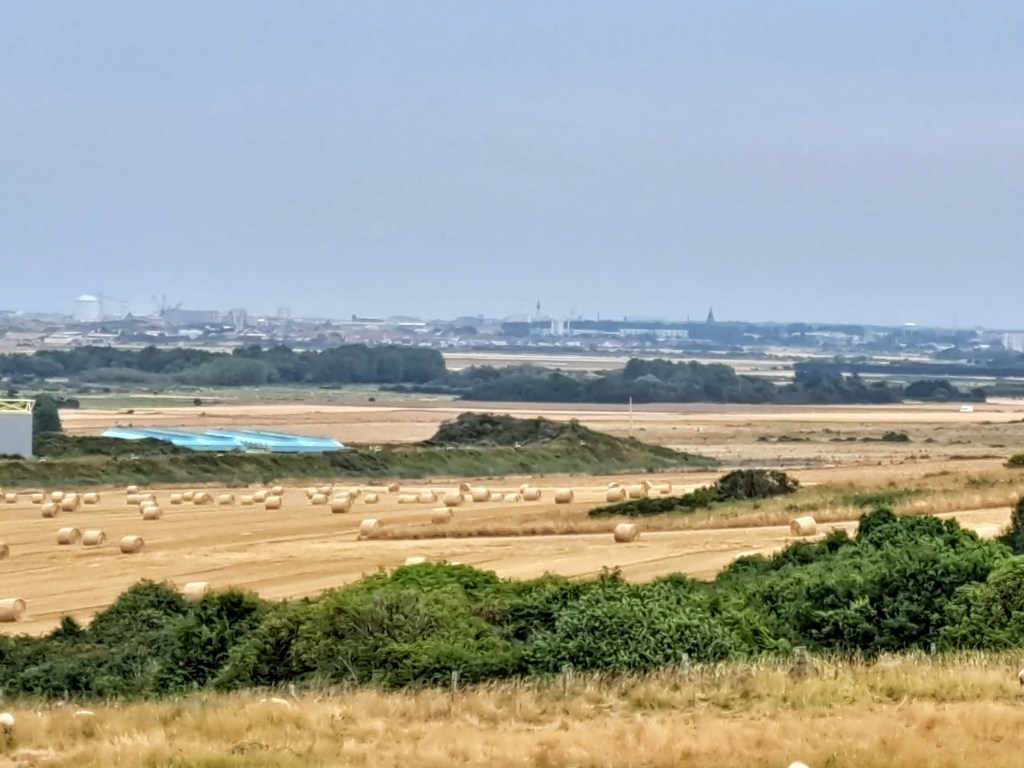
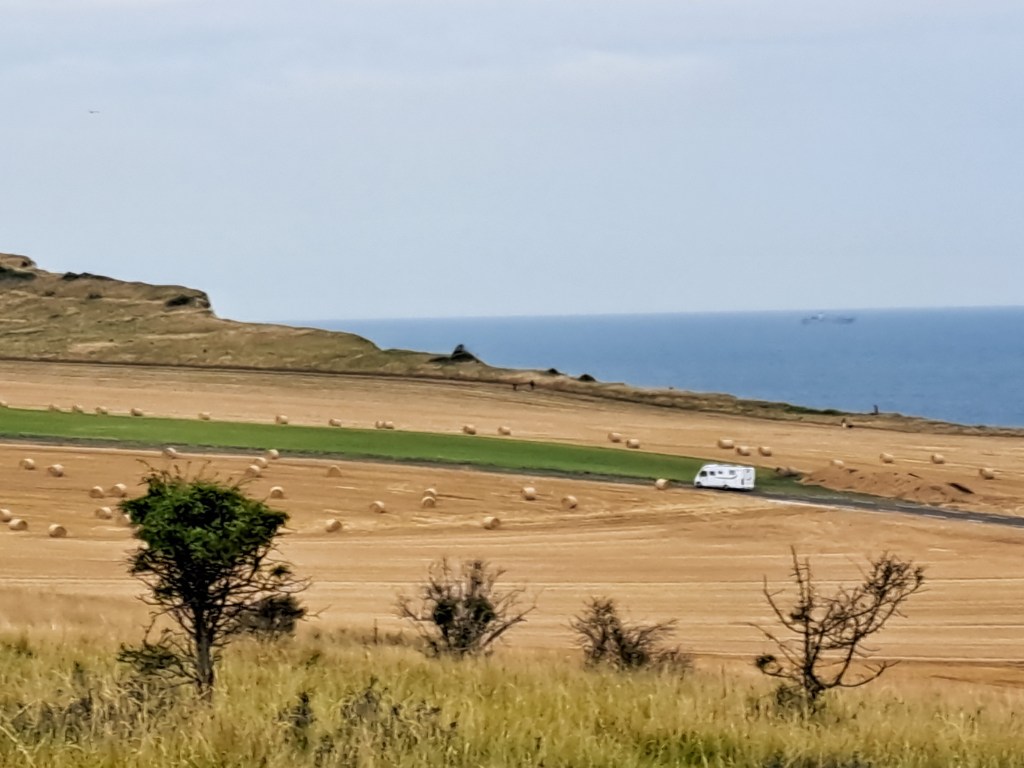
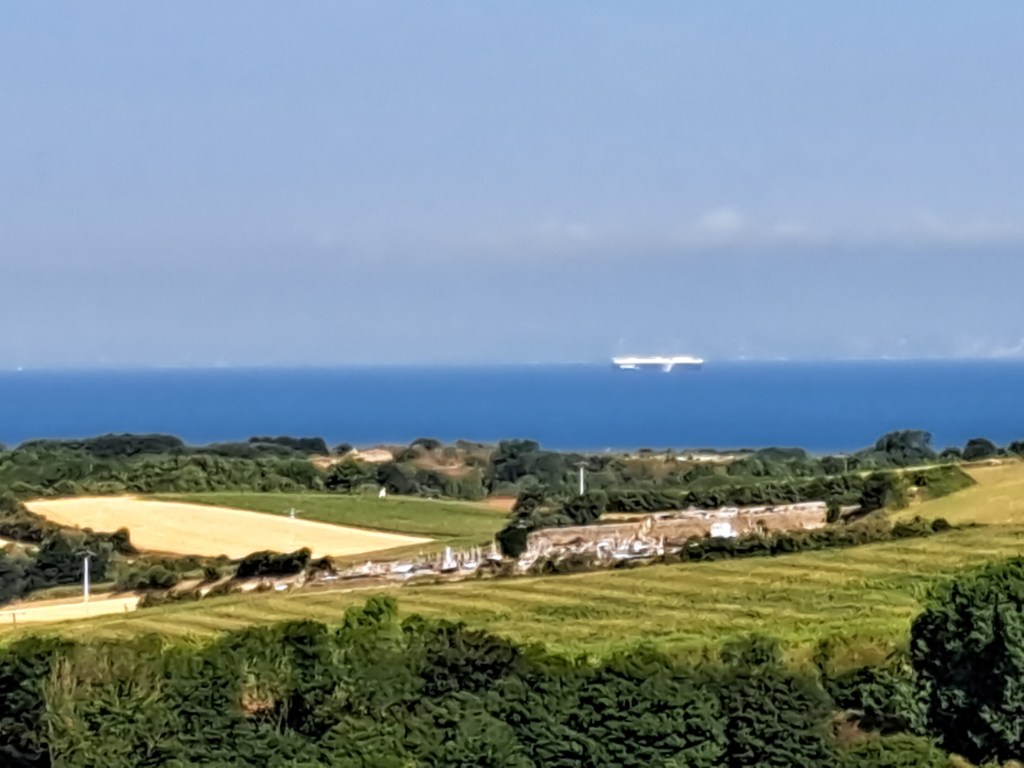
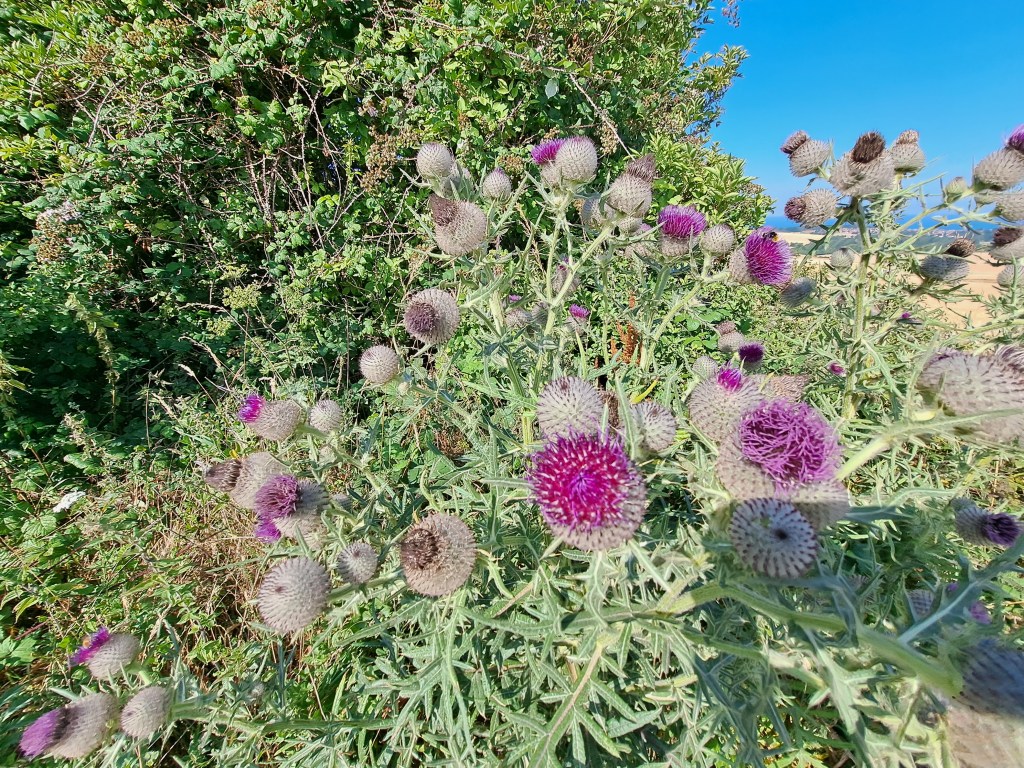
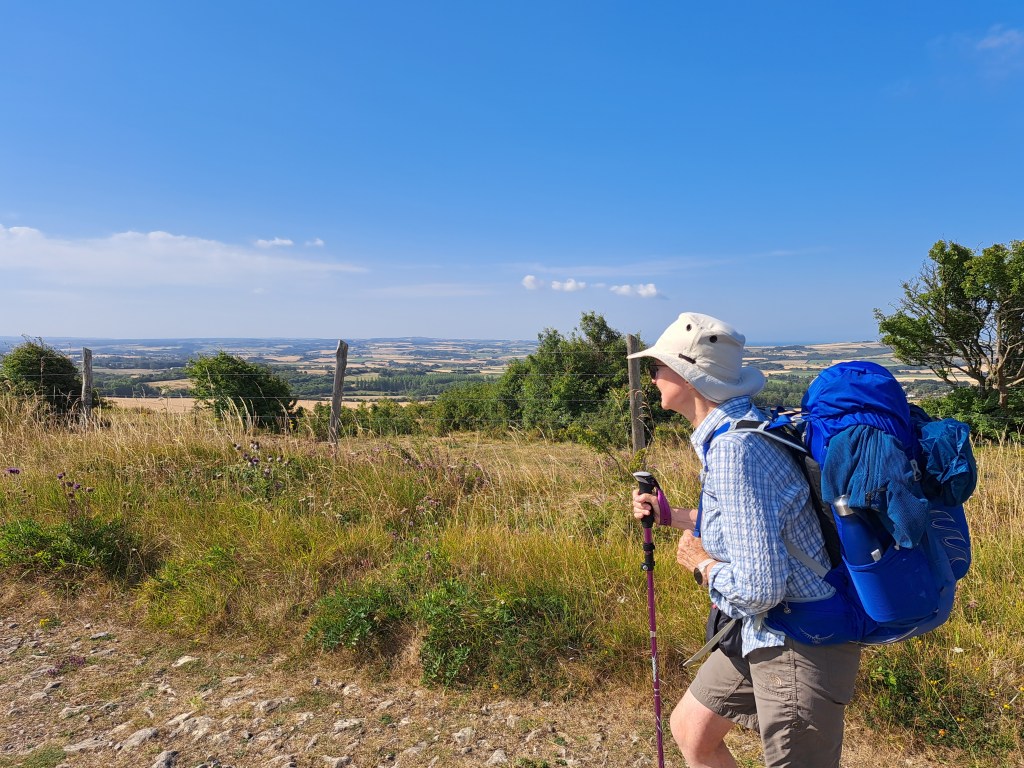
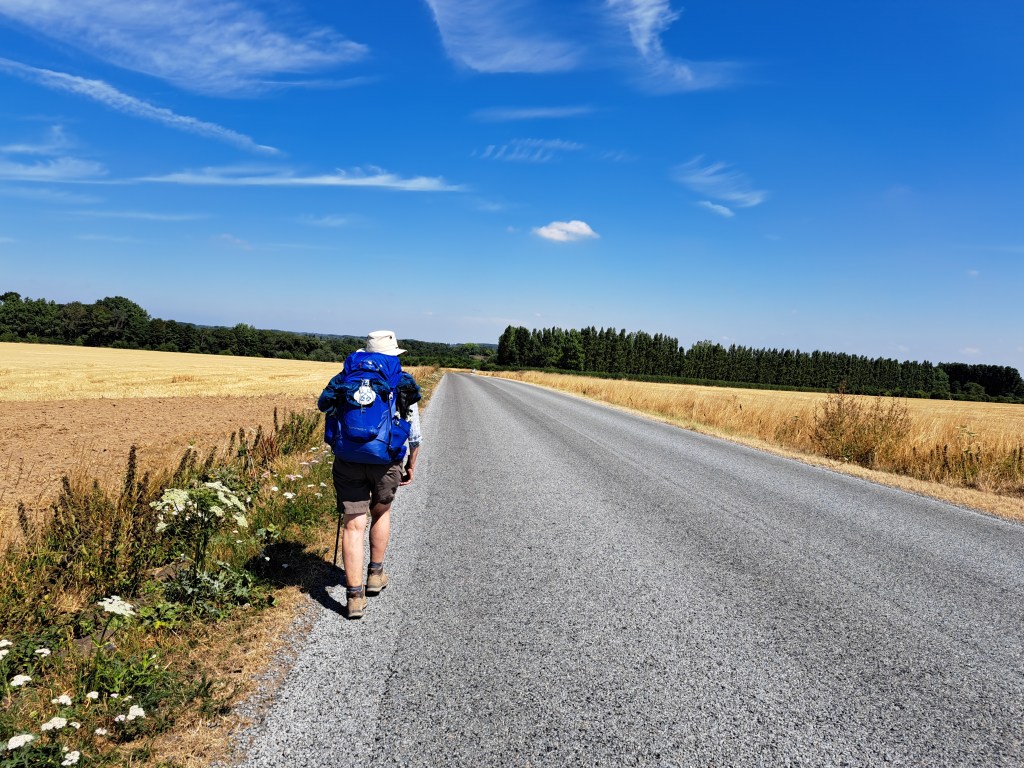
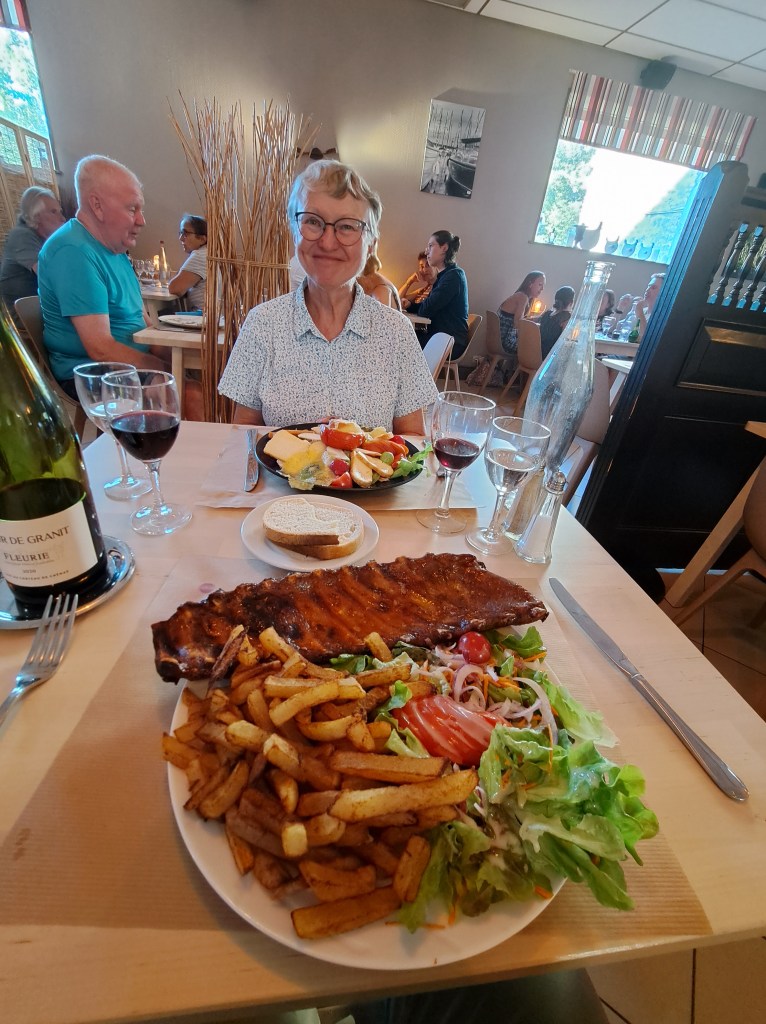
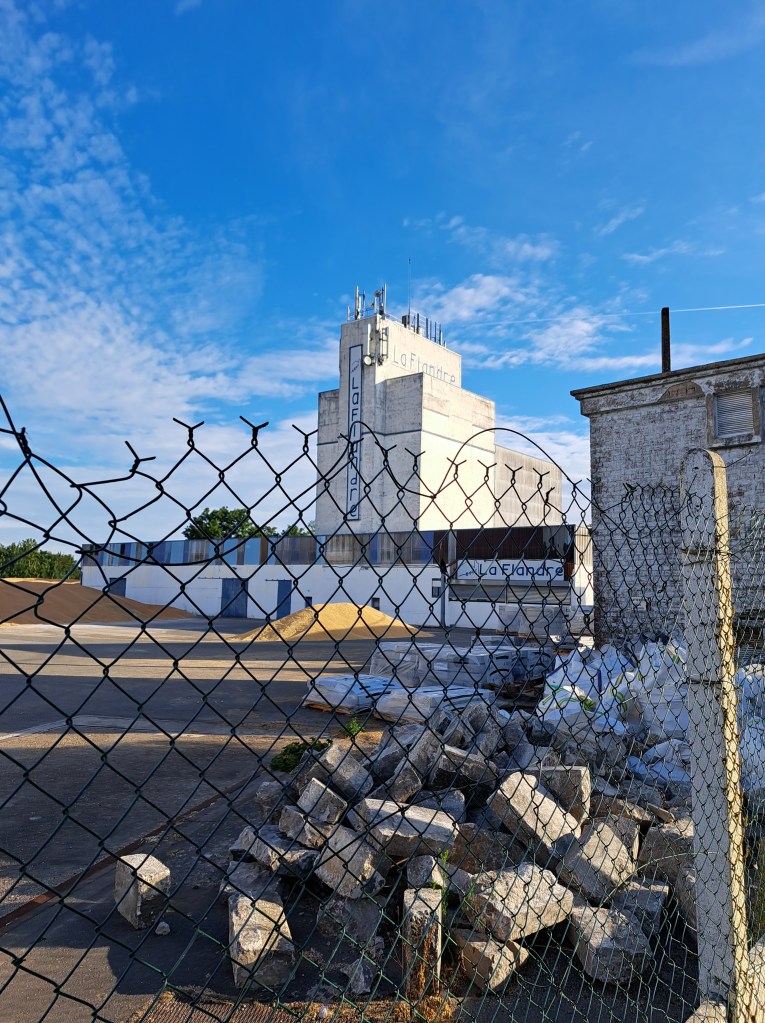
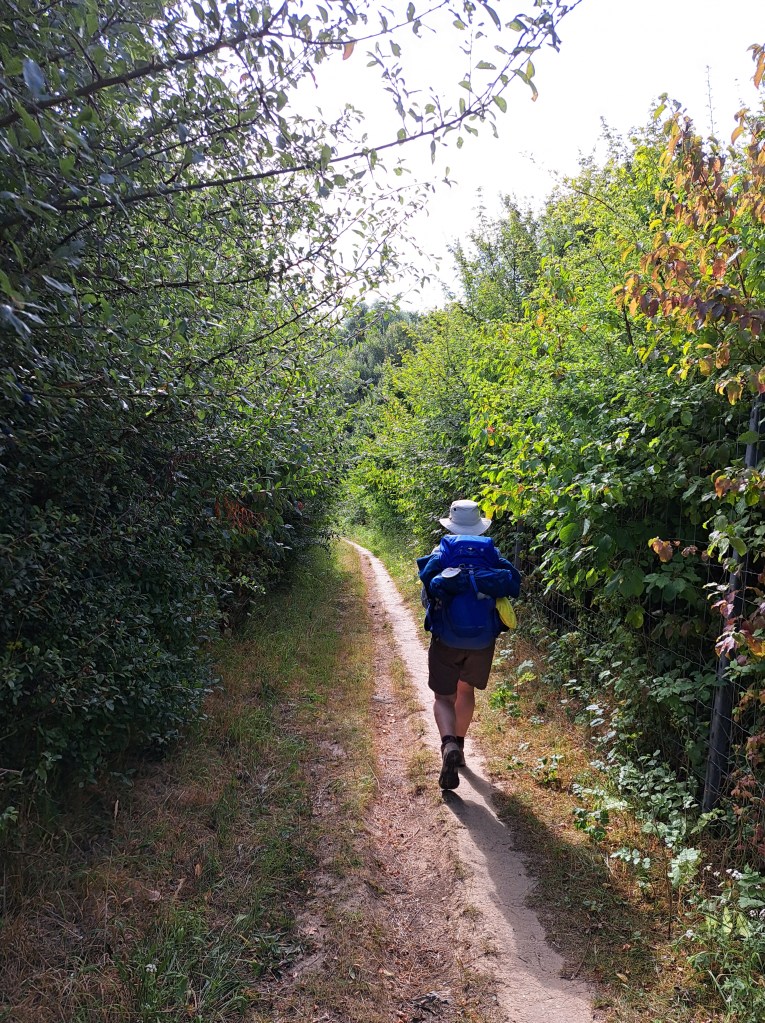
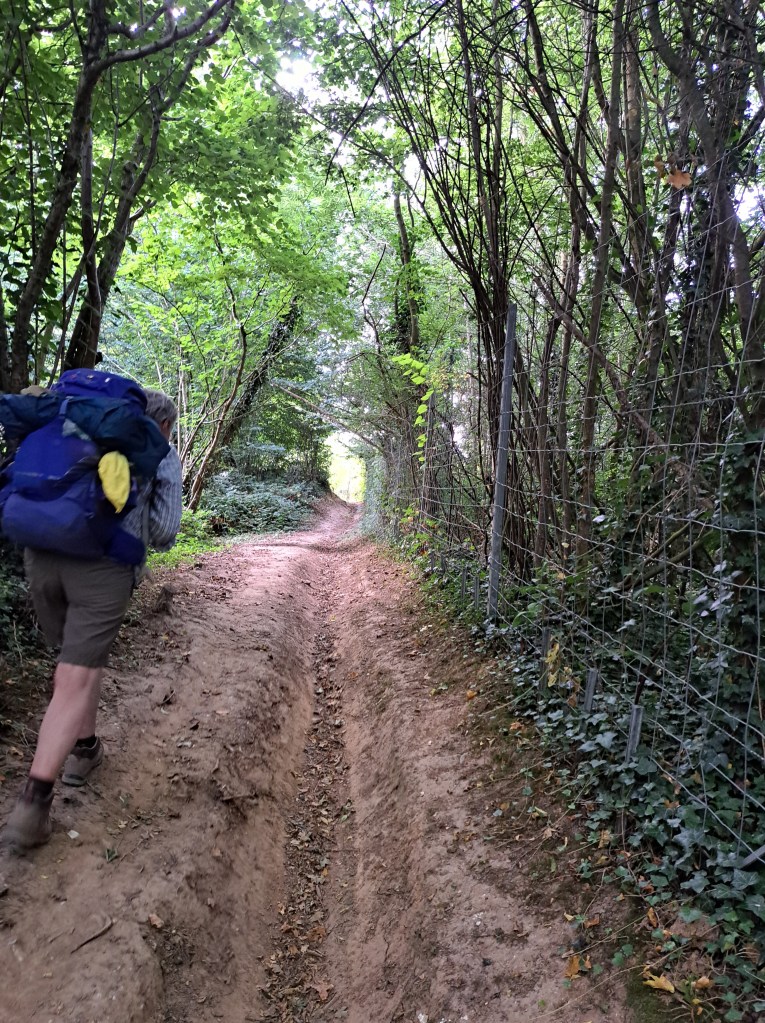
I will add some photos to give you a taste of the landscapes we have been walking through, so far. No deep thoughts (well not here and now) Alison’s arm continues to repair itself, we are easing back into French (well Alison is, I’m still getting off first base as usual) and the walking is what it is – sometimes further and harder than preferred, but always worth the effort.
We are planning the next week or two and seeing some fairly long stages will be necessary simply because the accommodation is so spread out and we are anxious that we need to get more places booked as August is a big holiday month here (and there are also lots of extra holidays to deal with, too).
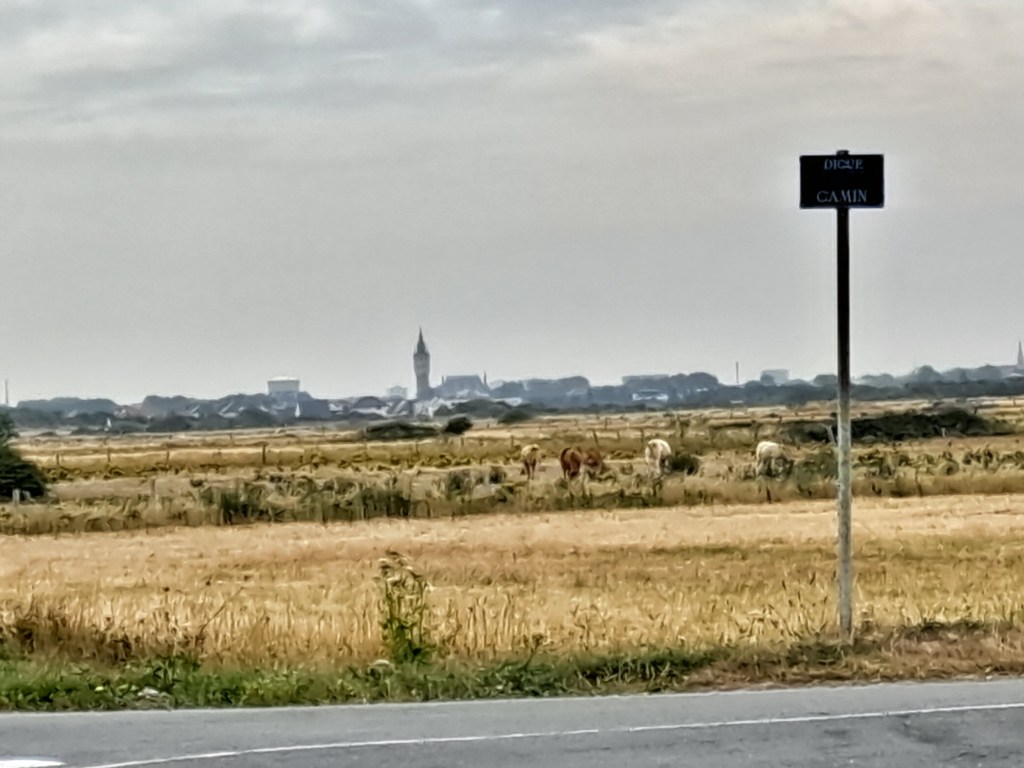
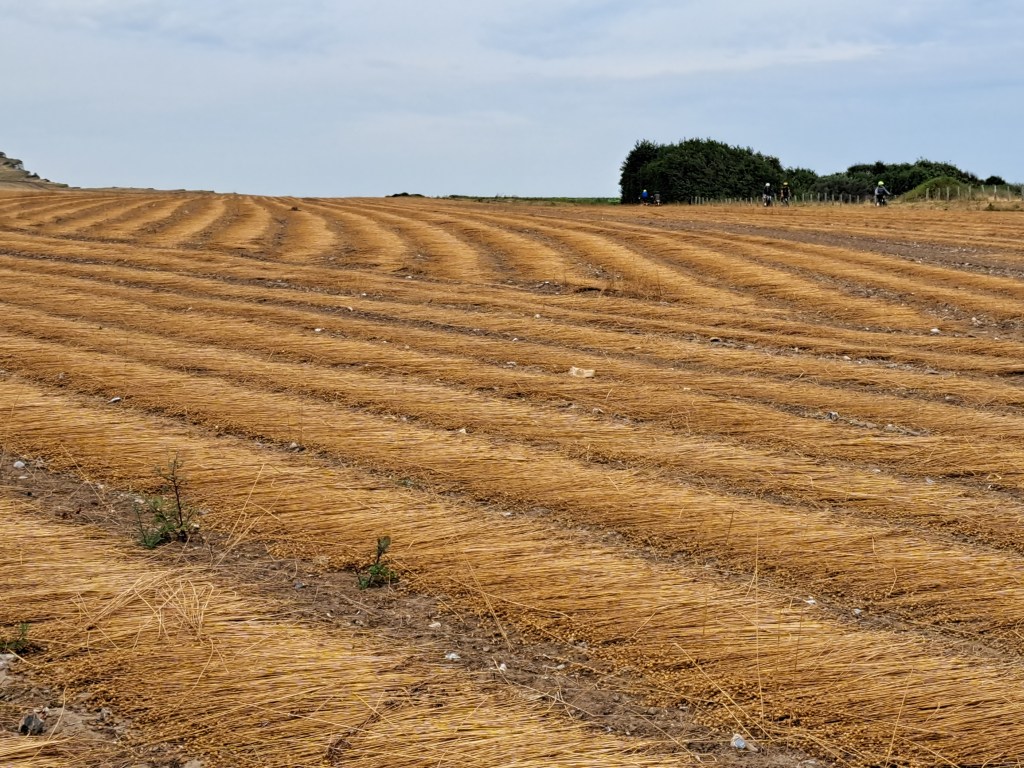
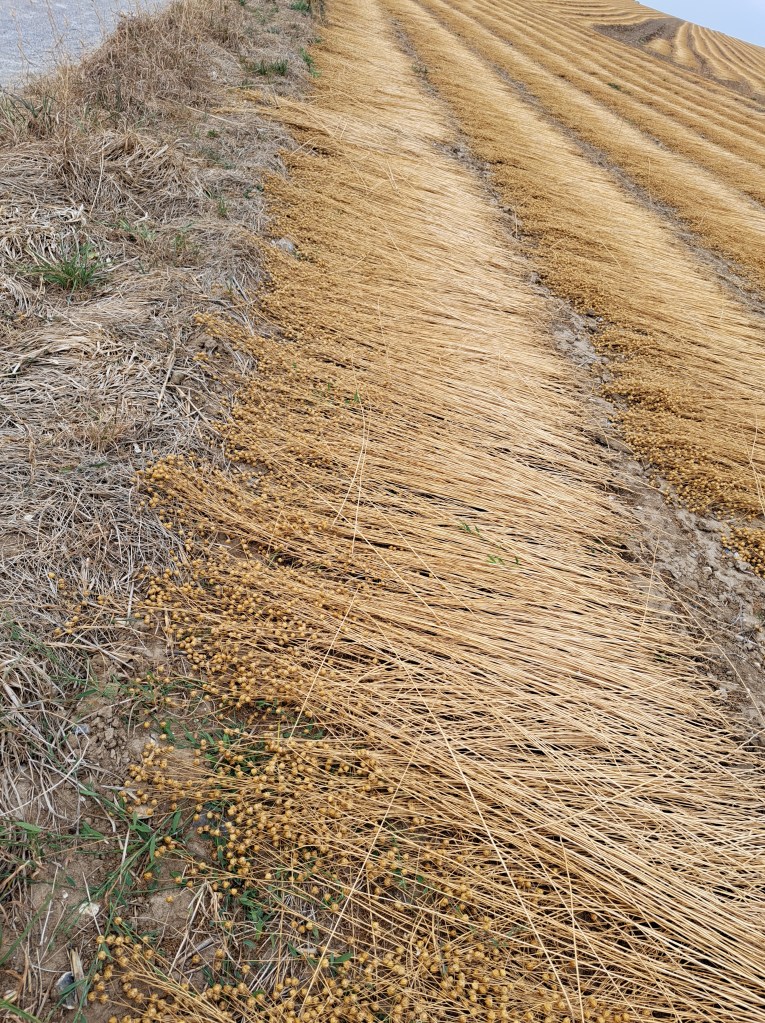
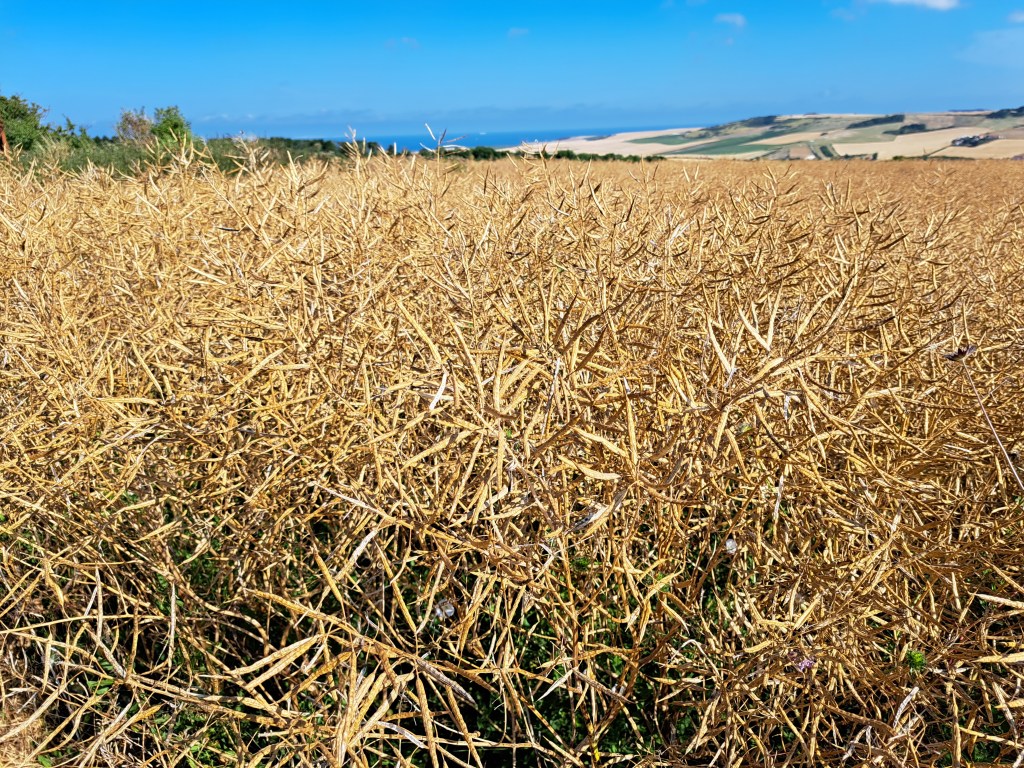
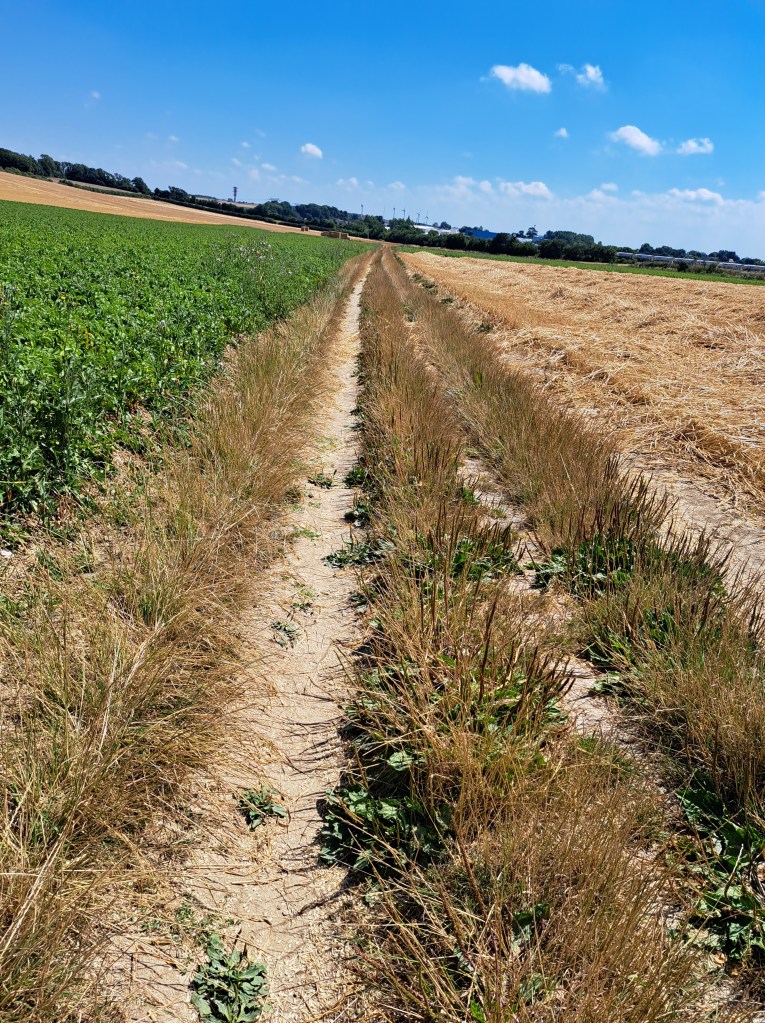
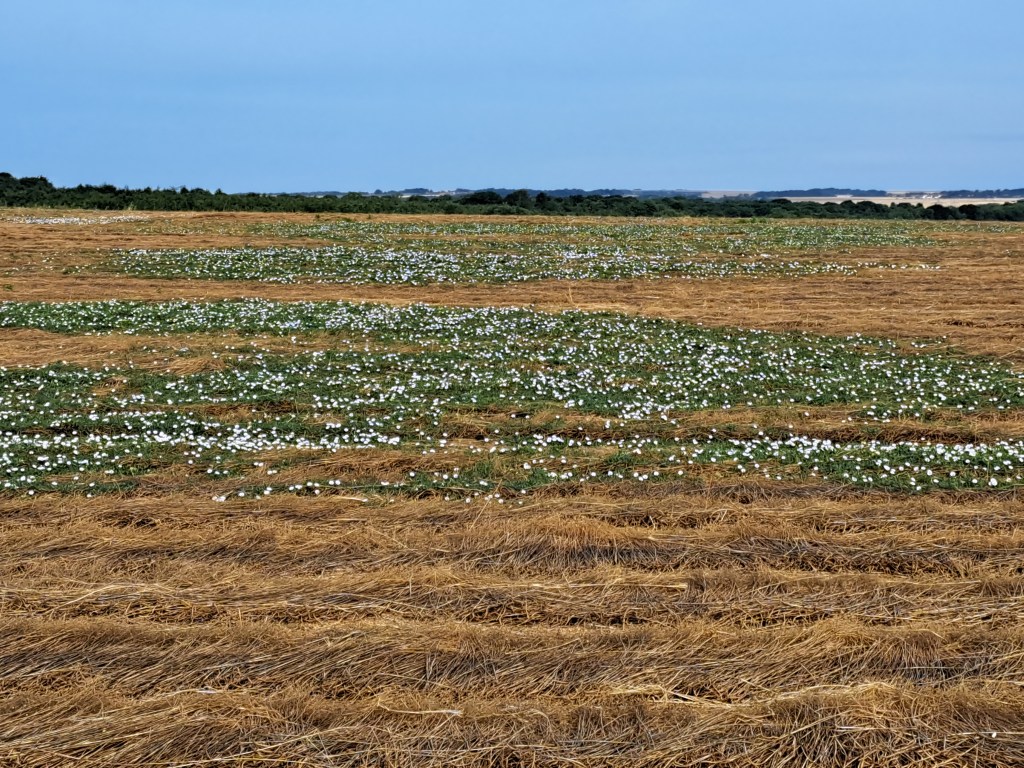
So, it is “keep it simple time”. I’m keeping my poems and thoughts in my little notebook for a while. Please look at the pretty pictures instead…. Oh, and if you can, please take note of the crop that has been cut and neatly laid in rows, forming wonderful chevrons across the earth. The thin stalks are topped off with little bunches of seeds that look quite like dried coriander seeds but they are not coriander…. What is this mysterious crop we have been walking past since arriving in France?
Final note – i have given up trying to post all the selected photos – these took nearly six hours to upload. we are staying in a convent tomorrow, perhaps they will have wifi that is not steam driven….
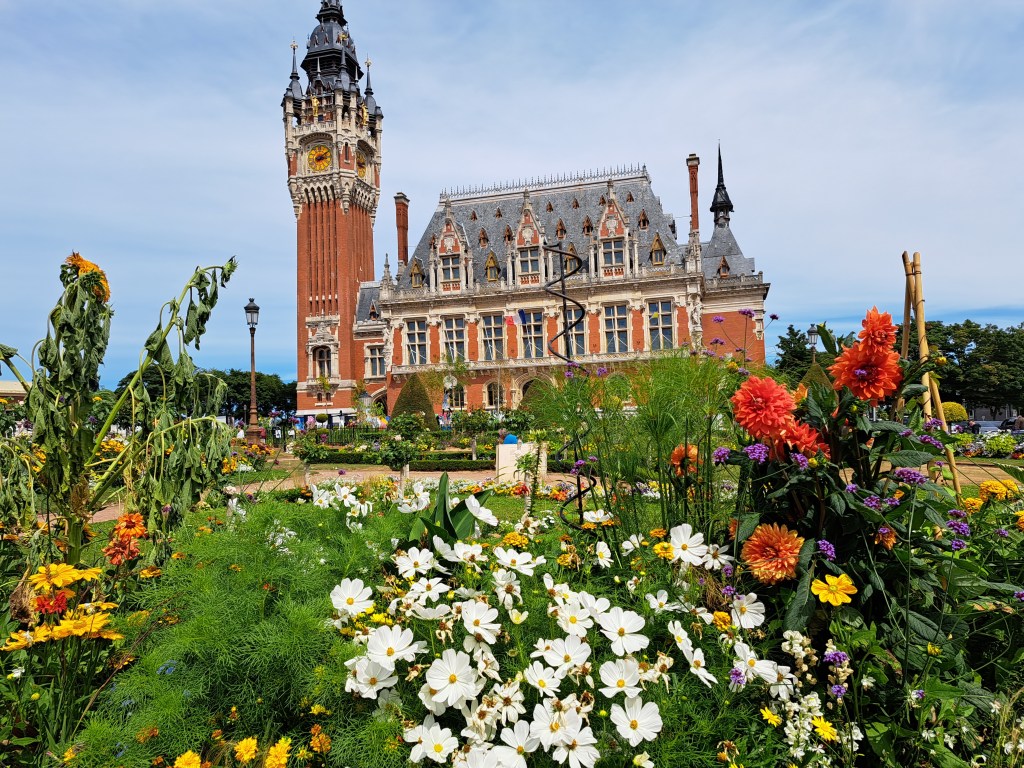
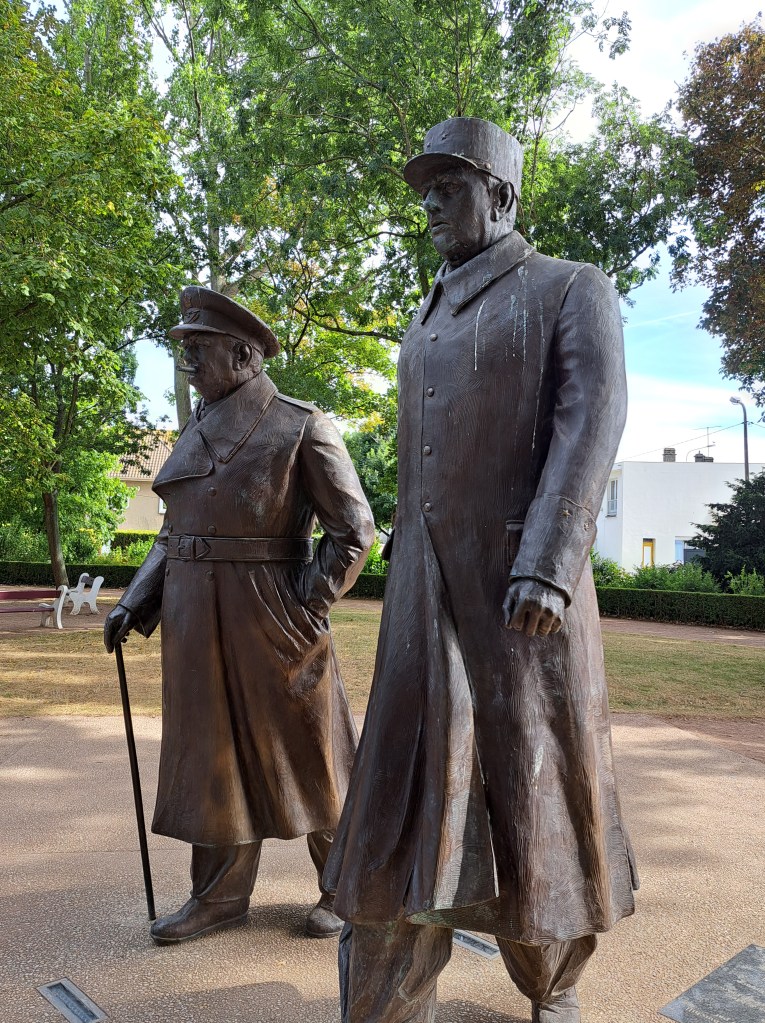
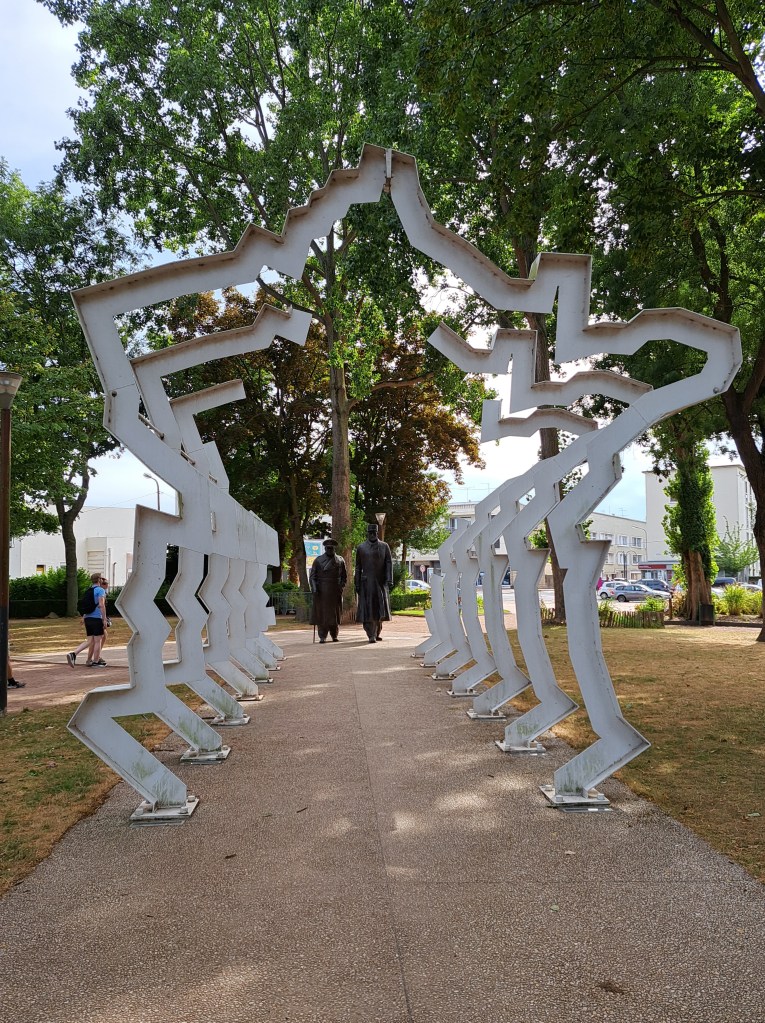
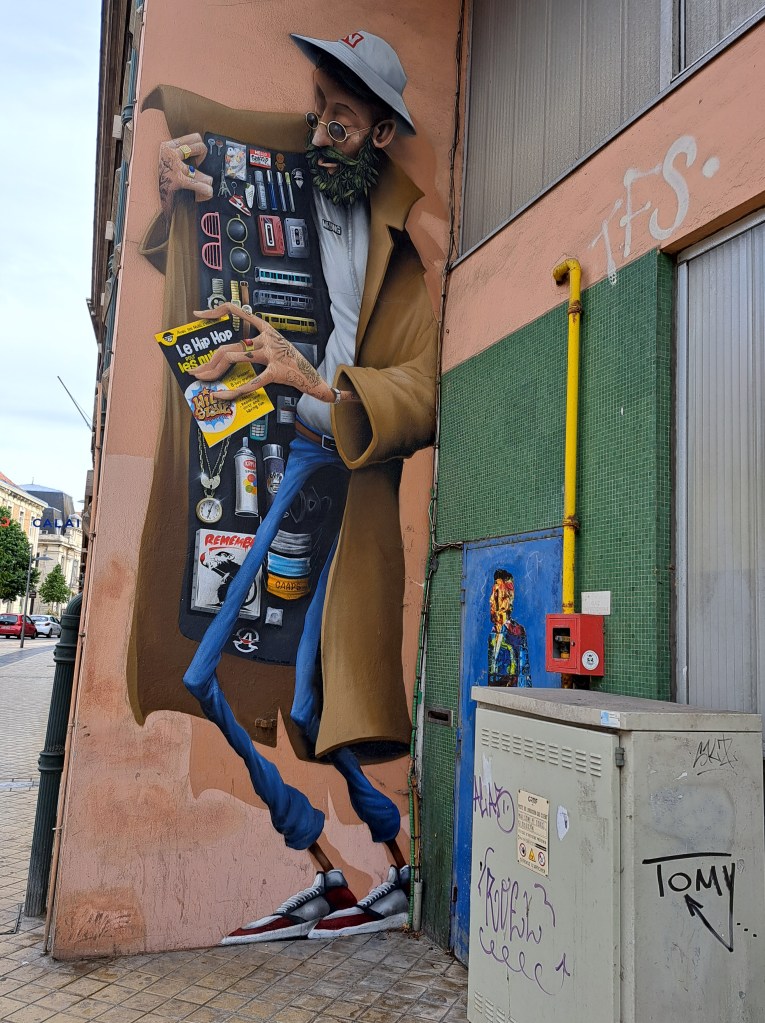
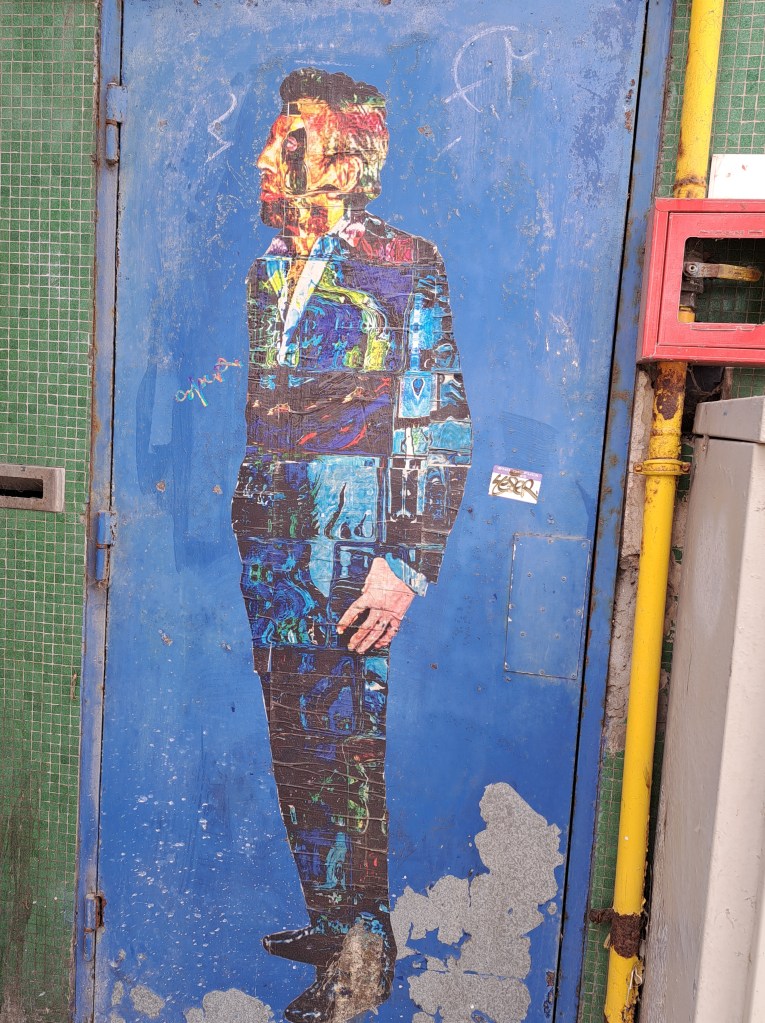
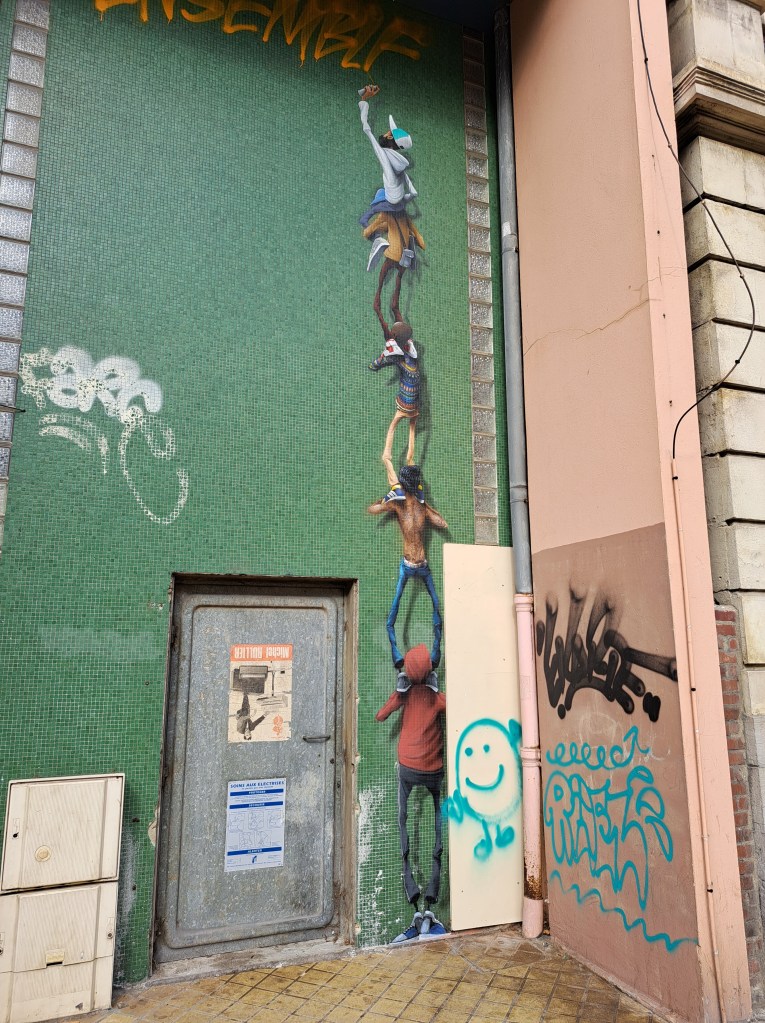

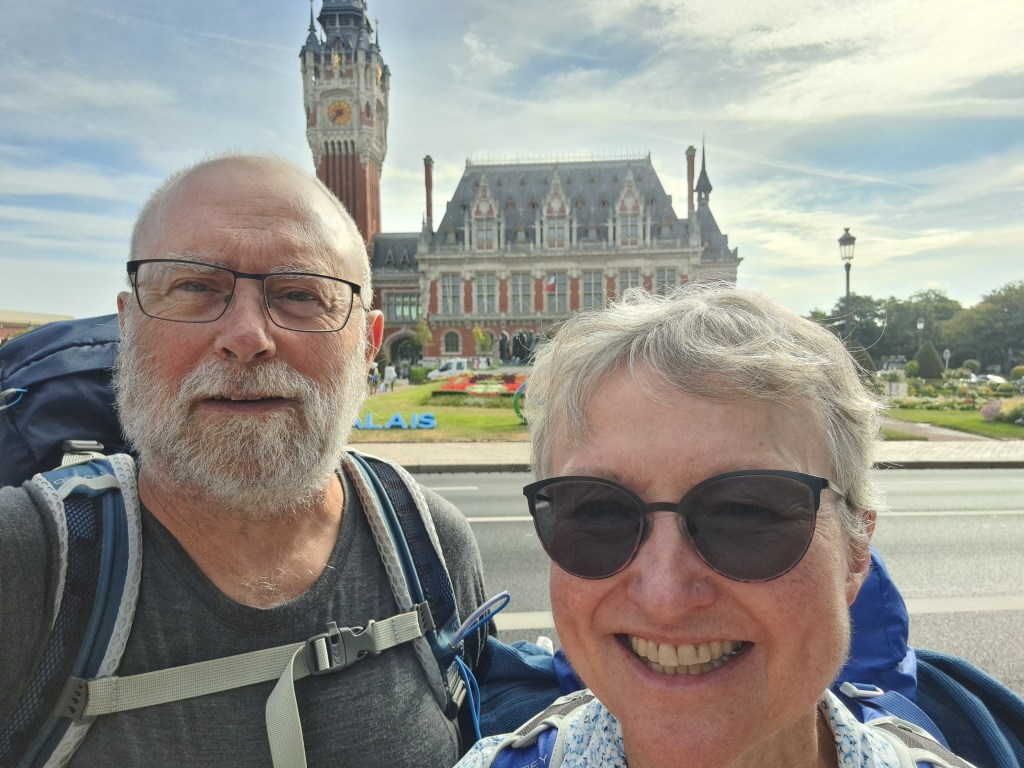
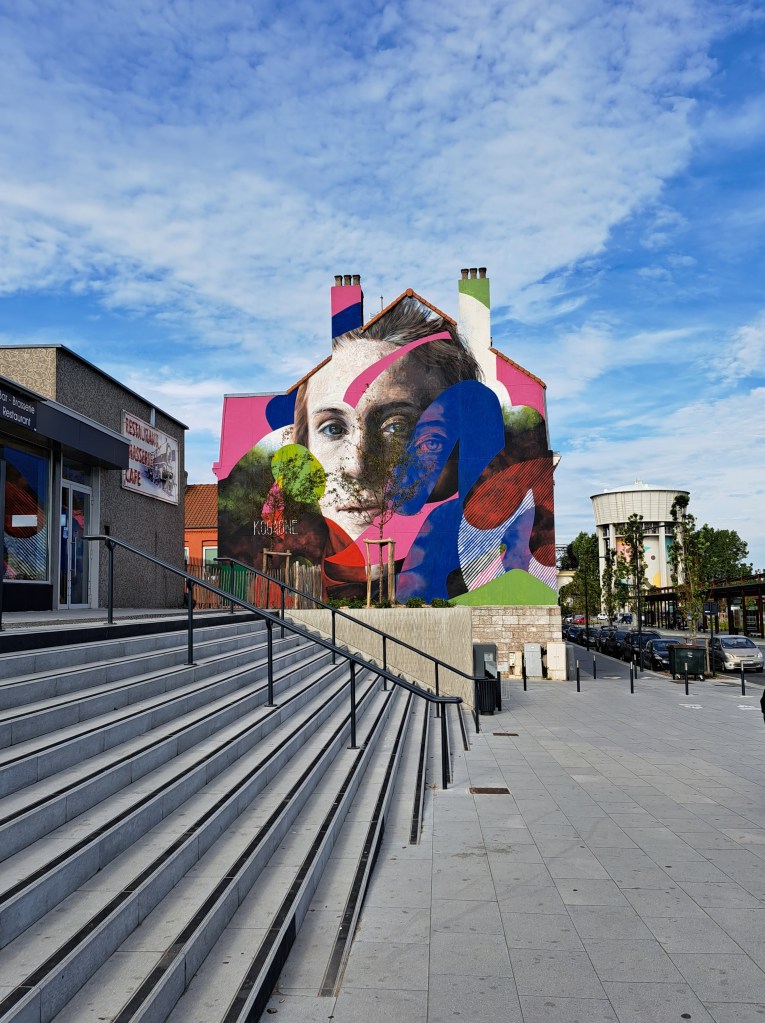
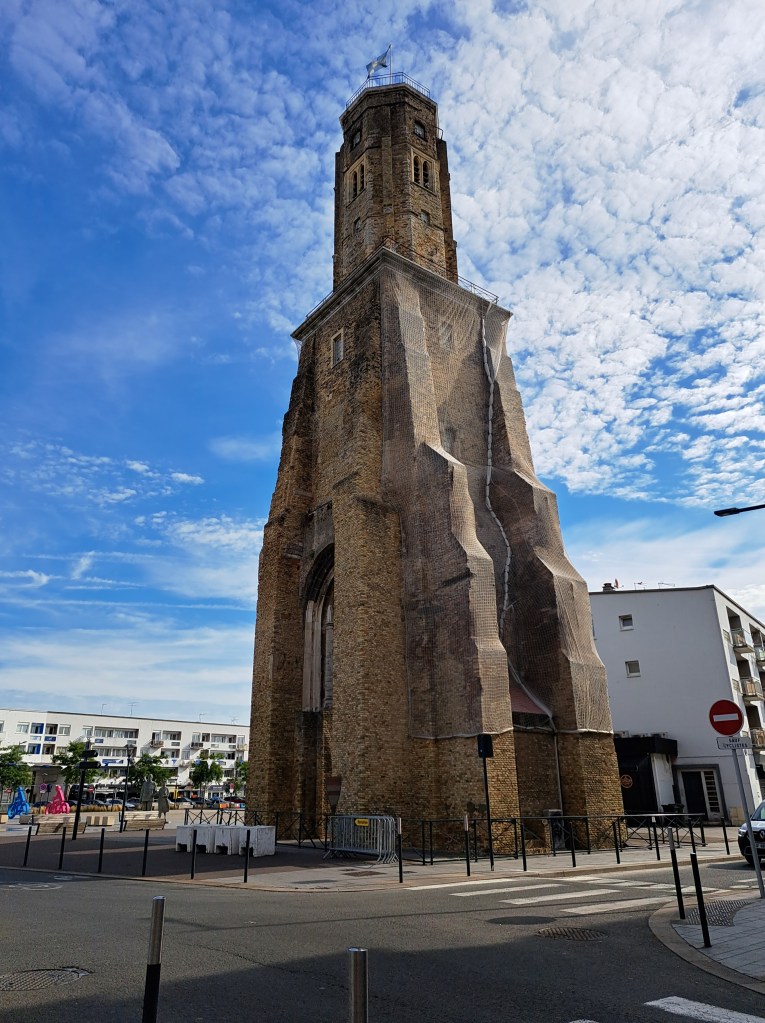
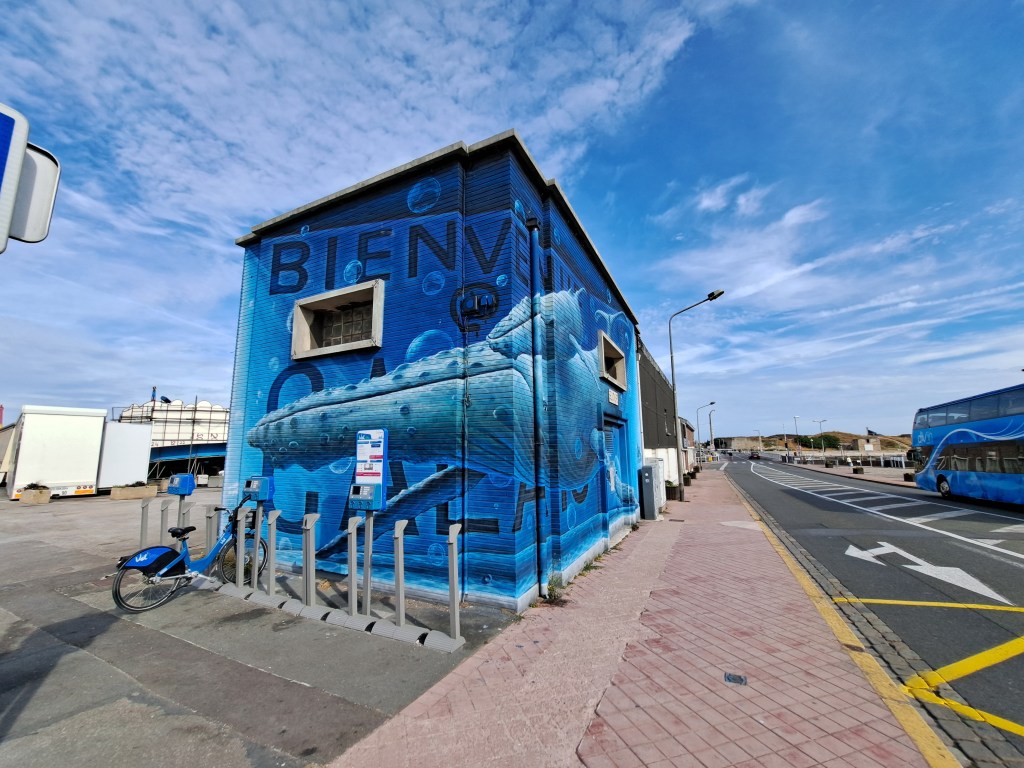
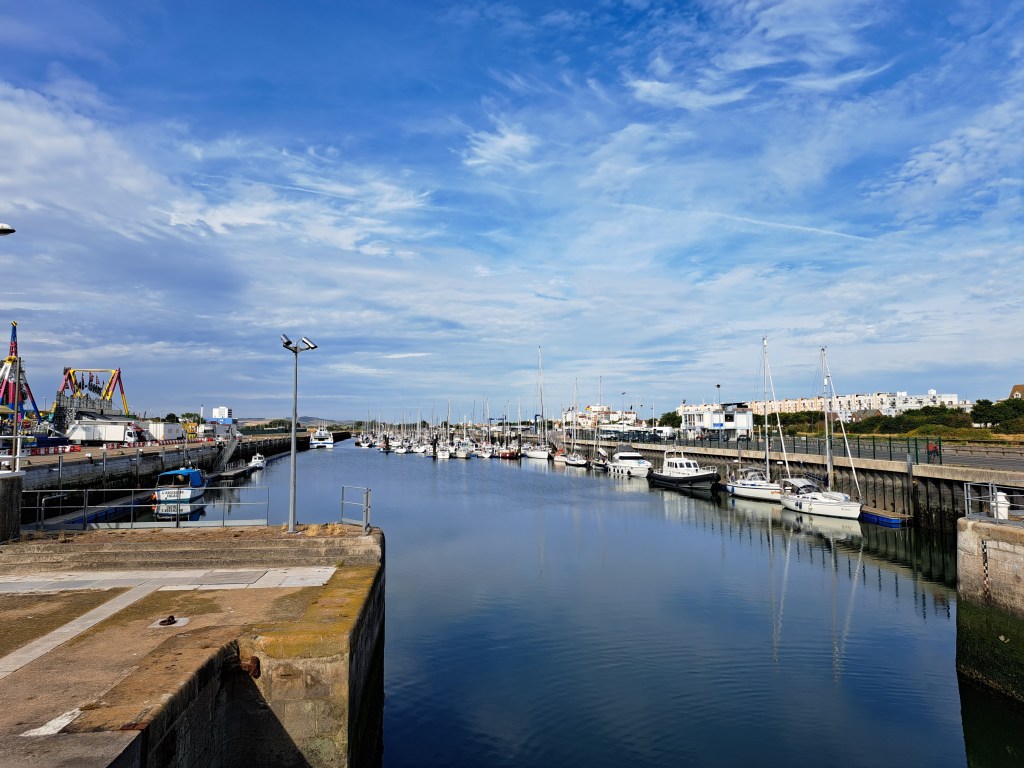
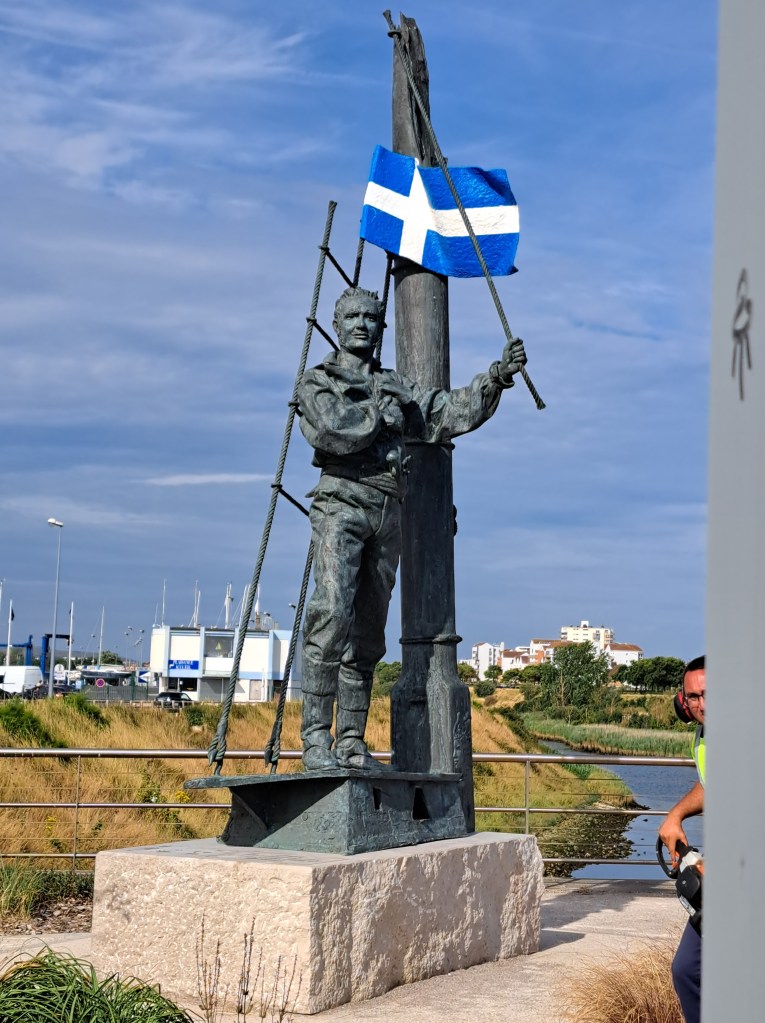

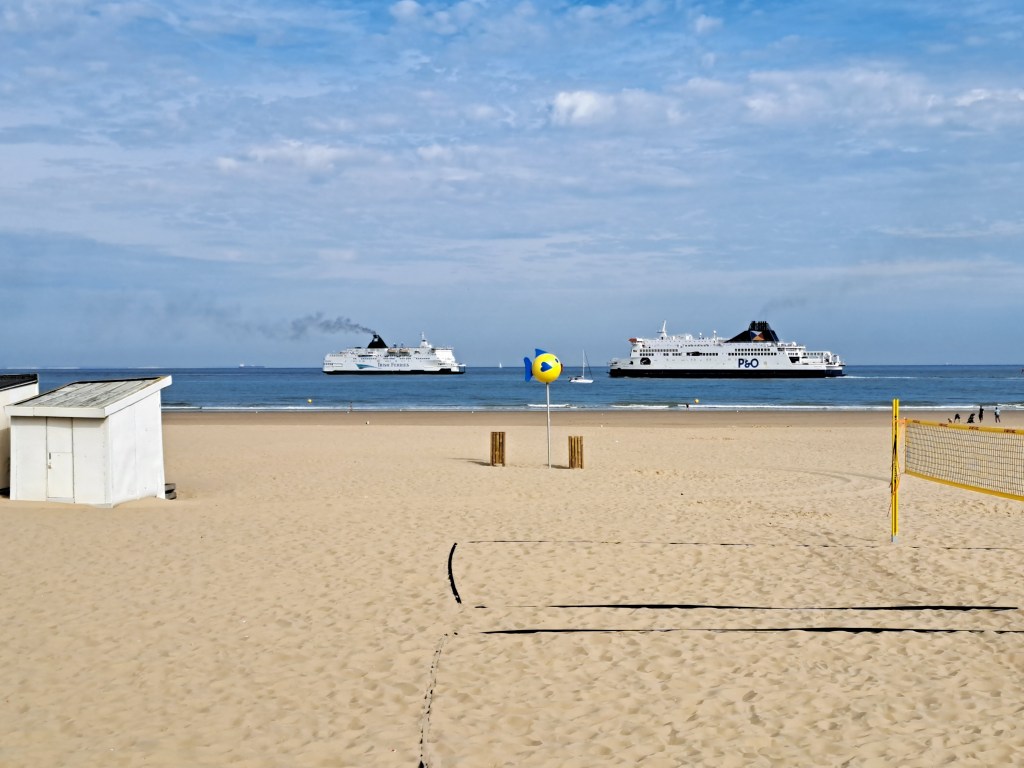
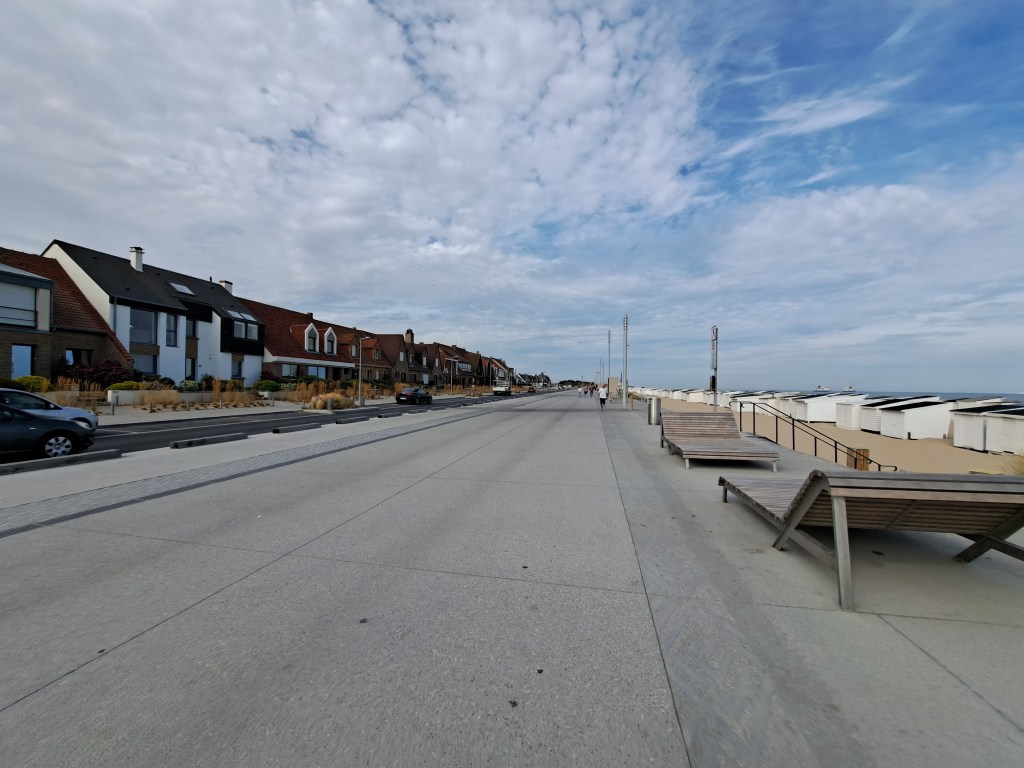
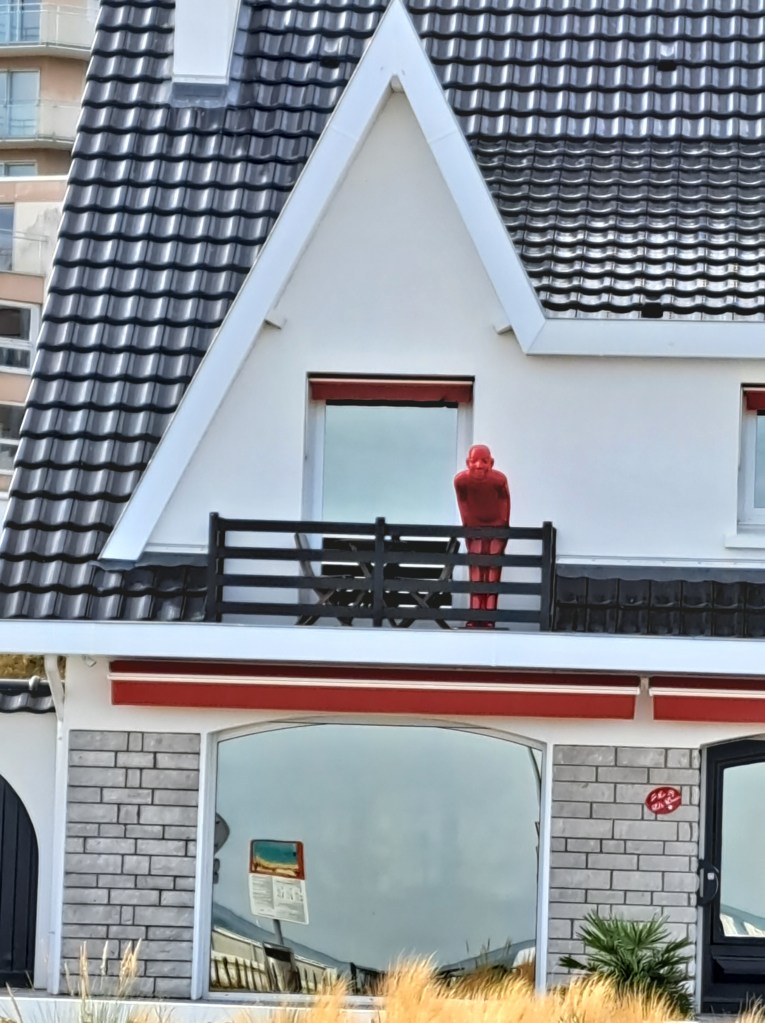

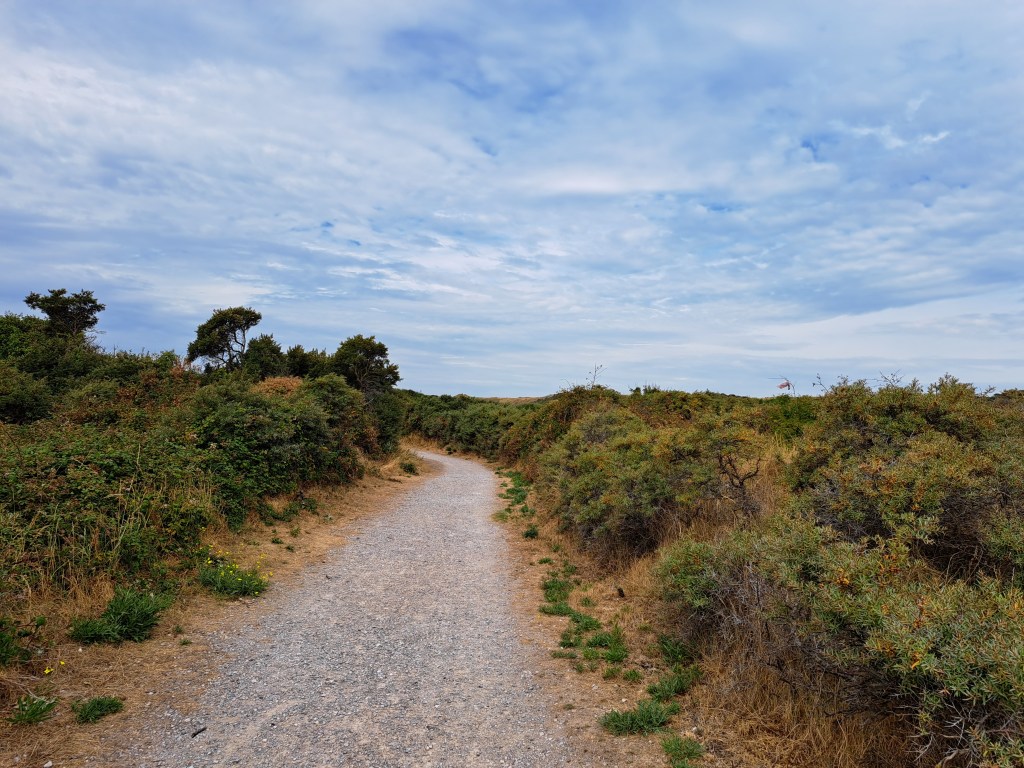



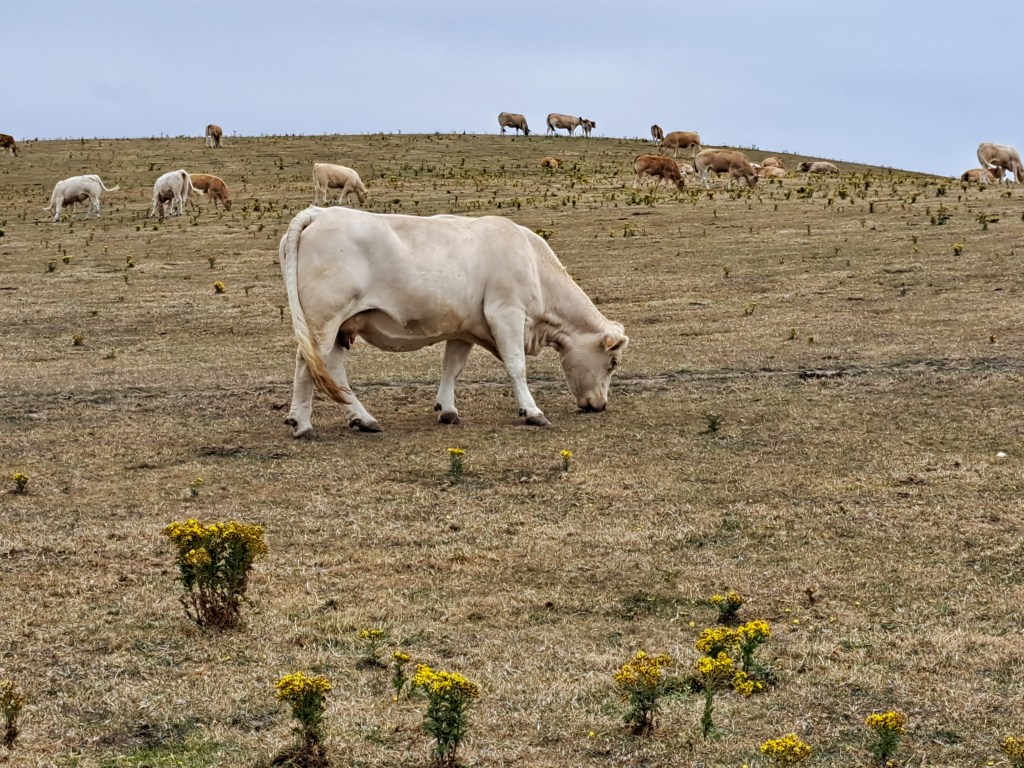
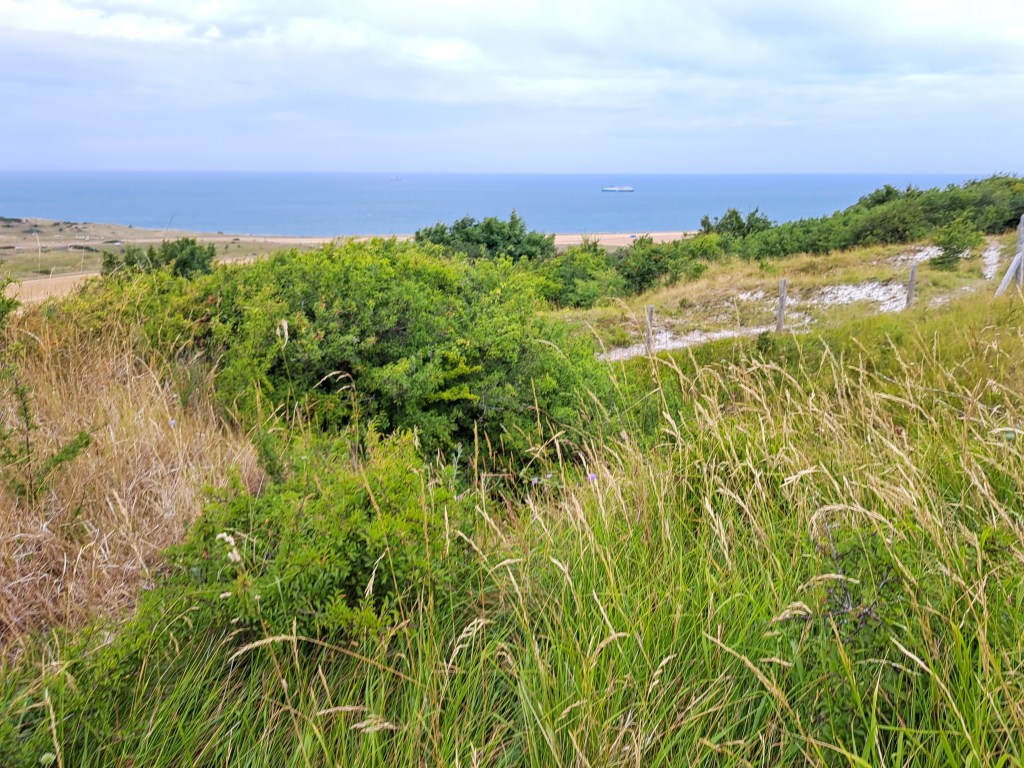
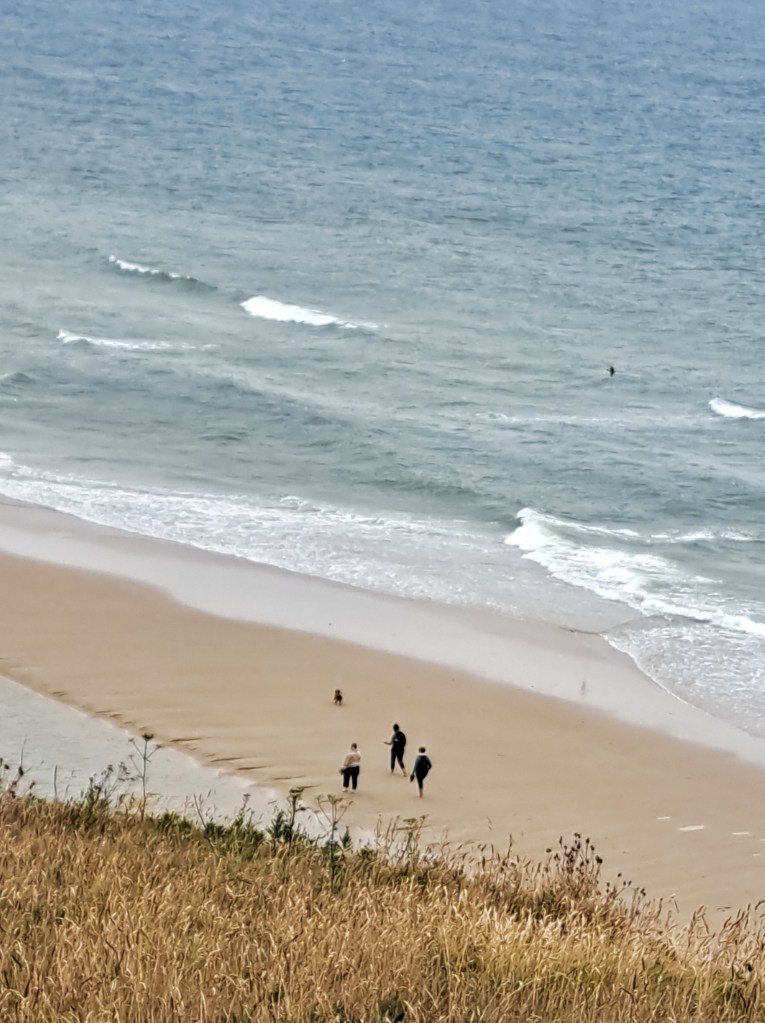

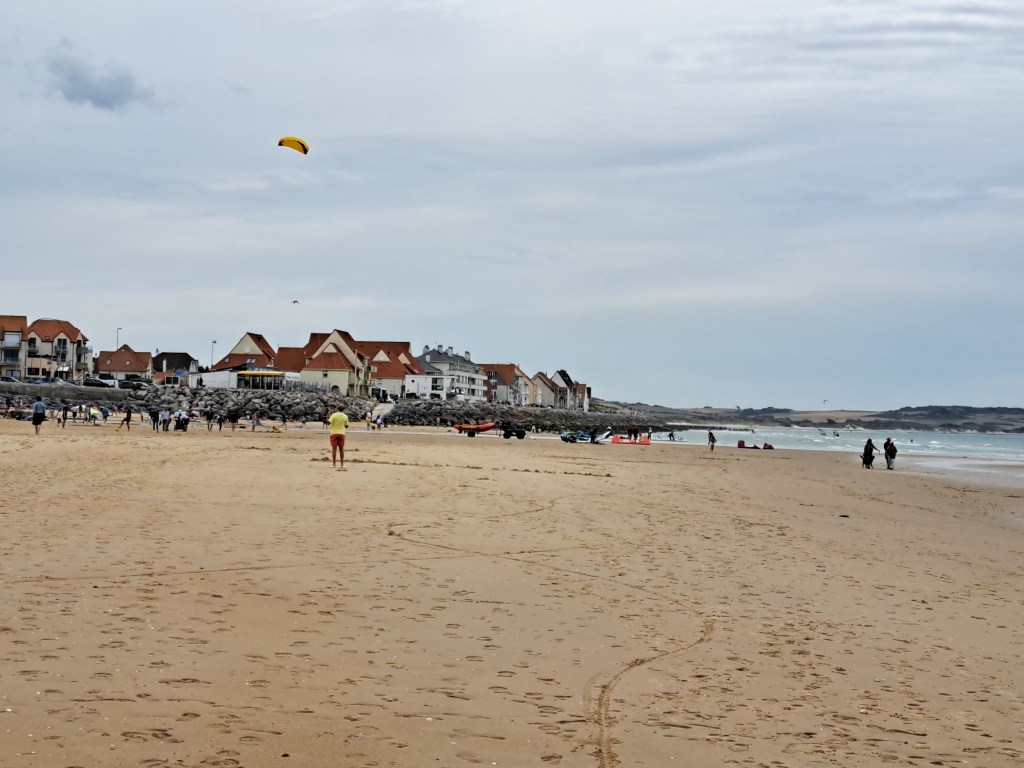
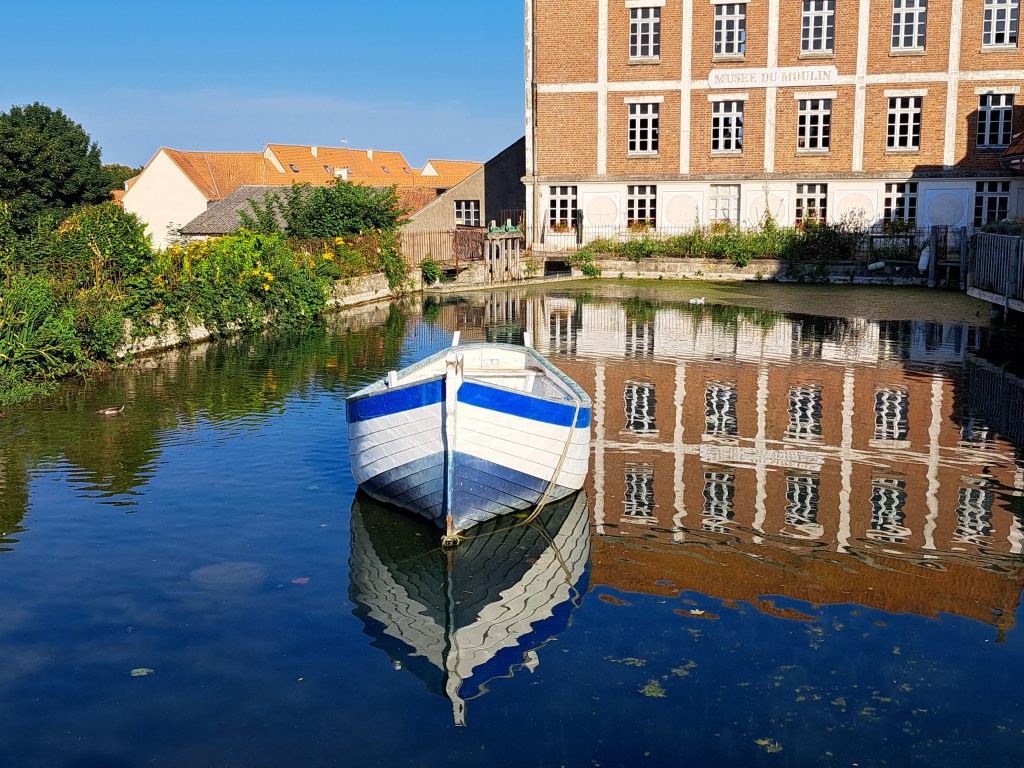
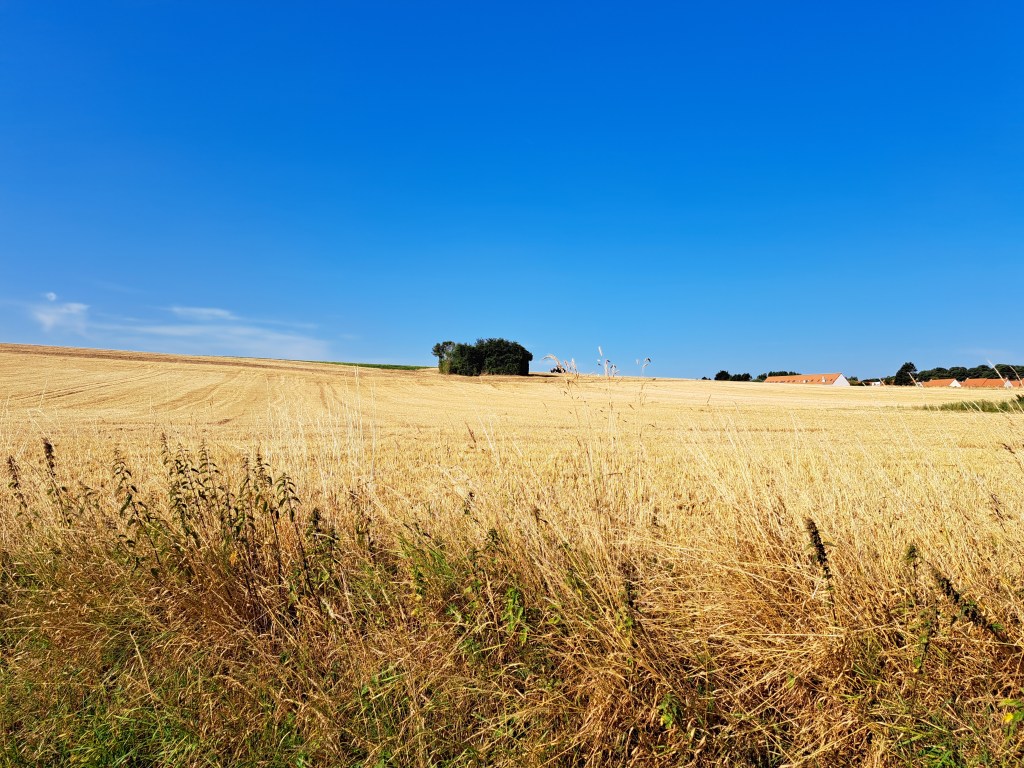

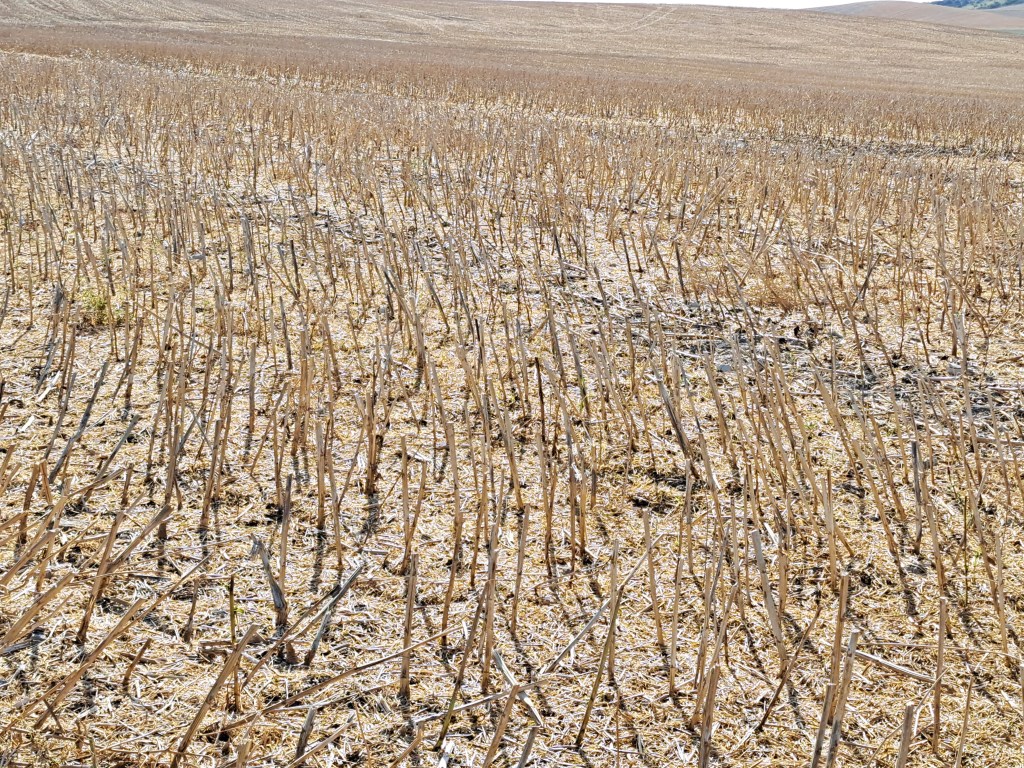
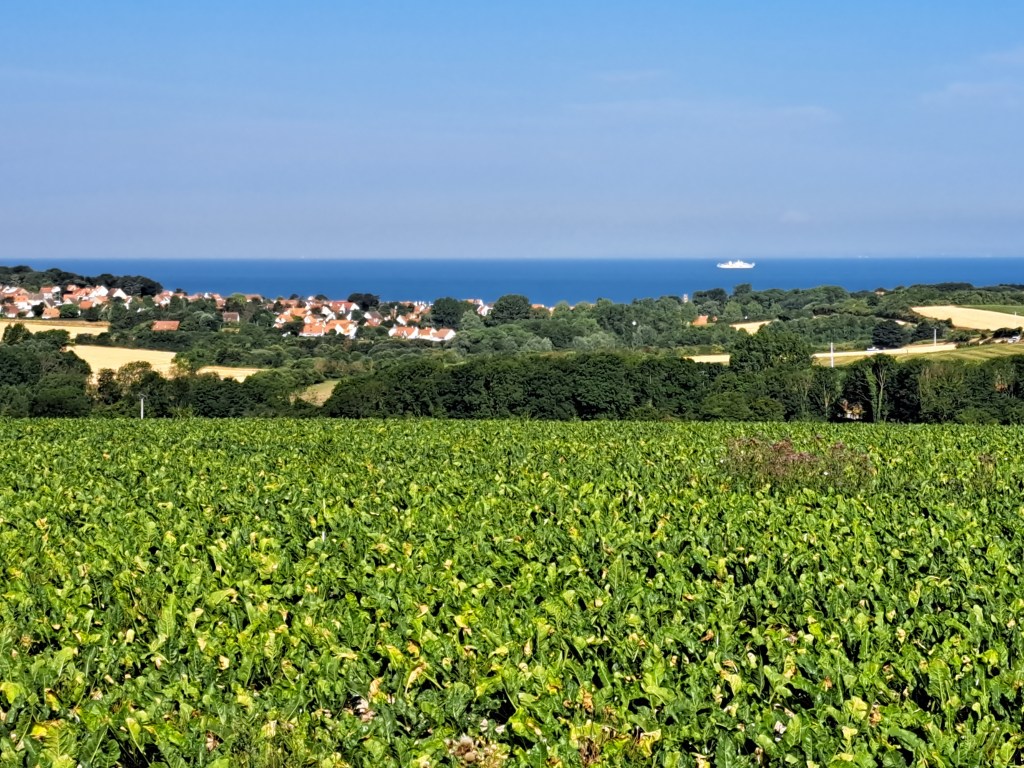

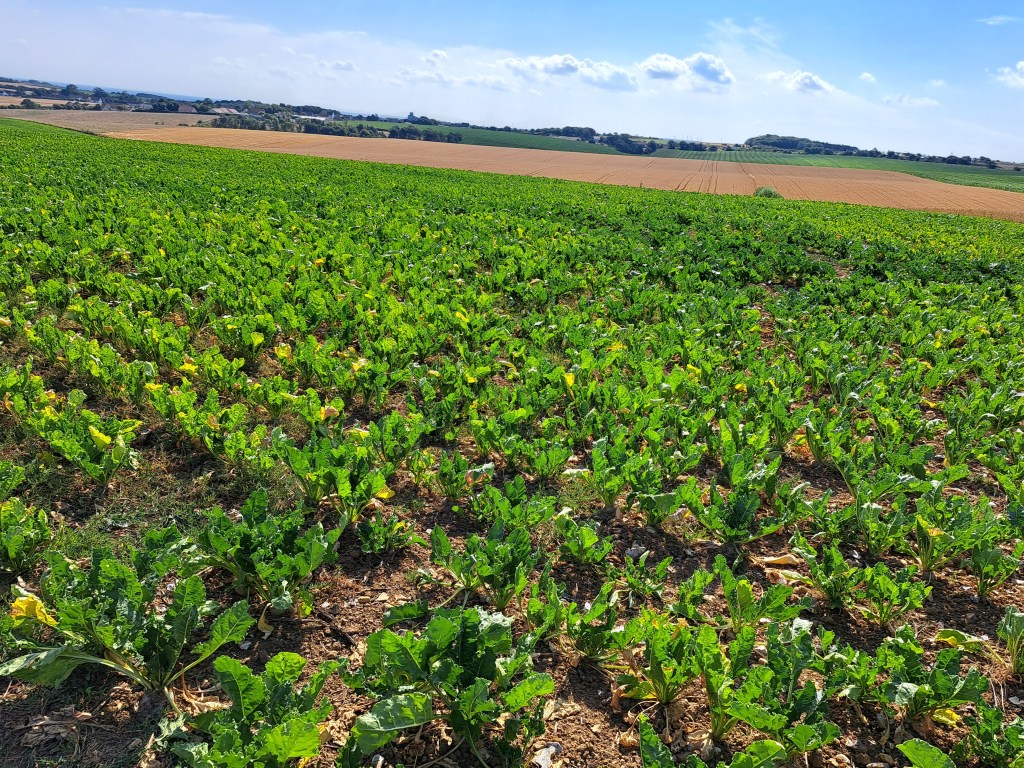
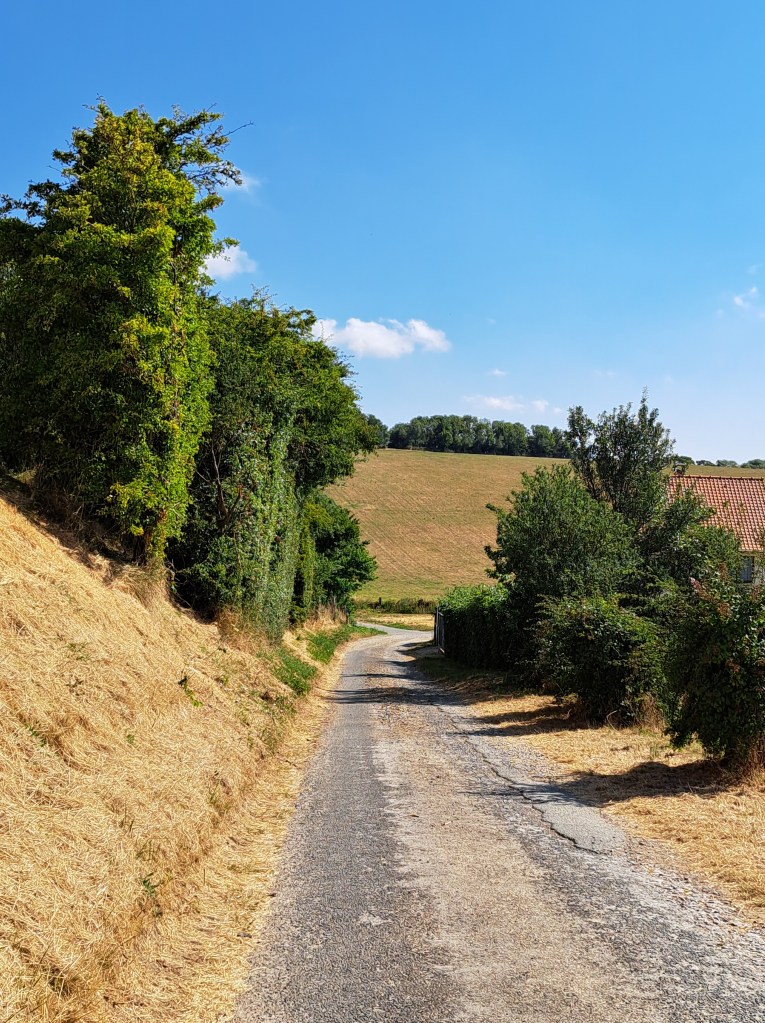
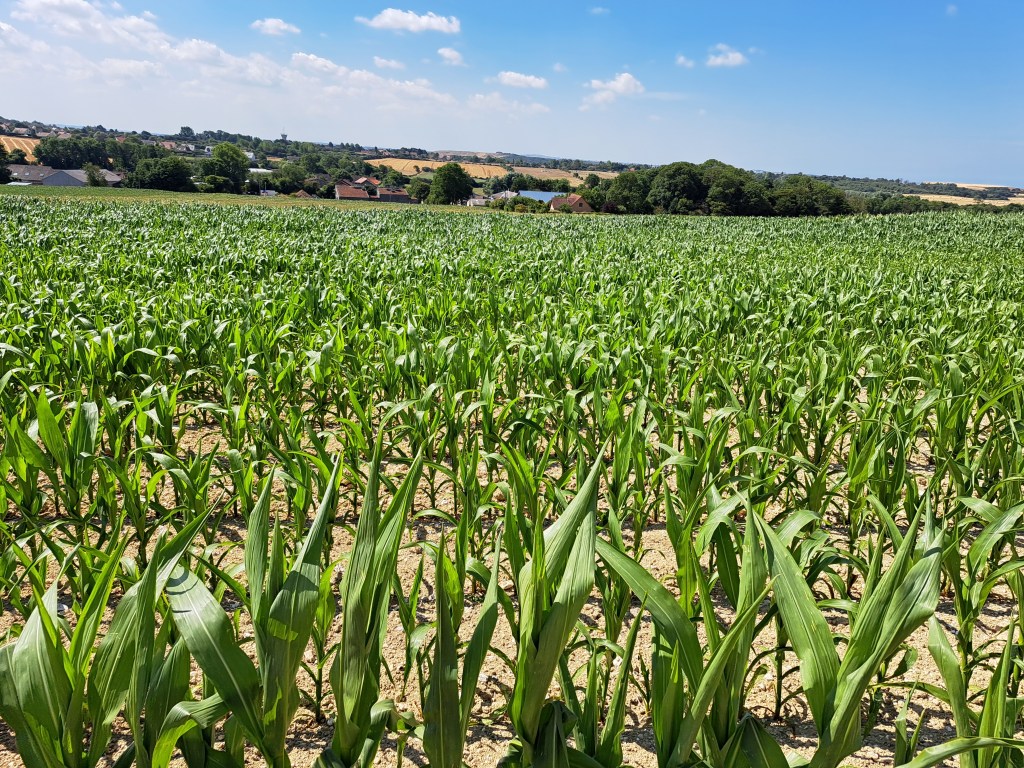
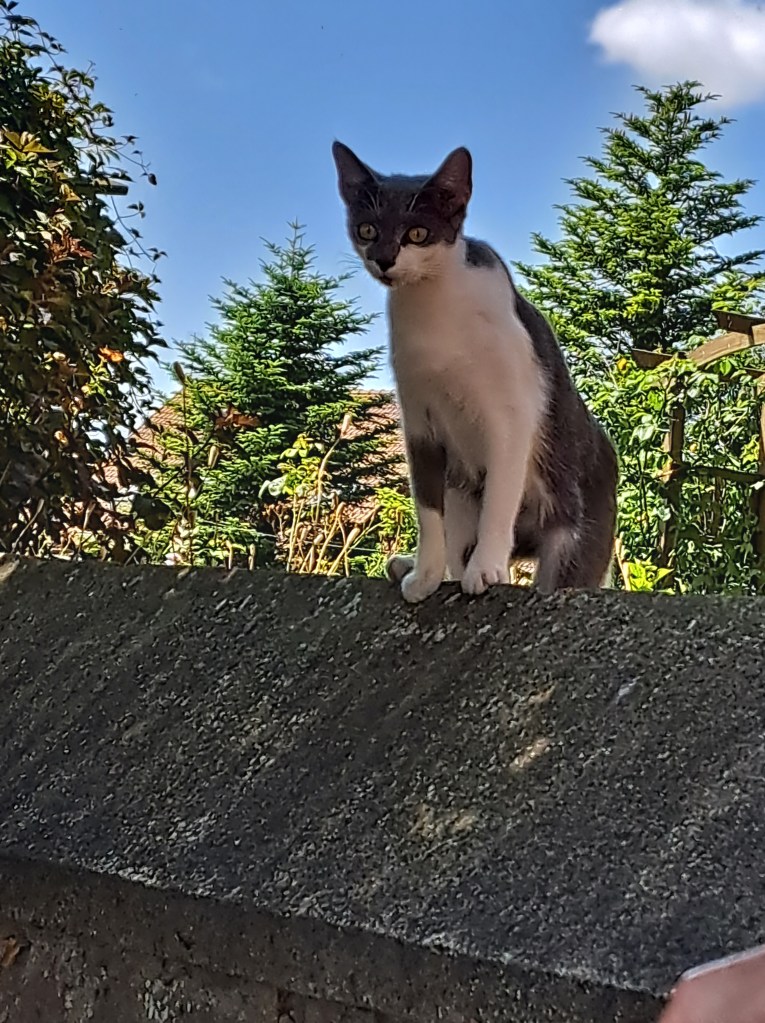
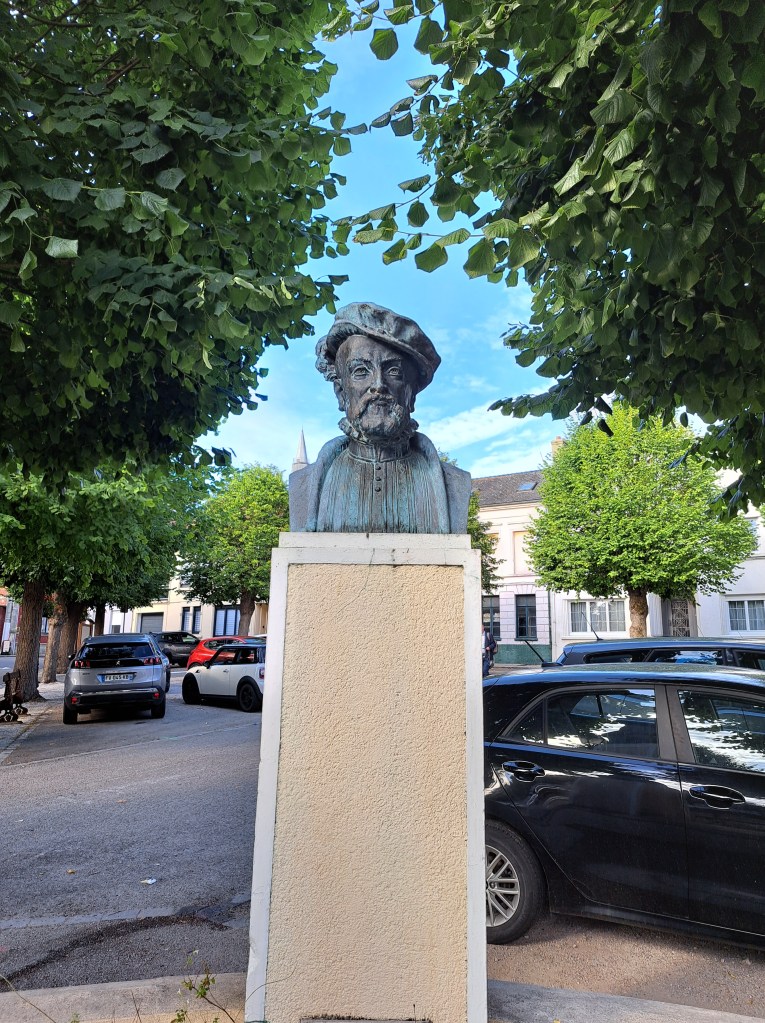
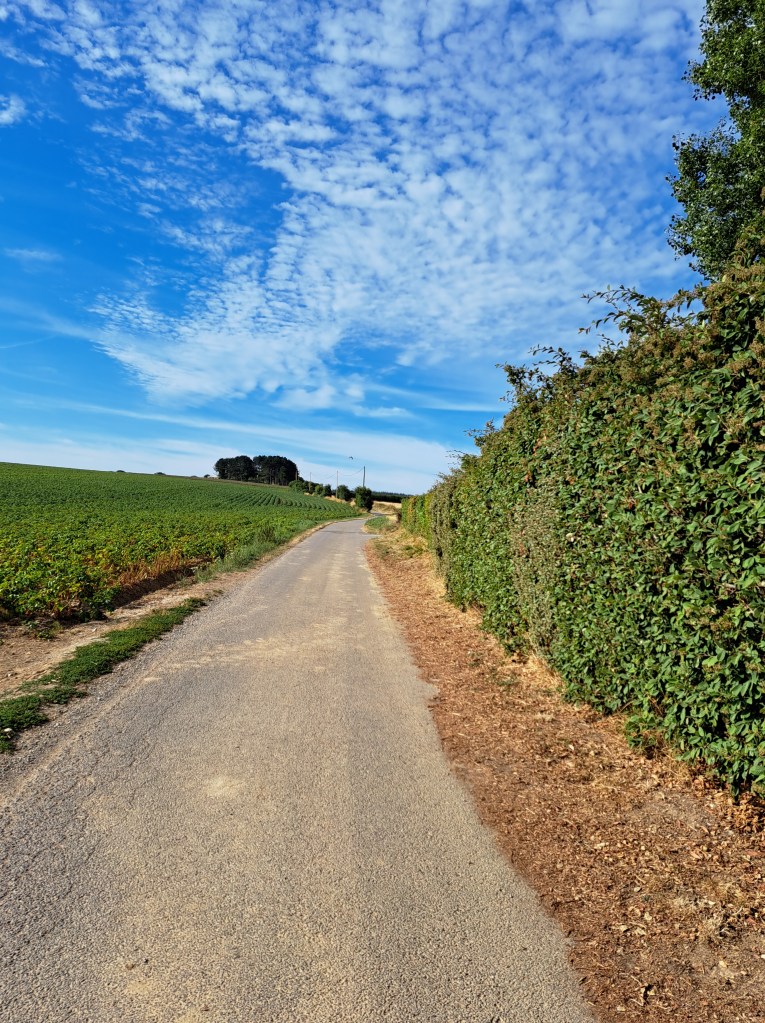
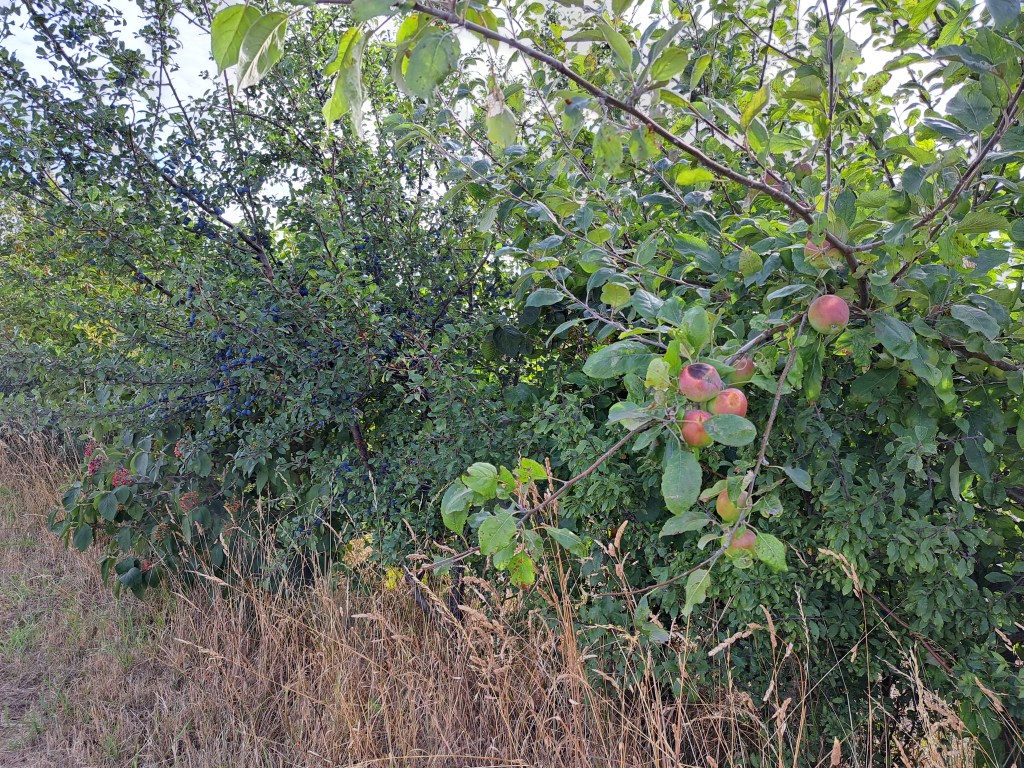
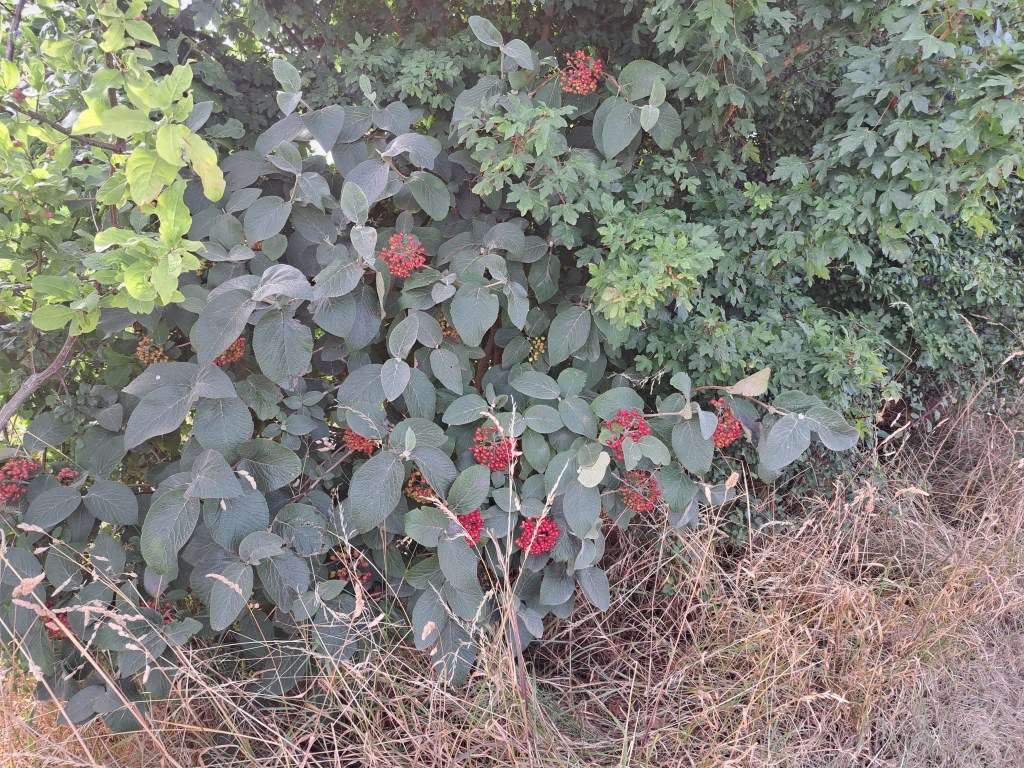
-
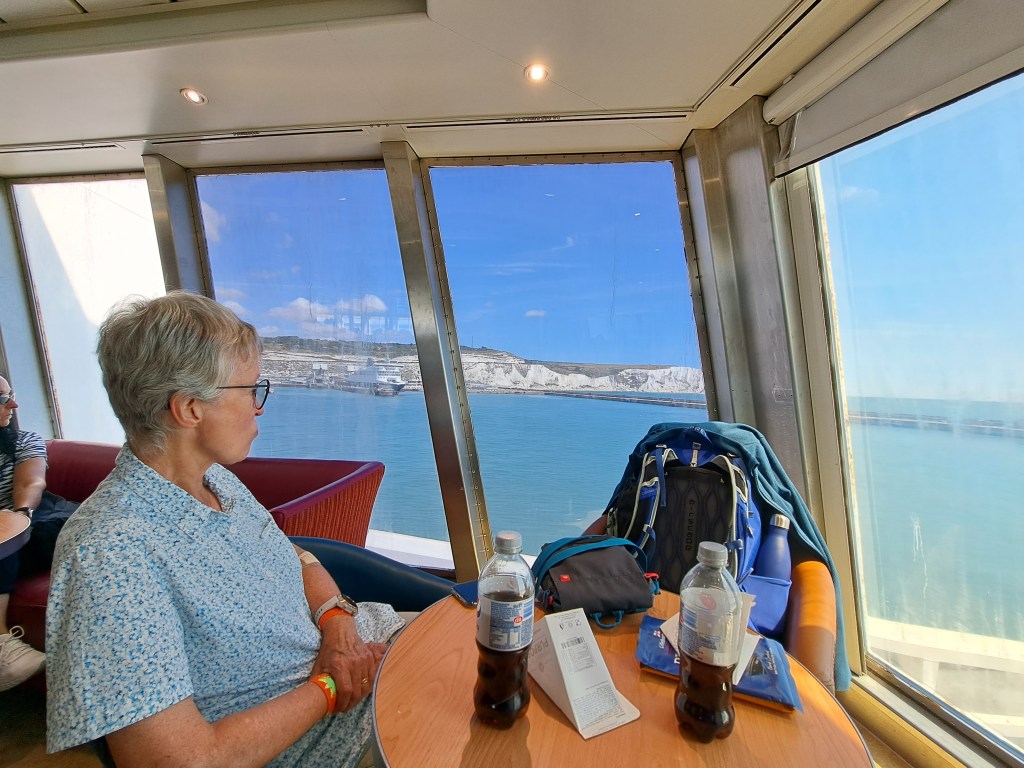
A note from the boat
We are sitting at the front of the ferry as it pushes its way through the waters of the Channel. France was visible to us even before we set off and the coast is steadily becoming clearer as we go. There is an inevitability about the process that stops you from wondering if you will get there. We watched a container ship cross our path and a British patrol vessel seemed to pause to let us pass as we ploughed on along our well established course.
It brings it home to us how so much of our lives consist of fixed patterns that keep us going, keep us in our place and shore us up against the forces outside our control. Even (or perhaps, especially) in times of hardship, we use routines and rituals to give us that stability and to help us map our way through each day’s challenges.
And I am thinking of these things as I look out with joy at the sea with its deep blue broken into an endless rippling of small waves and brief lines of broken white. The power and the depth holds a sense of restlessness and hidden movement just lurking below the surface. France is closer now as more ships pass. It feels like we are turning, moving in a wide curve towards the distant port where two other ferries are cutting their way towards Dover.
Before Alison’s accident, I felt like we were building up our momentum. We were getting into a daily rhythm and the walking was getting easier. I wondered if the day of queueing and waiting would break this developing pattern and I am glad to say it has not. It has not been easy for Alison – she reacted badly to the antibiotics and we became ever more mindful of our movements through the narrow and unruly paths across the Downs. But these have helped us focus more on how we are making this journey together.
We have our own form of stability within the daily patterns of pilgrimage and these have helped us keep going and helped us help each other along the way.
This is what we were looking forward to when we first set off. We have both described the experience of pilgrimage as a way of being both outside of and still part of the world around us. The uncertainties of the path are part of the joy, like the unsettling sea, we can steer our course through to our next destination. The patterns of the day, the details of each necessity, free us to enjoy where we are, who we are with, what we are experiencing as we go. And, unlike many, we are blessed by the instabilities we face each day. We are free to embrace the changes rather than try to fight them. We are so lucky to be here and even luckier to know that we will soon be moving on, and on.
So, as we approach France we really do feel ready to find out exactly how far we can go……
-
Dancing in the footprints of time
I have put the other blogs aside. They will be on record just as are all of the photos I don’t share on this site. A number of years ago, when we first started doing long walks, I got myself a digital camera and made a decision about how to approach photography on our walk. I had been a person who had enjoyed taking pictures in the old fashioned way using a single lens reflex camera and film. But I didn’t want to be spending time taking photos on our pilgrimage. I didn’t want it to be a burden or a source of long pauses as I set up pictures and so on.
Instead, I decided to take the same sort of approach as some people I knew who were sampling sounds digitally. So I did visual sampling. The camera was point and click, so I pointed and clicked. I sampled the world visually without doing too much to intentionally set up the picture. Since then, I have done this with other cameras with varying success mainly because it is almost impossible to get click and go with a more modern digital camera – they are too clever and I have had to wait for them to take the picture or I lose it.
Phones, generally speaking, are now giving me a chance to get back to that. Still getting used to it, but I take lots of pictures and some turn out looking good.
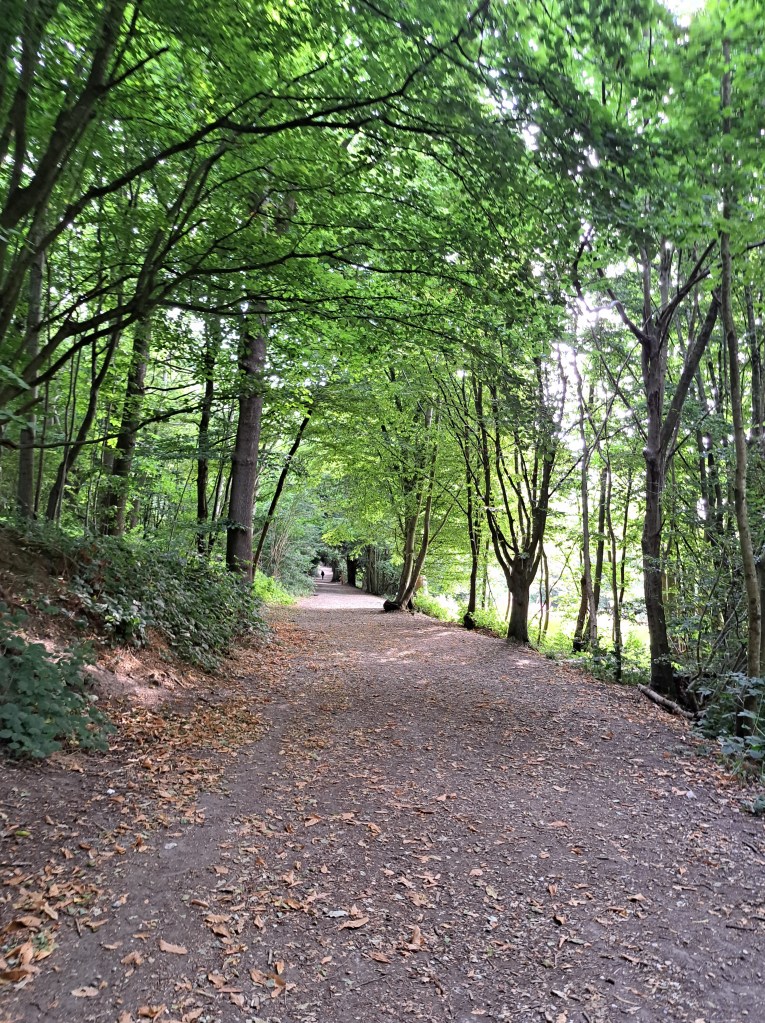
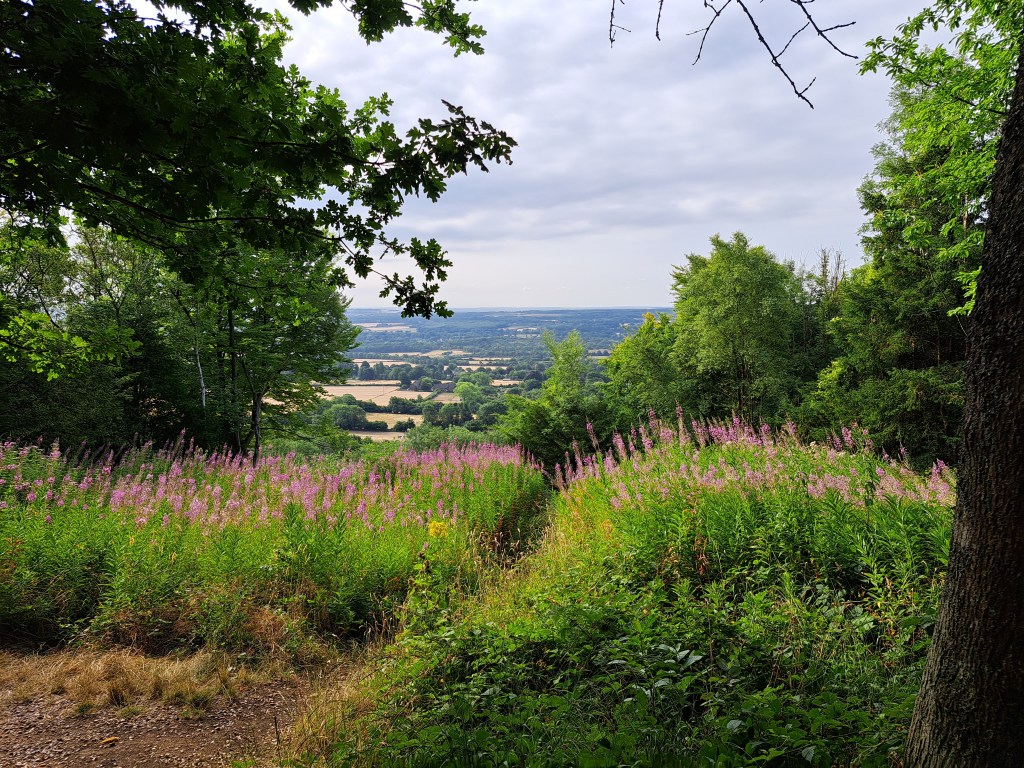
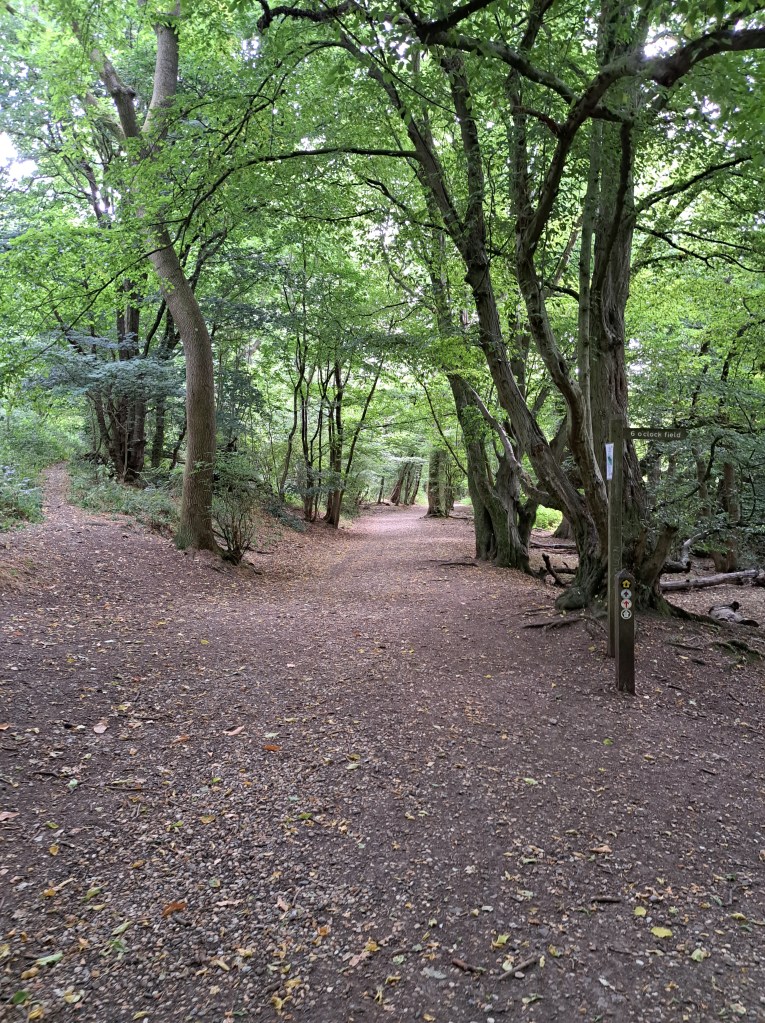
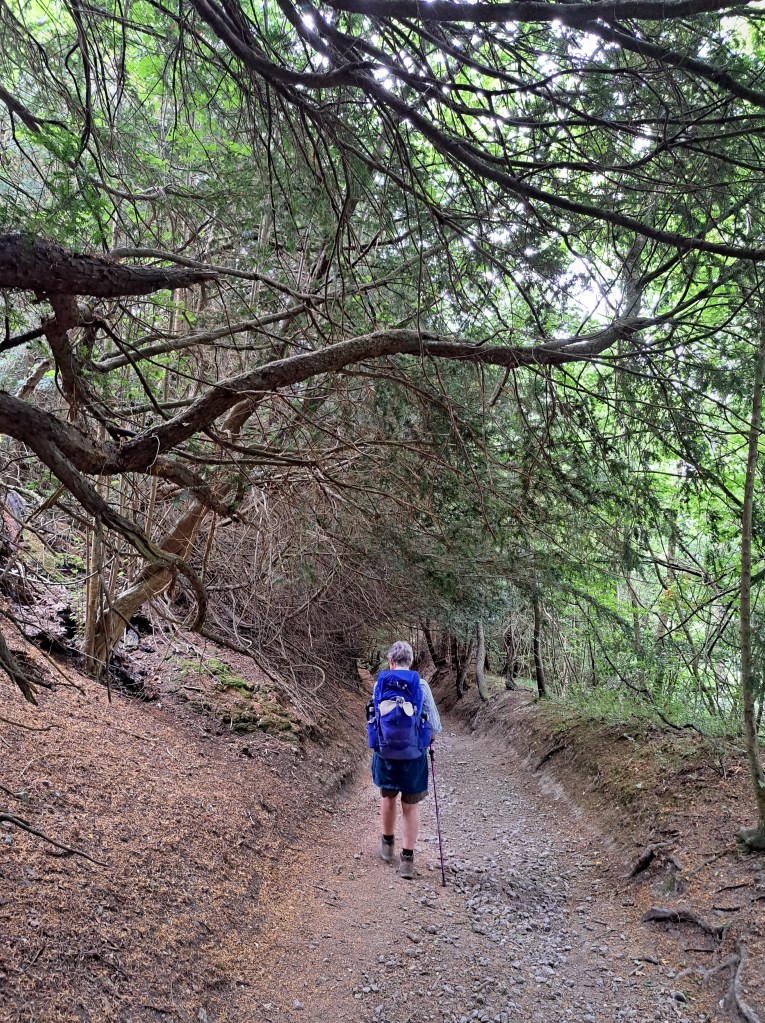
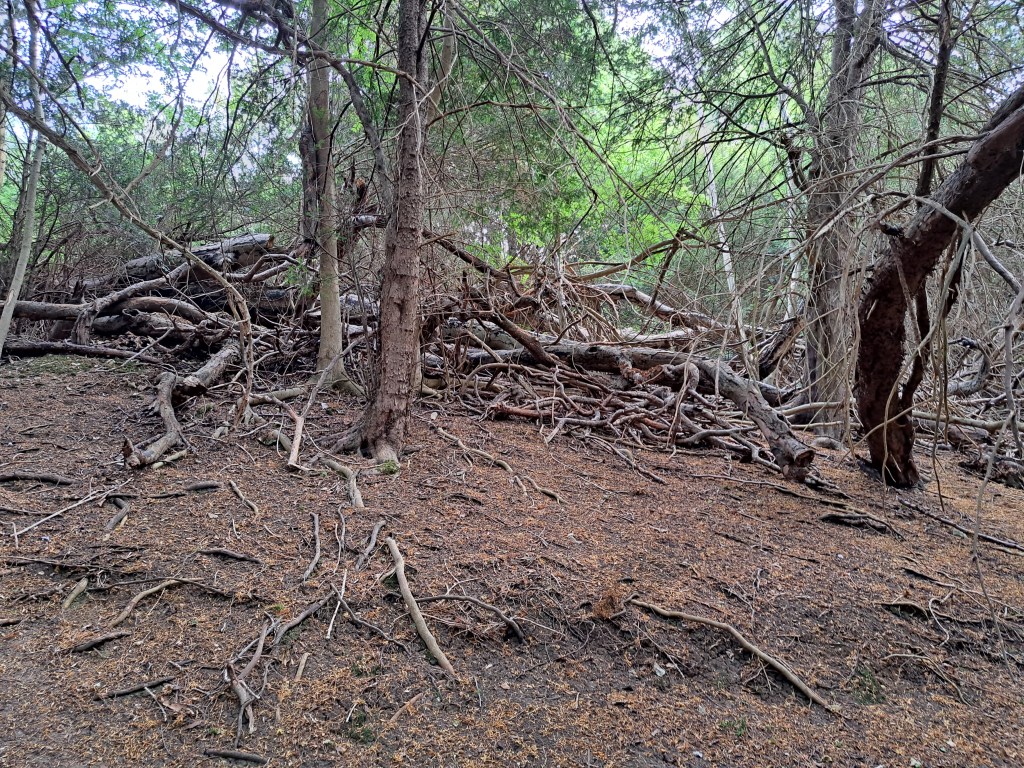
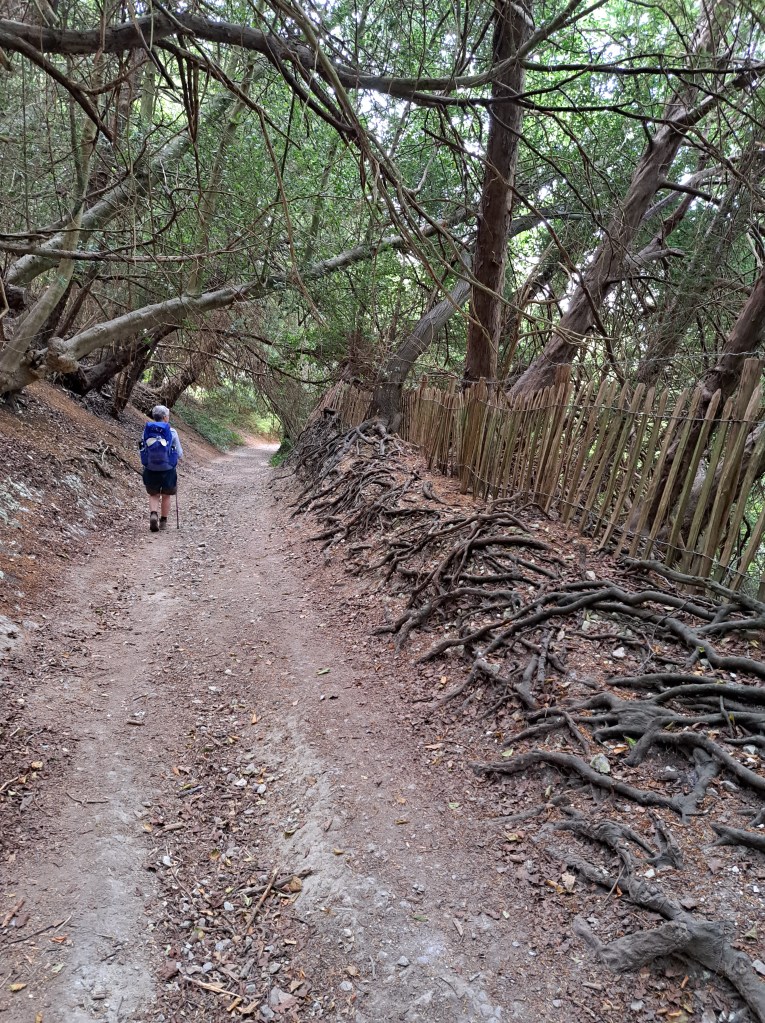
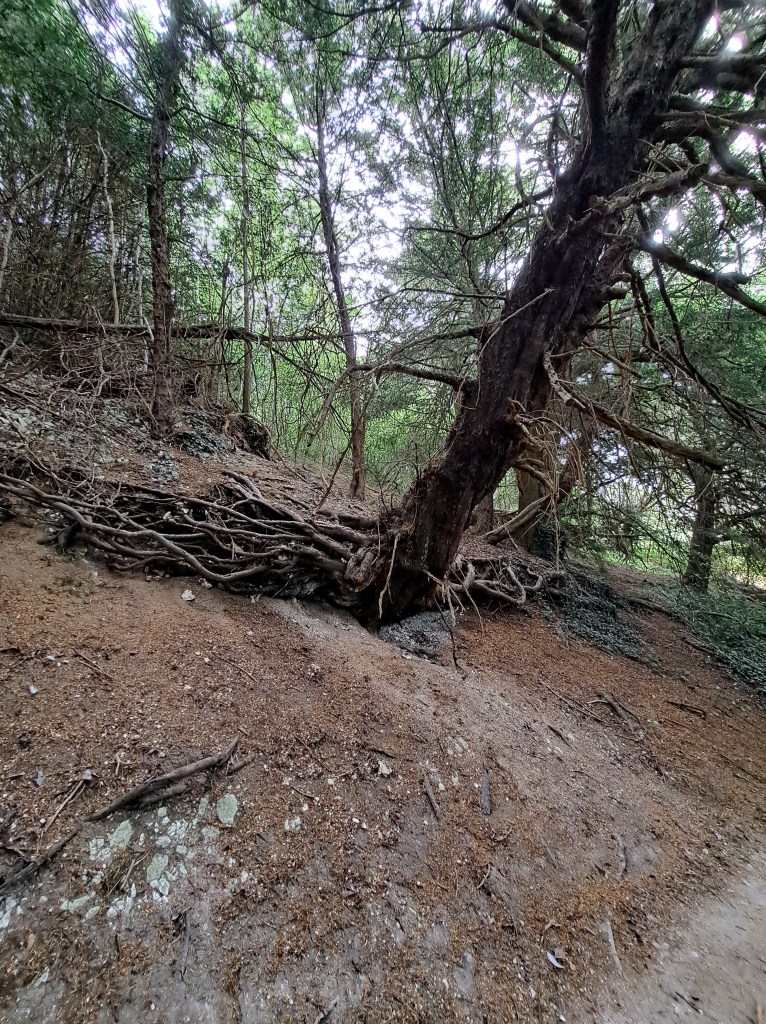
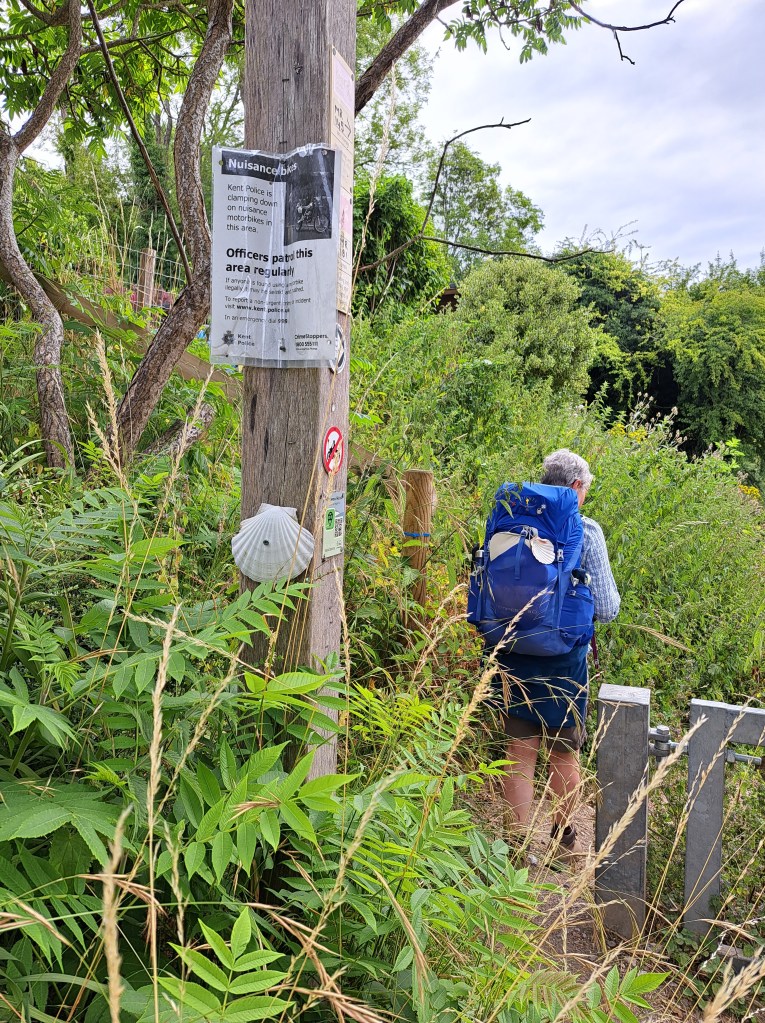
The reason why I have ended up sharing this approach is because, despite taking lots of photos, my focus is always on something other than the pictures. Indiscriminate snapping leaves me time to actually look around. I am not wasting time composing pictures. The intention is just click and go, and the desired state is for me to be as surprised as you with the results at the end of the day. Warning, expect photos of walls, paths, river surfaces and bark as we go… for the same reason.
So, while you take in the visual joy of our walk (this is an amazing place to walk through), we want to assure you that the real pilgrimage goes on wonderfully, too.
We had a thin view of the walk from London to Canterbury. For us, regardless of the walk, we always approach it as a pilgrimage and this route, for us, had all of the ingredients of one, despite our lack of confidence that we would meet any pilgrims on the way. So, we were deeply conscious of walking in the footprints of so many pilgrims and new that we were just a couple more. Nothing bad in the context of so many historical companions who have established and walking on our way.
As I have said, our welcome during each day has been consistently joyous wherever we have ended up and people’s enthusiasm for our pilgrimage have helped elevate us on a daily basis.
Then, after joining the Way from Winchester, we bumped into a trio of American pilgrims who added another level to the journey. Ironically, before this encounter, it was another pilgrim who appeared ahead of us on our way that had given us the first frisson that we were really in pilgrim territory. This lovely man walking our way turned out to be a man who hails from Cambridge and was walking the Way as part of his period of discernment after retiring and before committing to training to become an Anglican priest.
After encountering and walking with the Americans (Matthew, Ruth and Sarah) we left them to stride on ahead as we continued, then we met up with the other pilgrim, Chris, as we entered a little church. He waved us in and we entered a place filled with peace and joy.
Matthew, who is a singer, songwriter and story teller had found a piano in the church. He was playing and singing something that just seemed to filter through the air, fuse with the stones around us and resonate as if it was something organic that was there to offer us peace and shelter on our way.
This was back to the full rich palette of pilgrimage that all of us seek. Thank you Matthew, Ruth and Sarah!
So, that evening we stayed together in Aylesford, encountered each other on the way the next day, Chris walked with us, on and off and was already in the pub we arrived in for lunch the next day, and the then the two of us and our American pilgrims shared Sung Evensong tonight in Canterbury. Chris doesn’t arrive until tomorrow and we are all praying for him.
So, Just before I finish this rambling blurb, I want to urge you to check out Matthew’s site. His music, like his personality, is deep rooted, reflective, and richly inspired. Go here now then come back for my conclusions (just set my self up… see you in a long while) https://www.matthewclark.net/ .
So, despite all of our physical distractions, and despite the fact that one of our consistent comments, as we walk, is that we are so lucky to be walking here, in these special places and times, there is a specific core that underlines all of our walks. And it is something that has been at the heart of our experience so far.
The idea that we are walking in other people’s footsteps seems such a trite idea that it almost worries me that it might not be enough for such discerning readers as you. But that is really it. People were walking here yesterday. They walked here last year and last century.
They were here a thousand years ago and I might even know some of their names. They stayed and drank in the pubs we stayed in and (wait for it) drank in those places, too. The forebears of some of those serving us were serving pilgrims hundreds of years ago. They built and developed the churches and they cultivated the fields, Their livestock were driven along our paths, and they skipped along those paths to markets and to visit girlfriends, boyfriends and family as well as going on those longer walks. These paths are redolent of so many people’s lives and experiences and we are part of that geographical and temporal narrative, too. Our prayers have been heard within the walls of the same places of worship and the people who welcomed us into Canterbury as pilgrims were working and volunteering to carry out these very old traditions that have continued and have been unbroken (despite the reformation) for hundreds of years.
The fact that we are not on our own as we partake in this deep rooted journey gives us hope and joy and confirms, for us, the personal commitment we have for the rest of our journey. It adds to our growing anticipation as we head south to Dover and to France. The buzz on the path is real ands alive and we can feel it through our feet!!!!
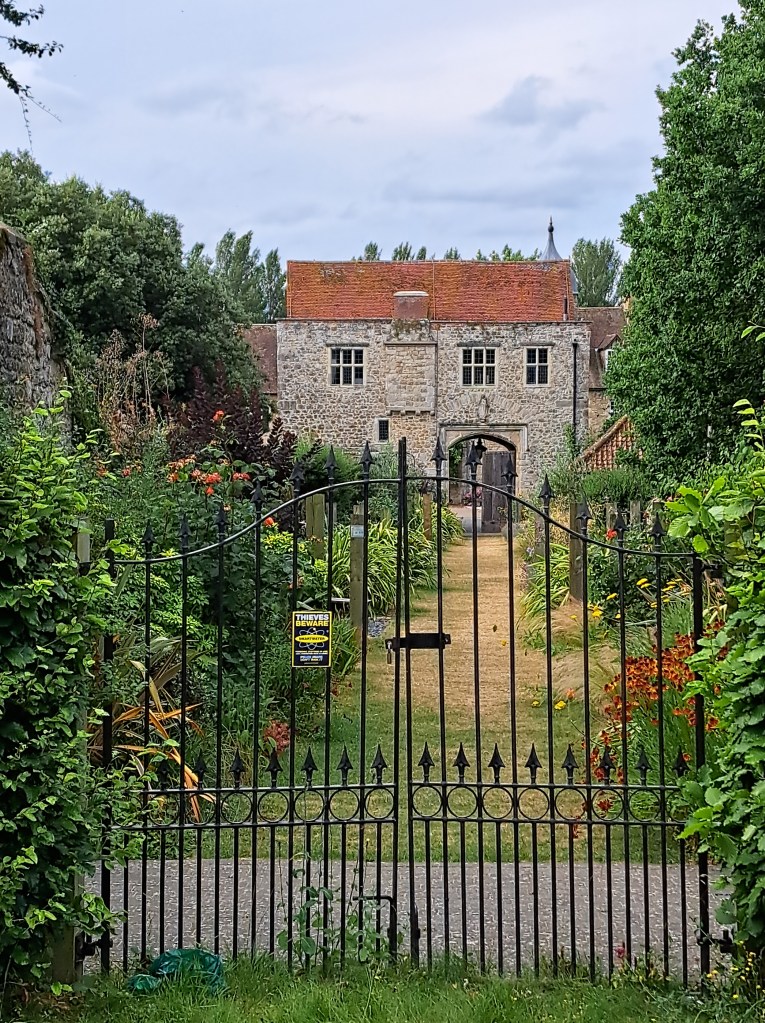
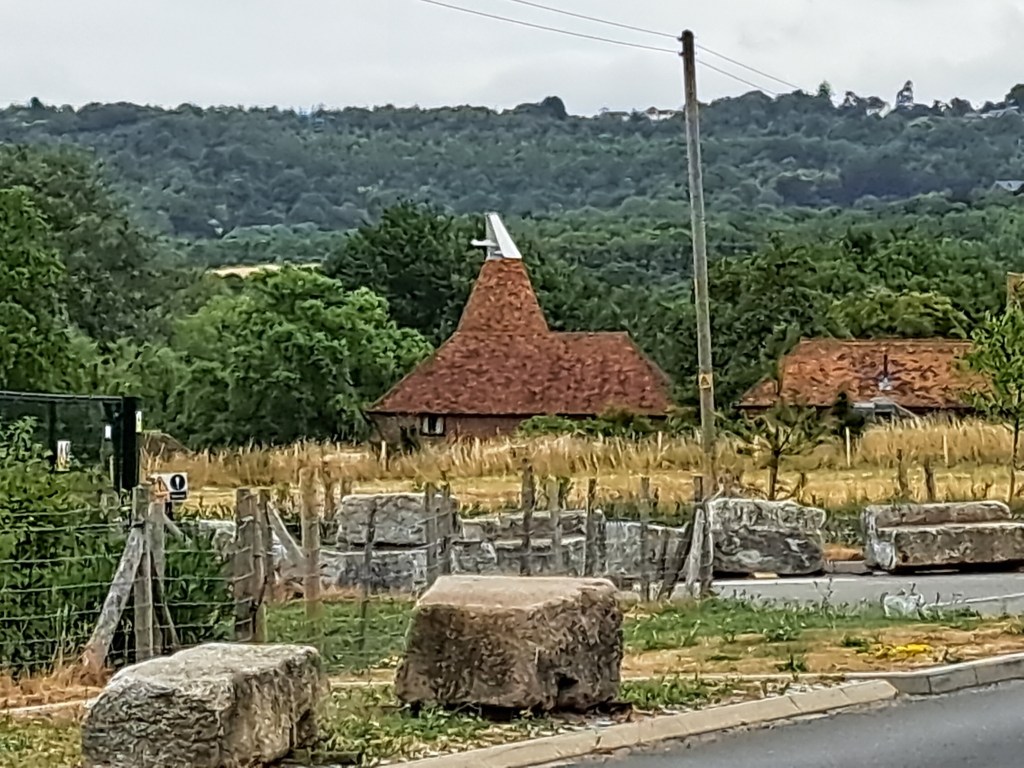
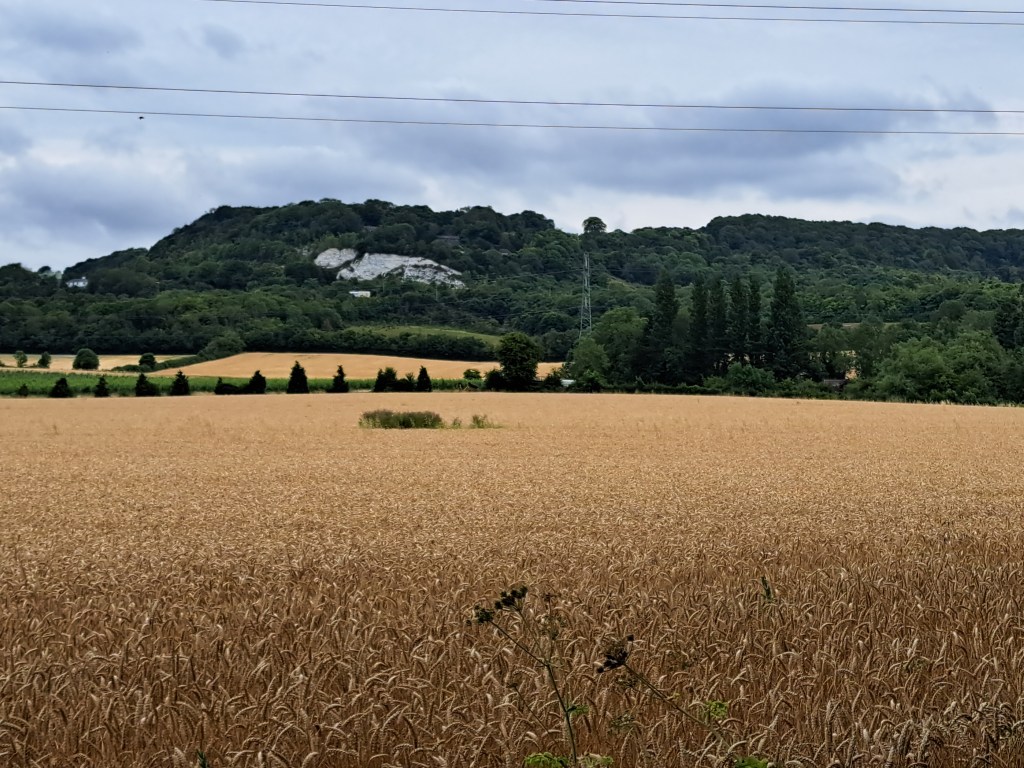
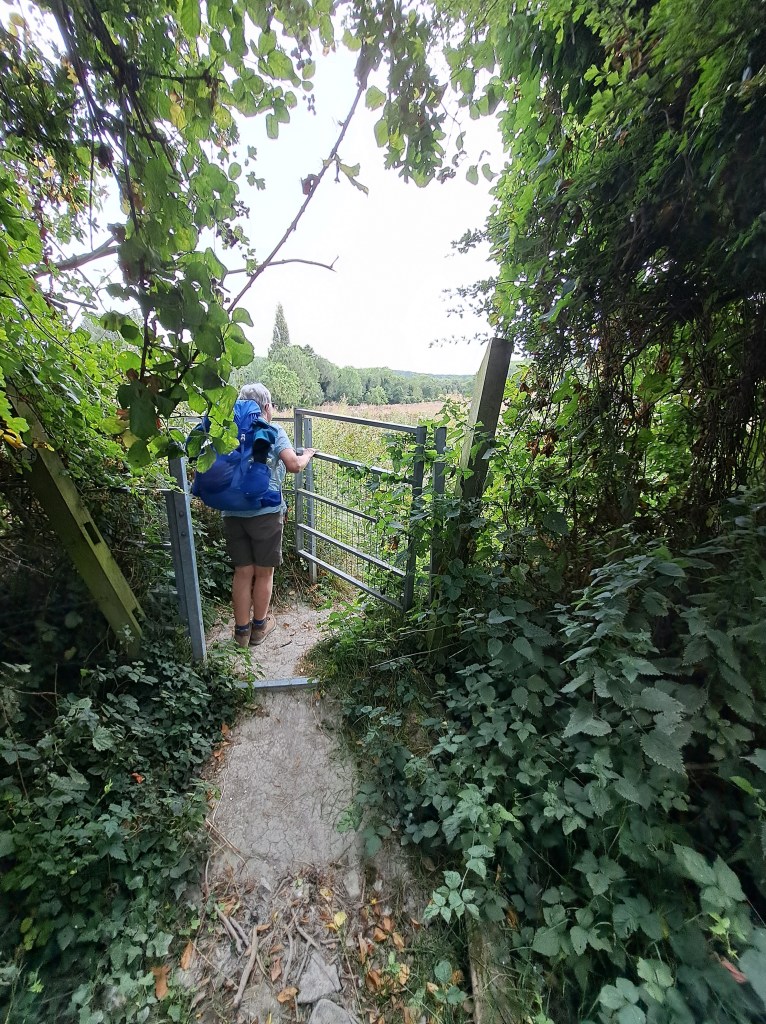
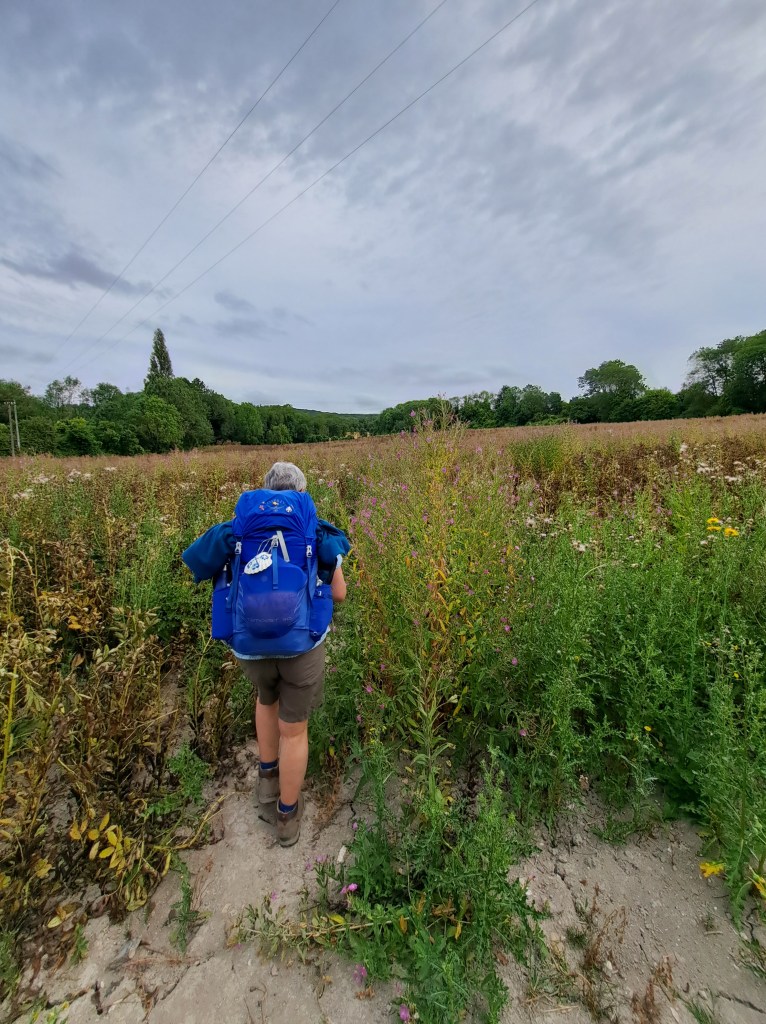
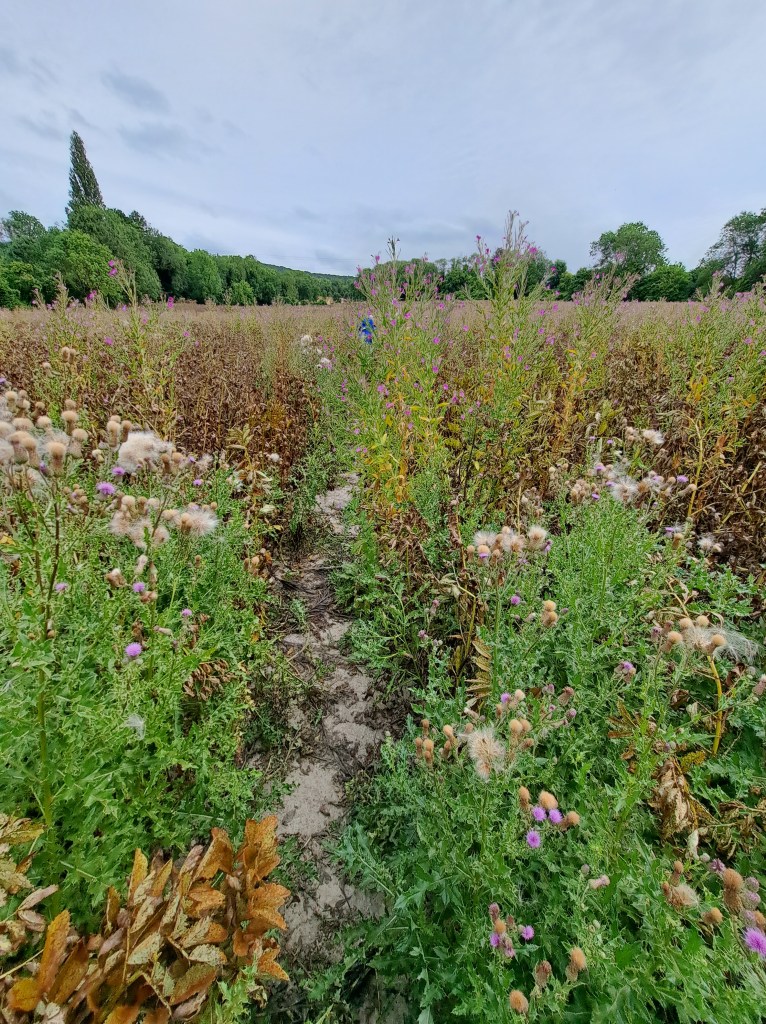
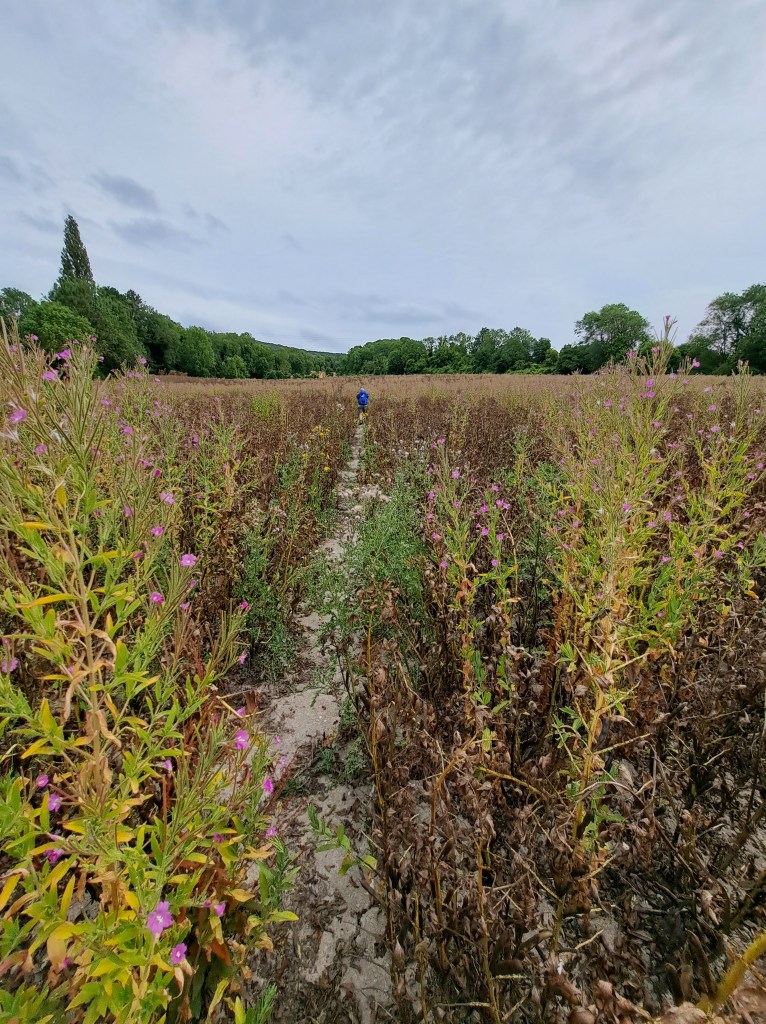
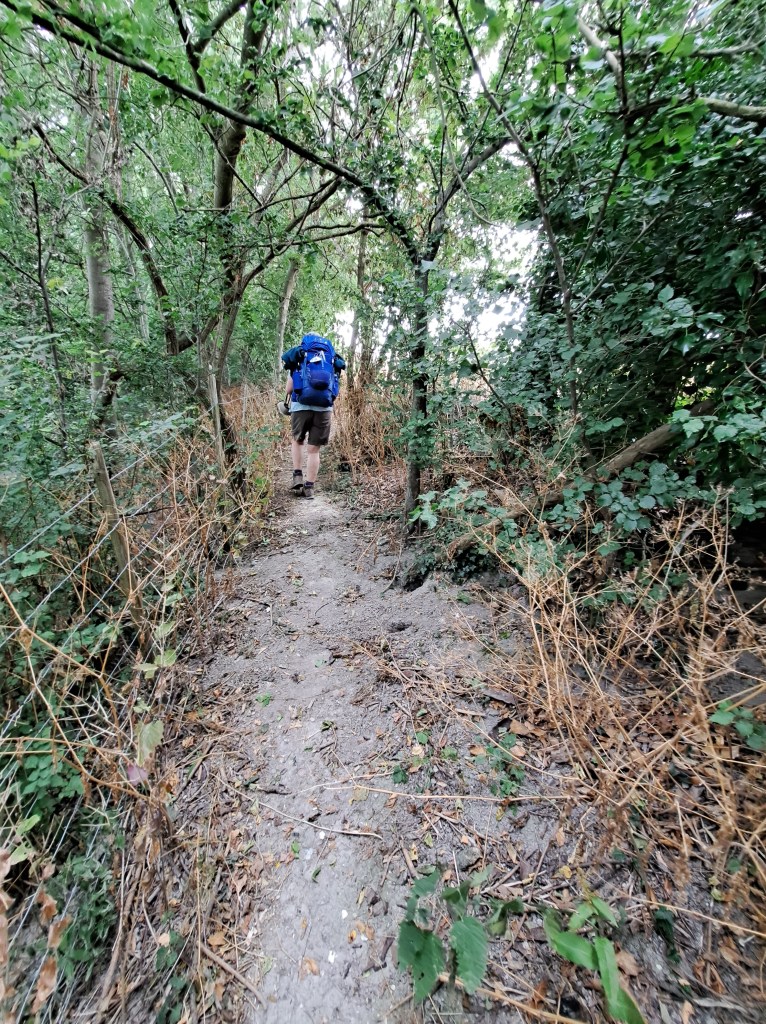
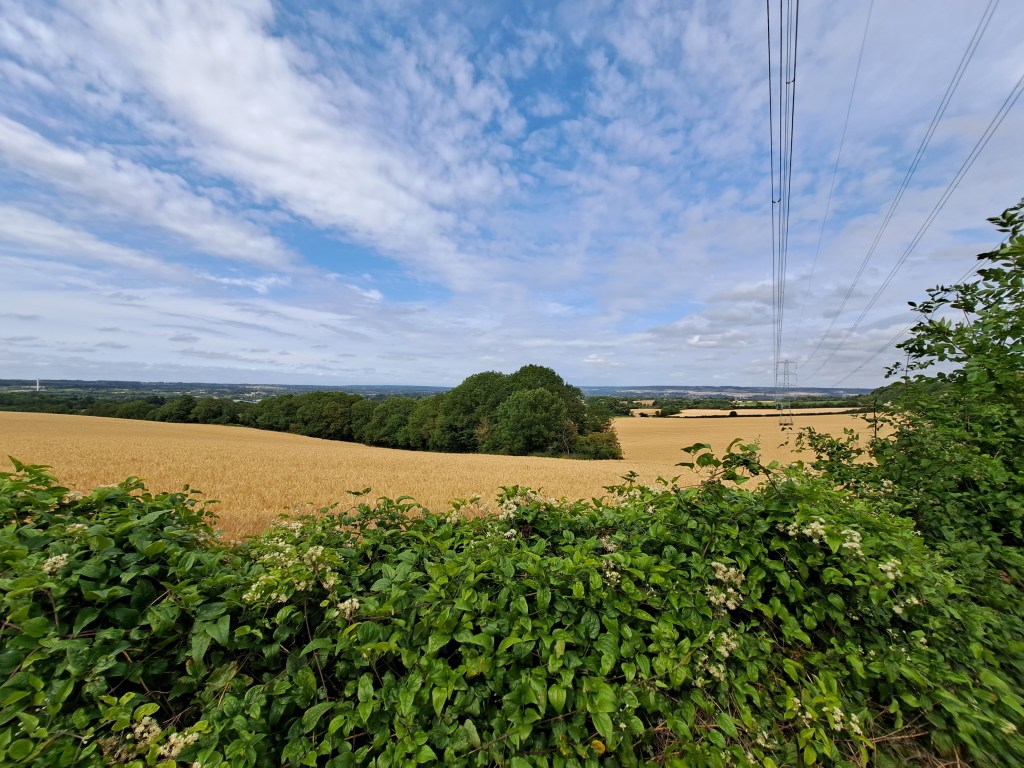
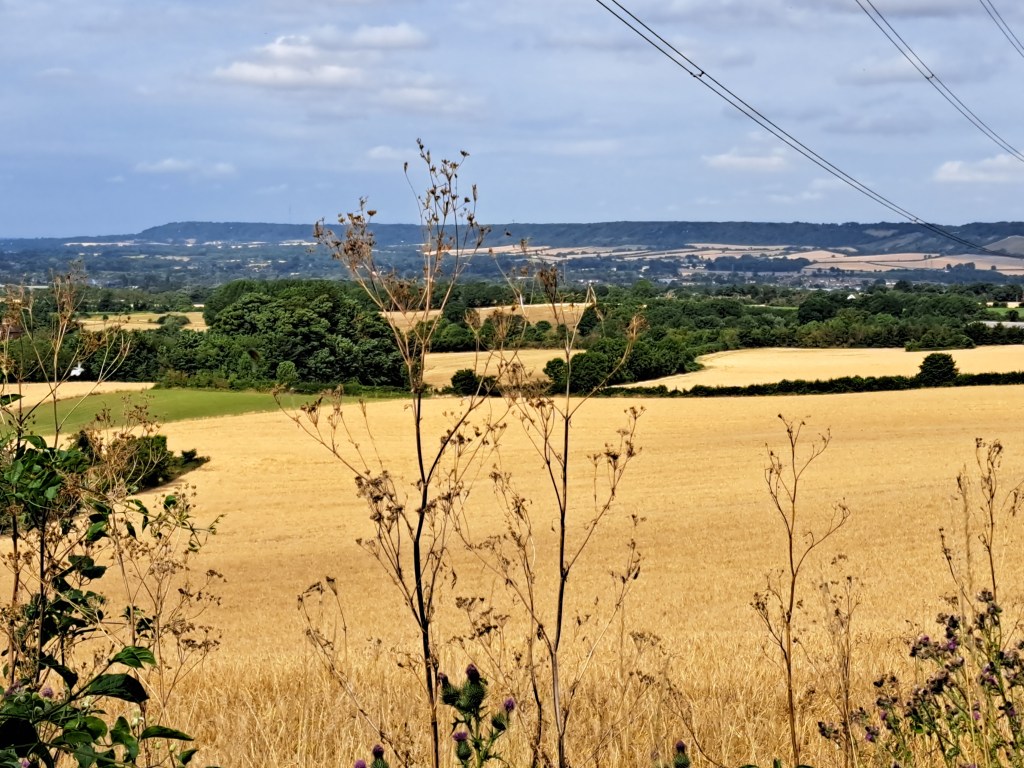
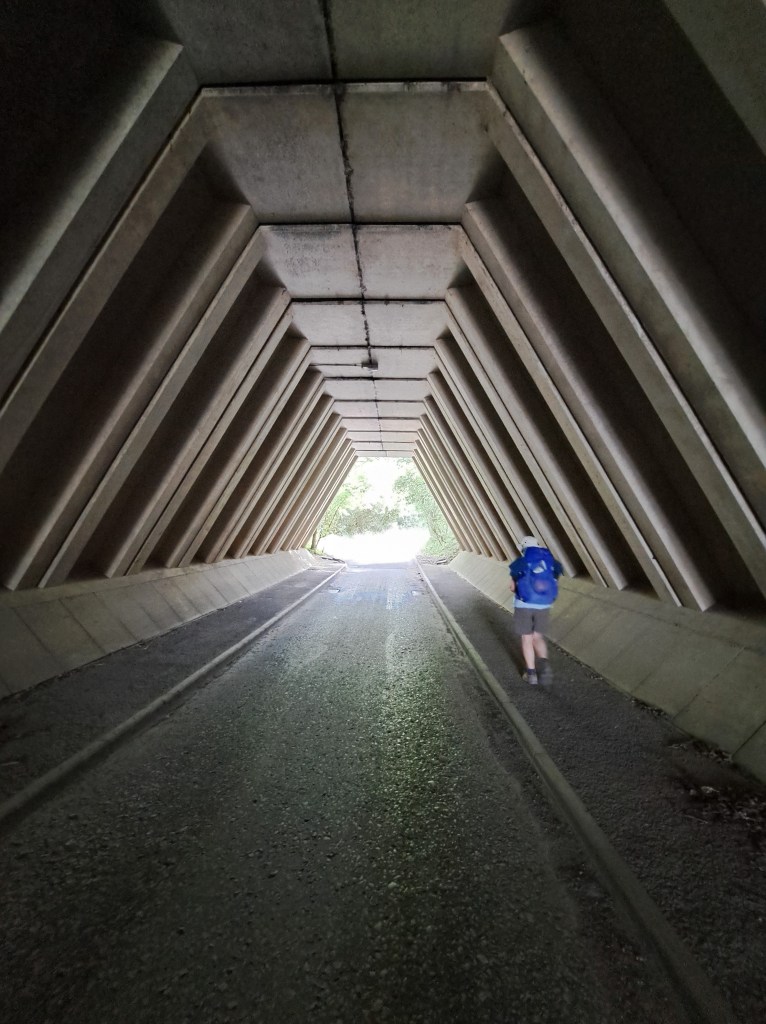
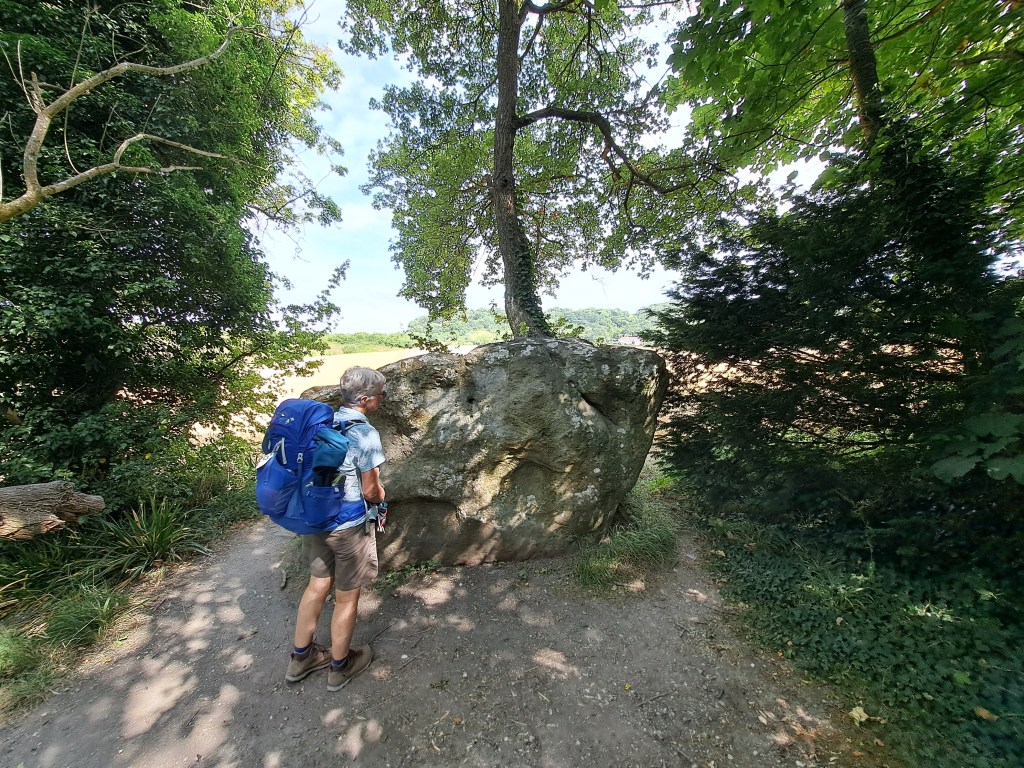
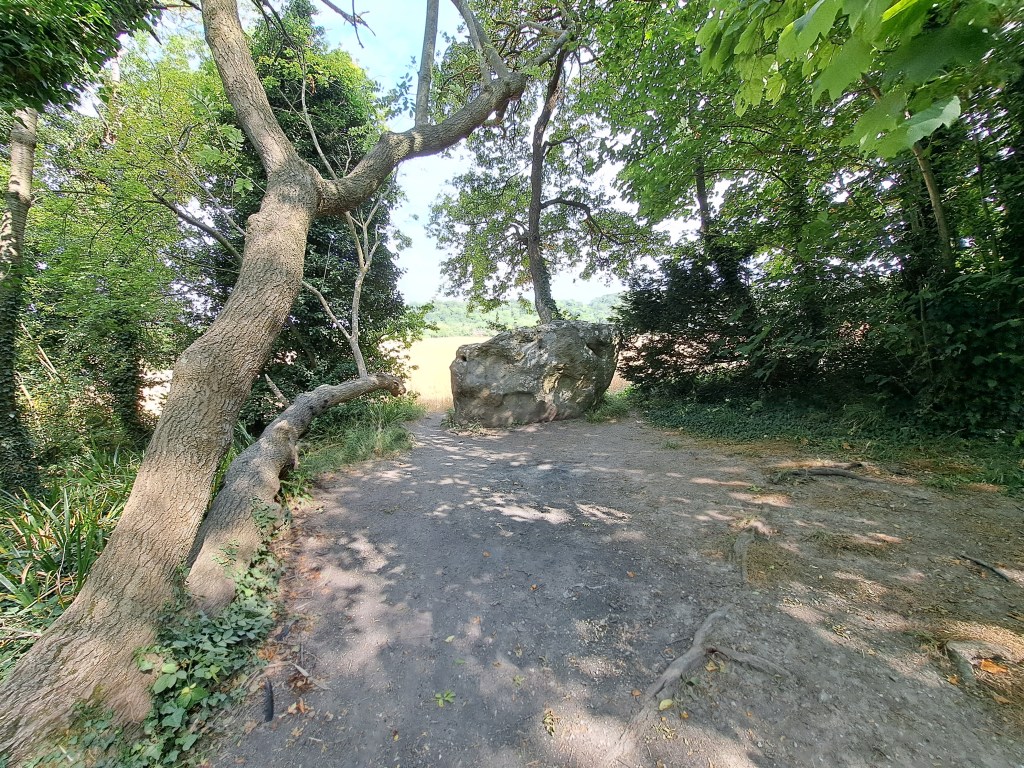
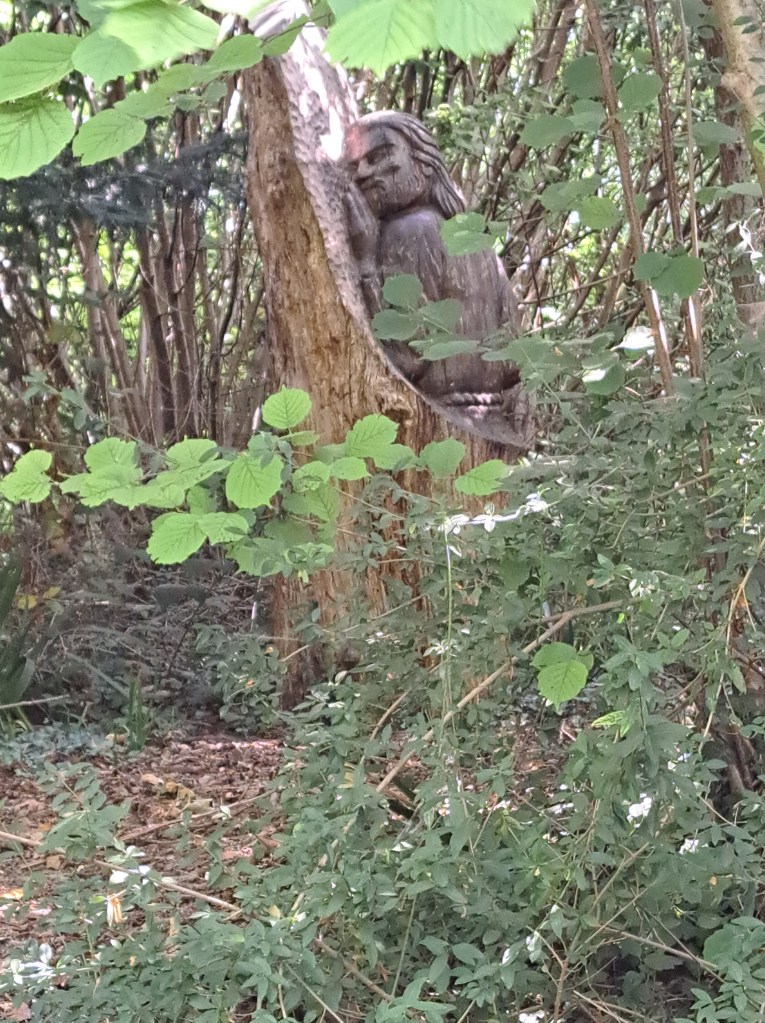
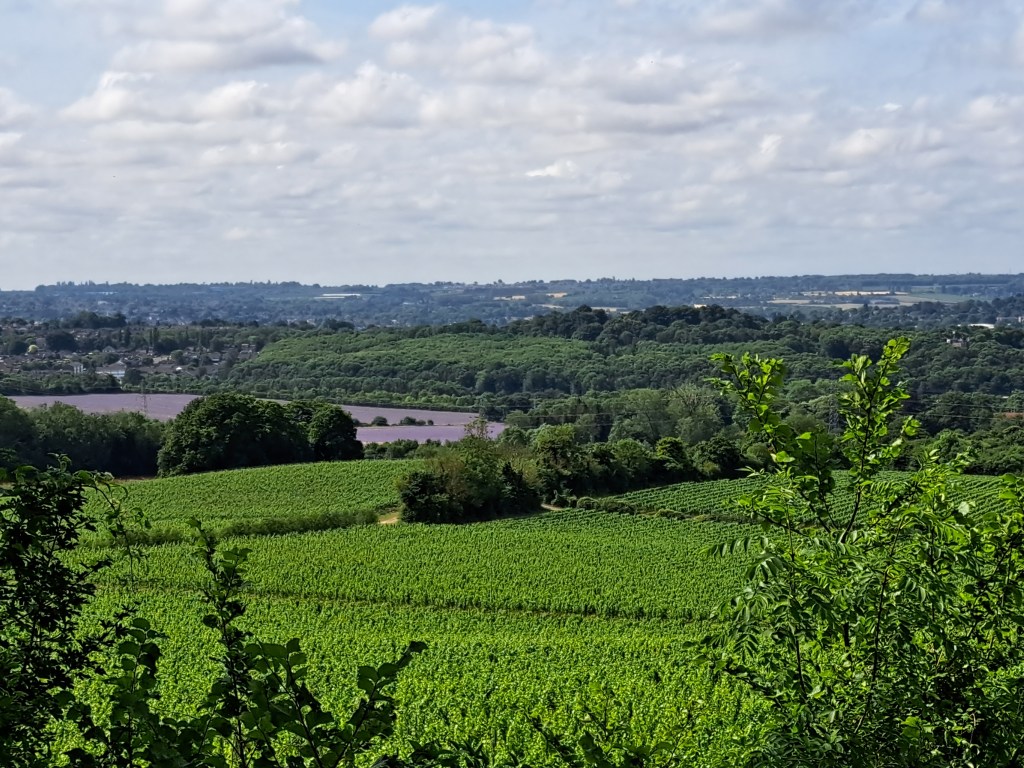
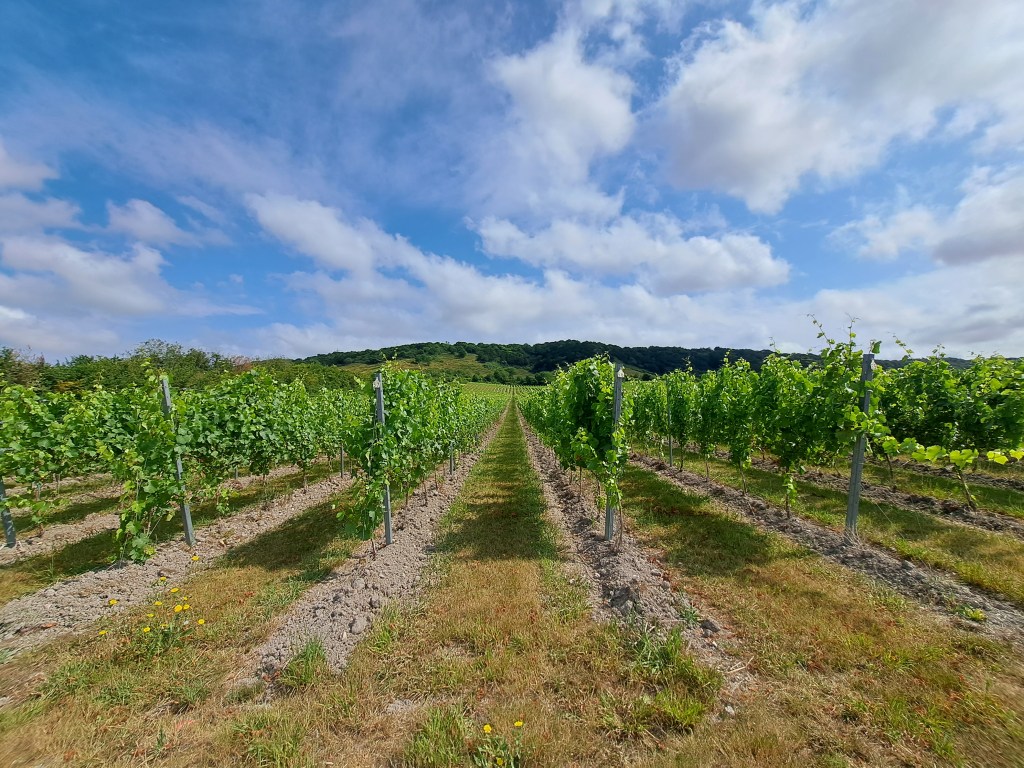
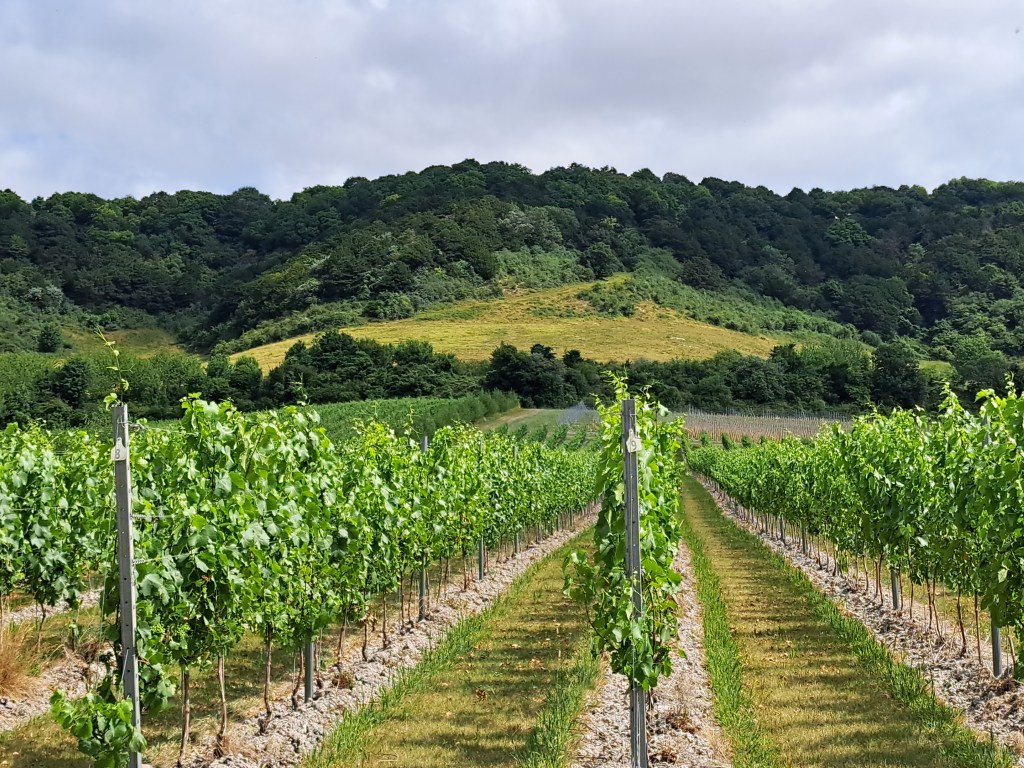
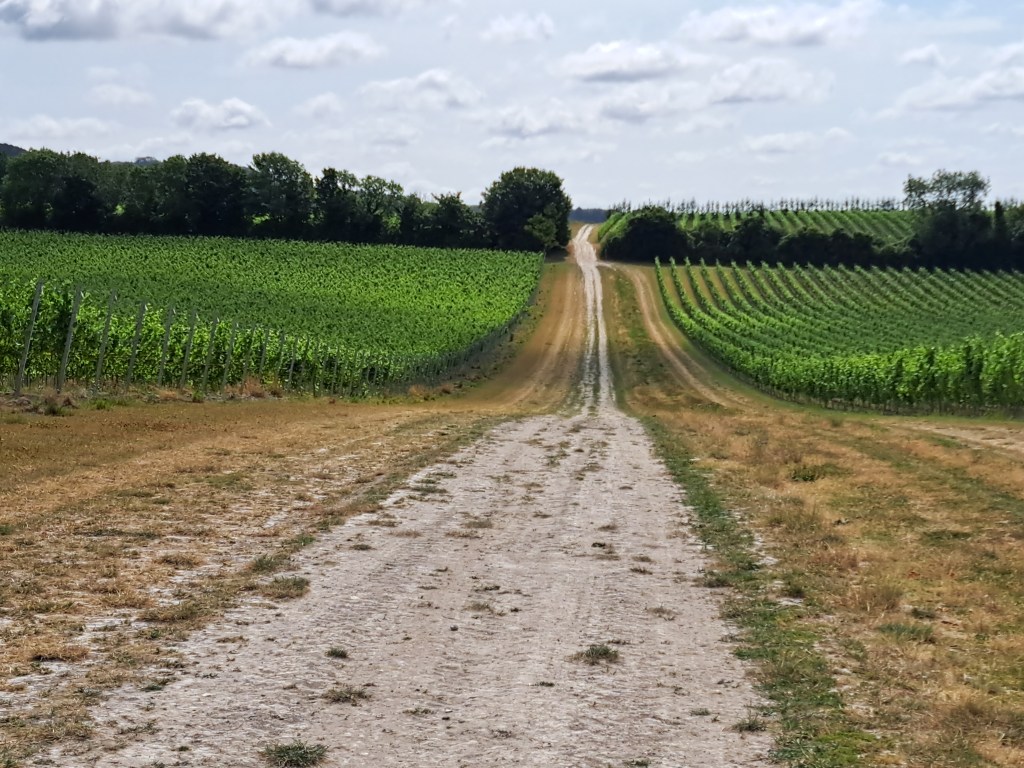
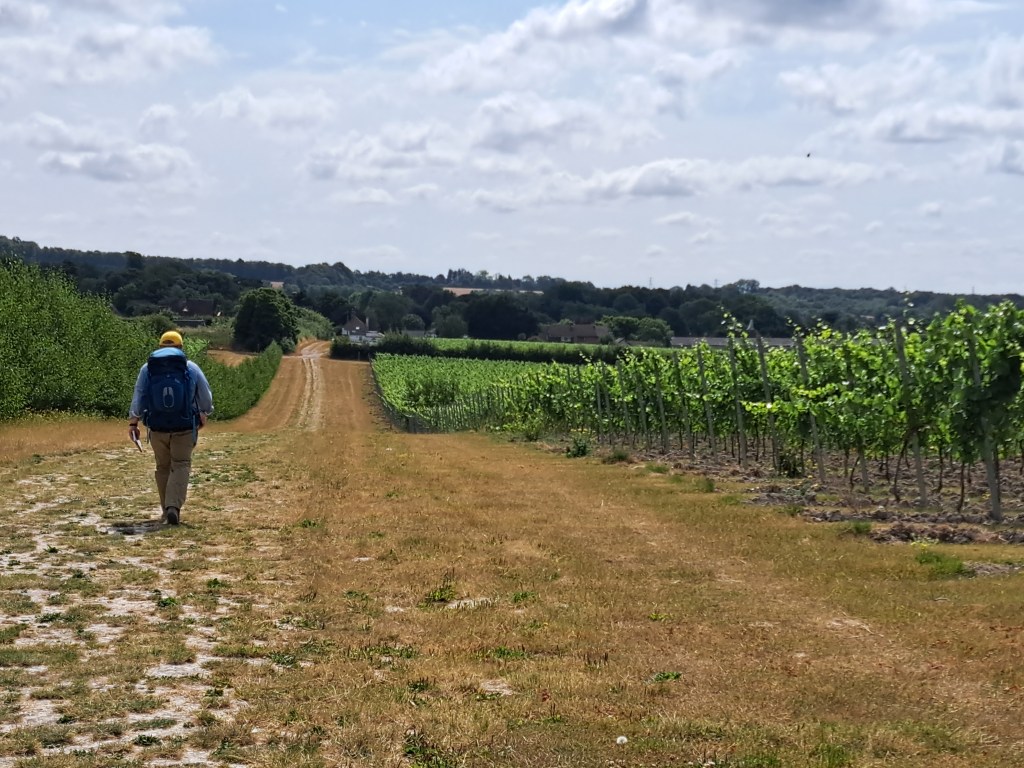
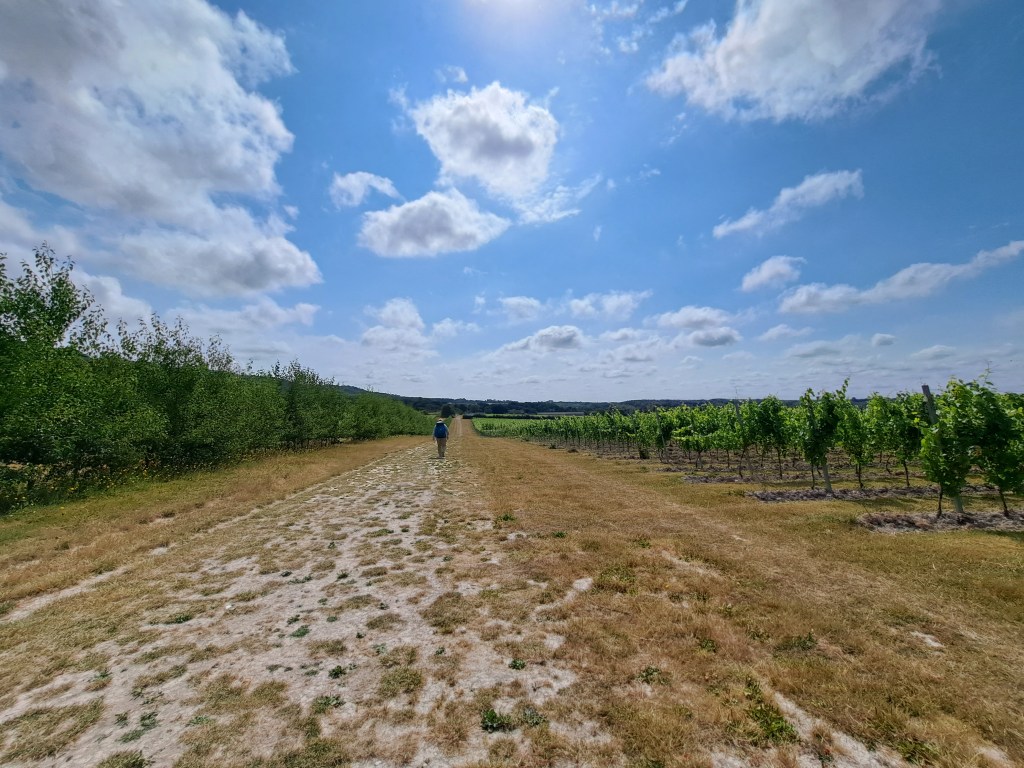
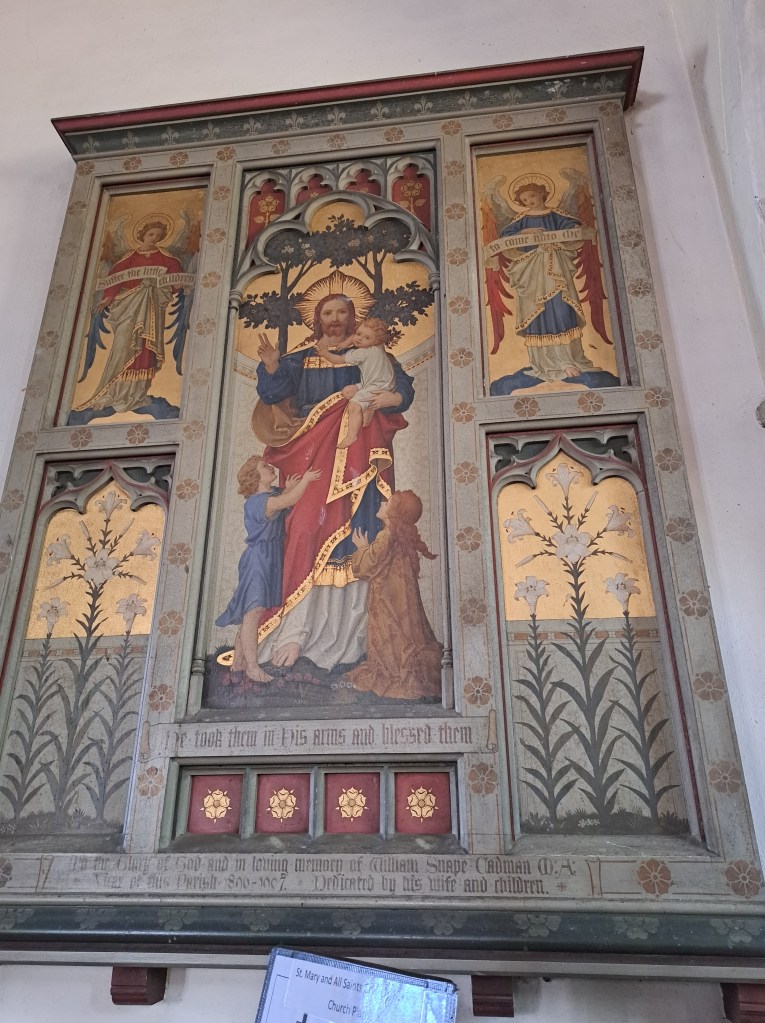
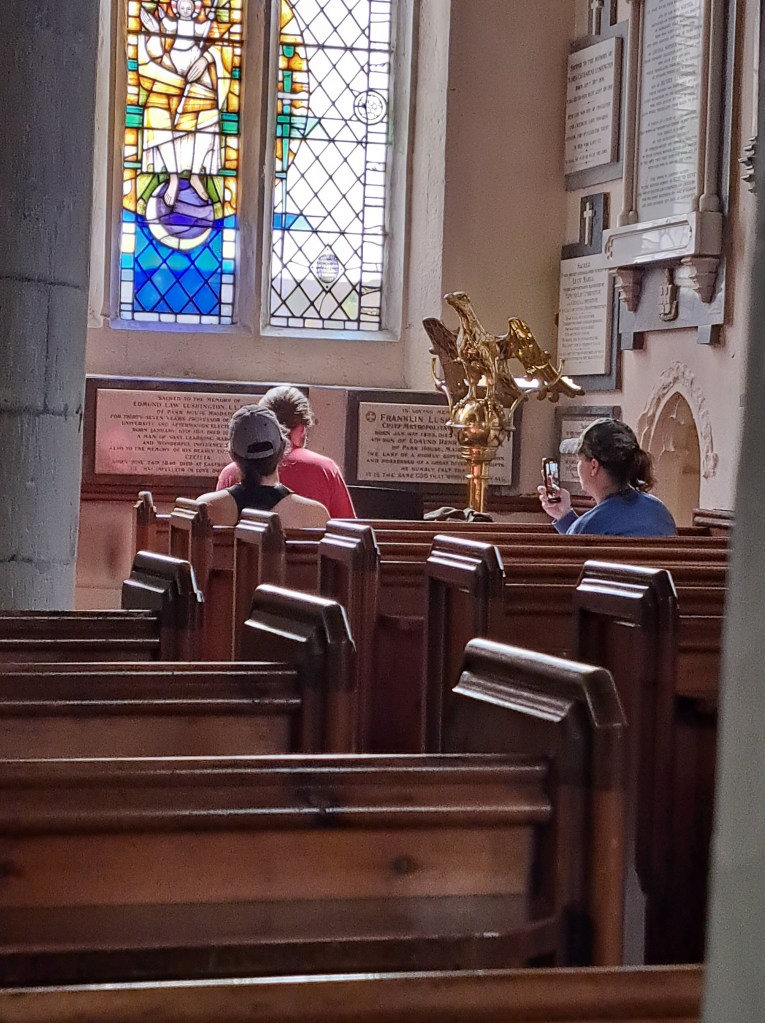
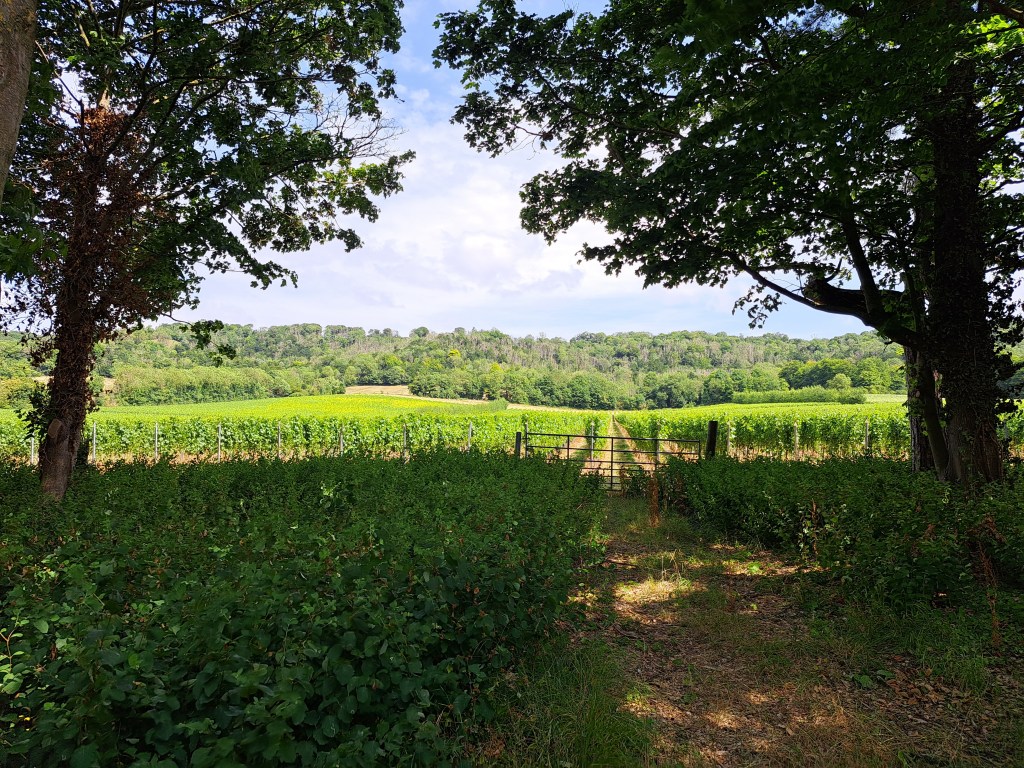
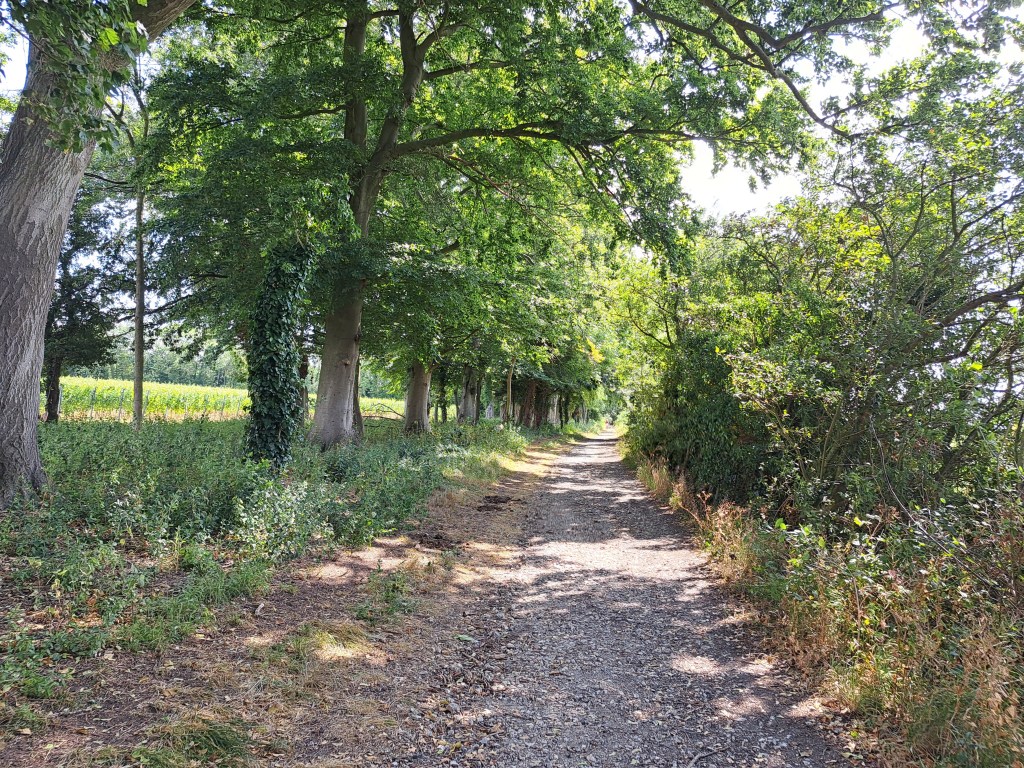
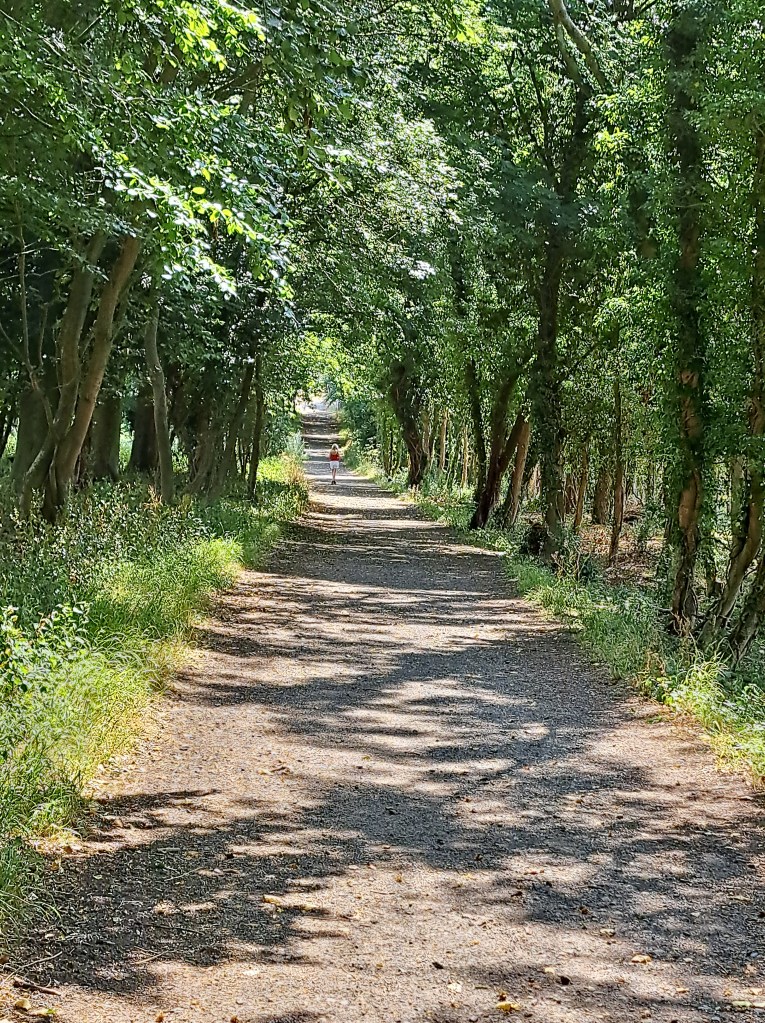
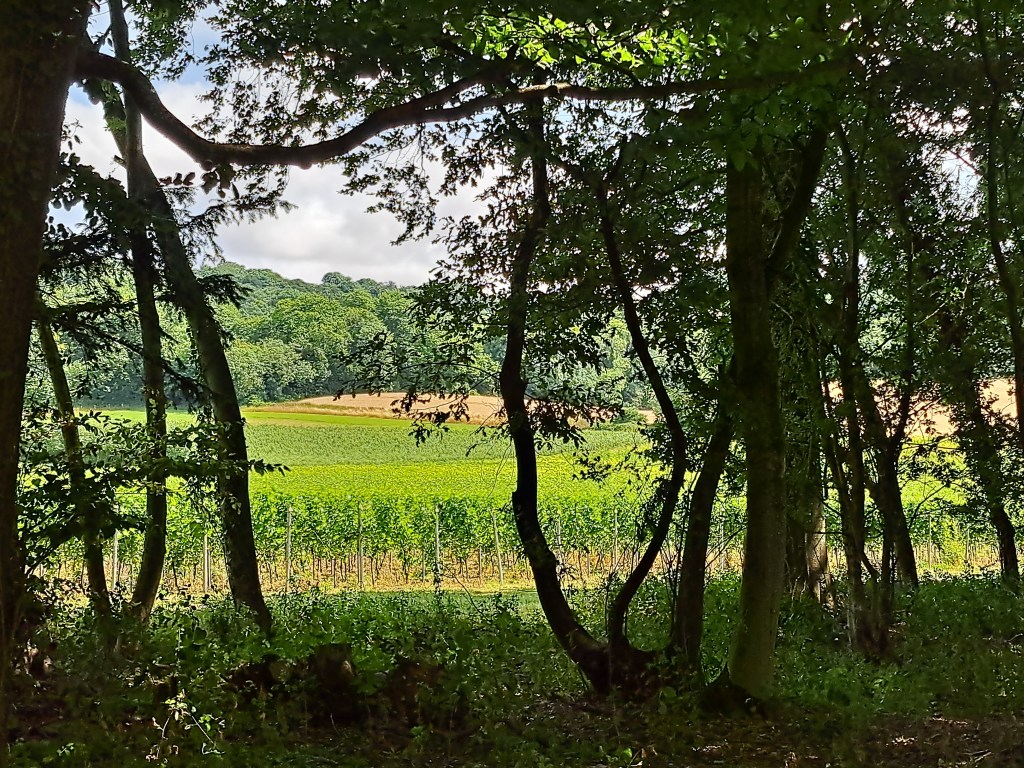
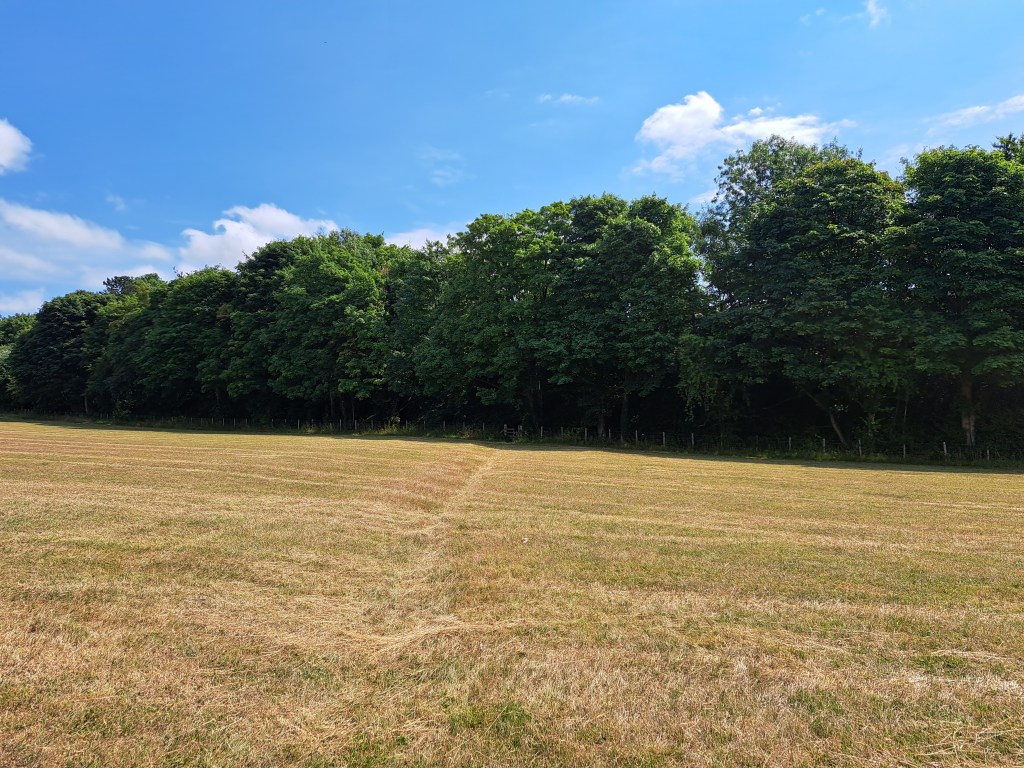
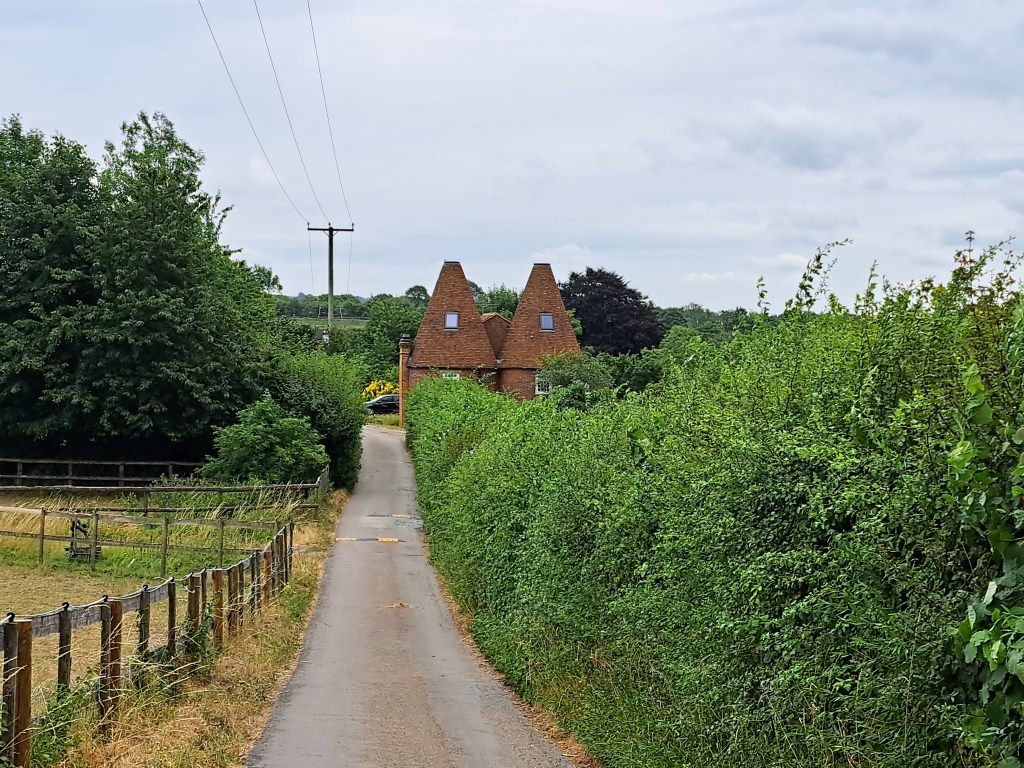
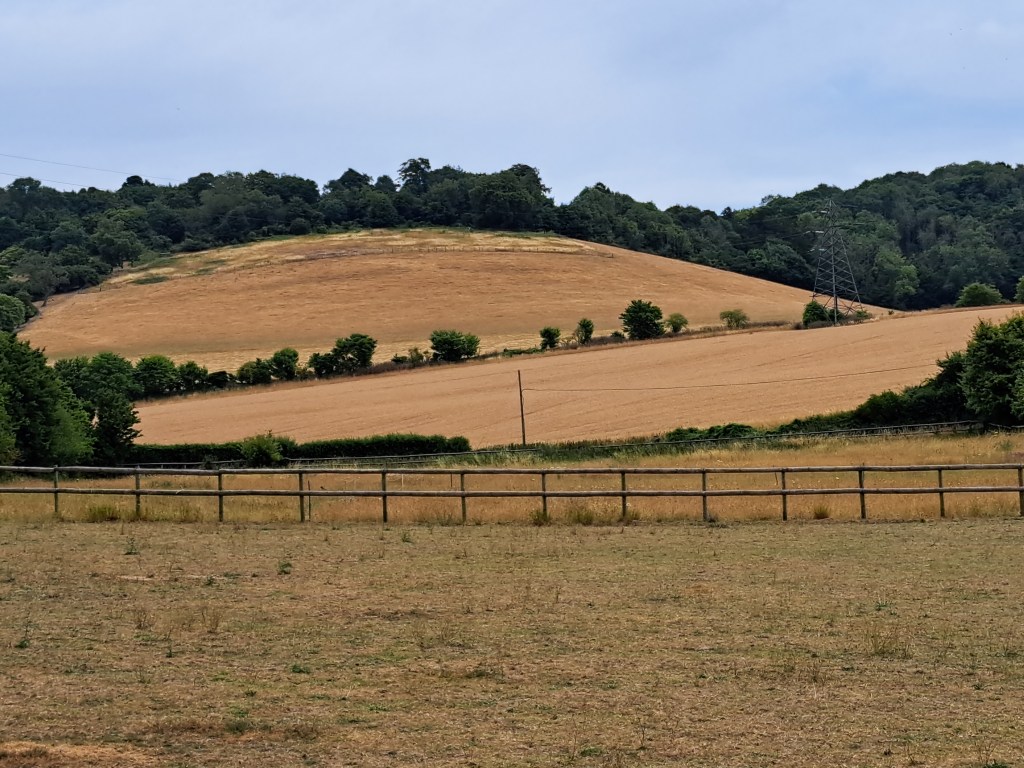
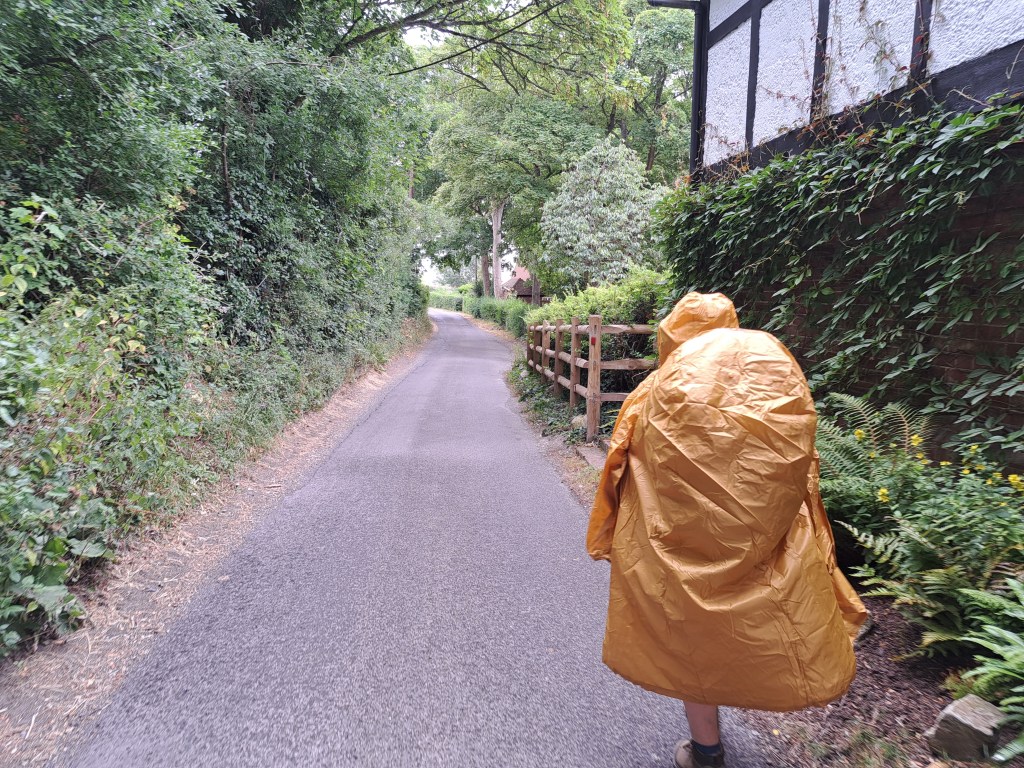
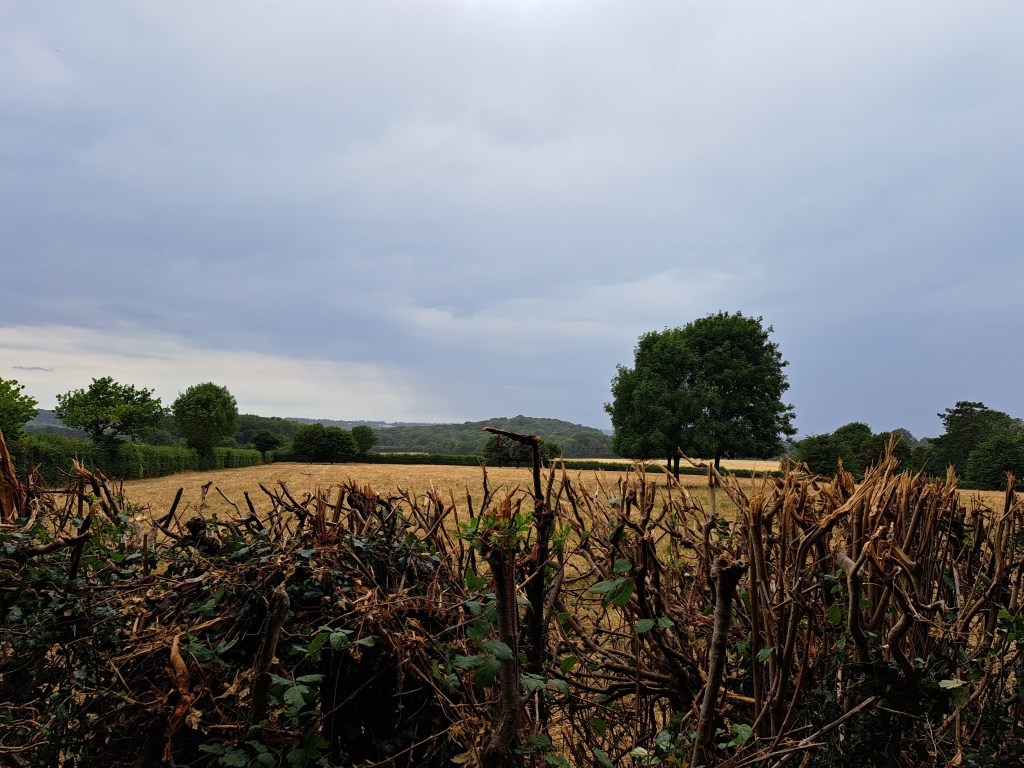
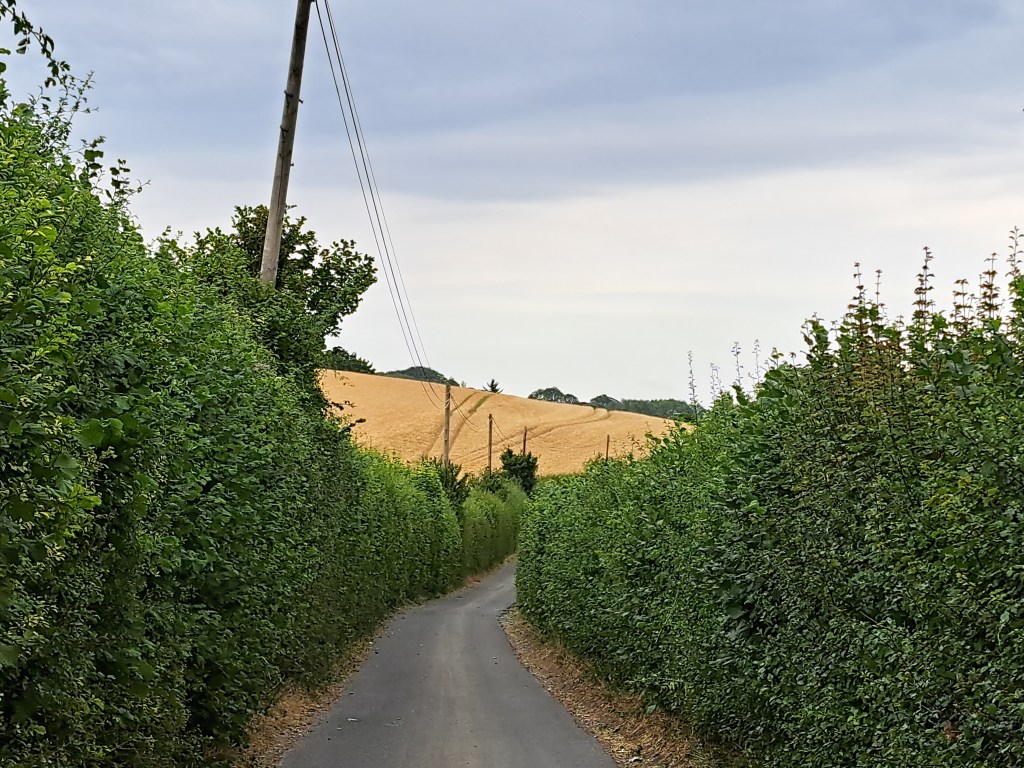
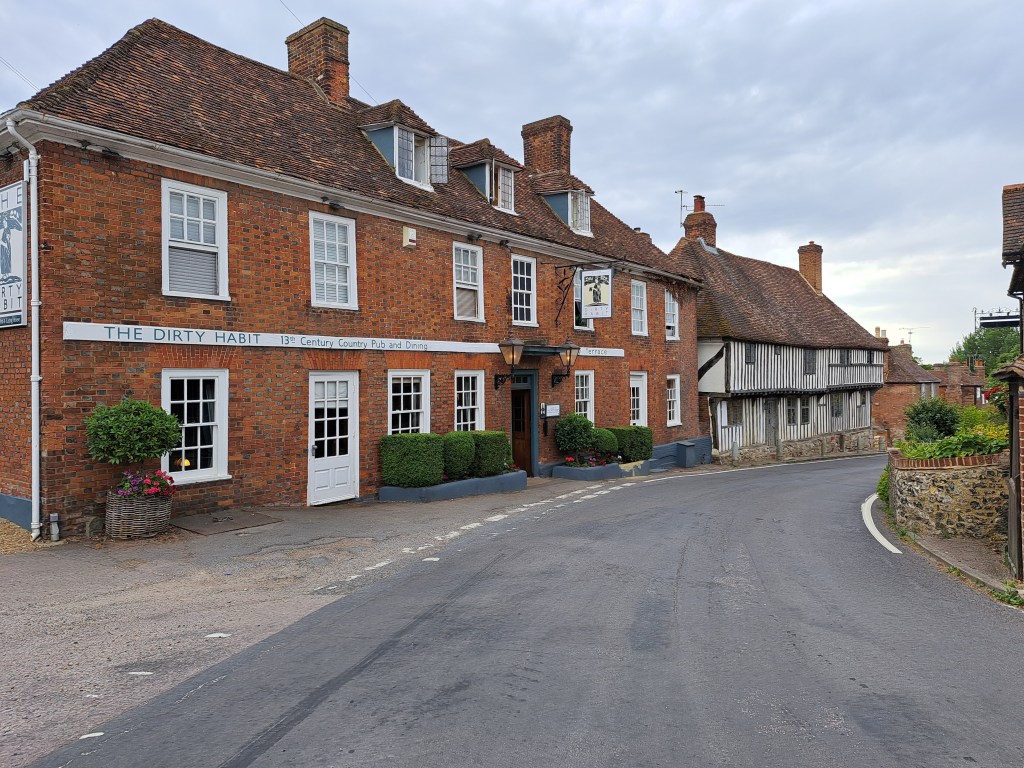
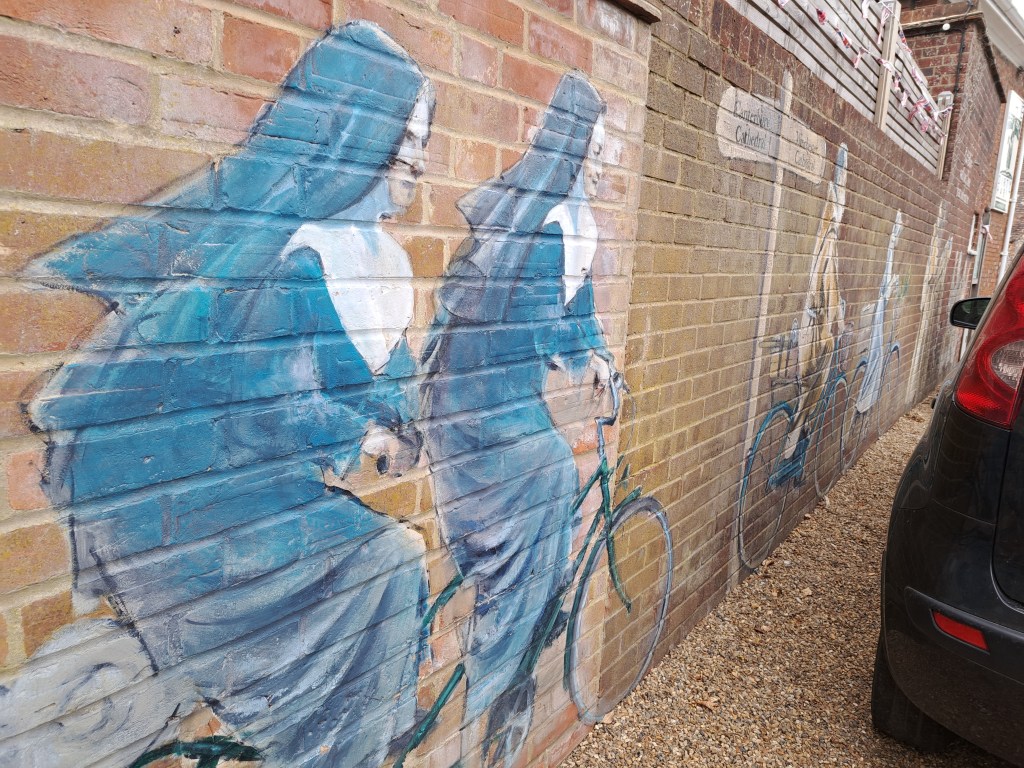
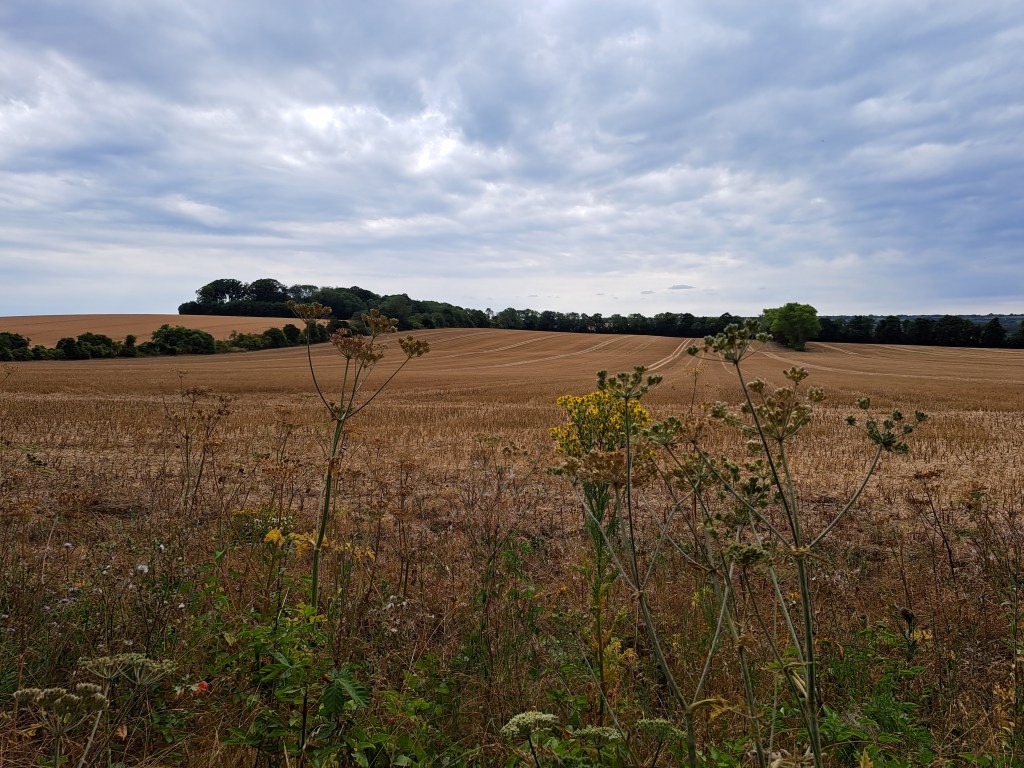
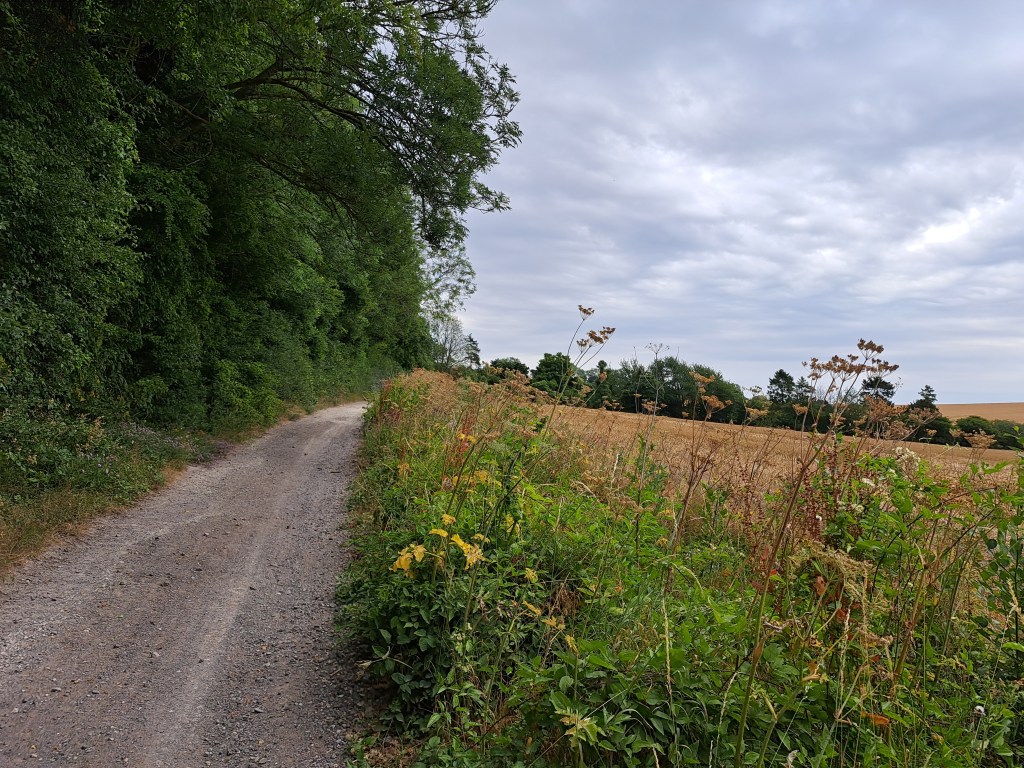
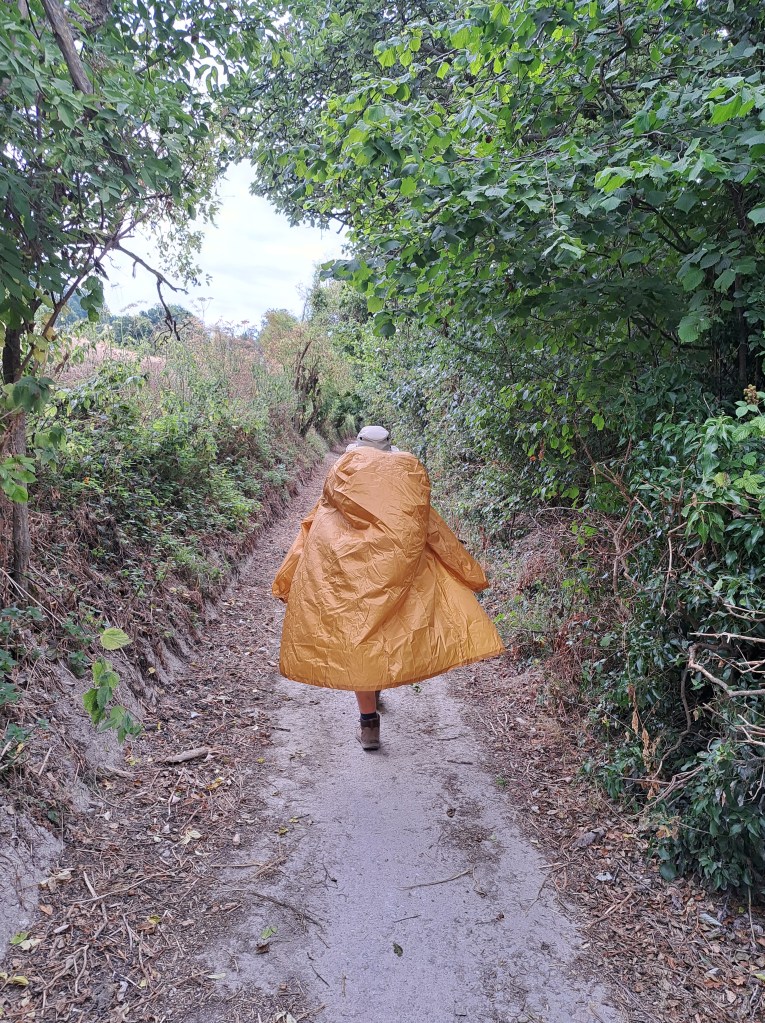
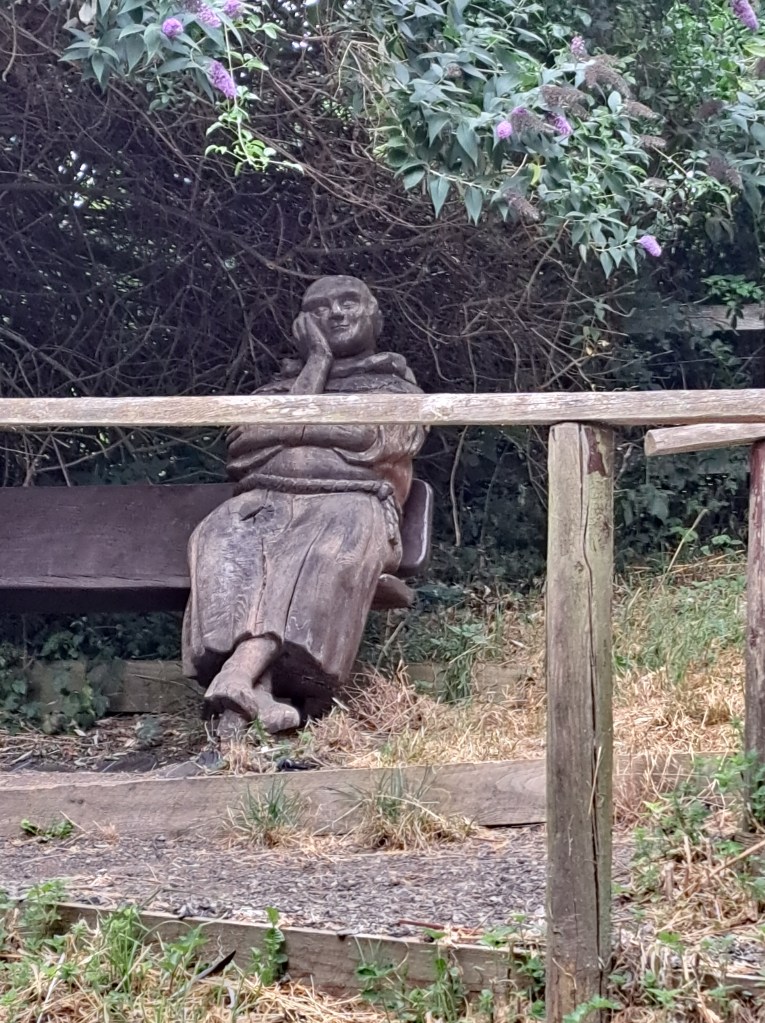
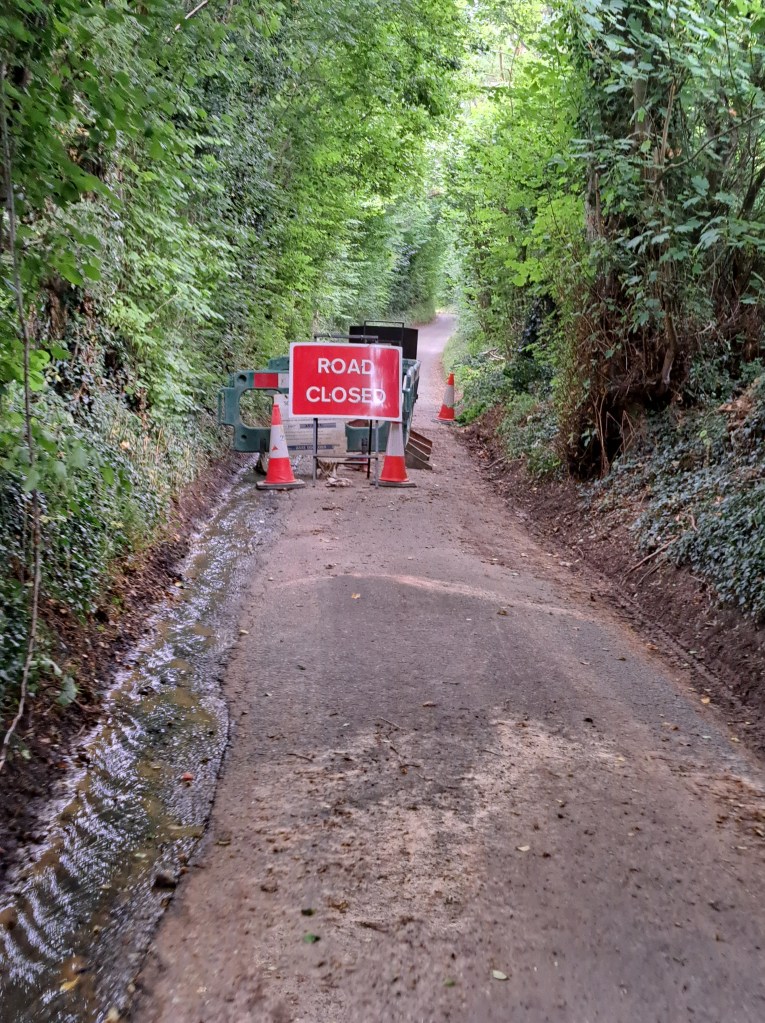
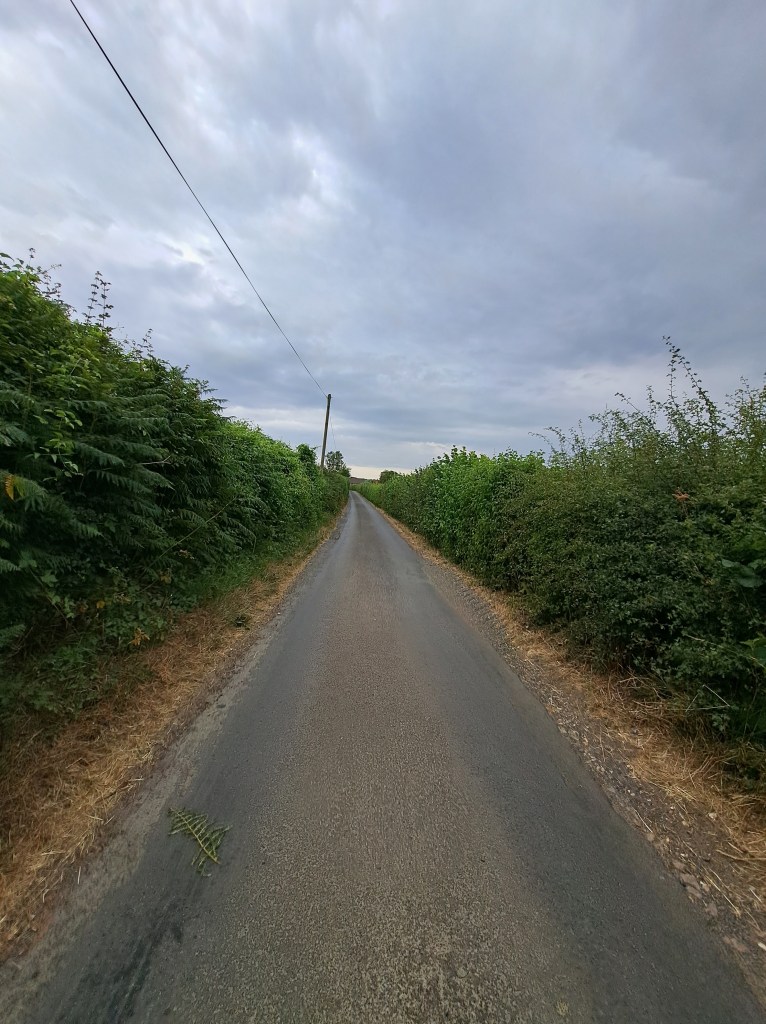
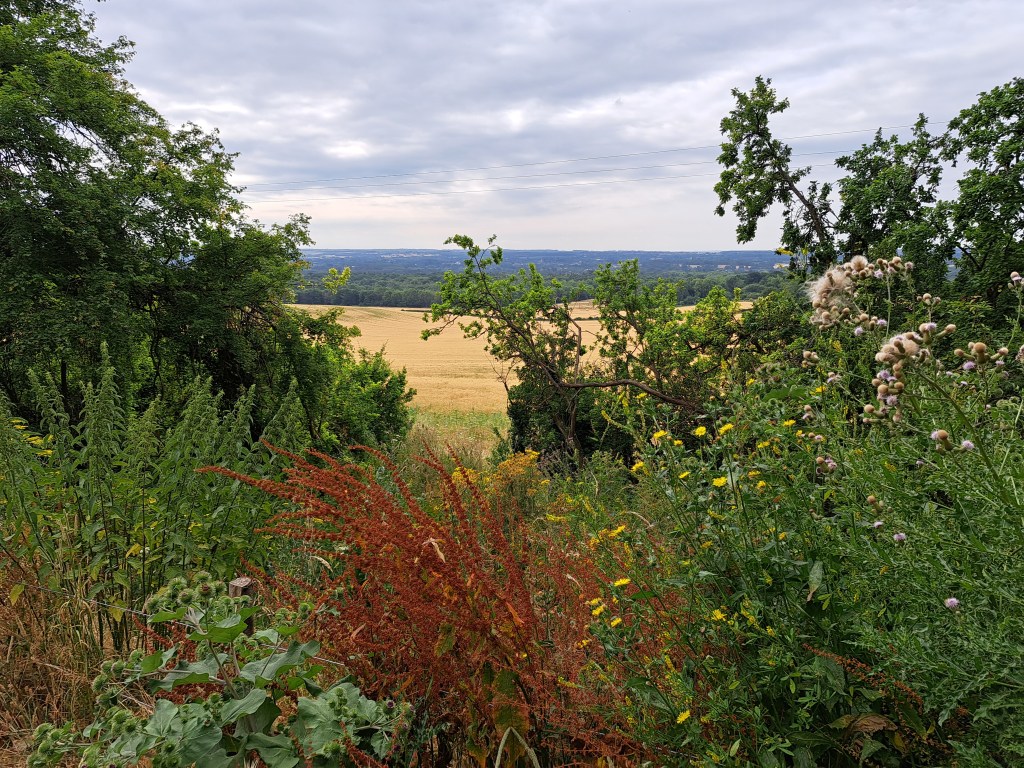
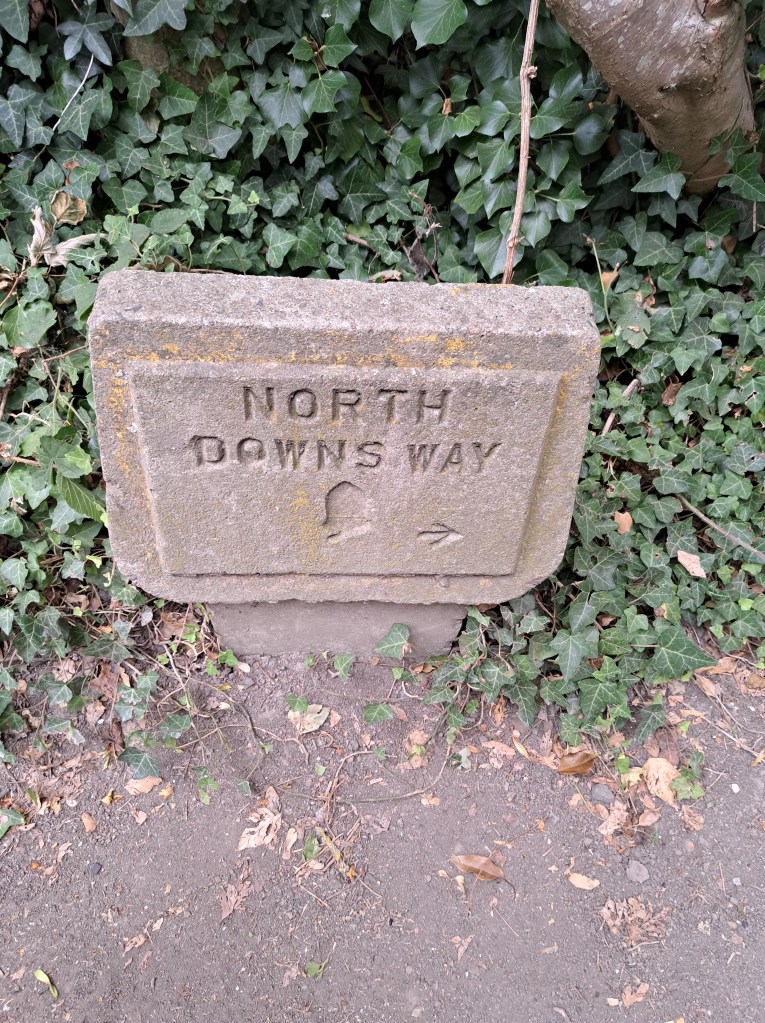
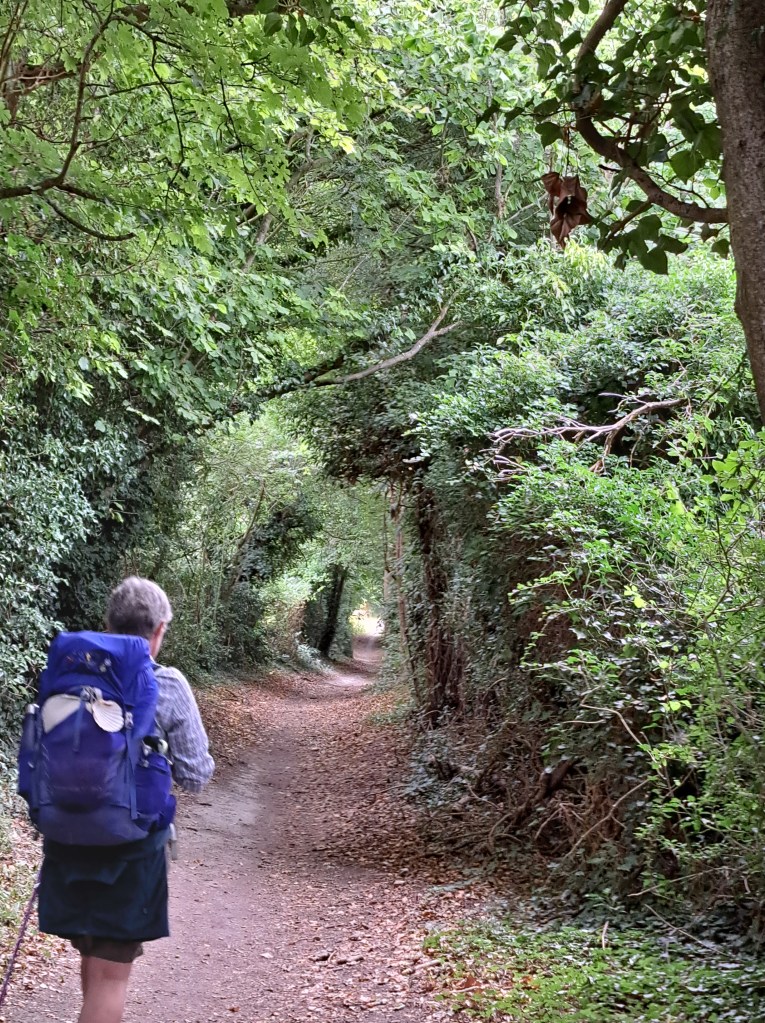
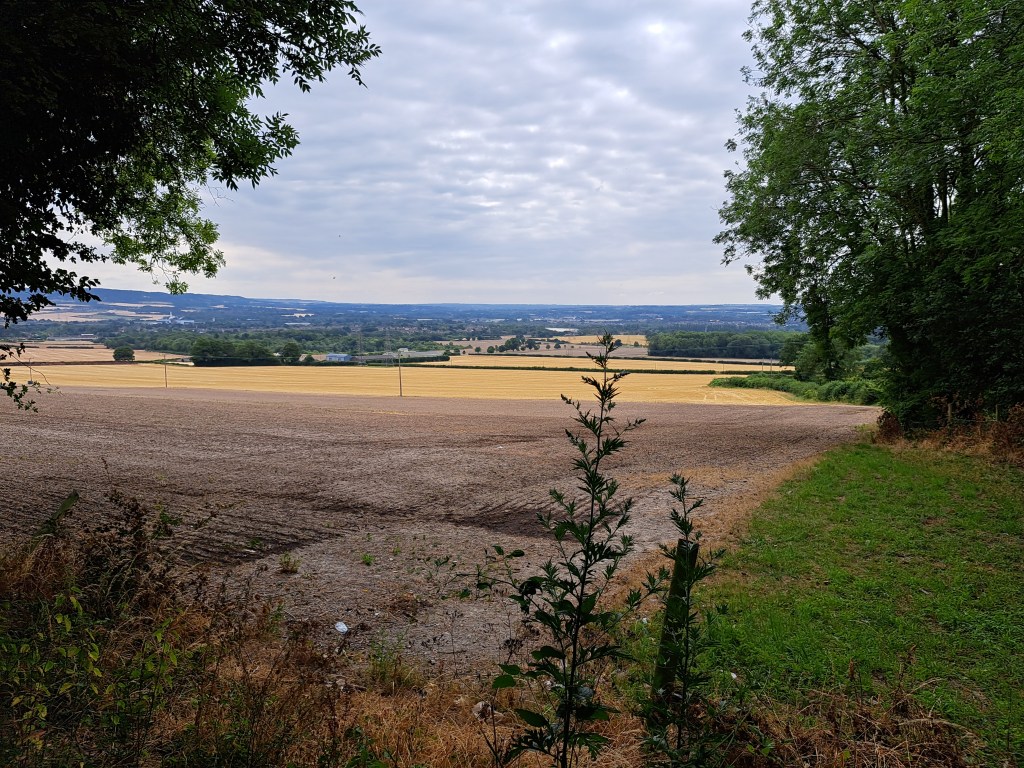
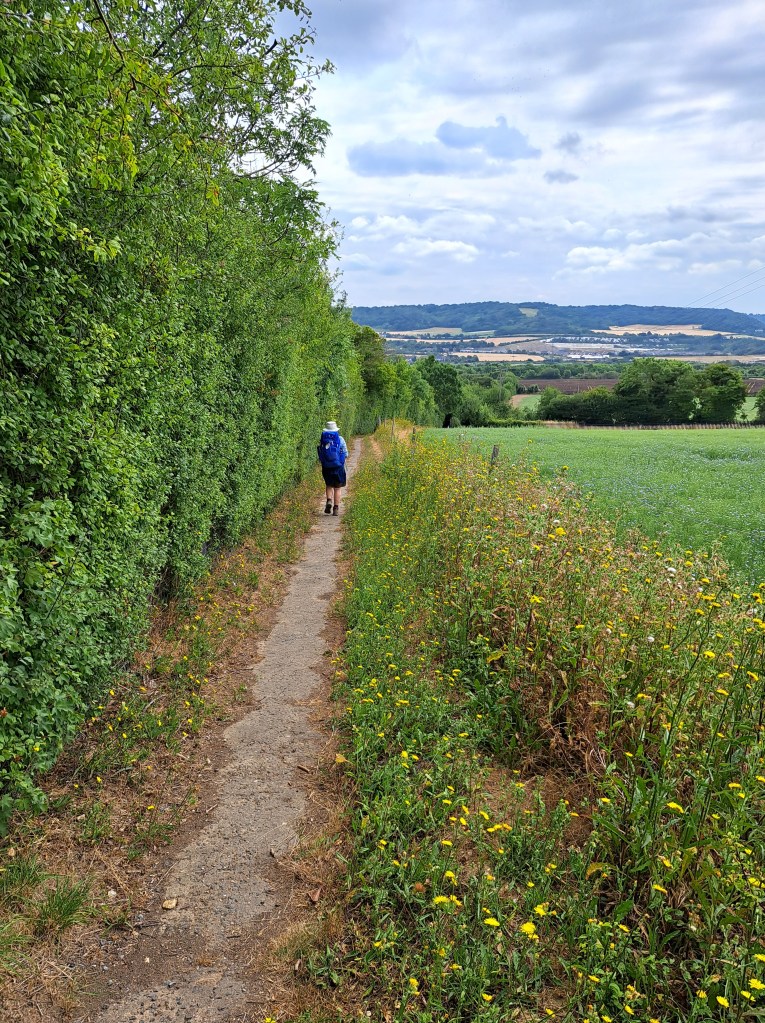
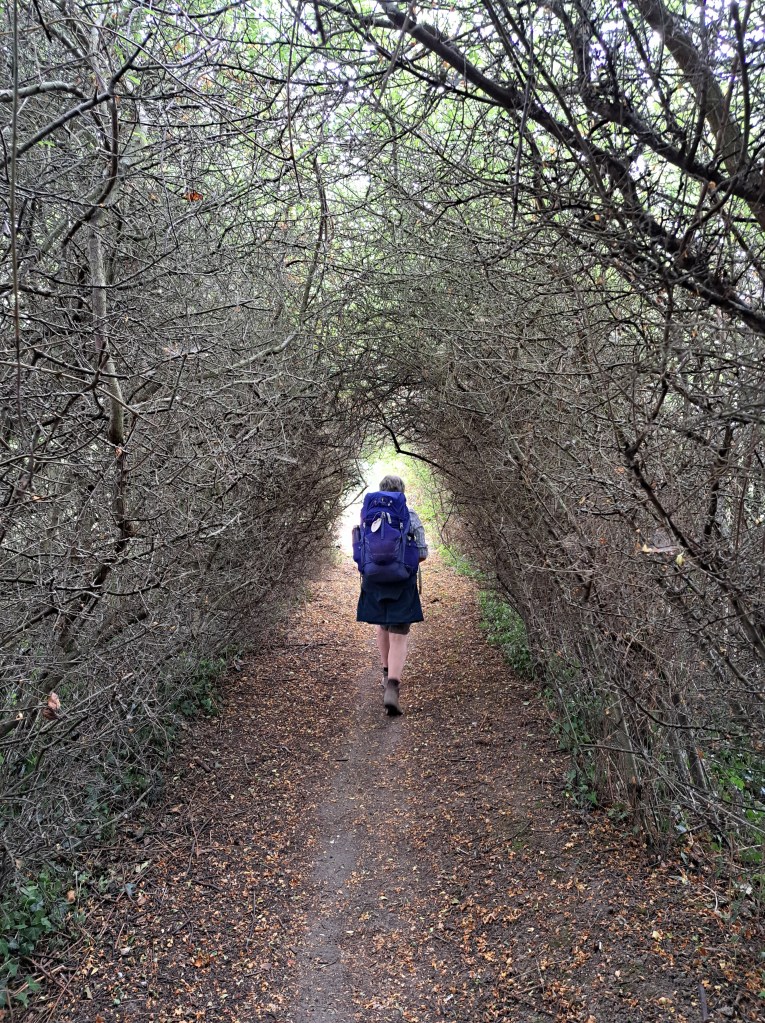
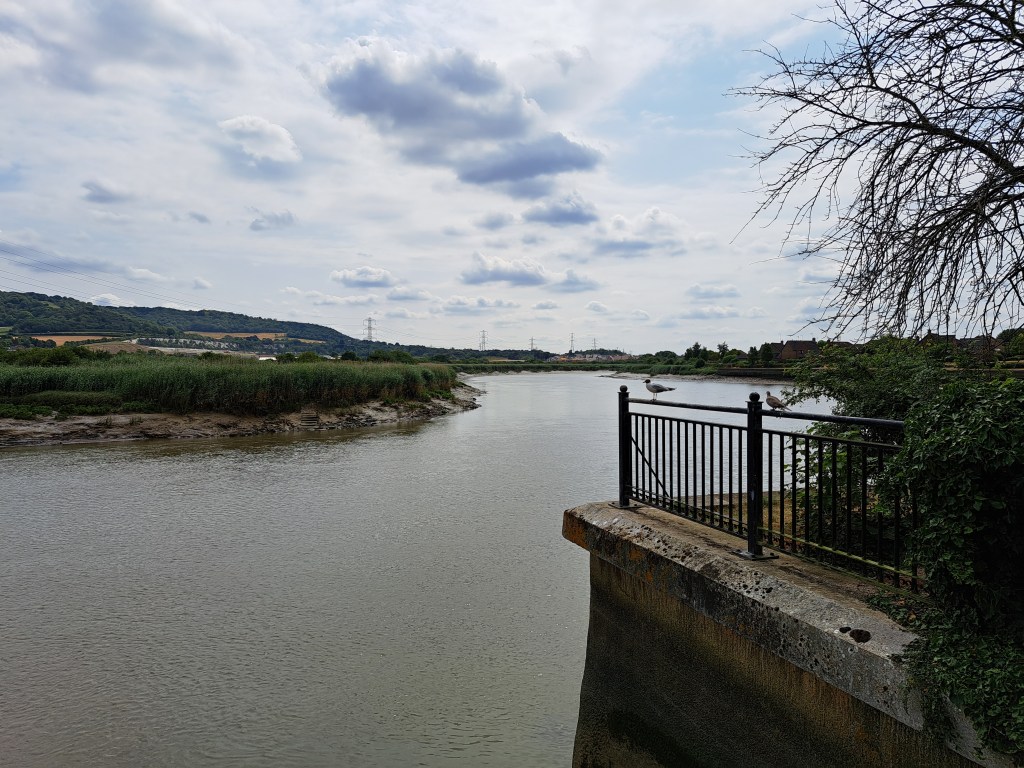
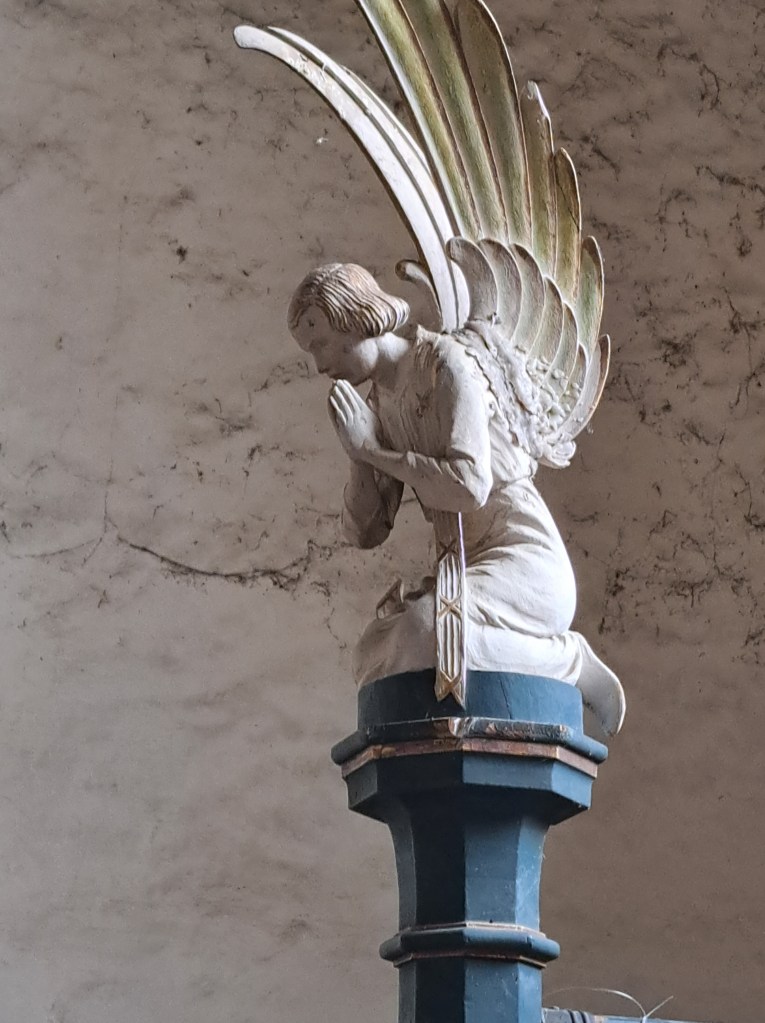
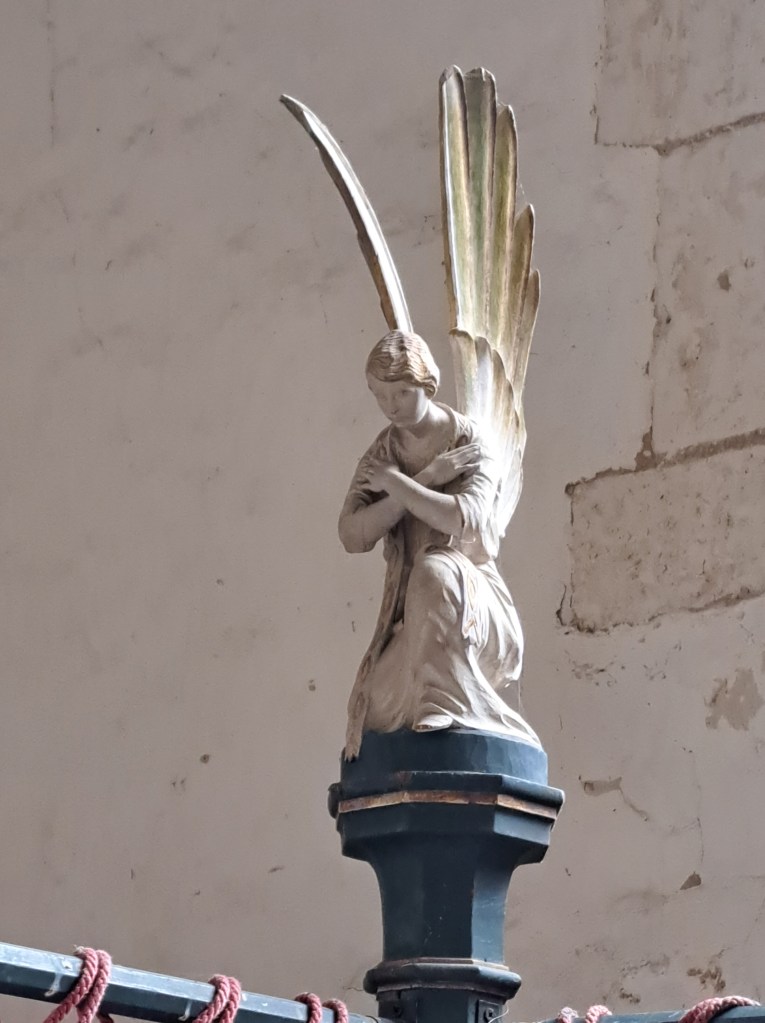
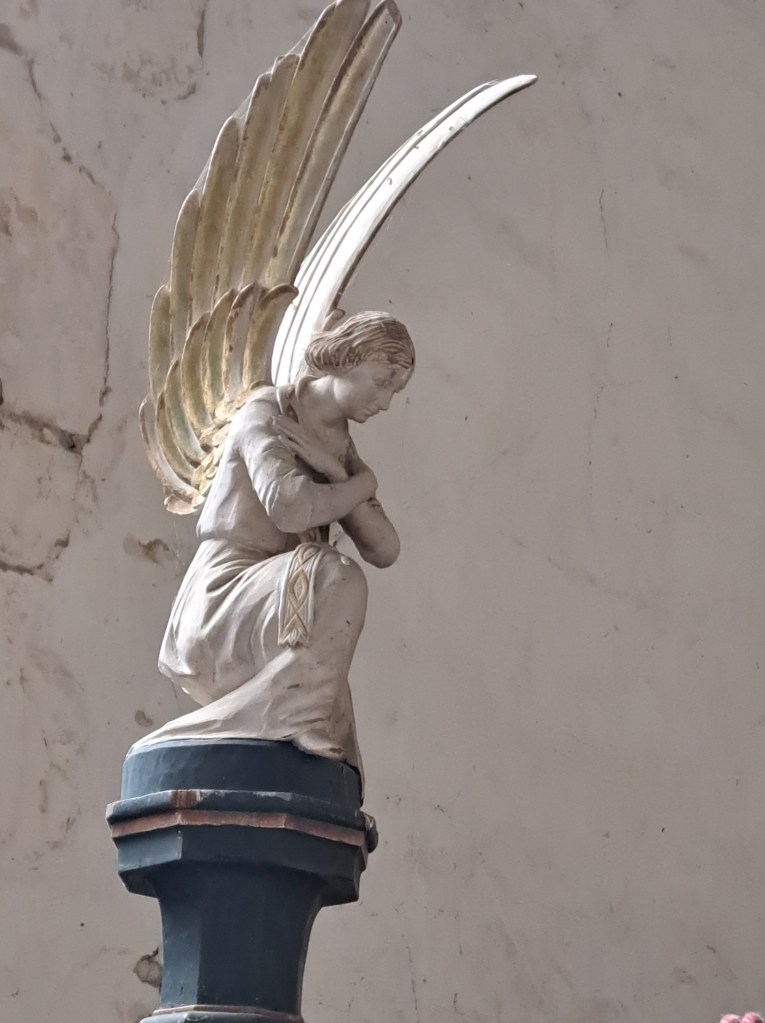
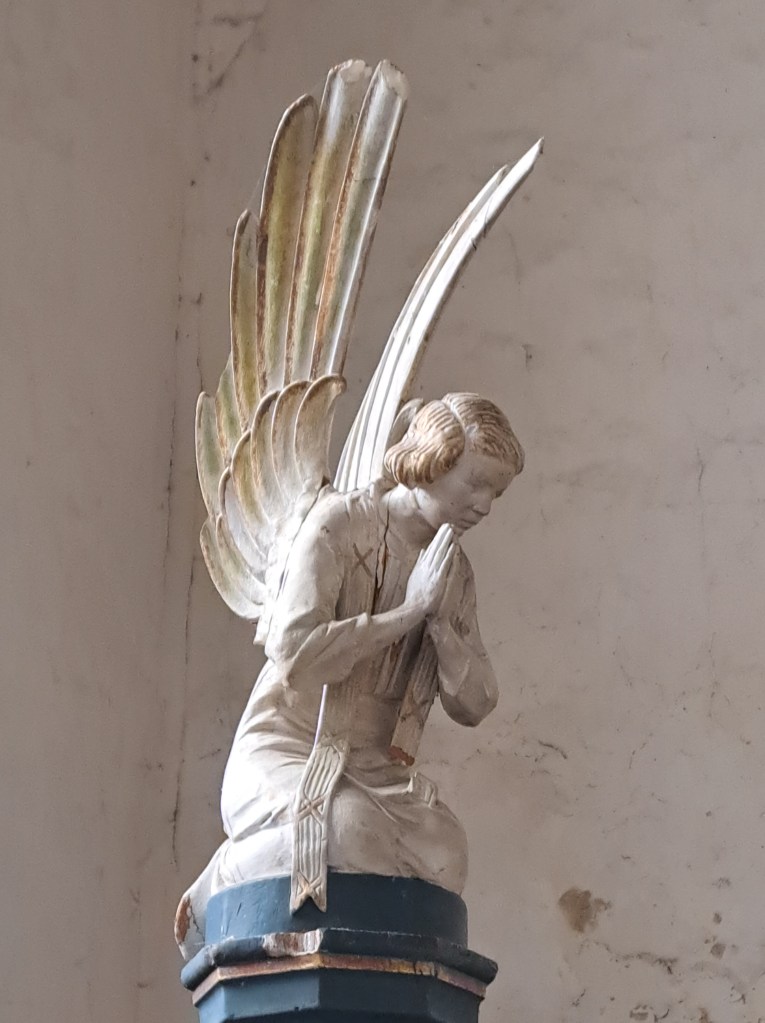
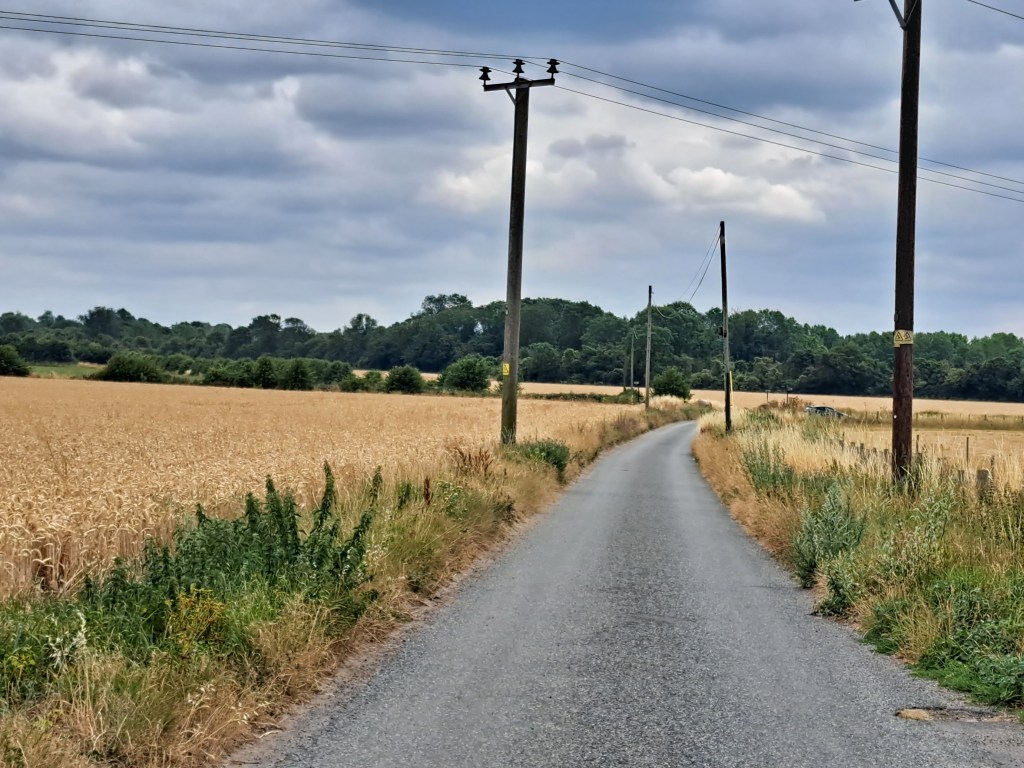
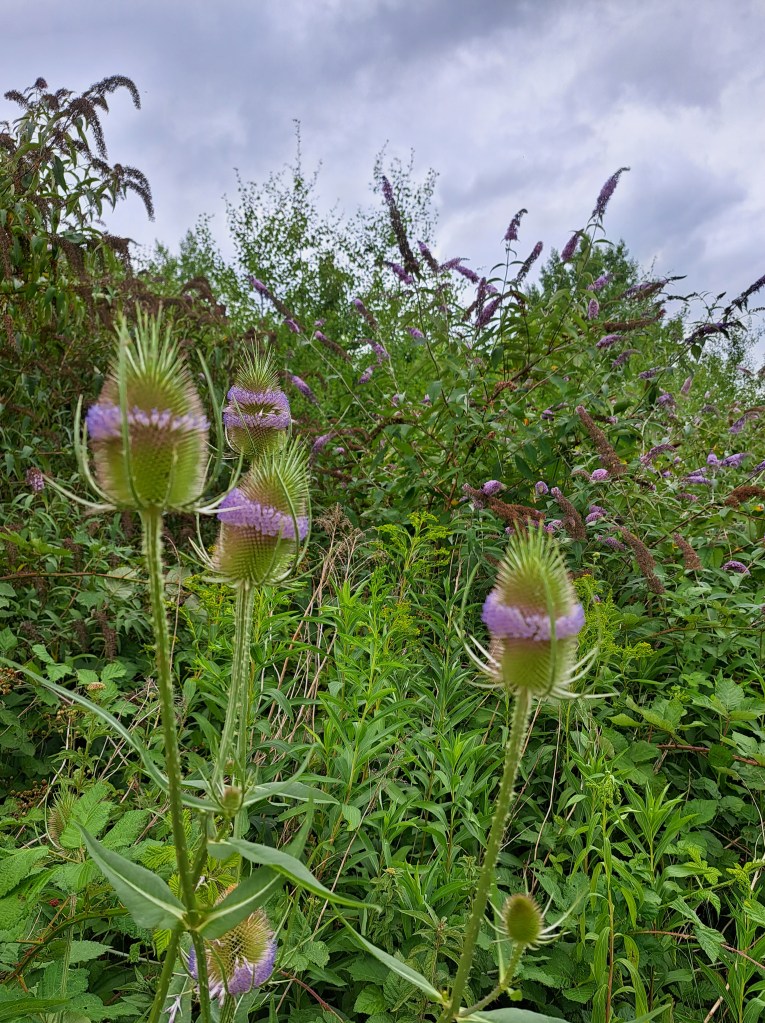
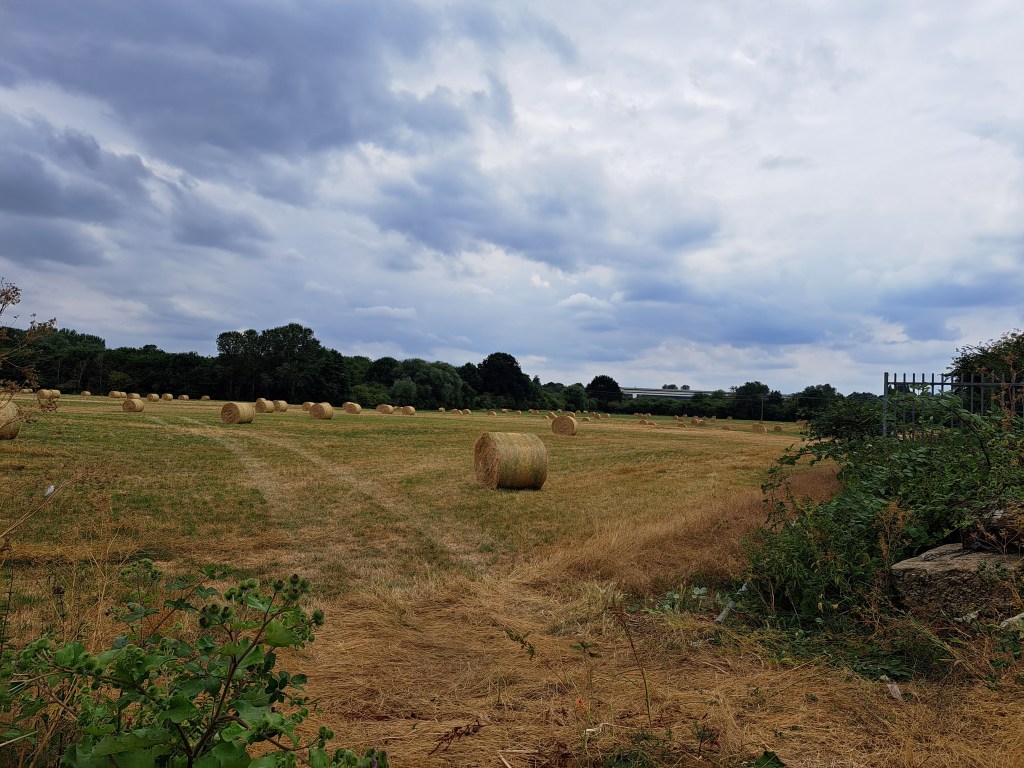
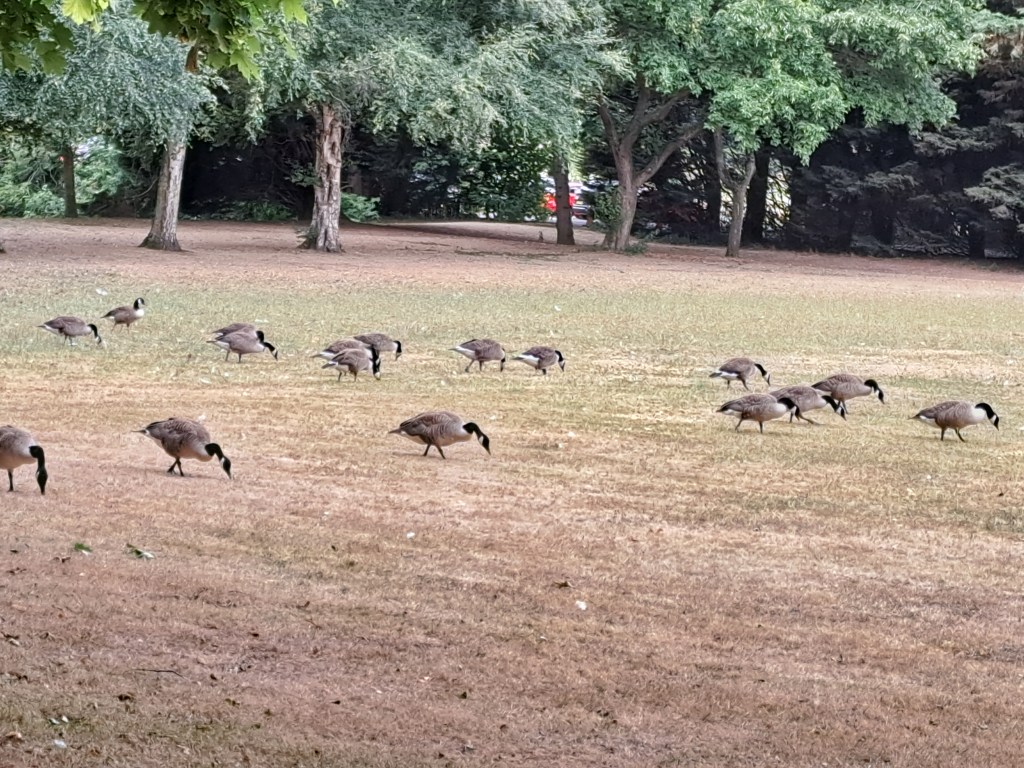
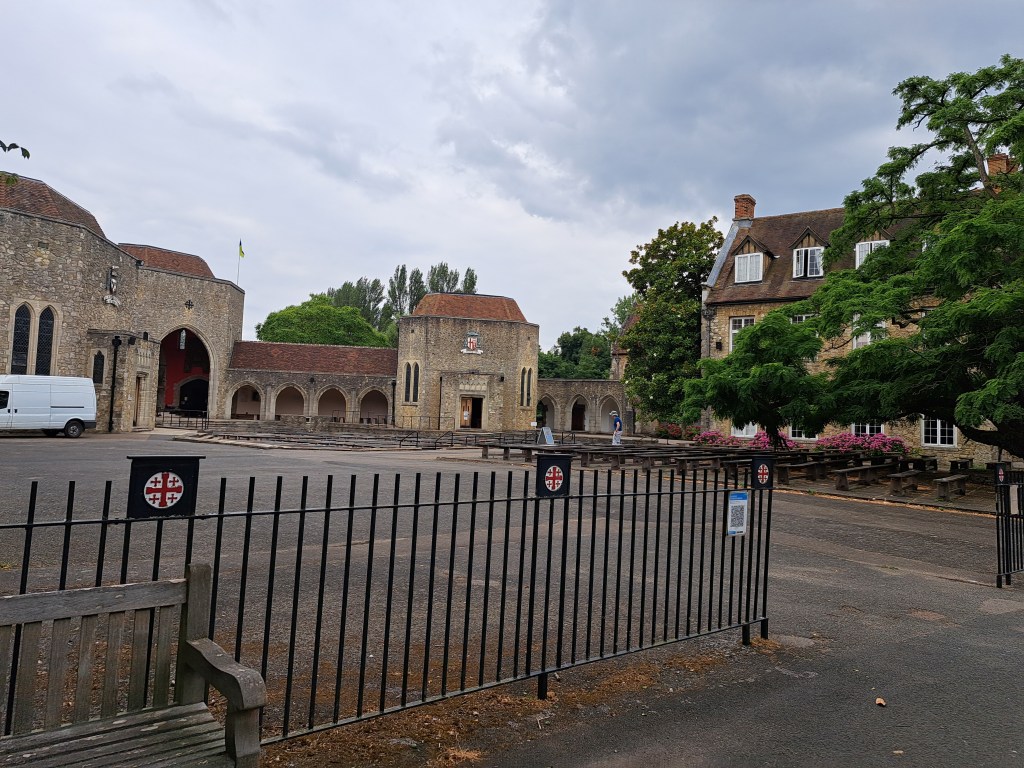
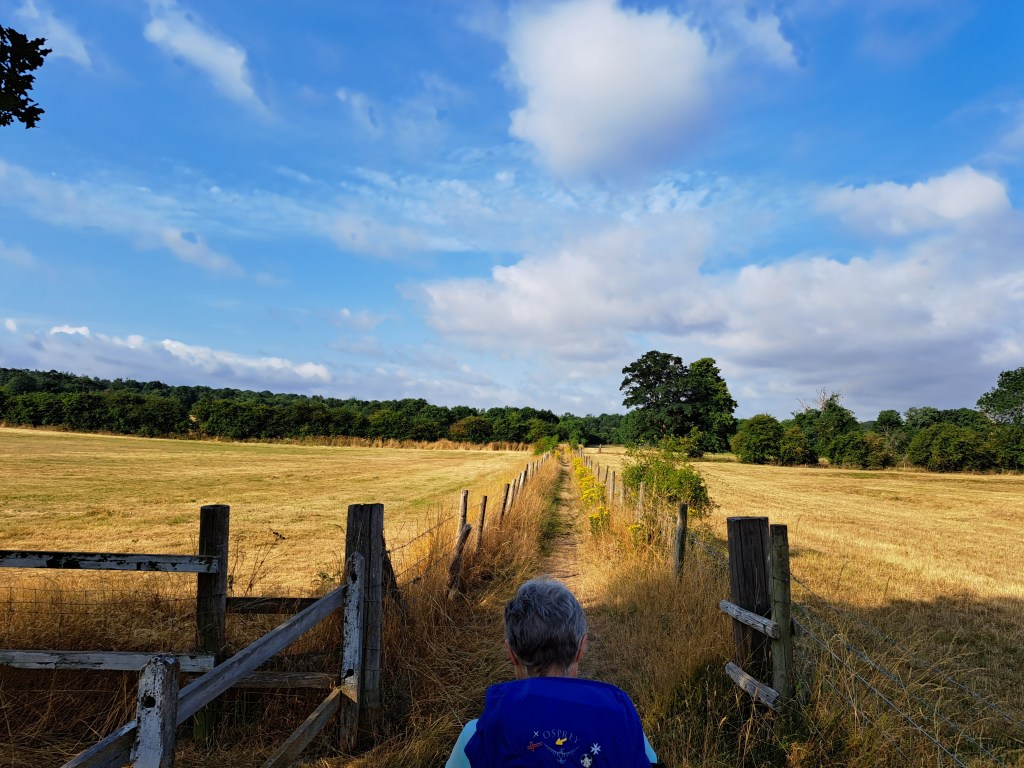
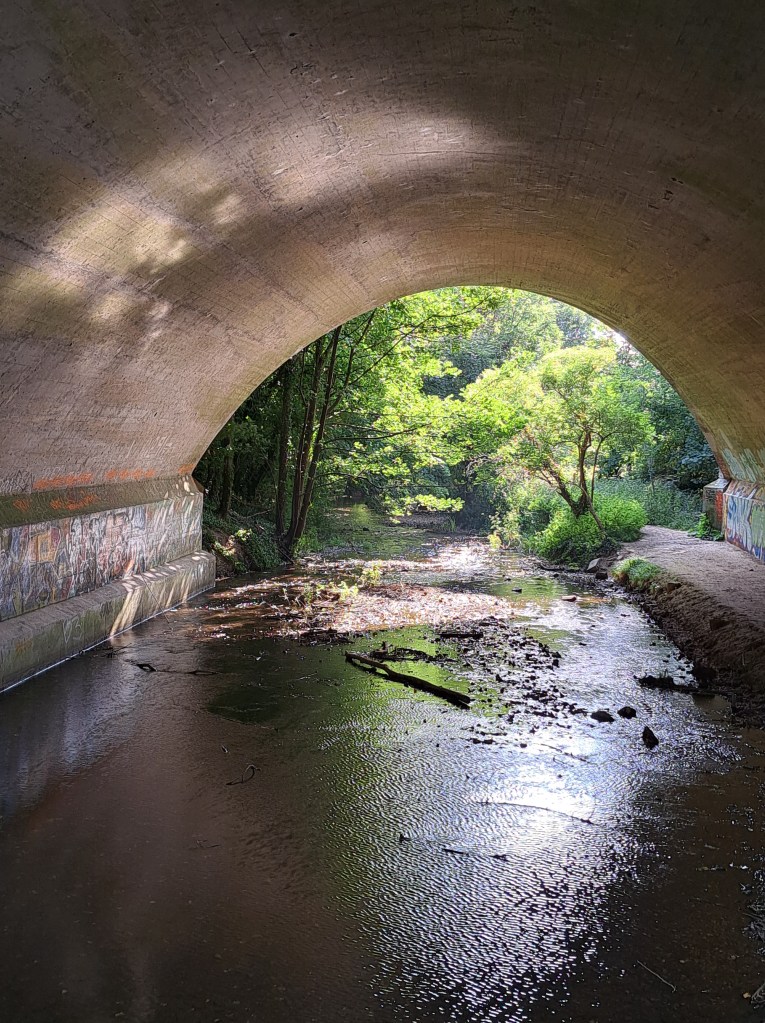
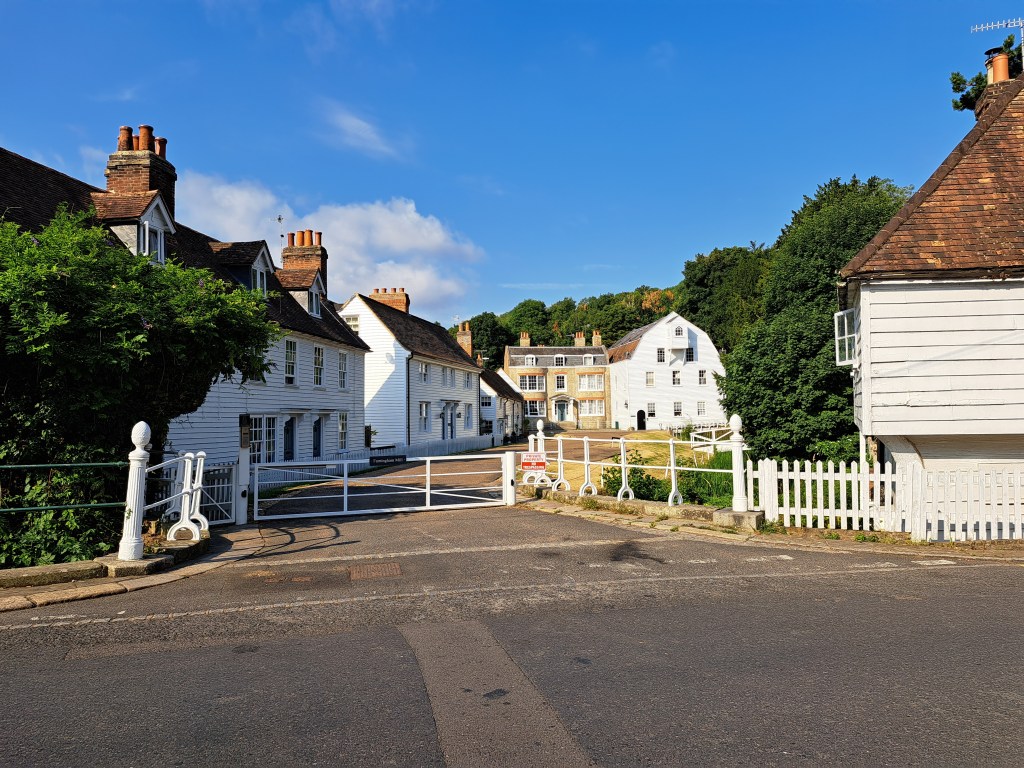
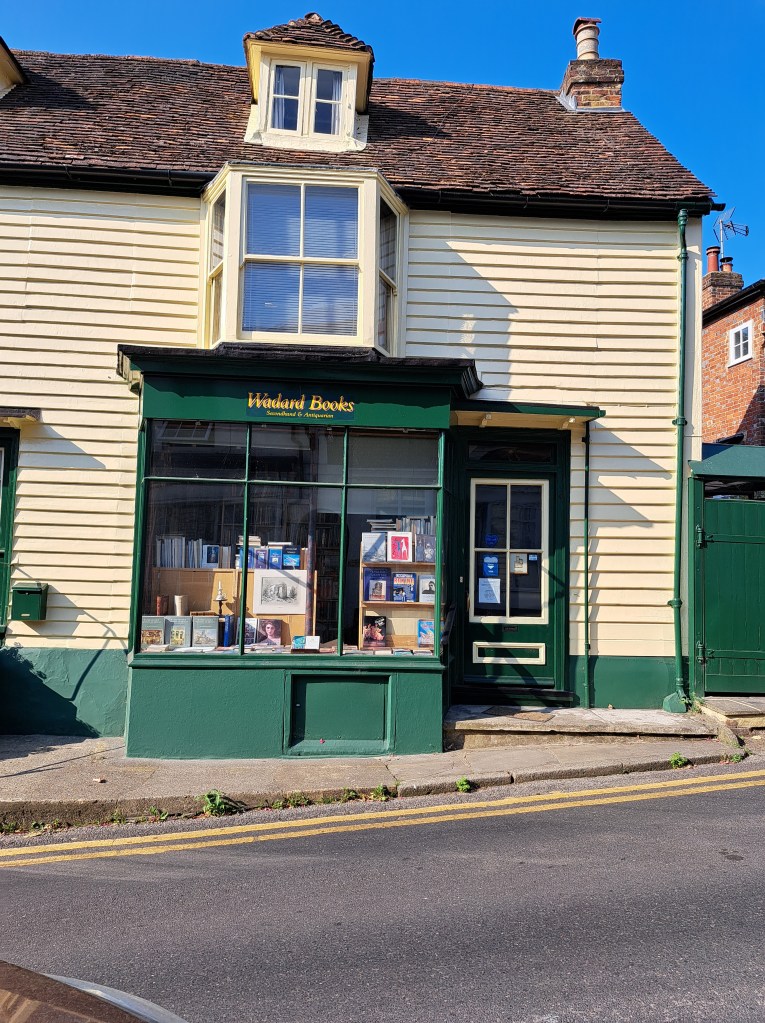
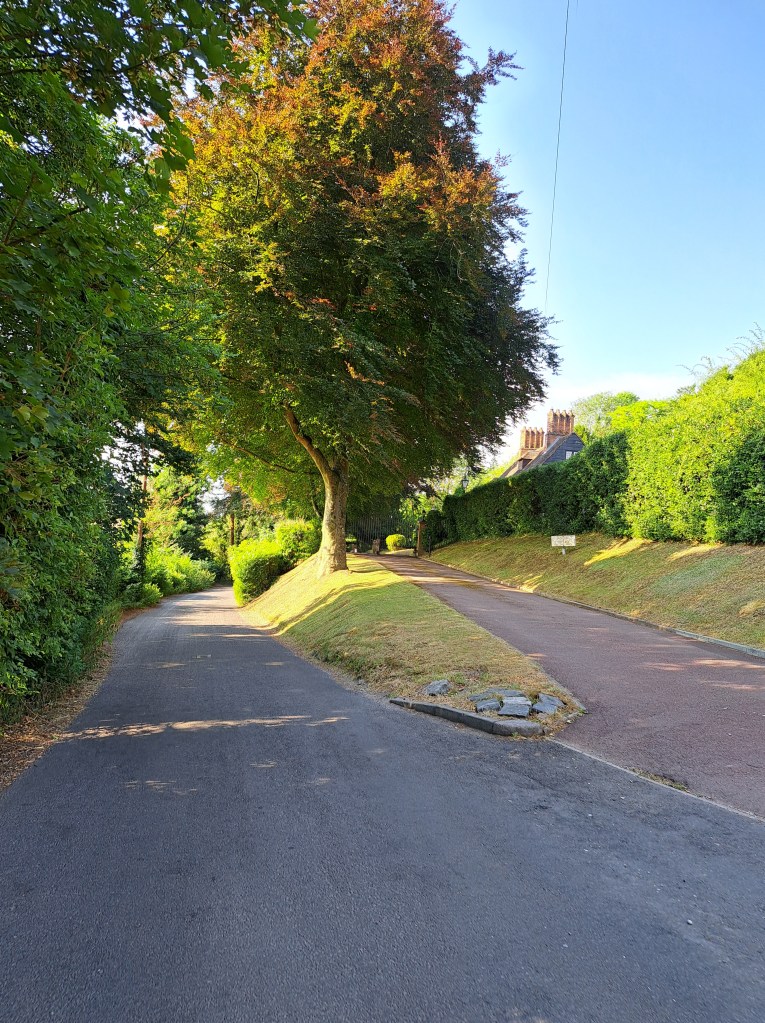
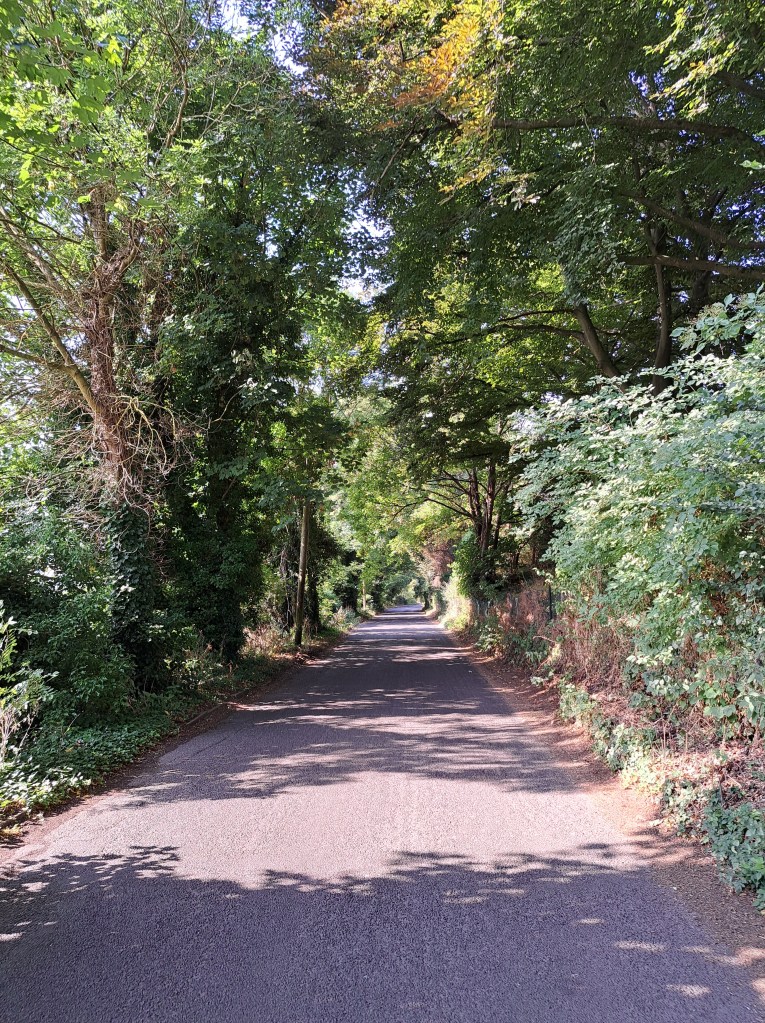
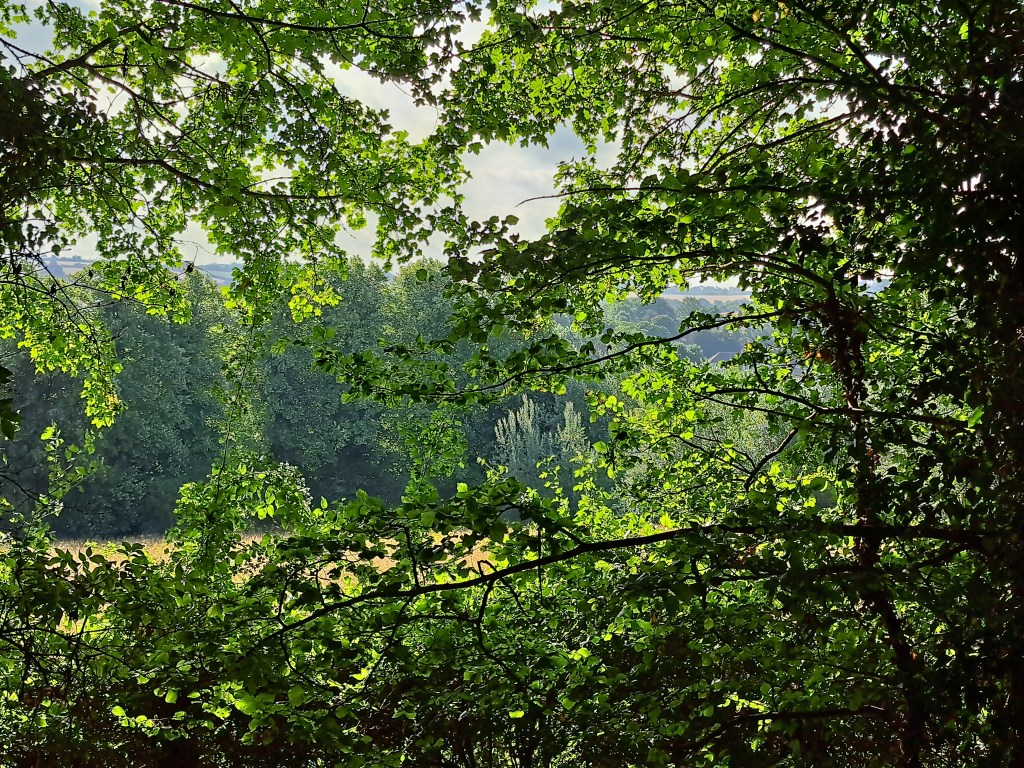
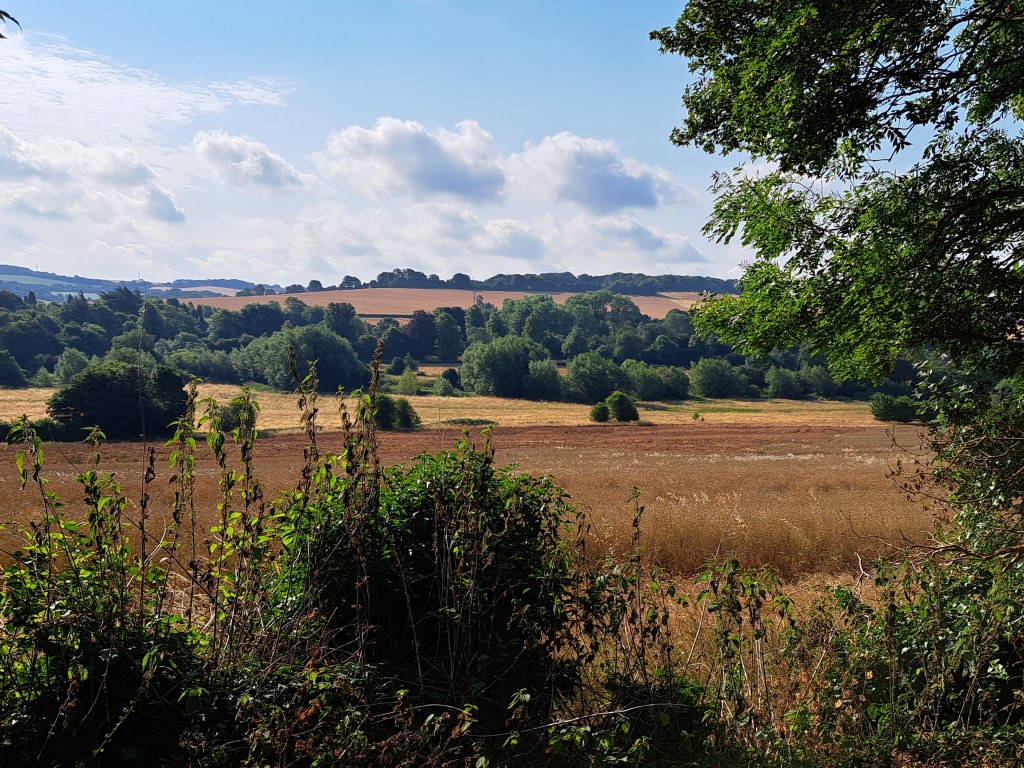
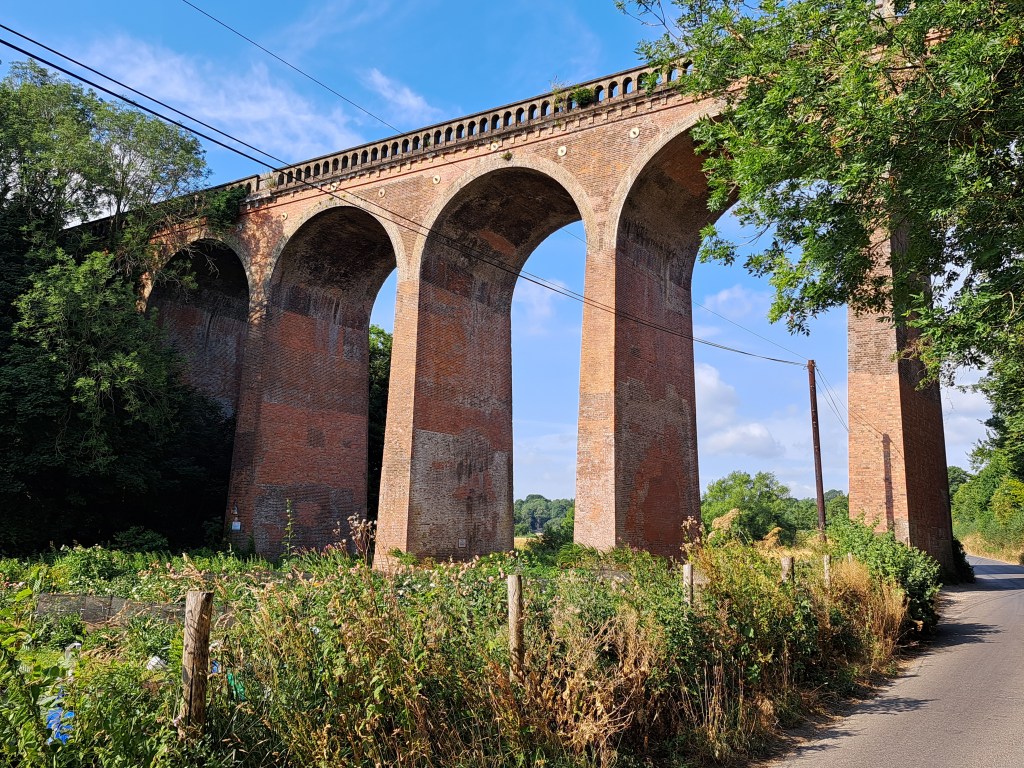
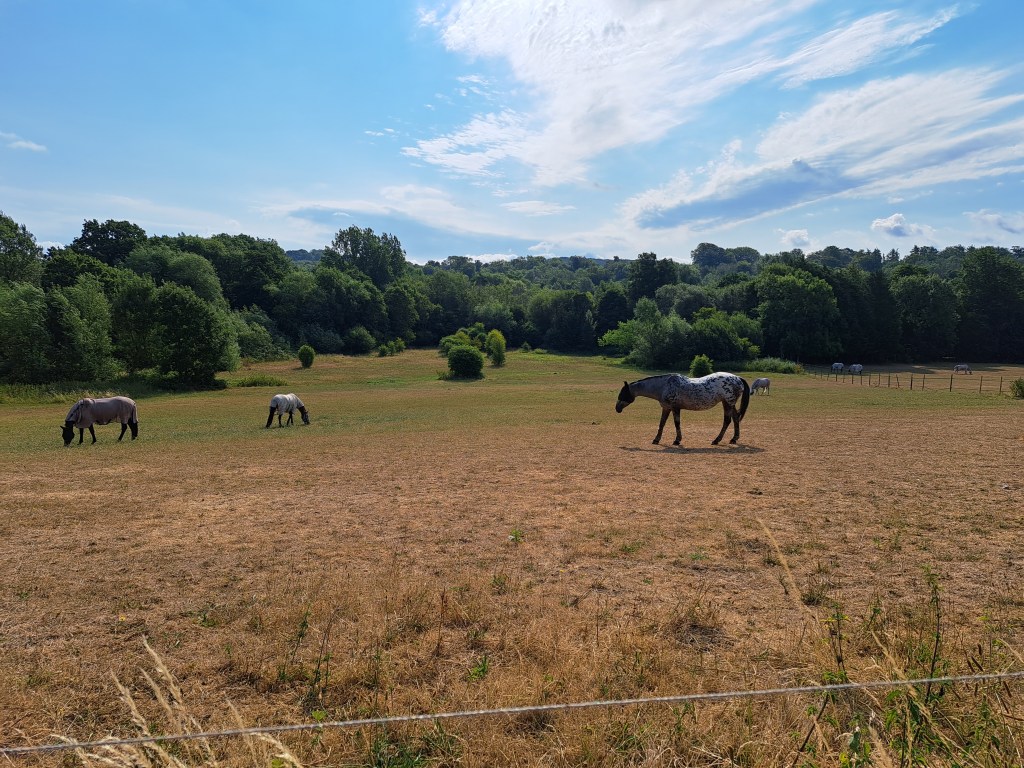
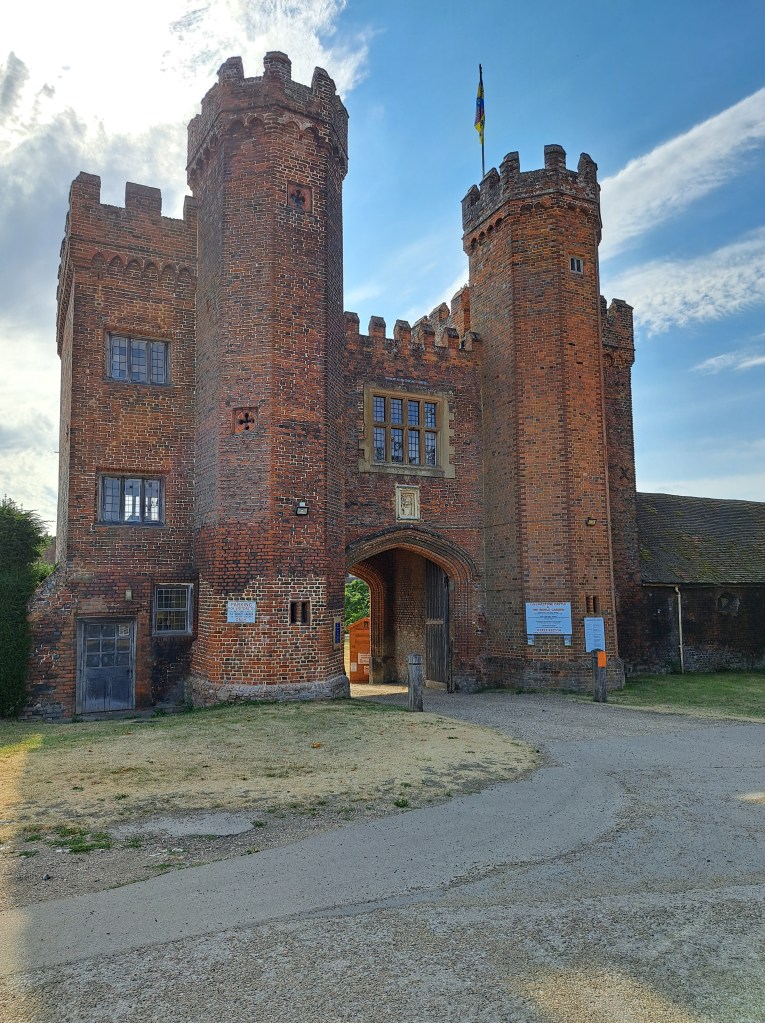
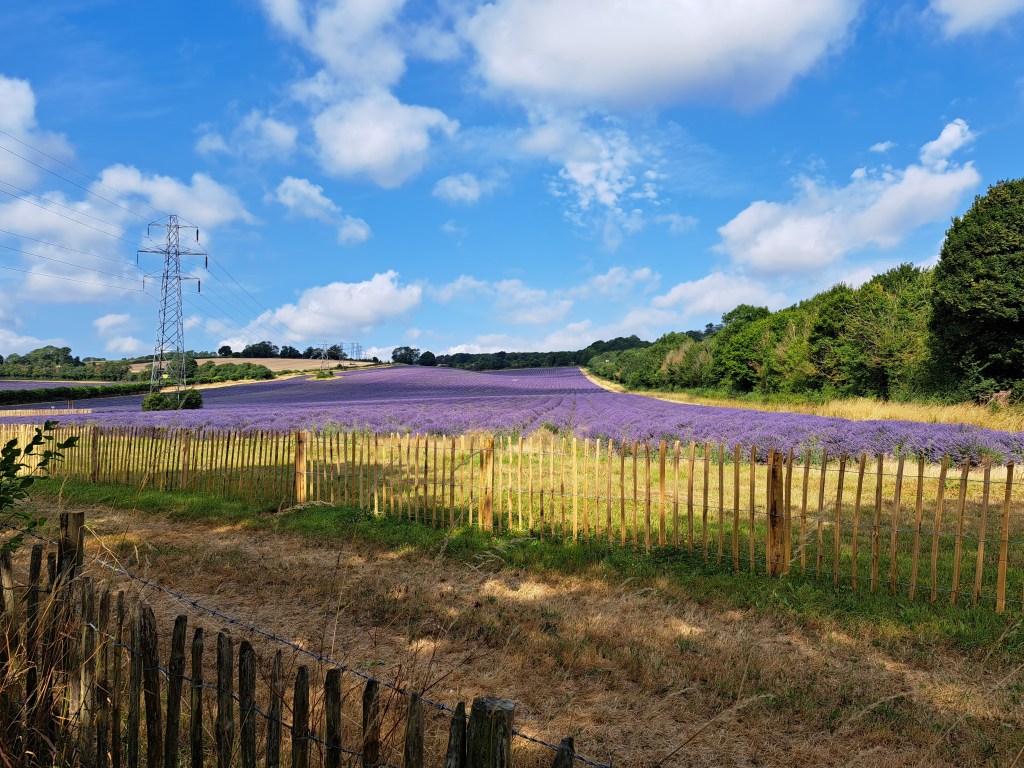
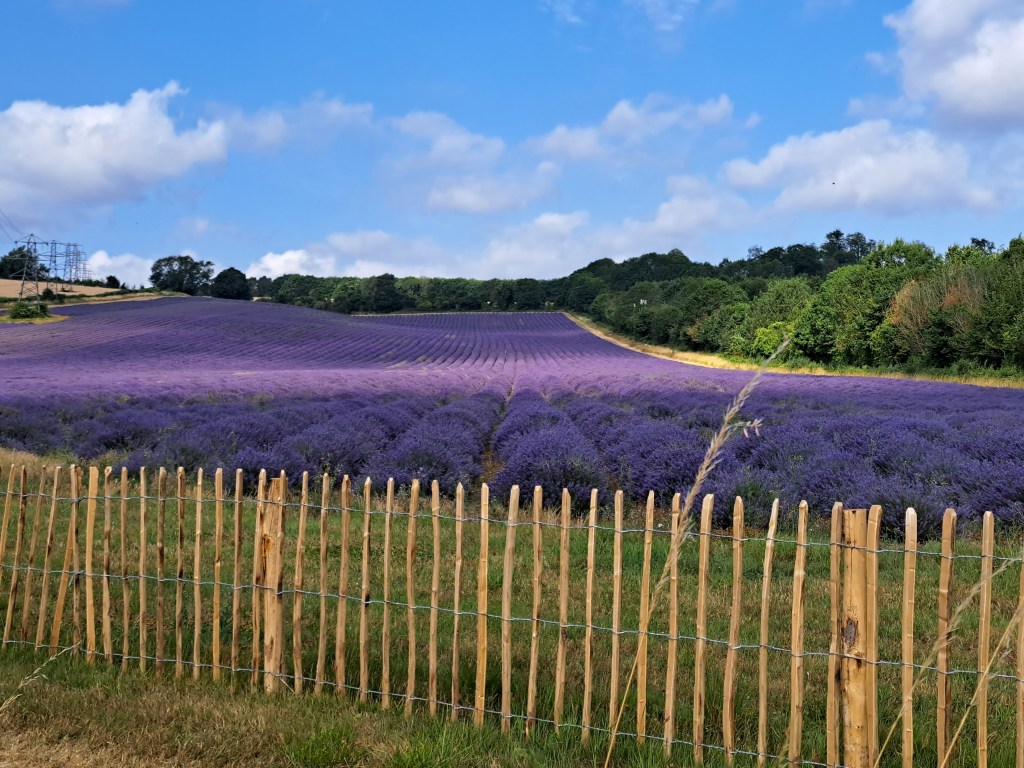
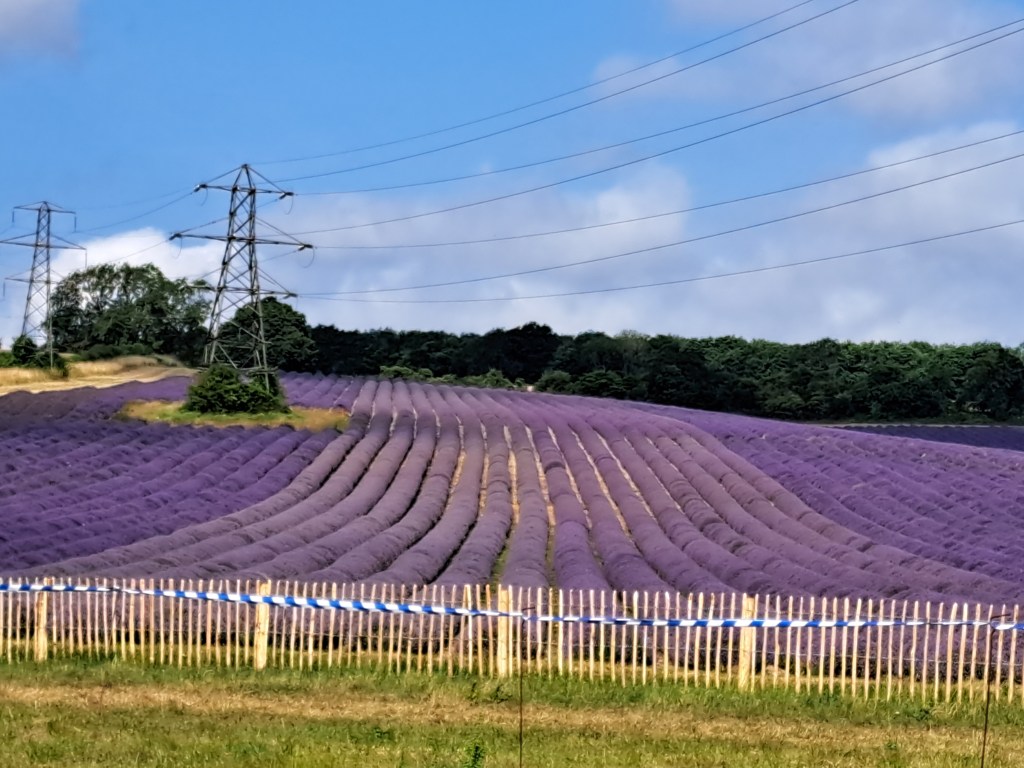
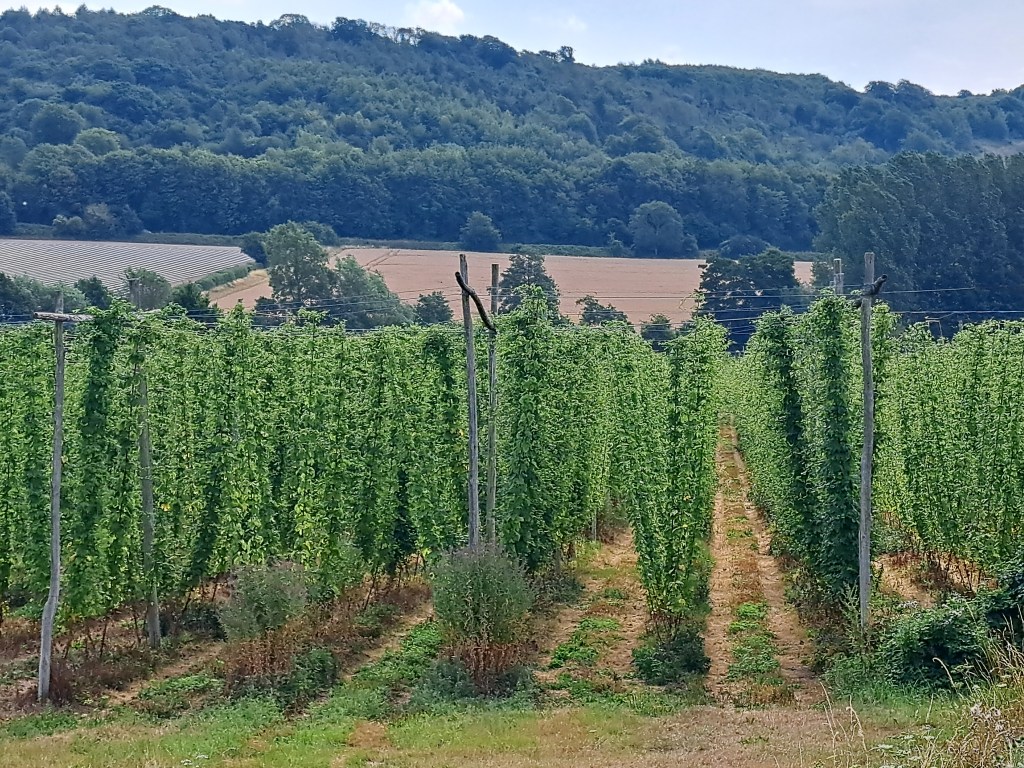
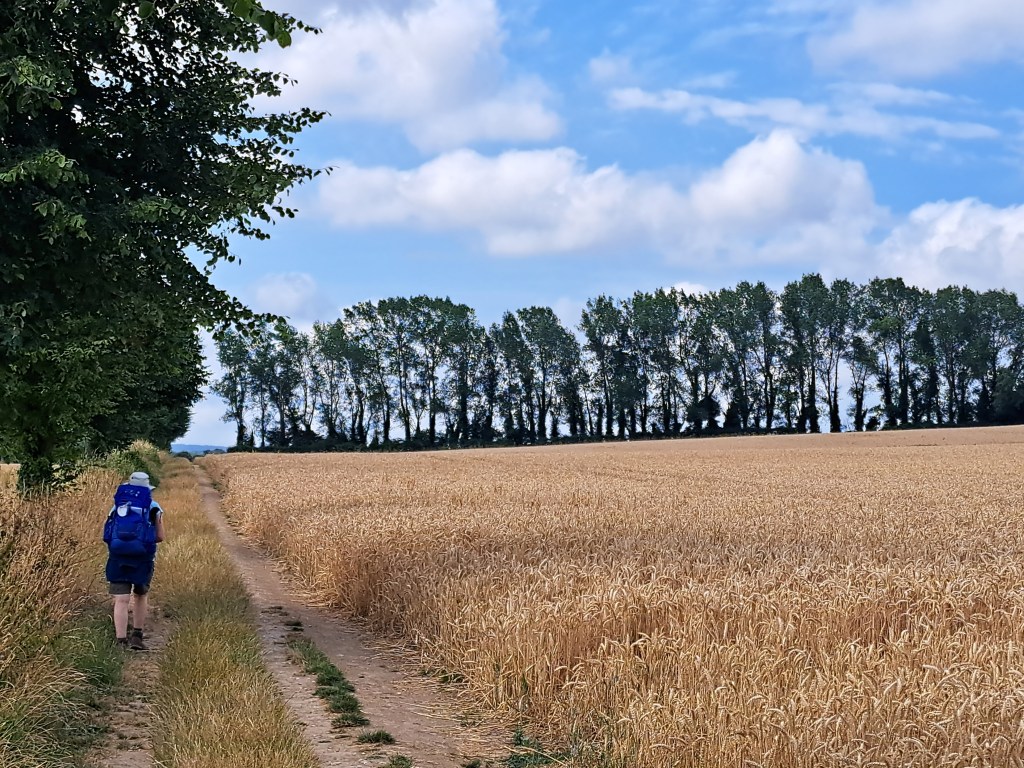
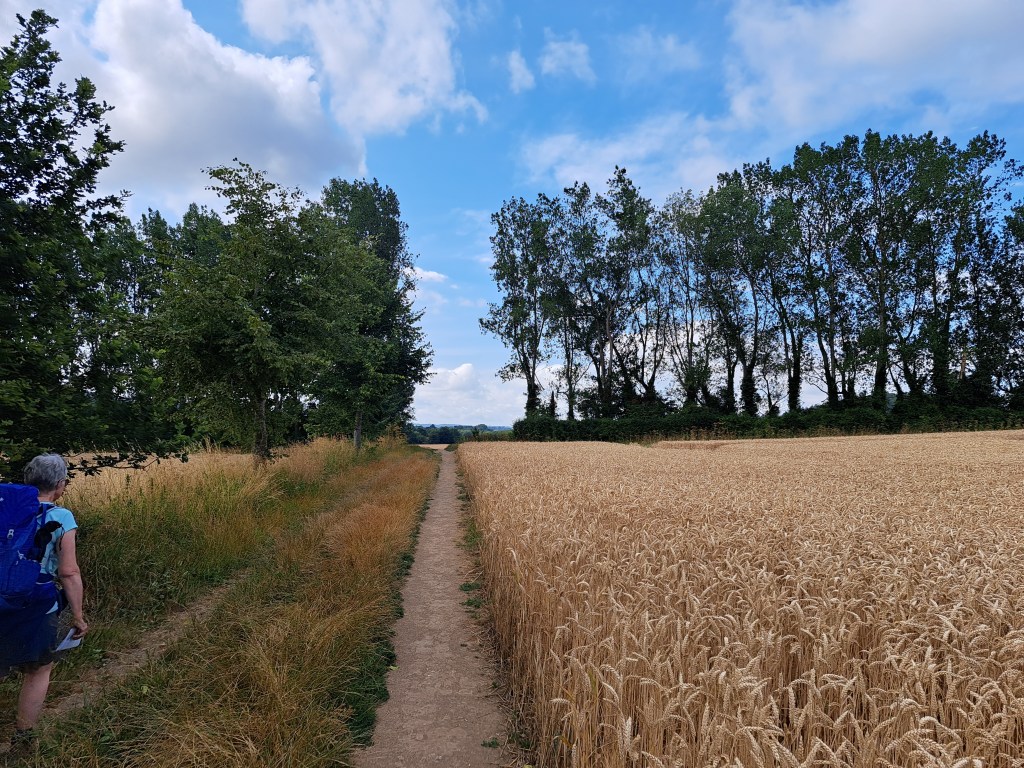
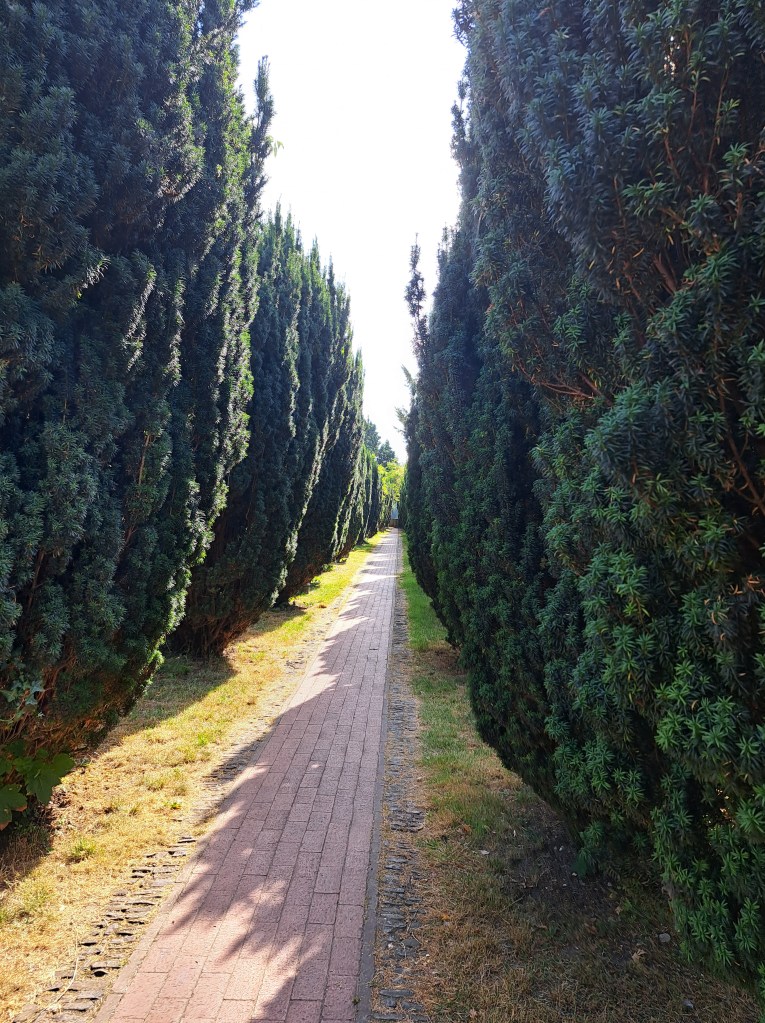
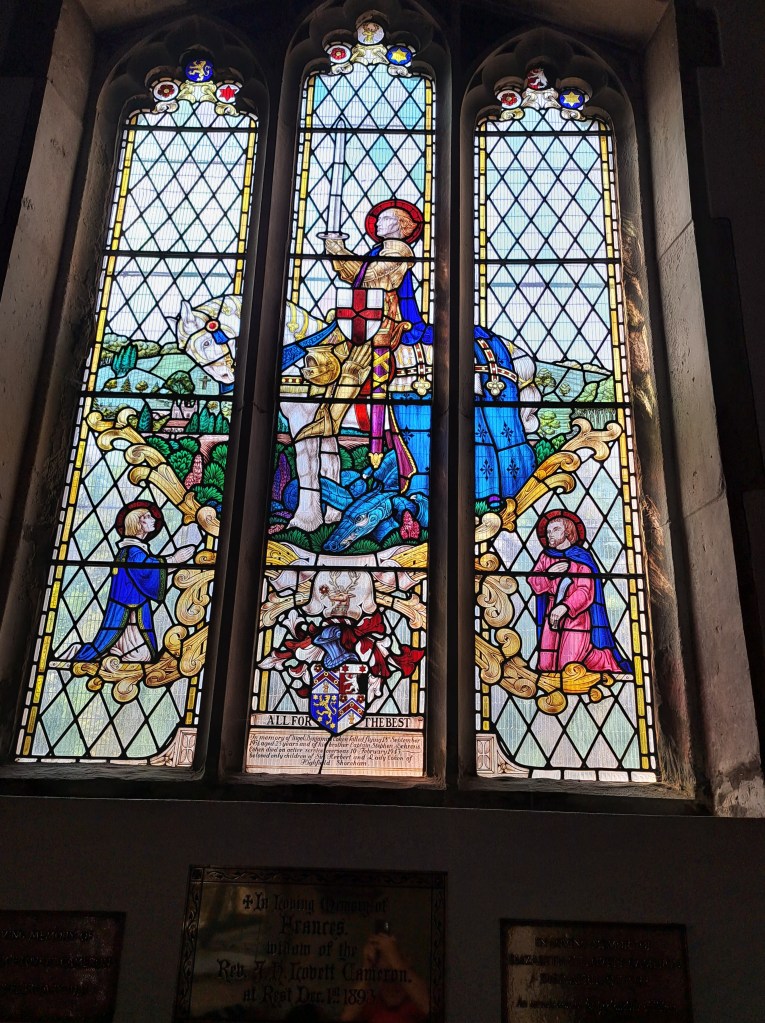
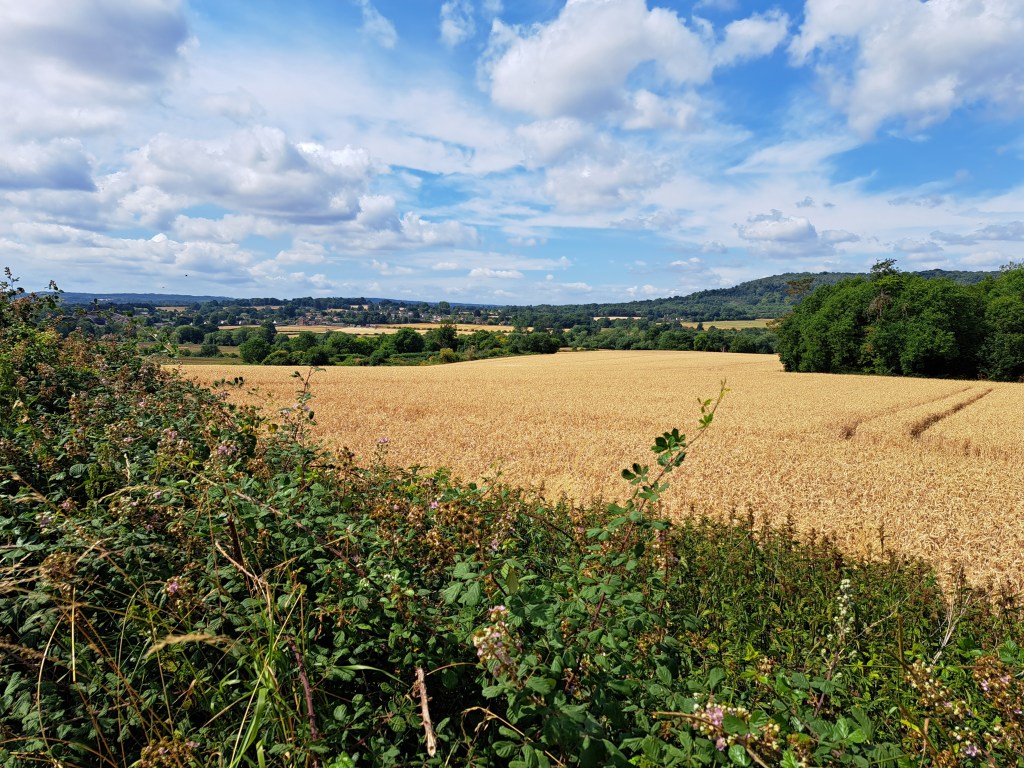
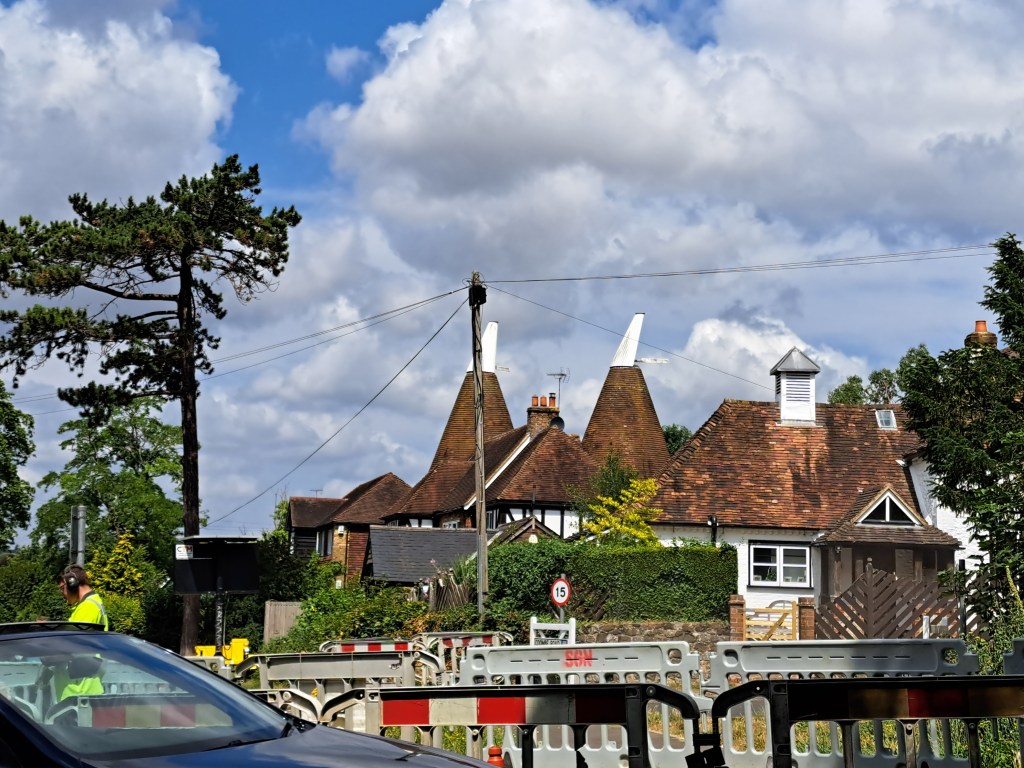
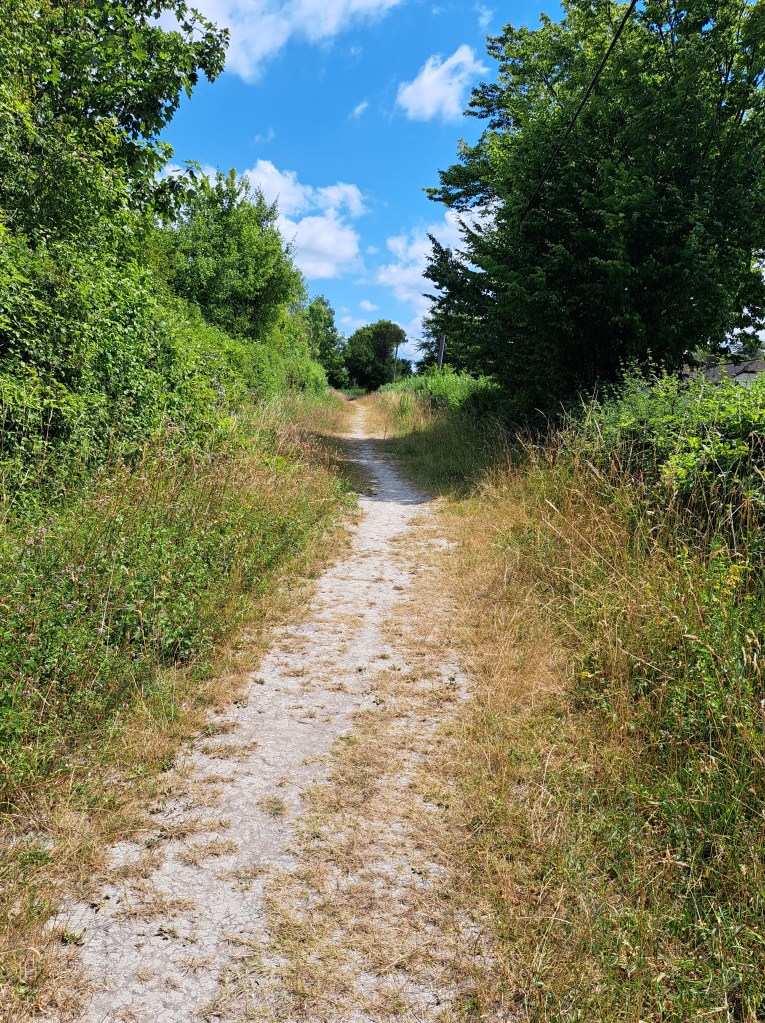
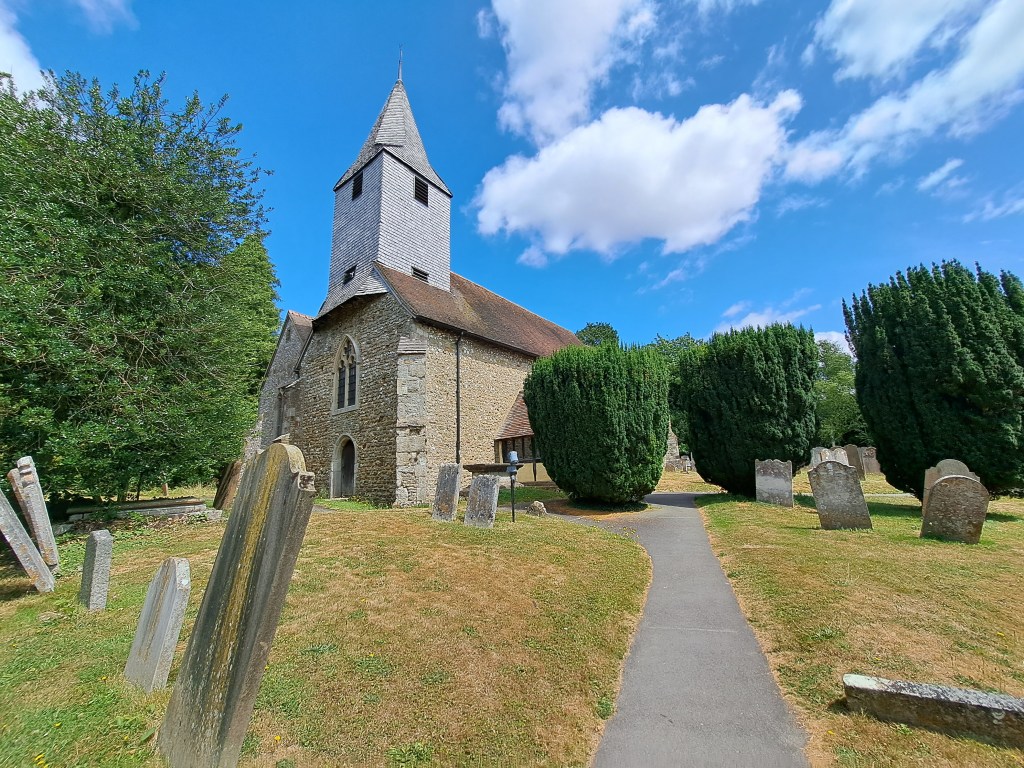
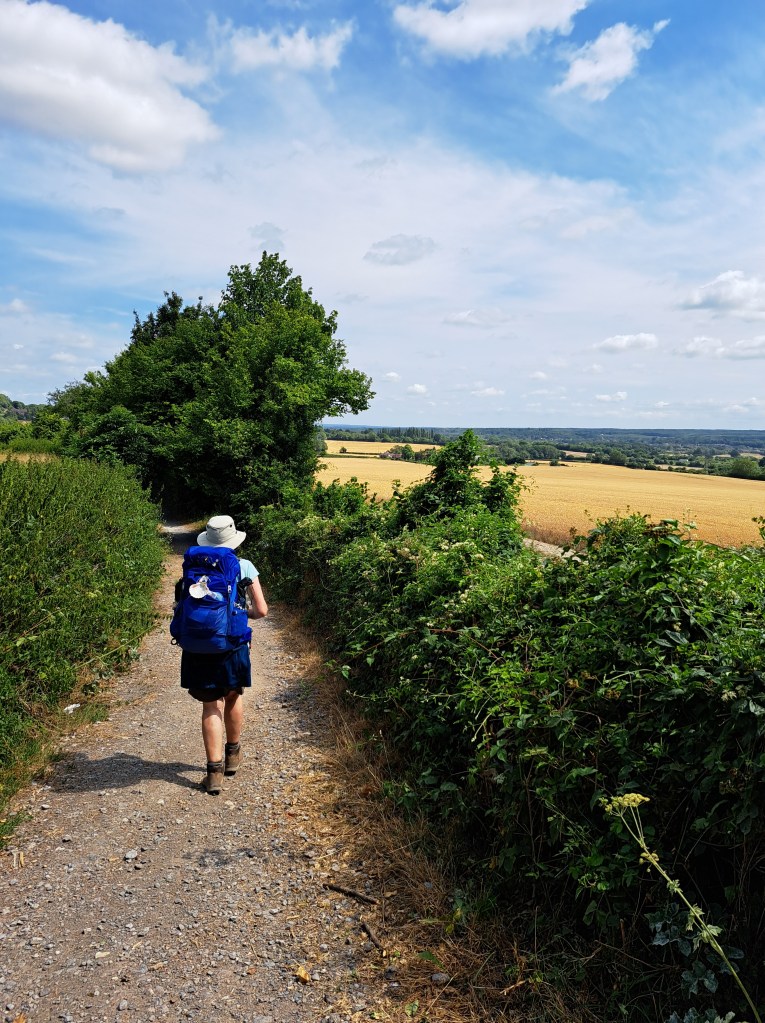
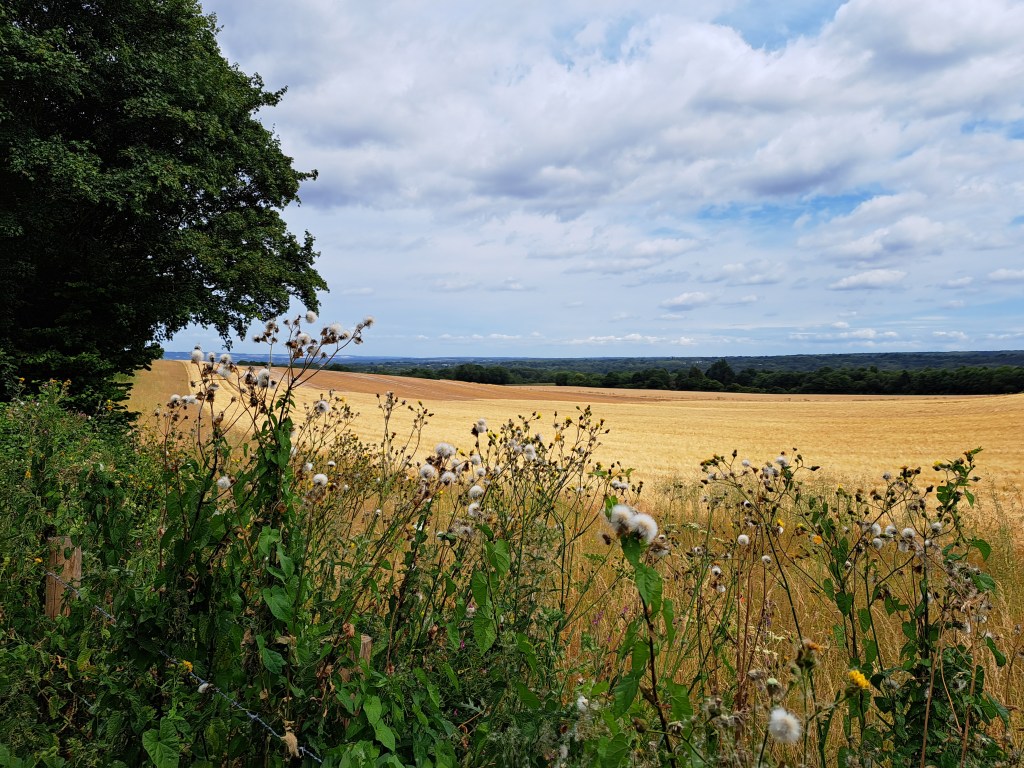
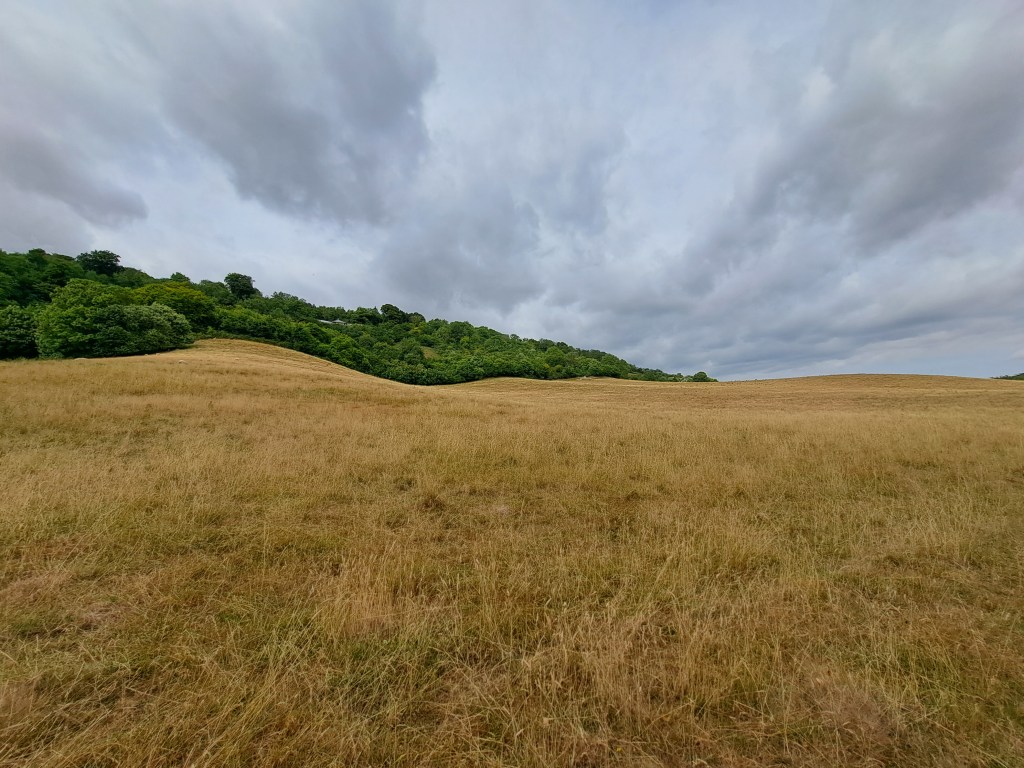
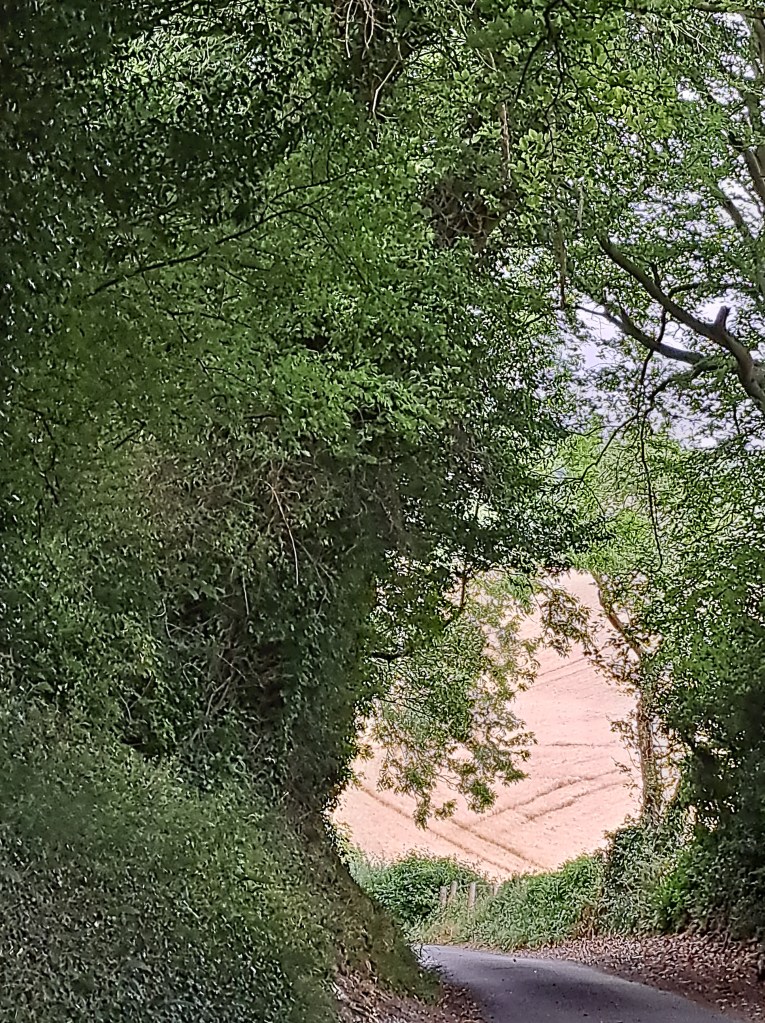
OK, this is not compulsory. A very shortened summary of our visual encounters for Wednesday, Thursday and Friday. Hold on, should it be Friday, Thursday and Wednesday…. OK a journey back in time so you may want to start at the bottom….




















-
Subscribe
Subscribed
Have a WordPress.com account? Log in now.

